If you’re serious about upgrading your cookware, cast iron is probably already on your radar.
It’s heavy, durable, and legendary for a reason.
But once you start shopping, another question pops up almost immediately: classic cast iron or enameled cast iron?
They look similar. They cook similarly. But they behave very differently in daily kitchens.
This guide breaks down the real differences between cast iron and enameled cast iron so you can confidently choose the one that fits your cooking style, kitchen habits, and patience level.
What Cast Iron Cookware Really Is
Traditional cast iron is made from solid iron with no coating. It relies on seasoning—a baked-on layer of oil—to create a natural nonstick surface and protect it from rust.
It’s the cookware your grandparents used and probably still own.
Why people swear by cast iron 🥘
Extreme durability
Cast iron can last generations with proper care.
Excellent heat retention
Once hot, it stays hot, perfect for searing.
Naturally nonstick over time
Seasoning improves the more you cook.
Versatile cooking
Works on stovetops, ovens, grills, and campfires.
Downsides to understand
- Requires regular seasoning
- Not dishwasher safe
- Can rust if left wet
- Reacts with acidic foods
- Heavy and not beginner-friendly
Cast iron rewards effort. If you treat it right, it treats you better.
What Enameled Cast Iron Is
Enameled cast iron is traditional cast iron coated with a smooth porcelain enamel layer. This coating eliminates the need for seasoning and prevents rust.
It’s designed to offer cast iron performance with modern convenience.
Why enameled cast iron is popular 🍲
No seasoning required
Ready to use out of the box.
Non-reactive surface
Safe for acidic foods like tomatoes and wine.
Easy cleanup
No rust worries, no oiling after use.
Beautiful designs
Often doubles as serveware.
Downsides to consider
- Higher upfront cost
- Enamel can chip if mishandled
- Heavier than most cookware
- Not ideal for extreme high heat searing
Enameled cast iron is cast iron with training wheels—in a good way.
Cast Iron vs Enameled Cast Iron Comparison Table
| Feature | Cast Iron | Enameled Cast Iron |
|---|---|---|
| Seasoning required | Yes | No |
| Acidic foods | Not recommended | Safe |
| Maintenance | High | Low |
| Nonstick performance | Improves with use | Consistent |
| Heat retention | Excellent | Excellent |
| Durability | Nearly indestructible | Very durable |
| Appearance | Rustic | Polished |
| Price | Lower | Higher |
| Best for | High-heat cooking | Slow cooking & braising |
Cooking Performance in Real Kitchens
Both types excel at heat retention, but they shine in different scenarios.
Cast iron is unbeatable for:
- Searing steaks
- Frying
- Baking cornbread
- Cooking over open flame
Enameled cast iron excels at:
- Braises
- Soups and stews
- Tomato-based sauces
- Slow cooking dishes
If your cooking leans bold and high heat, traditional cast iron feels better. If you cook complex, saucy meals, enameled cast iron wins.
Maintenance and Care Reality
This is where many people make their decision.
Cast iron care involves:
- Hand washing
- Drying immediately
- Light oiling
- Occasional re-seasoning
Enameled cast iron care is simpler:
- Hand wash or gentle dishwasher use
- No oiling
- No seasoning
- No rust concerns
If maintenance feels stressful, enameled cast iron is far more forgiving.
Weight and Handling
Both are heavy. There’s no way around that.
Cast iron skillets are slightly lighter because they don’t have enamel coating. Enameled cast iron, especially Dutch ovens, can be very heavy when full.
If wrist strength or daily lifting is a concern, this matters more than people admit.
Flavor and Cooking Experience
Seasoned cast iron adds subtle flavor over time. Some cooks swear it improves food depth, especially with repeated use.
Enameled cast iron delivers clean, neutral results every time. No flavor transfer, no seasoning buildup.
Neither is better. It’s personal preference.
Our top pick for cast iron cookware
Lodge Pre-Seasoned Cast Iron Skillet
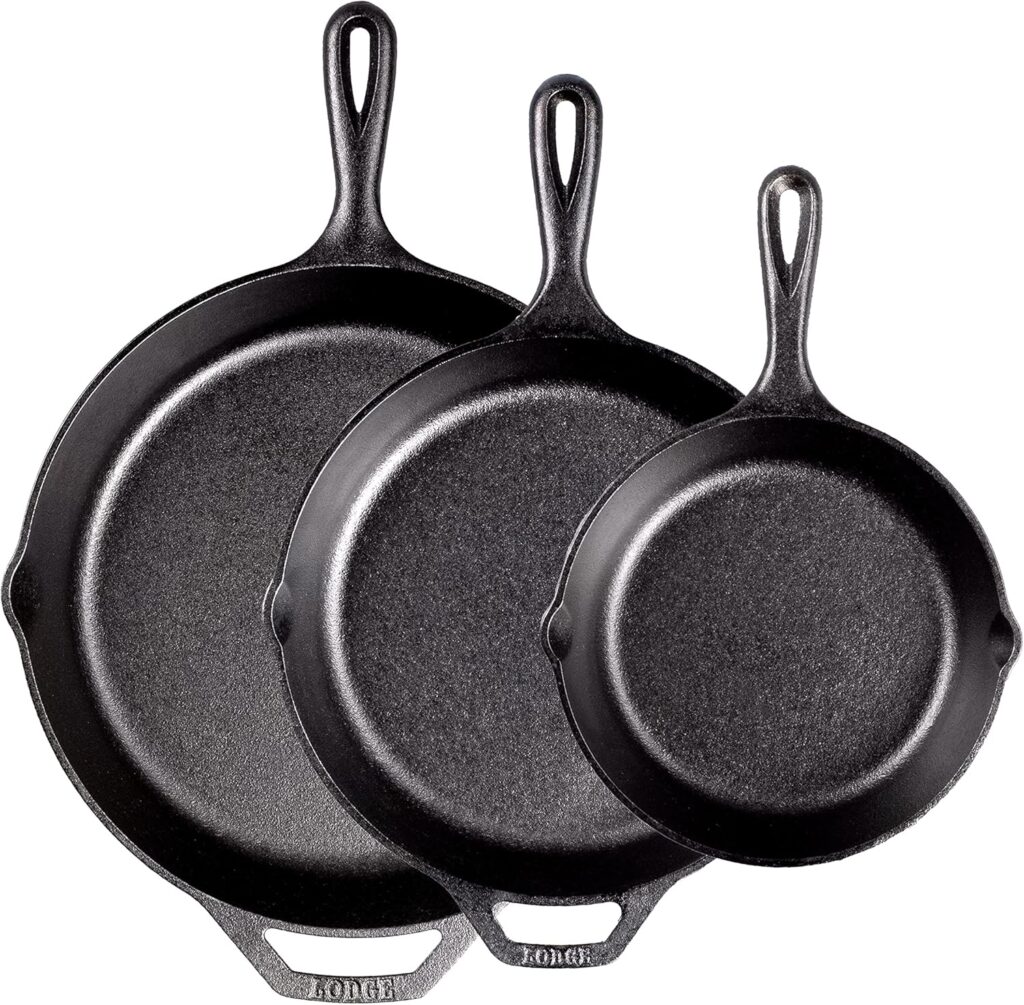
Why this is a classic:
- Pre-seasoned and ready to use
- Excellent heat retention
- Affordable and widely trusted
- Works on all heat sources
- Nearly impossible to ruin
This is the best entry point for anyone new to cast iron and a staple even in advanced kitchens.
Our top pick for enameled cast iron cookware
Le Creuset Signature Enameled Cast Iron Dutch Oven
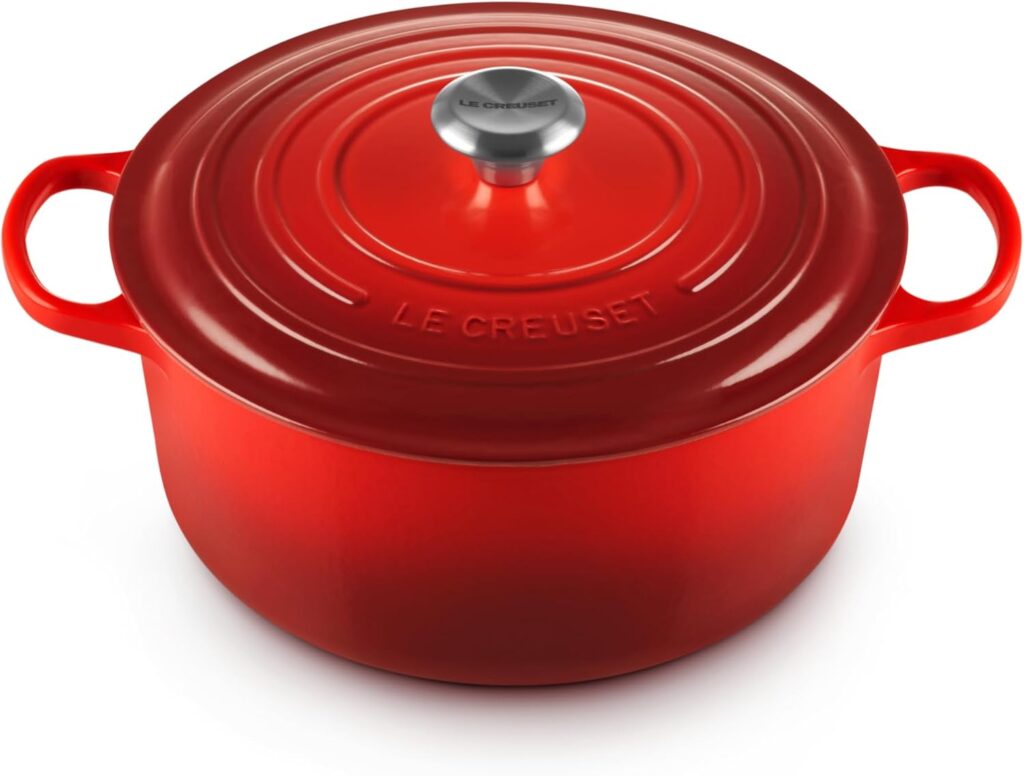
Why it stands out:
- Exceptional enamel durability
- Even heat distribution
- Safe for acidic foods
- Beautiful enough for serving
- Long-lasting investment piece
This is ideal for home cooks who want performance without maintenance stress.
Which One Is Better for Beginners?
Enameled cast iron is easier for beginners.
There’s no seasoning anxiety, no rust panic, and no learning curve. You can focus on cooking, not caring for cookware.
Cast iron is better once you’re comfortable with basic maintenance.
Which One Is Better for Meal Prep and Families?
Enameled cast iron wins here.
It handles:
- Large batch cooking
- Sauces and soups
- Long simmering
- Easy reheating
It’s more forgiving when life gets busy.
Which One Is Better for High-Heat Cooking?
Traditional cast iron.
It thrives under high heat and improves with aggressive cooking styles. This makes it perfect for steaks, burgers, and frying.
Can You Own Both?
Absolutely. Many kitchens do.
Cast iron skillet for searing and frying.
Enameled cast iron Dutch oven for braising and slow cooking.
They complement each other perfectly.
Smart Buying Tips Before You Choose
If you hate maintenance, skip traditional cast iron.
If you love rustic cooking and don’t mind care, cast iron is unbeatable value.
If you cook acidic foods often, enameled is safer.
If budget matters, cast iron offers incredible performance for the price.
Final Verdict
Cast iron and enameled cast iron are both elite cookware choices. The difference isn’t quality—it’s lifestyle.
Cast iron is raw, powerful, and performance-driven.
Enameled cast iron is polished, versatile, and low-maintenance.
Choose cast iron if you enjoy hands-on cooking and high heat.
Choose enameled cast iron if you want reliability, ease, and flexibility.
Either way, you’re investing in cookware that can last decades—and that’s always a smart move.
📌Related Read:
6 Best Enameled Cast-Iron Skillets (Stovetop to Oven)
Le Creuset Enameled Cast Iron Cookware Cleaner
23+ Best Cookware Set Deals to Shop This New Year
6 Best Cast Iron Seasoning Wax Options for Long-Lasting Protection
What Is The Best Oil To Season A Cast Iron Skillet?