
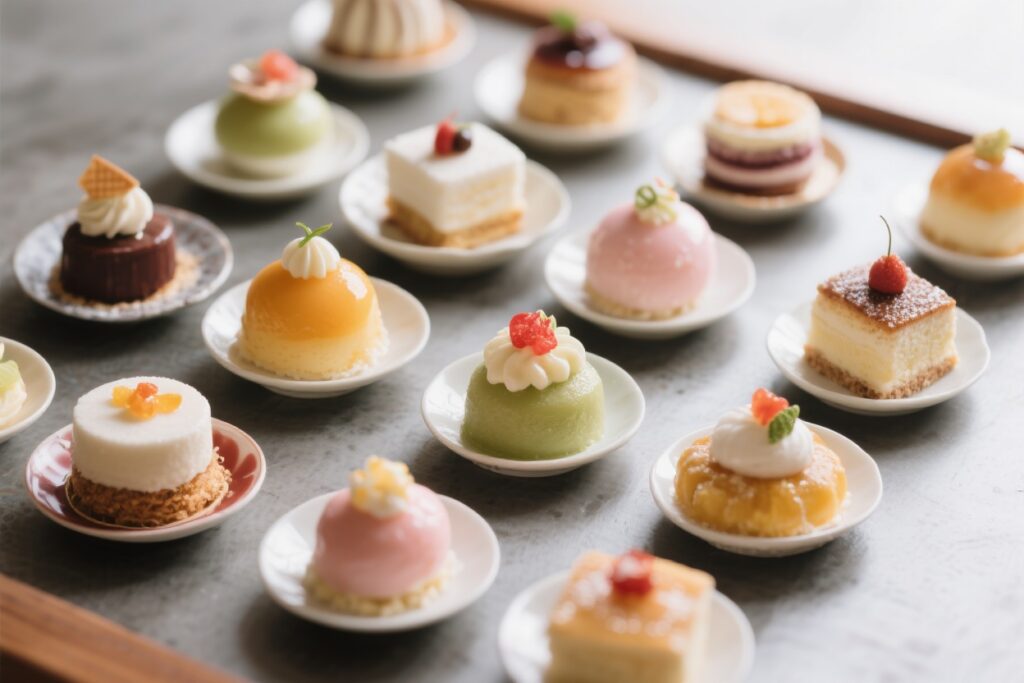
Japanese desserts shine when you want something sweet without feeling weighed down. Think silky custards, softly set jellies, and airy cakes that let delicate flavors lead. These recipes offer balance: gentle sweetness, clean textures, and seasonal ingredients.
You’ll find both traditional treats and modern café favorites here, all approachable for home cooks. If you’re after desserts that feel graceful and refreshing, this list has you covered.
What Makes This Recipe So Good
- Light and balanced: These desserts focus on subtle sweetness, not heavy creams or intense sugars.
- Clean flavors: Green tea, citrus, azuki beans, sesame, and seasonal fruit keep things fresh and nuanced.
- Approachable techniques: Simple methods like steaming, chilling, and gentle baking make success likely.
- Elegant presentation: Minimal garnishes and neat portions make these sweets look instantly refined.
- Flexible and seasonal: Easy to adapt with whatever fruit or tea you have on hand.
Ingredients
Below is a consolidated list for all 10 recipes. Pick and choose based on what you plan to make.
- Dairy and Eggs: Whole milk, heavy cream, unsalted butter, eggs, egg yolks
- Sugars and Sweeteners: Granulated sugar, light brown sugar, honey
- Flours and Starches: Cake flour, all-purpose flour, cornstarch, rice flour (shiratamako or mochiko)
- Gelling Agents: Gelatin powder or sheets, agar-agar (kanten)
- Teas and Flavorings: Matcha powder, hojicha powder, vanilla extract, yuzu juice or zest, lemon zest, kinako (roasted soybean flour)
- Beans and Pastes: Sweet red bean paste (anko), black sesame paste or toasted black sesame seeds
- Fruits: Strawberries, peaches, citrus segments, melon, mango, berries (fresh or canned in light syrup)
- Other: Sweet rice flour dumpling mix, mochi sheets or frozen mochi (optional), toasted coconut (optional), roasted nuts (optional), water, milk tea for soaking (optional)
Step-by-Step Instructions
- Matcha Warabi Mochi: Stir warabi starch (or substitute with a blend of potato starch and sugar) with water and sugar.
Cook over medium heat, stirring until translucent. Dust with matcha-kinako mixture and chill. Cube and serve with a drizzle of honey or kuromitsu.
- Hojicha Panna Cotta: Warm cream and milk with sugar.
Steep hojicha tea, strain, then whisk in bloomed gelatin. Pour into cups and chill until softly set. Top with a small spoon of anko or a sprinkle of crushed roasted tea leaves.
- Ichigo Daifuku (Strawberry Mochi): Wrap hulled strawberries in a thin layer of anko.
Microwave mochiko, sugar, and water until elastic. Dust with cornstarch, then wrap small mochi rounds around the anko-strawberries. Serve the same day.
- Yuzu Jelly (Kanten): Dissolve agar-agar in water with sugar, simmer 1–2 minutes.
Stir in yuzu juice off heat. Pour into a shallow pan with citrus segments. Chill until firm, then cut into neat cubes.
- Japanese Cotton Cheesecake: Melt cream cheese, butter, and milk.
Whisk in egg yolks, sugar, and sifted cake flour. Fold in whipped egg whites gently. Bake in a water bath at low heat until puffed and just set.
Cool slowly for a cloud-like texture.
- Black Sesame Pudding: Blend milk, cream, sugar, and black sesame paste until smooth. Heat, then whisk in bloomed gelatin. Chill in small cups.
Finish with a few toasted sesame seeds for contrast.
- Mizu Shingen Mochi (Raindrop Cake): Dissolve agar-agar and sugar in water, simmer briefly, then pour into round molds. Chill until clear and bouncy. Serve with kinako and a thin drizzle of kuromitsu for gentle sweetness.
- Fruit Anmitsu: Make kanten cubes with agar and water.
Chill and cut. Serve with a variety of fruits, a spoon of anko, and a splash of light syrup or kuromitsu. Add small mochi balls if you like.
- Matcha Swiss Roll: Whip eggs and sugar until thick and pale.
Fold in sifted flour and matcha with melted butter. Bake thin, cool under parchment, then spread lightly sweetened whipped cream. Roll tightly and chill before slicing.
- Kinako Milk Ice: Stir milk with sugar and a generous spoon of kinako.
Freeze in a shallow tray, scraping with a fork every 30 minutes for a fluffy texture, or churn in an ice cream maker. Serve with a dusting of kinako and a drizzle of honey.
How to Store
- Refrigerate puddings, jellies, and panna cotta: Keep covered in the fridge for 2–3 days.
- Mochi-based sweets: Best the day they’re made. If needed, wrap tightly and refrigerate up to 24 hours.
Let come to room temp before serving.
- Swiss roll and cheesecake: Store in an airtight container in the fridge for 2–3 days. Slice just before serving.
- Raindrop cake: Serve within hours. It weeps and loses clarity over time.
- Anmitsu components: Keep fruit and kanten separate and combine right before serving to prevent dilution.
Benefits of This Recipe
- Lighter indulgence: Lower in richness than many Western desserts, so you get flavor without heaviness.
- Elegant textures: Soft gels, airy sponges, and silky custards create a refined experience.
- Versatile flavors: Swap fruits, teas, and syrups to match the season or your pantry.
- Make-ahead friendly: Many set in the fridge, freeing you up before guests arrive.
- Beautiful presentation: Clean cuts and minimal garnishes look restaurant-quality with little effort.
Pitfalls to Watch Out For
- Over-gelling: Too much agar or gelatin leads to rubbery textures.
Measure carefully and avoid boiling gelatin.
- Deflated cakes: Overmixing batter or opening the oven early can collapse a cotton cheesecake or sponge.
- Dry mochi: Overcooking or storing uncovered turns mochi tough. Keep it covered and serve fresh.
- Bitter matcha: Use good-quality matcha and sift it. Too much can taste harsh.
- Watery anmitsu: Combine fruit and syrup at serving time, not earlier, to keep textures crisp.
Alternatives
- Tea swaps: Replace matcha with hojicha or sencha for a different aroma and less bitterness.
- Citrus options: No yuzu?
Try lemon, lime, or a blend of grapefruit and mandarin.
- Sweeteners: Use light honey or maple syrup in place of sugar for a mellow sweetness.
- Dairy-free: Use coconut milk or oat milk in puddings and panna cotta. Adjust gelatin or agar slightly for proper set.
- Bean-free versions: Skip anko and add extra fruit, roasted nuts, or toasted coconut for contrast.
FAQ
Can I make these desserts less sweet?
Yes. Most recipes are forgiving.
Reduce sugar by about 10–20% without affecting structure. For gels, keep the liquid-to-gelling ratio the same, and just decrease the sugar.
What’s the difference between agar and gelatin?
Agar (kanten) is plant-based and sets firmer at room temperature with a clean bite. Gelatin is animal-based and yields a softer, bouncier texture that melts in the mouth.
Choose based on the texture you prefer.
How do I keep the Swiss roll from cracking?
Do not overbake, and roll it while it’s slightly warm using parchment to guide you. A brief pre-roll without filling can also “train” the cake to curve smoothly.
Which desserts are best for making ahead?
Panna cotta, black sesame pudding, yuzu jelly, and anmitsu components are great a day in advance. Assemble right before serving for the freshest look and texture.
Can I skip anko if I don’t like red bean?
Absolutely.
Use fresh fruit, a dab of nut butter, or a small square of dark chocolate where anko is called for. Keep portions small to maintain balance.
What matcha grade should I use?
Use culinary-grade matcha for baking and sweets. It’s more cost-effective and designed for mixing, while still offering vibrant color and flavor.
How do I get a smooth panna cotta?
Fully dissolve sugar, strain after stirring in gelatin, and skim any foam.
Chill undisturbed and avoid moving the cups until set for a glassy surface.
Final Thoughts
These Japanese desserts prove that sweet can be subtle, elegant, and incredibly satisfying. Start with one or two, then mix flavors and textures to suit your taste and the season. With gentle techniques and a light touch, you’ll serve desserts that feel calm, polished, and refreshingly modern.
Enjoy the quiet pleasure of each bite—and the simplicity that makes them so special.
📌Related Read:
Strawberry Crunch Cheesecake Tacos That Are Almost Too Pretty to Eat
21 Vegan Dessert Recipes Everyone Will Love
Soft, Fluffy Cinnamon Rolls Just Like a Bakery Makes
14 Dessert Bread Recipes for Breakfast or Dessert
Simple Churro Cheesecake That’s Perfect for Parties and Potlucks