If you’re shopping for new cookware, chances are you’ve run into this exact dilemma: ceramic cookware or carbon steel cookware?
Both are everywhere on Amazon, both claim to be “healthy” and “non-toxic,” and both have fans who swear they’ll never use anything else.
But here’s the truth: these two cookware types are built for very different kinds of cooks.
One is low-effort, beginner-friendly, and aesthetic.
The other is performance-driven, professional-leaning, and gets better the more you use it.
In this guide, we’re breaking down ceramic vs carbon steel cookware in plain English so you can figure out which one actually fits your kitchen, cooking style, and lifestyle.
If you’re furnishing a new kitchen, upgrading old pans, or deciding what’s worth your money in 2026, this comparison will save you from buyer’s remorse.
What Is Ceramic Cookware?
Ceramic cookware usually refers to metal pans coated with a ceramic-based nonstick layer. These coatings are often marketed as PTFE-free, PFOA-free, and safer than traditional nonstick.
Ceramic cookware is popular with apartment dwellers, beginner cooks, and anyone who wants easy cleanup without seasoning or maintenance.
Why people love ceramic cookware
- Naturally nonstick surface
- Easy to clean with minimal oil
- Lightweight and beginner-friendly
- Often comes in stylish, modern colors
- No seasoning required
Where ceramic cookware struggles
- Nonstick coating wears down over time
- Not ideal for very high heat
- Less durable than carbon steel
- Performance declines after a few years
Ceramic cookware is all about convenience, not longevity.
Amazon ceramic cookware pick
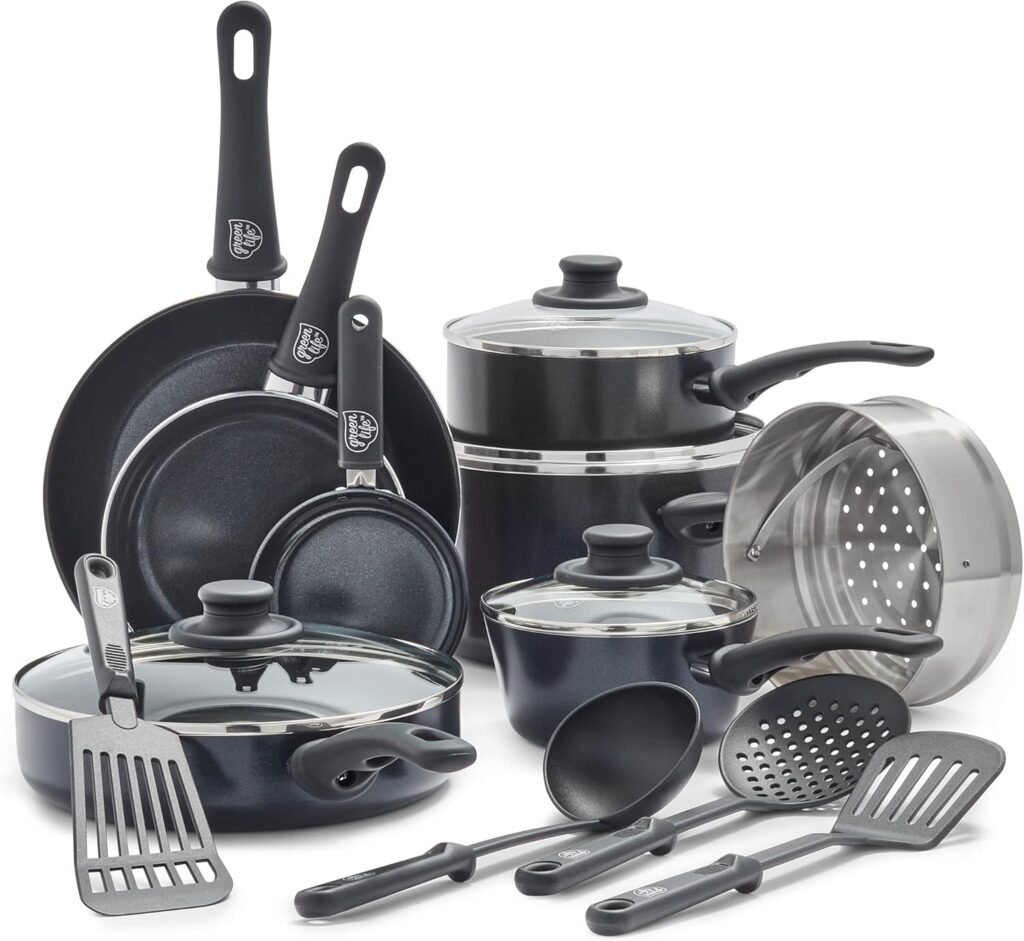
GreenLife Soft Grip Healthy Ceramic Nonstick Cookware Set
This is one of Amazon’s most popular ceramic cookware sets for a reason. It’s affordable, safe, and designed for everyday home cooking.
Why it’s a good buy:
- PFAS-free ceramic coating
- Lightweight aluminum construction
- Dishwasher safe
- Soft-grip handles stay cool
- Ideal for eggs, pancakes, and quick meals
This type of set is perfect if you want something that works right out of the box with zero learning curve.
What Is Carbon Steel Cookware?
Carbon steel cookware is made from iron and carbon, similar to cast iron but thinner and lighter. It’s widely used in professional kitchens because it handles high heat, develops a natural nonstick surface, and lasts for decades.
Carbon steel pans require seasoning and ongoing care, but they reward you with unmatched cooking performance.
Why people love carbon steel cookware
- Excellent heat responsiveness
- Handles extremely high temperatures
- Develops natural nonstick with seasoning
- Durable enough to last decades
- Works on gas, electric, induction, and oven
Where carbon steel cookware struggles
- Requires seasoning and maintenance
- Not dishwasher safe
- Heavier than ceramic cookware
- Not ideal for acidic foods early on
Carbon steel is cookware you grow into, not something you buy for convenience.
Amazon carbon steel cookware pick
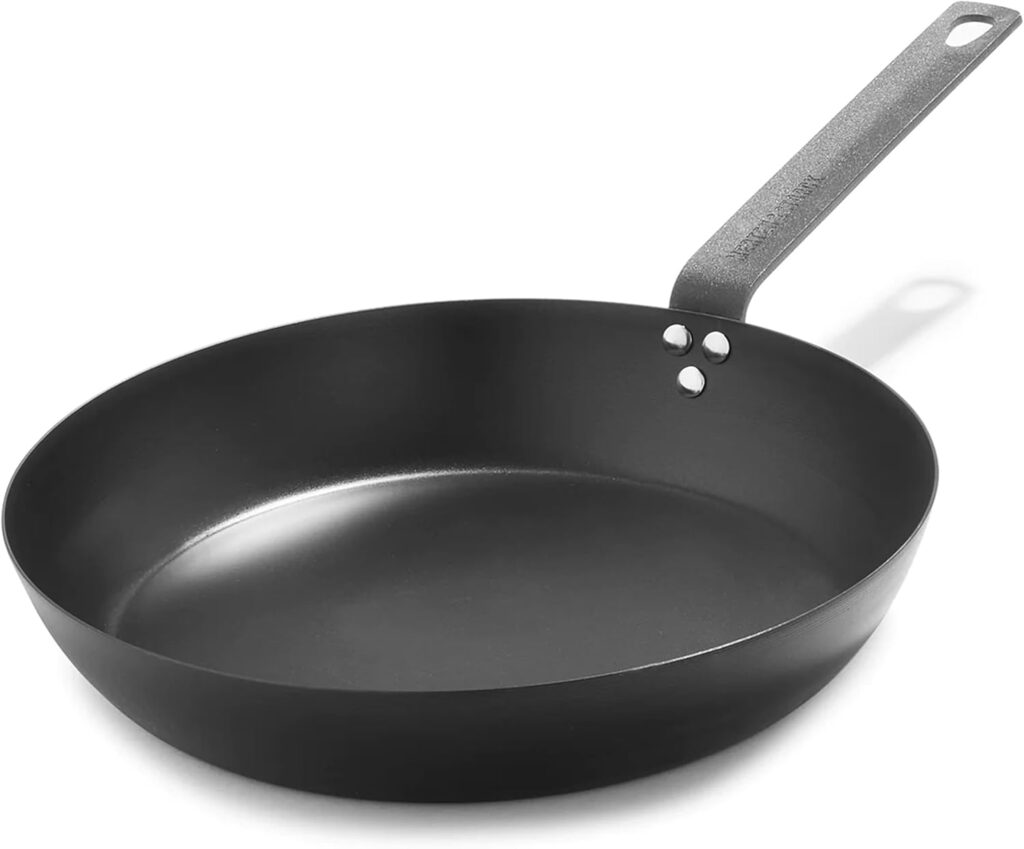
Merten & Storck Pre-Seasoned Carbon Steel Frying Pan
This pan is a great entry point into carbon steel without intimidating beginners.
Why it stands out:
- Pre-seasoned to reduce learning curve
- Oven safe and induction compatible
- Lighter than cast iron
- Excellent for searing, stir-frying, and eggs after seasoning builds
If you want restaurant-style cooking at home, this is where carbon steel shines.
Cooking Performance Comparison
When it comes to actual cooking, these two materials behave very differently.
Ceramic cookware heats evenly but doesn’t love high heat. It’s perfect for low-to-medium heat cooking like eggs, vegetables, and delicate foods.
Carbon steel heats fast, cools fast, and thrives at high temperatures. It’s ideal for searing steaks, stir-frying, and achieving crisp textures.
If your cooking style involves high heat, browning, or frequent pan use, carbon steel wins. If your cooking is casual and comfort-focused, ceramic works just fine.
Nonstick Ability Over Time
This is where expectations matter.
Ceramic cookware starts very nonstick but slowly loses performance as the coating degrades. Even the best ceramic coatings eventually wear down, especially if used with high heat or metal utensils.
Carbon steel starts sticky but becomes more nonstick the more you use it. With proper seasoning, it can rival traditional nonstick and even improve over time.
If you want instant nonstick with minimal effort, ceramic is easier. If you’re okay investing time for long-term performance, carbon steel is unmatched.
Durability and Lifespan
Ceramic cookware has a lifespan. Most ceramic pans last two to four years with regular use before the coating declines.
Carbon steel cookware can last a lifetime. There is no coating to wear off. Scratches don’t ruin it. Rust can be fixed. Seasoning can be rebuilt.
If long-term value matters more than convenience, carbon steel is the better investment.
Maintenance and Care
Ceramic cookware is extremely low maintenance. You wash it, dry it, and put it away. That’s it.
Carbon steel cookware requires:
- Hand washing only
- Drying immediately
- Light oiling after use
- Occasional re-seasoning
For some people, this is relaxing. For others, it’s a dealbreaker.
If you want cookware that fits into a busy lifestyle with zero fuss, ceramic wins here.
Health and Safety Considerations
Both ceramic and carbon steel are considered safe when used correctly.
Ceramic cookware is often chosen by people avoiding traditional nonstick chemicals. Just be aware that once the coating degrades, performance drops significantly.
Carbon steel contains no synthetic coatings at all. Once seasoned, it creates a natural nonstick layer using oil polymerization.
If health is your primary concern, both are solid options, but carbon steel is the most minimal and chemical-free long term.
Best Use Cases for Ceramic Cookware
Ceramic cookware is ideal if:
- You’re setting up a first apartment
- You cook mostly eggs, pancakes, and light meals
- You want fast cleanup
- You prefer lightweight pans
- You replace cookware every few years
This makes ceramic cookware especially popular with renters, students, and casual home cooks.
Best Use Cases for Carbon Steel Cookware
Carbon steel cookware is ideal if:
- You enjoy cooking and learning technique
- You cook at high heat
- You want cookware that improves with time
- You want one pan to do almost everything
- You value performance over convenience
This is why carbon steel is favored by chefs and serious home cooks.
Which One Should You Buy?
There is no universal winner. The better option depends entirely on how you cook.
Choose ceramic cookware if:
- You want effortless nonstick
- You dislike maintenance
- You value aesthetics and ease
- You’re furnishing a starter kitchen
Choose carbon steel cookware if:
- You want long-term durability
- You enjoy hands-on cooking
- You want superior searing and heat control
- You prefer cookware that evolves with use
Many home cooks eventually own both. Ceramic for quick breakfasts and carbon steel for serious dinners.
Smart Buying Strategy
If you’re unsure, start small.
Buy a ceramic cookware set for daily convenience and add one carbon steel pan for high-heat cooking. This gives you flexibility without committing fully to either system.
Amazon makes this approach easy with affordable entry-level options in both categories.
Final Verdict
Ceramic cookware is about simplicity, speed, and stress-free cooking. Carbon steel cookware is about performance, longevity, and skill.
Neither is better for everyone. But one will definitely be better for you.
If you want cookware that feels easy and looks good, ceramic is the move.
If you want cookware that feels powerful and grows with you, carbon steel is worth the effort.
📌Related Read
6 Best Carbon Steel Frying Pans for Searing Steaks & More (2026)
7 Best Pie Dishes (Glass, Metal, Ceramic) in 2026
7 Best Ceramic Nonstick Fry Pans Without PFAS (2026)