
12 Containers · 5 Meals · About 2 Hours
Meal Prep for the Week: 5 Balanced Meals in One Sunday Session
One oven, one rice cooker and about 2 hours on Sunday gives you 12 containers of real food: honey garlic salmon, paprika chicken, turkey meatballs two ways and lemony shredded chicken. Grocery list, game plan and packing chart included.
- 12 containers
- ~35–45g protein each
- Freezer-friendly
- Printable card
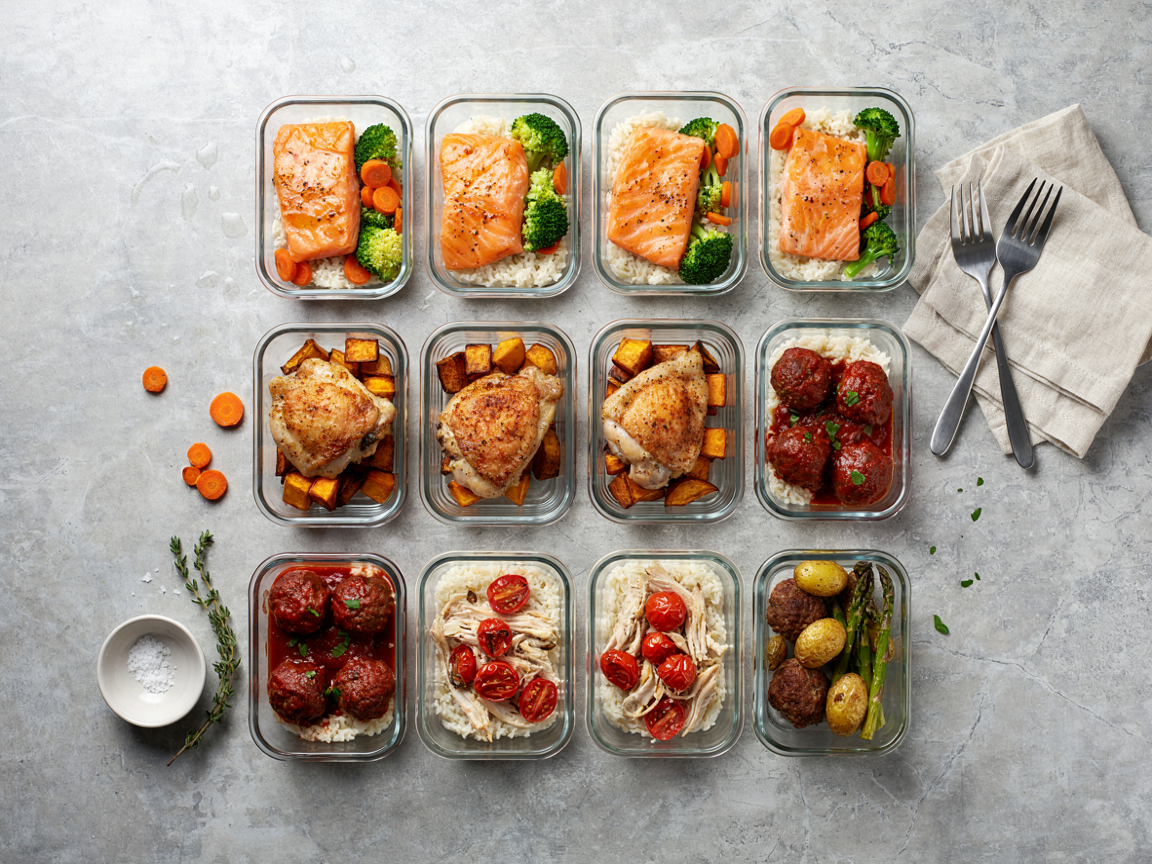
Twelve containers, five different meals, all from one Sunday session.
Picture Monday morning: you open the fridge and lunch and dinner are already done. This meal prep for the week makes that happen with one focused Sunday session. Instead of cooking five separate recipes, you cook a handful of components at once and mix them into five different balanced meals, so you are not eating the same container all week.
Every meal has a protein, a carb and a vegetable. Below you will find the five meals, the full grocery list, a minute-by-minute game plan, a packing chart, and exactly how long each container keeps in the fridge or freezer.
The 5 Balanced Meals in This Weekly Meal Prep
Five meals, twelve containers. Each one is built on the same simple formula: a palm-sized protein, a fist of carbs and plenty of vegetables.
Meal 1: Honey Garlic Salmon Bowls
Glazed salmon, jasmine rice, steamed broccoli and roasted carrots. 3 containers. Eat these first, on days 1 to 2.
Meal 2: Smoked Paprika Chicken
Golden chicken thighs, roasted sweet potatoes and cauliflower rice. 3 containers.
Meal 3: Turkey Meatball Marinara
Meatballs in marinara over cauliflower rice, with parsley. 2 containers. A low-carb lunch that reheats beautifully.
Meal 4: Lemon Herb Shredded Chicken
Shredded chicken, blistered cherry tomatoes and jasmine rice with lemon. 2 containers. Good cold, too.
Meal 5: Meatballs, Potatoes and Asparagus
Turkey meatballs, crispy baby potatoes and roasted asparagus. 2 containers.
Meal Prep Grocery List for the Week
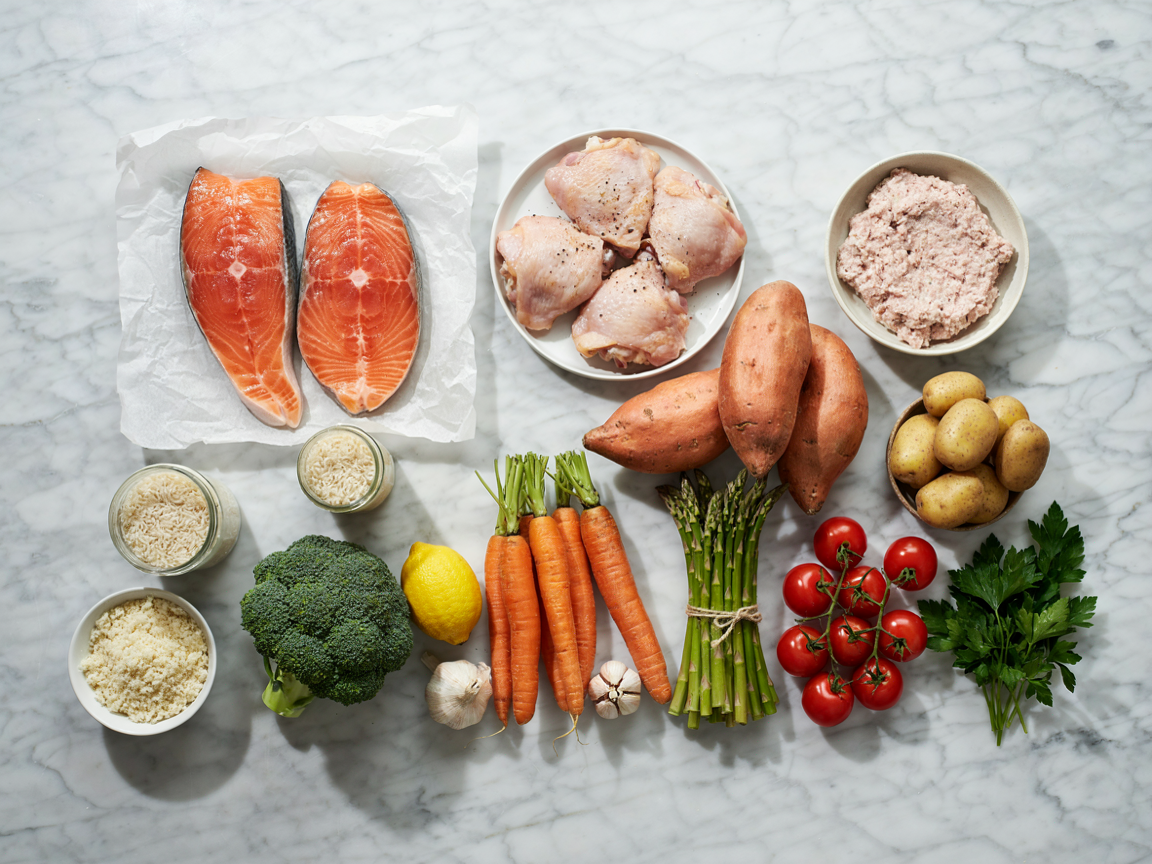
Everything for 12 containers fits in one grocery run.
This shopping list makes all 12 containers. It is organized by section of the store, so you can shop it in one quick loop:
Tap a different container count on the recipe card below and every amount scales for you.
Sunday Meal Prep Recipe: All 5 Meals
The card covers every component. Tap 6, 12, 18 or 24 containers and all the amounts change, including the printable version.
Sunday Meal Prep: 5 Balanced Meals
One 2-hour Sunday session makes 12 containers and 5 different meals: honey garlic salmon, paprika chicken, turkey meatballs two ways and lemony shredded chicken, with rice, potatoes and roasted vegetables.
How many containers?
Ingredients
- 10 oz1¼ lb1¾ lb2½ lb salmon fillets
- 1¼ lb2½ lb3¾ lb5 lb boneless skinless chicken thighs
- ¾ lb1½ lb2¼ lb3 lb ground turkey, 93% lean
- 1 small egg, ¼ cup, 2 tbsp1 egg, ½ cup, ¼ cup2 eggs, ¾ cup, 6 tbsp2 eggs, 1 cup, ½ cup egg + panko + grated parmesan (meatballs)
- 1 cup2 cups3 cups4 cups jasmine rice, uncooked
- 1 lb2 lb3 lb4 lb sweet potatoes, cubed
- ¾ lb1½ lb2¼ lb3 lb baby potatoes, halved
- 12 oz24 oz36 oz48 oz cauliflower rice, fresh or frozen
- 3 cups + 26 cups + 49 cups + 612 cups + 8 broccoli florets + carrots, sliced
- ½ bunch + 1 cup1 bunch + 2 cups1½ bunches + 3 cups2 bunches + 4 cups asparagus + cherry tomatoes
- ¾ cup1½ cups2¼ cups3 cups marinara sauce
- 1½ tbsp each3 tbsp each4½ tbsp each6 tbsp each soy sauce + honey (salmon glaze)
- 3 tbsp⅓ cup½ cup⅔ cup olive oil
- 1 tsp each2 tsp each1 tbsp each4 tsp each smoked paprika, garlic powder, Italian seasoning
- to taste salt, pepper, lemon and parsley
Instructions
Start the oven and rice
Heat the oven to 425°F (220°C) and line 3 sheet pans. Start the rice in a rice cooker or pot.
Roast the potatoes and carrots
Toss the sweet potatoes, baby potatoes and carrots with half the oil, salt, pepper and paprika. Spread over 2 pans and roast 30 to 35 minutes, tossing halfway.
Roast the chicken
Season the thighs with paprika, garlic powder, salt and pepper. Roast on the third pan for 22 to 25 minutes, to 165°F. Shred 2 thighs out of every 5 for the shredded chicken meal.
Bake the meatballs
Mix the turkey, egg, panko, parmesan, Italian seasoning and a pinch of salt. Roll into 24 balls and bake on a lined pan for 16 to 18 minutes, to 165°F.
Glaze and roast the salmon
Stir the soy sauce, honey, a grated garlic clove and a squeeze of lemon. Brush over the salmon and roast for 10 to 12 minutes, to 145°F.
Finish the vegetables
Roast the asparagus and tomatoes with a little oil for 10 minutes. Steam the broccoli for 4 minutes and sauté the cauliflower rice for 5 minutes.
Sauce half the meatballs
Warm the marinara and toss half the meatballs in it.
Cool and pack
Cool everything for 20 to 30 minutes, then pack 12 containers using the chart below. Refrigerate what you will eat in the next 3 days and freeze the rest.
Your Sunday Meal Prep Game Plan, Minute by Minute
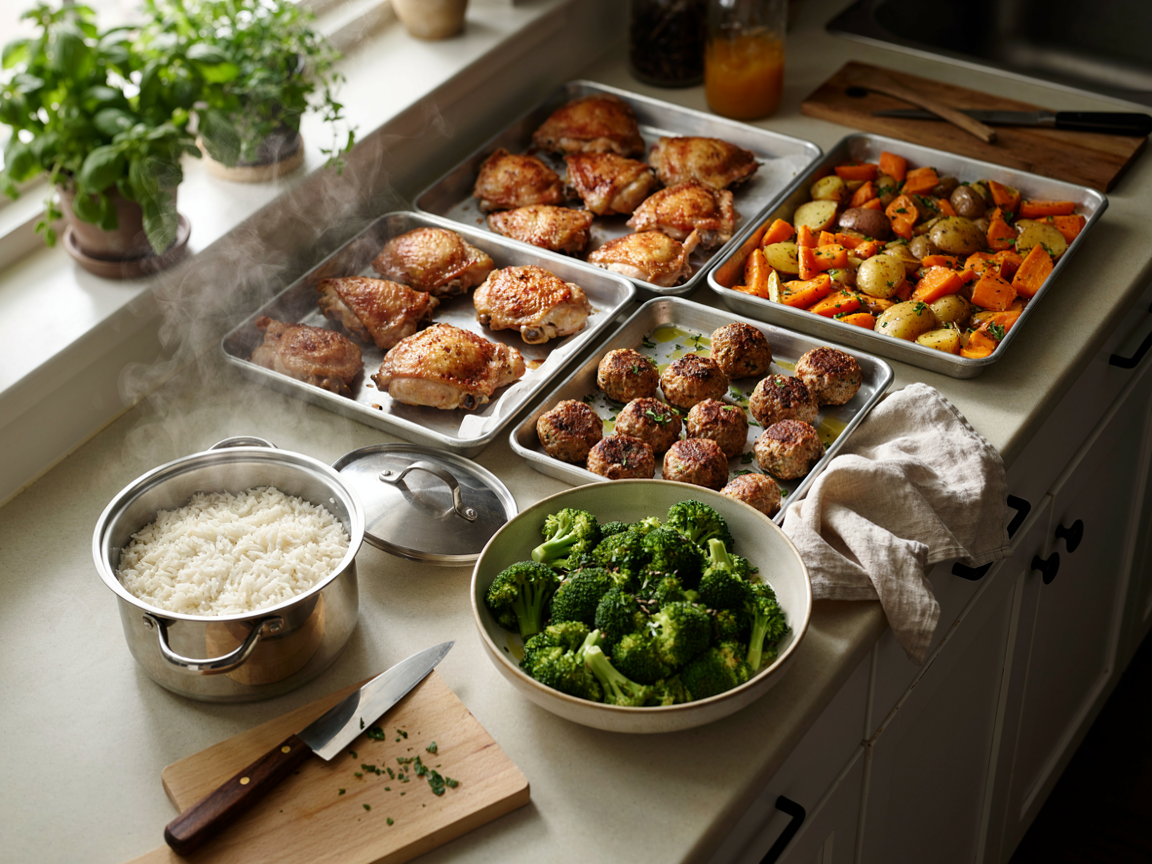
Keep the oven full: potatoes, chicken, meatballs and salmon all roast at 425°F.
The secret to a 2-hour session is never letting the oven sit empty. One temperature, 425°F, works for everything, so pans simply rotate in and out:
| Time | What you are doing |
|---|---|
| Time0:00 | What you are doingOven on, rice started, potatoes and carrots chopped and in the oven. |
| Time0:15 | What you are doingChicken seasoned and roasting. Meatball mix stirred together and rolled. |
| Time0:40 | What you are doingChicken out to rest; meatballs in. Salmon glazed. |
| Time0:55 | What you are doingPotatoes out; salmon in. Broccoli steaming, cauliflower rice in the skillet. |
| Time1:10 | What you are doingAsparagus and tomatoes roasting. Marinara warming. Chicken shredded. |
| Time1:25 | What you are doingEverything cooling on the counter. Containers lined up. |
| Time1:50 | What you are doingAll 12 containers packed, lidded and in the fridge or freezer. |
Short on time? Buy pre-cut sweet potatoes, frozen cauliflower rice and a bag of broccoli florets. It cuts about 20 minutes of chopping.
How to Pack Your 12 Meal Prep Containers
Line up your containers and fill them like an assembly line. Here is exactly what goes in each one, and when to eat it:
| Meal | Protein | Carb | Vegetable | Containers | Eat |
|---|---|---|---|---|---|
| Meal1. Salmon bowls | ProteinSalmon | CarbJasmine rice | VegetableBroccoli + carrots | Containers3 | EatDays 1–2 |
| Meal2. Paprika chicken | ProteinChicken thighs | CarbSweet potatoes | VegetableCauliflower rice | Containers3 | EatDays 1–4 or freeze |
| Meal3. Meatball marinara | Protein6 meatballs + sauce | Carb— | VegetableCauliflower rice | Containers2 | EatDays 1–4 or freeze |
| Meal4. Shredded chicken | ProteinShredded chicken | CarbJasmine rice | VegetableCherry tomatoes | Containers2 | EatDays 1–4 |
| Meal5. Meatballs + potatoes | Protein6 meatballs | CarbBaby potatoes | VegetableAsparagus | Containers2 | EatDays 1–4 or freeze |
Keep any extra sauce, lemon wedges or dressing in small separate cups so nothing turns soggy.
Save the pin so the plan is ready for next Sunday.
How Long Does Meal Prep Last? Fridge, Freezer and Reheating
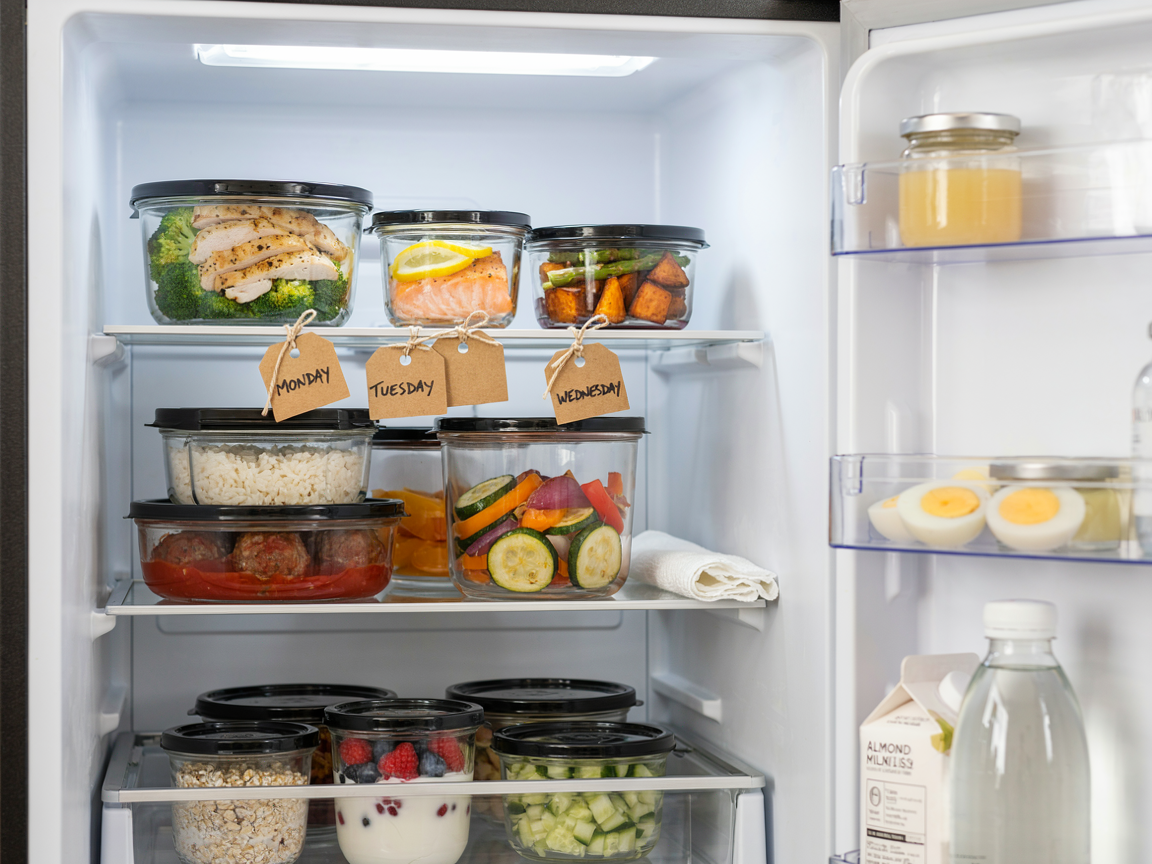
Eat the fridge containers first, and freeze the ones for later in the week.
Cooked meal prep is safe in the fridge for 3 to 4 days. So for a 6-day week, refrigerate the meals for days 1 to 3 and freeze the rest on Sunday, then move each one to the fridge the night before.
| Food | Fridge | Freezer |
|---|---|---|
| FoodSalmon and fish | Fridge1–2 days for best quality, 3 at most | FreezerUp to 2 months |
| FoodChicken and turkey | Fridge3–4 days | FreezerUp to 3 months |
| FoodRice and potatoes | Fridge3–4 days | FreezerUp to 3 months |
| FoodRoasted vegetables | Fridge3–4 days | FreezerUp to 2 months (softer when thawed) |
How to Reheat Meal Prep
| Container | How to reheat | Tip |
|---|---|---|
| ContainerChicken, meatballs, rice | How to reheatMicrowave 2–3 min, covered, with 1 tbsp water sprinkled over the rice | TipUntil steaming hot, 165°F |
| ContainerSalmon bowls | How to reheatMicrowave at 50% power for 2 min, or eat the salmon cold | TipGentle heat keeps it moist |
| ContainerPotatoes and asparagus | How to reheatOven or air fryer at 375°F for 6–8 min | TipBrings back the crisp |
| ContainerFrom frozen | How to reheatThaw overnight in the fridge, then reheat as above | TipNever thaw on the counter |
Easy Swaps: Vegetarian, Low-Carb and Budget
Keep the same Sunday game plan and change what goes in. Tap a swap:
Vegetarian Swap
Swap the salmon for roasted chickpeas, the chicken for crispy baked tofu, and the meatballs for lentil or bean patties. Everything else stays the same. For more ideas, see our meal prep without meat ideas.
Low-Carb Swap
Use cauliflower rice in every container and swap the potatoes for roasted zucchini and bell peppers. Our meal prep without rice has more ideas.
No-Microwave Swap
Meal 4 is already great cold. Turn the paprika chicken into a salad bowl with greens, cucumber and a yogurt dressing in a separate cup. More cold lunches in our meal prep without microwave guide.
Budget Swap
Use chicken drumsticks instead of thighs, frozen broccoli and carrots, and canned salmon or eggs for Meal 1. Rice and potatoes keep the cost per container low.
Change the Flavors
Keep the same Sunday plan and change the seasoning each week: teriyaki, fajita (chili powder, cumin, lime), Greek (oregano, lemon, garlic) or curry. Same work, new meals.
5 Meal Prep Mistakes to Avoid
Packing food while it is hot
Steam turns into water inside the lid and makes everything soggy. Cool food for 20 to 30 minutes, but get it into the fridge within 2 hours.
Planning 7 days in the fridge
Cooked food keeps 3 to 4 days chilled. Freeze the containers for later in the week and move them to the fridge the night before.
Overcooking for reheating
Food cooks again when you reheat it. Pull chicken and salmon as soon as they hit temperature, and cook vegetables until just tender.
Saucing everything
Sauce makes rice and vegetables soggy. Keep dressings and extra sauce in small separate cups.
Five brand-new recipes
Cooking components, then mixing them into different meals, is what makes this plan fit into 2 hours.
Meal Prep for the Week FAQs
How long does meal prep last in the fridge?
Most cooked meal prep lasts 3 to 4 days in the fridge. Eat fish within 1 to 2 days for the best quality. For a full week, freeze the containers you will eat on days 4 to 6 and thaw them in the fridge the night before.
How long does it take to meal prep for the week?
About 2 hours for this plan of 5 meals and 12 containers. Using one hot oven, a rice cooker and the stovetop at the same time is what keeps it short.
How many meals should I prep for the week?
Most people prep lunches, or lunches plus a few dinners. Twelve containers covers lunch and dinner for 6 days, or lunches for 2 people across a work week.
Can you freeze meal prep containers?
Yes. Chicken, meatballs, rice, sweet potatoes and cauliflower rice freeze well for up to 3 months. Salmon freezes for up to 2 months. Leave a little space at the top of each container.
What are the best containers for meal prep?
Glass containers with snap lids are the best all-rounders: they reheat well, do not stain and last for years. Two-compartment containers keep wet and crispy foods apart.
Can you meal prep salmon?
Yes, but eat it first. Cooked salmon is best within 1 to 2 days, so pack it for the first meals of the week, or freeze it right away.
How do you keep rice from drying out in meal prep?
Pack it while still slightly warm, and sprinkle a teaspoon or two of water over it before reheating, then cover the container.
How do you keep meal prep from getting soggy?
Cool food before closing the lids, keep sauces and dressings in separate small cups, and roast vegetables rather than steaming them where you can.
Is meal prepping cheaper than eating out?
Usually, yes. Buying proteins and vegetables in bulk and cooking once makes each container far cheaper than a takeout lunch, and you waste less food.
What should beginners meal prep?
Start with sturdy foods that reheat well: chicken thighs, meatballs, rice, potatoes and roasted vegetables. Prep components, then mix them into a few different meals.
How do you reheat meal prep?
Microwave covered for 2 to 3 minutes until steaming hot, with a splash of water over rice. Reheat potatoes in an oven or air fryer to keep them crisp.
How much protein is in each container?
Roughly 35 to 45 grams, depending on the meal. Each container has about 6 to 8 ounces of salmon, chicken or turkey before cooking.
Related Reads
More meal prep plans, bowls and freezer meals from our kitchen.
7-Day High Protein Meal Prep Plan
A full week of high-protein meals, planned for you. See the plan → Lunches7-Day Healthy Lunch Meal Prep
High-protein lunch containers for the work week. Prep lunches → Ground TurkeyGround Turkey Teriyaki Meal Prep Bowls
A 30-minute turkey bowl that reheats well. Get the recipe → BowlsBBQ Ranch Chicken Meal Prep Bowls
45 grams of protein per bowl. Make them → SaladsMason Jar Meal Prep Salads
Layered salads that stay fresh all week. Build a jar → FreezerIndividual Freezer Meals for One
12 single-serve meals to stash in the freezer. Stock up →Five meals, twelve containers and about two hours. Roast everything at one temperature, mix the components into different meals, refrigerate the first three days and freeze the rest.
Pin this meal prep for the week plan so your next Sunday session is already planned.