
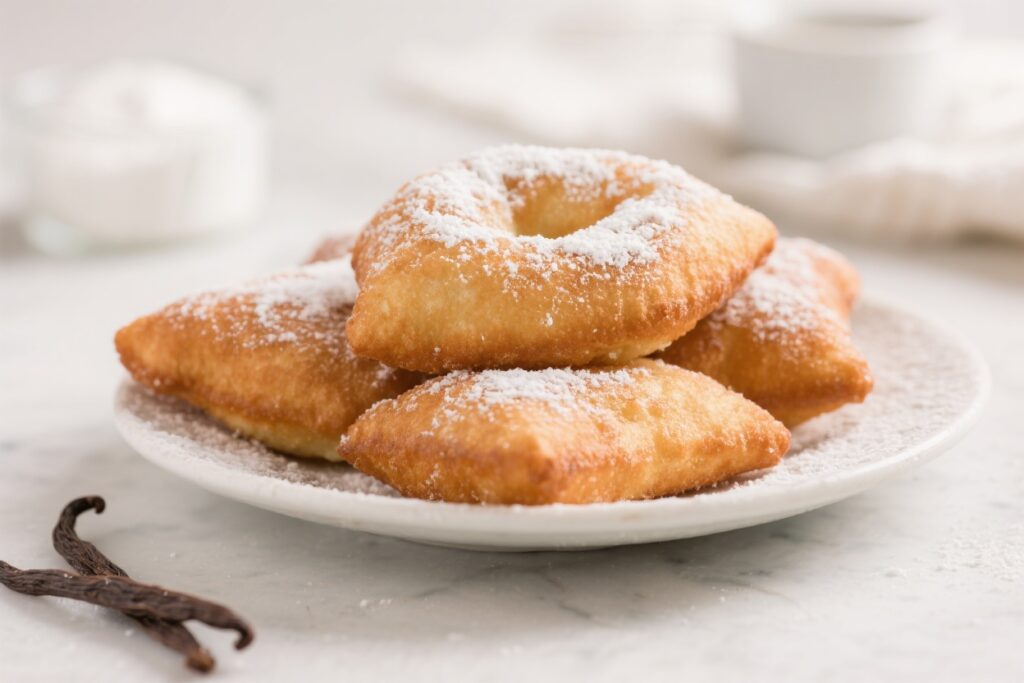
Warm, pillowy beignets dusted with powdered sugar are one of life’s simple pleasures.
You don’t have to travel to New Orleans or spend all day in the kitchen to enjoy them.
This quick vanilla beignet recipe delivers café-style results in about two hours, start to finish.
The dough is soft, the centers are airy, and the hint of vanilla makes each bite extra comforting.
If you’ve never made fried dough at home, this is a friendly, confidence-boosting place to start.
What Makes This Recipe So Good
- Quick rise time: This recipe uses instant or rapid-rise yeast so you get a fast, reliable puff without a long wait.
- Light and fluffy texture: A touch of egg and butter creates tender dough with a hollow, airy center when fried.
- Balanced vanilla flavor: Vanilla bean paste or extract adds warmth and aroma without overpowering the dough.
- Simple ingredients: Everything is pantry-friendly, and the dough comes together with minimal fuss.
- Foolproof frying: Clear temperature cues help you get golden beignets without greasiness.
What You’ll Need
- All-purpose flour: About 3 1/4 to 3 1/2 cups, plus more for dusting
- Instant or rapid-rise yeast: 2 1/4 teaspoons (one packet)
- Granulated sugar: 1/4 cup for the dough
- Warm milk: 1 cup, about 110°F (43°C)
- Unsalted butter: 3 tablespoons, melted and slightly cooled
- Egg: 1 large
- Vanilla: 2 teaspoons vanilla bean paste or extract
- Salt:</strong > 1/2 teaspoon
- Neutral oil for frying: Such as canola or peanut oil, 6–8 cups depending on pot size
- Powdered sugar: For dusting (about 1–1 1/2 cups)
How to Make It
- Warm the milk: Heat milk until warm to the touch, about 110°F. It should feel like a warm bath, not hot.
Too hot can kill the yeast.
- Mix wet ingredients: In a large bowl, whisk warm milk, sugar, melted butter, egg, and vanilla until smooth.
- Add yeast and dry ingredients: Sprinkle in the yeast, then add 2 1/2 cups of flour and the salt. Stir with a wooden spoon until a shaggy dough forms.
- Knead to smooth: Add more flour, a few tablespoons at a time, and knead by hand or with a stand mixer (dough hook) for 5–7 minutes. You want a soft, slightly tacky dough that pulls away from the bowl but doesn’t stick heavily to your hands.
- First rise: Shape the dough into a ball, place it in a lightly oiled bowl, and cover.
Let it rise in a warm spot until puffy and nearly doubled, about 45–60 minutes.
- Preheat the oil: Fill a heavy pot or Dutch oven with 2–3 inches of oil. Heat to 350–360°F (175–182°C). Keep a thermometer clipped to the pot for steady temperature.
- Roll the dough: Turn the dough onto a lightly floured surface.
Roll to about 1/4 inch thick for light beignets. Dust the top lightly if needed to prevent sticking.
- Cut into squares: Use a knife or pizza cutter to cut 2-inch squares or rectangles. Aim for even sizes so they fry uniformly.
- Fry in batches: Carefully slip 5–6 dough pieces into the hot oil.
They should float and puff within seconds. Fry about 60–90 seconds per side until deep golden. Adjust heat to keep oil near 350°F.
- Drain and sugar: Transfer beignets to a wire rack set over a sheet pan.
While warm, dust generously with powdered sugar. Repeat with remaining dough.
- Serve hot: Beignets are best right away. Add another snowy layer of powdered sugar at the table if you like.
How to Store
- Room temperature: Keep leftovers in an airtight container for up to 1 day.
Rewarm briefly in a 300°F oven for 5–7 minutes.
- Freeze before frying: Cut dough pieces can be flash-frozen on a tray, then stored in a freezer bag for up to 1 month. Thaw until puffy at room temperature before frying.
- Freeze after frying: Cooled beignets can be frozen for up to 1 month. Reheat at 325°F for 8–10 minutes, then dust with fresh powdered sugar.
Why This is Good for You
- Made from scratch: You control the ingredients—no preservatives or mystery oils.
- Freshness matters: Freshly fried beignets are more satisfying, so you’re less likely to overeat compared to store-bought sweets.
- Mindful treat: Enjoying an occasional dessert you made yourself can support balanced eating and a healthy relationship with food.
- Customizable: You can tweak sugar, oil type, and portion size to suit your needs.
Common Mistakes to Avoid
- Oil too cool: If the oil drops below 340°F, the dough soaks up oil and turns greasy.
Heat back to 350–360°F between batches.
- Over-flouring the dough: Too much flour makes dense beignets. Keep the dough slightly tacky for a tender crumb.
- Overcrowding the pot: Adding too many pieces lowers the oil temperature. Fry in small batches for even browning.
- Rolling too thick or too thin: Too thick won’t cook through; too thin won’t puff.
Aim for 1/4 inch.
- Skipping the rise: Rushing the first rise reduces lift. Wait until the dough is noticeably puffy.
Recipe Variations
- Cinnamon sugar: Toss hot beignets in a mix of 1/2 cup granulated sugar and 1 teaspoon cinnamon instead of powdered sugar.
- Lemon-vanilla: Add 1 teaspoon lemon zest to the dough and finish with powdered sugar mixed with a little zest.
- Chocolate drizzle: Melt dark chocolate with a splash of cream and drizzle over warm beignets.
- Filled beignets: Pipe jam, lemon curd, or vanilla pastry cream into slightly thicker beignets after frying.
- Dairy-free: Use plant milk and dairy-free butter. The texture remains soft and fluffy.
- Baked “beignets”: Not traditional, but you can bake at 375°F for 10–12 minutes, then brush with melted butter and coat in powdered sugar.
Texture will be more like a soft roll.
FAQ
Can I use active dry yeast instead of instant?
Yes. Bloom 2 1/4 teaspoons active dry yeast in the warm milk with a pinch of sugar for 5–10 minutes, until foamy. Then proceed with the recipe.
Do I need a thermometer to fry?
It’s strongly recommended.
Oil temperature control is the key to light, non-greasy beignets. If you don’t have one, test with a small dough scrap—if it sizzles steadily and browns in about 2 minutes, you’re close.
Why didn’t my beignets puff?
Common causes are under-proofed dough, cold oil, or dough rolled too thin. Ensure a puffy first rise, maintain 350–360°F oil, and roll to 1/4 inch.
What oil is best for frying?
Use a neutral, high-smoke-point oil like canola, peanut, or sunflower.
Avoid strongly flavored oils that can overwhelm the vanilla.
Can I make the dough ahead?
Yes. After kneading, cover and refrigerate up to 12 hours. Let it warm and puff at room temperature for 45–60 minutes before rolling and cutting.
How do I keep powdered sugar from melting?
Dust beignets once right after frying, then again at the table.
A double coat sticks well and stays snowy longer.
Can I air-fry beignets?
You can, but expect a different texture. Brush cut dough with a little melted butter and air-fry at 350°F for 6–8 minutes, flipping halfway, then coat in powdered sugar.
In Conclusion
These homemade vanilla beignets are simple, fast, and irresistibly good. With a short rise, steady oil temperature, and a generous snowfall of powdered sugar, you’ll get café-quality results at home.
Serve them warm with coffee or hot chocolate, and enjoy the moment. Two hours is all you need for a batch of pure comfort.
📌Related Read:
Strawberry Crunch Cheesecake Tacos That Are Almost Too Pretty to Eat
Simple Churro Cheesecake That’s Perfect for Parties and Potlucks
Soft & Irresistible Cinnamon Roll Cookies for Cozy Days
Mini Cheesecakes That Are Perfect for Parties and Holidays
Classic Tiramisu That Tastes Just Like an Italian Café
Magic Cookie Bars With Layers of Chocolate and Coconut