Kitchen Safety · Updated for 2026
What Happens If You Stick a Fork in a Toaster? (And What to Do Instead)
Why metal and toasters do not mix, what changes when it is switched off or unplugged, the safe way to free a stuck slice — and what to do in the first sixty seconds if someone gets shocked.
- Plugged in vs unplugged
- Forks, knives & foil
- First aid steps
- Toaster ovens too
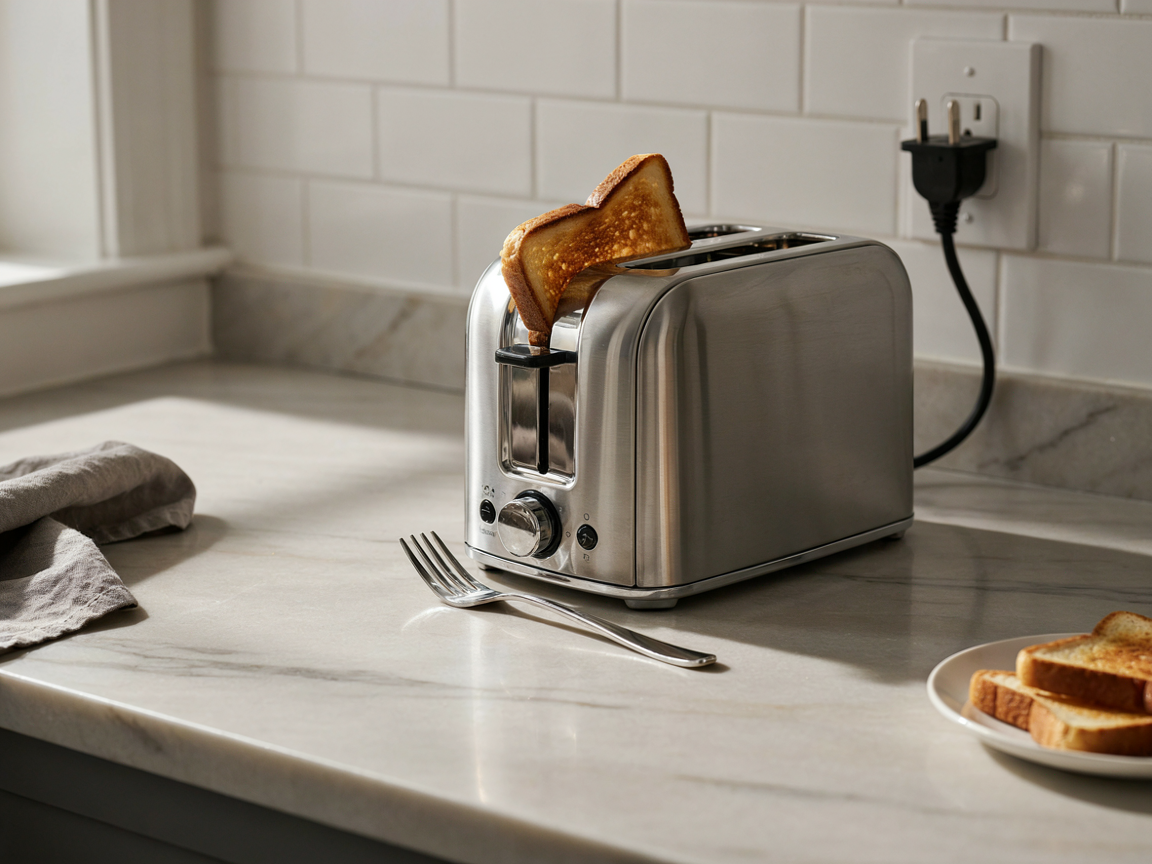
The slice is stuck, the fork is right there, and the plug is already out. That last part is the one that matters.
Putting a fork in a toaster is the kitchen hazard everyone has heard about and almost nobody can explain. The short version: the heating elements are bare, uninsulated wire, and a plugged-in toaster can hold them at mains potential even when it is switched off and stone cold.
This page covers what actually happens electrically, what changes when the toaster is off, switched off at the wall, or unplugged, which objects are safe and which are not, how to get a stuck slice out properly, and what to do in the first minute if someone does get shocked. That last section is the one worth reading before you need it.
Why a Fork in a Toaster Is Dangerous
It is not superstition and it is not only about the heat. Four things stack up, and the second one is the one that catches people out.
The elements are bare wire
Look down a toaster slot and the orange ribbons you can see are nichrome wire with no insulation on them at all. They sit a couple of inches below the top of the slot, which is roughly how far a fork goes in before it touches something.
Most toasters only switch one side
A toaster interrupts one of the two conductors when the lever is up. Depending on which way round the plug sits, the element can still be at mains potential while the toaster looks completely idle. Nothing glows, nothing is warm, and the metal is still live.
Your body becomes the path
Touch a live element with a fork while any part of you touches something earthed — a tap, a sink, a metal splashback, the toaster’s own casing — and the current runs through you to get there. From hand to hand or hand to foot, that path crosses the chest.
Even without a shock, it is a dead short
A fork that bridges an element to the metal chassis is a short circuit. At best the breaker trips. At worst you get an arc flash, pitted metal, molten splatter and a toaster that fails dangerously the next time it is used.
The part people get wrong. Almost everyone believes a toaster is safe once it stops glowing. Heat and electrical danger are not the same thing — a cold toaster that is still plugged in can shock you just as hard as a hot one.
Off, Switched Off, or Unplugged: What Actually Changes
These four states are not the same, and only one of them is genuinely safe. Pick the one you are in:
The lever is down and it is toasting
Full current is flowing and the elements are glowing. This is the worst possible moment to put anything metal into the slots, and the one most people instinctively understand.
It is also when the bread is most likely to catch, which is exactly why people reach for a fork. Pop the lever up, then pull the plug, then deal with it.
The lever is up but it is still plugged in
This is the dangerous middle ground, and the one people get wrong. The toaster is not heating, so it feels safe. But the switch opens only one conductor, so the elements can still sit at mains potential depending on plug orientation.
There is no way to tell by looking. Treat a plugged-in toaster as live whether or not the lever is down, every single time.
Switched off at the wall socket
If your socket has its own switch and it is genuinely off, the circuit is broken at the wall and the toaster is dead. That is better than relying on the toaster’s own lever.
The problem is that wall switches get knocked, and you cannot always tell at a glance which switch belongs to which socket. Pulling the plug out leaves nothing to be wrong about.
Unplugged completely
Electrically, this is safe. With the plug out of the wall there is no source of current and no shock risk. If you have already poked a fork into an unplugged toaster, nothing is going to happen to you.
It is still not a good idea. Nichrome gets brittle after thousands of heat cycles, so levering at an element bends or cracks it, and a deformed element can touch the chassis and short the next time you use it. Unplugged plus wooden tongs is the actual answer.
Knives, Spoons, Foil and Everything Else
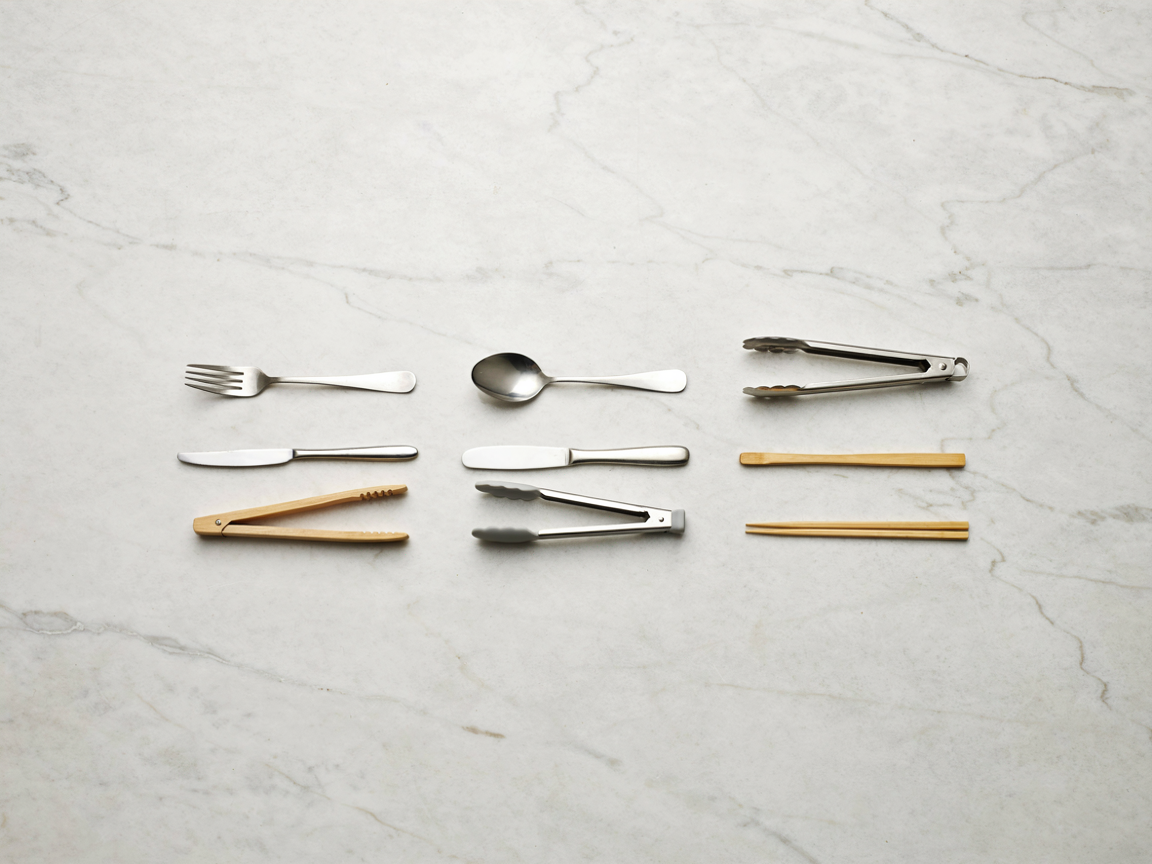
Everything on the top row conducts. Everything on the bottom row does not. That is the whole rule.
A knife deserves its own warning, because it is what people actually reach for and it is worse than a fork: longer, wider, and far more likely to bridge two elements or touch the chassis. Butter on the blade makes no difference at all.
| Object | Safe to use? | Why |
|---|---|---|
| ObjectMetal fork | Safe to use?Never while plugged in | WhyEven unplugged it bends elements and jams the carriage. The tines slip between the wires and catch. |
| ObjectMetal knife | Safe to use?Never — worse than a fork | WhyLonger reach, a wider blade and more surface area, so it is more likely to bridge two elements or an element and the chassis. |
| ObjectMetal spoon | Safe to use?Never while plugged in | WhyConducts exactly like a fork, and the bowl shape catches on the carriage on the way back out. |
| ObjectMetal tongs | Safe to use?Never while plugged in | WhyTwo conductive arms at once, which is the easiest way there is to bridge from a live element straight to earthed metal. |
| ObjectMetal skewer or chopstick | Safe to use?Never while plugged in | WhyThin, rigid and conductive. The thinness makes it easier to reach the element, not safer. |
| ObjectAluminium foil | Safe to use?Never, plugged in or not | WhyConducts, tears easily and can weld itself to a hot element. A scrap left behind is a short circuit waiting for the next slice. |
| ObjectPlastic chopstick | Safe to use?Unplugged only, once cool | WhyNot conductive, so it will not shock you. It will melt onto an element that is still hot, so let the toaster cool first. |
| ObjectSilicone-tipped tongs | Safe to use?Yes, unplug first | WhyNon-conductive and heat resistant. Check there is no exposed metal at the tip before you trust them. |
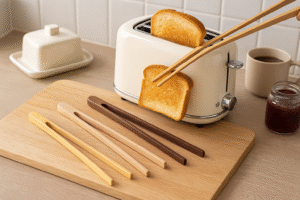
| ObjectWooden or bamboo tongs | Safe to use?Yes — the right tool | WhyNon-conductive, wide enough to grip a slice properly, and they cannot damage the element. |
| ObjectYour fingers | Safe to use?No, even unplugged | WhyThe elements and the slice hold enough heat to burn for several minutes after the toaster stops. |
One rule covers all of it. If it conducts electricity, it does not go in the slot while the toaster is plugged in. Inserting metal utensils of any kind — forks, knives, spoons, skewers — is the one thing every toaster manual in the world tells you not to do. Wood, bamboo and silicone are the only things that belong in a toaster besides bread. A set of wooden toast tongs costs less than a loaf and lives in the drawer next to the toaster.
What to Use Instead


This post contains affiliate links. If you buy through one, Kitchen Guide 101 may earn a small commission at no extra cost to you.
Toaster Ovens Are a Different Machine
A pop-up toaster and a toaster oven both have exposed heating elements, so reaching in with metal while either is plugged in carries the same shock risk. After that, the two diverge.
Metal bakeware is fine, metal poking is not
Baking trays, metal tins and foil-wrapped parcels are all designed to go in a toaster oven. What is dangerous is reaching in with a fork while it is plugged in, or letting bakeware rest against an element.
Never line the base with foil
Foil laid across the bottom of a toaster oven traps heat under itself and can touch the lower element. Most manufacturers forbid it outright. Use a tray instead and keep foil off the walls and floor of the cavity.
The elements are easier to reach
A toaster oven’s elements sit a few inches from the opening rather than down a narrow slot, so a careless reach gets there faster. Switch it off and let it cool before anything goes in or out that is not on a tray.
The same rule still applies
Unplug before you clean it, before you pull out a jammed rack, and before you investigate anything unusual. A toaster oven draws more current than a pop-up toaster, not less.
Metal does not explode in a toaster oven. That idea comes from microwaves, where metal can arc because of how microwave energy behaves around edges and points — and even there it sparks rather than explodes. A toaster oven is a small conventional oven. Metal bakeware belongs in it.
How to Get Stuck Toast Out Safely
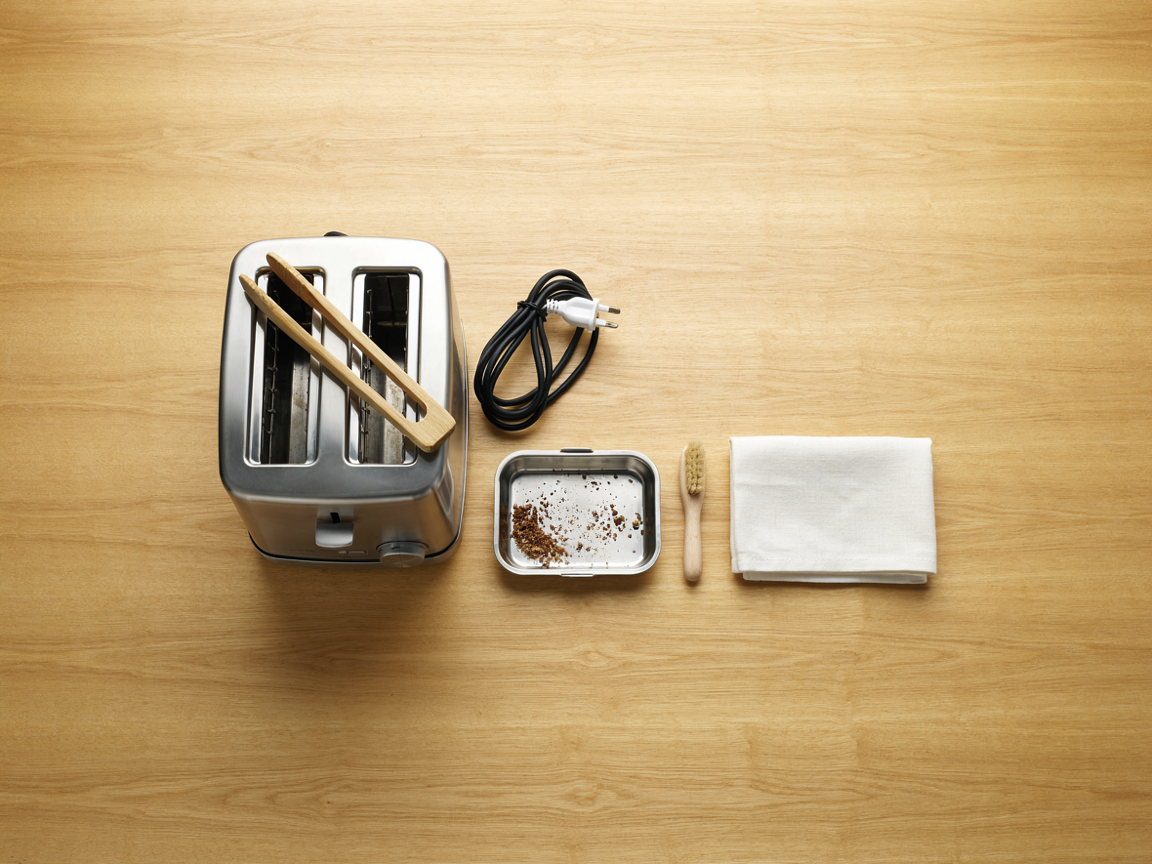
Plug out, tongs on top, crumb tray emptied. The whole job takes about two minutes.
This is the problem that sends people reaching for cutlery in the first place, so here is the version that does not involve any.
Unplug it at the wall
Not the lever, not the socket switch. Pull the plug out so there is nothing left to be uncertain about. This takes two seconds and it is the step people skip.
Give it a minute to cool
The elements and the trapped slice are both hot enough to burn. There is nothing to be gained by rushing this, and burns from a toaster are far more common than shocks.
Tip it over the sink and shake gently
Hold the toaster upside down over a sink or bin and shake it with short, easy movements. Most stuck slices drop straight out. Do not bang it on the counter, and do not shake it hard enough to rattle the carriage.
Use wooden or silicone tongs, straight up
If shaking has not freed it, grip the slice with wooden or silicone tongs and lift it straight out of the slot. Do not lever against the side of the slot — that is what bends the element.
Pull the crumb tray and empty it
Slide the tray out of the base and tip it into the bin. A crumb layer is what turns a jam into a fire, and it is the single most neglected part of any toaster.
Plug it back in only when it is dry and clear
If you used a damp cloth on anything, let it dry completely. Then look down the slots to check nothing is left behind before the next slice goes in.
If it jams every week, the toaster is the problem. Thick slices, sourdough ends, bagel halves and denser gluten-free loaves all jam narrow slots. A toaster with wider, self-centring slots and a high-lift lever fixes it permanently — see our picks for the best bagel toasters and the best 4-slice toasters.
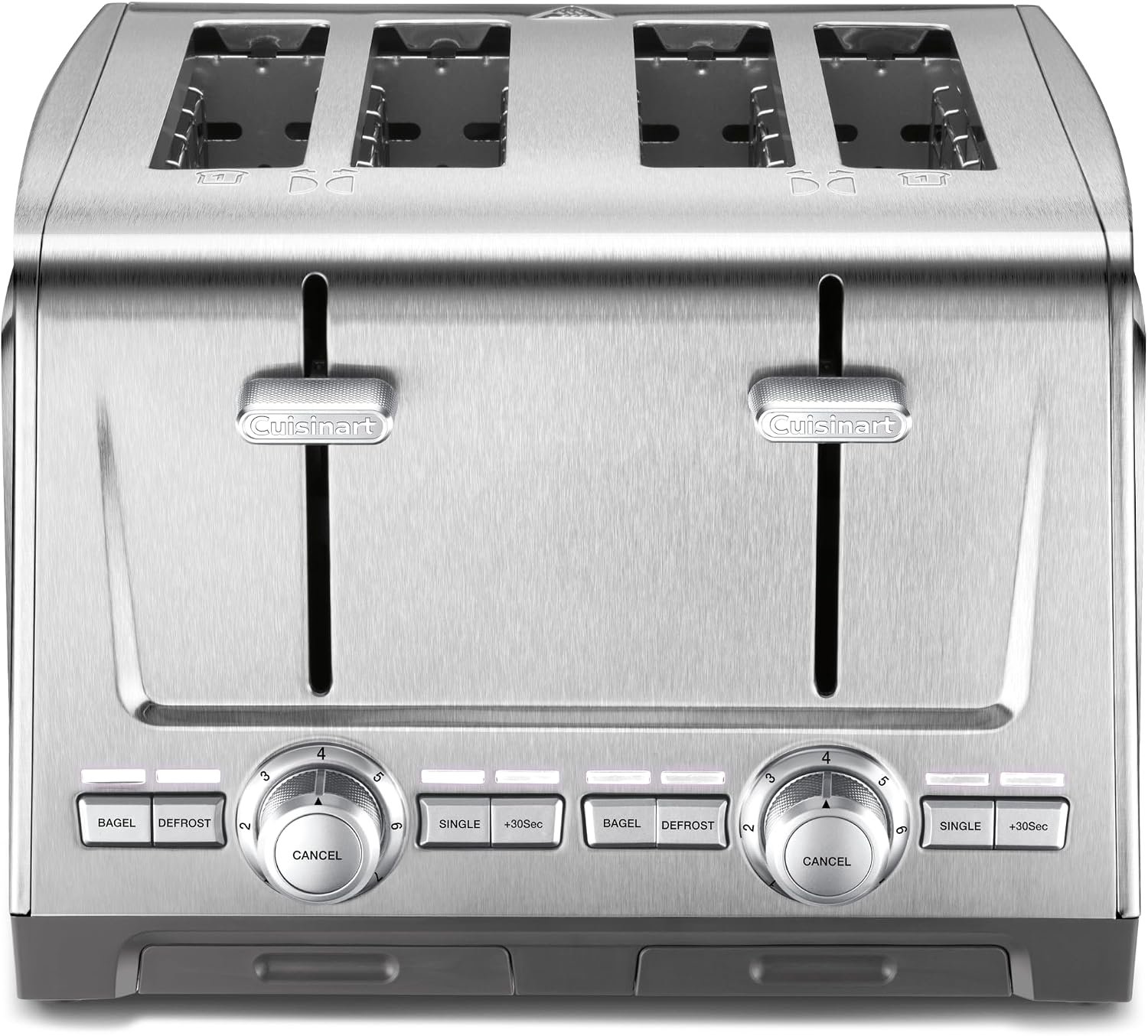
Affiliate links — Kitchen Guide 101 may earn a small commission at no extra cost to you.
If Someone Gets Shocked: the First Sixty Seconds
This is the section worth reading now rather than later. The instinct when you see someone being shocked is to grab them, and that is the one thing you must not do.
Do not touch them
If the person is still in contact with the toaster or the socket, touching them puts the current through you as well. This is the instinct you have to override.
Cut the power first
Pull the plug, switch the socket off, or kill the circuit at the breaker or fuse box. Breaking the circuit is faster and safer than trying to move anyone.
If you cannot cut the power, push them clear
Stand on something dry and non-conductive and use a dry wooden or plastic object — a broom handle, a chair — to push them away from the source. Never use anything metal or damp.
Call emergency services
Call as soon as the situation is safe to approach. Electrical injury can look minor on the surface while doing real damage underneath.
Check breathing and pulse, start CPR if there is none
Once they are clear of the source, check their airway, breathing and pulse. If they are unconscious with no pulse, start CPR. If they are unconscious but breathing, keep monitoring them.
Treat burns simply, and do not improvise
Rinse burned skin with cool running water. Do not apply ice, butter, ointment or adhesive dressings, do not break blisters and do not pull away loose skin.
Get checked even if they feel fine
Household current can disturb heart rhythm in ways that do not show up straight away. Anyone who has taken a mains shock should be assessed by a medical professional, even if they got up and laughed it off.
This is general first-aid information, not medical advice. The steps above follow standard guidance for electrical injury from MedlinePlus. In an emergency, call your local emergency number and follow the instructions of the person on the line over anything written here.
How Dangerous Is It, Really?
You will find pages claiming hundreds of people a year die from toaster accidents. That figure is not from any safety body, and it does not survive contact with the published data.
The US Consumer Product Safety Commission’s own electrocution report estimated an average of about 48 electrocution deaths a year from all consumer products combined. Small appliances as a whole — every toaster, kettle, blender and hair dryer on the market — accounted for 21 of those deaths across four years, roughly 12 percent of the total.
So the honest answer is that deaths from putting metal in a toaster are rare. They are rare because almost nobody does it, not because it is safe. Shocks, burns and tripped circuits are far more common than fatalities, and they are the outcome you are actually risking on any given morning.
Why the made-up number matters. A page that invents a statistic to sound urgent is easy to dismiss on everything else it says. The real figures make the same point without needing help: the mechanism is real, the outcome when it goes wrong is severe, and it is completely avoidable.
Toasters and Children
Most toaster injuries involving small children are burns and pulled-down appliances rather than electrocution. Four things cover nearly all of it.
Push it back from the edge
A toaster within arm’s reach of a counter edge is a toaster that can be pulled down. Push it to the back of the run, behind the line a small child can reach.
Deal with the cord
A dangling cord is a handle. Shorten it with a cord winder or clip it along the back of the counter so there is nothing to grab.
Unplug it when it is not in use
This solves the electrical question entirely and costs nothing. It also means the toaster cannot be switched on while something is inside it.
Teach the rule, not just the ban
Children follow rules they understand. Nothing goes into the slots, ever, and only a grown-up unplugs it is clearer and stickier than a vague do not touch.
The same instinct goes for wall outlets. A fork in an outlet is the identical circuit with nothing in between, and it can hurt or kill an adult as easily as a child. Tamper-resistant sockets prevent it mechanically — the shutters only open when both pins go in together, so a single fork tine cannot reach the contacts.
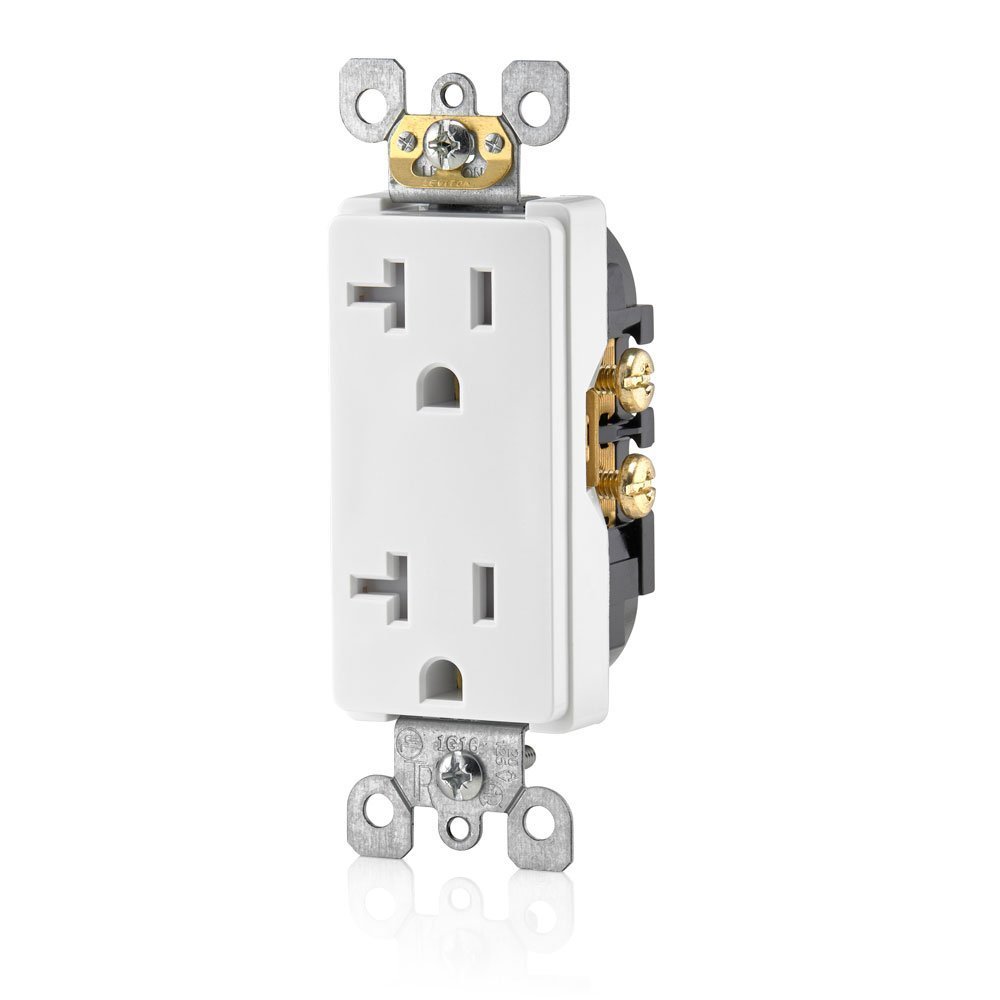
Affiliate links — Kitchen Guide 101 may earn a small commission at no extra cost to you.
Our full guide to childproofing your kitchen goes through cords, sockets, counter edges and the rest of the kitchen the same way.
Fork in a Toaster: Common Questions
What happens if you stick a fork in a toaster?
If the toaster is plugged in, the fork can touch a bare heating element that is still at mains potential, and the current can pass through you to anything earthed you happen to be touching. The result ranges from a painful jolt to burns, a disrupted heart rhythm, or in the worst case death. If the fork bridges an element to the toaster body instead, you get a short circuit, sparks and a tripped breaker.
Can putting a fork in a toaster electrocute you?
Yes. A toaster runs on ordinary household mains, which is more than enough to be fatal when it passes through the chest. It does not take an unusual toaster or an unusual fault. All it takes is metal touching a live element while another part of you touches something earthed, such as a tap or a metal sink.
Is it safe to put a fork in a toaster if it is switched off?
No. Off only means it has stopped heating. Most toasters interrupt just one of the two conductors, so depending on which way round the plug sits, the elements can still be at mains potential with the lever up and nothing glowing. There is no way to tell by looking, so treat any plugged-in toaster as live.
Can you put a fork in a toaster if it is unplugged?
Electrically, yes, it is safe. With the plug out of the wall there is no current and no shock risk. It is still a bad idea mechanically: the heating wire goes brittle with age, and levering at it with a fork can bend or crack an element, which can then touch the chassis and short out the next time you use the toaster. Use wooden or silicone tongs instead.
Do you die if you put a fork in a toaster?
Usually not, but it can happen, and that is the point. Mains electricity across the chest can cause the heart to fibrillate. Most people who do this get a severe shock, a burn or a fright rather than a fatal injury, and the outcome depends on the path the current takes and what else you are touching at the time. It is not a risk worth taking for a slice of bread.
What happens if you stick a knife in a toaster?
The same risk as a fork, only greater. A table knife is longer and has more surface area, so it reaches the elements more easily and is more likely to bridge two of them, or an element and the metal body. Butter on the blade makes no difference to conductivity. A knife is the single worst thing people reach for, and it is the most common one.
Can modern toasters still electrocute you if you put a metal knife in?
Yes. Auto shut-off, burn sensors, anti-jam ejection and app control all make a toaster easier and safer to use, but none of them disconnect the heating elements from the mains while the toaster is plugged in. No sensor is watching for a knife. The protections are against bad toast and overheating, not against metal objects.
Why can’t you put metal in a toaster?
Because metal conducts electricity and the heating elements inside a toaster are bare, uninsulated wire. Anything conductive that reaches them can carry current to your hand, or short the element against the metal body of the toaster. Wood, bamboo and silicone do not conduct, which is why they are the correct tools.
Why shouldn’t I shake my toaster?
Shaking a toaster is fine as long as it is unplugged and you are gentle about it. Tipping it over a sink and giving it short, easy shakes is one of the best ways to free a stuck slice. The problem is shaking it hard, banging it on the counter, or shaking it while it is still plugged in. Hard knocks bend the carriage and the elements, and a plugged-in toaster being shaken can still be live.
Can I use a plastic chopstick to get bread out of an unplugged toaster?
Yes, with one caveat. Plastic does not conduct, so there is no shock risk once the toaster is unplugged, but plastic will melt onto an element that is still hot. Let the toaster cool for a few minutes first, or use a wooden or bamboo tool, which does not have that problem.
What happens if you put a fork in a toaster oven?
A toaster oven has exposed elements too, usually above and below the rack, so touching one with a fork while the oven is plugged in carries the same shock risk. The difference is that metal bakeware is designed to go inside a toaster oven and is perfectly safe there, as long as it never touches the elements and you are not reaching in while the oven is running.
Will a metal bowl explode in a toaster oven?
No. Metal does not explode in a toaster oven, and metal bakeware is normal in one. You may be thinking of a microwave, where metal can arc and spark because of how microwaves interact with it, and even there it arcs rather than explodes. The real risk in a toaster oven is a bowl touching an element, or foil laid across the base where it can trap heat.
Can children get electrocuted by a toaster?
It is rare, but it is the reason toasters belong at the back of the counter with the cord tidied away. The realistic risks for a small child are pulling a hot toaster down on themselves and putting something into the slots. Unplugging it when it is not in use removes the electrical question entirely.
How many people die from sticking a utensil into a toaster?
Nobody publishes a figure for that specific act, and the numbers circulating online that claim hundreds of toaster deaths a year are not from any safety body. For scale, the US Consumer Product Safety Commission estimated around 48 electrocution deaths a year from all consumer products combined, with small appliances as a whole accounting for 21 deaths across a four-year period. The number is small mainly because very few people actually do it.
Is sticking a fork in the toaster a crime?
No. It is not illegal anywhere we are aware of. It is simply one of the more reliable ways to give yourself a mains shock in your own kitchen, which is punishment enough.
More Toaster Guides
The tools and the toasters that stop this happening in the first place.
Unplug it at the wall, let it cool, tip it over the sink, and lift the slice out with something wooden. That is the whole answer, and it takes less time than finding a fork.
Pin this so the next time a slice jams, nobody in the house has to wonder whether a fork in a toaster is really that bad.