
Sugar Free Lemon Cake: The Moist Lemon Bundt Nobody Can Tell Is Sugar Free
A tender lemon bundt with a bright sugar free glaze, sweetened with a monk fruit blend and kept soft with Greek yogurt, plus the sweetener swaps, the pan sizes, a low-carb almond flour version and the fixes for every dry, pale or cooling-tasting sugar free cake.
- No added sugar
- Stays moist 3 days
- 6 sweetener options
- Printable recipe
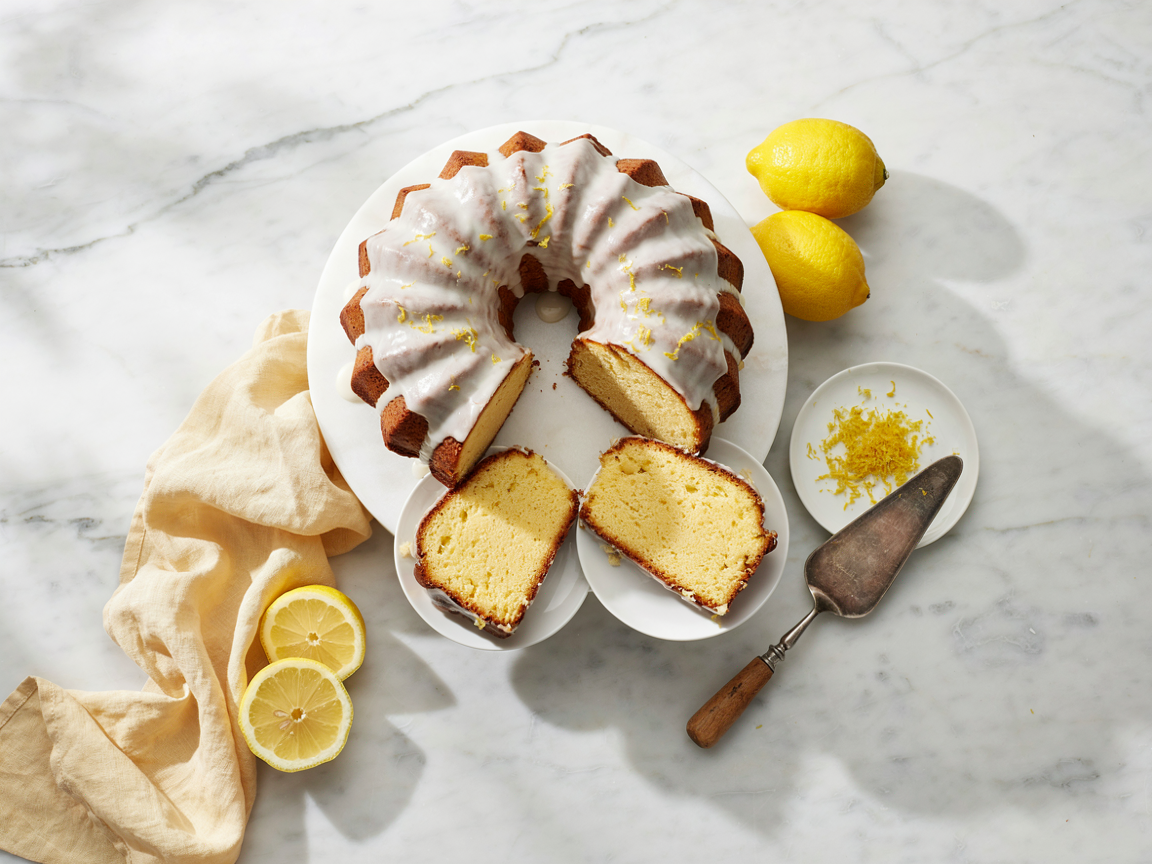
The sugar free lemon bundt, glazed and sliced to show the soft yellow crumb.
Most sugar free lemon cake recipes fail the same two ways: the crumb is dry by the next morning, and there is a cold, minty aftertaste that announces the sweetener. This one fixes both. Whole-milk Greek yogurt and a little oil do the job sugar used to do for moisture, a monk fruit blend at the right amount leaves no aftertaste, and the zest of three lemons is rubbed into the sweetener so the cake tastes of lemon first and last. It bakes in a bundt, gets a sharp sugar free glaze, and nobody at the table is told.
Below: why this version works where others dry out, a sweetener table with the amount and oven change for each option, what every ingredient is doing, the recipe with a card that scales from a loaf to two bundts, how to get the lemon flavor loud, every pan size with its bake time, six variations including a low-carb almond flour cake and a layer cake, a sugar free cream cheese frosting and lemon syrup, storage, troubleshooting, honest nutrition and every question about baking without sugar.
Why This Sugar Free Lemon Cake Works
Four things most sugar free cakes get wrong, and how this one avoids them:
It is moist, which sugar free cakes usually are not
Sugar holds water in a cake; take it out and the crumb dries by the next morning. Here whole-milk Greek yogurt and a quarter cup of oil do sugar’s job, so the cake is still soft on day three.
No cooling aftertaste
Pure erythritol leaves a cold, minty finish. A monk fruit and erythritol blend, used at 1:1, does not, and the lemon covers whatever is left. Lemon is the most forgiving flavor for sugar free baking.
The lemon is loud
Zest rubbed into the sweetener, fresh juice in the batter, a little lemon extract, and a sharp glaze. Four layers of lemon, so the cake tastes like lemon, not like a sweetener.
It looks like the bakery’s
A bundt hides the paler color of a sugar free crumb under ridges and glaze, and slices cleanly. Nobody is told; nobody asks.
Which Sugar Substitute to Use in a Lemon Cake
The recipe is written for a 1:1 monk fruit and erythritol blend. Every other option works with the amount and oven change in its row:
| Sweetener | Amount for 2 cups flour | Oven | What to expect |
|---|---|---|---|
| SweetenerMonk fruit + erythritol blend (1:1) | Amount for 2 cups flour1 cup | Oven350°F | What to expectThe default. No aftertaste at this amount; cake stays pale |
| SweetenerAllulose | Amount for 2 cups flour1⅓ cups | Oven325°F, tent at 30 min | What to expectBrowns like sugar, moistest crumb, glossiest glaze; 70% as sweet |
| SweetenerPure erythritol | Amount for 2 cups flour1⅓ cups | Oven350°F | What to expectWorks; slight cooling note; glaze can recrystallize, so warm the juice |
| SweetenerStevia baking blend (1:1 type) | Amount for 2 cups flour1 cup | Oven350°F | What to expectFine if the bag says it measures like sugar; some have a bitter edge with lemon |
| SweetenerXylitol | Amount for 2 cups flour1 cup | Oven350°F | What to expectBakes well; keep the cake away from dogs, it is toxic to them |
| SweetenerAllulose + monk fruit blend | Amount for 2 cups flour1¼ cups | Oven325°F | What to expectThe best of both; browns and no cooling |
| SweetenerLiquid stevia or drops alone | Amount for 2 cups flourDo not use | Oven | What to expectNo bulk; the cake collapses and goes rubbery |
| SweetenerHoney, maple, dates, coconut sugar | Amount for 2 cups flourNot sugar free | Oven | What to expectNatural, but sugar; use our regular lemon recipes instead |
What sugar free means here. No added sugar in the cake or the glaze. The flour still carries carbohydrate (about 17 grams a slice) and the yogurt and lemon a little natural sugar. The almond flour tab below is the lower-carb version for anyone who needs the number, not just the label.
Ingredients for Sugar Free Lemon Cake
Each one is chosen for what sugar used to do:
The sweetener
A granulated monk fruit and erythritol blend that measures 1:1 with sugar. Rubbed with the zest first so it carries the lemon oil. The table above covers every other option.
Butter and oil together
Butter for flavor, a quarter cup of oil for a crumb that stays moist without sugar. Oil alone tastes flat; butter alone dries out by day two.
Whole-milk Greek yogurt
The moisture and the tenderness. Non-fat yogurt makes a drier, tighter cake. Sour cream is the equal swap.
Three large lemons
Zest of all three in the batter, juice in the batter and the glaze. Zest is the flavor; juice is the brightness. Bottled juice has neither.
Lemon extract
Half a teaspoon, optional, and the difference between a lemon-flavored cake and a lemon cake. Sugar substitutes mute flavor slightly; the extract turns it back up.
Eggs, room temperature
Three large eggs give structure that sugar would otherwise provide. Cold eggs curdle the batter and sink the cake; sit them in warm water for 10 minutes.
All-purpose flour
Two cups, spooned and leveled, not scooped. Packed flour is the fastest way to a dry sugar free cake. For a lower-carb cake, the almond flour tab has its own amounts.
Baking powder and soda
Both. The soda reacts with the yogurt and lemon for lift; the powder finishes the rise in the oven. A sugar free batter is thick and needs both.
Sugar Free Lemon Cake Recipe
The card makes a 10-cup bundt, 12 slices, by default. Tap a size and the amounts, the pan and the bake time all update together.
Sugar Free Lemon Bundt Cake
A moist, tender lemon bundt with a bright sugar free lemon glaze, sweetened with a monk fruit and erythritol blend and kept soft with Greek yogurt and a little oil. Nobody at the table guesses. Tap a size and the amounts, the pan and the bake time update with the printable card.
What are you baking?
Ingredients
For the cake- 1 cup (125 g)2 cups (250 g)3 cups (375 g)4 cups (500 g) all-purpose flour, spooned and leveled
- ¾ tsp1½ tsp2¼ tsp1 tbsp baking powder
- ¼ tsp½ tsp¾ tsp1 tsp baking soda
- ¼ tsp½ tsp¾ tsp1 tsp fine salt
- ½ cup1 cup1½ cups2 cups granulated 1:1 sugar substitute, monk fruit and erythritol blend (see the sweetener table for others)
- 1½ tbsp (2 lemons)3 tbsp (3 large lemons)4½ tbsp (5 lemons)6 tbsp (6 lemons) lemon zest, finely grated
- ¼ cup½ cup¾ cup1 cup unsalted butter, softened
- 2 tbsp¼ cup6 tbsp½ cup neutral oil (avocado, light olive or canola)
- 2356 large eggs, room temperature
- ½ tsp1 tsp1½ tsp2 tsp vanilla extract (or alcohol-free vanilla)
- ¼ tsp½ tsp¾ tsp1 tsp lemon extract, optional but recommended
- ½ cup1 cup1½ cups2 cups whole-milk Greek yogurt or sour cream, room temperature
- 2 tbsp¼ cup6 tbsp½ cup fresh lemon juice
- ½ cup1 cup1½ cups2 cups powdered 1:1 sugar substitute (confectioners-style)
- 1 to 1½ tbsp2 to 3 tbsp3 to 4 tbsp4 to 6 tbsp fresh lemon juice, warmed slightly
- ½ tsp1 tsp1½ tsp2 tsp lemon zest
- ½ tsp1 tsp1½ tsp2 tsp melted butter, optional, for shine
- pinchpinch2 pinches2 pinches pinch of salt
Sweetener note: the amounts are for a 1:1 monk fruit and erythritol blend. For allulose use a third more and bake at 325°F; for pure erythritol use a third more and expect a slight cooling note. The table above has every swap.
Instructions
Heat the oven and prepare the pan
Heat the oven to 350°F (325°F if your sweetener is allulose, which browns faster). Butter the bundt pan thoroughly, getting into every ridge, then dust with flour and tap out the excess, or use a baking spray with flour. Sugar-free cakes stick more than sugared ones, so do not skip this.
Rub the zest into the sweetener
Put the sweetener in the mixing bowl, add the lemon zest and rub them together with your fingertips for a minute until the sweetener is damp and yellow and smells strongly of lemon. This pulls the oils out of the zest and is where most of the lemon flavor comes from.
Whisk the dry ingredients
In a separate bowl, whisk the flour, baking powder, baking soda and salt until no streaks remain.
Cream the butter, oil and sweetener
Add the softened butter and the oil to the zest and sweetener and beat on medium-high for 3 to 4 minutes, scraping the bowl twice. It will look pale and fluffy but a little sandy, because sugar substitutes do not dissolve like sugar; that is normal.
Add the eggs and extracts
Beat in the eggs one at a time, 30 seconds each, then the vanilla and lemon extract. If the mixture looks curdled, it is only the cold eggs; it comes back together with the flour.
Alternate the dry and the wet
Stir the lemon juice into the yogurt. On low speed, add a third of the flour, half the yogurt, another third of the flour, the rest of the yogurt and the last of the flour, mixing only until each addition disappears. Finish by hand with a spatula; overmixing makes a sugar-free cake tough.
Fill the pan
Spoon the batter into the pan, smooth the top and tap the pan on the counter three times to knock out air pockets. The batter is thick; that is right.
Bake
Bake 40 to 45 minutes for the bundt, until the top springs back and a skewer in the thickest part comes out with a few moist crumbs. Sugar-free cakes stay paler than sugared ones, so test with the skewer, not the color. Tent with foil at 30 minutes if the top is browning (allulose will).
Cool in the pan, then out
Cool in the pan 15 minutes, exactly; sooner and it breaks, later and it sticks. Run a thin knife around the center tube, invert onto a rack and cool completely, about 1 hour. Sugar-free cakes firm up as they cool and are fragile warm.
Glaze
Whisk the powdered sweetener with the warm lemon juice, zest, melted butter and salt until smooth and pourable, adding juice a teaspoon at a time. Pour over the cooled cake and let it set 20 minutes. Warming the juice stops erythritol glazes from turning grainy.
How to Get Big Lemon Flavor Without Sugar
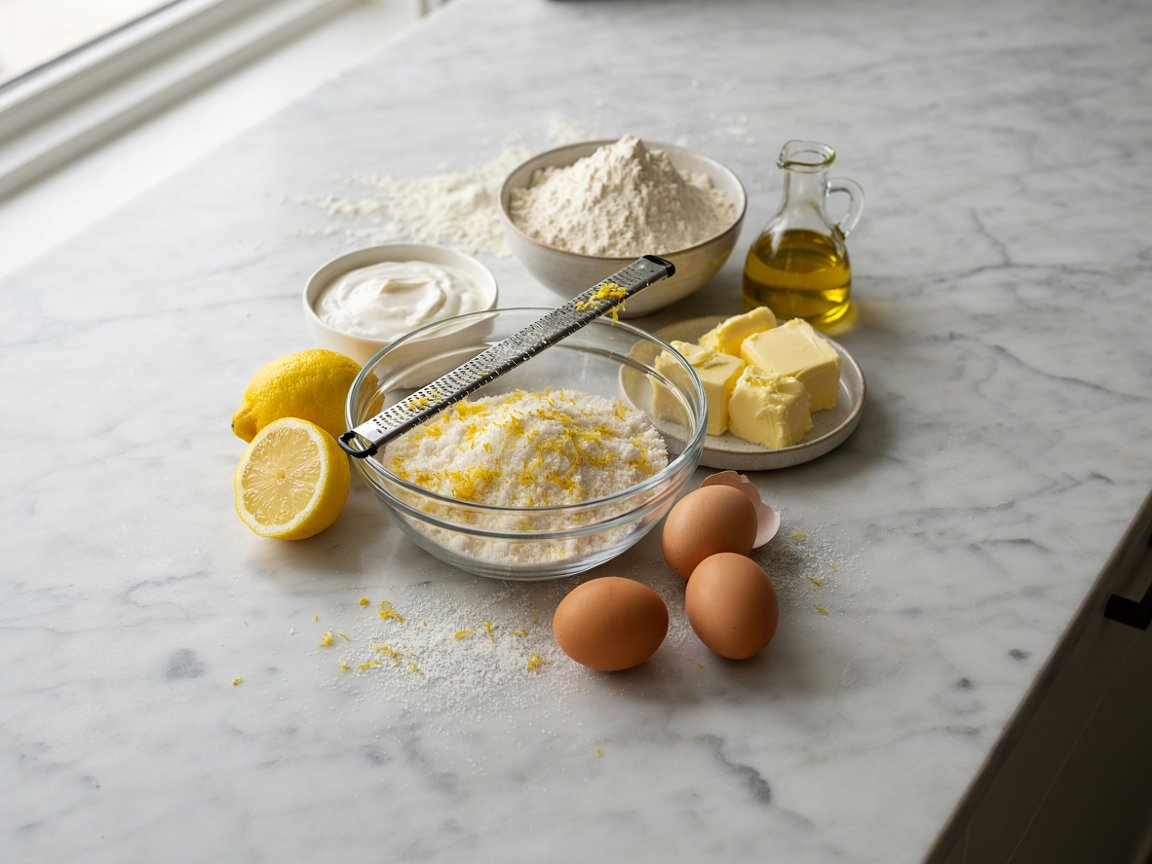
Lemon zest rubbed into the sweetener until it turns yellow and damp: the step that makes the cake taste like lemon.
Sugar substitutes mute flavor a little, so the lemon has to be built in layers:
Rub the zest into the sweetener
A full minute with your fingertips. The sweetener turns yellow and wet. This one step adds more lemon than doubling the juice would.
Zest, juice and extract are three different flavors
Zest is oil and perfume, juice is acid, extract is intensity. A cake with all three tastes like lemon; a cake with only juice tastes sour and faint.
Add a lemon soak for a bakery-style cake
Simmer ¼ cup lemon juice with 3 tablespoons of allulose for 2 minutes and brush it over the warm cake before the glaze. The sugar free version of the classic lemon drizzle soak; the recipe is below.
Glaze cold, serve at room temperature
Glaze the cake fully cooled so the glaze sits white on top instead of soaking in, then serve at room temperature, when the crumb is softest and the lemon brightest.
Pan Sizes and Bake Times
| Pan | Batter | Oven | Bake time | Notes |
|---|---|---|---|---|
| Pan10-cup bundt | Batter1 batch | Oven350°F | Bake time40 to 45 minutes | NotesCool 15 minutes in the pan before turning out |
| Pan9 by 5-inch loaf | Batter1 batch (very full) or ¾ | Oven350°F | Bake time50 to 60 minutes | NotesTent at 35 minutes; the loaf tab has the method |
| Pan8 by 4-inch loaf | Batter½ batch | Oven350°F | Bake time50 to 55 minutes | NotesCard size A |
| Pan9 by 13-inch pan | Batter1½ batches | Oven350°F | Bake time30 to 35 minutes | NotesGlaze in the pan; card size C |
| PanTwo 8-inch rounds | Batter1 batch | Oven350°F | Bake time25 to 30 minutes | NotesLayer cake tab has the frosting |
| Pan12 muffins or cupcakes | Batter½ batch | Oven350°F | Bake time18 to 22 minutes | NotesFill two-thirds; glaze or frost |
| Pan6 mini bundts | Batter1 batch | Oven350°F | Bake time20 to 24 minutes | NotesGrease every ridge; cool 10 minutes |
Six Ways to Change the Cake
Same batter, same sweetener. Tap a version:
Low-Carb Almond Flour Lemon Cake
Replace the 2 cups of all-purpose flour with 2½ cups fine blanched almond flour plus ¼ cup coconut flour, use 4 eggs instead of 3, keep everything else and bake in a 9 by 5-inch loaf or an 8-inch round at 325°F for 50 to 55 minutes, tented after 30. It is denser and richer than the bundt, keeps 5 days, and is the version for anyone counting carbs closely, since almost all the carbohydrate in the main recipe is the flour.
Lemon Poppy Seed Cake
Fold 2 tablespoons of poppy seeds into the batter with the last of the flour and add a teaspoon of poppy seeds to the glaze. Nothing else changes. The bakery classic, sugar free.
Lemon Blueberry Cake
Toss 1½ cups fresh or frozen blueberries (frozen straight from the freezer, not thawed) with 1 tablespoon of the measured flour and fold them in last. Bake 5 minutes longer. The blueberries add a little natural fruit sugar; the cake is still free of added sugar.
Sugar Free Lemon Loaf
Bake the full batch in a 9 by 5-inch loaf pan lined with parchment: 350°F for 50 to 60 minutes, tented with foil after 35. Cool 15 minutes, lift out by the parchment, cool fully and glaze thickly so it runs down the sides. The coffee-shop lemon loaf without the sugar.
Lemon Layer Cake with Sugar Free Cream Cheese Frosting
Bake the batter in two 8-inch rounds lined with parchment, 25 to 30 minutes. Fill and frost with the sugar free cream cheese frosting below (one batch covers two layers), and press lemon zest around the base. Chill 30 minutes before slicing so the layers stay neat.
Dairy-Free Sugar Free Lemon Cake
Use ½ cup coconut oil, soft but not melted, in place of the butter, and 1 cup of thick unsweetened coconut or almond yogurt in place of the Greek yogurt. The crumb is a little lighter and the lemon slightly more forward. Glaze as written, with coconut oil instead of butter for shine.
Sugar Free Lemon Glaze, Frosting and Syrup
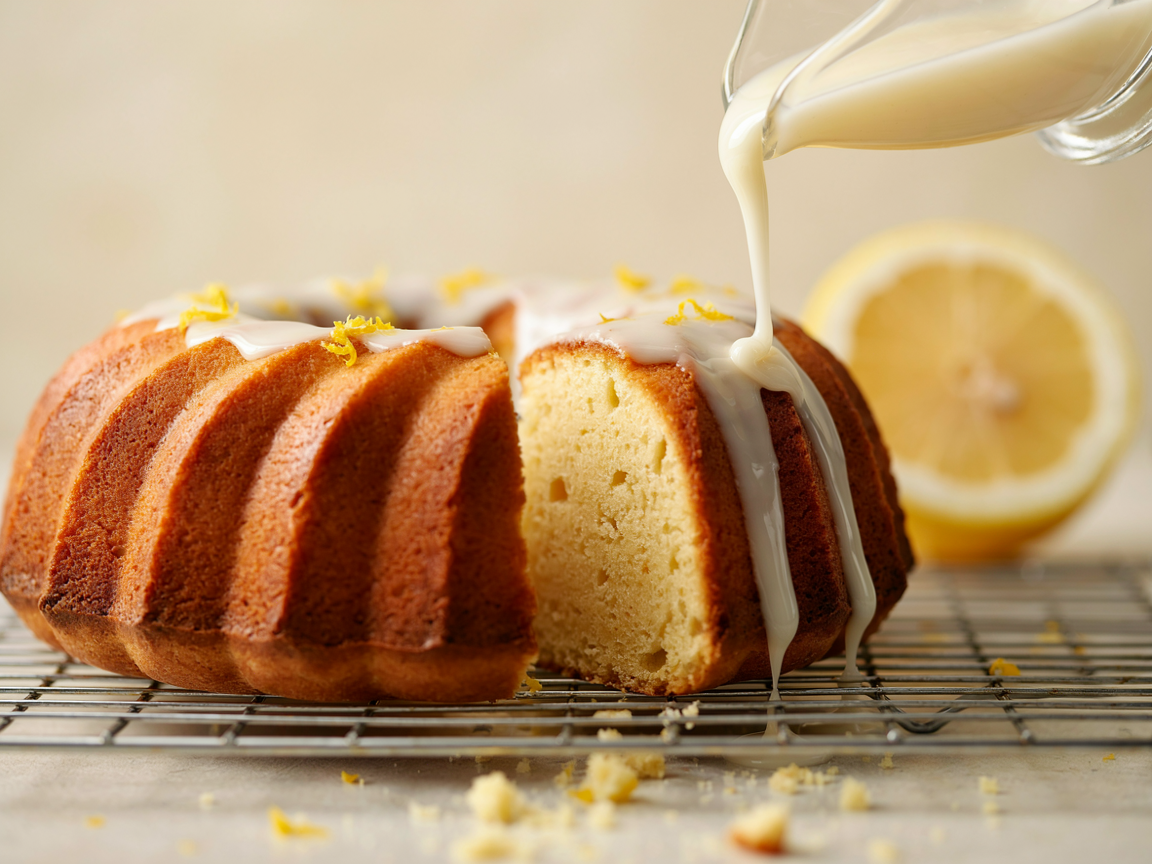
The sugar free lemon glaze poured over the cooled bundt, setting white against the yellow crumb.
The glaze is in the recipe card. For a layer cake or cupcakes, and for the bakery-style soaked crumb, these two are the extras:
Sugar Free Lemon Cream Cheese Frosting (frosts two 8-inch layers or 18 cupcakes)
- 8 oz full-fat cream cheese, softened
- ½ cup unsalted butter, softened
- 1½ cups powdered 1:1 sugar substitute
- 1 tbsp lemon zest and 1 tbsp fresh lemon juice
- ½ tsp vanilla (or alcohol-free vanilla), pinch of salt
- Beat the cream cheese and butter until completely smooth, 2 minutes. Add the powdered sweetener half a cup at a time, beating on low, then medium until fluffy.
- Beat in the zest, juice, vanilla and salt. If it is grainy, let it sit 10 minutes and beat again; powdered erythritol dissolves slowly. Chill 15 minutes before spreading if it is soft.
Keeps: 5 days in the fridge; bring to room temperature and re-whip.
Sugar Free Lemon Syrup Soak (optional, for a drizzle-cake crumb)
- ¼ cup fresh lemon juice
- 3 tbsp allulose or 2 tbsp monk fruit blend
- 1 tsp lemon zest
- Simmer everything in a small pan for 2 minutes, until the sweetener dissolves and the syrup is slightly thickened.
- Poke the warm cake all over with a skewer while it is still in the pan, brush half the syrup over the exposed base, turn the cake out after 15 minutes and brush the rest over the top. Cool, then glaze.
Why allulose here: it stays syrupy; erythritol recrystallizes as it cools and can leave a crunchy surface.
More Sugar Free Baking
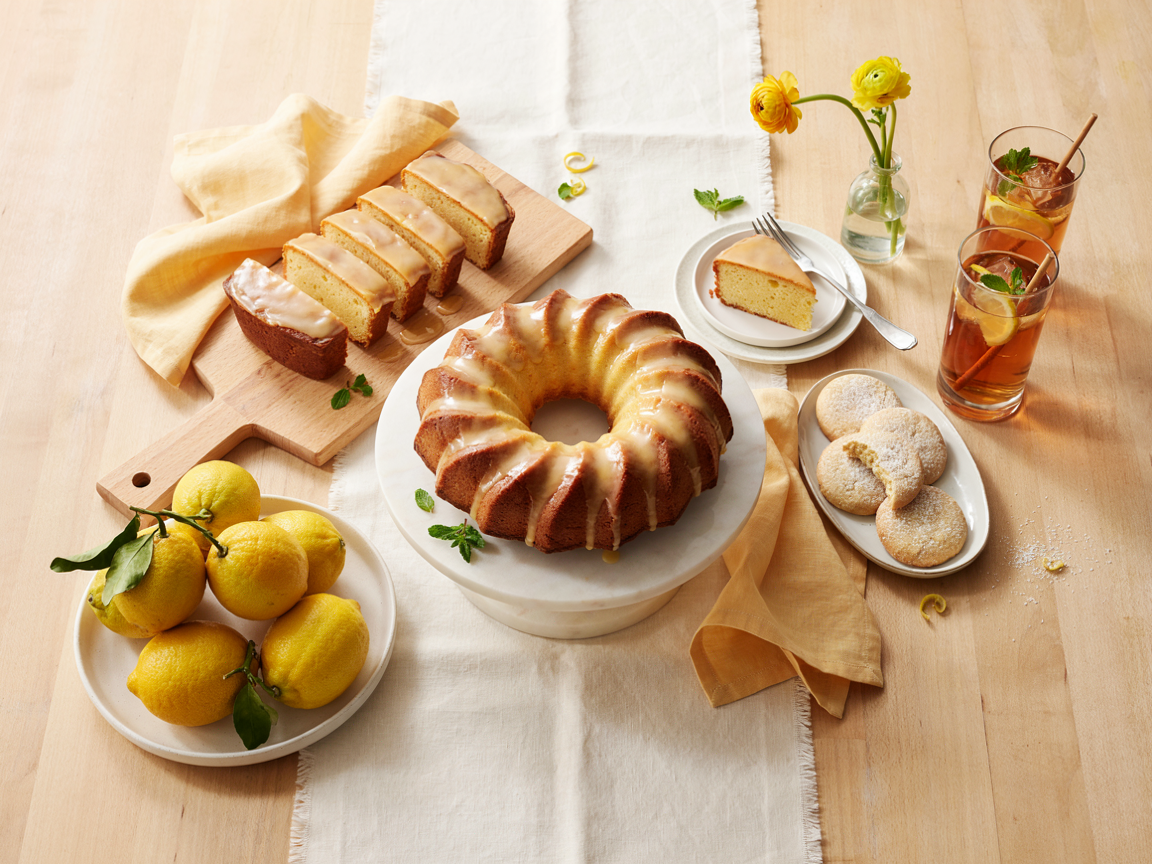
A sugar free dessert table: the lemon bundt with vanilla cake, lemon cookies and iced tea.
The lemon cake sits at the center of the sugar free baking on this site. For a plain vanilla version of the same yogurt-and-oil method, see the sugar free vanilla cake, and for chocolate the sugar free chocolate cake. The sugar free birthday cake is the one for a celebration table, the sugar free cream cheese pound cake is the dense, buttery cousin, and the sugar free mug cake is the two-minute fix for a single craving. For a whole menu, the 30+ sugar free desserts for diabetics and the diabetic-friendly dessert recipes round out the dessert table, and the sugar free lemon desserts post has the lemon cookies that use the same sweetener.
Storage and Make-Ahead
| Where | How long | Notes |
|---|---|---|
| WhereRoom temperature, covered | How long2 days | NotesBest texture; a cake dome or an upturned bowl |
| WhereFridge, airtight | How long5 days | NotesSugar free crumb firms when cold; bring slices to room temperature 30 minutes |
| WhereFreezer, unglazed | How long2 months | NotesWrap the whole cake or slices in plastic and foil; thaw covered, then glaze |
| WhereFreezer, glazed | How long1 month | NotesFreeze uncovered until the glaze is hard, then wrap; the glaze may dull slightly |
| WhereMake ahead | How long1 day | NotesBake and cool, store covered, glaze the morning it is served |
Troubleshooting Sugar Free Lemon Cake
| Problem | Likely cause | Fix |
|---|---|---|
| ProblemDry crumb | Likely causeNon-fat yogurt, packed flour, or overbaked | FixWhole-milk yogurt; spoon and level; pull at a few moist crumbs |
| ProblemCooling or minty aftertaste | Likely causePure erythritol | FixUse a monk fruit blend or allulose; more lemon zest and extract |
| ProblemDense or rubbery | Likely causeOvermixed after the flour, or liquid sweetener used | FixMix until the flour just disappears; granulated 1:1 only |
| ProblemSank in the middle | Likely causeUnderbaked, oven door opened early, or cold eggs | FixSkewer test; no peeking before 35 minutes; room-temperature eggs |
| ProblemPale and looks underdone | Likely causeNormal for erythritol blends | FixTrust the skewer, not the color; allulose if you want browning |
| ProblemStuck in the bundt pan | Likely causePan not fully greased, or cooled too long | FixButter and flour every ridge; exactly 15 minutes before turning out |
| ProblemGlaze grainy or opaque | Likely causePowdered erythritol recrystallized | FixWarm the lemon juice; use powdered allulose for a glossy glaze |
| ProblemFaint lemon flavor | Likely causeJuice only, bottled juice, zest skipped | FixRub zest into the sweetener; add lemon extract; fresh lemons |
Nutrition (approximate, per slice)
Estimates for one of 12 glazed slices with a monk fruit and erythritol blend; erythritol is not counted as net carbohydrate. The almond flour version is about 6g net carbs per slice. No added sugar, no alcohol with alcohol-free vanilla.
Sugar Free Lemon Cake: FAQs
What is the best sugar substitute for a sugar free lemon cake?
A granulated monk fruit and erythritol blend that measures 1:1 with sugar: it creams with the butter, has no aftertaste at this amount and needs no other changes. Allulose makes the moistest cake and browns like sugar but needs a third more and a 325°F oven. Pure erythritol works with a slight cooling note. The sweetener table above covers each one with amounts.
Can I use stevia in this lemon cake?
Only a granulated stevia baking blend that says it measures cup for cup like sugar; use 1 cup as written. Liquid stevia or pure stevia powder will not work, because sugar substitutes also provide the bulk and structure in a cake and drops provide none; the cake collapses and turns rubbery.
Is sugar free lemon cake OK for people with diabetes?
It has no added sugar and the glaze is sugar free, which removes most of what spikes a dessert. It still contains carbohydrate from the two cups of flour, about 17 grams per slice, plus a little natural sugar from the yogurt and lemon. The almond flour version in the tabs brings that down sharply. Anyone managing blood sugar should fit a slice into their own plan rather than treat it as free.
Why does my sugar free cake taste cold or minty?
That is erythritol’s cooling effect, strongest when pure erythritol is used at a high amount. Switch to a monk fruit and erythritol blend or to allulose, keep the amount at 1 cup for 2 cups of flour, and add the lemon extract: lemon masks the cooling note better than any other flavor.
Why is my sugar free lemon cake dry?
Sugar holds moisture, and without it the usual mistakes show up fast: non-fat yogurt, flour scooped instead of spooned, or 5 minutes too long in the oven. Use whole-milk Greek yogurt or sour cream, keep the quarter cup of oil, spoon and level the flour, and take the cake out when a skewer shows a few moist crumbs, not when it is clean and dry.
Why is my cake pale on top?
Erythritol and monk fruit do not caramelize, so the cake browns far less than a sugared one and the top stays blonde even when it is fully baked. Test with a skewer. If you want a golden top, use allulose, which browns like sugar, and bake at 325°F so it does not over-brown.
Can I make this as a loaf, a layer cake or cupcakes?
Yes. A 9 by 5-inch loaf takes 50 to 60 minutes tented after 35; two 8-inch rounds take 25 to 30 minutes; 12 cupcakes from a half batch take 18 to 22. The pan table above has every size with its time, and the loaf and layer cake tabs have the method.
Can I make it with almond flour or make it keto?
Yes. The almond flour tab replaces the flour with 2½ cups almond flour plus ¼ cup coconut flour and adds an egg, baked at 325°F in a loaf. It is lower in carbohydrate and denser, closer to a pound cake. The main recipe is sugar free but not low carb, because of the wheat flour.
Why did the glaze turn grainy or white and crunchy?
Powdered erythritol recrystallizes as the glaze cools, especially if the lemon juice was cold. Warm the juice before whisking, add it slowly, and pour the glaze as soon as it is smooth. Powdered allulose makes a glossy, bakery-style glaze with no graininess.
Can I use bottled lemon juice?
For the batter in a pinch, yes, but the cake will taste flatter, and the zest, which carries most of the lemon flavor, has to come from fresh lemons anyway. Buy three lemons: zest all of them into the sweetener and juice them for the batter and the glaze.
How much lemon flavor does this cake have?
A lot, on purpose. Zest of three lemons rubbed into the sweetener, a quarter cup of juice in the batter, lemon extract, and a sharp lemon glaze. For a milder cake, leave out the extract and use the zest of two lemons; for a louder one, add the lemon syrup soak from the recipe boxes above.
How long does sugar free lemon cake keep?
Two days covered at room temperature, 5 days in the fridge, 2 months frozen unglazed. The crumb firms up when cold because there is no sugar to keep it soft, so bring refrigerated slices to room temperature for 30 minutes before serving.
Can I make it dairy-free?
Yes. Use soft coconut oil in place of the butter and a thick unsweetened coconut or almond yogurt in place of the Greek yogurt; the dairy-free tab has the amounts. Glaze with coconut oil instead of butter for shine.
How many calories and carbs are in a slice?
About 215 calories, 17 grams of net carbohydrate, 2 grams of natural sugar, 6 grams of protein and 13 grams of fat for one of 12 slices with the glaze, using a monk fruit and erythritol blend. The erythritol itself is not counted as net carbohydrate. The almond flour version is roughly 6 grams of net carbohydrate per slice.
Save the pin so the recipe, the sweetener table and the pan sizes are one tap away.
More Sugar Free Cakes
Vanilla, pound cake, birthday cake and the lemon cookies that use the same sweetener.
Sugar Free Vanilla Cake
The same moist method, plain and perfect. See the recipe → Pound CakeSugar Free Cream Cheese Pound Cake
Dense, buttery and sliceable. Bake it → CelebrationSugar Free Birthday Cake
Vanilla or chocolate, frosted and low carb. See the cake → LemonSugar Free Lemon Cookies
The cookie that uses the same sweetener. Bake a batch → Roundup30+ Sugar Free Desserts for Diabetics
The whole dessert table, no added sugar. See the list → Two MinutesSugar Free Mug Cake
One serving, two minutes, no leftovers. Make one →Rub the zest into the sweetener, cream it with butter and oil, fold in the yogurt and flour, bake until the skewer is clean and glaze it cold. A lemon cake with no added sugar that tastes like the bakery made it.
Pin this sugar free lemon cake so it is ready for the next birthday, holiday or Tuesday that needs a cake everyone can eat.