
Assemble at Night · Bake in the Morning · 10 Minutes of Work
Monkey Bread with Frozen Dinner Rolls: The Easy Overnight Method
Frozen rolls, dry pudding mix, brown sugar and butter, left to rise on the counter overnight — and the five-minute rule that decides whether it comes out of the pan whole.
- 10 minutes hands-on
- No thawing
- 4 pan options
- Three rise methods
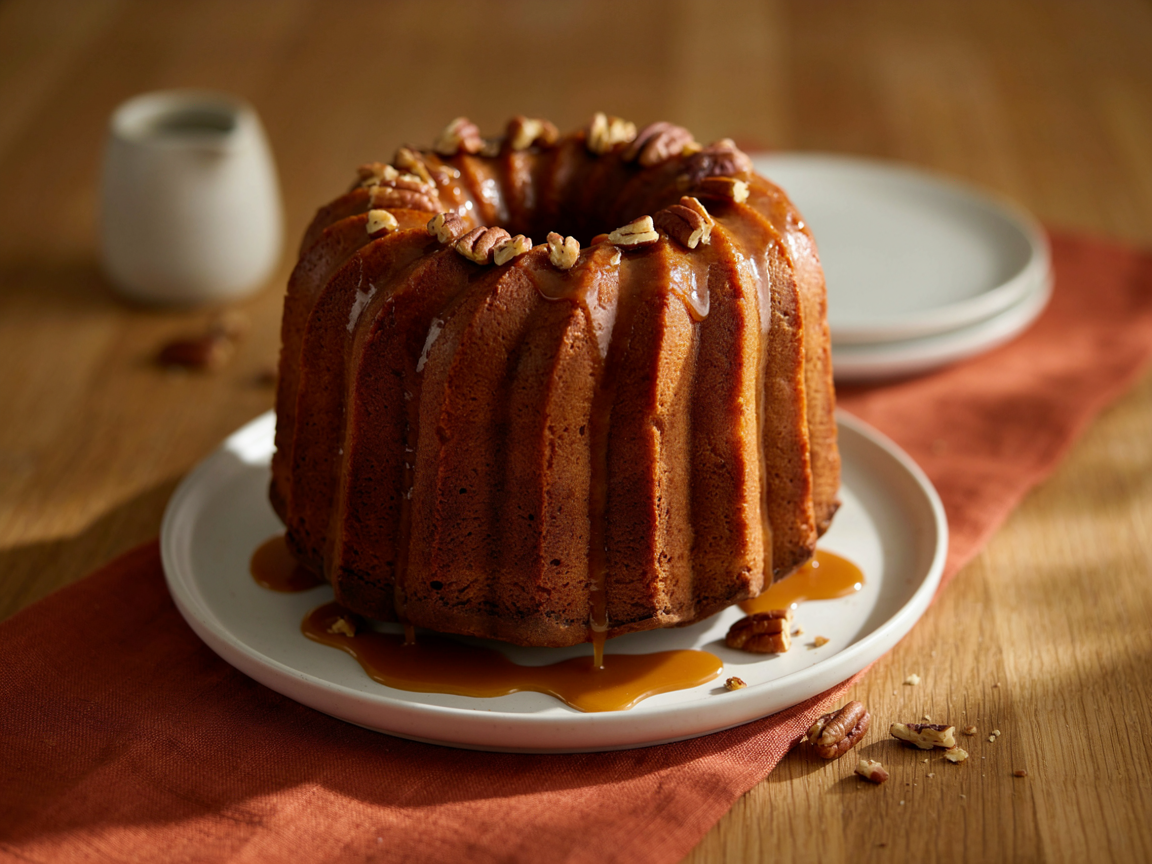
Turned out at five minutes. At fifteen it would still be in the pan.
Monkey bread with frozen dinner rolls is the rare shortcut that makes the original better rather than worse. You are not skipping the dough so much as letting somebody else portion it — and because the rolls go in frozen and rise slowly overnight, they develop more flavour than a same-day dough ever would.
Ten minutes of work in the evening, nothing but an oven in the morning, and the whole thing turns out of the pan in one piece as long as you respect the two rules that most recipes bury: do not thaw the rolls, and rest it for exactly five minutes before inverting.
Why Monkey Bread with Frozen Dinner Rolls Works So Well
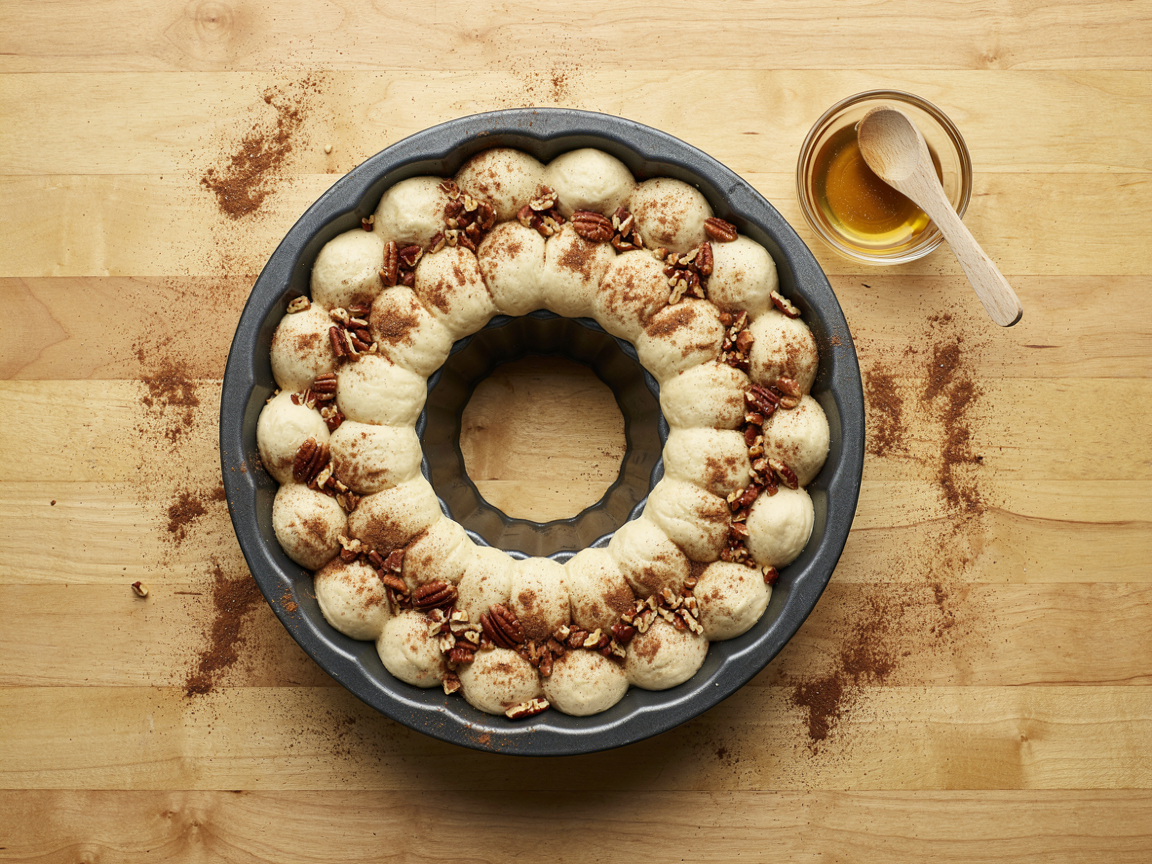
Ten minutes of assembly, straight from the freezer. Nothing here is thawed.
Made from scratch, monkey bread means mixing a dough, proving it, rolling it into dozens of balls and dipping each one in butter and sugar. Frozen rolls remove every part of that except the pleasure of eating it.
The rolls are already portioned
Twenty-four evenly sized balls of enriched dough, made and frozen for you. This is the entire tedious part of monkey bread, and it is the part you are skipping.
A slow rise builds flavour
Frozen dough thaws and proves over eight hours rather than one. Long, cool fermentation develops flavour that a fast warm rise simply does not have time to make.
The caramel makes itself
Dry pudding mix, brown sugar and melted butter combine during the rise and again in the oven, thickening into a caramel with no pan, no thermometer and no stirring.
Ten minutes, the night before
Butter a pan, tip things into it, cover it and go to bed. In the morning the only decision left is when to turn the oven on.
The dry pudding mix is not a gimmick. Scattered over the rolls straight from the packet, it dissolves into the melting butter and brown sugar and thickens the whole thing into a caramel that clings instead of running. Make it up with milk first and you have pudding, which never caramelises and never sets. If you would rather skip it entirely, the swaps table has a boiled butter-and-sugar version that works.
Three Ways to Rise It
Pick the one that fits your kitchen and your morning:
The overnight rise
Assemble everything in the buttered pan in the evening, cover loosely, and leave it on the counter for 8 to 10 hours. This is the original method and the best-tasting one: the long cold-start rise develops flavour in the dough that a fast rise never does, and it means the morning is nothing but preheating an oven. Assemble at 9pm, bake at 7am.
The same-day version
Thaw the rolls in the buttered pan, covered, for about 90 minutes until soft but not risen. Then add the pudding mix, sugar, cinnamon and butter, and let it rise a further 2 to 3 hours until nearly doubled. Total time is about 4 to 5 hours from freezer to table, and the result is a little milder but still very good.
The refrigerator rise
Assemble it, cover, and refrigerate for 8 to 12 hours. Then take the pan out and leave it at room temperature for 1 to 2 hours before baking, until the rolls have nearly doubled. This is the right method for a warm kitchen, and the only one that lets you assemble it two nights ahead.
What never works
Thawing the rolls fully, then rising them fast in a warm oven. The dough goes slack, over-proofs and collapses in the middle during baking, and the caramel sinks straight to the bottom. If you are short on time, the same-day version above is the shortcut worth taking.
Monkey Bread with Frozen Dinner Rolls Recipe
Overnight Monkey Bread from Frozen Rolls
Frozen rolls, dry pudding mix, brown sugar, cinnamon and melted butter, risen overnight on the counter and baked in the morning.
Which pan?
Ingredients
- 24122424 frozen unbaked dinner rolls, straight from the freezer
- 1 packet (3.4 oz)½ packet1 packet (3.4 oz)1 packet (3.4 oz) instant butterscotch pudding mix, dry — not sugar-free, not cook-and-serve
- ¾ cup6 tbsp¾ cup¾ cup light brown sugar, packed
- ½ cup¼ cup½ cup½ cup unsalted butter, melted
- 2 tsp1 tsp2 tsp2 tsp ground cinnamon
- ½ cup¼ cup½ cup½ cup chopped pecans, optional
- for coatingfor coatingfor coatingfor coating softened butter and granulated sugar, for the pan
Instructions
Butter the pan properly, then butter it again
Coat every surface of a 12-cup bundt pan with softened butter, working it into each groove with your fingers rather than a brush, then dust with a tablespoon of granulated sugar and tip out the excess. This is the step that decides whether the bread comes out in one piece, and cooking spray on its own is not enough against set caramel.
Scatter the nuts, if you are using them
Spread the chopped pecans over the base of the pan. They end up on top once the bread is turned out, and putting them in now means they toast in the caramel instead of sitting dry on the surface.
Arrange the frozen rolls straight from the freezer
Place the frozen rolls in the pan in a single even layer, with a small gap between them, then add any remaining rolls in a loose second layer. Do not thaw them first — the slow rise from frozen is what gives this bread its flavour and its even texture.
Sprinkle the dry pudding mix over the top
Scatter the instant pudding mix over the frozen rolls straight from the packet, without making it up. It dissolves into the melting butter and sugar during the rise and becomes the body of the caramel; mixed with milk first, it simply turns to pudding and never caramelises.
Add the brown sugar and cinnamon
Stir the brown sugar and cinnamon together and scatter evenly over everything. Mixing them first matters more than it sounds — cinnamon added separately clumps and leaves some bites bland and others harsh.
Pour the melted butter over and cover loosely
Pour the melted butter slowly over the whole surface so it soaks in rather than running to one side. Cover the pan loosely with a clean tea towel or lightly greased plastic wrap. Loosely is the operative word: dough that rises into a tight cover sticks to it and tears as you pull it away.
Leave it to rise overnight at room temperature
Leave the pan on the counter for 8 to 10 hours, or overnight. The rolls should roughly double and reach a little below the rim of the pan. If your kitchen runs warm, check at 6 hours — dough that rises above the rim will overflow in the oven and collapse in the middle.
Bake at 350°F for 25 to 30 minutes
Uncover and bake until the top is deep golden and the caramel is bubbling thickly around the edges. Lay foil loosely over the pan if the top darkens before 25 minutes. The centre pieces should feel set rather than doughy when pressed with a spoon.
Rest exactly five minutes, then invert
Set a timer. Five minutes lets the caramel thicken just enough to cling to the bread; much less and it runs off into the pan, much more and it sets hard and glues the loaf in place. Put a serving plate over the pan, turn the whole thing over in one movement, and lift the pan away.
Roughly, per serving
A 12-cup bundt made with 24 rolls, divided twelve ways, with pecans included. Leaving the nuts out takes off about 35 calories a serving.
This is an estimate, not a lab analysis. The brand of roll and how generously you butter the pan both move it.
The Overnight Timeline
Working backwards from breakfast at eight. Shift every time by the same amount if you eat earlier or later.
- 9:00 pm
Butter the pan
Coat every groove with softened butter and dust with sugar. Five minutes of care here is what lets the bread come out whole.
- 9:05 pm
Build it
Frozen rolls in, dry pudding mix scattered over, brown sugar and cinnamon, then the melted butter poured slowly across the surface.
- 9:10 pm
Cover loosely and walk away
A tea towel or lightly greased wrap, resting rather than sealed. Nothing more to do until morning.
- 7:00 am
Check the rise
The rolls should have nearly doubled and be sitting just below the rim. Heat the oven to 350°F.
- 7:10 am
Bake
25 to 30 minutes, uncovered, with foil laid over the top if it darkens early.
- 7:40 am
Rest five minutes, then invert
Set a timer. Five minutes exactly, then turn it out onto a plate and serve while the caramel is still loose.
If your kitchen runs warm: check the rise at six hours rather than eight. Dough that has climbed above the rim of the pan will overflow in the oven and sink in the middle, and the only fix at that point is to press it gently back down and bake it immediately.
Six Ways to Change It
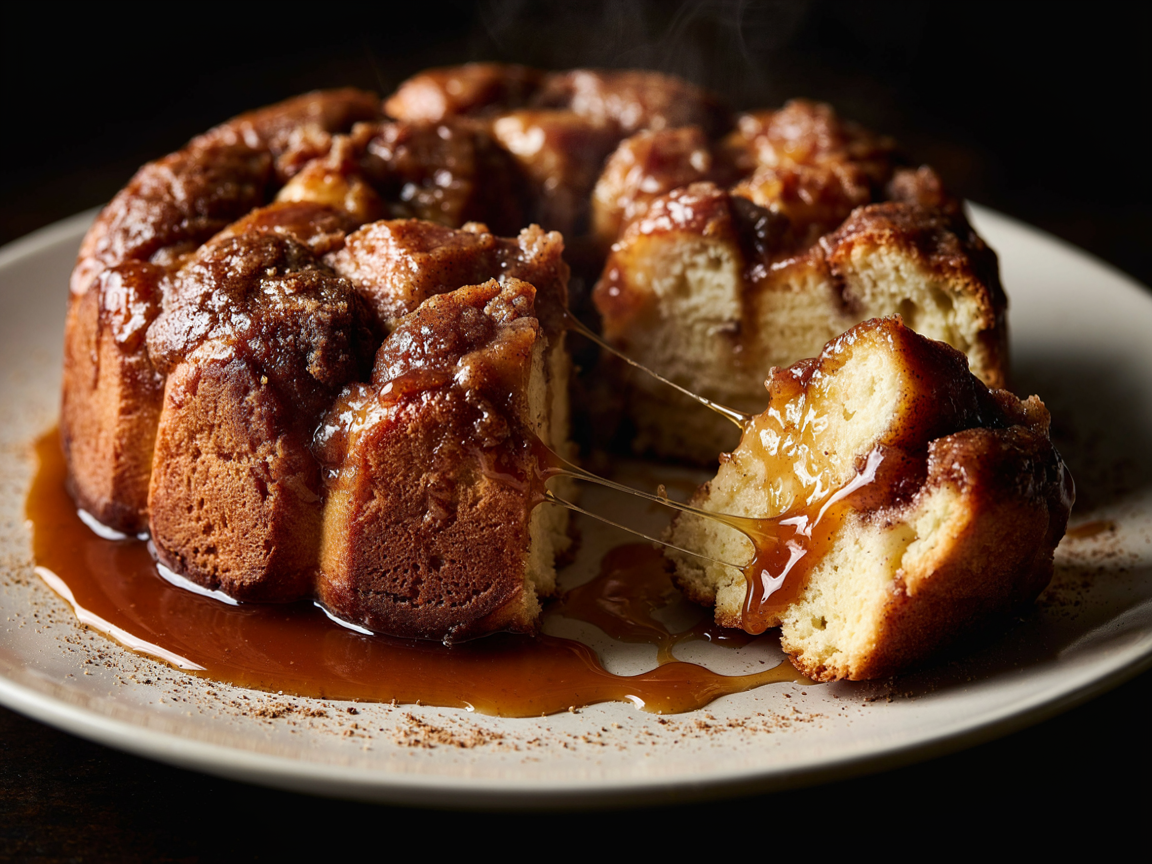
Served warm, straight from the plate, with no utensils involved.
Pick one:
Cream cheese filled
Press a ½-inch cube of cream cheese into the centre of every third roll before it goes in the pan. It stays soft and slightly tangy against the caramel, and it is the version people remember. Do not fill every roll or the bread loses its structure.
Apple and cinnamon
Toss 1 cup of finely diced peeled apple with a tablespoon of the brown sugar and scatter it between the layers of rolls. The apple releases moisture as it bakes, so add 5 minutes to the bake and expect a slightly softer bread.
Orange sweet roll
Add the finely grated zest of two oranges to the brown sugar mixture and finish the baked bread with a simple glaze of 1 cup powdered sugar whisked with 2 tablespoons orange juice. This is the one to make when the cinnamon version feels too familiar.
Extra salted caramel
Increase the butter to ⅔ cup, use dark brown sugar, and scatter a scant ½ teaspoon of flaky salt over the bread the moment it comes out of the oven. The salt on top stays distinct rather than dissolving into the caramel.
Savoury garlic and herb
Skip the sugar, cinnamon and pudding entirely. Toss the frozen rolls with ½ cup melted butter, 4 minced garlic cloves, 2 teaspoons dried herbs and ½ cup grated parmesan, rise the same way, and bake the same way. A completely different bread from the same method.
Muffin tin monkey bread
Cut each frozen roll into quarters once thawed enough to cut, and divide between 12 buttered muffin cups with the sugar and butter. Rise 2 to 3 hours and bake at 350°F for 18 to 20 minutes. Individual portions, crisper edges, and no inverting.
Substitutions That Actually Work
| Instead of | Use | What changes |
|---|---|---|
| Instead ofInstant butterscotch pudding mix | UseInstant vanilla pudding mix | What changesSlightly lighter and less toffee-like; everything else is identical |
| Instead ofInstant pudding mix entirely | Use1 cup brown sugar and ¾ cup butter, boiled together 1 minute | What changesA looser, glossier caramel that tastes more of toffee and less of butterscotch |
| Instead ofA 12-cup bundt pan | UseA 9×13 baking dish | What changesEasier to serve and no inverting; the pieces are shallower and crisper on top |
| Instead ofPecans | UseToasted walnuts, or nothing at all | What changesWalnuts are sharper against the sweetness; without nuts nothing else needs adjusting |
| Instead ofLight brown sugar | UseDark brown sugar | What changesDeeper, more molasses-heavy caramel and a noticeably darker finish |
| Instead ofAn overnight counter rise | UseAn overnight rise in the refrigerator | What changesSafer in a warm kitchen, but it needs 1 to 2 hours on the counter before baking |
| Instead ofCinnamon alone | UseCinnamon with ¼ tsp nutmeg and a pinch of cardamom | What changesWarmer and more complex, especially worth it around the holidays |
The one swap not worth making: thawed rolls in place of frozen to save the overnight wait. It is not a faster version of the same bread, it is a worse one — the dough over-proofs, the centre bakes dense and the caramel sinks. The same-day method above is the shortcut that actually works.
Troubleshooting
Pick whatever went wrong:
The middle is doughy
Either it went into the oven cold, or it never finished rising. The fix: bake for a further 8 to 10 minutes with foil laid loosely over the top, which cooks the centre without burning the surface. Next time, make sure the rolls have nearly doubled before baking and that a refrigerated pan has stood out for an hour first.
It stuck in the pan
The rest was too long. The fix: set the pan back in a 300°F oven for 3 to 4 minutes to soften the caramel, then invert immediately. Five minutes of rest is the rule, and it is worth setting a timer for because it is easy to be distracted by other things at breakfast.
It overflowed in the oven
Over-risen, usually in a warm kitchen overnight. The fix: nothing can be done mid-bake beyond sliding a foil-lined tray underneath to catch the spill. Next time check the rise at 6 hours, use a 12-cup pan rather than a 10-cup one, or move the rise to the refrigerator.
The caramel all ran to the bottom
Too much melted butter, or a rest that was too short. The fix: spoon the caramel from the plate back over the bread while it is still warm, which it will absorb. Keep the butter to ½ cup for 24 rolls and rest for the full five minutes.
The top burnt before the inside cooked
The pan sat too high in the oven. The fix: bake on the middle rack, and lay foil loosely over the top once the surface reaches the colour you want. A bundt pan is deep, and the top always reaches colour well before the centre is done.
Some bites are bland and others taste raw with cinnamon
The cinnamon was added separately rather than stirred into the sugar. The fix: always mix the two in a small bowl first. Cinnamon is light and clumps when it lands on wet dough, and once it clumps there is no redistributing it.
Questions, Answered
Do I need to thaw the frozen dinner rolls first?
No, and thawing them first is the most common way this goes wrong. The rolls go into the pan frozen and rise slowly at room temperature over 8 to 10 hours. That long, cold-start rise is what develops the flavour and gives an even texture; thawed rolls rise too fast, overflow the pan and bake up dense in the middle.
Can I make monkey bread with frozen dinner rolls the same day?
Yes. Thaw the rolls in the buttered pan, covered, for about 90 minutes until soft but not risen, then add the pudding mix, sugar, cinnamon and butter and let it rise for a further 2 to 3 hours until nearly doubled. It is good, though the overnight version has noticeably more flavour.
What happens if it rises too much overnight?
If the dough has climbed over the rim of the pan it will overflow in the oven and the centre will sink. Press it gently back down with buttered hands, set the pan on a foil-lined baking sheet to catch the caramel, and bake straight away. Next time either use fewer rolls or start the rise later.
Why did my monkey bread stick to the pan?
Almost always the five-minute rule. Caramel is liquid while hot and sets solid as it cools, so a bread left 15 or 20 minutes in the pan is cemented in. Rest it exactly five minutes and turn it out. The other cause is a pan greased with spray rather than butter worked into every groove.
Can I use a 9×13 pan instead of a bundt?
Yes, and it is easier to serve from. Arrange the rolls in a single layer, build it exactly the same way, and bake at 350°F for 25 to 30 minutes. Do not invert a 9×13 — serve it straight from the dish, spooning the caramel from the bottom over the top.
Do I have to use pudding mix?
No. Without it, use 1 cup of brown sugar and ¾ cup of melted butter, and bring them to a boil together for one minute before pouring over. The pudding mix version is thicker and more reliably caramel-like; the boiled-butter version is looser and tastes more straightforwardly of toffee.
Can I let it rise in the refrigerator instead?
Yes, and this is the better option if your kitchen is warm. Cover and refrigerate overnight, then take the pan out and let it stand at room temperature for 1 to 2 hours until the rolls have nearly doubled before baking. Baking it straight from cold gives you a doughy centre.
How do I reheat leftovers?
Cover with foil and warm in a 300°F oven for 10 to 12 minutes, which softens the caramel again without drying the bread. Individual pieces take about 15 seconds in the microwave. It is at its best the day it is baked and still good the next morning.
Butter every groove of the pan, keep the rolls frozen, scatter the pudding mix dry, and rest it for five minutes before you turn it out. Everything else about this bread is forgiving.
Pin this monkey bread with frozen dinner rolls so the overnight timings are there the night before you need them.