
Flying Dutchman Burger Recipe (In-N-Out Copycat with Sauce)
The In-N-Out secret-menu burger, made at home: two crispy smash patties and two slices of melty cheese, stacked between caramelized onion “buns” with a homemade special sauce. No bread, all burger.
Why make a homemade Flying Dutchman
The Flying Dutchman burger is In-N-Out’s most famous secret-menu order: two beef patties and two slices of melted cheese, with no bun at all. This Flying Dutchman burger recipe keeps that idea and makes it something you can actually pick up. The patties and cheese go between thick caramelized onion “buns,” with a five-minute special sauce on top.
The onion “buns” are the magic. Thick rounds of onion, cooked low and slow until they’re deeply golden, sweet and jammy, do everything a bun should. They hold the stack, add flavor and look amazing, and you get a juicy, high-protein burger with no bread at all.

Here’s why it’s worth making at home:
What is the Flying Dutchman at In-N-Out?
At In-N-Out, the Flying Dutchman is two beef patties with two slices of American cheese melted between them, and that’s all. No bun, no spread, and no lettuce, tomato or onion unless you ask for them.
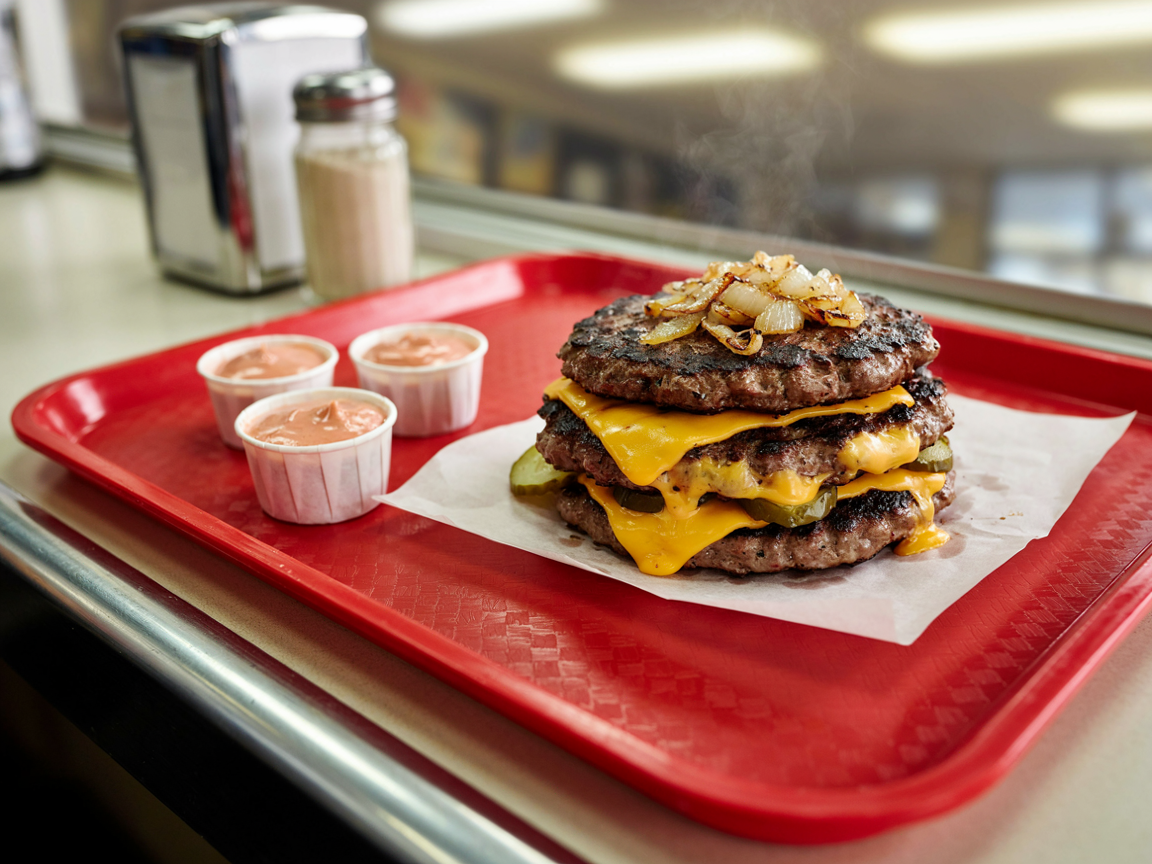
It isn’t printed on the menu board, but it’s one of the chain’s best-known “not-so-secret” orders, and staff know it by name. The full list of Flying Dutchman burger In-N-Out ingredients is just beef, salt and cheese. That’s why low-carb eaters love it, and also why it’s a little messy to eat with your hands.
How to order a Flying Dutchman
- Ask for it by name at the counter or the drive-thru: “One Flying Dutchman.”
- Want sauce? It comes plain, so ask for spread on it or on the side.
- Want onions? Ask for grilled or raw onions. Or ask for it wrapped in onion, which puts the patties and cheese between whole onion slices. That’s the idea behind this recipe.
- Go animal-style: mustard-grilled patties, grilled onions, pickles and extra spread.
- Size it up: you can ask for extra patties and cheese, like a 3×3.
In-N-Out original vs. this homemade Flying Dutchman
| In-N-Out Flying Dutchman | This homemade version | |
|---|---|---|
| Patties | 2 beef patties | 2 smash patties, 3 oz each |
| Cheese | 2 slices American | 2 slices American |
| “Bun” | None | 2 caramelized onion rounds |
| Sauce | None, unless you ask | Big Mac-style or In-N-Out-style spread |
| Calories | About 380 | About 800 |
| Protein | About 30g | About 39g |
| Fat | About 28g | About 60g |
| Carbs | 0 to 2g | About 20g |
In-N-Out doesn’t publish nutrition for secret-menu orders, so the original’s numbers are typical figures from nutrition-tracking apps. The homemade burger is bigger, with more beef plus the onion buns and sauce.
Where to get something like a Flying Dutchman
No In-N-Out near you? Most burger places will make the same thing if you order a double cheeseburger with no bun, or ask for it lettuce-wrapped. Or make this Flying Dutchman burger In-N-Out recipe at home in 30 minutes. It’s the closest thing to the original, with a crispier crust.
📌 Save this high-protein burger
The best Flying Dutchman burger recipe
Here’s how to make a Flying Dutchman at home. This Flying Dutchman recipe is made from scratch and makes 4 burgers. Check the scaler for a crowd, the seasoning blend for the patties, or the smash tips for perfect crispy edges.
🥫 Big Mac-style sauce
📋 Method
Save it to your phone or print it for the kitchen ✨
The perfect seasoning blend for a Flying Dutchman burger
In-N-Out keeps it simple and seasons its patties with salt. At home, a little more goes a long way, because a smash patty is thin and the crust is where all the flavor lives.
Mix this blend for 1½ lb of beef (4 burgers). It makes about 2¾ teaspoons:
Sprinkle it on right after you smash, not mixed into the beef. Seasoning the surface builds the crust. Salt mixed into raw ground beef makes the patty dense and springy.
Flying Dutchman burger recipe with sauce: pick your spread
The original comes plain, and a lot of people want to know which sauce from In-N-Out to add to a Flying Dutchman. So this Flying Dutchman In-N-Out recipe with sauce gives you three options, each enough for 4 burgers.
Big Mac-style sauce (on the card)
Tangy and a little sweet, with mustard: ½ cup mayo, 2 tbsp sweet pickle relish, 1 tbsp each yellow mustard and ketchup, 1 tsp white vinegar, and ½ tsp each onion powder, garlic powder and paprika.
In-N-Out-style spread
The Thousand Island-style one: ½ cup mayo, 2 tbsp ketchup, 1 tbsp sweet pickle relish, 1 tsp white vinegar and ½ tsp sugar. No mustard. Chill for 15 minutes before using.
Flying Dutchman high-protein burger sauce
Swap half the mayo for plain Greek yogurt: ¼ cup each of Greek yogurt and mayo, plus the relish, mustard, ketchup and spices from the card. It’s lighter and tangier, with a little extra protein.
Want the full sauce breakdown, with ratios and make-ahead tips? See our Flying Dutchman burger sauce recipe.
Flying Dutchman macros: homemade vs. In-N-Out
For one homemade burger as written, with two 3-oz smash patties, two slices of cheese, two onion rounds and about 2 tablespoons of sauce:
This is general food information, not medical or nutrition advice. For guidance tailored to your goals, check with a registered dietitian or your doctor.
Making Flying Dutchman burgers for a crowd?
Tap how many burgers you’re making. The amounts update instantly.
5 ways to make it yours
Same core burger, different spin. Tap a tab.
How to make the best Flying Dutchman burger: smash tips
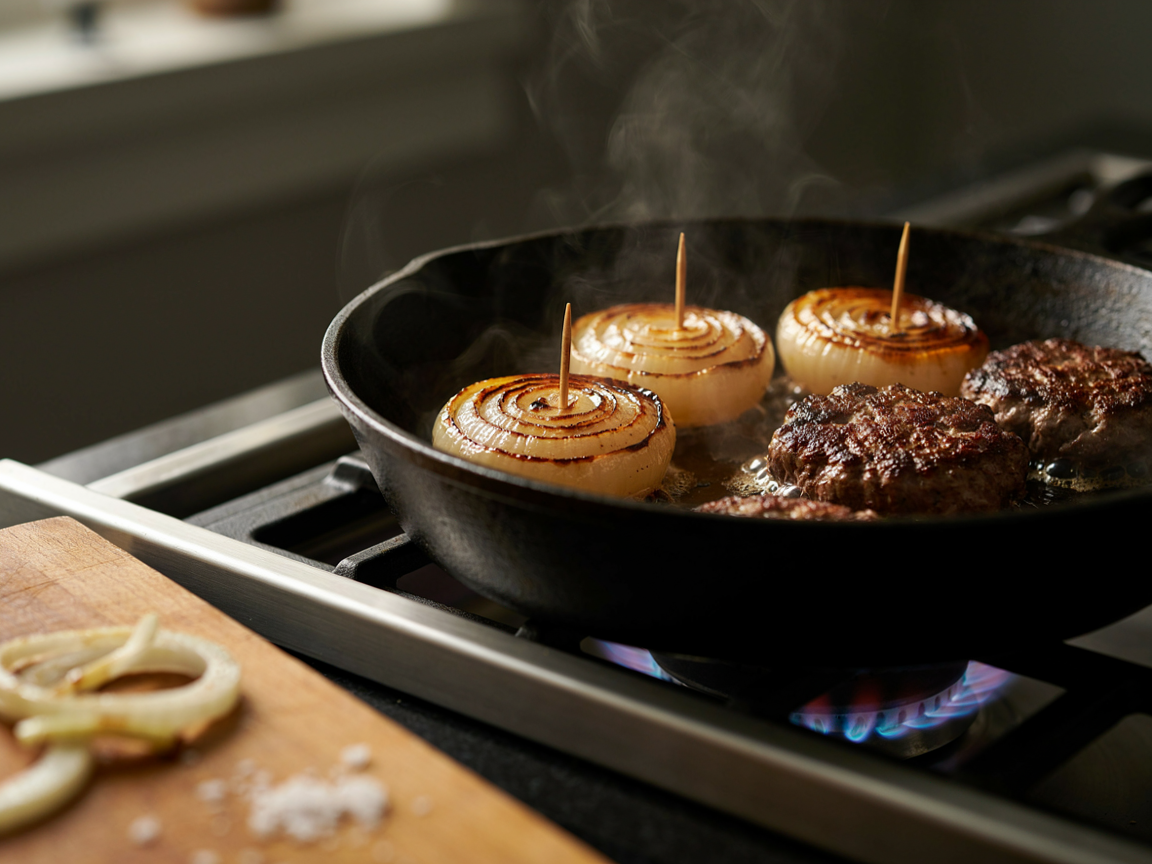
🔥 Get the pan screaming hot
Cast iron or a griddle, preheated until it’s just smoking. A hot surface is what gives you that deep, crispy crust the instant the beef hits it.
💪 Smash hard & fast
Press the ball thin within the first 30 seconds. After that the crust sets and it won’t flatten. Use parchment so the press doesn’t stick.
🚫 Don’t move it
Leave the patty alone until you flip. Fighting the urge to nudge it is what lets that lacy, browned crust form properly.
🧂 Season after smashing
Season the patty after you smash it, not before. Salting raw beef too early draws out moisture and firms up the texture.
🧀 Melt the cheese with steam
Add cheese right after the flip and cover the pan for a few seconds. A little trapped steam melts it perfectly over the edges.
🌡️ Cook it through
Smash patties are thin and cook fast. For food safety, take ground beef to 160°F (71°C).
Tools that make it easy
You don’t need much for great smash burgers, but these three make it foolproof.
🍳 Cast-iron skillet
Holds fierce, even heat, which is the single most important thing for a deep, crispy smash-burger crust.
Shop cast-iron skillets🍔 Burger press
Gets each patty evenly thin in one press, so they cook at the same rate and build maximum crust.
Shop burger presses🥄 Stiff metal spatula
A sharp, sturdy edge scrapes up every bit of that crispy crust without leaving it stuck to the pan.
Shop metal spatulasAs an Amazon Associate, Kitchen Guide 101 earns from qualifying purchases, at no extra cost to you.
Flying Dutchman burger FAQs
What is a Flying Dutchman burger?+
What comes on a Flying Dutchman at In-N-Out?+
Does the Flying Dutchman come with sauce?+
How many calories and how much protein are in a Flying Dutchman?+
What is the best seasoning for a Flying Dutchman burger?+
How do you order a Flying Dutchman?+
Where can I get something like a Flying Dutchman?+
Is the Flying Dutchman keto and low-carb?+
What is in Big Mac-style special sauce?+
How do you make caramelized onion buns that hold together?+
How do I get crispy smash burger edges?+
Can I make it with regular buns?+
More smash burgers and sauces to try
Flying Dutchman Burger Sauce Recipe
The spread on its own, with exact ratios and make-ahead tips.
Get the sauce → Onion LoversOklahoma Fried Onion Smash Burger
Paper-thin onions smashed right into the beef for a sweet, crispy crust.
See the recipe → TechniqueHow to Make a Smash Burger on the Stove
Restaurant-style crust from a regular skillet, step by step.
Learn the method → 30-Minute DinnerCrispy Smash Burger Tacos
The same crispy patties, pressed onto tortillas for taco night.
Make them tonight →🍔 Save it and fire up the pan
Pin this Flying Dutchman burger recipe so it’s ready next time you want a high-protein dinner that tastes like a treat. Then grab the recipe card and get smashing.

