
The Orange Pound Cake: Zesty, Buttery Crumb With Orange Glaze
A dense, fine-crumbed butter loaf with orange zest rubbed into the sugar, soaked in warm orange syrup straight from the oven and finished with a thick orange glaze that drips down the sides.
- Syrup-soaked, moist for days
- Loaf, minis or Bundt
- Five glazes
- Printable recipe
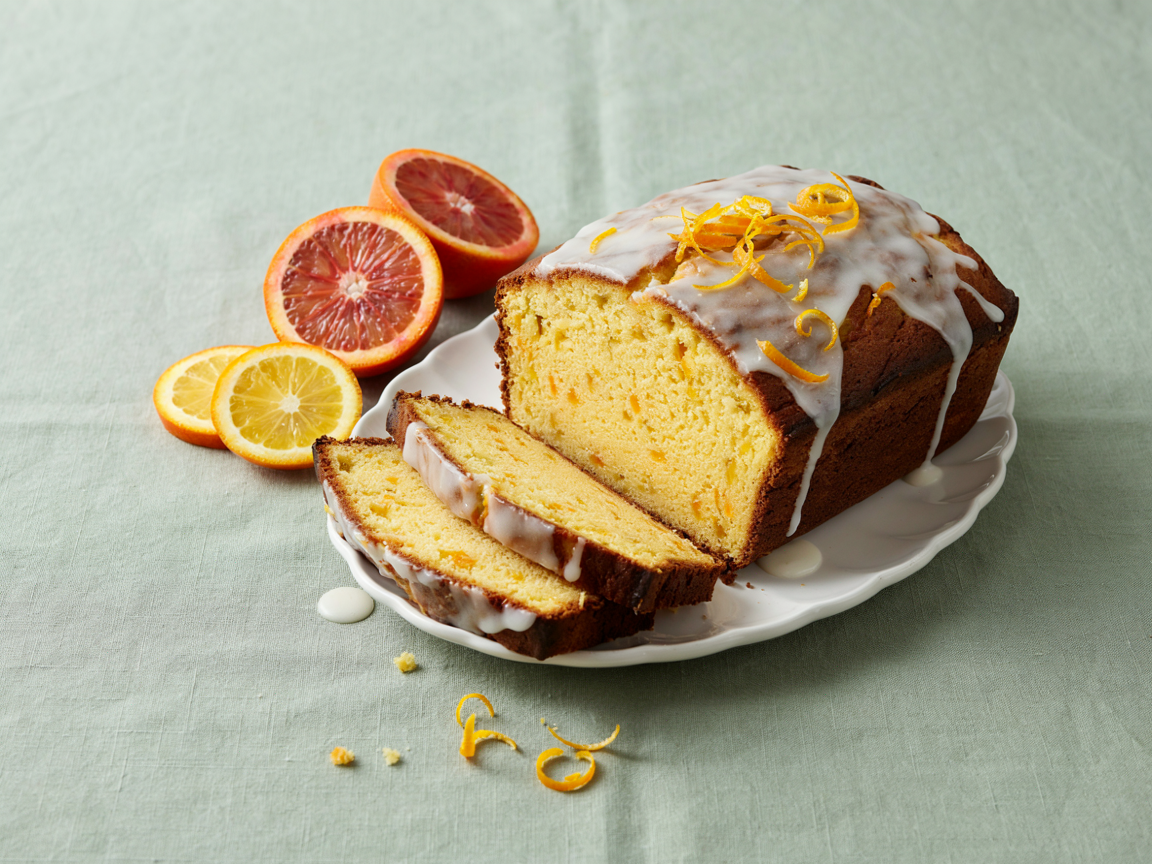
The loaf from the pin: a crackled golden crust, a buttery crumb and thick orange glaze running down the sides.
The best orange pound cake gets its flavor three times over: zest rubbed into the sugar, juice in the batter, then warm syrup and a thick glaze on top. The syrup keeps it moist for days, and it is even better on the second. The card makes one loaf and scales to mini loaves, two loaves or a Bundt.
In this post:
- Why this orange pound cake works
- What each ingredient does
- The recipe, from minis to a Bundt
- Five rules for a fine, moist crumb
- The syrup and five glazes
- Six versions, from marmalade to cranberry
- Storage, troubleshooting and 14 FAQs
Why This Orange Pound Cake Works
Orange in three layers
Zest rubbed into the sugar, juice in the batter, then syrup and glaze on top. Each layer adds orange in a different way, so the flavor lasts to the last slice.
Moist for days
Warm syrup poured over the hot cake soaks right into the crumb. The cake is better on day two than day one.
A pound cake crumb
Butter and sugar creamed for a full five minutes and a spoon of sour cream give the dense, fine, buttery texture a pound cake should have.
The drip from the pin
A thick powdered-sugar and orange glaze on a cold cake runs down the sides in slow ribbons instead of soaking in.
Ingredients for Orange Pound Cake
Unsalted butter
Soft enough to dent with a finger, not greasy. It is the body and the flavor of a pound cake.
Orange zest
The strongest orange flavor in the cake; the oils are in the peel. Zest only the orange part, with a microplane.
Fresh orange juice
For the batter, syrup and glaze. Bottled juice tastes flat next to fresh.
Sour cream
A small amount for moisture and a little tang. Plain Greek yogurt works the same.
Eggs
Room temperature, one at a time, so they emulsify with the butter instead of curdling it.
All-purpose flour
Spooned and leveled, or weighed: 190 g. Cake flour makes it softer and slightly less sturdy.
Orange Pound Cake Recipe
The card makes one 9×5-inch loaf, 10 slices. Tap a size and the amounts, pan and bake time update.
Orange Pound Cake
The cake from the pin: a buttery, fine-crumbed loaf with orange zest rubbed into the sugar, soaked in warm orange syrup straight from the oven and finished with a thick orange glaze that drips down the sides. Tap a size for mini loaves, two loaves or a Bundt.
What are you baking?
Ingredients
- 1 cup (225 g)1 cup (225 g)2 cups (450 g)2 cups (450 g) unsalted butter, softened
- 1 cup (200 g)1 cup (200 g)2 cups (400 g)2 cups (400 g) caster or granulated sugar
- 2 tbsp (2 oranges)2 tbsp (2 oranges)¼ cup (4 oranges)¼ cup (4 oranges) finely grated orange zest
- 3366 large eggs, room temperature
- 1½ cups (190 g)1½ cups (190 g)3 cups (380 g)3 cups (380 g) all-purpose flour
- 1 tsp1 tsp2 tsp2 tsp baking powder
- ¼ tsp¼ tsp½ tsp½ tsp fine salt
- ⅓ cup (80 ml)⅓ cup (80 ml)⅔ cup (160 ml)⅔ cup (160 ml) fresh orange juice
- 2 tbsp2 tbsp¼ cup¼ cup sour cream or plain Greek yogurt
- 1 tsp1 tsp2 tsp2 tsp alcohol-free vanilla
- ¼ cup + 3 tbsp¼ cup + 3 tbsp½ cup + 6 tbsp½ cup + 6 tbsp orange juice and sugar, for the syrup
- 1 cup (120 g)1 cup (120 g)2 cups (240 g)2 cups (240 g) powdered sugar, for the glaze
- 2 to 3 tbsp + 1 tsp2 to 3 tbsp + 1 tsp4 to 6 tbsp + 2 tsp4 to 6 tbsp + 2 tsp orange juice and zest, for the glaze
Fresh oranges: about 3 large ones give the zest and all the juice for one loaf. Room temperature butter, eggs and sour cream, or the batter curdles. Alcohol-free vanilla keeps it halal; vanilla bean paste works too. Weigh the flour if you can; too much makes a dry cake.
Instructions
Prepare
Heat the oven to 325°F (160°C). Grease four 5¾×3-inch mini loaf pansa 9×5-inch loaf pantwo 9×5-inch loaf pansa 12-cup Bundt pan, buttered and floured in every ridge and line the loaf pans with parchment, leaving an overhang to lift the cake out. Set out the butter, eggs and sour cream an hour ahead.
Rub the zest into the sugar
Rub the orange zest into the sugar with your fingertips for a minute, until the sugar is damp and smells strongly of orange.
Cream for 5 minutes
Beat the butter with the orange sugar on medium-high for 4 to 5 minutes, until pale and fluffy. This is where the fine crumb comes from.
Add the eggs
Beat in the eggs one at a time, scraping the bowl after each. If the batter looks curdled, add a spoonful of the flour.
Alternate flour and juice
Whisk the flour, baking powder and salt. Stir the orange juice, sour cream and vanilla together. Add to the butter in three parts, starting and ending with flour, on low or by hand, just until no flour shows.
Bake
Spread the batter level and bake 35 to 40 minutes55 to 65 minutes55 to 65 minutes, side by side on the center rack65 to 75 minutes, until deep golden, cracked along the top and a skewer in the center comes out clean. Tent with foil if it browns too fast.
Soak with syrup
Simmer the syrup juice and sugar for 2 minutes. As soon as the cake comes out, poke 20 to 25 holes over the top with a skewer and spoon the warm syrup over slowly. Cool 15 minutes in the pan, then lift out onto a rack.
Glaze when cold
Whisk the powdered sugar with the juice and zest until thick but pourable. Spoon it over the completely cooled cake and let it run down the sides. Set 20 minutes before slicing.
Five Rules for a Moist, Fine Crumb
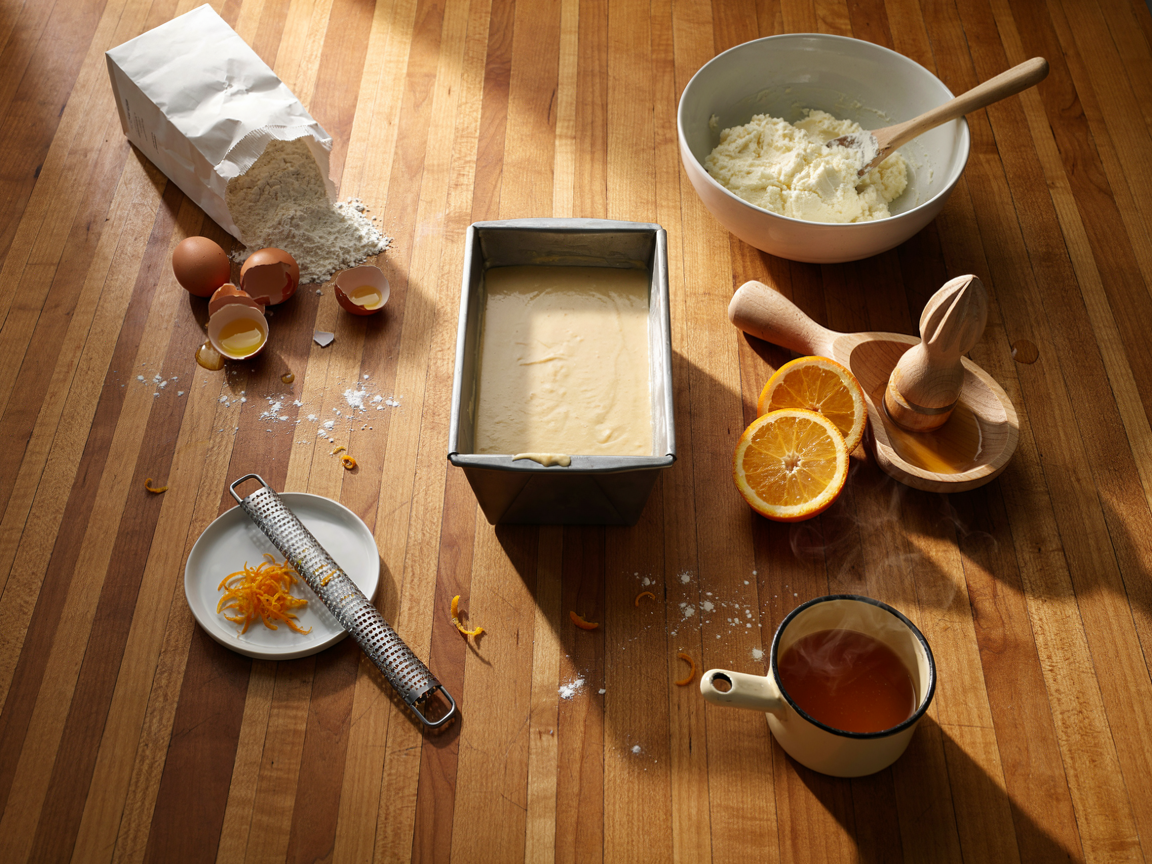
Into the pan: the batter smoothed in a lined loaf pan, fresh zest, halved oranges and the syrup ready on the stove.
Everything at room temperature
Cold eggs or sour cream make the creamed butter seize and curdle. An hour on the counter is enough.
Cream for a full 5 minutes
Pale, fluffy and visibly bigger. Under-creamed butter gives a heavy, greasy cake.
Fold in the flour, do not beat it
Low speed or a spatula, and stop when the flour disappears. Overmixing gives a tough cake with tunnels.
Syrup on the hot cake
Pour it within a minute of the cake leaving the oven, so the crumb drinks it in.
Glaze on the cold cake
On a warm cake the glaze melts and vanishes. Wait until it is cold for the thick drip on the pin.
The Orange Syrup and Glaze
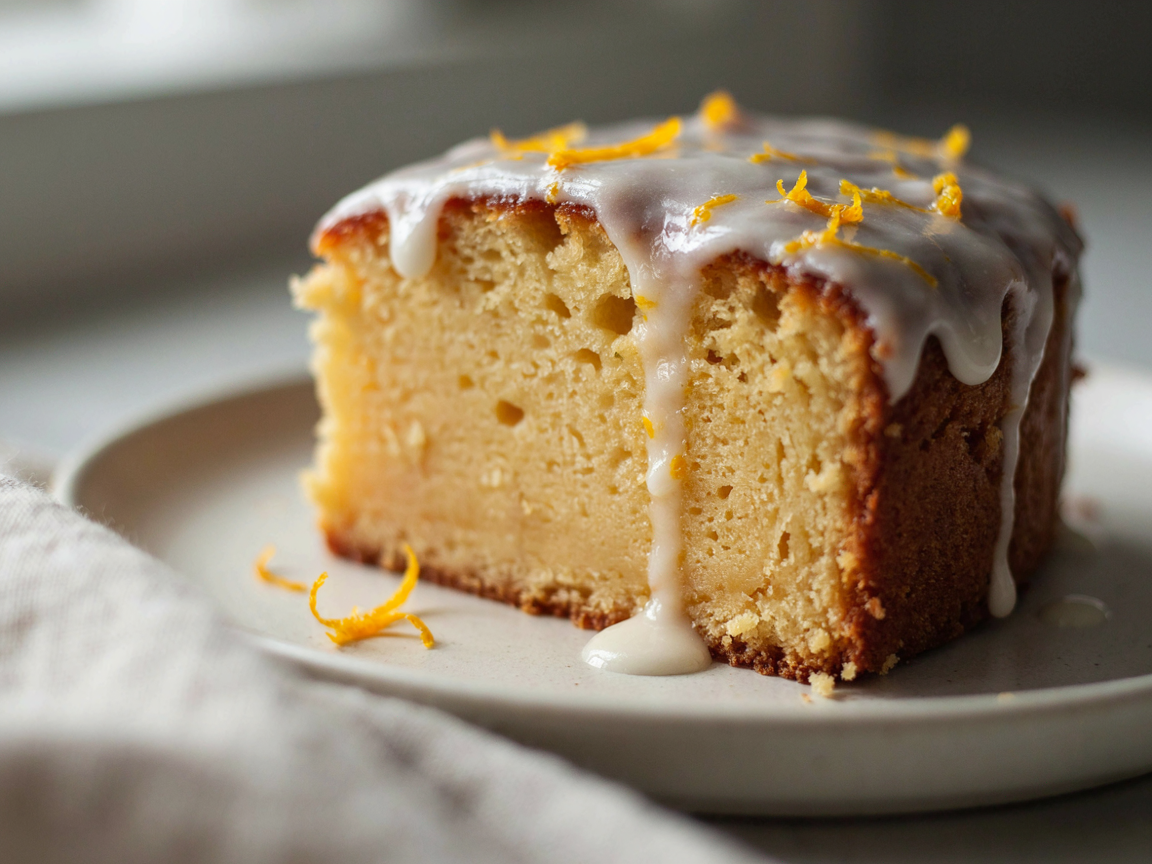
Up close: the crumb glistening where the syrup soaked in, under a thick glaze with fine zest.
The syrup goes on the hot cake; the glaze goes on the cold one. For the glaze, pick the finish you want:
| Finish | Mix | Result |
|---|---|---|
| FinishThin drizzle | Mix1 cup powdered sugar + 3 to 4 tbsp juice | ResultFine lines, sets translucent |
| FinishThick drip (as on the pin) | Mix1 cup powdered sugar + 2 tbsp juice + 1 tsp zest | ResultWhite, opaque ribbons down the sides |
| FinishCream cheese glaze | Mix2 oz cream cheese + 1 cup powdered sugar + 2 tbsp juice | ResultRicher and tangy; keep chilled |
| FinishMarmalade glaze | Mix⅓ cup marmalade warmed with 1 tbsp juice | ResultGlossy, bittersweet, with peel |
| FinishJust the syrup | MixNo glaze at all | ResultA crisp sugared top, less sweet |
Six Ways to Make Orange Pound Cake
Same batter, a different twist. Tap a version:
Orange Pound Cake
The cake above: zest in the sugar, orange syrup soak, thick orange glaze. The loaf on the pin.
Orange Marmalade Butter Cake
Fold ⅓ cup orange marmalade into the batter with the last of the flour, then brush the warm cake with marmalade melted with a spoon of juice instead of the syrup. Bittersweet, with chewy bits of peel.
Blood Orange Pound Cake
Use blood orange zest and juice throughout. The glaze turns pale pink, and blood orange slices on top look like the ones on the pin.
Cranberry Orange Pound Cake
Toss 1 cup fresh or frozen cranberries in a spoon of flour and fold them in last. The holiday version: tart red pockets in the gold crumb.
Orange Chocolate Chip Pound Cake
Fold in ¾ cup mini dark chocolate chips, tossed in flour so they do not sink. Orange and dark chocolate, like a chocolate orange.
Orange Cream Cheese Pound Cake
Replace half the butter with 4 oz soft cream cheese and skip the sour cream. Denser, richer and even moister, with a tangy edge.
Serving and Storing Orange Pound Cake
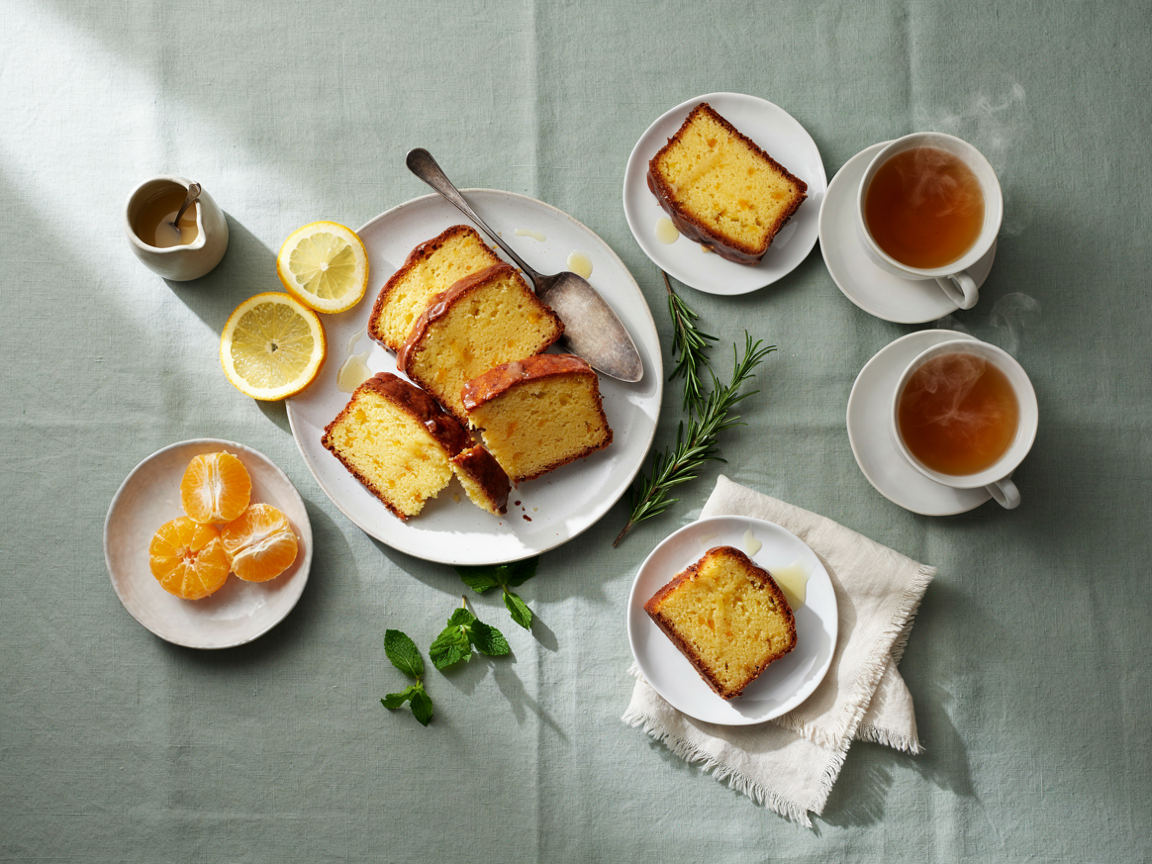
Afternoon tea: the glazed loaf sliced on a white plate, cups of tea and fresh orange segments.
Ways to serve it:
- With tea or coffee, sliced thick, on its own
- Lightly toasted in a dry pan, with a spoon of Greek yogurt and orange segments
- As dessert, with whipped cream and fresh berries
- More cakes: a moist lemon Bundt or vanilla cake from scratch
- Other toppings: brown butter cream cheese frosting or old-fashioned caramel icing
Storage and Make Ahead
| How | How long | |
|---|---|---|
| Room temperature | HowWrapped tightly, or in a cake tin | How long4 days; best on day 2 |
| Fridge | HowWrapped, especially with a cream cheese glaze | How long1 week; bring to room temperature to serve |
| Freezer | HowUnglazed, double-wrapped, whole or sliced | How long3 months; thaw wrapped, then glaze |
| Make ahead | HowBake and syrup the day before, glaze on the day | How longThe crumb is moister the next day |
Troubleshooting
| Problem | Likely cause | Fix |
|---|---|---|
| ProblemSunk in the middle | Likely causeUnderbaked, or the oven door opened early | FixBake until a skewer is clean; keep the door shut for 40 minutes |
| ProblemDense, gummy streak | Likely causeUnder-creamed butter or cold ingredients | FixRoom temperature, 5 minutes of creaming |
| ProblemDry | Likely causeToo much flour or overbaked | FixWeigh the flour; start checking at 55 minutes; do not skip the syrup |
| ProblemCurdled batter | Likely causeCold eggs | FixAdd a spoonful of flour; it bakes up fine |
| ProblemTop browning too fast | Likely causeHot oven or dark pan | FixTent loosely with foil after 40 minutes |
| ProblemGlaze soaked in | Likely causeCake still warm | FixGlaze only a completely cold cake |
| ProblemGlaze too runny | Likely causeToo much juice | FixAdd powdered sugar a spoonful at a time |
| ProblemCracked top | Likely causeNormal for pound cake | FixThat crack is the sign of a good one |
Nutrition (approximate, per slice)
One of ten slices with syrup and the thick glaze. Halal with alcohol-free vanilla; contains dairy, eggs and gluten.
Orange Pound Cake: FAQs
How do you make orange pound cake moist?
Three things: room-temperature ingredients creamed properly, a spoon of sour cream in the batter, and warm orange syrup poured over the cake the moment it comes out of the oven. Wrapped, it is even moister on day two.
Why do you pour syrup over pound cake?
The hot cake soaks up the warm syrup, which keeps the crumb moist for days and adds a second layer of orange flavor. Poke 20 to 25 holes first so it reaches the middle.
Can I use bottled orange juice?
It works, but the cake tastes flatter. You need fresh oranges for the zest anyway, and three large ones give all the juice for one loaf.
How many oranges do I need?
About 3 large oranges for one loaf: two for the zest, and all three squeezed for the batter, syrup and glaze.
Why did my pound cake sink in the middle?
It was underbaked, or the oven door was opened too early. Bake until a skewer in the center comes out clean, and keep the door closed for the first 40 minutes.
Why is my pound cake dense or gummy?
Cold ingredients or butter that was not creamed long enough. Everything should be at room temperature, and the butter and sugar beaten for a full 4 to 5 minutes.
Can I bake it in a Bundt pan?
Yes. Double the recipe for a 12-cup Bundt, butter and flour every ridge, and bake 65 to 75 minutes at 325°F. Tap Bundt on the card for every amount.
Can I make mini loaves?
One batch fills four 5¾ by 3-inch mini loaf pans. Bake 35 to 40 minutes. They make good gifts, glazed and wrapped.
How do I make the glaze thick enough to drip?
Use only 2 tbsp orange juice per cup of powdered sugar, add more a teaspoon at a time, and pour it over a completely cold cake. The glaze table above has five versions.
Can I freeze orange pound cake?
Yes, for up to 3 months. Freeze it after the syrup but before the glaze, double-wrapped. Thaw it still wrapped at room temperature, then glaze.
How long does orange pound cake keep?
4 days at room temperature, wrapped tightly, or a week in the fridge. With a cream cheese glaze, keep it in the fridge.
Can I use orange marmalade?
Yes. Fold ⅓ cup marmalade into the batter and brush the warm cake with melted marmalade instead of the syrup. It is in the tabs above.
Can I use cake flour?
Yes, the same weight (190 g), for a softer, more delicate crumb. All-purpose flour gives the classic sturdy pound cake slice.
Is this cake halal?
Yes with alcohol-free vanilla or vanilla bean paste. Ordinary vanilla extract contains alcohol.
Save the pin so the recipe, the glaze table and the six versions are one tap away.
More Cakes and Toppings
A lemon Bundt, vanilla cake, pumpkin bread, two toppings and the holiday cakes.
Moist Lemon Bundt Cake
The lemon cousin. See the recipe → From ScratchVanilla Cake
Moist and easy. See the recipe → LoafPumpkin Pie Bread
Another loaf for fall. See the recipe → ToppingBrown Butter Cream Cheese Frosting
Rich and silky. See the recipe → ToppingCaramel Icing
Old-fashioned, stovetop. See the recipe → HolidayThanksgiving Cakes
For the holiday table. See the cakes →Zest in the sugar, five minutes of creaming, syrup on the hot cake, glaze on the cold one. Bright, buttery and better the next day.
Pin this orange pound cake for your next bake.