
Best Turkey Burger Recipe: Juicy, Easy and Full of Flavor
Grated onion and a spoon of olive oil in the mix, Worcestershire and smoked paprika for depth, and a hard sear in a hot skillet. Crisp outside, juicy inside, on the table in 20 minutes.
- 20 minutes
- No egg, no breadcrumbs
- Skillet, grill or air fryer
- Printable recipe
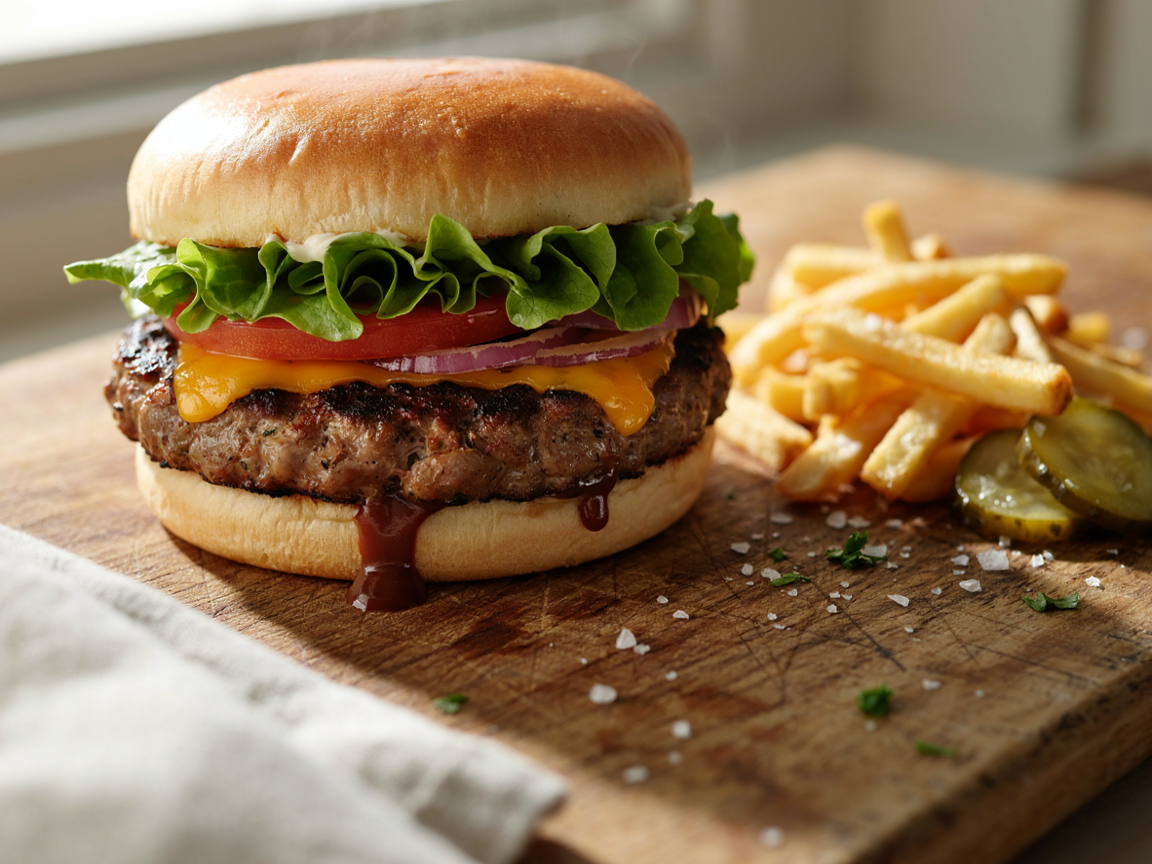
A turkey burger with a deep golden crust, melted cheddar, lettuce, tomato and red onion on a toasted brioche bun.
The best turkey burger recipe fixes turkey’s one problem: it is lean, so it dries out. The fix is grated onion and a spoon of olive oil in the meat, then a hard sear in a very hot pan without pressing. The card scales from 2 to 8 burgers; the methods table covers the grill and air fryer.
In this post:
- Why these turkey burgers stay juicy
- The recipe, from 2 to 8 burgers
- Five rules for burgers that hold together
- Skillet, grill, air fryer, oven and frozen
- Doneness, and which turkey to buy
- Six flavors and six topping combos
- Sides, make ahead, troubleshooting and 14 FAQs
Why These Turkey Burgers Stay Juicy
Grated onion bastes from the inside
Grated, not diced, the onion turns to a wet pulp that spreads through the meat and keeps every bite moist as it cooks.
Oil goes into the mix
Ground turkey has little fat. A tablespoon of olive oil worked into the meat puts back what it is missing, through the whole patty rather than on the surface.
Umami for a mild meat
Worcestershire, smoked paprika and garlic give turkey the savory depth people miss from beef. Soy sauce works the same way.
A crust that seals it
A very hot pan and no pressing or moving build a golden crust in 4 minutes a side. Twenty minutes start to finish.
Juicy Turkey Burger Recipe
The card makes 4 burgers from 1 lb of turkey. Tap a size and everything updates.
Juicy Turkey Burgers
Ground turkey made juicy with grated onion and a spoon of olive oil in the mix, seasoned with Worcestershire and smoked paprika, seared hard in a hot skillet to 165°F. Tap a batch size and the printable card updates.
How many burgers?
Ingredients
- ½ lb1 lb1½ lb2 lb ground turkey, 93% lean
- ¼½ medium¾ medium1 medium onion, grated on a box grater (not diced)
- 1234 garlic cloves, minced
- 1½ tsp1 tbsp1½ tbsp2 tbsp Worcestershire sauce (or soy sauce)
- 1½ tsp1 tbsp1½ tbsp2 tbsp olive oil, mixed into the meat
- ½ tsp1 tsp1½ tsp2 tsp smoked paprika
- ¼ tsp each½ tsp each¾ tsp each1 tsp each garlic powder and onion powder
- a pinch¼ tsp¼ tsp + a pinch½ tsp cayenne
- ½ tsp¾ tsp1¼ tsp1½ tsp salt
- a pinch¼ tsp¼ tsp + a pinch½ tsp black pepper
- 1½ tsp1 tbsp1½ tbsp2 tbsp oil, for the pan
- 2468 sharp cheddar slices (optional)
- 2468 brioche buns
- lettuce, tomato, red onion and pickles, to serve
93% lean turkey is the sweet spot; 99% lean needs an extra tablespoon of oil. Worcestershire is made with vinegar and anchovies and is usually alcohol-free; check the label, or use soy sauce. Halal turkey as needed. A thermometer is the only reliable test: 165°F in the center.
Instructions
Mix gently
Grate the onion straight into the turkey so none of its juice is lost. Add the garlic, Worcestershire, olive oil and all the seasonings and mix with your hands just until combined. Overmixing makes tough, springy patties.
Shape with a dimple
Divide into equal portions and shape patties about ¾ inch thick and a little wider than the buns. Press a shallow dimple into the center of each so they cook flat instead of doming.
Chill
Refrigerate the patties 15 to 30 minutes on a plate. Cold patties hold together and build a better crust. Optional, but worth it.
Sear, without touching
Heat the pan oil in a cast-iron or heavy skillet over medium-high for 3 minutes. Add the patties, in batches of four at most, and leave them alone for 4 to 5 minutes until a deep golden crust forms and they release.
Flip once, to 165°F
Flip and cook 4 to 5 minutes more, until the center reads 165°F. Lay the cheese on for the last minute and cover the pan to melt it. Never press the patties.
Rest, toast, build
Rest the patties 3 minutes. Meanwhile toast the cut buns in the pan drippings for 30 to 45 seconds. Build with lettuce, tomato, onion and pickles and serve straight away.
Five Rules for Turkey Burgers That Hold Together
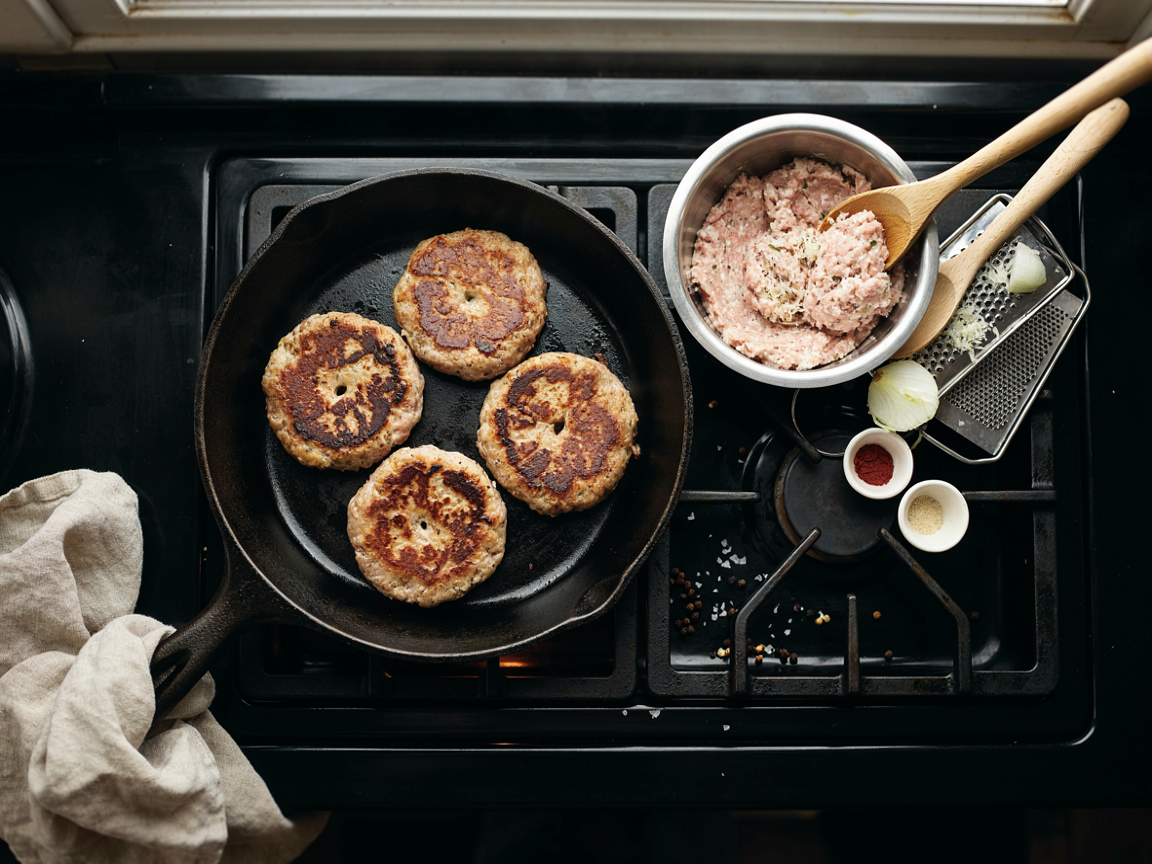
In the pan: four dimpled patties searing in cast iron, the grated-onion mix and spices beside the stove.
Grate the onion, do not dice it
Diced onion stays in chunks and does nothing for moisture. Grated onion disappears into the meat and keeps it juicy.
Mix just until combined
Turkey turns tough and rubbery when overworked. Use your hands, and stop as soon as the seasoning is through.
Dimple and chill
A thumbprint in the center stops the patty doming; 15 to 30 minutes in the fridge stops it falling apart.
Hot pan, hands off
Medium-high heat, four patties at most, no touching for 4 to 5 minutes. Pressing squeezes the juice out; early flipping tears the crust.
165°F, then rest
Turkey cannot be served pink. Check the center, rest 3 minutes, and toast the buns in the drippings while you wait.
How to Cook Turkey Burgers: Skillet, Grill, Air Fryer or Oven
For ¾-inch patties. Every method ends at the same place: 165°F in the center.
| Method | Heat | Time | Notes |
|---|---|---|---|
| MethodSkillet (as written) | HeatMedium-high, 3-minute preheat | Time4 to 5 min a side | NotesThe best crust |
| MethodGrill | HeatMedium-high, grates oiled, patties chilled 30 min | Time5 to 6 min a side, flip once | NotesUse a wide, thin spatula |
| MethodAir fryer | Heat380°F, single layer, no preheat needed | Time10 to 12 min, flip halfway | NotesLess crust, very juicy |
| MethodOven | Heat425°F on a rack over a lined sheet | Time15 to 18 min, no flip | NotesHands-off for 8 or more |
| MethodFrom frozen (raw) | HeatSkillet, medium heat, covered for the first side | TimeAdd 3 to 4 min a side | NotesSeason the outside again |
How to Know When a Turkey Burger Is Done
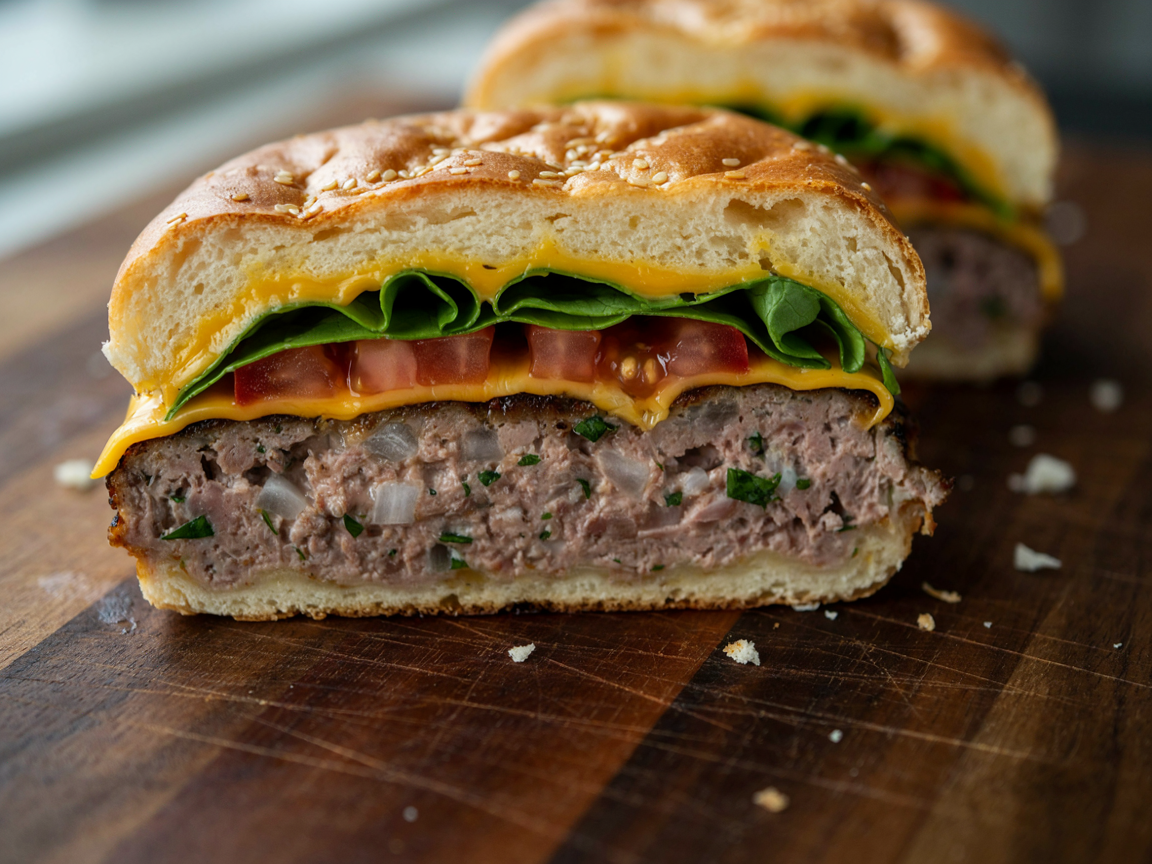
Cut open at 165°F: white all the way through, still glistening, with specks of grated onion.
| Temperature | What you see | What to do |
|---|---|---|
| TemperatureUnder 165°F | What you seePink or grey-pink center, soft when pressed | What to doBack in the pan, 2 more minutes a side on medium |
| Temperature165°F (perfect) | What you seeWhite through, firm but springy, juices clear | What to doRest 3 minutes and serve |
| TemperatureAbove 175°F | What you seeVery firm, dense, dark outside | What to doDry; next time check at 4 minutes a side |
Which Ground Turkey to Buy
| Turkey | Result | Adjust |
|---|---|---|
| Turkey99% lean | ResultDry and crumbly | AdjustAdd an extra tablespoon of oil and pull at exactly 165°F |
| Turkey93% lean (best) | ResultJuicy and holds together | AdjustThe recipe as written |
| Turkey85% lean | ResultThe juiciest, most like beef | AdjustSkip the oil in the mix; drain the pan |
| TurkeyGround turkey breast | ResultVery lean, mild | AdjustTreat as 99%: extra oil, gentle mixing |
Six Ways to Season Turkey Burgers
The same method, a different mix. Tap a flavor:
Classic Juicy Turkey Burger
The recipe above: grated onion, Worcestershire, smoked paprika. Savory and slightly smoky; works with every topping in the combo table.
BBQ Smokehouse Turkey Burger
Swap the Worcestershire for 2 tbsp BBQ sauce in the mix, add 1 tsp brown sugar and ½ tsp each cumin and chilli powder. Brush with more sauce in the last 2 minutes for a glossy, caramelized crust.
Mediterranean Feta Turkey Burger
Mix in ½ cup crumbled feta, 2 tbsp chopped parsley, 1 tsp oregano and 1 tbsp lemon zest; skip the Worcestershire and paprika. Serve in warm pita with tzatziki, cucumber and tomato.
Ginger Soy Turkey Burger
Use 2 tbsp soy sauce, 1 tbsp sesame oil, 1 tbsp grated ginger and 1 tsp sriracha in place of the Worcestershire, olive oil and paprika. Sesame bun, sriracha mayo and a crunchy cabbage slaw.
Jalapeño Cheddar Turkey Burger
Fold ½ cup shredded sharp cheddar and 1 finely chopped jalapeño into the mix. Pockets of melted cheese inside every bite; pepper jack slices on top for more heat.
Mushroom Swiss Turkey Burger
Cook as written, top with mushrooms sautéed in butter with thyme and a slice of Swiss in the last minute. A spoon of the mushroom juices on the bun.
Turkey Burger Toppings: Six Combos
Pick a row, or mix and match:
| Combo | Toppings | Sauce |
|---|---|---|
| ComboClassic | ToppingsCheddar, lettuce, tomato, red onion, pickles | SauceKetchup and mustard |
| ComboSmokehouse | ToppingsTurkey or beef bacon, cheddar, crispy onions | SauceBBQ sauce |
| ComboCalifornia | ToppingsAvocado, tomato, sprouts, pepper jack | SauceChipotle mayo |
| ComboCaramelized onion | ToppingsSlow-cooked onions, sharp cheddar, arugula | SauceGarlic mayo |
| ComboBreakfast | ToppingsFried egg, turkey bacon, cheddar | SauceSriracha mayo |
| ComboGreek | ToppingsFeta, cucumber, tomato, red onion | SauceTzatziki |
What to Serve With Turkey Burgers, and How to Store Them
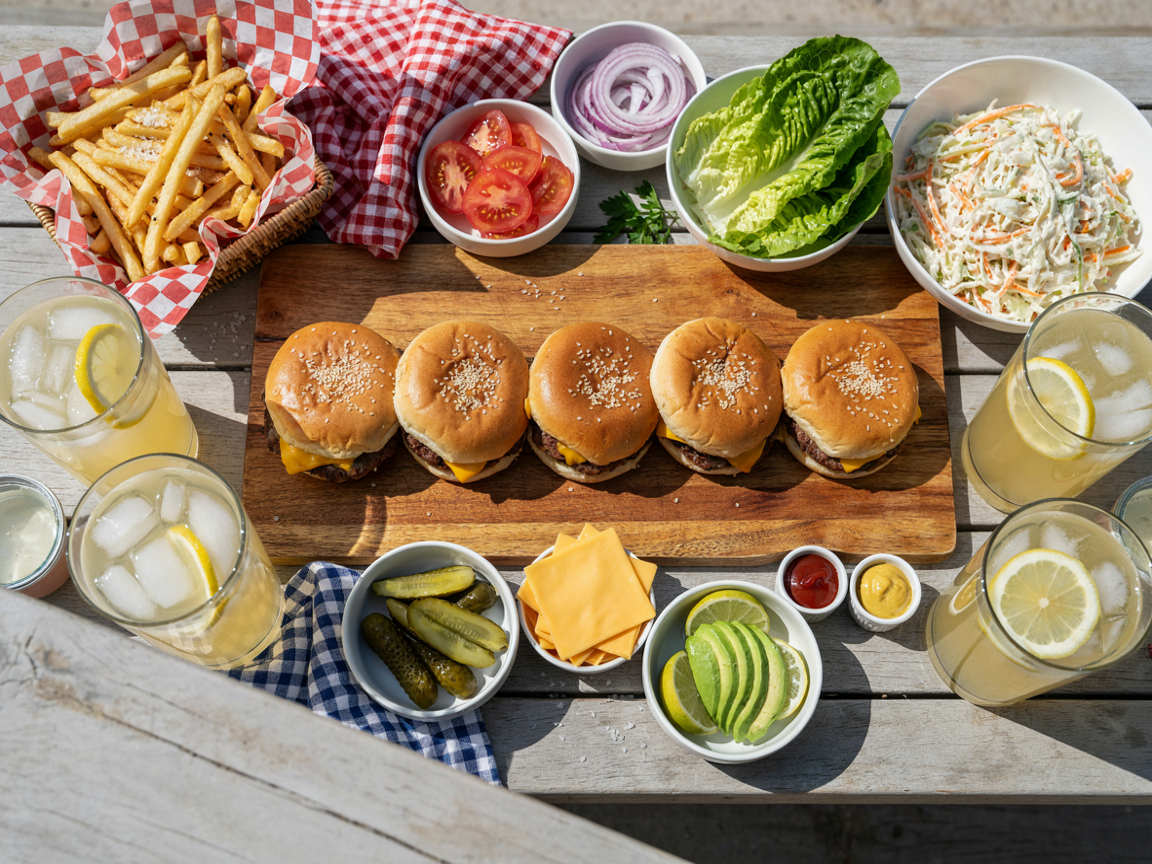
Burger night: four turkey burgers, a build-your-own toppings spread, fries, coleslaw and lemonade.
What to put on the table with them:
- The sauce: turkey burger sauce
- Off the grill: grilled turkey burgers
- A big side: cowboy baked beans
- Something crunchy: crispy zucchini tots
- Something green: broccoli salad
- For dipping: guacamole
Make Ahead and Freezing
| How | How long | |
|---|---|---|
| Mix ahead | HowShaped patties, covered, in the fridge | How longUp to 1 day |
| Freeze raw | HowParchment between patties, flat in a bag | How long3 months; cook from frozen |
| Freeze cooked | HowCooled, wrapped individually | How long3 months; reheat at 375°F, 10 to 12 min |
| Leftover patties | HowAirtight in the fridge | How long3 to 4 days; crumble into pasta or wraps |
| Meal prep | HowPatties over salad or rice with the sauce on the side | How longReheat until steaming |
Troubleshooting
| Problem | Likely cause | Fix |
|---|---|---|
| ProblemDry burger | Likely causeToo lean, overcooked, or pressed | Fix93% lean, grated onion, oil in the mix, pull at 165°F |
| ProblemFalls apart | Likely causeOvermixed, too warm, or pan not hot | FixMix gently, chill 15 minutes, preheat the pan 3 minutes |
| ProblemSticks to the pan | Likely causeFlipped too early | FixWait until it releases on its own |
| ProblemDomed, uneven | Likely causeNo dimple | FixPress a thumbprint into the center |
| ProblemBland | Likely causeTurkey is mild | FixWorcestershire or soy, smoked paprika and enough salt |
| ProblemPale, no crust | Likely causePan too cool or crowded | FixMedium-high, four at a time |
| ProblemSoggy bun | Likely causeUntoasted bun under juicy toppings | FixToast in the drippings; lettuce under the patty |
Nutrition (approximate, per burger)
One 4-oz patty (93% lean) with a slice of cheddar on a brioche bun, before sauces. The patty alone is about 200 calories and 22 g protein.
Turkey Burgers: FAQs
How do you make turkey burgers juicy?
Grate the onion into the meat instead of dicing it, work a tablespoon of olive oil into the mix, use 93% lean turkey, sear in a very hot pan without pressing, and take them off at 165°F. Rest 3 minutes before serving.
How long do you cook turkey burgers?
4 to 5 minutes a side in a skillet over medium-high, for ¾-inch patties; 5 to 6 a side on the grill; 10 to 12 minutes in an air fryer at 380°F. The center must reach 165°F.
What temperature should turkey burgers be?
165°F in the center, checked with an instant-read thermometer. Unlike beef, ground turkey cannot be served pink.
Do turkey burgers need egg or breadcrumbs?
No. Breadcrumbs soak up moisture and egg can make the patties rubbery. Grated onion and gentle mixing keep them moist, and chilling holds them together.
Why do my turkey burgers fall apart?
Overmixing, warm patties or a pan that is not hot enough. Mix just until combined, chill the patties 15 minutes, and preheat the pan for 3 minutes before they go in.
Can I use 99% lean ground turkey?
Yes, but it is drier. Add an extra tablespoon of olive oil to the mix and take the burgers off at exactly 165°F. The grated onion matters even more.
Can I grill turkey burgers?
Yes. Chill the patties 30 minutes, oil the grates, and grill over medium-high 5 to 6 minutes a side, flipping once with a wide, thin spatula.
Can I make turkey burgers in the air fryer?
Yes: 380°F for 10 to 12 minutes in a single layer, flipping halfway, to 165°F. They are very juicy, with a lighter crust than the skillet.
Are turkey burgers healthier than beef burgers?
Usually lower in fat and calories: 4 ounces of raw 93% lean turkey has about 170 calories and 9 g fat, against about 290 calories and 23 g fat for 80/20 beef. Protein is similar, about 20 to 22 g. The toppings make the bigger difference.
What is the best cheese for turkey burgers?
Sharp cheddar, for flavor that stands up to the mild meat. Pepper jack for heat, Swiss with mushrooms, provolone for a clean melt. Very mild cheeses disappear.
Can I make turkey burgers ahead or freeze them?
Shape them a day ahead and keep them covered in the fridge. Freeze raw patties with parchment between them for up to 3 months and cook from frozen, adding 3 to 4 minutes a side.
What sauce goes with turkey burgers?
Chipotle mayo, garlic aioli, BBQ sauce, tzatziki for the Mediterranean version or sriracha mayo for the Asian-style one. The topping combos above pair each sauce with toppings.
Is Worcestershire sauce halal?
Most brands are made with vinegar, molasses and anchovies, without alcohol, but recipes vary, so check the label. Soy sauce is a simple swap at the same amount.
What do you serve with turkey burgers?
Fries or zucchini tots, baked beans, broccoli salad, coleslaw or corn on the cob, and guacamole with chips. The serving list above links the recipes.
More Burger Recipes
The grilled version, the sauce, a crispy smash burger and three sides.
Grilled Turkey Burgers
Extra juicy, over the coals. See the recipe → The SauceTurkey Burger Sauce
Whisk and go. See the sauces → CrispySmash Burger on a Tortilla
The viral one. See the recipe → SideCowboy Baked Beans
The crowd-pleasing side. See the recipe → SideBroccoli Salad
Crunchy and make-ahead. See the recipe → SideCrispy Zucchini Tots
Instead of fries. See the recipe →Grate the onion, oil in the mix, chill, sear hard, 165°F. The turkey burger that converts the people who say they do not like turkey burgers.
Save this best turkey burger recipe for the next burger night.