
Mango Sticky Rice Recipe: The Best Thai Dessert You’ll Ever Make
Glutinous rice steamed and soaked in warm sweet coconut cream until glossy, served beside ripe mango with a salty coconut drizzle and toasted sesame. The night-market method, scaled from two bowls to eight, with a five-minute sauce.
- 5-minute coconut sauce
- Vegan and gluten-free
- Leftover sticky rice ideas
- Printable recipe
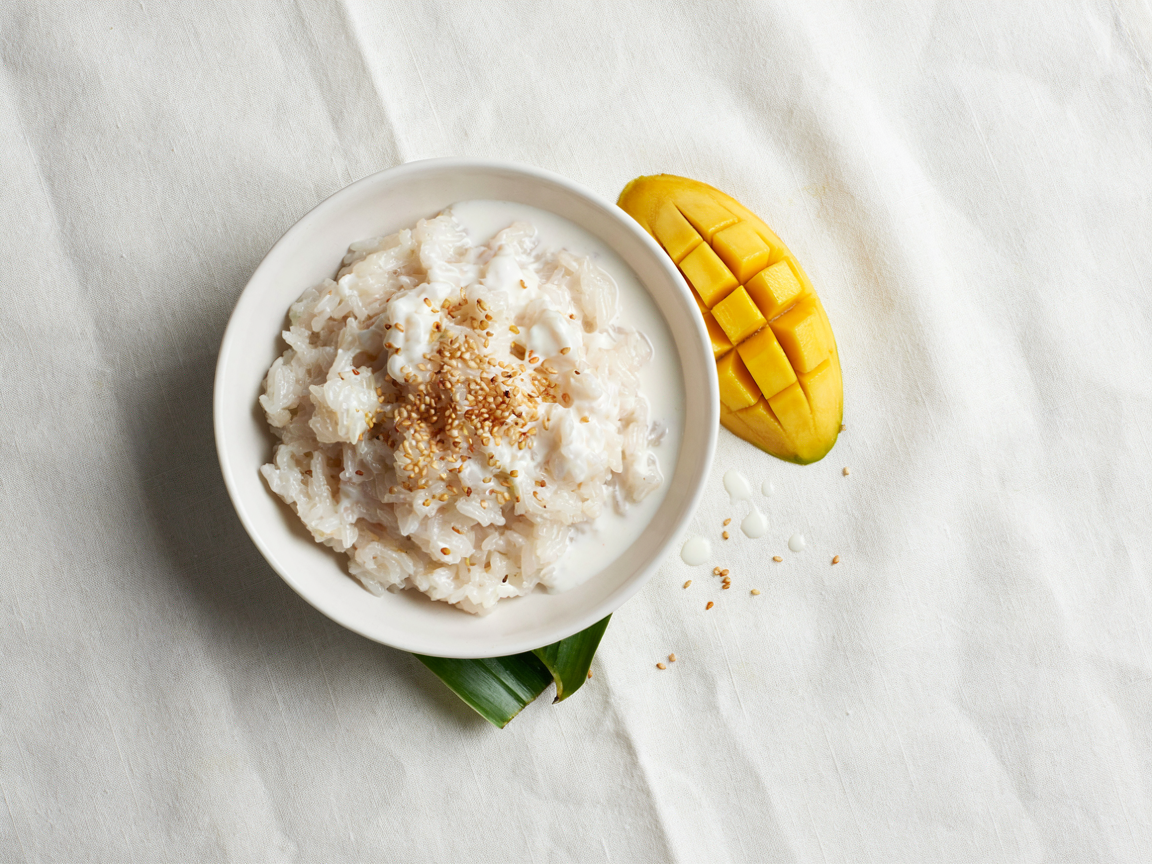
The bowl from the pin: glossy coconut rice with sesame, a scored mango cheek, a pandan leaf and the salty drizzle.
This mango sticky rice recipe comes down to sweet coconut-soaked rice, ripe mango and a drizzle that tastes salty on its own. Soak the rice, steam it, pour warm coconut cream over it and let it rest; the five-minute drizzle and a well-chosen mango do the rest.
In this post:
- Why the sweet and salty method works
- The ingredients, and which mango to buy
- The recipe, scaling from 2 to 8 servings
- Four rules for glossy, never-hard rice
- Four ways to cook the rice without a steamer
- Six versions, from pandan to black sticky rice
- Leftover sticky rice ideas, storage and 14 FAQs
Why This Mango Sticky Rice Works
The night-market method
Steam the rice, soak it in warm sweet coconut cream, finish with a salty drizzle. Sweet rice, sweet mango, salty cream: that contrast is the whole dish.
Four core ingredients
Glutinous rice, coconut cream, sugar and mango, plus salt. Pandan and sesame are optional extras; nothing needs a special shop except the rice.
Scales from two to eight
One can of coconut cream for four servings, rice and drizzle together, so nothing is wasted. Tap 8 for a dinner party and it is two cans.
Vegan and gluten-free
No dairy, no eggs, no wheat. Despite the name, glutinous rice contains no gluten; ‘glutinous’ describes the glue-like texture.
Ingredients for Mango Sticky Rice
Glutinous rice
Also sold as sticky rice or sweet rice, short opaque white grains. Almost all of its starch is amylopectin, which is why it turns chewy and clingy and soaks up the cream instead of staying separate. Any Asian grocer; also online.
Full-fat coconut cream
The thick, rich top of coconut milk, sold in its own can. The fat is what carries the flavour into the rice. If the can sloshes like water, it is coconut milk; use it only if you must, and expect a thinner result.
Mango
Ataulfo (also called honey mango), Nam Dok Mai or Alphonso: small, golden, sweet and fibre-free. The large red-green supermarket varieties are stringy and tart next to coconut. The mango table below has the full guide.
Salt, twice
A little in the soaking sauce, a lot in the drizzle. Without it the dessert is flat and only sweet.
Sugar
White sugar for a clean taste, palm sugar for a deeper caramel note. Three tablespoons for four servings is lightly sweet; the mango does the rest.
Pandan leaf
A long green leaf tied in a knot and warmed in the cream. It adds a soft vanilla-like fragrance that is hard to name but missed when it is gone. Frozen pandan keeps for months; skip it rather than substitute extract-heavy flavourings.
Toasted sesame or mung beans
The traditional crunch on top. Toast sesame in a dry pan 2 minutes until golden; crispy yellow mung beans are sold ready to sprinkle.
Thai Mango Sticky Rice Recipe
The card makes 4 servings from one can of coconut cream. Tap a size and everything updates.
Thai Mango Sticky Rice
Glutinous rice steamed, then soaked in warm sweetened coconut cream until glossy, served beside ripe mango with a salty coconut drizzle and toasted sesame. Four core ingredients, made the way it is sold at Thai night markets. Tap a serving size and the printable card updates.
How many servings?
Ingredients
- ¾ cup1½ cups2¼ cups3 cups glutinous (sticky, sweet) rice
- ½ can (200 ml)1 can (400 ml)1½ cans (600 ml)2 cans (800 ml) full-fat coconut cream, total
- ⅔ cup1¼ cups2 cups2½ cups Soaking sauce: coconut cream (from the total)
- 1½ tbsp3 tbsp¼ cup + 1½ tsp6 tbsp granulated or palm sugar
- ⅛ tsp¼ tspa generous ⅓ tsp½ tsp fine salt
- 1122 pandan leaf, tied in a knot (optional)
- 3 tbsp⅓ cup½ cup⅔ cup Salty drizzle: coconut cream (the rest of the can)
- ¼ tsp½ tsp¾ tsp1 tsp fine salt
- ½ tsp1 tsp1½ tsp2 tsp sugar
- ½ tsp + 1½ tsp water1 tsp + 1 tbsp water1½ tsp + 1½ tbsp water2 tsp + 2 tbsp water cornstarch, mixed with water
- 1234 To serve: ripe Ataulfo (honey) mangoes
- 1 tsp2 tsp1 tbsp4 tsp toasted sesame seeds or crispy mung beans
Glutinous rice only; jasmine or sushi rice will not absorb the cream the same way. Full-fat coconut cream, shaken: light coconut milk makes it thin and hollow. One can feeds four, rice and drizzle together. The drizzle must taste salty on its own; that contrast is the point. Vegan and gluten-free as written.
Instructions
Rinse and soak the rice
Rinse the rice 3 or 4 times until the water runs nearly clear, then cover with cold water and soak at least 30 minutes, ideally 4 hours or overnight. Unsoaked rice steams unevenly and never turns silky.
Steam
Drain and steam over simmering water in a cloth-lined steamer for 20 to 25 minutes, until tender with a slight bite. It finishes softening in the coconut cream, so do not steam it to mush. The rice methods table has the rice cooker, stovetop and microwave timings.
Warm the soaking sauce
While the rice steams, warm the soaking coconut cream with the sugar, salt and pandan over medium-low heat, stirring until the sugar dissolves. Steaming, never boiling; boiled coconut cream splits and turns grainy. Remove the pandan.
Soak the hot rice
Tip the hot rice into a bowl, pour the warm sauce over and stir gently. Cover and rest 20 to 30 minutes. The rice drinks the cream and turns glossy; this rest is the dish.
Make the salty drizzle
Warm the remaining coconut cream with the salt and sugar, stir in the cornstarch slurry and simmer 1 to 2 minutes until it lightly coats a spoon. Taste it: it should be noticeably salty on its own.
Cut the mango
Slice the cheeks off the flat stone, score in a grid without cutting the skin, and push the skin up so the cubes stand out like the pin; or peel and slice into fans. Room-temperature mango is sweeter than cold.
Plate
Mound the rice on one side of each bowl, set the mango beside it, spoon the salty drizzle over the rice and scatter sesame or mung beans. Serve warm or at room temperature, the same day.
Four Rules for Glossy Sticky Rice
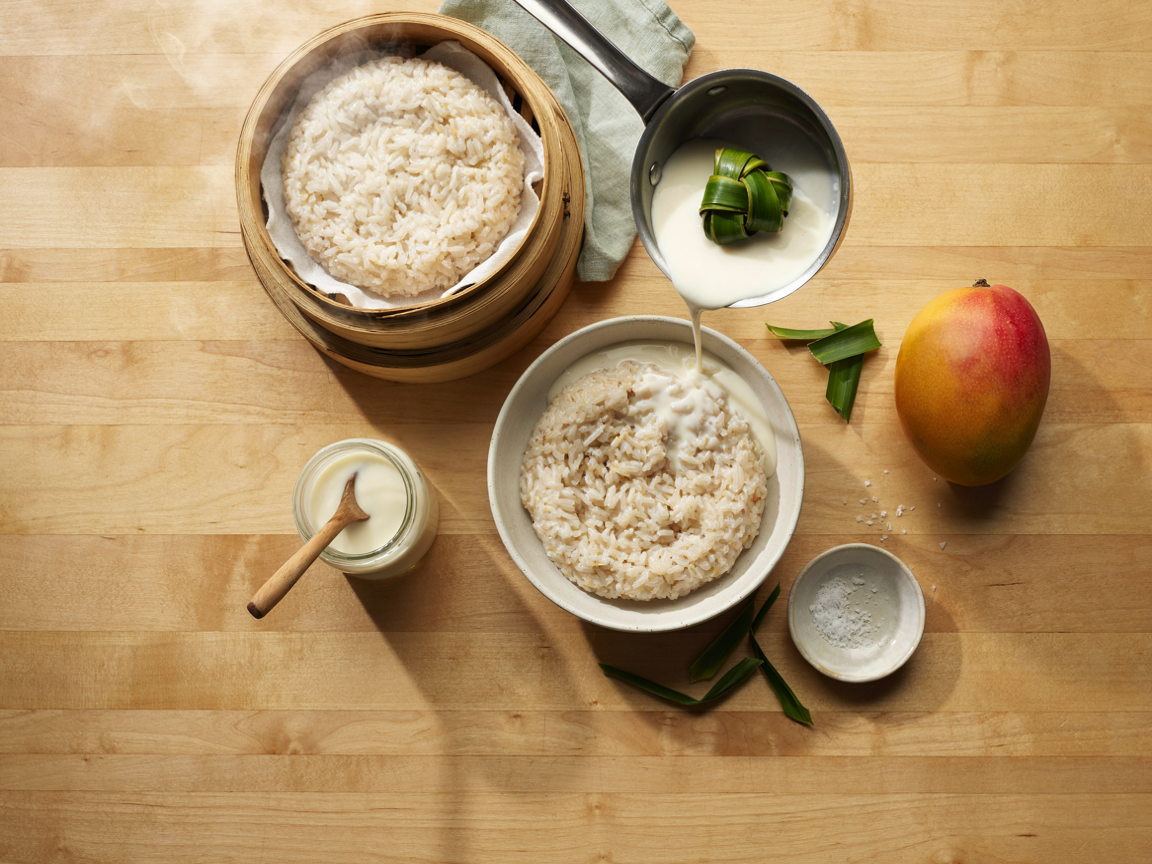
The soak: steamed rice in a bowl, warm coconut cream poured over, a pandan knot in the pan, the mango waiting.
Soak the rice first
At least 30 minutes, overnight if you can plan ahead. Soaked rice steams evenly and turns silky; unsoaked rice stays hard in the centre.
Warm the cream, never boil it
Steam rising, sugar dissolved, off the heat. Boiling splits the coconut fat and the sauce turns grainy.
Hot rice, warm sauce, 20-minute rest
Pour the warm sauce over rice straight from the steamer and cover it. Cold rice will not absorb; skipping the rest leaves rice sitting in a puddle.
Drizzle saltier than feels right
Taste the drizzle alone: it should be clearly salty. Over sweet rice and mango it reads as balance, not salt.
Choosing the Mango
The single biggest decision after the rice:
| Mango | Verdict | Why |
|---|---|---|
| MangoAtaulfo (honey mango) | VerdictThe best widely available choice | WhySmall, golden, kidney-shaped, sweet and fibre-free; in season late winter to summer |
| MangoNam Dok Mai | VerdictThe traditional Thai choice | WhyFragrant, floral, fibre-free; Asian grocers |
| MangoAlphonso | VerdictExceptional | WhyDeep orange, very aromatic; South Asian grocers in spring |
| MangoHoney or Philippine | VerdictA good year-round option | WhyYellow-green skin, sweet, few fibres |
| MangoLarge red-green supermarket mangoes | VerdictLast resort | WhyFibrous and tart beside coconut cream |
| MangoFrozen mango | VerdictEmergency option | WhyThaw and drain; better than an unripe fresh one |
| MangoHow to tell it is ripe | VerdictSmell and squeeze | WhyFragrant at the stem end, yields like a ripe peach; colour means little |
Four Ways to Cook Sticky Rice
All four need the rice soaked first:
| Method | How | Result |
|---|---|---|
| MethodBamboo steamer | HowCloth-lined, over boiling water, 20 to 25 minutes | ResultMost authentic; chewiest, most distinct grains |
| MethodRice cooker | HowGlutinous setting, or white rice setting with 1:1 water to soaked rice | ResultEasiest; slightly softer |
| MethodStovetop | HowEqual water to soaked rice; boil, cover, lowest heat 15 minutes, rest 10, lid on | ResultNo equipment; a little stickier |
| MethodMicrowave | HowEqual water, covered with vented wrap, high 8 minutes, rest 5 | ResultEmergency; softer but absorbs the cream fine |
Six Ways to Make Mango Sticky Rice
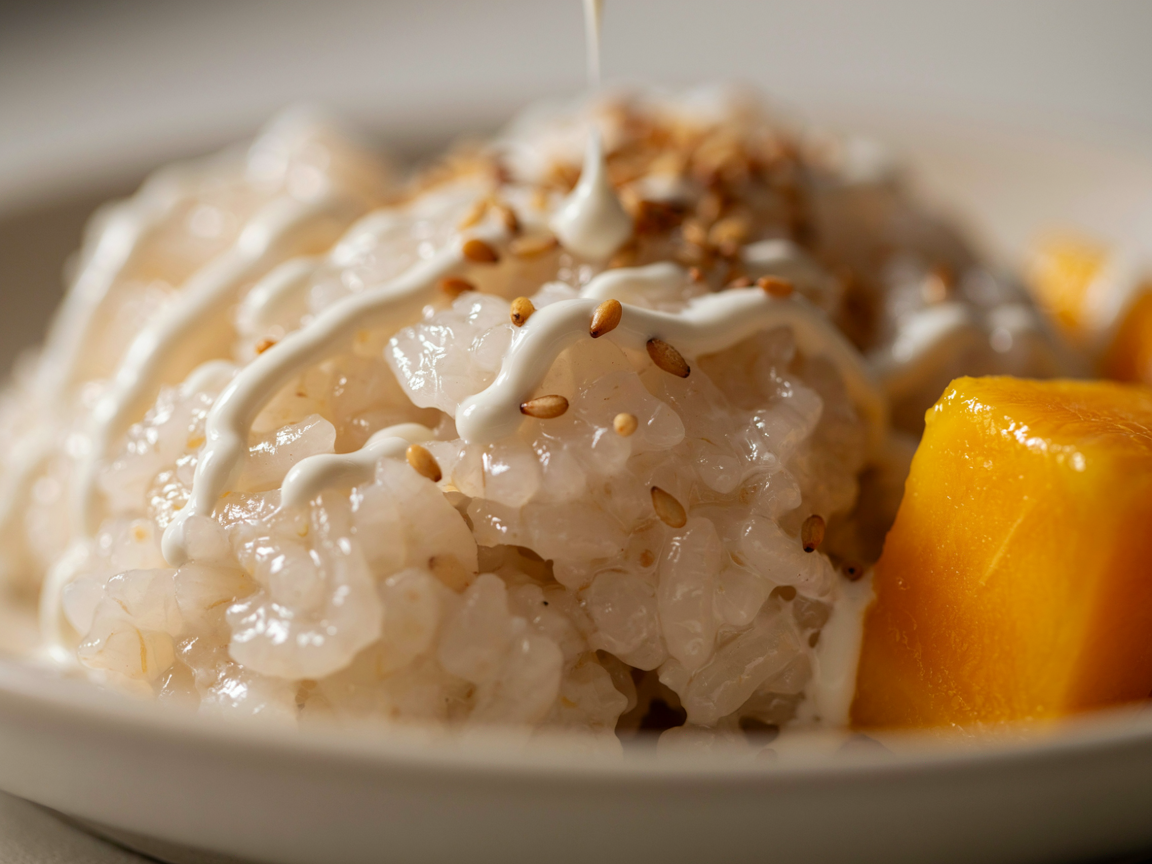
Up close: glossy grains of coconut rice, the salty drizzle pooling, sesame on top, the edge of the mango.
Same method, a different sauce or rice. Tap a version:
Classic Thai Mango Sticky Rice
The recipe above: sweet coconut-soaked rice, salty coconut drizzle, mango and sesame, with an optional pandan knot. The bowl on the pin.
Pandan Coconut Sticky Rice
Blend 4 pandan leaves with 3 tablespoons water, strain, and stir the green juice into the soaking cream. The rice turns a soft jade green and the fragrance deepens. The most striking version on the plate.
Palm Sugar Sticky Rice
Swap the white sugar for an equal weight of palm sugar, shaved and melted into the cream. Deeper, caramel-like and a little less sweet; the colour turns pale gold.
Ginger Lemongrass Coconut Sticky Rice
Simmer a bruised lemongrass stalk (white part only) and a 1-inch piece of sliced ginger in the soaking cream for 10 minutes, then strain. Citrusy and warm; finish the plate with a little lime zest.
Black Sticky Rice with Mango
Use black glutinous rice, or half black and half white. Soak overnight and steam 35 to 40 minutes. Nuttier and chewier, and the purple rice under white cream with gold mango is the most dramatic bowl of the six.
Mango Sticky Rice with Dark Chocolate Drizzle
Keep the classic rice; for the drizzle, melt 50 g dark chocolate into ¼ cup warm coconut cream with a teaspoon of sugar and a pinch of salt. Not traditional, but mango and dark chocolate are very good together.
Leftover Sticky Rice Ideas
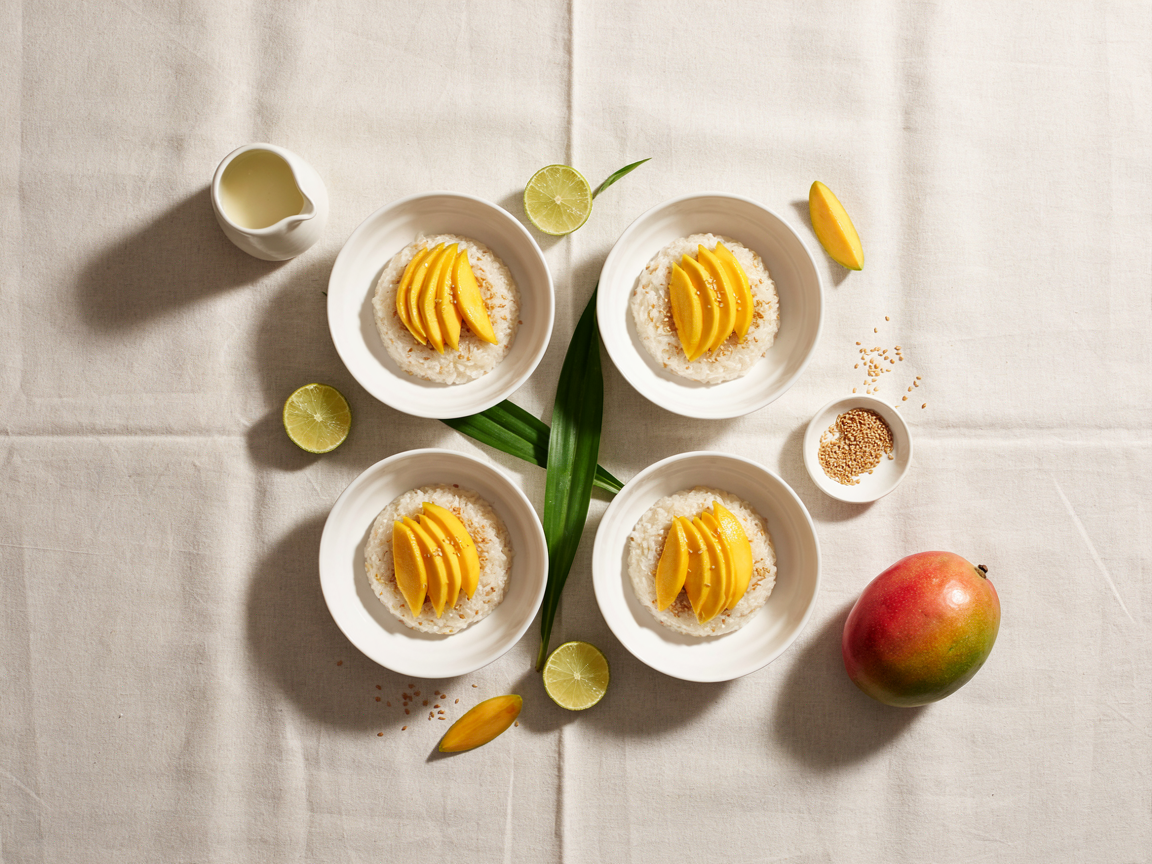
Mango sticky rice for a table: bowls with fanned mango, a jug of the salty drizzle and a dish of sesame.
Cold sticky rice hardens, but it does not go to waste:
| Idea | How | Why |
|---|---|---|
| IdeaCrispy sticky rice cakes | HowPress cold rice into a 1-inch slab, cut squares, pan-fry in a little oil 3 minutes a side | WhyServe with the drizzle and mango; crisp outside, chewy inside |
| IdeaCoconut rice pudding | HowSimmer leftover rice with ½ cup coconut milk per cup of rice, 5 minutes, stirring | WhySpoonable, warm, a breakfast or late dessert |
| IdeaToasted coconut rice balls | HowRoll cold rice into walnut-sized balls with wet hands, roll in toasted coconut | WhyA lunchbox treat; no reheating needed |
| IdeaMango sticky rice jars | HowLayer rice, diced mango and drizzle in small jars | WhyMake-ahead dessert for a party; serve at room temperature |
| IdeaBreakfast bowl | HowWarm the rice, top with coconut yogurt, fruit and toasted nuts | WhyThe leftover the next morning |
| IdeaGrilled sticky rice skewers | HowShape into flat ovals, brush with beaten egg and a pinch of salt, grill or griddle until golden | WhyA Thai street-food snack; good warm |
Make Ahead and Storage
| What | How long | Notes |
|---|---|---|
| WhatBest | How longServed the day it is made, warm or room temperature | NotesRice firms up in the fridge |
| WhatSoak ahead | How longRice soaking overnight | NotesThe best make-ahead step |
| WhatSauces | How longUp to a week in the fridge | NotesWarm gently before using |
| WhatCooked rice | How long2 days in the fridge, separate from sauce and mango | NotesSprinkle with 2 tbsp water, cover and microwave 60 to 90 seconds |
| WhatCut mango | How long1 day, covered, with a squeeze of lime | NotesCut it fresh if you can |
| WhatDinner party | How longSteam and soak up to 4 hours ahead; keep covered at room temperature | NotesCut mango and drizzle at serving |
More mango, coconut and Thai cooking:
- Another mango dessert: mango chia seed pudding or mango dessert cups
- Coconut pudding without the rice: coconut milk chia pudding
- A mango drink: mango coconut smoothie
- Dinner before it: Thai red curry or creamy coconut curry
Troubleshooting
| Problem | Likely cause | Fix |
|---|---|---|
| ProblemRice hard in the centre | Likely causeNot soaked, or steamed too briefly | FixSoak at least 30 minutes; steam until tender with a slight bite |
| ProblemRice mushy | Likely causeOver-steamed, or regular rice used | FixPull at a slight bite; glutinous rice only |
| ProblemRice sitting in a puddle | Likely causeCold rice, or no rest | FixHot rice, warm sauce, covered 20 to 30 minutes |
| ProblemGrainy sauce | Likely causeCoconut cream boiled | FixWarm only; whisk in a splash of fresh cream to smooth it |
| ProblemFlat, only sweet | Likely causeDrizzle not salty enough | FixSalt it until it tastes salty on its own |
| ProblemThin, watery taste | Likely causeLight coconut milk | FixFull-fat coconut cream |
| ProblemStringy mango | Likely causeWrong variety | FixAtaulfo, Nam Dok Mai or Alphonso |
| ProblemRice hard the next day | Likely causeRefrigerated | FixSprinkle water, cover and microwave to soften |
Nutrition (approximate, per serving)
One of four servings: a quarter of the rice, half a mango and the drizzle. Vegan, dairy-free and gluten-free as written.
Mango Sticky Rice: FAQs
How do you make mango sticky rice?
Soak glutinous rice at least 30 minutes, steam it 20 to 25 minutes, pour warm coconut cream sweetened with sugar and a little salt over the hot rice and rest it covered 20 minutes. Serve beside ripe mango with a salty coconut drizzle and toasted sesame. The card above scales from 2 to 8.
What rice is used for mango sticky rice?
Glutinous rice, also sold as sticky rice or sweet rice. Its starch is almost all amylopectin, which makes it chewy and lets it absorb coconut cream. Jasmine, basmati and sushi rice do not work the same way.
Is glutinous rice gluten-free?
Yes. ‘Glutinous’ describes the sticky, glue-like texture, not gluten. Mango sticky rice is naturally gluten-free and vegan.
Can I make it without soaking the rice?
Not well. Unsoaked glutinous rice steams unevenly and stays hard in the centre. Thirty minutes is the minimum; 4 hours to overnight gives the silkiest result.
Can I use coconut milk instead of coconut cream?
Full-fat coconut milk works with a thinner, lighter result; light coconut milk makes it watery and hollow. If using coconut milk, simmer the drizzle a minute longer so it thickens.
Why is there salt in a dessert?
The salty drizzle balances the sweet rice and sweet mango. Without it, the dish tastes flat. It should taste clearly salty on its own and balanced on the plate.
Which mango is best?
Ataulfo (honey mango), Nam Dok Mai or Alphonso: small, golden, sweet and fibre-free. Ripe means fragrant at the stem and yielding like a peach. The mango table above covers the alternatives.
Can I make mango sticky rice in a rice cooker?
Yes. Use the glutinous rice setting, or the white rice setting with equal water to soaked rice. Then soak the hot cooked rice in the warm coconut cream exactly as in the recipe.
Can I make it ahead?
Soak the rice overnight, make both sauces up to a week ahead, and steam and soak the rice up to 4 hours before serving, kept covered at room temperature. Cut the mango and drizzle at the table.
How do I store and reheat leftovers?
Rice, sauce and mango separately, 2 days in the fridge. The rice hardens when cold: sprinkle with a little water, cover and microwave 60 to 90 seconds until soft again.
What can I do with leftover sticky rice?
Pan-fry it into crispy cakes, simmer it into coconut rice pudding, roll it into toasted coconut balls, layer it into dessert jars, warm it into a breakfast bowl, or grill it on skewers. The leftover table above has each method.
What is pandan and do I need it?
A long, fragrant leaf used across Southeast Asia, tied in a knot and warmed in the cream. It adds a soft vanilla-like fragrance. It is optional; the dessert is still excellent without it.
Is mango sticky rice served warm or cold?
Warm or at room temperature, never fridge-cold. Warm rice is softest; the mango is best at room temperature, when it tastes sweetest.
How many calories are in a serving?
About 420 per serving of the four-serving batch: a quarter of the rice, half a mango and the drizzle. It is a full dessert portion.
Save the pin so the recipe, the mango guide and the leftover ideas are one tap away.
More Mango and Coconut
Mango puddings and cups, a coconut chia pudding, a smoothie and two curries for dinner first.
Mango Chia Seed Pudding
The overnight version. See the recipe → MangoMango Dessert Cups
Layered, for a party. See the recipe → CoconutCoconut Milk Chia Pudding
Same flavours, no rice. See the recipe → DrinkMango Coconut Smoothie
The breakfast cousin. See the recipe → DinnerThai Red Curry
The dinner before dessert. See the recipe → DinnerCreamy Coconut Curry
Weeknight, 30 minutes. See the recipe →Soak, steam, pour the warm cream, wait twenty minutes, salt the drizzle. That is the night-market bowl, at home.
Pin this mango sticky rice recipe for the next ripe mango.