
Best-Ever Neapolitan Pizza Dough Recipe —
Crispy, Pillowy & No-Fail
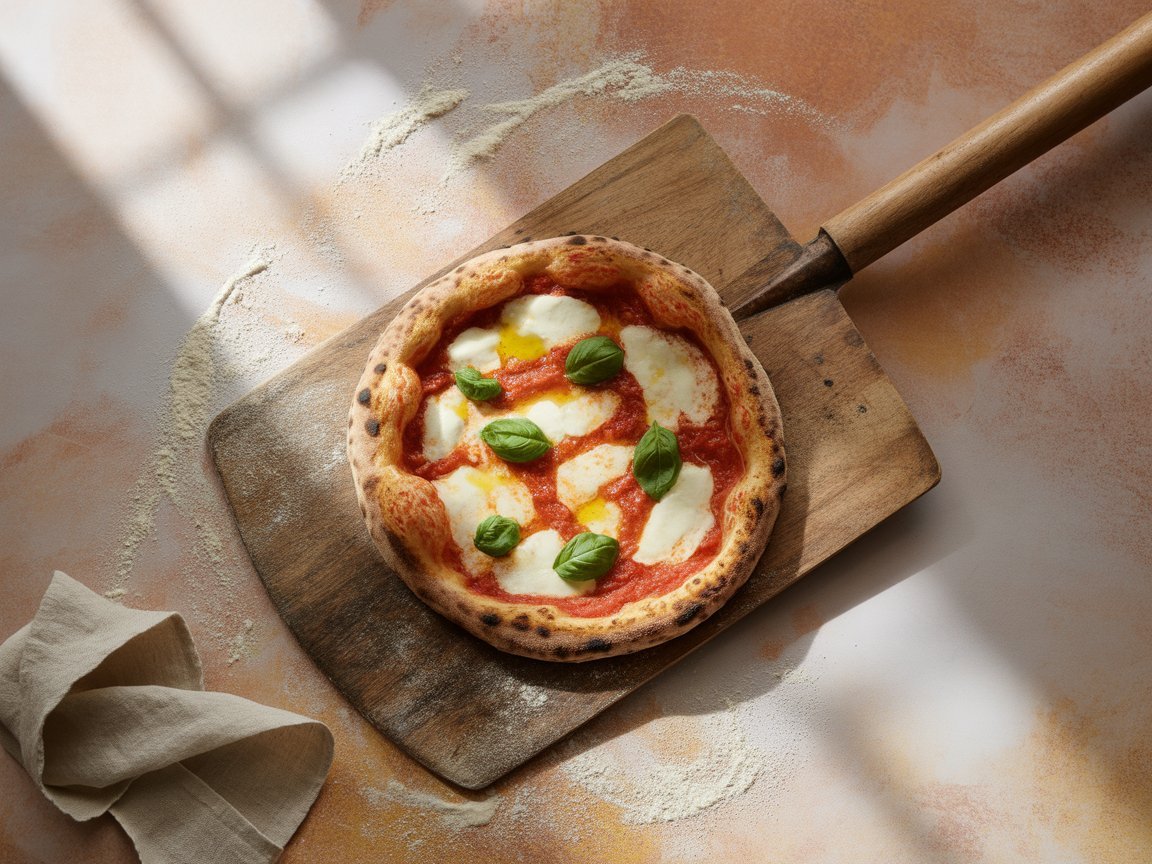
The real Naples-style dough — thin, crispy bottom with a pillowy, airy, leopard-spotted edge (the cornicione). Just four ingredients. Slow cold ferment for that signature flavor. No pizza stone? No 900°F oven? No problem — we cover all setups.
The Naples-style dough — four ingredients, perfect every time
The Associazione Verace Pizza Napoletana (AVPN) protects this recipe like Italians protect their grandmothers. Four ingredients. Long cold fermentation. No shortcuts. The reward: crispy bottom, blistered pillowy edge, restaurant-quality every time.
Ingredients
- 500gItalian 00 flour (Caputo Pizzeria preferred)
- 315g (315ml)cool water (~65°F / 18°C)
- 12gfine sea salt
- 1ginstant yeast (¼ tsp)
That’s it. No oil, no sugar, no eggs, no milk. The dough develops all its flavor from slow fermentation. Weights matter — please use a kitchen scale.
Yield: 4 dough balls × 200-220g each = four 10-12 inch pizzas.
Steps
- Weigh everything precisely. Use a digital kitchen scale. Eyeballing or volume measurements will fail — flour packs differently every time. Bakers measure by weight for a reason.
- Dissolve salt in water. Pour 315g cool water into a large bowl. Add 12g salt, stir until fully dissolved. Salt-water first, yeast separately — direct salt-on-yeast contact can kill the yeast.
- Add the yeast. Sprinkle 1g instant yeast over the salt water. Stir briefly. You don’t need to bloom instant yeast — it activates in the dough.
- Add 10% of the flour (about 50g) to the water. Whisk into a smooth slurry. This is the classic Neapolitan technique — it prevents lumps and creates a smoother dough.
- Gradually add remaining flour while mixing with a wooden spoon or your hands. Mix until no dry flour remains and a shaggy dough forms, about 2-3 minutes.
- Knead for 8-10 minutes. Turn out onto an unfloured counter (the dough won’t stick once it develops). Knead with the heel of your hand, pushing forward and folding back. Knead until smooth and elastic — passes the “windowpane test” (stretch a small piece — it should be translucent without tearing).
- First rise: 2 hours at room temperature. Place dough in a lightly oiled bowl, cover with a damp towel or plastic. Find a warm-ish spot (70-75°F / 21-24°C). The dough should roughly double in size.
- Divide into 4 dough balls (about 207g each). Shape each into a tight ball by pulling the surface taut over itself. The smoother the ball, the better the final cornicione.
- Cold ferment: 24-72 hours. Place each ball in its own lightly oiled, sealed container. Refrigerate. This slow ferment is THE step that creates Neapolitan flavor — don’t skip or shorten. 24hr = good, 48hr = great, 72hr = exceptional.
- 3 hours before baking, remove dough balls from fridge. Let them come to room temperature on the counter, covered. They should look puffy, soft, and gassy.
- Stretch each ball into a 10-12 inch round using the slap-and-fold technique (see section below). Never use a rolling pin — it crushes the gas bubbles that make the cornicione pillowy.
- Top minimally — a few tablespoons of crushed San Marzano tomatoes, torn fresh mozzarella, a few basil leaves, a drizzle of olive oil, pinch of salt. Less is more in Neapolitan tradition.
- Bake at maximum heat (see Baking Setups section). Real Neapolitan ovens hit 900°F (480°C) for 60-90 seconds. Home ovens at 550°F take 4-7 minutes. Adapt accordingly.
The 48-hour plan — exactly when to do what
Neapolitan dough requires planning. Here’s the perfect 48-hour timeline from “I want pizza Friday night” to “wow this is restaurant-quality.”
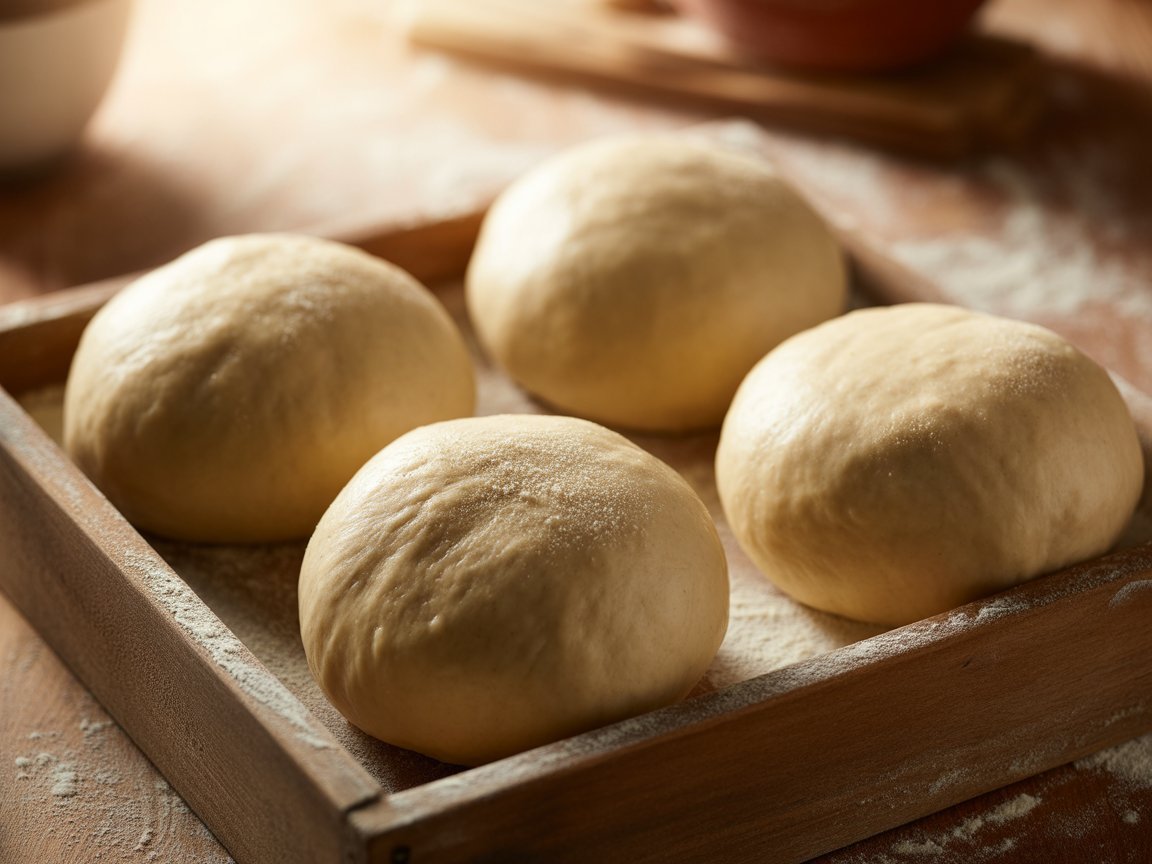
🍕 The Perfect 48-Hour Timeline
Start Wednesday evening for Friday dinner. That’s the magic.
Wed 7:00 PM — Mix & Knead
Combine ingredients, knead 8-10 min. Active work: 15 minutes.
Wed 9:00 PM — Bulk Rise Done
Dough has roughly doubled. Time to divide into balls.
Wed 9:15 PM — Ball & Refrigerate
Shape 4 balls, into containers, into the fridge. Active work done.
Fri 6:00 PM — Remove from Fridge
3 hours before bake time. Let the balls warm up on counter, covered.
Fri 8:00 PM — Preheat Oven
Crank oven + stone to max temp. Preheat for at least 1 hour.
Fri 9:00 PM — Bake & Eat
Stretch, top, bake (4-7 min each). Dinner is served.
The dough needs at least 24 hours total fermentation for proper Neapolitan flavor. 6-hour same-day doughs taste yeasty and bland. The slow cold ferment is where lactic acid bacteria develop the complex flavors that make this recipe taste so different from quick American doughs. 72 hours is the upper limit — beyond that, the dough over-ferments and weakens.
24-hour express: Mix at 8 PM Thursday → ferment 22 hours in fridge → 2 hours room temp → bake at 8 PM Friday. Good but slightly less complex flavor. 72-hour deluxe: Mix Monday night → ferment 70 hours → bake Thursday night. Maximum flavor development, but watch for over-fermentation in warmer kitchens. Sourdough variant: Replace yeast with 100g active sourdough starter. Extends timeline to ~30 hours minimum.
Short on time? The overnight method works. Mix and knead in the evening, do the 2-hour bulk rise, ball the dough, then cold-ferment it overnight and through the next day — about 18–24 hours in the fridge — and bake that evening. You lose a little of the deep flavor that 48–72 hours builds, but an overnight Neapolitan pizza dough is still worlds better than any same-day dough. Mix one night, bake the next.
00 flour vs bread flour vs all-purpose — does it really matter?
The single biggest variable in your final pizza. Yes, the flour matters enormously. Here’s the honest hierarchy from authentic to “works okay.”
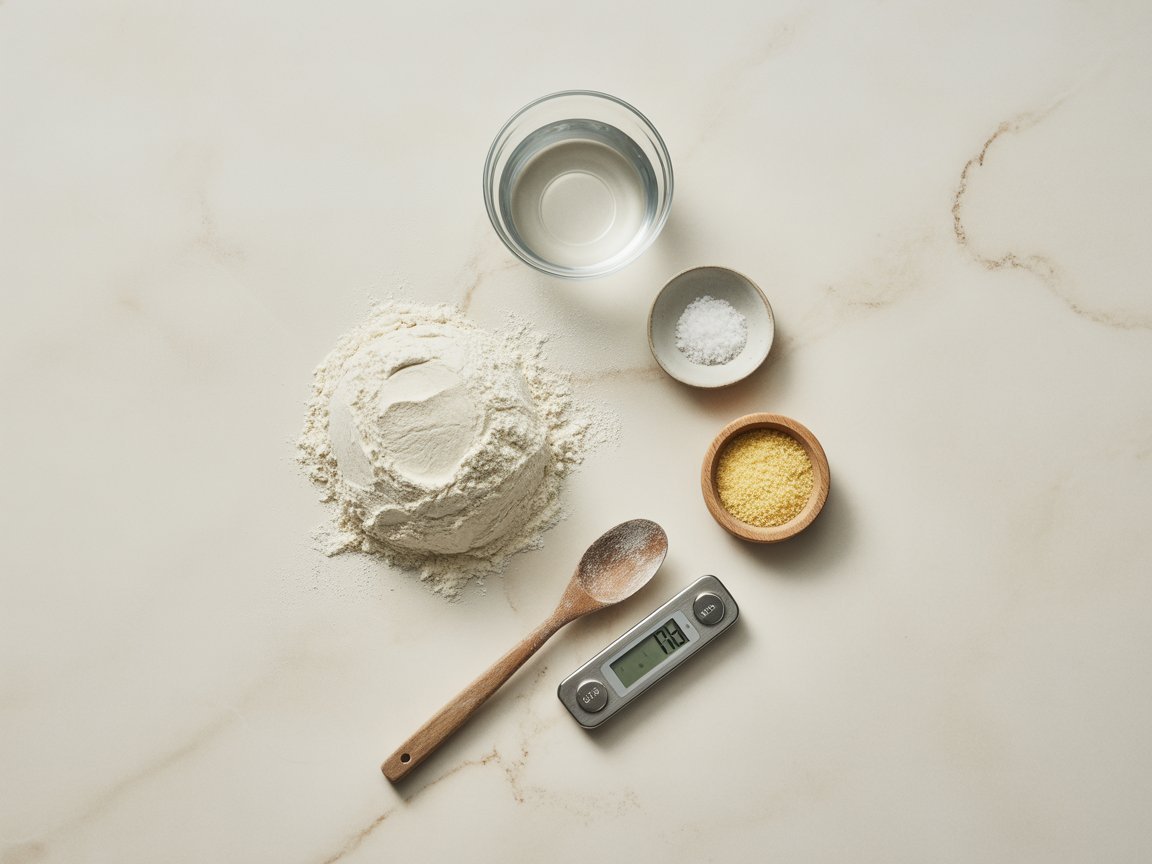
🇮🇹 Italian 00 Flour
🌾 Bread Flour
🥖 All-Purpose Flour
If you’re serious about Neapolitan pizza, buy Caputo “Pizzeria” 00 flour (the blue bag). It’s specifically formulated for high-heat, long-ferment Neapolitan style. Caputo “Chef’s” (red bag) is also good but optimized for slightly cooler ovens. Available at Italian markets, Whole Foods, Amazon, and increasingly mainstream grocery stores. ~$8-12 per 2.2 lb bag — enough for 8-10 pizzas. Worth every cent if you’re going to invest time in this recipe.
Cake flour (8-10% protein) doesn’t have enough gluten for pizza structure — you’ll get a soggy, weak crust. Bleached all-purpose flour has altered proteins that don’t ferment as cleanly. Always use unbleached flour for pizza. The bleaching process removes the natural yellow color and slightly damages gluten-forming proteins — both bad for pizza.
Your hydration level — pick by skill & equipment
Hydration = water weight ÷ flour weight × 100. Higher hydration = lighter, airier crust + harder to handle. Pick the right level for your skill and oven setup.
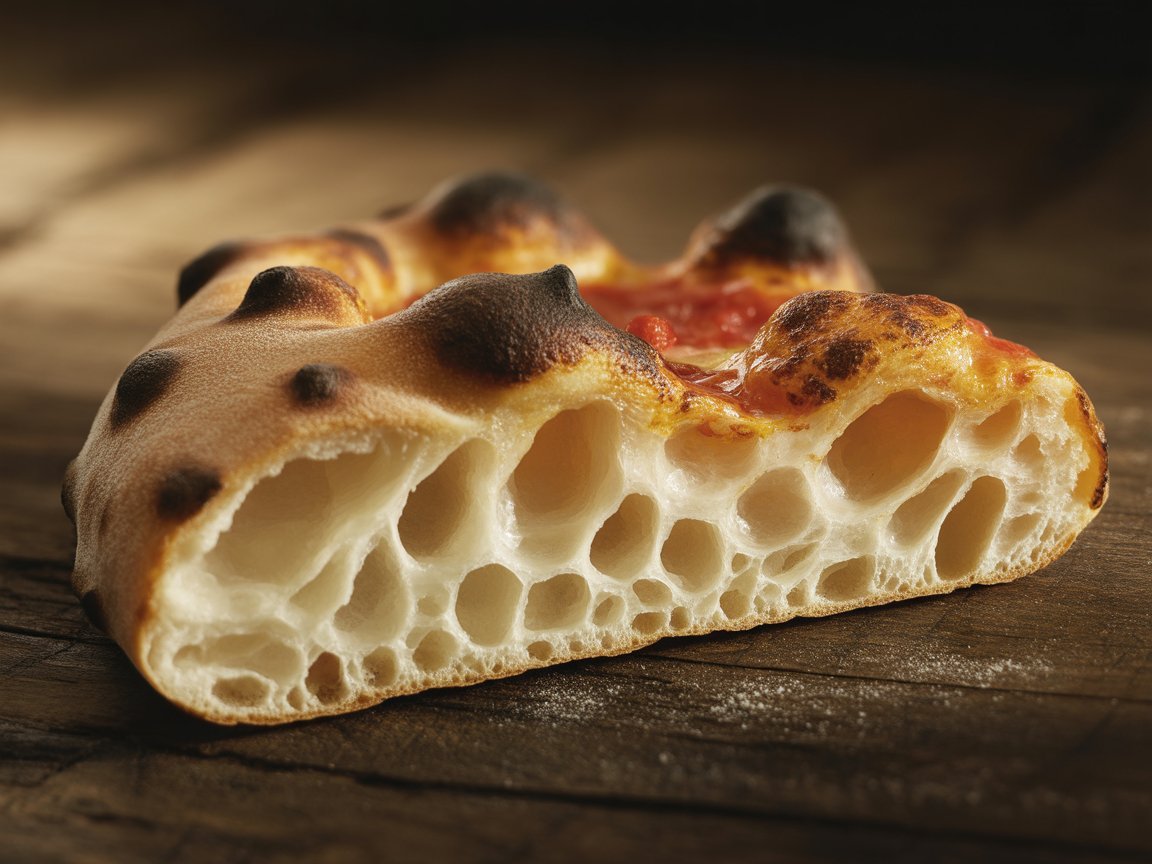
🍕 Pick Your Hydration Level
The recipe uses 63%. Adjust based on your situation.
The classic AVPN-recommended hydration. Best balance of handling and texture. Easy to stretch, produces a properly pillowy cornicione.
- Water per 500g flour315g
- Handling difficultyEasy-moderate
- Final textureCrispy bottom + pillowy edge
- Best forMost home bakers
- Oven temp needed500°F+ (260°C+)
More water = more steam during baking = more oven spring = more dramatic cornicione puff. But high-hydration dough is significantly stickier and harder to handle. Start at 63% for your first few attempts. Once you can stretch confidently without tearing, gradually push toward 68-70% for that ultra-airy texture you see in Naples photos.
How to stretch dough like a Neapolitan pizzaiolo
The stretch is where most home bakers fail. The technique is more important than strength. Four core rules separate amateur from authentic.
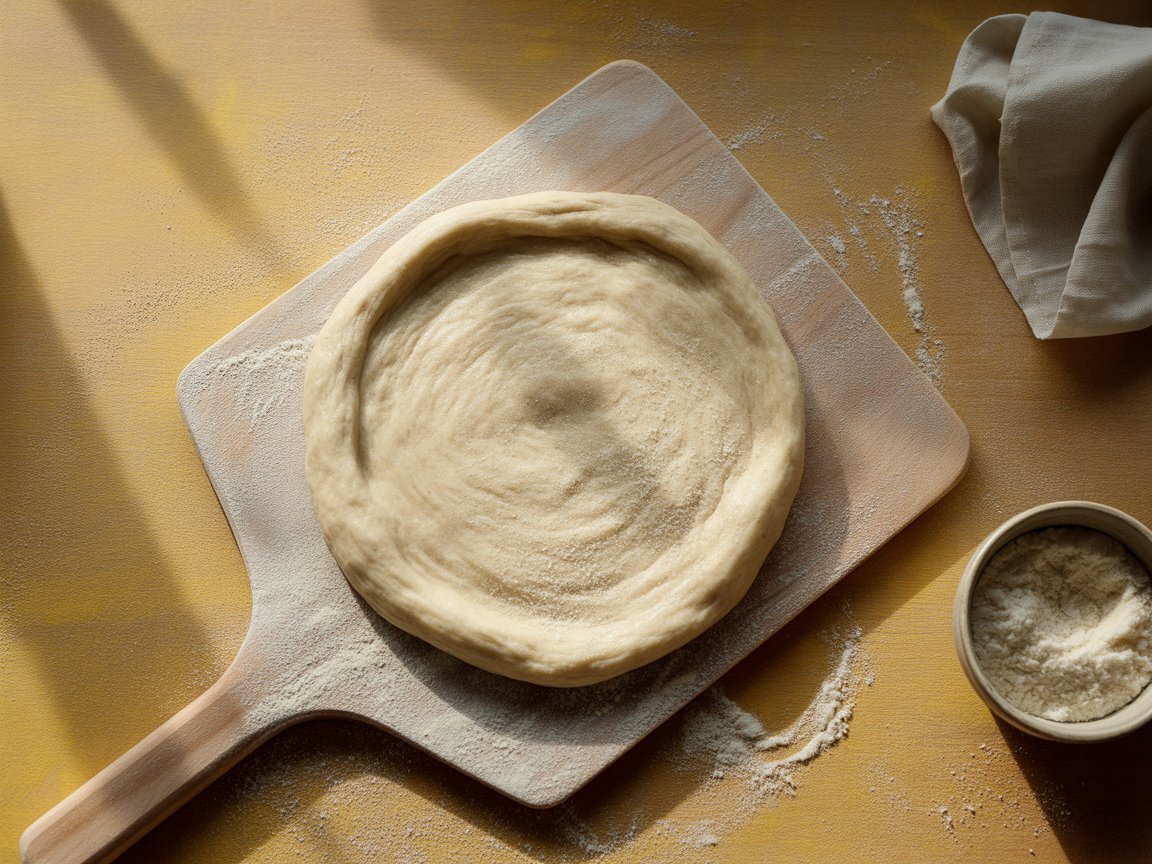
NEVER use a rolling pin
Rolling pins crush the gas bubbles in fermented dough. You’ll get a flat, dense pizza instead of pillowy cornicione.
RULE #1Press from center outward
Use fingertips, not palms. Push gas toward the edges to build the cornicione. Leave the outer 1 inch untouched.
RULE #2Rotate & stretch on knuckles
Drape dough over fists/knuckles. Rotate slowly as gravity stretches the dough. Authentic Neapolitan move.
RULE #3Aim for 10-12 inches
Final size: 10-12 inches across, thinner in middle, raised 1-inch edge. Don’t stretch too thin or you’ll lose the rise.
RULE #4(1) Flour your work surface generously. (2) Place dough ball seam-side down, press flat from center outward with fingertips. (3) Leave 1-inch unpressed border around the edge (the future cornicione). (4) Flip dough over, press again. (5) Drape dough over your two fists, knuckles up. (6) Slowly rotate the dough on your fists, letting gravity stretch it. (7) When it’s 10-12 inches, lay flat on a floured peel or parchment, ready to top.
This means it’s not relaxed enough. The gluten is still tight. Solution: cover with a damp towel and let it rest 10-15 minutes on the counter. Try again. Stretching should feel effortless — if you’re fighting the dough, the dough is winning. Wait it out.
How to bake without a 900°F pizzeria oven — 5 home methods
Real Neapolitan ovens hit 900°F (480°C) and bake a pizza in 60 seconds. Home ovens top out at 550°F. You can still get amazing results with the right setup.
Oven + Baking Steel (Best Home Setup)
How To
- Place baking steel on upper-middle rack
- Preheat to MAX (usually 550°F) for 60 min minimum
- The steel transfers heat 18x faster than stone
- Launch pizza from peel onto steel
- Bake 4-6 minutes until cornicione is leopard-spotted
- Rotate halfway if oven has hot spots
Why It Wins
- Closest to real Neapolitan results at home
- Steel retains massive thermal mass
- Crispy bottom in 4-6 minutes
- Investment: $80-150, lasts forever
- Best ROI for serious pizza makers
Oven + Pizza Stone
How To
- Place stone on upper-middle rack
- Preheat MAX (550°F) for 60 min — stones take longer
- Slide pizza directly onto stone with peel
- Bake 6-8 minutes until cornicione is golden + spotted
- Don’t put cold dough on hot stone — it’ll crack
- Don’t oil the stone — ever
Why It Works
- Most affordable serious option ($25-50)
- Decent thermal mass
- Available everywhere
- Works for bread too
- Slower than steel but still good results
Cast Iron Skillet (No Stone? No Problem)
How To
- Heat cast iron skillet on stovetop 5 min, high heat
- Meanwhile, position oven rack 6 inches from broiler
- Preheat broiler to HIGH
- Place stretched dough in hot skillet, add toppings
- Cook on stovetop 2 minutes to set bottom
- Transfer skillet to broiler 3-5 min until top is bubbly
- Watch closely — broiler can burn in seconds
Why It Works
- No pizza stone or steel required
- Hot pan + broiler simulates 900°F environment
- Pre-heated cast iron crisps the bottom
- Broiler char gives leopard-spotted edge
- Most accessible method
Outdoor Pizza Oven (Ooni / Roccbox / Gozney)
How To
- Preheat to 800-900°F (use built-in thermometer)
- Launch pizza on peel onto stone
- Bake 30 seconds, then rotate
- Total cook time: 60-90 seconds
- Look for leopard spots on cornicione
- Use peel + turning peel — pizzas cook fast
Why It Wins
- Genuine Neapolitan results
- Authentic leopard-spotted char
- Cooks 6+ pizzas per session easily
- Best investment for pizza obsessives ($300-700)
- Year-round outdoor entertaining
Steel + Broiler Combo (Pro Hack)
How To
- Preheat steel near top of oven, MAX heat, 60 min
- Switch oven to BROIL setting (steel stays in)
- Launch pizza onto pre-heated steel
- Bake under active broiler 3-4 min
- Steel cooks bottom, broiler chars the top
- Watch closely — this is fast
Why It’s Genius
- Closest a home oven can get to 900°F
- Active broiler + hot steel = top & bottom heat
- Leopard-spotted cornicione in 3 minutes
- No outdoor equipment needed
- The best Neapolitan results most home kitchens can achieve
Authentic Neapolitan pizza cooks in 60-90 seconds at 900°F. The fast bake creates two things: (1) Leopard-spotted char from sudden surface caramelization, (2) Massive oven spring in the cornicione before moisture escapes. At lower temps, the pizza dries out and toughens before it can puff. This is why a 550°F home oven + baking steel + broiler combo is the gold standard for home setups — it gets you as close to 900°F effective heat as possible.
The tricks that elevate this from good to pizzeria-quality
Small details. Massive impact on the final pizza.
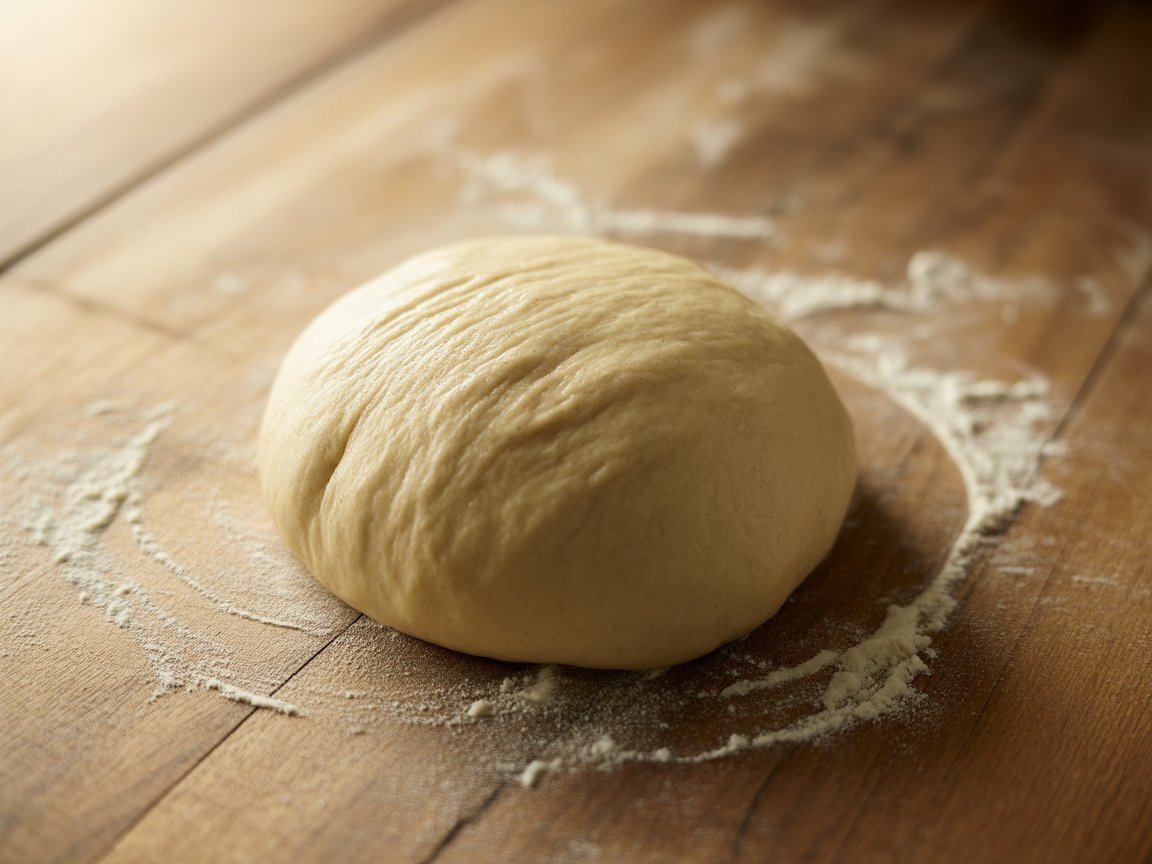
Weigh, don’t measure
Volume measurements (cups) introduce 10-20% variance. Use a digital kitchen scale. Bakers measure by weight for a reason — consistency.
Use cool water (~65°F)
Cool water slows initial fermentation, encouraging long flavor development. Warm water causes the dough to ferment too fast at room temp, missing the cold-ferment flavors.
Salt last, never with yeast
Direct salt-on-yeast contact kills yeast cells. Dissolve salt in water first, THEN add yeast. Order matters.
Don’t rush the cold ferment
24 hours minimum. The slow ferment develops the complex flavors, gluten structure, and digestibility that make Neapolitan pizza special.
Bring dough fully to room temp
Cold dough = won’t stretch + won’t puff in oven. 3 hours on counter, covered. The dough should feel soft, jiggly, gassy.
Preheat oven for 60 minutes
Pizza stones and steels need real heat soak time. 30 minutes is not enough. Set it, walk away, come back in an hour.
Top minimally
Neapolitan tradition: 3-4 tablespoons sauce, 3-4 oz cheese, basil + olive oil. Overloaded pizzas don’t bake properly — soggy middle, no puff.
Use a wooden peel for launching
Wooden peels release dough easier than metal. Sprinkle peel with semolina or coarse flour to prevent sticking. Practice the launch motion before topping.
The classic Neapolitan trifecta
Less is more. Real Neapolitan pizzaioli use a handful of perfect ingredients, not a Pizza Hut buffet. Here’s the authentic topping playbook.
San Marzano Tomatoes
Hand-crushed by hand — not blended. Pinch of salt, splash of olive oil. Never use pizza sauce from a jar.
Fresh Fior di Latte
Cow’s milk mozzarella, torn by hand into chunks. Drain well first. Wet mozzarella ruins crusts.
Buffalo Mozzarella
For pizza Bufalina — water buffalo milk, richer, creamier. Add AFTER baking, not before — it melts too fast.
Fresh Basil Leaves
Add 4-6 whole basil leaves. Tuck under the cheese if you want to add before baking, or scatter fresh after.
Extra Virgin Olive Oil
Finishing drizzle, AFTER baking. Never bake with olive oil — it smokes at high temps and turns bitter.
Sea Salt
Tiny pinch on the cheese before baking. San Marzanos have natural acidity; a touch of salt balances it.
Anchovies (Marinara)
For pizza Marinara — no cheese, just tomato + garlic + oregano + anchovy. The OG Neapolitan pizza.
Fresh Garlic
Thinly sliced or grated. Used in Marinara pizzas. Don’t burn it — add halfway through bake or tuck under cheese.
(1) Margherita — tomato + fior di latte + fresh basil + olive oil. The Italian flag on a pie. (2) Margherita Bufalina — same but with buffalo mozzarella added AFTER baking. Creamier, richer. (3) Marinara — tomato + garlic + oregano + olive oil + anchovy. No cheese, no nonsense. The original Naples pizza, predating the Margherita. All three are protected by the AVPN and considered the canon.
If you want authentic Neapolitan, avoid these: pineapple (yes, really), ranch dressing, BBQ sauce, jalapeños, alfredo sauce, chicken, cheddar cheese, mozzarella that wasn’t drained, anything labeled “pizza topping” in a can. This isn’t snobbery — it’s about respecting what makes the dough special. Heavy/wet toppings prevent the cornicione from puffing properly. Save the chicken bacon ranch for a different style of pizza.
If your pizza came out wrong — here’s why
Eight common problems with their honest diagnoses. Read these before your next attempt.
Dense, bread-like crust (no airy edge)
The cornicione is flat and dense instead of pillowy and airy.
Fix: Three likely causes: (1) Used a rolling pin (crushes gas — never use one), (2) Stretched the outer edge too thin (leave 1-inch border untouched), (3) Oven not hot enough (need 550°F minimum, longer preheat).
Soggy middle, crispy edges
The center stays wet and limp while the edges crisp up.
Fix: Too much sauce, wet mozzarella, or undertopped pizzeria stone/steel. Use less sauce (3-4 tbsp max), drain mozzarella on paper towels, and ensure preheat is at least 60 minutes.
Dough tears when stretching
The dough rips or develops holes during stretching.
Fix: Three reasons: (1) Dough is too cold (let warm 3 hr at room temp), (2) Over-fermented (going past 72 hours weakens gluten), (3) Hydration too high for your skill — drop to 60-63%.
No leopard spots / no char
The pizza is pale and uniform instead of beautifully spotted.
Fix: Your oven isn’t hot enough. Try the broiler combo method (preheated steel + active broiler). Real char requires 700°F+ effective surface temperature.
Crust tastes bland / “yeasty”
The dough tastes flat or like raw yeast even after baking.
Fix: Under-fermented. 24 hours minimum cold ferment, ideally 48-72. Same-day doughs taste yeasty. The flavor develops during slow fermentation.
Dough won’t rise at all
After hours, the dough looks the same as when you started.
Fix: Two suspects: (1) Salt killed the yeast (always dissolve salt in water FIRST, then add yeast), (2) Yeast is expired (test by adding ½ tsp yeast + ½ tsp sugar to ¼ cup warm water — should foam in 5-10 min).
Pizza sticks to the peel
Can’t transfer the topped pizza without it sticking and ripping.
Fix: Use semolina (coarse) or coarse flour on the peel, not fine flour. Work fast once dough hits peel — don’t let it sit topping for more than 2-3 minutes. Practice the launch motion with an empty peel first.
Bottom burns before top cooks
The crust bottom blackens while the cheese is barely melted.
Fix: Stone/steel too low in oven. Move rack to upper-middle position so heat radiates down from oven top. Or switch to broiler combo method — actively broil during the bake.
5-question Neapolitan mastery quiz
Tap your answer.
Everything else you’ll wonder about
Crispy bottom. Pillowy edge. Forever changed.
Once you’ve made proper Neapolitan dough — the kind with a 48-hour cold ferment, the kind with a leopard-spotted, airy cornicione you can pull apart with your hands — delivery pizza will never satisfy you again. This isn’t a recipe. It’s a permanent upgrade to your kitchen.
Plan ahead. Mix Wednesday. Bake Friday. Invite friends over for the result. Watch them go quiet as they take their first bite. That’s the goal. That’s the recipe.