Standard Kitchen Drawer Sizes: The Complete Dimensions Guide (Inches + cm)
Every standard drawer measurement you need to plan, build, or organize your kitchen — in inches and centimeters.
📐 The Short Answer
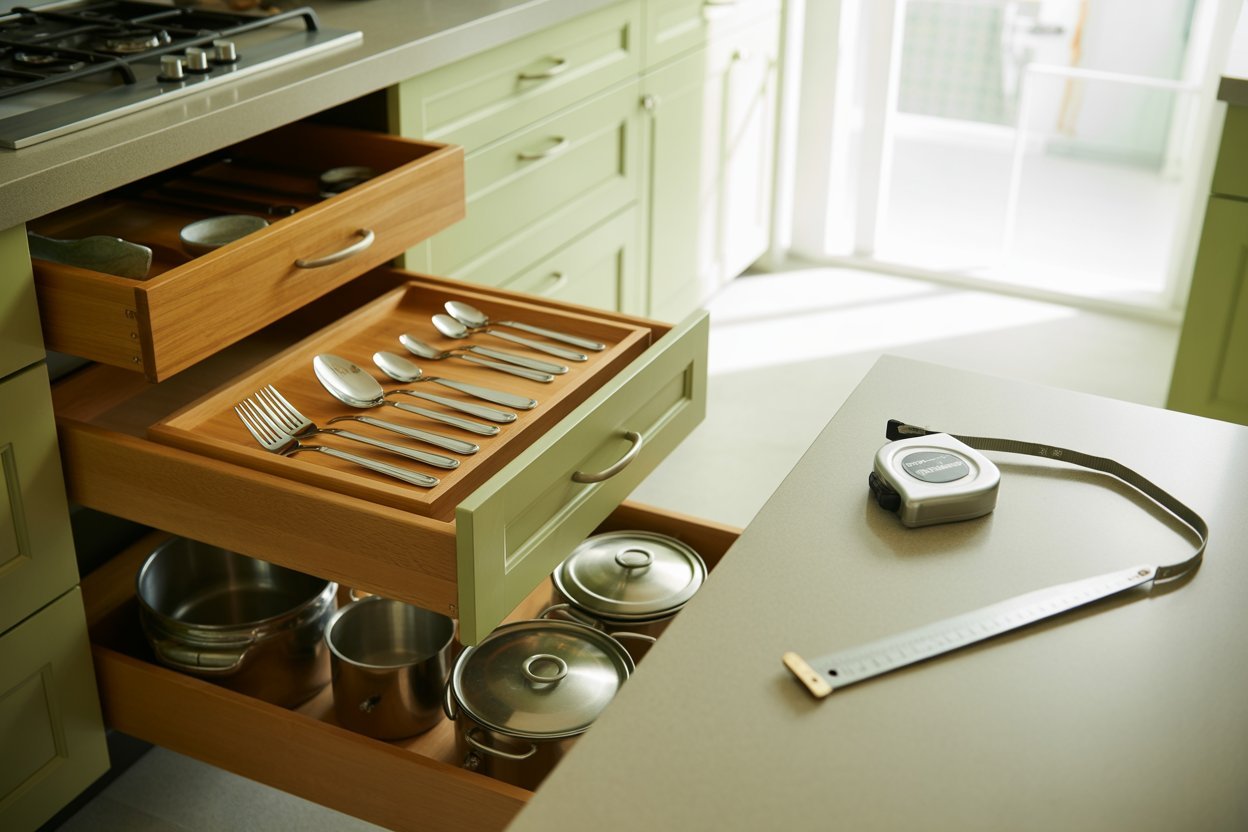
A standard kitchen drawer is about 24 inches (61 cm) deep, matching standard base-cabinet depth. Drawer widths follow the cabinet and range from 9 to 48 inches (23–122 cm), with 30 inches (76 cm) the most common. Base cabinets stand 34.5 inches (87.6 cm) tall without the countertop, and individual drawer fronts run about 6 to 12 inches (15–30 cm) depending on what they hold.
Renovating or planning a new kitchen layout? One of the easiest things to get wrong — and one of the most important to get right — is the size of your kitchen drawers. The right drawer dimensions make the difference between a kitchen that feels effortless and one where nothing quite fits, so it pays to know the standards before you order cabinets or start building.
The good news: kitchen drawers follow well-established standard sizes tied to cabinet dimensions, so you don’t have to guess. Below you’ll find a complete drawer size chart, the exact usable dimensions for common base cabinets, sizes for every drawer type (cutlery, silverware, pots and pans, spice), how to pick the right drawer slides, and how to measure your own — all given in inches with centimeter (cm) and millimeter (mm) equivalents, since standard sizes differ slightly between the US, UK, and Europe.
Kitchen Drawer Size Chart (Inches + cm)
The usable dimensions for every common kitchen drawer type, at a glance.
| Drawer Type | Usable Width | Usable Depth | Usable Height | Best Use |
|---|---|---|---|---|
| Standard Base DrawerMost common | 27.5″–29″70–74 cm | 22″56 cm | 6″–10″15–25 cm | General storage |
| Silverware Drawer | 18″46 cm | 18″46 cm | 3″–4″8–10 cm | Cutlery & small tools |
| Cutlery Drawer | 10″–12″25–30 cm | 18″46 cm | 3″–5″8–13 cm | Flatware & utensils |
| Pot & Pan DrawerDeep drawer | 30″–36″76–91 cm | 22″–24″56–61 cm | 10″–12″25–30 cm | Bulky cookware |
| Spice Drawer | 12″–16″30–41 cm | 19.5″50 cm | 3.5″–4.5″9–11 cm | Spice containers |
| Pull-Out Shelf | 6″–30″15–76 cm | 20″–22″51–56 cm | Variescustomizable | Versatile access storage |
| Shelf Liner Fit | 10″–14″25–36 cm | 16″–22″41–56 cm | — | Drawer lining |
Width note: the two numbers for a standard drawer reflect cabinet type — a face-frame cabinet gives about 27.5″ (70 cm) of usable width, while a frameless (Euro-style) cabinet gives closer to 29″ (74 cm). All figures are usable interior dimensions (the drawer box), which are smaller than the cabinet opening once slides and the face are accounted for.
Usable Drawer Size in a Standard Base Cabinet (30″ × 24″)
The most-asked question: a 30-inch-wide, 24-inch-deep base cabinet is the kitchen standard — but the usable drawer box inside is smaller. Here’s exactly how much.
Face-frame: the frame takes ~1.5″, leaving about 28.5″ (72 cm) interior. Frameless: only the wall thickness (~0.5″/side), leaving about 29″ (74 cm).
The back panel and drawer slides take about 2″, leaving roughly 22″ (56 cm) of usable drawer depth.
📐 Final usable drawer size (30″ × 24″ cabinet)
Height depends on how many drawers you stack: a single large drawer runs about 8″–10″, while a 3-drawer stack splits the space into shallower fronts. These vary slightly by manufacturer, hardware, and design, but they’re a reliable guideline for any standard 30″ × 24″ base cabinet.
Usable dimensions in a 30″ frameless base cabinet (3-drawer stack)
| Drawer Position | Usable Width | Usable Depth | Usable Height |
|---|---|---|---|
| Top drawer | 28½″72 cm | 21″–23″53–58 cm | 3½″–6″9–15 cm |
| Middle drawer | 28½″72 cm | 21″–23″53–58 cm | 6″–8″15–20 cm |
| Bottom drawer | 28½″72 cm | 21″–23″53–58 cm | 8″–10″+20–25 cm+ |
Width is reduced ~½″ per side for slides; depth depends on slide length and interior clearance; height depends on how the total front-panel height is split between drawers.
What size base cabinet do you need for pots & pans?
Pot-and-pan drawers live in wider cabinets. Here’s how cabinet width maps to cookware capacity:
| Cabinet Width | What it holds |
|---|---|
| 24″ 61 cm | Minimum size — a few pots and pans. Works for small kitchens but feels cramped. |
| 30″ 76 cm | More practical — fits a moderate number of pots, pans, and lids. |
| 36″ 91 cm | Ideal for most kitchens — easily stores full cookware sets, large pans, and lids. |
| 42″ 107 cm | Best for large families or serious home cooks — maximum space for heavy-duty cookware. |
Depth stays the standard 24″ (61 cm), and height is typically 34.5″ (87.6 cm) without the countertop.
Pro tip: for cookware, choose deep drawers (10″–12″ / 25–30 cm interior) instead of fixed shelves — you get easier access, better organization, and no more stooping to dig out a pan from the back of a cabinet.
Drawer Sizes by Type (Cutlery, Pots & Pans, Spice)
Each drawer job has its own ideal dimensions. Here are the standards for the drawers you’ll actually plan around — with the organizers that make them work.
How deep is a silverware drawer?
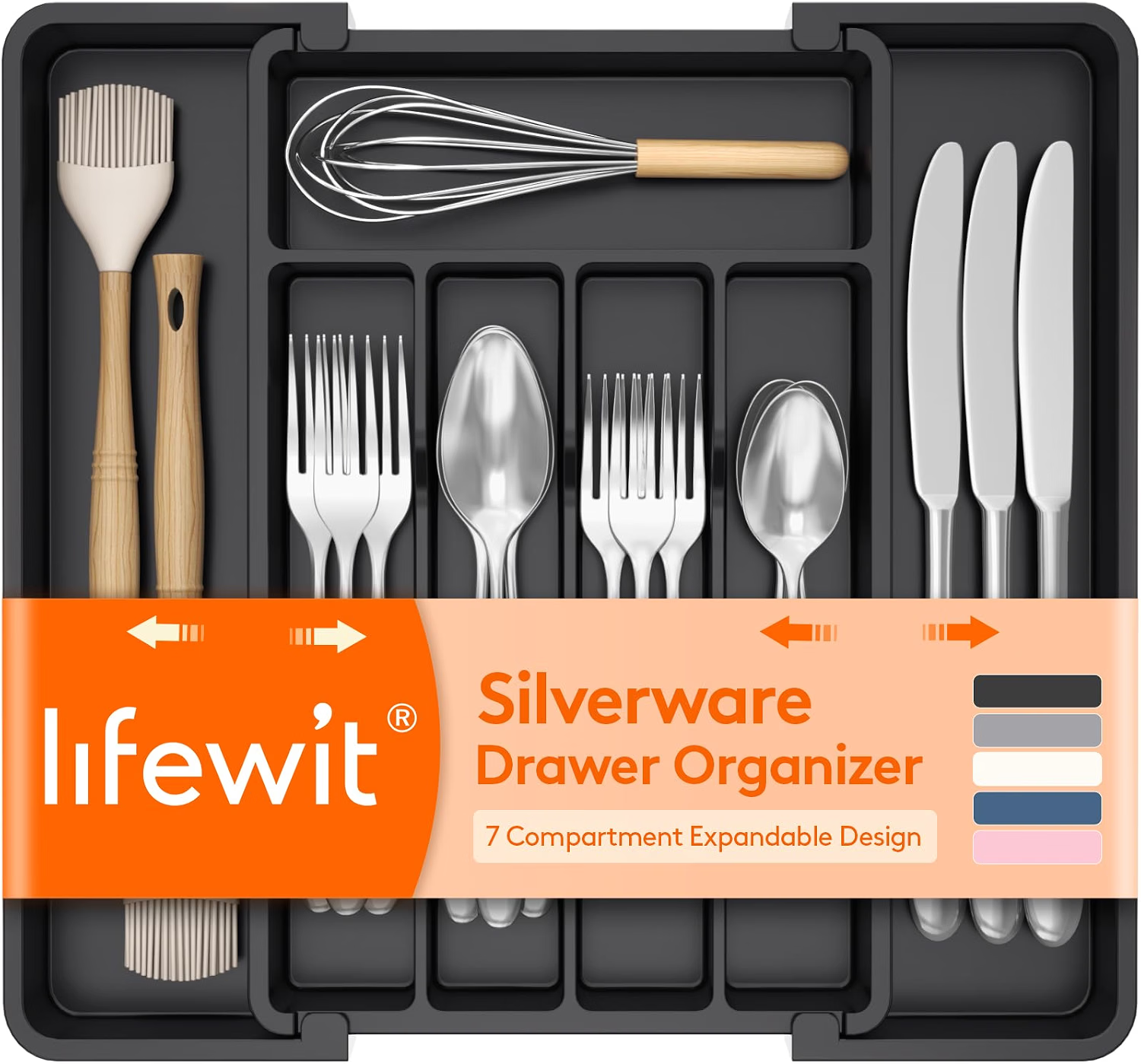
A standard silverware drawer is about 18″ wide (46 cm) and sits above the deeper drawers, with a shallow height of 3″–4″ (8–10 cm) — just right for flatware. For taller items like aluminum foil and sandwich bags, aim for a drawer about 11.5″ deep (29 cm) and 15″ wide (38 cm).
How wide is a cutlery drawer, and where should it go?
Cutlery doesn’t take much space — a drawer roughly 10″–12″ wide (25–30 cm) holds a full set of forks, knives, and spoons. For everyday convenience, put the cutlery drawer right next to the sink or dishwasher, so unloading clean flatware is a one-step reach.
How deep should kitchen drawers be for pots and pans?
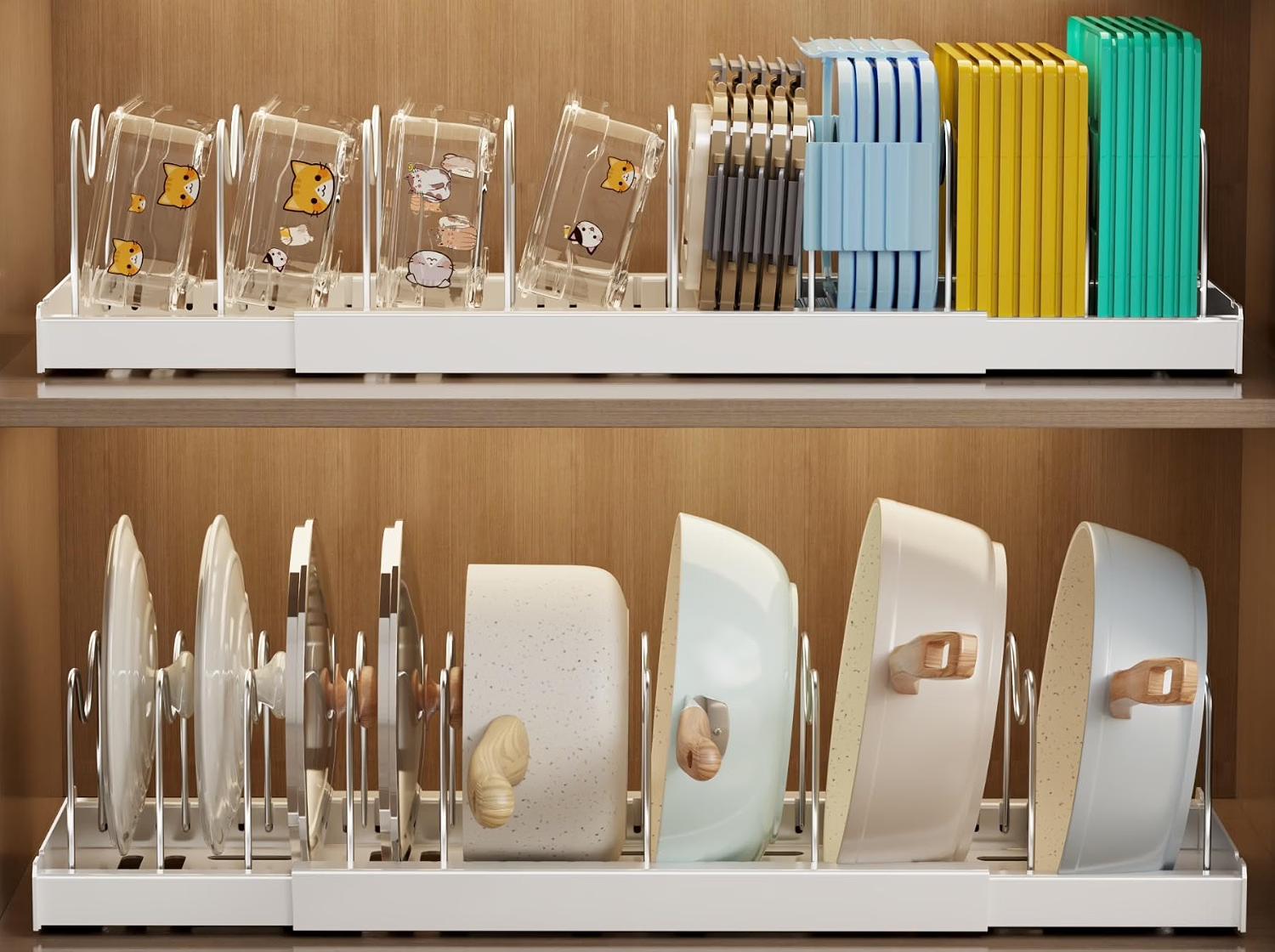
Pot-and-pan drawers need real depth. Plan for an interior height of about 10″–12″ (25–30 cm) and a width of 30″–36″ (76–91 cm) so lids and large pans lie flat. The drawer’s front-to-back depth follows the base cabinet — typically 22″–24″ (56–61 cm). Deep drawers beat fixed shelves here every time: you pull the whole drawer out instead of digging to the back.
How deep should a spice drawer be?
A spice drawer should be about 19.5″ deep (50 cm) so jars sit front to back, with a height of 3.5″–4.5″ (9–11 cm) — tall enough to hold standard spice containers upright while staying shallow enough to see every label at a glance. A width of 12″–16″ (30–41 cm) fits a tidy tiered insert.

How wide can a pull-out shelf be?
Pull-out shelves extend from the cabinet to maximize access, and their width ranges widely — from about 6″ to 30″ (15–76 cm) — with a depth of 20″–22″ (51–56 cm). Most are pre-assembled: you just screw the slides into the cabinet and slide the shelf in.

What size shelf paper fits a standard kitchen drawer?
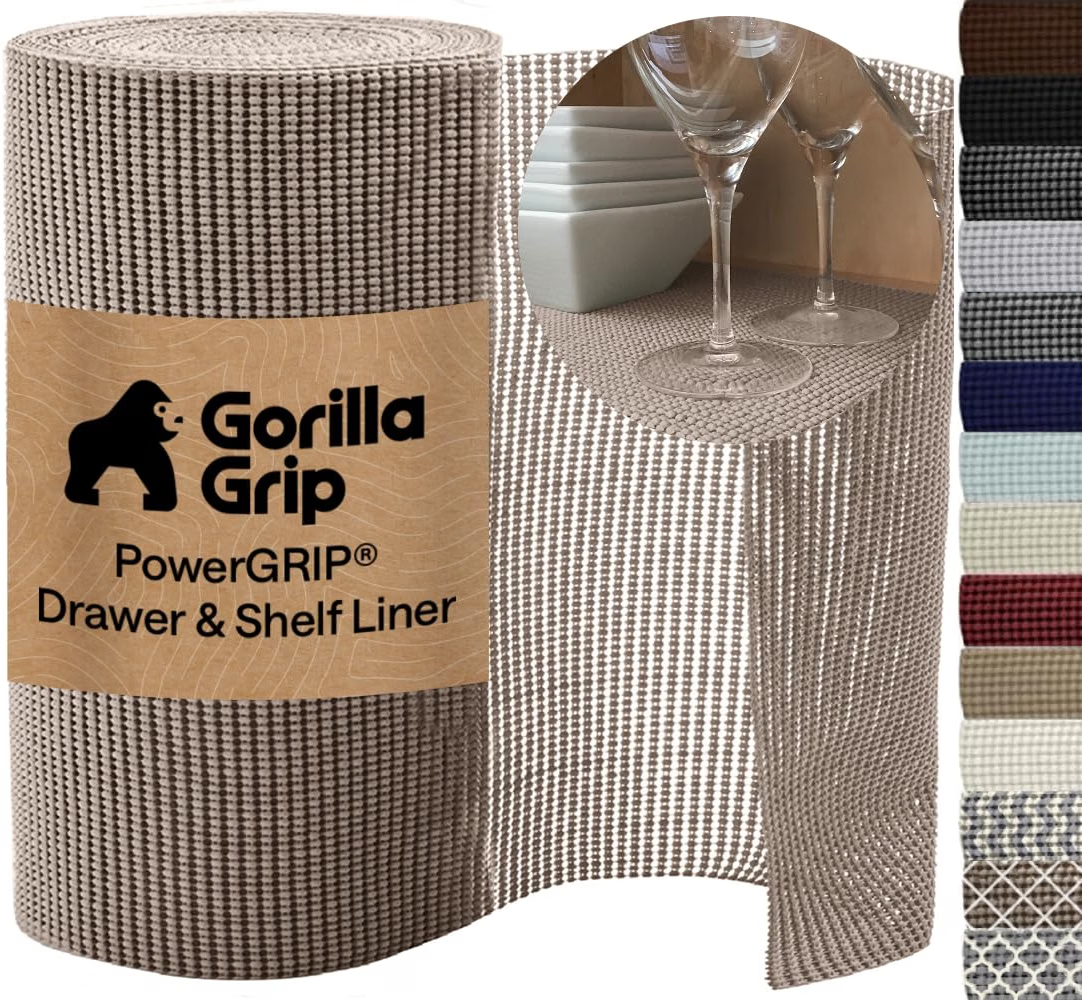
Shelf liner needs to fit your drawer’s interior, which for a standard drawer is about 10″–14″ wide (25–36 cm) and 16″–22″ deep (41–56 cm). Liner rolls usually come as 12″ × 20 ft (fits most drawers with a quick trim) or 18″ × 10 ft (better for deeper drawers and shelves). For a typical 12″ × 18″ drawer, a 12-inch-wide liner is ideal — you only trim the depth.
What Size Drawer Slides Do You Need?
Slides are the one part people get wrong most often — buy the wrong length and the drawer won’t close. Here’s how to size them right the first time.
📏 The sizing rule (measure once, buy once)
- Measure the drawer box from back to front — not the drawer face, which overhangs the cabinet.
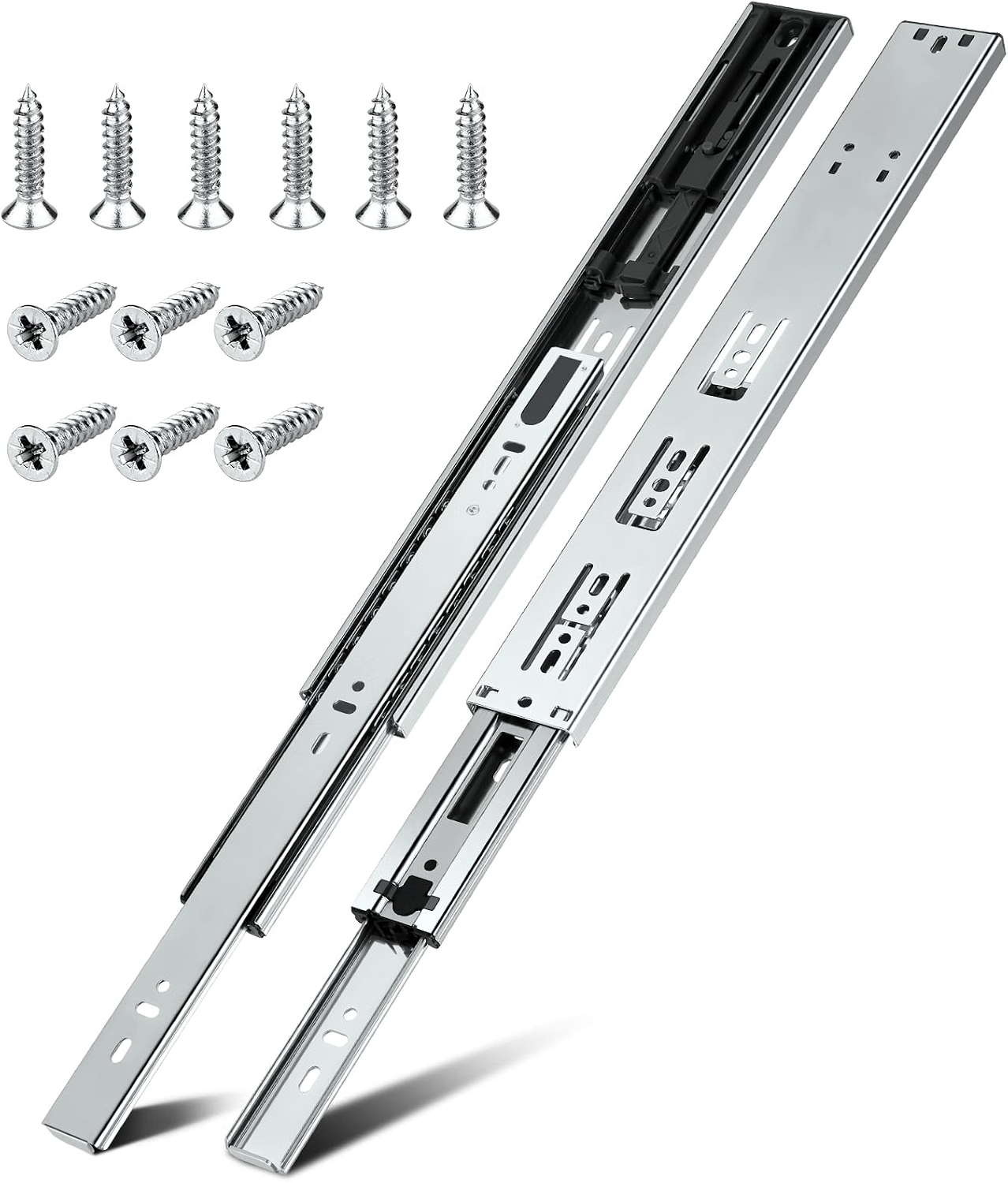
- Round down to the nearest standard slide length (slides come in even 2-inch sizes: 10, 12, 14, 16, 18, 20, 22, 24″).
- Example: a 24.5″ (62 cm) drawer takes a 24″ (61 cm) slide.
Drawer length → slide length (quick reference)
| Drawer box length | Slide length to buy |
|---|---|
| 16″ 41 cm | 16″ |
| 18″ 46 cm | 18″ |
| 20″–20.5″ 51 cm | 20″ |
| 21″ cabinet 53 cm | 16″–18″ |
| 22″ 56 cm | 22″ |
| 24″–24.5″ 61 cm | 24″ |
How thick are drawer slides?
Slide thickness depends on the weight rating. A light-duty side-mount slide is about ½″ (1.3 cm) thick per side, while a heavy-duty slide runs closer to ¾″ (1.9 cm). This matters because the slides eat into your usable drawer width — count on losing roughly ½″ (1.3 cm) per side for standard side-mount slides.
What size drawer slides for a 21″ cabinet?
For a 21-inch (53 cm) cabinet, a 16″ or 18″ (41–46 cm) slide is the right fit — the slide is always shorter than the cabinet depth so it clears the back panel. When in doubt, measure the actual drawer box and round down.
Can drawer slides be shorter or longer than the drawer?
Shorter — yes; longer — no. Slides are meant to be equal to or slightly shorter than the drawer. A 20.5″ (52 cm) drawer, for example, uses a 20″ (51 cm) slide or less. Never use a slide longer than the drawer — it won’t seat properly and the drawer won’t close flush.
How much space is needed for under-mount slides?
If you’re tight on width, under-mount slides hide beneath the drawer and need only 3⁄16″–¼″ (0.5–0.6 cm) of clearance on each side — far less than side-mounts. They cost more but give you a cleaner look and nearly the full cabinet width inside the drawer.
Kitchen Drawer Sizes in cm and mm (US vs UK & Europe)
Standard sizes are the same idea worldwide, but the numbers — and how cabinets are sold — differ. Here are the US standards converted to metric, plus what changes abroad.
| Dimension | Inches | cm | mm |
|---|---|---|---|
| Standard drawer depth | 24″ | 61 cm | 610 mm |
| Usable drawer depth | 22″ | 56 cm | 560 mm |
| Base cabinet height (no top) | 34.5″ | 87.6 cm | 876 mm |
| Most common drawer width | 30″ | 76 cm | 762 mm |
| Drawer width range | 9″–48″ | 23–122 cm | 230–1220 mm |
| Silverware drawer height | 3″–4″ | 8–10 cm | 76–102 mm |
| Deep (pot & pan) drawer height | 10″–12″ | 25–30 cm | 254–305 mm |
Quick conversion: 1 inch = 2.54 cm = 25.4 mm.
United States
Sold in inches. Base cabinets are 24″ deep and 34.5″ tall, with widths in 3-inch steps (9, 12, 15, 18 … 48″).
UK & Europe
Sold in mm as modular units — base carcasses about 500–600 mm deep and 720 mm tall (≈870–910 mm with worktop and plinth), in module widths of 300, 400, 500, 600, 800, 1000 mm.
IKEA (METOD)
Base cabinets come in 37 cm or 60 cm depths and 80 cm height, in widths of 20, 30, 40, 60, 80 cm; MAXIMERA drawers are sized to match.
Exact sizes vary by brand and range — always confirm against your manufacturer’s spec before ordering.
How to Measure for Kitchen Drawers
Whether you’re replacing a drawer, fitting an organizer, or planning a build, four measurements get you there.
- Measure the height — top to bottom, vertically, inside the drawer box.
- Measure the width — left to right, across the interior.
- Choose the mount — decide between side-mount (easier, needs ~½″ per side) or under-mount (hidden, needs only 3⁄16″–¼″ per side) slides before you finalize width.
- Measure the depth — front to back, excluding the drawer face, since the face overhangs the cabinet. Round the depth down for slide length.
Which number is which? For a drawer, height is top-to-bottom, width is left-to-right, and depth is front-to-back. Organizers are usually listed as width × depth × height.
Drawer face vs. drawer box — why they’re different sizes
The drawer face (the front panel you see and pull) is larger than the drawer box (the interior that holds your stuff), because the face overhangs the cabinet opening on all sides. So the usable interior height is always less than the face height — to get an interior clearance of 11.5″–12″ (29–30 cm) (enough for a tall bottle), the drawer face usually needs to be about 13″–14″ (33–36 cm) tall. Always plan around the interior box dimensions, not the face.
How much space should be between drawers?
Leave about 1 inch (2.5 cm) between drawer fronts for a clean, consistent look. Builders fitting a large number of drawers in one cabinet can tighten this to as little as ¼″ (0.6 cm) with precise measurement, but 1 inch is the comfortable standard.
How many drawers should a kitchen have?
Drawers beat door cabinets for everyday access — you slide them out instead of stooping and reaching to the back. A good rule of thumb: include at least one drawer stack (a “drawer bank”) for every double-door base cabinet, then add more based on your storage needs. Deep drawers for pots and pans, a wide cutlery drawer near the sink, and a shallow spice drawer cover most kitchens.
Standard Kitchen Drawer Size FAQs
Quick answers to the questions people ask most when planning drawers.
What is the standard kitchen drawer size?
A standard kitchen drawer is about 24 inches (61 cm) deep, matching standard base-cabinet depth. Widths range from 9 to 48 inches (23–122 cm), with 30 inches (76 cm) the most common, and drawer fronts run about 6 to 12 inches (15–30 cm) tall depending on the drawer’s job.
How deep is a standard kitchen drawer?
About 24 inches (61 cm), matching the standard base-cabinet depth so it sits behind a countertop with a slight overhang. The usable interior depth is a bit less — around 22 inches (56 cm) — once the back panel and slides are accounted for. Kitchen-island drawers can go deeper, up to about 36 inches (91 cm).
What is the standard height of a kitchen drawer?
Individual drawer fronts range from about 6 inches (15 cm) for a shallow top drawer to 10–12 inches (25–30 cm) for a deep pot-and-pan drawer. The base cabinet they sit in is 34.5 inches (87.6 cm) tall without the countertop.
How wide are kitchen cabinet drawers?
Drawer width follows the cabinet, ranging from about 9 to 48 inches (23–122 cm). The most common is 30 inches (76 cm), and US cabinet widths step up in 3-inch increments (9, 12, 15, 18, and so on).
What are the usable dimensions of a drawer in a 30-inch frameless cabinet?
About 28½ inches (72 cm) wide, 21–23 inches (53–58 cm) deep, and 3½–10 inches (9–25 cm) tall depending on whether it’s a top, middle, or bottom drawer. Width loses about ½ inch per side to the slides.
How deep does a kitchen drawer need to be for an 11-inch bottle?
The interior clearance needs to be at least 11.5 to 12 inches (29–30 cm) so the bottle fits with lid clearance and a little wiggle room. Because the interior is shorter than the face, the drawer front usually needs to be about 13 to 14 inches (33–36 cm) tall.
What size drawer slides do I need?
Measure the drawer box from back to front (not the face) and round down to the nearest standard 2-inch slide length. For example, a 24.5-inch drawer takes a 24-inch slide, and a 21-inch cabinet takes a 16 to 18-inch slide.
Can drawer slides be shorter or longer than the drawer?
Shorter, yes; longer, no. Slides should be equal to or slightly shorter than the drawer box — a 20.5-inch drawer uses a 20-inch slide or less. A slide longer than the drawer won’t seat properly and the drawer won’t close.
How far do kitchen drawers come out?
It depends on the slide type and drawer depth. Full-extension slides pull the whole drawer clear of the cabinet, while lower-cabinet drawers are typically 17 to 23 inches (43–58 cm) deep and upper drawers about 12 inches (30 cm).
Where should the cutlery drawer go in the kitchen?
Put it next to the sink or dishwasher so putting away clean flatware is a one-step reach. Keeping your most-used items closest to where you work is the simplest way to make a layout feel effortless.
How much space should be between kitchen drawers?
Leave about 1 inch (2.5 cm) between drawer fronts for a consistent look. Builders fitting many drawers in one cabinet can reduce this to as little as ¼ inch (0.6 cm) with careful measurement.
What is a drawer bank, and what are its standard sizes?
A drawer bank is a stack of drawers in a single cabinet, often 3 or 4. They follow standard cabinet widths — commonly 18, 24, 30, or 36 inches (46–91 cm) — with the total height split among the drawers, deeper ones toward the bottom.
What are standard kitchen drawer sizes in cm?
In metric, a standard drawer is about 61 cm deep (56 cm usable), base cabinets are 87.6 cm tall, and widths run from about 23 cm to 122 cm, with 76 cm the most common. In the UK and Europe, cabinets are sold in modular widths like 300, 400, 500, 600, 800, and 1000 mm.
How deep should a spice drawer be?
About 19.5 inches (50 cm) deep so jars line up front to back, with a shallow height of 3.5 to 4.5 inches (9–11 cm) to hold standard spice containers upright while keeping labels visible.
📌Related Read:
04 Best Kitchen Drawer Organizers
Best Kitchen Cabinet Organizers
5 Space-Saving Kitchen Racks & Organizers
7 Best Under-Shelf Baskets for Extra Pantry Space
10 Hidden Storage Ideas for a Clutter-Free Kitchen