
Sugar-Free German Chocolate Cake
Why You’ll Love This Cake
All the sticky, coconut-pecan magic of a classic German chocolate cake — no grains, no sugar, and under 3g net carbs a slice. It’s a moist, rich, two-layer chocolate cake with that signature gooey coconut-pecan caramel filling, and nobody will guess it’s keto-friendly.
- DietKeto · Grain-free
- Net carbs~3g per slice
- SweetenerAllulose / monk fruit
- Prep20 minutes
- Bake~28 minutes
- Makes12 slices
All the indulgence of a classic German chocolate cake — tender chocolate layers under a thick, buttery coconut-pecan topping — with the flour and sugar swapped for almond flour and allulose. It stays moist, rich, and genuinely low-carb.
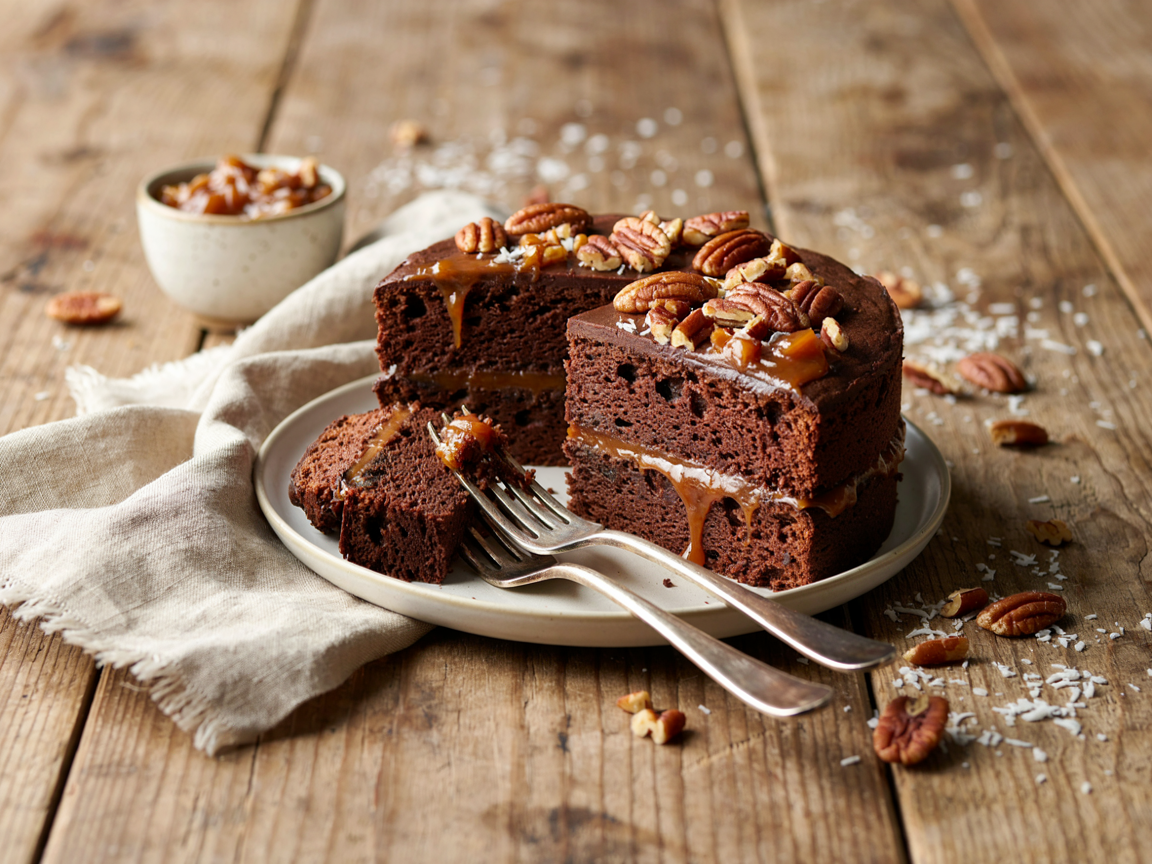
Sugar-Free German Chocolate Cake Recipe
Two components: a moist almond-flour chocolate cake and a sticky sugar-free coconut-pecan filling. Both come together in one afternoon, and the filling doubles as the frosting.
Sugar-Free German Chocolate Cake
Moist grain-free chocolate layers with a gooey coconut-pecan caramel filling — keto, sugar-free, and about 3g net carbs a slice.
🍫 For the Chocolate Cake
- 2½ cups (250g) blanched almond flour
- ¾ cup (65g) unsweetened cocoa powder
- 1¼ cups granulated allulose or monk-fruit/erythritol blend
- 2 tsp baking powder · ½ tsp baking soda · ½ tsp salt
- 4 large eggs, room temperature
- ½ cup (115g) unsalted butter, melted (or avocado oil)
- ½ cup sour cream or full-fat Greek yogurt
- 2 tsp vanilla extract
- ½ cup hot brewed coffee or hot water (blooms the cocoa)
🧄 For the Coconut-Pecan Filling
- ½ cup (115g) unsalted butter
- ¾ cup heavy cream (or full-fat coconut milk for dairy-free)
- ¾ cup granulated allulose (best for a soft, caramel-like set)
- 3 large egg yolks
- 1 tsp vanilla extract · pinch of salt
- 1½ cups unsweetened shredded coconut
- 1¼ cups pecans, toasted and chopped
📝 Make the Cake
- Prep. Heat oven to 350°F (175°C). Grease two 8-inch round pans and line the bottoms with parchment.
- Dry. Whisk almond flour, cocoa, sweetener, baking powder, baking soda and salt until no lumps remain.
- Wet. In another bowl beat the eggs, melted butter, sour cream and vanilla until smooth.
- Combine. Stir the wet into the dry, then mix in the hot coffee last — the batter will be pourable. Divide between the pans.
- Bake. Bake 26–30 minutes, until a toothpick comes out with a few moist crumbs. Cool in the pans 10 minutes, then turn out onto a rack to cool completely.
🍳 Make the Coconut-Pecan Filling
- Cook the base. In a saucepan over medium heat, whisk the butter, cream, allulose and egg yolks constantly until it thickens and coats the back of a spoon, about 8–12 minutes. Do not let it boil hard.
- Add the good stuff. Off the heat, stir in vanilla, salt, shredded coconut and toasted pecans.
- Cool to set. Let it cool 20–30 minutes — it thickens to a spreadable, gooey caramel as it sits.
🥕 Assemble
- Layer. Place one cake layer on a plate, spread with about a third of the filling, then top with the second layer.
- Finish. Spread the rest of the filling over the top (leave the sides bare, classic-style). Let it set 15 minutes before slicing.
Which Sweetener Should You Use?
Sweetener choice makes or breaks a sugar-free cake, so it’s worth getting right:
Allulose — best for the filling
Browns and stays soft like real caramel, and never crystallizes. Ideal for the gooey coconut-pecan topping, and lovely in the cake too.
Monk fruit / erythritol blend — great in the cake
A 1:1 sugar-replacement blend measures like sugar and bakes a tender crumb. If you use it in the filling, expect a slightly firmer set than allulose.
Avoid pure erythritol in the filling on its own — it can recrystallize into a gritty texture as the topping cools.
Tips for the Best Sugar-Free German Chocolate Cake
- Don’t skip the hot coffee — it blooms the cocoa for a deeper chocolate flavour (it won’t taste like coffee). Hot water works too.
- Whisk the filling constantly so the egg yolks thicken smoothly instead of scrambling.
- Cool the layers completely before filling, or the caramel slides off.
- Room-temperature eggs give the lightest, most even crumb.
- Almond flour matters — use blanched, finely ground flour (not almond meal) for a smooth texture.
Storing & Freezing
The filling has cream and egg yolks, so keep this one chilled:
- Fridge: airtight, up to 5 days. Let slices sit out 15 minutes before serving so the caramel softens.
- Freezer: wrap slices individually and freeze up to 2 months; thaw overnight in the fridge.
Easy Variations
Dairy-Free
Swap butter for coconut oil and the heavy cream for full-fat coconut milk. The coconut note actually suits this cake beautifully.
Cupcakes or 9×13
Pour the batter into a lined muffin tin (bake ~18 min) or a 9×13 pan (bake ~30 min) and spread the filling over the top.
Sugar-Free German Chocolate Cake FAQ
Is this German chocolate cake keto?
Yes. It’s made with almond flour instead of wheat flour and a sugar-free sweetener instead of sugar, so it’s grain-free, sugar-free, and comes in at about 3g net carbs per slice — keto-friendly for most people.
Why is it called German chocolate cake?
It’s not from Germany. The cake is named after Samuel German, who created a type of sweet baking chocolate in the 1850s. The name stuck, and the coconut-pecan filling became its signature.
What sweetener works best in a sugar-free German chocolate cake?
Use allulose in the coconut-pecan filling — it browns and stays soft like real caramel without crystallizing. For the cake itself, a 1:1 monk-fruit or erythritol blend measures like sugar and bakes a tender crumb.
How many net carbs are in a slice?
About 3g net carbs per slice when the recipe is cut into 12, since almond flour is low-carb and allulose isn’t counted toward net carbs. The exact number depends on the brands you use.
Does it actually taste like real German chocolate cake?
Yes — the moist chocolate layers and the sticky, buttery coconut-pecan caramel are the two things that define the classic, and both are here. Most people can’t tell it’s sugar-free.
Can I make this cake dairy-free?
Yes. Swap the butter for coconut oil and the heavy cream for full-fat coconut milk. The coconut flavour actually complements the filling beautifully.
Can I use coconut flour instead of almond flour?
Not as a 1:1 swap — coconut flour is far more absorbent. This recipe is built for almond flour; if you want coconut flour you’d need to reduce it to about a third and add more eggs and liquid.
How do I store it, and can I freeze it?
Because the filling has cream and egg yolks, refrigerate the cake in an airtight container for up to 5 days. To freeze, wrap slices individually and freeze up to 2 months, then thaw overnight in the fridge.
Can I make it as cupcakes or a sheet cake?
Yes. Use a lined muffin tin (bake about 18 minutes) or a 9×13 pan (bake about 30 minutes), then spread the coconut-pecan filling over the top.
The Bottom Line
This sugar-free German chocolate cake proves you don’t have to choose between a special-occasion dessert and your low-carb goals. Moist chocolate layers, a sticky coconut-pecan caramel that tastes like the real thing, and about 3g net carbs a slice — make it once and you’ll be obsessed with every bite. Save it, share it, and bake it for the next celebration.