
Easy Grass-Fed Gelatin Marshmallows: Fluffy, Natural and No Corn Syrup
Pillowy honey-sweetened marshmallows with five ingredients: grass-fed beef gelatin, honey, water, vanilla and salt. No corn syrup, no refined sugar, twenty-five minutes of work, and seven flavours from one method.
- 5 ingredients
- No corn syrup
- Maple-syrup option
- Printable recipe
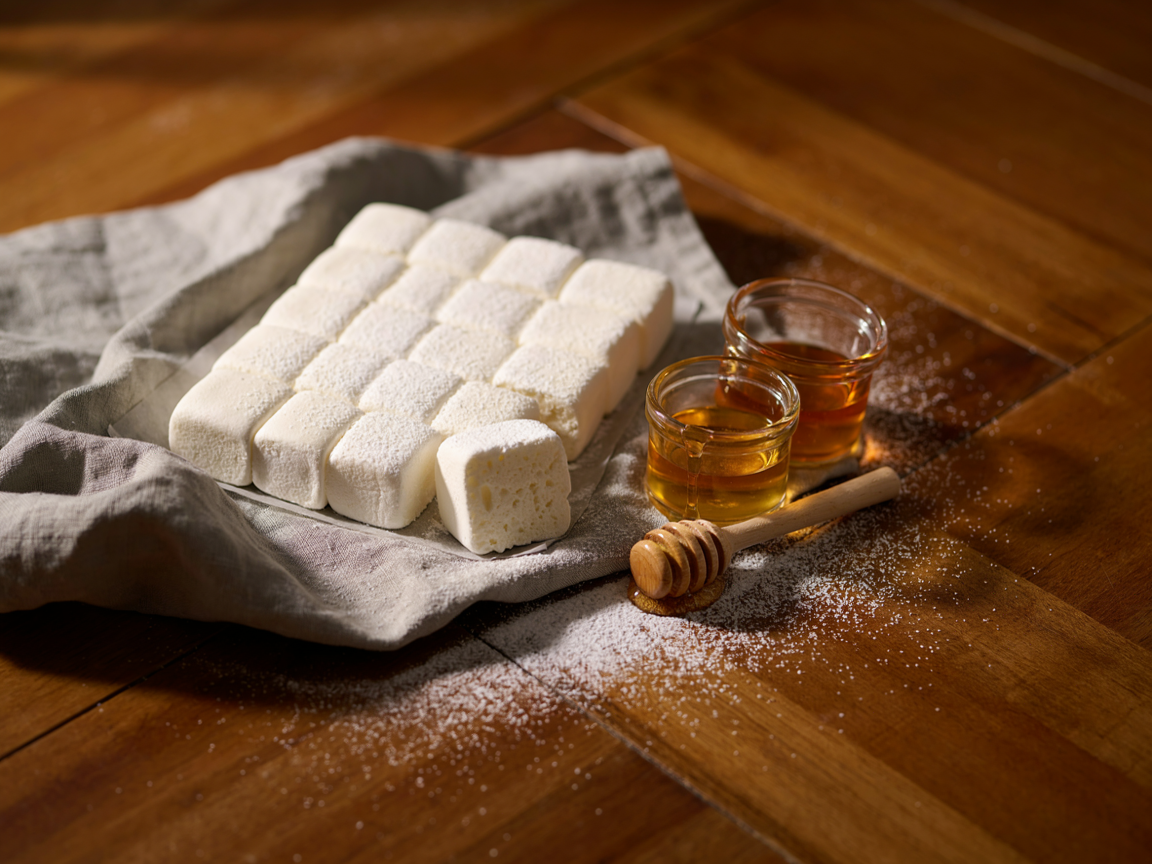
The slab from the pin: soft cream marshmallows cut into squares on linen, a jar of honey beside them.
These grass-fed gelatin marshmallows come down to gelatin bloomed in cold water, honey boiled to exactly 240°F, and twelve minutes of whipping. The result is softer and a little chewier than the bag, gently honey-flavoured, and made without corn syrup.
In this post:
- Why make them at home
- The ingredients, and the halal gelatin note
- The recipe, from 15 to 60 marshmallows
- Five rules for marshmallows that set every time
- Equipment, whipping stages and which sweetener to use
- Seven flavours, from chocolate to lavender honey
- Ways to use them, storage, troubleshooting and 14 FAQs
Why Make Grass-Fed Gelatin Marshmallows at Home
Five ingredients, no corn syrup
Gelatin, honey, water, vanilla and salt, plus arrowroot to dust. No corn syrup, no refined sugar, no dyes.
Softer than the bag
Pillowy and a little chewy, with a gentle honey flavour. They melt slowly into hot cocoa and toast to a deep golden crust.
Twenty-five minutes of work
The setting takes hours, but the work is a bloom, a boil and a 12-minute whip. Make them in the evening, cut them in the morning.
Seven flavours from one batch
Chocolate, strawberry, cinnamon, mocha, toasted coconut and lavender honey, each a tab below and each added at the same step.
Ingredients for Honey Marshmallows Without Corn Syrup
Grass-fed beef gelatin
Unflavoured beef gelatin powder, from cattle raised on pasture. It sets the marshmallow and gives the chew. Grass-fed and ordinary beef gelatin set the same; for halal, look for a halal-certified label. Pork gelatin is not used here.
Honey
The sweetener and most of the flavour. Mild clover or wildflower honey keeps the marshmallow light and gentle; dark, strong honeys taste overpowering. Raw honey gains nothing here since it is boiled.
Maple syrup
Swaps one for one with honey for a cleaner, caramel-leaning sweetness and a version that is safe for anyone avoiding honey. The sweetener table compares the options.
Water, twice
Cold water to bloom the gelatin (warm water clumps it) and water in the syrup so the honey boils evenly to temperature.
Alcohol-free vanilla and salt
Two teaspoons of vanilla for the classic marshmallow flavour, a pinch of salt to stop the honey tasting flat.
Arrowroot powder
For dusting the pan, the top and the cut sides. It does what cornstarch does without the raw, chalky taste. Cornstarch or powdered sugar mixed half and half with cornstarch also work.
Coconut oil
For greasing the pan, the spatula and the knife. Everything that touches marshmallow needs a film of fat.
Grass-Fed Gelatin Marshmallow Recipe
The card makes 30 marshmallows in an 8×8 pan. Tap a size and everything updates, pan included.
Grass-Fed Gelatin Marshmallows
Fluffy honey-sweetened marshmallows made with grass-fed beef gelatin, no corn syrup and no refined sugar: gelatin bloomed in water, honey boiled to 240°F, whipped 12 minutes until white and set overnight. Tap a batch size and the printable card updates.
How many marshmallows?
Ingredients
- 1½ tbsp3 tbsp (about 4 envelopes)¼ cup + 1½ tsp6 tbsp unflavoured grass-fed beef gelatin powder (halal-certified if needed)
- ¼ cup½ cup¾ cup1 cup cold water, for blooming
- ½ cup1 cup1½ cups2 cups mild honey (clover or wildflower) or pure maple syrup
- ¼ cup½ cup¾ cup1 cup water, for the syrup
- 1 tsp2 tsp1 tbsp4 tsp alcohol-free vanilla
- a pinch¼ tspa generous ⅓ tsp½ tsp fine sea salt
- 1½ tbsp3 tbsp¼ cup + 1½ tsp6 tbsp arrowroot powder, for dusting
- 1½ tsp1 tbsp1½ tbsp2 tbsp coconut oil, for greasing
Gelatin: any unflavoured beef gelatin works; for halal, buy one that is halal-certified (grass-fed alone does not mean halal). Not for babies under 12 months: honey is unsafe for infants even when cooked. A candy thermometer and a stand mixer make this easy; the FAQ covers working without them. Alcohol-free vanilla keeps it halal.
Instructions
Prepare the pan
Grease the pan with coconut oil, line it with parchment overhanging two sides, and dust the parchment with a third of the arrowroot.
Bloom the gelatin
Sprinkle the gelatin evenly over the cold water in the stand mixer bowl, stir once, and leave 5 minutes until it sets into a firm gel.
Boil the syrup to 240°F
Combine the honey and water in a deep, heavy saucepan (honey foams up). Clip on a candy thermometer and boil over medium-high, stirring occasionally, until it reads exactly 240°F, 7 to 10 minutes.
Pour in slowly
With the mixer on low, pour the hot syrup in a thin, steady stream down the side of the bowl, not onto the whisk, where it splatters.
Whip on high
Turn the mixer to high and whip 10 to 12 minutes. It goes from thin and amber to cloudy, then thick, glossy and nearly white, and clings to the whisk in stiff ribbons.
Flavour
Add the vanilla and salt, and any flavouring from the tabs, and whip 1 minute more.
Spread fast
Scrape into the pan at once with a greased spatula and smooth the top with a greased offset spatula. Dust with another third of the arrowroot. It sets quickly, so do not stop to tidy.
Set uncovered
Leave at room temperature, uncovered, at least 4 hours, ideally overnight. Not in the fridge, where marshmallows weep and turn sticky.
Cut and coat
Lift out by the parchment onto a board dusted with the last of the arrowroot. Cut into squares with a greased pizza cutter or knife and toss each in arrowroot so the cut sides do not stick.
Five Rules for Marshmallows That Set Every Time
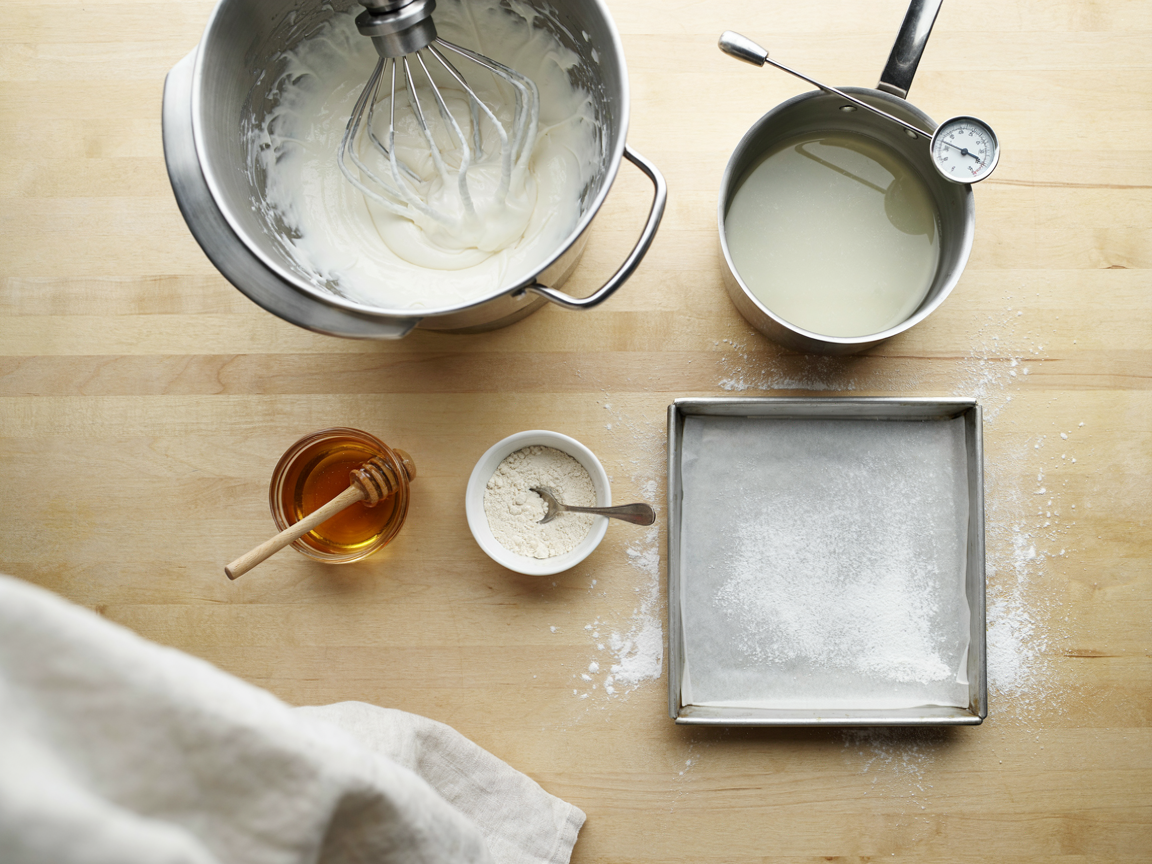
The whip: the mixture thick, glossy and nearly white, clinging to the whisk in ribbons, the honey jar beside the mixer.
Bloom in cold water
Sprinkle the gelatin over cold water and leave it 5 minutes. Hot water or dumping it in a heap makes lumps that never dissolve.
240°F exactly
The syrup temperature decides the texture: under 238°F they stay sticky and slump, over 245°F they turn firm and rubbery. Use a clip-on thermometer and read it at eye level.
Down the side, then high
Pour the syrup slowly down the side of the bowl on low, then whip on high a full 10 to 12 minutes, until thick, white and ribbony.
Grease everything and work fast
Spatula, pan, knife. The mixture starts setting the moment the mixer stops.
Air-set, never refrigerate
Uncovered at room temperature overnight. The fridge makes them damp and sticky.
Equipment and the Whipping Stages
| Tool | Need | Why |
|---|---|---|
| ToolStand mixer with whisk | NeedEssential | WhyTen to twelve minutes on high; a strong hand mixer works but is hard going |
| ToolCandy thermometer, clip-on | NeedEssential | Why240°F is the whole recipe |
| ToolDeep, heavy saucepan | NeedEssential | WhyHoney foams up as it boils; a small pan boils over |
| ToolSquare pan with parchment | NeedEssential | Why8×8 for 30 tall marshmallows; 9×13 for a double batch |
| ToolOffset spatula, greased | NeedHelpful | WhySmooths the top before it sets |
| ToolPizza cutter, greased | NeedHelpful | WhyThe cleanest cuts |
What the Mixture Looks Like as It Whips
| Time on high | What it looks like | What to do |
|---|---|---|
| Time on high0 to 2 minutes | What it looks likeThin, clear and amber, foamy | What to doKeep going |
| Time on high3 to 6 minutes | What it looks likeCloudy, pale gold, doubling in volume | What to doKeep going |
| Time on high7 to 10 minutes | What it looks likeOpaque, cream-white, thick and glossy | What to doNearly there |
| Time on high10 to 12 minutes | What it looks likeStiff, ribbony, clinging to the whisk, bowl just warm | What to doDone: add vanilla and salt |
Honey, Maple or Something Else, and How They Compare to the Bag
| Sweetener | Verdict | Notes |
|---|---|---|
| SweetenerMild honey (clover, wildflower) | VerdictRecommended | NotesSoft, floral; the classic honey marshmallow |
| SweetenerPure maple syrup | VerdictExcellent | NotesCleaner, caramel note; honey-free |
| SweetenerStrong honey (buckwheat, manuka) | VerdictAvoid | NotesOverpowering flavour |
| SweetenerAgave | VerdictAvoid | NotesDoes not set reliably |
| SweetenerBrown rice syrup | VerdictWorks | NotesDenser, less fluffy |
| SweetenerCorn syrup and sugar | VerdictThe standard recipe | NotesFluffier and whiter, but not this recipe |
Homemade vs Store-Bought Marshmallows
| Homemade (this recipe) | Typical bag | |
|---|---|---|
| Ingredients | Homemade (this recipe)Gelatin, honey, water, vanilla, salt | Typical bagCorn syrup, sugar, starch, gelatin, flavour, often colour |
| Sweetener | Homemade (this recipe)Honey or maple syrup | Typical bagCorn syrup and sugar |
| Texture | Homemade (this recipe)Softer, a little chewy | Typical bagBouncier, more uniform |
| Toasting | Homemade (this recipe)Browns faster (honey caramelises); hold further from the flame | Typical bagSlower to brown |
| Calories | Homemade (this recipe)About 37 each | Typical bagAbout 23 each, smaller |
| Cost | Homemade (this recipe)Similar or a little more per piece | Typical bagCheaper per bag |
| Keeps | Homemade (this recipe)2 weeks | Typical bagMonths |
Seven Flavours of Homemade Marshmallows
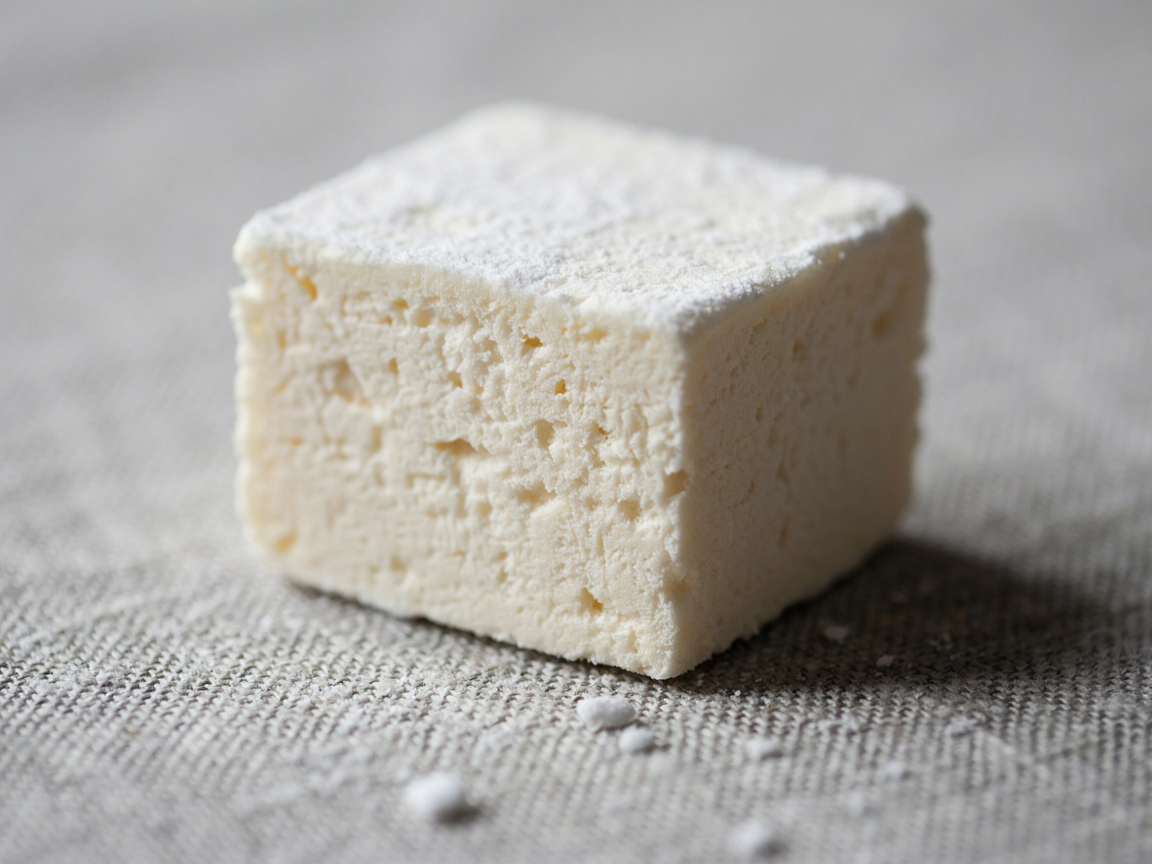
Up close: a cut marshmallow showing its fine, airy crumb, dusted with arrowroot.
Same base, a different flavour, added at the vanilla step. Tap one:
Classic Honey Marshmallows
The recipe above: honey, alcohol-free vanilla and a pinch of salt. The slab on the pin.
Chocolate Marshmallows
Whisk 3 tablespoons unsweetened cocoa and 1 teaspoon instant espresso powder into the bloomed gelatin before the syrup goes in, and dust with cocoa mixed half and half with arrowroot. Made for hot chocolate.
Strawberry Marshmallows
Fold in 3 tablespoons freeze-dried strawberry powder with the vanilla, and ¼ teaspoon rose water if you like a floral note. Soft pink with no dye.
Cinnamon Spice Marshmallows
Add 1½ teaspoons cinnamon, ¼ teaspoon nutmeg and a pinch of cloves with the vanilla, and dust with cinnamon arrowroot. For apple cider and pumpkin spice drinks.
Mocha Marshmallows
Use strong cold coffee instead of the blooming water and add 1 tablespoon cocoa with the vanilla. Float one on a latte or a mocha.
Toasted Coconut Marshmallows
Toast 1 cup unsweetened shredded coconut until golden, press half into the pan before spreading and roll the cut squares in the rest instead of arrowroot. Use maple syrup for a cleaner coconut flavour.
Lavender Honey Marshmallows
Steep 1 teaspoon culinary dried lavender in the syrup water for 10 minutes, strain, then make the syrup as usual. A light floral marshmallow for herbal tea.
Ways to Use Them, and How to Store Them
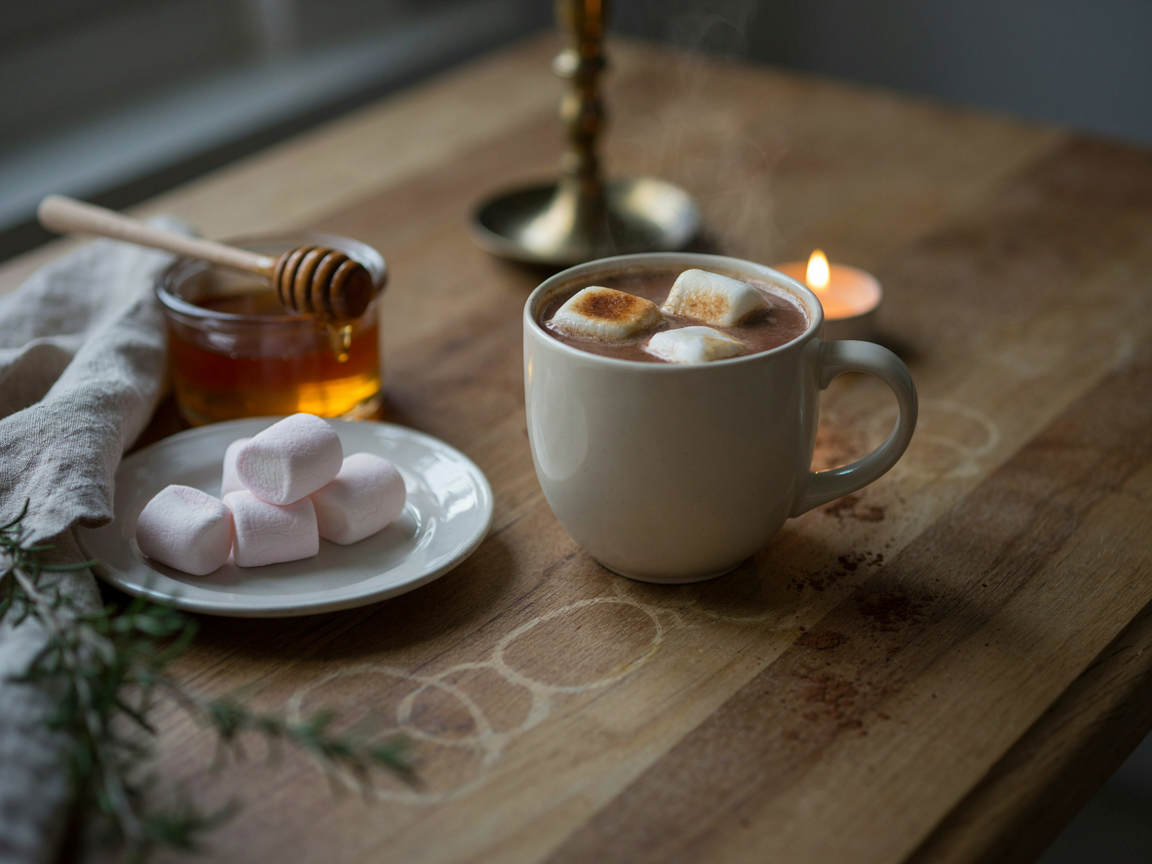
A mug of hot cocoa with two honey marshmallows melting on top, more squares on a plate beside it.
| Use | How |
|---|---|
| UseHot cocoa | HowDrop in two; they melt slowly into a honey foam |
| UseS’mores | HowToast at a distance; honey browns faster than sugar |
| UseCoffee or latte | HowTorch the top for a toasted-marshmallow latte |
| UseSweet potato casserole | HowScatter on top for the last 5 minutes |
| UseGift box | HowWrapped in parchment and twine with cocoa mix and a jar of honey |
| UseHot chocolate bar | HowA jar of the chocolate and cinnamon flavours side by side |
Storage
| Where | How long | Notes |
|---|---|---|
| WhereRoom temperature | How long2 weeks, airtight, dusted | NotesLayer with parchment |
| WhereFreezer | How long3 months | NotesThaw sealed 30 minutes so they do not sweat |
| WhereFridge | How longNot recommended | NotesThey turn damp and sticky |
| WhereHumid weather | How longExtra arrowroot, smaller container | NotesRe-dust if they feel tacky |
| WhereMake ahead for gifts | How longUp to 1 week before | NotesWrap the day you give them |
| WhereUncut slab | How long2 days, wrapped in dusted parchment | NotesCut when needed |
More gelatin recipes and things to put them on:
- More with beef gelatin: beef gelatin gummies and gelatin gummies
- The hot chocolate: a DIY hot chocolate bar
- On the Thanksgiving table: sweet potato casserole with marshmallows
- With coffee: a mocha latte
Troubleshooting
| Problem | Likely cause | Fix |
|---|---|---|
| ProblemDid not set, stays sticky | Likely causeSyrup under 240°F, or under-whipped | FixCheck the thermometer in boiling water (212°F); whip until stiff and white |
| ProblemRubbery and firm | Likely causeSyrup over 245°F | FixPull at exactly 240°F |
| ProblemGelatin lumps | Likely causeBloomed in warm water or dumped in a pile | FixSprinkle evenly over cold water |
| ProblemDense, not fluffy | Likely causeWhipped too briefly, or cold bowl | Fix10 to 12 minutes on high, until ribbony |
| ProblemWeeping, wet surface | Likely causeRefrigerated or humid | FixAir-set; extra arrowroot |
| ProblemSticky cut sides | Likely causeNot dusted | FixToss every square in arrowroot |
| ProblemSyrup boiled over | Likely causePan too small | FixA deep pan at least three times the syrup volume |
| ProblemStrong honey flavour | Likely causeDark honey | FixMild clover or wildflower, or maple syrup |
Nutrition (approximate, per marshmallow)
One of 30 made with honey. Dairy-free, gluten-free and corn-syrup-free; halal with halal-certified gelatin and alcohol-free vanilla. Not for babies under 12 months because of the honey.
Grass-Fed Gelatin Marshmallows: FAQs
How do you make marshmallows without corn syrup?
Bloom unflavoured gelatin in cold water, boil honey or maple syrup with water to exactly 240°F, pour it slowly into the gelatin and whip on high 10 to 12 minutes until thick and white. Spread into a dusted pan and set overnight. The card above scales from 15 to 60.
Is grass-fed gelatin halal?
Not automatically. Grass-fed describes how the cattle were raised, not how they were slaughtered. For halal marshmallows, buy a beef gelatin labelled halal-certified; it sets exactly the same.
Can I use regular gelatin?
Yes. Any unflavoured powdered beef gelatin works at the same amount, about 4 envelopes for 3 tablespoons. Collagen peptides do not work; they dissolve but do not set.
Are these marshmallows healthy?
They are a treat made with simpler ingredients: no corn syrup, refined sugar or dyes. They are still sweet, about 37 calories and 9 grams of sugar from honey each, with a little protein from the gelatin. Enjoy them like any sweet.
Can babies or toddlers eat them?
Not under 12 months: honey is unsafe for infants even when cooked. Make the maple syrup version for a household with a baby. For young children, cut them small; marshmallows are a choking risk.
Can I make them without a candy thermometer?
Yes, with the cold-water test: drop a little syrup into cold water and it should form a soft, pliable ball that flattens when pressed. A thermometer is far more reliable and inexpensive.
Can I use a hand mixer?
A powerful hand mixer works, but it takes 12 to 15 minutes of continuous whipping and the mixture gets heavy. A stand mixer is much easier.
Why didn’t my marshmallows set?
The syrup did not reach 240°F, or the mixture was not whipped long enough. Check your thermometer in boiling water (it should read 212°F at sea level) and whip until the mixture is stiff, white and ribbony.
Why are they sticky or wet?
Humidity, the fridge, or cut sides left undusted. Air-set them uncovered at room temperature and toss every cut square in arrowroot.
How long do homemade marshmallows last?
Two weeks in an airtight container at room temperature, three months in the freezer. Do not refrigerate them.
Can I make them with maple syrup instead of honey?
Yes, one for one. Maple marshmallows are slightly lighter in colour with a caramel note, and they are the right choice for anyone avoiding honey.
Can I make vegetarian marshmallows with agar?
Not with this method. Agar sets firm and brittle and does not whip into marshmallow; vegetarian marshmallows are made with aquafaba and a different recipe. This one relies on gelatin.
Do they toast like regular marshmallows?
They toast beautifully but faster, because honey caramelises at a lower temperature than sugar. Hold them a little further from the flame and turn them often.
How do I cut them cleanly?
Dust the board, grease a pizza cutter or large knife, and wipe and re-grease it every few cuts. Toss each square in arrowroot as you go.
Save the pin so the recipe, the 240°F rule and the seven flavours are one tap away.
More Gelatin Treats and Cozy Drinks
Gummies, the hot chocolate bar, a holiday casserole and a mocha.
Beef Gelatin Gummies
The other gelatin treat. See the recipe → GelatinGelatin Gummies
Fruit juice, no dye. See the recipe → Hot ChocolateDIY Hot Chocolate Bar
Where the marshmallows go. See the setup → ThanksgivingSweet Potato Casserole with Marshmallows
The holiday side. See the recipe → S’moresS’mores Protein Balls
The campfire flavour, no fire. See the recipe → CoffeeMocha Latte
Float a mocha marshmallow. See the recipe →Cold-water bloom, 240°F, twelve minutes on high, overnight on the counter. Soft, honey-sweet marshmallows with five ingredients.
Pin these grass-fed gelatin marshmallows for the first hot-cocoa night.