Copycat · 5 Minutes · No Machine Needed
5-Minute Starbucks Mocha Latte Copycat Recipe (Hot, Iced, or Blended)
The real mocha sauce, the right coffee-to-milk ratio for every cup size, and foam you can make in a jar — plus the pinch of salt nobody tells you about.
- Four sizes, scaled
- Sauce keeps 2 weeks
- No espresso machine
- Hot, iced or blended
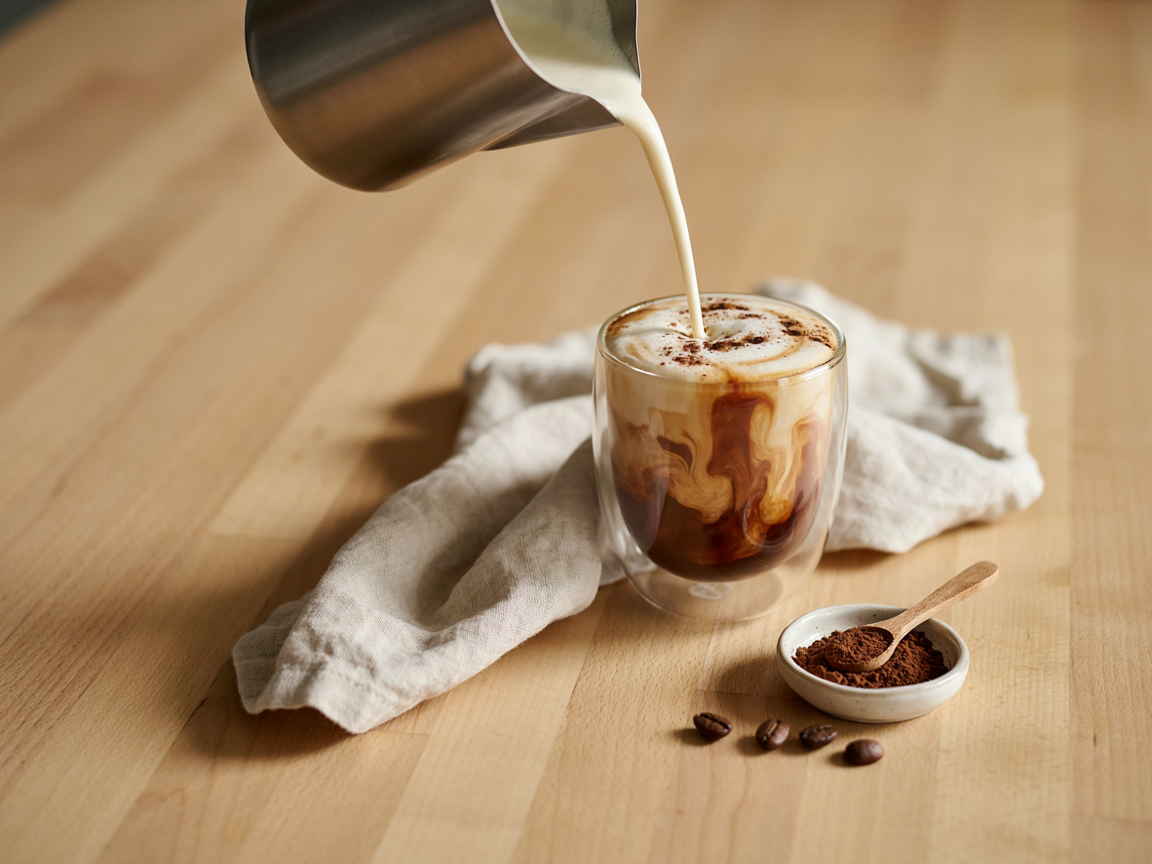
The layers are not decoration — chocolate first, coffee second, milk last is the order that keeps it from separating.
Most copycat attempts fail at the same point, and it is not the coffee. It is that a Starbucks mocha latte is built on a cooked mocha sauce — bittersweet, thick, barely sweet on its own — and almost everyone at home reaches for chocolate syrup instead. Syrup is sugar with cocoa for colour. The result is a drink that tastes like hot chocolate with a coffee accent rather than the other way round.
Fix the sauce and everything else falls into place: the coffee-to-milk ratio by cup size, milk heated to the right temperature rather than boiled, and a pinch of salt that does more for the chocolate than another spoon of sugar ever will. The same sauce carries all three versions — hot, iced, and the blended one that needs a thickener to stop it splitting.
Save the pin so the sauce ratios are there next time you want one.
What’s Actually in a Starbucks Mocha Latte
Four components, in a fixed order, and the whole drink is decided by the second one.
Mocha sauce
A cooked bittersweet sauce of cocoa, dark chocolate, sugar, water and salt — thick, glossy and only just sweet. This is the component that makes or breaks a copycat, and it is not interchangeable with chocolate syrup.
Espresso
One shot in a small cup, two in anything larger. Short and concentrated, because milk and chocolate flatten coffee far more than people expect and a mild brew disappears entirely.
Steamed milk
Heated to roughly 150°F and textured to a glossy microfoam rather than stiff bubbles. Whole milk is the default; oat milk is the only dairy-free option that behaves the same way.
Whipped cream
Unsweetened or barely sweetened, spooned on at the end. It is there for texture and for the way it melts into the first few sips, not for more sugar.
The ratio that defines the drink: the milk decides the size and the coffee decides the taste. A larger cup means more milk and more sauce, but going up in size without going up in shots is exactly how you end up with something that tastes like warm chocolate milk.
The Mocha Sauce — Make It Once, Use It for Two Weeks
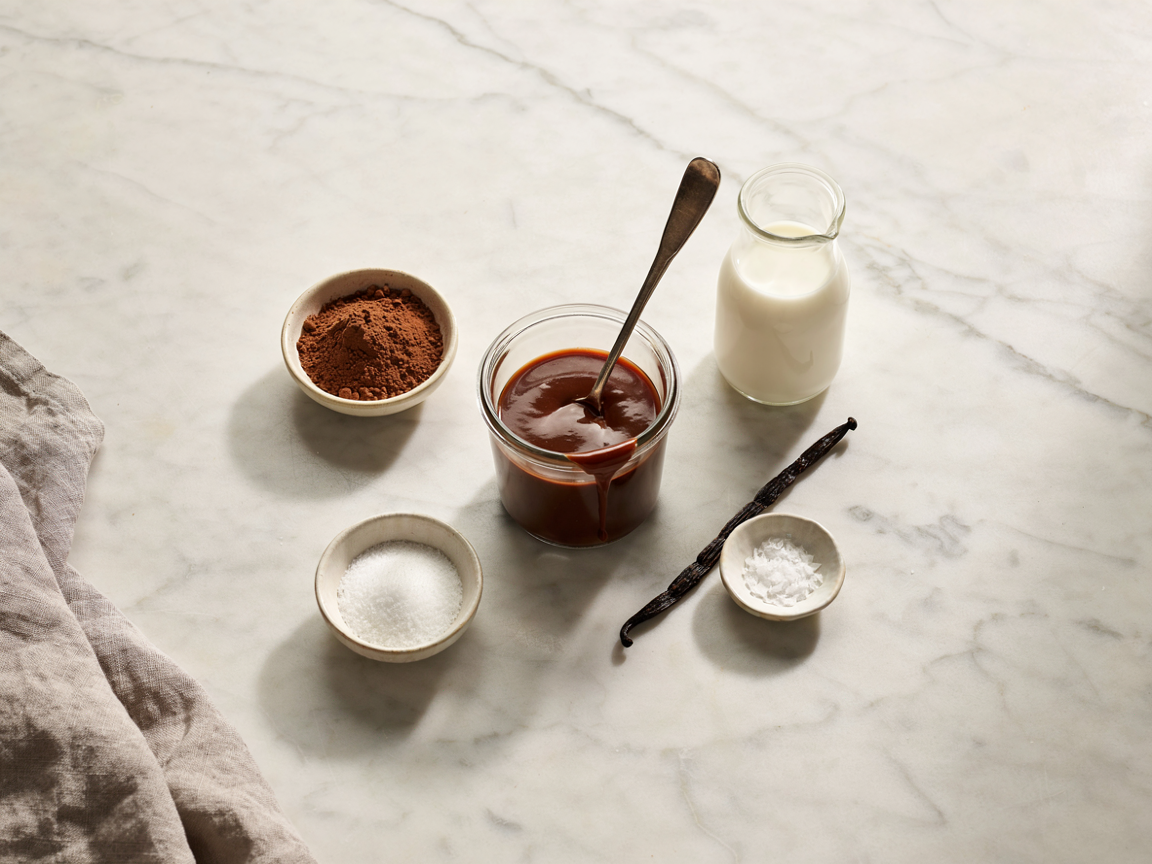
It thickens as it chills. Straight from the jar it should fall off a spoon in a thick ribbon.
Fifteen minutes on a Sunday and a mocha becomes a two-minute drink for the rest of the fortnight. This makes roughly one cup of sauce, which is about twelve medium drinks.
Mocha sauce
½ cup cocoa powder (Dutch-process for a darker, rounder flavour), ½ cup granulated sugar, ¾ cup water, 2 oz chopped dark chocolate, 1 tsp vanilla extract and ¼ tsp fine salt.
Whisk the cocoa and sugar together dry so the cocoa has something to disperse into, then whisk in the water. Bring it to a gentle simmer over medium heat, whisking constantly, and let it bubble for two full minutes — this is what hydrates the cocoa and kills any grittiness. Take it off the heat, add the chocolate, vanilla and salt, and whisk until completely smooth and glossy.
Cool, then pour into a jar. It keeps 2 weeks refrigerated and thickens considerably as it chills, which is normal. Warm the jar in hot water or microwave it for ten seconds before use.
Why the salt matters more than the sugar: a quarter teaspoon across the whole batch is not enough to taste as salt, but it suppresses the flat sweetness and sharpens the cocoa underneath it. Leave it out and the natural instinct is to add more sugar, which is the step that turns a mocha into hot chocolate.
The Drink
Copycat Mocha Latte
Mocha sauce loosened in the mug, strong espresso stirred through, and milk heated to 150°F and foamed in a jar.
What size cup?
Ingredients
- 1½ tbsp2 tbsp3 tbsp4 tbsp mocha sauce (recipe below, or shop-bought chocolate sauce)
- 1 tsp1 tbsp1 tbsp1½ tbsp just-boiled water, to loosen the sauce
- 1 shot (1 oz)1 shot (1 oz)2 shots (2 oz)2 shots (2 oz) espresso, or very strong concentrated coffee
- 5 oz8 oz11 oz14 oz whole milk, or oat milk for the closest dairy-free match
- a small spoona spoona generous spoona generous spoon whipped cream, to finish
- a light dustinga light dustinga light dustinga light dusting cocoa powder or extra mocha sauce, for the top
- a pincha pincha pincha pinch fine salt — the detail most copycats miss
Instructions
Warm the mug and the sauce together
Spoon the mocha sauce into the bottom of your mug and pour a tablespoon of just-boiled water over it. Stir until it is completely smooth and glossy. Doing this before anything else is what stops the chocolate sitting in a sludge at the bottom of the finished drink.
Pull or brew the coffee strong
Pull your espresso shots directly onto the loosened sauce and stir again. If you do not have a machine, use 2 oz of moka pot coffee, a double AeroPress, or 2 teaspoons of instant espresso powder in 2 oz of boiling water. What matters is concentration, not equipment — drip coffee at normal strength will taste washed out under this much chocolate.
Heat the milk to just under a simmer
Bring the milk to about 150°F (65°C), which is hot to the touch, steaming, and nowhere near boiling. Boiled milk tastes cooked and flat, and it will never hold foam properly. If you have no thermometer, pull it off the heat the moment the first small bubbles appear at the edge of the pan.
Foam it with whatever you own
Pour the hot milk into a jar with a tight lid, filling it no more than a third, and shake hard for 30 seconds. Alternatively pump a French press plunger 20 times, or run a handheld frother for 20 seconds. You want microfoam with a glossy surface, not the stiff bubbly cap that meringue-like foam produces.
Pour the milk and hold the foam back
Hold the foam back with a spoon and pour the liquid milk into the mug first, stirring gently as it goes so the chocolate stays incorporated. Fill to about a centimetre from the rim.
Spoon the foam on and finish
Spoon the held-back foam over the top, then finish with whipped cream and a light dusting of cocoa powder or a drizzle of the mocha sauce. Serve immediately, because a mocha separates as it cools and is genuinely a different drink after ten minutes.
Roughly, per 16 oz cup
Made with whole milk, three tablespoons of the sauce on this page and a spoon of whipped cream. Skim milk and no cream takes it under 200; oat milk lands within about 20 calories of whole.
This is an estimate, not a lab analysis. The sauce and the cream are where nearly all of the sugar sits, and both are easy to dial down without touching the coffee.
No Espresso Machine? Four Ways That Work
The recipe needs about two ounces of concentrated coffee, and how you get there barely shows up in the finished drink. What does show up is weak coffee.
| Method | How | How close it gets |
|---|---|---|
| MethodMoka pot | HowA standard 3-cup pot yields about 4 oz — use half per drink | How close it getsThe closest match by some distance; strong, syrupy, slightly more bitter |
| MethodAeroPress | How18g of fine coffee, 60g of water, pressed short | How close it getsVery close, and cleaner tasting than a moka pot |
| MethodInstant espresso powder | How2 tsp in 2 oz of boiling water | How close it getsBetter than its reputation once chocolate and milk are in — genuinely hard to pick out |
| MethodStrong filter coffee | HowBrewed at double strength, 4 oz reduced to the same volume | How close it getsThe weakest option; acceptable at double strength, thin at normal |
The one rule across all four: brew it stronger than you would drink it black. Three tablespoons of chocolate and eleven ounces of milk will bury a pleasant, balanced cup of coffee completely, and the fix is always concentration rather than quantity.
Foaming Milk Without a Steam Wand
Coffee shop foam is not a cap of bubbles sitting on the milk — it is microfoam, air worked through the whole body of the milk until it turns glossy and slightly thicker. Three household methods get remarkably close.
The jar
Heat the milk first, pour it into a jar no more than a third full, screw the lid on tight and shake hard for 30 seconds. The best method available to most kitchens, and it costs nothing.
The French press
Hot milk in the jug, plunger pumped 20 times fast. Produces the finest texture of the three, and the one closest to a real steam wand.
The handheld frother
Twenty seconds, held just below the surface and moved slowly. Quick and consistent, though it tends toward larger bubbles than the other two unless you keep it deep.
The rule behind all three
Heat first, foam second. Cold milk foams into big fragile bubbles that collapse on contact with hot coffee; milk at about 150°F holds its texture for several minutes.
Never let it boil. Milk proteins denature well below boiling, and once they have, no technique will make them hold air again. Steaming and hot to the touch is the target; the first bubbles at the edge of the pan are the signal to stop.
Seven Ways to Change It
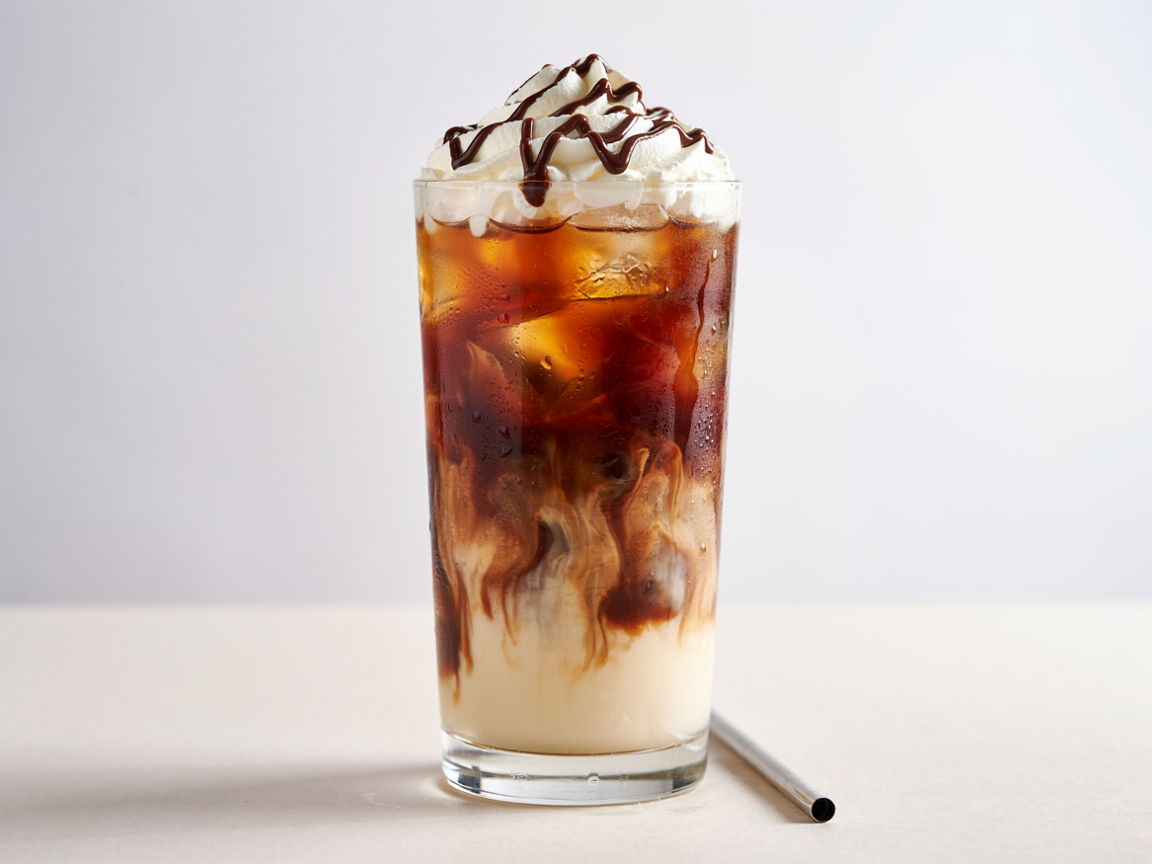
The iced version needs the chocolate dissolved into hot espresso first, or it ends up in a lump at the bottom.
Pick one:
Iced mocha
Dissolve the sauce into the hot espresso first, then pour over a full glass of ice and top with cold milk. Use about a third more sauce than the hot drink, because cold flattens sweetness and chocolate both. Whipped cream last, on top of the ice.
Blended mocha
The frappé-style version. Blend 4 oz of cold milk, 3 tbsp of the mocha sauce, 2 oz of cooled espresso and a packed cup and a half of ice until completely smooth, which takes longer than you think — keep going until no ice crackles against the jug. A quarter teaspoon of xanthan gum, or a tablespoon of instant vanilla pudding powder, is what stops it separating into slush and liquid within two minutes, and it is the reason shop versions hold together. Whipped cream and a drizzle of sauce on top.
White mocha
Swap the mocha sauce for a white chocolate sauce: 3 oz of chopped white chocolate melted into ¼ cup of warm cream with a pinch of salt. It is sweeter than the dark version, so pull the coffee stronger and keep the salt in — without it the drink tastes like warm icing.
Peppermint mocha
Add ¼ teaspoon of peppermint extract per serving to the loosened sauce, not to the milk. Finish with whipped cream and crushed candy cane. A quarter teaspoon sounds like nothing and is already on the edge of too much.
Skinny mocha
Use the cocoa-and-sugar version of the sauce with the sugar halved, skim milk, and no whipped cream. It will be thinner in body, so lean harder on the salt and on a full two shots to keep it tasting like something rather than like weak cocoa.
Protein mocha
Blend a scoop of chocolate or unflavoured protein powder into the cold milk before heating, then warm it gently and never let it approach a boil or it will curdle. Foam it after blending. It makes a substantial post-workout drink at roughly 25g of protein.
Mocha cold brew
Stir the loosened sauce into 4 oz of cold brew concentrate, add ice and cold milk. Smoother and less acidic than the iced espresso version, and the one worth making a jug of ahead for a hot week.
Substitutions That Actually Work
| Instead of | Use | What changes |
|---|---|---|
| Instead ofMocha sauce | UseShop-bought bittersweet chocolate sauce, or 2 tbsp cocoa mixed with 1½ tbsp sugar and a splash of hot water | What changesThe cocoa version is less glossy and needs more vigorous stirring, but the flavour holds up well |
| Instead ofEspresso | UseMoka pot coffee, a short AeroPress, or instant espresso powder in boiling water | What changesAlmost no difference once chocolate and milk are in — concentration matters far more than method |
| Instead ofWhole milk | UseOat milk | What changesThe closest dairy-free foam by a wide margin; slightly sweeter, which means you can cut the sauce back a little |
| Instead ofWhipped cream | UseA thicker cap of milk foam | What changesLighter and less sweet, and it makes the drink taste noticeably more of coffee |
| Instead ofDark chocolate in the sauce | UseSemisweet chocolate chips | What changesSweeter and milder — reduce the sugar in the sauce by a tablespoon to compensate |
| Instead ofA milk frother | UseA jar with a tight lid, shaken hard, or a French press plunger | What changesNone at all, provided the milk is hot before you foam it rather than after |
| Instead ofGranulated sugar in the sauce | UseLight brown sugar | What changesAdds a faint caramel note that works particularly well in the iced version |
The one swap not worth making: chocolate syrup in place of the sauce. It is the single change that stops this tasting like the drink you are copying, and the sauce takes fifteen minutes for a fortnight’s worth.
Troubleshooting
Pick whatever went wrong:
The chocolate settled at the bottom
The sauce went into cold or lukewarm liquid and never dissolved. The fix: always loosen the sauce with a spoonful of boiling water in the empty mug, stir it to a smooth gloss, and only then add the coffee. For an iced mocha this step is not optional — the chocolate has to meet the hot espresso before any ice appears.
It tastes weak and milky
Too much milk against too little coffee, which is the single most common home-mocha mistake. The fix: use two shots rather than one in anything above a small mug, and brew them shorter and stronger than you would for drinking black. Milk volume is what defines the size of the drink; coffee strength is what defines the taste.
It is sickly sweet
Chocolate syrup instead of mocha sauce. The fix: make the sauce on this page, which is built on cocoa and dark chocolate rather than sugar, and add the pinch of salt — salt suppresses perceived sweetness and sharpens the cocoa at the same time. Stronger coffee also pulls it back fast.
The foam collapsed immediately
The milk was either not hot enough before foaming or was boiled. The fix: heat to about 150°F, hot to the touch and steaming but not bubbling, then foam. Boiled milk has denatured proteins that simply will not hold a structure, and no amount of shaking rescues it.
It tastes grainy
Undissolved cocoa, usually from the shortcut version of the sauce. The fix: cocoa needs to be whisked into sugar first and then into hot liquid, and it needs a full minute of heat to hydrate properly. If it is already in the mug, a 20-second blitz with a handheld frother will smooth it out.
It separated while I drank it
Normal, and the reason coffee shops serve it immediately. The fix: stir before each sip, or make the drink a size smaller so it is finished while it is hot. A mocha left to stand for ten minutes is a genuinely different drink, not a slightly cooler one.
Questions, Answered
What is in a Starbucks mocha latte?
Four things: espresso, mocha sauce, steamed milk and whipped cream. The mocha sauce is the part people get wrong at home — it is a cooked bittersweet chocolate sauce rather than a chocolate syrup or a spoon of drinking chocolate, which is why homemade versions often taste sweeter and thinner than the drink they are copying.
What is the difference between a mocha and a latte?
A latte is espresso and steamed milk. A mocha is the same drink with chocolate added and usually whipped cream on top, which makes it a sweeter and richer cousin rather than a separate category. If you order a mocha and ask for no chocolate, you have ordered a latte.
Can I make a mocha latte without an espresso machine?
Yes, and the drink barely suffers. A moka pot, an AeroPress pushed short and strong, or two teaspoons of instant espresso powder in two ounces of boiling water all give you the concentration this recipe needs. The only approach that does not work is ordinary drip coffee at normal strength, because the chocolate and milk simply bury it.
Why does my homemade mocha taste too sweet?
Almost always because chocolate syrup was used instead of a proper mocha sauce. Syrup is mostly sugar with cocoa for colour, while a real mocha sauce is built on cocoa and dark chocolate with far less sugar in proportion. Adding a pinch of salt and using coffee brewed stronger than feels sensible both pull it back.
How much caffeine is in a mocha latte?
It tracks the espresso rather than the chocolate. One shot is roughly 75mg of caffeine and two shots roughly 150mg, with the cocoa adding only a few milligrams more. A medium-sized mocha made with two shots therefore sits somewhere near a large mug of strong filter coffee.
Can I make the mocha sauce ahead of time?
That is exactly how it is meant to be used. The sauce keeps for two weeks in a sealed jar in the refrigerator and thickens as it chills, so a mocha at home becomes a two-minute drink rather than a project. Warm the jar in hot water or microwave it for ten seconds before spooning it out.
What milk works best in a mocha latte?
Whole milk foams the most reliably and gives the closest match to the coffee shop version. Among dairy-free options oat milk is far ahead of the rest because its fat and protein content foam convincingly, while almond milk stays thin and can split against hot coffee.
How do I make a blended mocha at home?
Blend cold milk, mocha sauce, cooled espresso and a generous amount of ice until no ice crackles against the jug, which takes longer than most people run the blender for. The part that separates a homemade blended mocha from the shop version is a thickener — a quarter teaspoon of xanthan gum or a tablespoon of instant vanilla pudding powder keeps it emulsified instead of splitting into slush and brown liquid while you drink it.
How do I make an iced mocha instead?
Loosen the sauce with hot water and stir it into the hot espresso first, because cold chocolate will not dissolve and you will find it in a lump at the bottom of the glass. Then pour that over a full glass of ice, top with cold milk, and finish with whipped cream. Use about a third more sauce than the hot version, since cold blunts sweetness.
Make the sauce, brew the coffee stronger than feels sensible, heat the milk to steaming rather than boiling, and keep the pinch of salt. Those four things are the entire difference between a copycat and a near miss.
Pin this Starbucks mocha latte copycat so the sauce ratios and the size chart are there the next time the craving lands — hot, iced or blended.