
25 Minutes · No Pork · 1 Bowl to 10
Miso Ramen Broth Recipe: Easy Miso Broth Ready in 25 Minutes
A rich, savory miso broth for ramen made with chicken broth, garlic, ginger and a creamy sesame miso tare. Plus which miso to use, when to add it, and creamy, spicy and sesame versions.
- 25 minutes
- Halal-friendly
- Make-ahead tare
- Printable card
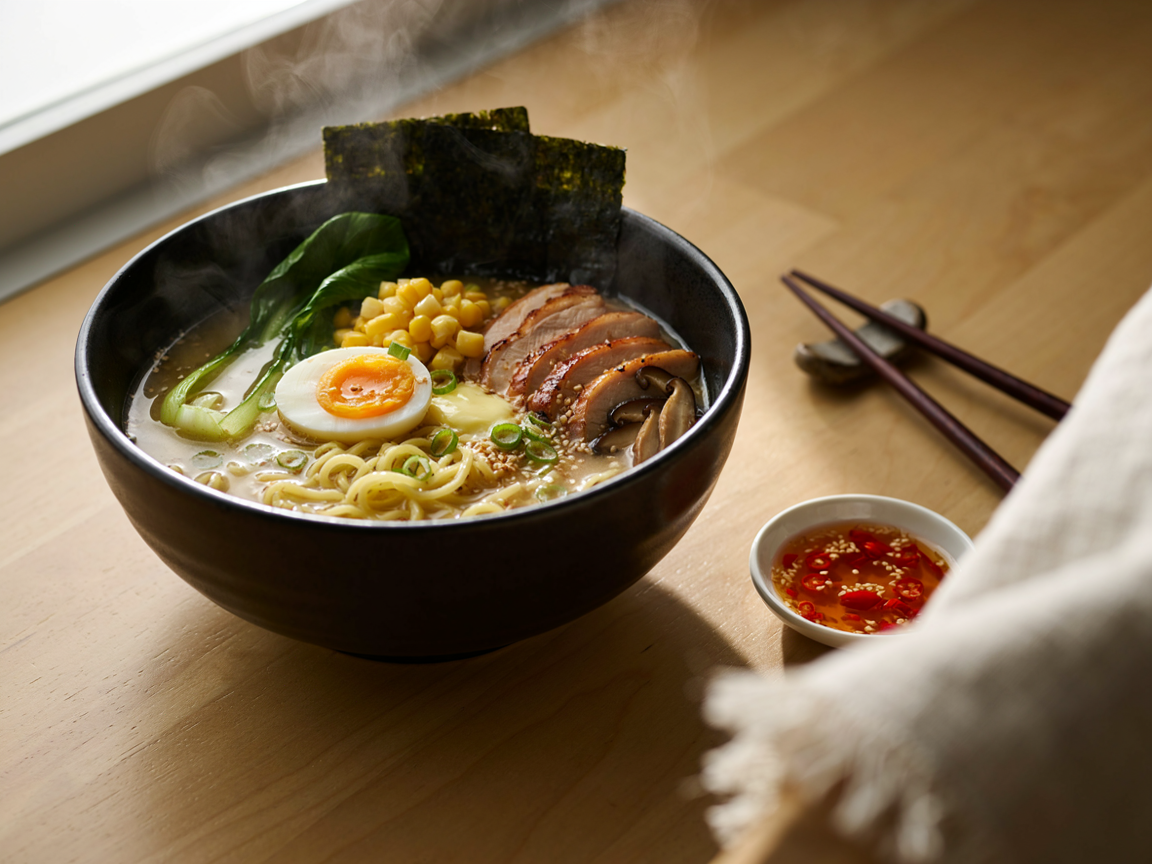
Miso ramen with a jammy egg, chicken, corn, butter, bok choy and green onion.
This miso ramen broth tastes like it simmered all day, but it takes 25 minutes. The secret is the tare: a quick paste of miso, sesame, soy sauce and a little sugar that you whisk into hot broth at the very end. The result is a savory, slightly creamy, deeply comforting miso broth that clings to every noodle.
It is an easy miso broth recipe for beginners, a simple miso broth made from homemade tare, and a simple miso ramen broth you can scale from one bowl to ten. Below you will find which miso to use, the one rule for adding it, quick versions with dashi or plain chicken broth, and how to build the perfect bowl.
What Is Miso Ramen Broth?
Miso ramen broth is a ramen soup seasoned with miso, a fermented soybean paste. A savory stock is simmered with garlic and ginger, then finished with a miso tare: miso blended with sesame, soy sauce and a little sugar.
Miso ramen comes from Sapporo, on Japan’s northern island of Hokkaido, where its rich, warming broth suits long, snowy winters.
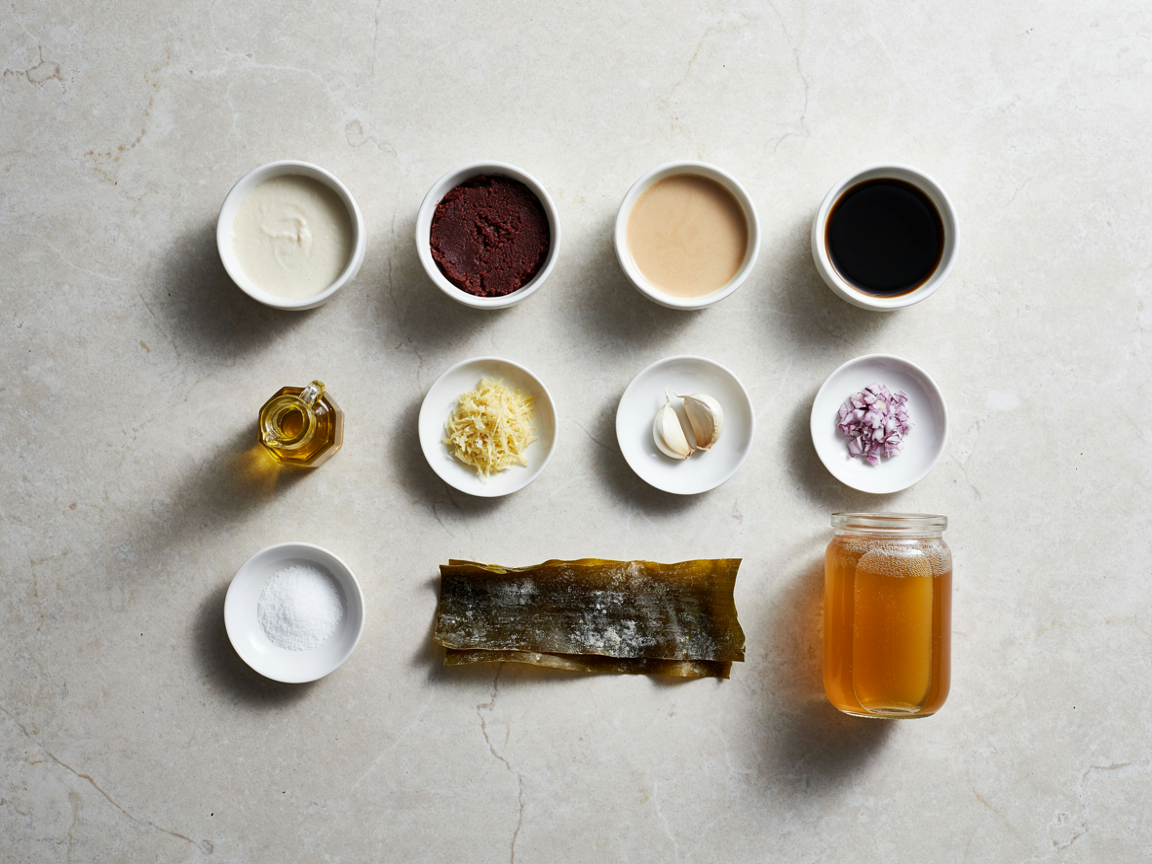
White and red miso, sesame paste, soy sauce, garlic, ginger, shallot and chicken broth.
Miso ramen broth explained in one line: stock for body, miso tare for flavor. Authentic Sapporo shops often use a pork bone miso ramen stock, but this miso based ramen broth uses chicken broth, which is faster, lighter and pork-free.
Easy Miso Ramen Broth Recipe
Here is how to make miso broth from scratch in 25 minutes. Tap how many bowls you need and every amount on the card changes, from a 1 portion method to a big pot for 10.
Easy Miso Ramen Broth
A rich, savory miso broth for ramen in 25 minutes: chicken broth simmered with garlic, ginger and shallot, then finished with a sesame miso tare off the boil. Tap 1 bowl for a single portion or 10 for a crowd.
How many bowls?
Ingredients
- 1½ tbsp3 tbsp6 tbspscant 1 cup white (shiro) miso paste, or half white and half red
- 1½ tsp1 tbsp2 tbsp5 tbsp tahini or Japanese sesame paste
- 1½ tsp1 tbsp2 tbsp5 tbsp soy sauce
- ½ tsp1 tsp2 tsp1 tbsp + 2 tsp sugar
- ½ tsp1 tsp2 tsp1 tbsp + 2 tsp toasted sesame oil
- 1½ tsp1 tbsp2 tbsp5 tbsp neutral oil or butter
- 1 clove + ½ tsp2 cloves + 1 tsp4 cloves + 2 tsp10 cloves + 5 tsp garlic cloves, grated, plus fresh ginger, grated
- ½ small1 small2 small5 small shallot, finely chopped
- 2 cups (475 ml)4 cups (950 ml)8 cups (2 quarts)20 cups (5 quarts) low-sodium chicken broth
- ½ tsp1 tsp2 tsp5 tsp instant dashi powder (optional)
- 1 portion2 portions4 portions10 portions ramen noodles, fresh or dried
Instructions
Make the miso tare
In a small bowl, whisk the miso, sesame paste, soy sauce, sugar and sesame oil into a smooth paste. This is the flavor base, called tare.
Cook the aromatics
Warm the oil or butter in a pot over medium heat. Add the garlic, ginger and shallot and stir for 1 minute, until fragrant but not browned.
Simmer the broth
Pour in the chicken broth, add the dashi powder if using, and bring to a gentle simmer. Simmer for 10 minutes.
Add the miso off the boil
Turn the heat to its lowest setting. Ladle a little hot broth into the tare and whisk until smooth, then stir it back into the pot. Do not let the broth boil again.
Taste and adjust
Add more miso for depth and salt, a few drops of rice vinegar for brightness, or chili oil for heat.
Build the bowls
Cook the noodles separately following the package, drain well and divide between bowls. Ladle the hot broth over and add your toppings.
A halal tip. This recipe uses no mirin or sake. Some miso brands add a little alcohol as a preservative, so check the label and choose one without it.
When to Add Miso Paste to Ramen Broth (Do Not Boil It)
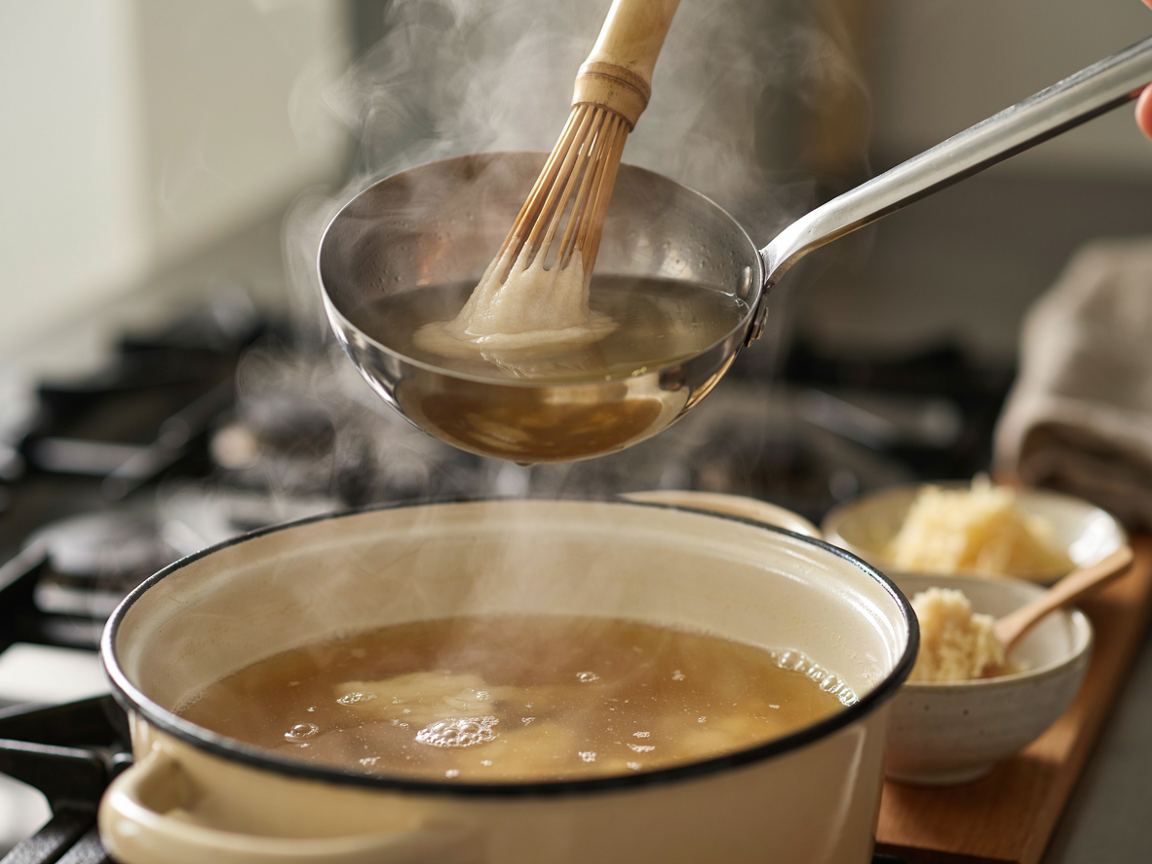
Whisk the miso into a ladle of hot broth first, so it melts in smoothly.
Have white miso paste for ramen and wondering when to add it during cooking? Add it last, off the boil. Miso is already fermented and full of flavor; it does not need cooking. Miso stirred into broth at a rolling boil loses its aroma and can taste flat and grainy.
- Turn the heat down to the lowest setting once the broth has simmered.
- Ladle a little hot broth into the miso tare and whisk until smooth.
- Stir the miso back into the pot and keep it hot, just below a simmer.
This is why the best miso ramen broth recipes always say add miso paste, do not boil.
Which Miso Is Best for Ramen Broth?
All miso works, but each one gives a different bowl. Tap to compare:
White (shiro) miso: mild and sweet
The best miso for a light miso broth. It is fermented for a short time, so it is pale, creamy, a little sweet and not too salty. It is the safest choice for your first bowl.
Use it on its own, or as half of a mixed blend.
Yellow (shinshu) miso: balanced
Fermented a little longer than white, with a golden color and a rounder, saltier flavor. A great everyday miso for ramen if you can find it.
Red (aka) miso: bold and salty
Aged longest, so it is dark, deeply savory and quite salty. It gives a rich red miso broth with a strong, almost meaty depth.
Start with two-thirds of the amount on the card, then taste and add more. For a gluten-free bowl, serve rice ramen in red miso broth and use tamari instead of soy sauce.
Awase (mixed) miso: the ramen-shop blend
Many ramen shops blend miso for sweetness and depth together. Use half white and half red, or buy a ready-mixed awase miso.
Quick Miso Ramen Broth: 5 Easy Bases
No time to simmer? A quick ramen broth comes together in minutes. Here is how a tasty broth comes together by adding miso paste to whatever you have:
| Base | Tastes | How |
|---|---|---|
| BaseChicken broth + miso | TastesFastest and most popular | HowYes: whisk miso into simmering chicken broth off the boil. |
| BaseDashi + miso | TastesLighter and more seafood-savory | HowUse 4 cups prepared dashi in place of the broth. |
| BaseHalf chicken broth, half dashi | TastesRich and savory | HowOur favorite balance of depth and lightness. |
| BaseVegetable broth + miso | TastesVegetarian | HowAdd a few dried shiitake for savory depth. |
| BaseWater + miso only | TastesThin, like miso soup | HowWorks, but a strip of kombu or a few mushrooms helps a lot. |
For any of these, use about 1 to 1½ tablespoons of miso per bowl (2 cups of liquid), and always add it off the heat. These quick miso broth tips work for udon too.
Save the pin for your next ramen night.
Creamy, Spicy and Sesame Miso Broth Variations
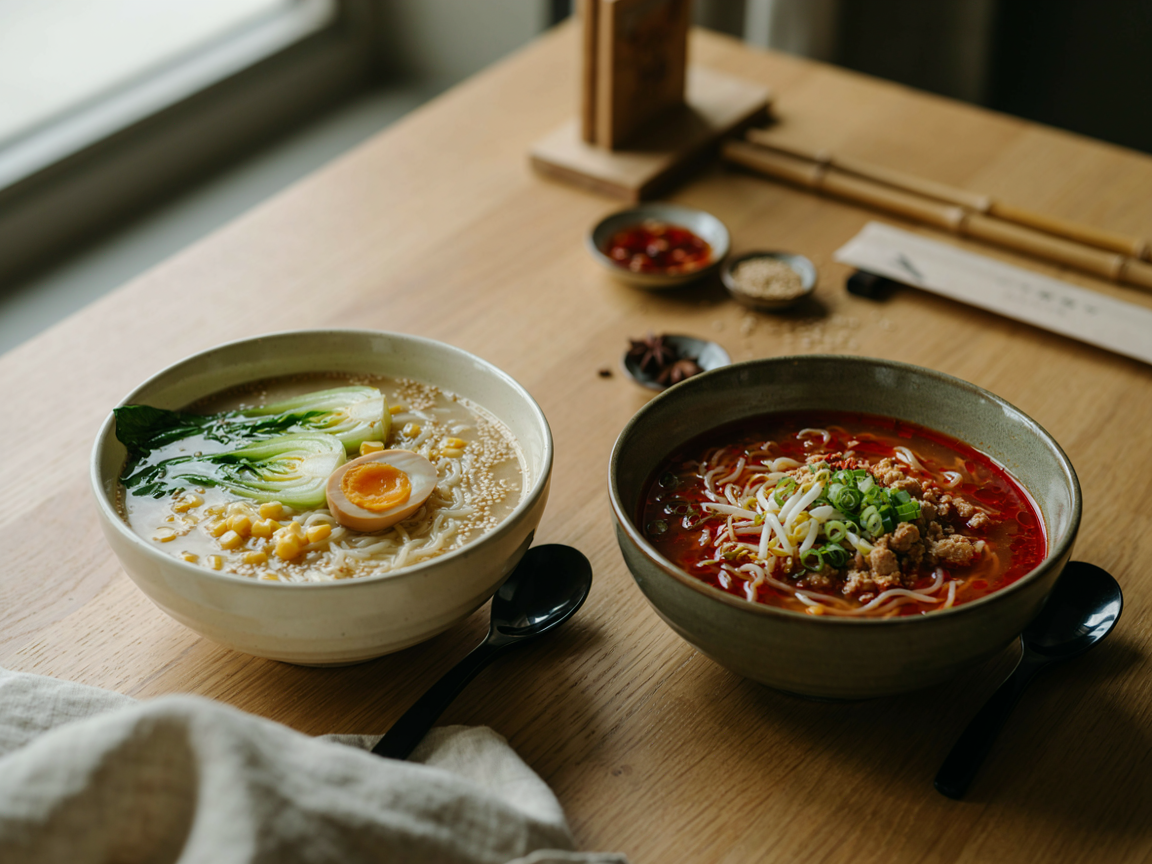
Creamy sesame miso broth on the left, spicy red miso broth on the right.
Creamy Miso Broth
Stir 1 cup unsweetened soy milk per 4 cups of broth in with the miso, plus an extra tablespoon of sesame paste. Warm it gently and never boil, or the soy milk can split.
For a coconut miso broth, use ½ cup coconut milk instead. It is lovely with chili oil and lime.
Spicy Red Miso Broth
Use red miso in the tare and add 1 to 2 tbsp chili oil plus a pinch of red pepper flakes. Top with ground chicken cooked with garlic and a little extra chili oil.
Sesame Miso Broth
Double the sesame paste and finish each bowl with toasted sesame seeds and a few drops of sesame oil. Nutty, rich and a little creamy.
Miso Butter Corn (Sapporo Style)
The classic from Sapporo, where miso ramen began. Top each bowl with sweet corn and a pat of butter that melts into the hot broth.
Vegetarian Miso Broth
Swap the chicken broth for vegetable broth and the dashi for kombu dashi. For the full recipe, see our vegetarian miso ramen broth.
How to Build a Miso Ramen Bowl
This is where the broth becomes an easy miso ramen recipe for weeknights. A great bowl of ramen with miso broth is all about contrast: rich broth, chewy noodles, something soft, something fresh and something crunchy.
Noodles
Thick, wavy, chewy ramen noodles hold the rich broth best. Fresh or dried both work, and so does udon.
Protein
Sliced seared chicken thigh, ground chicken, duck breast, tofu or shrimp.
Egg
A jammy soft-boiled egg: boil 6½ minutes, chill in ice water, peel and halve.
Vegetables
Bok choy, shiitake or enoki mushrooms, bean sprouts, corn and spinach.
Finish
Green onion, toasted sesame seeds, nori, chili oil and a pat of butter.
Cook the noodles separately, never in the broth. Noodle starch clouds and thickens the miso broth and makes it taste dull.
Miso Broth Concentrate: Make-Ahead and Storage
Want a miso broth mix ready for busy nights? Make a big batch of miso tare concentrate and keep it in a sealed jar in the fridge for up to a week. For each bowl, whisk about 1½ tablespoons into 2 cups of hot broth.
Finished broth keeps for up to 4 days in the fridge or 3 months in the freezer. Reheat it gently, without boiling, and always store noodles and toppings separately.
Miso Ramen Broth FAQs
What is miso ramen broth?
Miso ramen broth is a ramen soup seasoned with miso, a fermented soybean paste. Stock, usually chicken or a mix of chicken and dashi, is simmered with garlic and ginger, then finished with a miso tare blended with sesame and soy. Miso ramen comes from Sapporo, on Japan’s northern island of Hokkaido.
When do I add white miso paste to ramen broth?
Add it at the end, off the boil. Turn the heat to low, whisk the miso with a ladle of hot broth until smooth, then stir it into the pot. Boiling miso dulls its flavor and aroma.
Can you just put miso paste in chicken broth for ramen?
Yes. That is the quickest miso ramen broth there is. Simmer chicken broth with a little garlic and ginger, then whisk in about 1 to 1 and a half tablespoons of miso per bowl off the heat.
Can you make ramen broth with only miso?
You can make broth from miso paste and hot water alone, but it tastes thin, more like miso soup. A strip of kombu, a few dried shiitake or a teaspoon of dashi powder gives it far more depth.
What is an easy broth recipe for ramen using prepared dashi and miso?
Warm 4 cups of prepared dashi with grated garlic and ginger for 5 minutes, take it off the heat, and whisk in 3 tablespoons of miso blended with a tablespoon of soy sauce and sesame paste. That makes 2 bowls.
Which miso is best for ramen broth?
White miso gives a mild, light broth and is the easiest to start with. Red miso is bolder and saltier. Many ramen shops use a mix of both.
Is miso ramen broth halal?
It can be. Use chicken or vegetable broth, skip mirin and sake, and check the miso label, because some brands add alcohol as a preservative. This recipe uses no pork and no alcohol.
Can you add coconut milk to miso broth?
Yes. Stir in about half a cup of coconut milk per 4 cups of broth with the miso for a creamy coconut miso broth. Warm it gently without boiling.
How do you make miso ramen broth for one person?
Use 2 cups of broth and 1 and a half tablespoons of miso. Tap 1 bowl on the recipe card and every amount changes for a single portion.
How much miso ramen broth do I need for 10 people?
About 20 cups, or 5 quarts, of broth and just under 1 cup of miso. Tap 10 bowls on the recipe card for every amount, and simmer it in your largest stockpot.
Can I make miso broth concentrate ahead of time?
Yes. Mix a big batch of the miso tare and keep it in a sealed jar in the fridge for up to a week. Use about 1 and a half tablespoons per 2 cups of hot broth.
How do you store and reheat miso ramen broth?
Cool it, then refrigerate for up to 4 days or freeze for up to 3 months. Reheat gently until steaming, without boiling, and store noodles and toppings separately.
Related Reads
More ramen broths and cozy noodle bowls from our kitchen.
Vegetarian Miso Ramen Broth
Kombu and shiitake give it all the depth, no chicken needed. Get the recipe → Soy Sauce RamenShoyu Ramen Broth Recipe
Clear, savory and soy-seasoned: the classic Tokyo bowl. Make it next → Rich and CreamyCreamy Chicken Paitan Ramen Broth
The tonkotsu-style bowl, made with chicken and no pork. See the recipe → Instant UpgradeRamen Without the Seasoning Packet
Better flavor from pantry staples in minutes. Upgrade your bowl → Cozy DinnerRamen with Dumplings
An easy, filling bowl with dumplings and greens. Read the recipe → Golden BrothThe Best Ramen Broth Recipe
A rich, golden, restaurant-quality base. Try it →Simmer the broth, take it off the boil, whisk in the miso tare, and you have a rich, savory miso ramen broth in 25 minutes.
Pin this miso ramen broth recipe so it is ready for your next cozy ramen night.

