
5 Ingredients · No Gelatin · No Oven
No Bake Cheesecake with Condensed Milk — 5 Ingredients, Sets Every Time
Cream cheese, condensed milk, lemon juice, crumbs and butter. Why the lemon is doing the setting rather than the flavouring, what happens if you leave any one thing out, and six flavours built on the same base.
- 5 ingredients
- No gelatin, no oven
- 10 substitutions
- Printable card
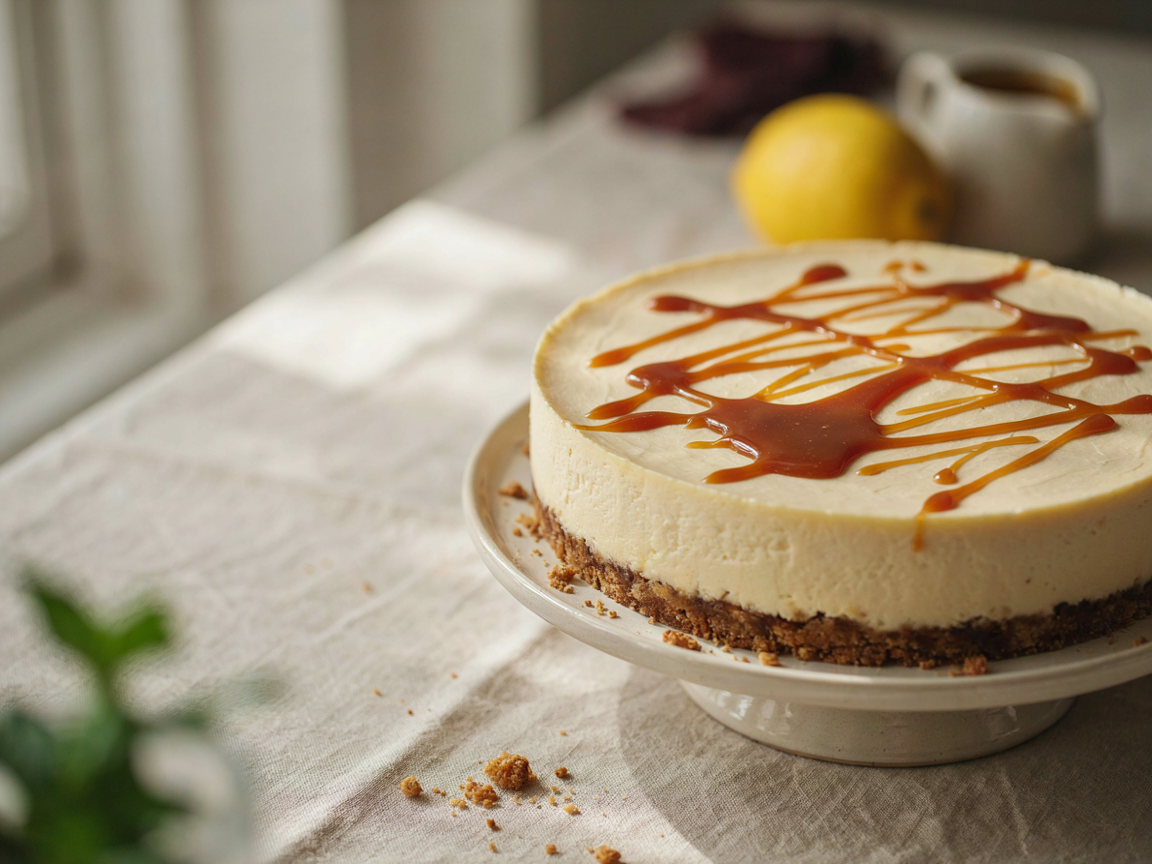
Topping goes on just before serving. Added early, caramel sinks and fruit weeps.
A no bake cheesecake with condensed milk is five ingredients and about fifteen minutes of work, and the question almost everybody has before they start is the same one: will it actually set?
It will, reliably, and not because of gelatin or refrigeration alone. The lemon juice is the setting agent, not a flavouring — and understanding that one thing tells you exactly what you can and cannot change about this recipe.
Why It Sets Without Baking or Gelatin
What is actually making it firm?
Acid. The lemon juice does the work.
Sweetened condensed milk already has about 60% of its water removed, so it starts out thick. When you add lemon juice, the acid lowers the pH of the mixture and the milk proteins in both the condensed milk and the cream cheese coagulate — they tighten and thicken. It is the same reaction that turns milk into buttermilk, and you can watch it happen about thirty seconds after the juice goes in.
Cold then does the rest: chilling firms the fat in the cream cheese and the butter. Low water, plus acid, plus cold fat, equals a set. No oven and no gelatin required.
Sweetened condensed milk, not evaporated
Condensed milk is thick and very sweet; evaporated milk is thin and unsweetened. They are shelved together and look alike, and mixing them up is the single most common reason a no-bake cheesecake fails outright.
Full-fat block cream cheese
Not the spreadable tub, which is thinned with water and will never firm up properly. The fat is doing half the structural work here, and the tub version has less of it and more liquid.
Lemon juice, freshly squeezed
A full third of a cup per 14 oz can. Bottled juice works but is weaker, so you may need an extra tablespoon. This is the ingredient people cut back on, and it is the one that cannot be cut back on.
Six hours of cold, minimum
The acid thickens the filling in seconds but the fat needs hours. Four hours gives you something that looks set and slumps on the plate; overnight gives you something that slices like a baked cheesecake.
The practical consequence is worth spelling out: you can change the flavour of this cheesecake freely, but you cannot remove the acid without replacing the structure it was providing. That is the line between a substitution that works and one that leaves you with a bowl of sweet soup, and the table further down says which is which.
No Bake Cheesecake with Condensed Milk
Condensed Milk No Bake Cheesecake
Cream cheese, sweetened condensed milk and lemon juice on a buttery crumb base. No oven, no gelatin, no whipped cream.
What size are you making?
For the base
- 1½ cups2 cups2½ cups1¾ cups digestive or graham cracker crumbs
- 6 tbsp½ cup10 tbsp7 tbsp unsalted butter, melted
- 8 oz16 oz20 oz16 oz full-fat cream cheese, softened
- 7 oz14 oz (1 can)17 oz14 oz sweetened condensed milk
- 3 tbsp⅓ cup6 tbsp⅓ cup lemon juice, freshly squeezed
- 1 tsp2 tsp2½ tsp2 tsp vanilla extract
- pinch¼ tsp¼ tsp¼ tsp fine salt
Instructions
Press the base and chill it while you work
Stir the crumbs and melted butter together until every crumb is damp, tip into a lined tin and press down firmly with the flat base of a glass — firmly is the word, because a loosely pressed base crumbles the moment you cut it. Put it in the freezer for 15 minutes. A cold, set base is what stops the filling soaking into it.
Beat the cream cheese completely smooth, on its own
This is the step that decides whether your cheesecake is silky or lumpy. Beat the softened cream cheese by itself for 2 full minutes, scraping the bowl twice, before anything else goes in. Once the condensed milk is added, any lumps that are still there will stay there for good — they cannot be beaten out afterwards.
Pour in the condensed milk and beat until glossy
Add the sweetened condensed milk in a steady stream with the mixer on low, then beat for a minute until the mixture is completely uniform and glossy. It will look far too loose to ever set. That is expected, and it is about to change in the next step.
Add the lemon juice last, and stop mixing when it thickens
With the mixer on low, pour in the lemon juice. Within about thirty seconds the mixture visibly thickens and takes on a satiny sheen — you can see it happen. That is the acid doing its work, and it is the whole reason this cheesecake sets without gelatin or an oven. Stop as soon as it is uniform; beating past this point knocks air in and can make it weep later.
Pour onto the base and chill for at least 6 hours
Pour the filling over the chilled base, smooth the top with an offset spatula, and cover loosely. Six hours is the minimum and overnight is better — the difference between a 4-hour cheesecake and an overnight one is the difference between a slice that slumps and a slice that stands up.
Release it and top it just before serving
Run a thin knife dipped in hot water around the edge before releasing the tin. Add any topping at the last minute rather than before chilling: fruit releases water and caramel sinks, and both of them do it slowly over several hours in the refrigerator.
Roughly, per slice
Cutting the condensed milk to 10 oz takes roughly 45 calories off each slice and makes it noticeably less sweet.
This is an estimate, not a lab analysis.
What You Can and Cannot Leave Out
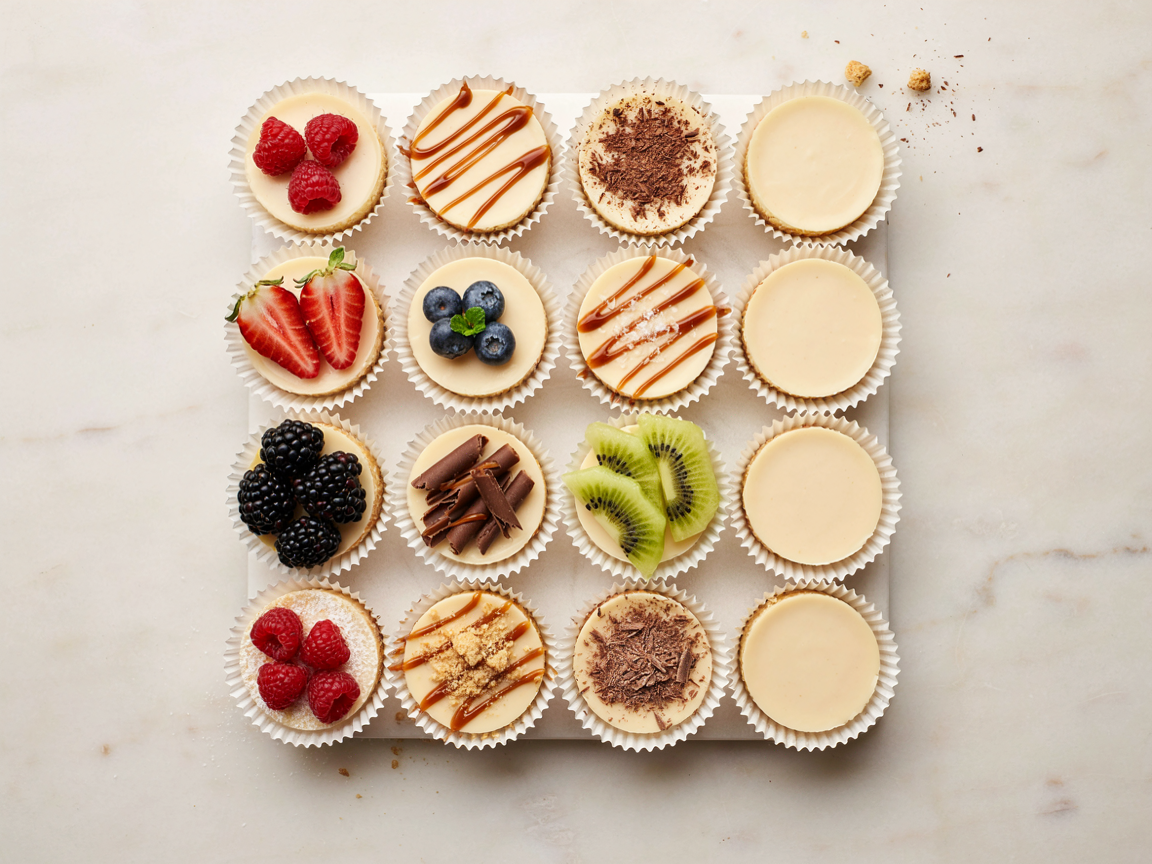
A clean vertical edge is the sign of a properly chilled one. Four hours gives you a slump.
Every one of these is a question people genuinely ask about this recipe, answered honestly — including the two where the answer is simply no.
| If you change this | Do this | What changes |
|---|---|---|
| If you change thisLemon juice — you have none, or dislike it | Do this3 tbsp lime juice per 14 oz can, or fold in ½ cup of heavy cream whipped to stiff peaks | What changesLemon is the acid that thickens it. Without any acid you must add structure some other way, and whipped cream is the best of them |
| If you change thisHeavy or double cream | Do thisNot needed — this version sets on acid alone | What changesA cream version is lighter and mousse-like; this one is denser and slices more cleanly |
| If you change thisCream cheese | Do this16 oz mascarpone, or thick Greek yogurt strained overnight in muslin | What changesMascarpone is richer and sweeter; strained yogurt is tangier and softer. Both set properly |
| If you change thisYou only have one 8 oz block | Do thisHalve everything: 7 oz condensed milk, 3 tbsp lemon juice | What changesMakes a 6-inch cheesecake or 8 minis. Use the 6-inch column in the card above |
| If you change thisSour cream, for extra tang | Do thisSwap 4 oz of the cream cheese for 4 oz full-fat sour cream | What changesNoticeably tangier and a little softer. Give it 2 extra hours of chilling |
| If you change thisWhole milk, to loosen the mixture | Do thisDo not. There is no version of this where added milk helps | What changesCondensed milk is thick because most of its water is already removed. Putting water back in means it will never set |
| If you change thisEggs | Do thisLeave them out entirely | What changesThere is no bake step to make raw egg safe, and they contribute nothing a no-bake filling needs |
| If you change thisGelatin, for a firmer set | Do this1 tsp bloomed in 2 tbsp cold water, melted, folded in with the lemon juice | What changesOnly worth it in a hot kitchen or if you have cut the lemon. It firms it up and adds a slight bounce |
| If you change thisWhipped topping, for a lighter texture | Do thisFold in 8 oz at the very end, after the lemon juice | What changesLighter and sweeter, closer to a mousse. Add an extra hour of chilling |
| If you change thisIt is too sweet for you | Do thisCut the condensed milk to 10 oz, add ¼ tsp salt and 1 extra tbsp of lemon juice | What changesThe sweetness is entirely the condensed milk. Less of it plus more acid rebalances without hurting the set |
The one that catches most people out is not on the list, because it is not a substitution but a mistake: evaporated milk instead of sweetened condensed milk. The cans sit side by side on the shelf and look almost identical. Evaporated milk is unsweetened and much thinner, and a cheesecake made with it will never set no matter what else you do.
Six Flavours on the Same Base
Same method, same setting mechanism — pick a flavour:
Caramel or toffee
Beat 3 tablespoons of thick caramel or dulce de leche into the filling with the condensed milk, and drizzle more over the chilled cheesecake just before serving. Use a thick caramel rather than a thin syrup — runny sauce loosens the filling and will keep sinking through it for hours. A crushed chocolate-toffee bar pressed into the base is very good here.
Chocolate fudge
Melt 6 oz of dark chocolate, let it cool until just warm, then beat it in after the condensed milk and before the lemon juice. Use a chocolate biscuit base instead of plain. The chocolate firms as it chills, so this version sets harder and faster than any other on this page — four hours will do it.
Coconut and white chocolate
4 oz melted white chocolate beaten in with the condensed milk, ½ cup of desiccated coconut folded through, and toasted coconut flakes on top. Very sweet, so take the condensed milk down to 10 oz and keep the full lemon juice to balance it.
Pineapple
Fold in ¾ cup of crushed pineapple, drained extremely well and then pressed dry in a sieve. The draining is not optional — undrained pineapple carries enough water to stop the filling setting. The old-fashioned version, and still one of the best.
Fruit and nut chocolate, on a biscuit base
Chop 4 oz of fruit and nut chocolate and fold two thirds through the filling, scattering the rest over the top. Press the base a little thicker than usual so it stands up to the weight. Rich, textured, and the most traditional-tasting of the six.
Extra lemon, or lime
Take the lemon juice to ½ cup and add the zest of two lemons. It sets firmer than the standard version because there is more acid, and it is sharper and much less sweet — the one to make if the classic version is too rich for you. Lime works identically and makes something very close to a key lime pie.
Minis, Cups, Bites and Filling
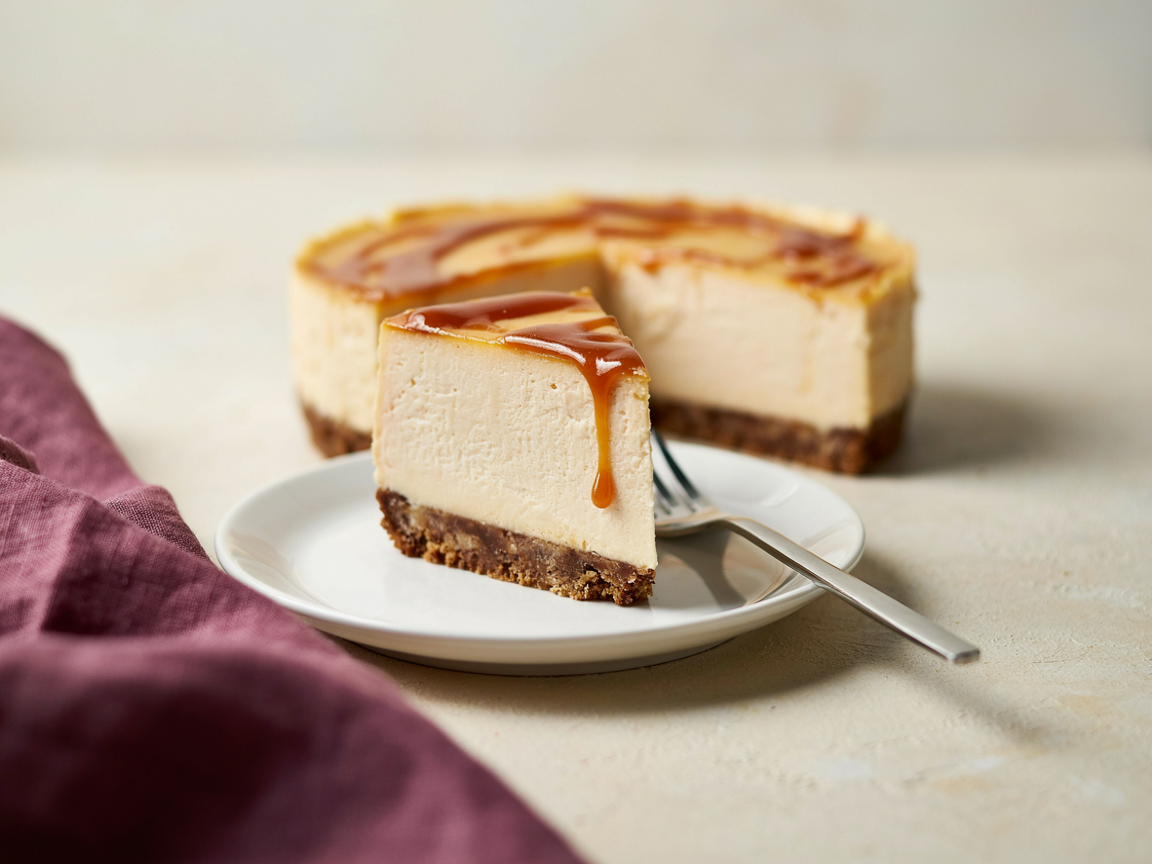
Minis set in three to four hours rather than six, because they are shallow.
The same filling works in four completely different formats, and two of them are faster than making a whole cheesecake.
Minis in a muffin tin
Line a 12-hole tin with paper cases, press 2 tablespoons of base into each, and divide the filling between them. They set in 3 to 4 hours rather than 6, because they are shallow, and they come out of the paper cleanly once cold.
In glasses or small jars
No pressing and no tin. Crumbs spooned loose into the bottom, filling piped or spooned over, topping added at the last minute. The easiest format of all, and the one that travels.
Cheesecake bites or balls
Make the filling, chill it until very firm — at least 6 hours — then scoop and roll into balls with a small ice cream scoop. Roll them in crushed biscuit crumbs and refrigerate. They hold best if you freeze them for 20 minutes between rolling and coating.
As a filling, with no base at all
The filling on its own is useful in a way people underestimate: spooned into a ready-made pastry case, layered into a trifle, spread between biscuits, or piped into tart shells. It keeps 4 days covered in the refrigerator before you commit it to anything.
Troubleshooting
Pick whatever happened:
It never set
Three likely causes. The fix: first, check you used sweetened condensed milk and not evaporated milk — they sit next to each other on the shelf and evaporated milk will never set. Second, you need the acid: a full third of a cup of lemon juice per 14 oz can. Third, give it longer — six hours minimum, and overnight is genuinely different. If all three were right, whisk 1 tsp of bloomed gelatin into the filling and re-chill.
It is lumpy
The cream cheese was not beaten smooth before the condensed milk went in. The fix: there is no way to remove lumps afterwards, because the mixture is too loose to beat hard without knocking air in. Next time, beat the cream cheese alone for 2 full minutes, scraping twice, and make sure it is genuinely at room temperature first. Cold cream cheese is the usual culprit.
The base crumbled when I cut it
Not pressed hard enough, or not enough butter. The fix: press with the flat base of a glass rather than your fingers, and use half a cup of melted butter to two cups of crumbs. Chill or freeze the base for 15 minutes before the filling goes on. A warm knife wiped between slices also helps far more than people expect.
There was water sitting on top
Over-beaten after the lemon juice went in, or a topping added too early. The fix: stop mixing as soon as the filling thickens and looks satiny. And add fruit, caramel or sauce just before serving — anything sitting on the surface overnight slowly draws moisture out of the filling.
It is far too sweet
One can of condensed milk is a lot of sugar and it is the only sweetener in the recipe. The fix: next time use 10 oz rather than the full 14, add a quarter teaspoon of salt, and keep the full lemon juice. You can also use a dark chocolate or plain digestive base rather than a sweet one, and skip any sweetened topping.
It is set but too soft to slice neatly
Usually just impatience. The fix: put it in the freezer for 30 to 45 minutes before slicing — not to freeze it, just to firm the surface. Cut with a thin knife dipped in hot water and wiped clean between every single slice. For a permanently firmer cheesecake, use the extra-lemon version or add gelatin.
Storing and Making Ahead
| How it is stored | How long | What to know |
|---|---|---|
| How it is storedIn the refrigerator, covered | How longUp to 5 days | What to knowBest on days one and two. Cover loosely so condensation does not drip onto the surface |
| How it is storedIn the freezer, whole | How longUp to 2 months | What to knowFreeze uncovered until firm, then wrap. Thaw overnight in the refrigerator, never on the counter |
| How it is storedIn the freezer, sliced | How longUp to 2 months | What to knowFreeze slices on a tray, then wrap individually. They thaw in about an hour |
| How it is storedThe filling alone, no base | How long4 days | What to knowCovered in the refrigerator. Useful if you want to assemble on the day |
This is a genuinely good make-ahead dessert — better on day two than on the day you make it, because the base softens very slightly into the filling and the lemon settles back. Make it the day before you need it and add the topping just before it goes on the table.
Questions, Answered
Do you need to cook condensed milk for a no bake cheesecake?
No. Sweetened condensed milk is already cooked — it is milk with roughly 60% of its water evaporated off and a great deal of sugar added, and that process happens in the can before you buy it. It is safe to eat straight from the tin and it needs no heating at all here. Heating it would only caramelise it, which is how you make dulce de leche, not cheesecake.
Will a no bake cheesecake set without lemon juice?
Not on its own, no — and this is the most important thing on the page. The lemon juice is not for flavour, it is the setting agent. Acid lowers the pH of the mixture, which makes the milk proteins in both the condensed milk and the cream cheese coagulate and thicken. It is the same reaction that turns milk into buttermilk, and you can watch it happen about thirty seconds after the juice goes in. If you want to leave the lemon out, you must replace the structure it was providing: either fold in half a cup of heavy cream whipped to stiff peaks, or use a teaspoon of bloomed gelatin.
Can I mix condensed milk with whole milk in a no bake cheesecake?
No. Condensed milk is thick precisely because most of its water has been removed, and adding whole milk puts that water straight back. The filling will be thinner, the acid will be diluted, and it will not set however long you chill it. If the mixture seems too stiff to pour, beat it a little longer rather than thinning it — it loosens as it warms slightly in the bowl.
Is sweetened condensed milk too sweet for a no bake cheesecake?
It is the only sweetener in the recipe, so a full 14 oz can does make a sweet cheesecake — that is the style, not a fault. If it is too much for you, drop to 10 oz, add a quarter teaspoon of salt, and keep the lemon juice at the full third of a cup. More acid and a little salt rebalance it without weakening the set. A plain digestive or dark chocolate base rather than a sweet crumb helps as well.
Can I make it without heavy cream?
This version has no heavy cream in it at all, so yes. Many no-bake cheesecake recipes use whipped cream for structure; this one uses acid instead, which is why it is only five ingredients. The result is denser and slices more cleanly than a cream-based one, which tends toward mousse. If you would rather have the lighter texture, fold half a cup of stiffly whipped cream in at the very end.
Can I make it without cream cheese?
Yes, with either of two swaps. Mascarpone, measure for measure, gives something richer and slightly sweeter. Thick Greek yogurt strained overnight through muslin until it has lost its water gives something tangier and a little softer — strain it properly or the extra liquid will stop it setting. Both work with the same quantity of condensed milk and lemon juice.
How long does it need to chill?
Six hours is the minimum and overnight is meaningfully better. At four hours it will look set and then slump on the plate; at twelve it slices like a baked cheesecake. Minis in a muffin tin are shallow enough to be ready in three to four hours, and the chocolate version firms up faster than any other because the chocolate sets as it cools.
Can I use just one 8 oz block of cream cheese?
Yes — halve the whole recipe. One 8 oz block, 7 oz of condensed milk (about half a can) and 3 tablespoons of lemon juice, on a base of 1½ cups of crumbs and 6 tablespoons of butter. That fills a 6-inch tin or eight minis. The 6-inch column in the recipe card above has all of it laid out.
Beat the cream cheese smooth before anything else joins it, use the full amount of lemon juice, press the base hard, and give it overnight rather than an afternoon. Everything else about this recipe is flavour.
Pin this no bake cheesecake with condensed milk so the substitution table is there the next time you are one ingredient short.