
Vanilla or Chocolate · Low-Carb · Frosting That Isn’t Gritty
A Sugar Free Birthday Cake Everyone Will Love — Vanilla or Chocolate, Low-Carb
One master recipe that works as a vanilla layer cake, a chocolate one, cupcakes or a sheet cake — plus the sweetener chart that decides whether your frosting comes out silky or sandy.
- No added sugar
- Low-carb, gluten-free
- 4 pan sizes
- Printable card
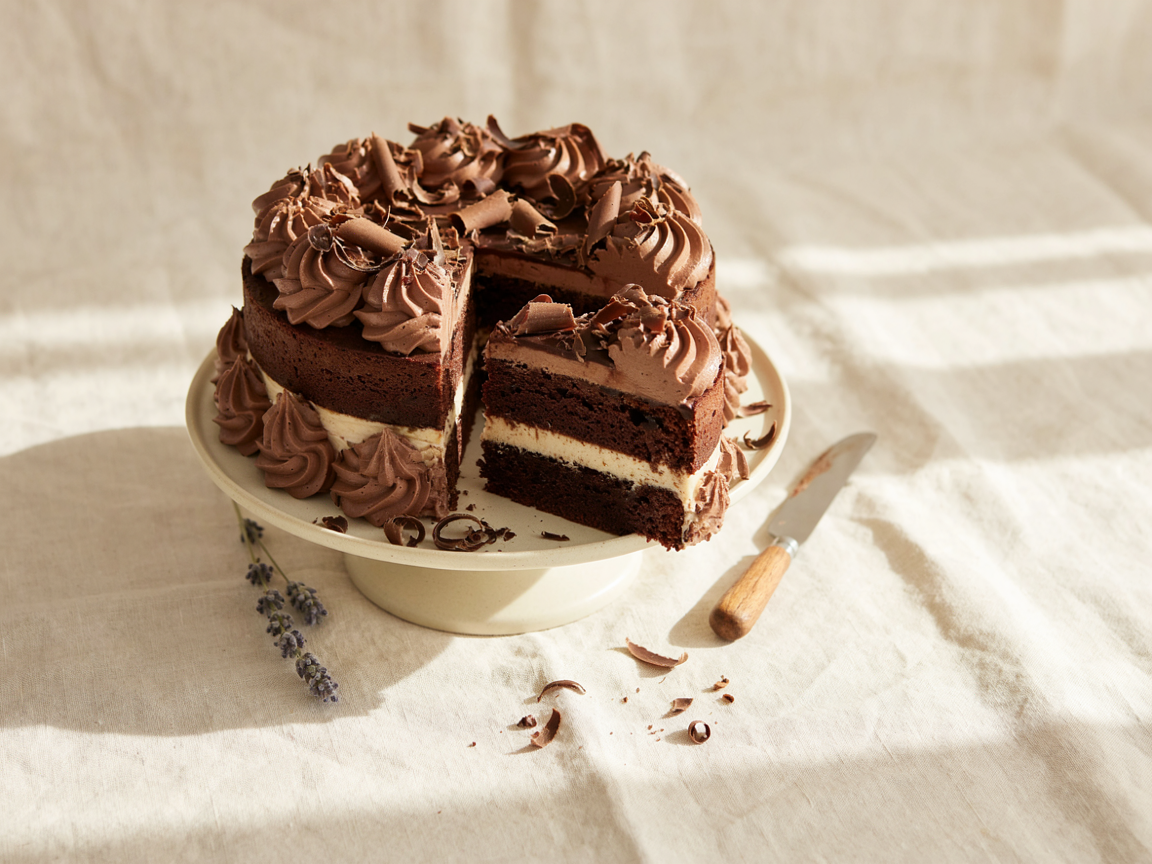
Fruit does what sprinkles do, and almost every sprinkle on the shelf is made of sugar.
Most people who set out to bake a sugar free birthday cake hit the same two problems, and neither of them is the cake itself. The cake is straightforward. It is the frosting that goes gritty, and the aftertaste that nobody warned you about — and both come down to a single decision you make at the shop.
So this starts with the sweetener chart, then gives you one master recipe that becomes vanilla, chocolate, cupcakes or a sheet cake without changing the method.
Which Sugar Substitute to Use
Granulated allulose in the cake · powdered allulose in the frosting
Use 1⅓ cups of allulose in place of 1 cup of sugar. If you read nothing else on this page, read that line.
The differences between these are not small, and they show up in different places — a sweetener that is perfectly good in the cake can ruin the frosting. This is what each one actually does.
| Sweetener | Instead of 1 cup sugar | In the cake | In the frosting |
|---|---|---|---|
| SweetenerAllulose, granulated | Instead of 1 cup sugar1⅓ cups | In the cakeThe best of them. Browns a little, keeps the crumb soft, no aftertaste and no cooling effect | In the frostingThe only one that never turns gritty in a cold frosting. First choice by a distance |
| SweetenerErythritol | Instead of 1 cup sugar1¼ cups | In the cakeBakes well but sets hard when the cake is refrigerated, so serve at room temperature | In the frostingRecrystallises as it chills and goes sandy. Use half allulose, or accept the texture |
| SweetenerMonk fruit and erythritol blend | Instead of 1 cup sugar1 cup | In the cakeThe most widely sold option and perfectly good in the cake itself | In the frostingSame grittiness as plain erythritol, because erythritol is most of what is in it |
| SweetenerXylitol | Instead of 1 cup sugar1 cup | In the cakeBehaves more like sugar than anything else here, including browning | In the frostingSmooth in frosting. Xylitol is toxic to dogs — keep the cake and the bag well out of reach |
| SweetenerPure stevia or pure monk fruit | Instead of 1 cup sugarabout 1 tsp | In the cakeHas no bulk at all, so on its own the cake collapses. Use only to boost a bulk sweetener | In the frostingCannot build a frosting — there is nothing there to replace the powdered sugar |
| SweetenerDates, banana or applesauce | Instead of 1 cup sugarsee the fruit section | In the cakeNo added sugar rather than sugar-free, and definitely not low-carb | In the frostingNot workable. Use whipped cream or a yogurt topping instead |
The reason allulose wins is chemical, not a matter of taste: erythritol recrystallises as it cools. It dissolves happily into a warm mixture and then comes back out of solution in the refrigerator, which is exactly where a frosted cake lives. That is the sandy texture, and it is not something better beating can fix.
A plain note: this is a recipe, not health advice. What it can tell you is exactly what is in the cake — no added sugar, almond and coconut flour instead of wheat, and the sweetener you chose above. How any food fits a particular person’s situation is a question for their own doctor or dietitian. If you are baking for someone else, tell them which sweetener you used.
Sugar Free Birthday Cake Recipe
Sugar Free Vanilla Birthday Cake
An almond flour layer cake with no added sugar, under cream cheese frosting made with powdered allulose so it stays silky in the refrigerator.
What are you baking?
For the cake
- 1¾ cups3 cups3 cups1¾ cups fine blanched almond flour
- 3½ tbsp⅓ cup⅓ cup3½ tbsp coconut flour
- ⅔ cup1 cup1 cup⅔ cup granulated allulose, or a monk fruit blend
- 1¼ tsp2 tsp2 tsp1¼ tsp baking powder
- ¼ tsp½ tsp½ tsp¼ tsp fine salt
- 4664 large eggs, at room temperature
- ½ cup¾ cup¾ cup½ cup unsalted butter, melted and cooled
- ⅓ cup½ cup½ cup⅓ cup sour cream or full-fat Greek yogurt
- 2 tsp1 tbsp1 tbsp2 tsp vanilla extract
- 1½ tsp2 tsp2 tsp1½ tsp lemon juice or white vinegar
- 12 oz16 oz16 oz12 oz full-fat block cream cheese, softened
- ½ cup¾ cup¾ cup½ cup unsalted butter, softened
- 1 cup1½ cups1½ cups1 cup powdered allulose
- 1½ tsp2 tsp2 tsp1½ tsp vanilla extract
- ⅛ tsp¼ tsp¼ tsp⅛ tsp fine salt
Instructions
Set the oven low and line the pans properly
325°F, not 350°F. Almond flour browns much faster than wheat flour and a sugar-free batter has nothing in it that needs a hot oven to caramelise, so the usual temperature scorches the edges before the middle is set. Grease two 8-inch pans, line the bottoms with parchment circles and grease the parchment as well.
Whisk the dry ingredients and break up the lumps
Almond flour and coconut flour both clump in the bag, and a lump of coconut flour in a finished cake is a dry white pocket you cannot miss. Whisk the almond flour, coconut flour, granulated sweetener, baking powder and salt together thoroughly, pressing any lumps against the side of the bowl with the whisk.
Beat the eggs until they are pale and frothy
A full two minutes with a hand mixer. Six eggs are doing a lot of structural work here that gluten would normally do, and beating air into them is the only leavening this cake gets beyond the baking powder. Room-temperature eggs whip to about twice the volume of cold ones.
Add the fat and the sour cream, then the acid
Beat in the cooled melted butter, the sour cream and the vanilla until smooth, then the lemon juice last. The acid reacts with the baking powder and gives you a little extra lift, which matters in a batter with no gluten to trap it.
Fold the dry into the wet and let the batter sit 5 minutes
Fold gently until no dry flour remains, then leave it alone for five minutes. Coconut flour is extraordinarily absorbent and it has not finished drinking yet — batter that looks too loose now will be exactly right in five minutes. Do not add more flour during those five minutes.
Bake 28 to 34 minutes and ignore the colour
Start checking at 28. A skewer should come out with a few moist crumbs on it. Sugar is what browns a cake, so a sugar-free one stays pale and will look underbaked when it is done — judge it by the skewer and by the edges pulling very slightly from the pan, never by how golden the top is.
Cool completely in the pans, then turn out
This is not optional and it is where most almond flour cakes are lost. The crumb has no gluten holding it together and it is fragile while warm. Leave the layers in their pans on a rack until they are fully at room temperature, at least 90 minutes, before you go anywhere near them with a knife.
Make the frosting and chill the cake before slicing
Beat the cream cheese and butter together for 2 minutes before the powdered sweetener goes in, then add it a third at a time with the vanilla and salt. Fill and frost the cooled layers, then chill the assembled cake for 30 minutes so it slices cleanly.
Roughly, per slice
Net carbohydrate excludes the sweetener and the almond flour’s fibre. Made with dates or banana instead of allulose, the same slice comes to roughly 24g of carbohydrate.
This is an estimate, not a lab analysis, and it moves with the brand of sweetener you use.
The Sugar Free Chocolate Birthday Cake
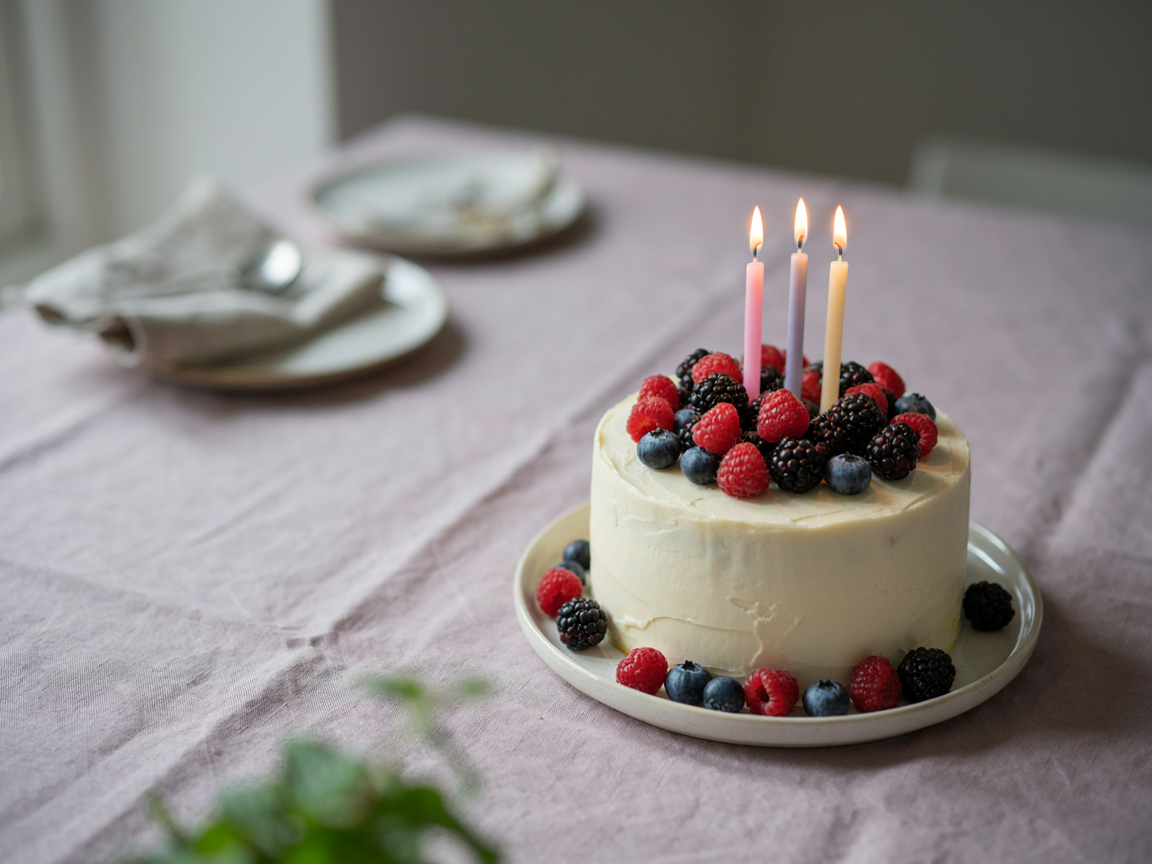
Cocoa needs more sweetener and more liquid than the vanilla version. Both, not one.
This is the version people search for most after the plain one, and it is the same recipe with four changes. The important thing is that you make all four — cocoa changes both the flavour balance and the moisture.
What to change
Replace ½ cup of the almond flour with ½ cup of unsweetened cocoa powder, and take the granulated sweetener up to 1¼ cups. Add 2 extra tablespoons of sour cream. That is the entire conversion.
Why the extra sweetener
Cocoa is bitter and the bitterness is far more obvious without sugar to hide behind. A quarter cup more sweetener is the difference between a chocolate cake and a cake that tastes vaguely of unsweetened chocolate.
Why the extra sour cream
Cocoa powder is very thirsty and it will pull moisture out of an already gluten-free crumb. Two more tablespoons of sour cream puts it back without loosening the batter.
For the frosting
Sift ⅓ cup of cocoa powder in with the powdered allulose and add a tablespoon of heavy cream to loosen it. Or melt 3 oz of sugar-free dark chocolate, cool it until just warm, and beat it in at the end for something closer to a ganache.
Bake time goes up by about three minutes and the colour tells you even less than usual, since a chocolate cake is dark before it is baked. Go entirely by the skewer here: a few moist crumbs, no wet batter.
Sugar Free Frosting That Isn’t Gritty
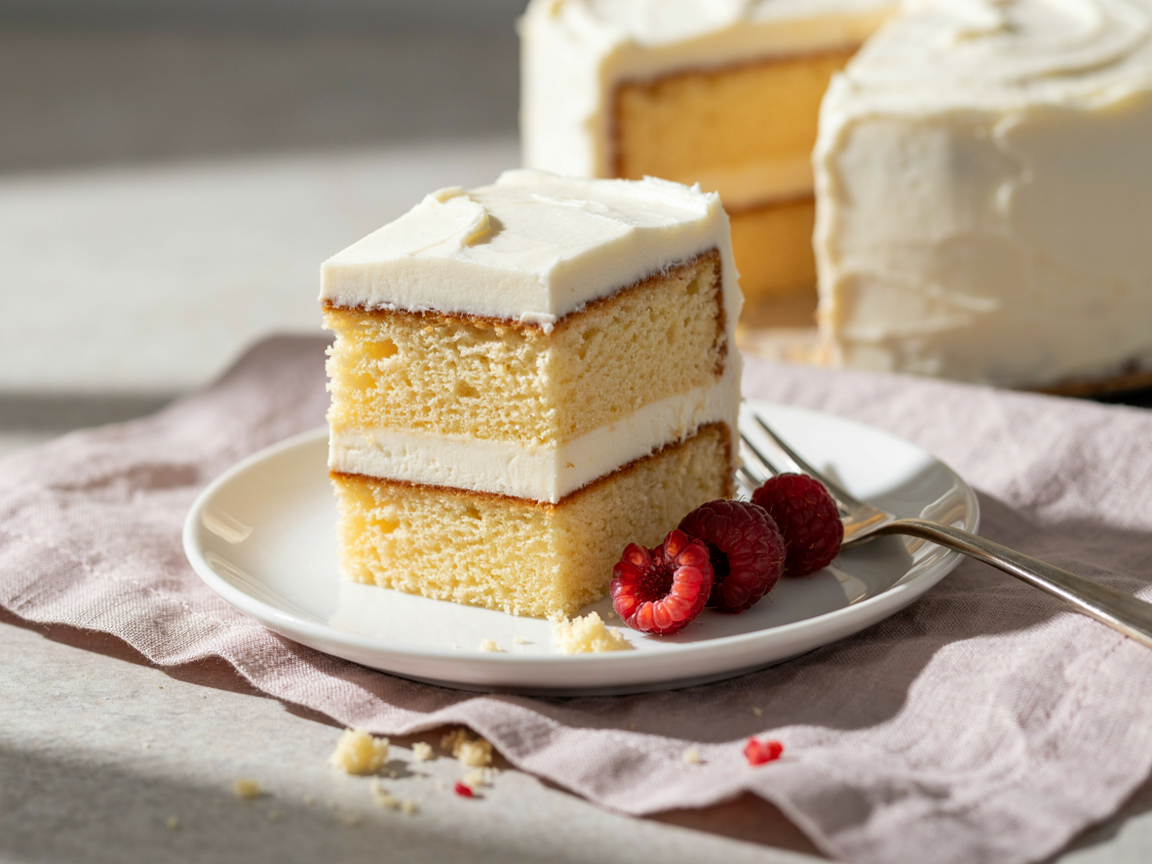
Smooth, not sandy. That is the sweetener, not the technique.
This is where most sugar-free birthday cakes fall down, and it is genuinely not the baker’s fault — it is a property of the ingredient almost every recipe tells you to buy.
Allulose, powdered, and nothing else
This is the single most important decision in a sugar-free cake. Erythritol and the blends built on it recrystallise as the frosting chills, which is why so many sugar-free frostings taste sandy. Powdered allulose does not.
Powder it yourself if you have to
Granulated allulose blitzed in a clean spice or coffee grinder for 30 seconds works perfectly and costs a third of what the pre-powdered bags do. Let the dust settle before you open the lid.
Block cream cheese, never the tub
The spreadable kind is thinned with water and will not hold a pipe or an edge. Full-fat block, softened for 45 minutes and no longer.
Beat the fats first, sweetener second
Two full minutes of cream cheese and butter alone, then the powdered sweetener a third at a time. Adding it all at once gives you a dense paste that never lightens however long the mixer runs.
If your frosting is too soft to pipe, chill the whole bowl for 20 minutes and beat it briefly again rather than adding more powdered sweetener. Allulose does not stiffen a frosting the way powdered sugar does, so you cannot fix softness by adding more of it — you only get something sweeter and just as soft.
The No-Sweetener and Small-Cake Versions
Pick the version you actually need:
The fruit-sweetened version
If you want no sweeteners at all, blend 1 cup of soft Medjool dates with ½ cup of hot water into a smooth paste and use it in place of the granulated sweetener, cutting the sour cream to ¼ cup. Two very ripe mashed bananas or 1 cup of unsweetened applesauce work the same way. This is no added sugar rather than sugar-free, and it is not low-carb — the sugar is coming from the fruit. It is a softer, denser, more banana-bread cake, and children generally prefer it.
A first birthday smash cake
Make a single 6-inch layer using mashed banana in place of the sweetener, swap the almond flour for oat flour if you would rather avoid nuts, and skip the frosting entirely or top it with thick plain yogurt and mashed berries. No honey at all under twelve months, and check with your own paediatrician about introducing eggs, dairy and nuts on their schedule rather than a recipe’s.
A small cake for two or three
The 6-inch two-layer column in the card above makes a proper little birthday cake that serves six, or a generous cake for three with leftovers. Halve it again and bake a single 6-inch layer for a cake for one or two — 24 to 28 minutes at 325°F.
Fruit as the decoration
Berries, halved figs, sliced stone fruit and pomegranate seeds all do what sprinkles do visually and bring their own sweetness. Arrange them within an hour of serving; fruit sitting on cream cheese frosting overnight will weep into it.
A lower-carb fruit compromise
Raspberries, blackberries and strawberries are the three lowest-carbohydrate fruits by a clear margin, so if you are keeping carbohydrate down but want real fruit on the cake, they are the ones to use. Blitz a handful with a spoonful of water for a natural pink filling.
What Goes Wrong
Pick whatever happened:
It was dry and crumbly
Sugar holds water in a cake, so taking it out means the crumb dries faster and more easily. The fix: do not skip the sour cream, weigh the almond flour rather than scooping it (a scooped cup can be 25% heavy), and pull the cake at 28 minutes rather than waiting for colour. Overbaking by four minutes does more damage to a sugar-free cake than to a normal one.
It fell apart when I turned it out
It was still warm. The fix: almond flour has no gluten, so the crumb has almost no structure until it is completely cool. Leave the layers in the pans on a rack for at least 90 minutes. If it has already broken, cream cheese frosting is remarkably good at gluing a cake back together — chill the pieces, assemble, and frost generously.
The frosting was gritty
Erythritol. The fix: erythritol and the monk fruit blends built on it recrystallise as they cool, and a chilled cake makes it worse. Use powdered allulose instead — it is the one bulk sweetener that stays dissolved. If the frosting is already made, beating in a tablespoon of warm heavy cream helps a little but will not fix it properly.
There was a cold, minty aftertaste
That is erythritol too — it has a genuine cooling effect on the tongue, which is a physical property of the crystal rather than a flavour. The fix: allulose has none of it. A monk fruit blend has less than plain erythritol but not none. A pinch of salt and a full tablespoon of vanilla also mask it noticeably.
It sank in the middle
Usually the batter was not left to sit, or the oven door was opened early. The fix: give the batter its five minutes so the coconut flour absorbs properly, and do not open the oven before 25 minutes. Too much baking powder causes it as well — a big rise followed by a collapse means reduce it by a quarter teaspoon.
It tasted eggy
Six eggs is a lot, and without sugar there is less competing for attention. The fix: a full tablespoon of vanilla, the full half teaspoon of salt, and the lemon juice all work against it. Beating the eggs until pale and frothy rather than just combined makes a real difference too — the eggy note is much stronger in a dense crumb.
Making It Look Like a Birthday Cake
A sugar-free cake is paler and a little flatter than a sugared one, because sugar is what browns and what holds air. That is worth compensating for rather than ignoring.
Fresh fruit, arranged late
Berries, figs, cherries or pomegranate around the top edge. The most reliable decoration there is, and it solves the problem that almost every sprinkle on the shelf is made of sugar.
Sugar-free chocolate shavings
A bar of sweetener-based dark chocolate dragged with a vegetable peeler. Two minutes of work, it looks expensive, and it hides an uneven frosting job completely.
Toasted nuts around the base
Flaked almonds or chopped pistachios pressed into the bottom third of the sides. It covers the join between layers and it suits an almond flour cake.
Height and candles
Two layers rather than one, and a cake stand. Sugar-free cakes are naturally paler and flatter-looking than sugared ones, so height and a good candle do more for the photograph than any amount of piping.
On sprinkles: almost every sprinkle sold is sugar with wax and colouring, so a scattering of them undoes the point of the cake. Sugar-free sprinkles do exist and are worth buying if a child is going to care. Otherwise fruit, shaved chocolate and a good candle do the job perfectly well.
Questions, Answered
What is the best sugar substitute for a birthday cake?
Allulose, granulated for the cake and powdered for the frosting. It browns a little, it keeps the crumb soft, it has no cooling aftertaste, and crucially it does not recrystallise when the cake is chilled — which is what makes so many sugar-free frostings taste sandy. Use 1⅓ cups of allulose in place of 1 cup of sugar. A monk fruit and erythritol blend is the most widely available alternative and is fine in the cake itself, but it will go gritty in a cold frosting.
Can I make this a sugar free chocolate birthday cake?
Yes, and it is a small change. Replace ½ cup of the almond flour with ½ cup of unsweetened cocoa powder, take the granulated sweetener up to 1¼ cups, and add 2 extra tablespoons of sour cream. The extra sweetener matters because cocoa is bitter and there is no sugar to balance it; the extra sour cream matters because cocoa powder is very absorbent. For the frosting, sift ⅓ cup of cocoa in with the powdered allulose.
Is this cake suitable for someone with diabetes?
This is a recipe, not medical advice, so the honest answer is that it depends on the person and their plan. What the recipe can tell you factually is what is in it: no added sugar, almond and coconut flour rather than wheat flour, and either allulose or a monk fruit blend as the sweetener. How any particular food fits someone’s situation is a question for their own doctor or dietitian, who knows their numbers. If you are baking for someone else, the kindest thing is to tell them exactly which sweetener you used.
Why did my sugar-free frosting go gritty?
Because it was made with erythritol, or with a monk fruit blend built on erythritol. Erythritol recrystallises as it cools, so a frosting that was smooth in the bowl turns sandy once the cake has been in the refrigerator. Powdered allulose is the fix and it is the only reliable one. You can powder granulated allulose yourself in a clean spice grinder if the pre-powdered bags are expensive where you are.
Can I make it without almond flour?
For a nut-free version, use 1½ cups of sunflower seed flour plus ½ cup of coconut flour in place of the 3 cups of almond flour and ⅓ cup of coconut flour, and add 1 tablespoon of lemon juice — sunflower seed flour reacts with baking powder and can turn the crumb green without a little extra acid. It is harmless but alarming. If you do not need it low-carb, regular flour works too; see the question below.
Can I make a sugar-free birthday cake for a first birthday?
Yes. Bake a single 6-inch layer using mashed ripe banana in place of the granulated sweetener, use oat flour rather than almond flour if you would rather avoid nuts, and either leave it plain or top it with thick plain yogurt and mashed berries. No honey at all before twelve months. Beyond that, follow your own paediatrician’s guidance on when to introduce eggs, dairy and nuts rather than a recipe’s timeline.
Can I make it with regular flour instead?
Yes, if low-carb is not the point and you just want no sugar. Use 2½ cups of all-purpose flour in place of the almond and coconut flour, drop to 4 eggs, cut the butter to ½ cup, and bake at 350°F for 25 to 30 minutes. The cake will be lighter and more conventional. Keep the sweetener quantities and the frosting exactly as written.
How long does it keep?
Four days in the refrigerator, covered, and it is better on day two once the crumb has settled. Take slices out 30 minutes before serving, because cream cheese frosting and almond flour both firm up considerably when cold. Unfrosted layers freeze well for 3 months, double-wrapped; thaw them in the wrapping so the condensation forms on the plastic rather than on the cake.
Buy allulose rather than erythritol, weigh the almond flour, bake at 325°F, ignore the pale colour, and let the layers cool completely in their pans. Get those five right and nobody at the table will work out what is missing.
Pin this sugar free birthday cake so the sweetener chart is there before your next trip to the shop.