
How to Clean a Wooden Cutting Board: Wash, Sanitize and Deodorize
Wash a wooden cutting board with warm soapy water, dry it right away and stand it up. Sanitize after raw meat, and use lemon and salt for stains and smells.
To clean a wooden cutting board, wash it with warm water and a little dish soap, rinse it quickly, dry it with a clean cloth and stand it on edge to air dry. Never soak it or put it in the dishwasher.
After raw meat, poultry or fish, sanitize it: the USDA mix is 1 tablespoon of unscented liquid chlorine bleach per gallon of water.
Every use: warm soapy water, soft scrub, quick rinse, dry and stand upright. After raw meat: sanitize with diluted bleach, then rinse and dry. Stains and smells: coarse salt and half a lemon for 5 to 15 minutes. Monthly: oil it so it does not dry out.
Daily steps, three ways to sanitize, what to avoid and six products that help are below.
Product links go to Amazon. As an Amazon Associate, Kitchen Guide 101 earns from qualifying purchases.
Cleaning Tools for Wooden Boards
Methods follow John Boos and USDA guidance. Tap any name to see it on Amazon.
| Product | Type | How you use it | When | Best for | Price |
|---|---|---|---|---|---|
| OXO Good Grips Soap-Dispensing Dish Brush | Dish brush | Soap in the handle | Every wash | Quick daily cleaning | $ |
| Coarse Kosher Salt | Coarse salt | With half a lemon | 5 to 15 minutes | Stains and odors | $ |
| Distilled White Vinegar | Vinegar | 1 part vinegar, 2 parts water | Wipe and dry | Regular sanitizing | $ |
| Cutting Board Drying Rack | Rack | Holds boards on edge | After every wash | Drying and storage | See listing |
| Swedish Dishcloths, Reusable Cellulose Sponge Cloths, 10-Pack | Cloths | Drying after washing | Every wash | Any board | $$ |
| John Boos Board Cream | Board cream | Beeswax and mineral oil | After cleaning | Dry boards | $ |
Details are from each maker or listing at time of writing and can change. Price tiers: $ lowest in this group · $$ middle · $$$ highest.
6 Things That Keep a Wooden Board Clean
A brush, two pantry cleaners, a rack, cloths and a cream for afterwards.
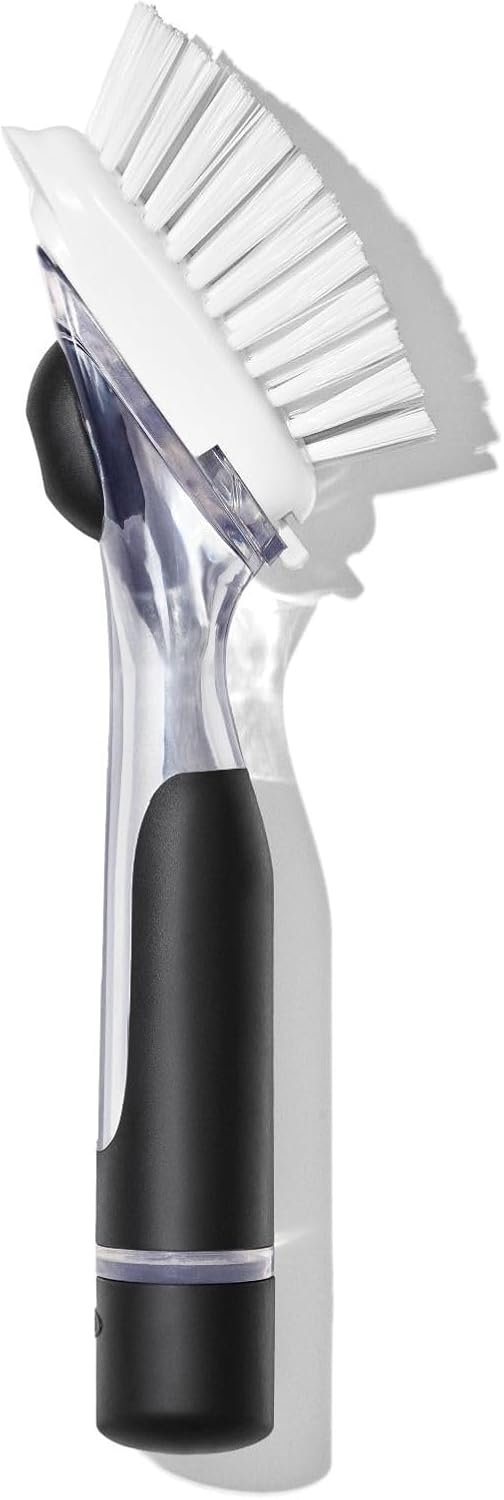
OXO Good Grips Soap-Dispensing Dish Brush
Daily cleaning is warm water, a little soap and a soft scrub. A brush with soap in the handle does it in one pass, then the board gets rinsed and dried right away.
Scrub gently; there is no need to soak.
- Soap and brush in one
- Quick to use
- Keeps hands out of the water
- Refill the handle
- Use gently on soft woods
Coarse Kosher Salt
The John Boos method for stains and odors: sprinkle coarse salt over the board and scrub it in with half a lemon. Leave it 5 to 10 minutes, or up to 15 for deep stains, then rinse with warm water and dry.
Boos also suggests lemon or lime juice with a little salt for odors.
- No harsh chemicals
- Lifts stains
- Pantry staple
- Needs a lemon too
- Rinse well after
Distilled White Vinegar
For regular sanitizing, John Boos suggests 1 part vinegar to 2 parts water. Wipe it over the board, then dry it thoroughly.
It skips harsh chemicals, which Boos says can damage the wood.
- Gentle on wood
- Easy to mix
- Low price tier
- Dry thoroughly after
- After raw meat, use the bleach method
Cutting Board Drying Rack
John Boos says to air dry a board standing up so water does not pool. A rack holds boards on edge with air on both sides, which also helps them stay flat.
Boos warns against storing a board flat on a cold stone counter.
- Dries both sides
- Helps prevent warping
- Organizes several boards
- Takes counter space
- Check the slot width for thick boards
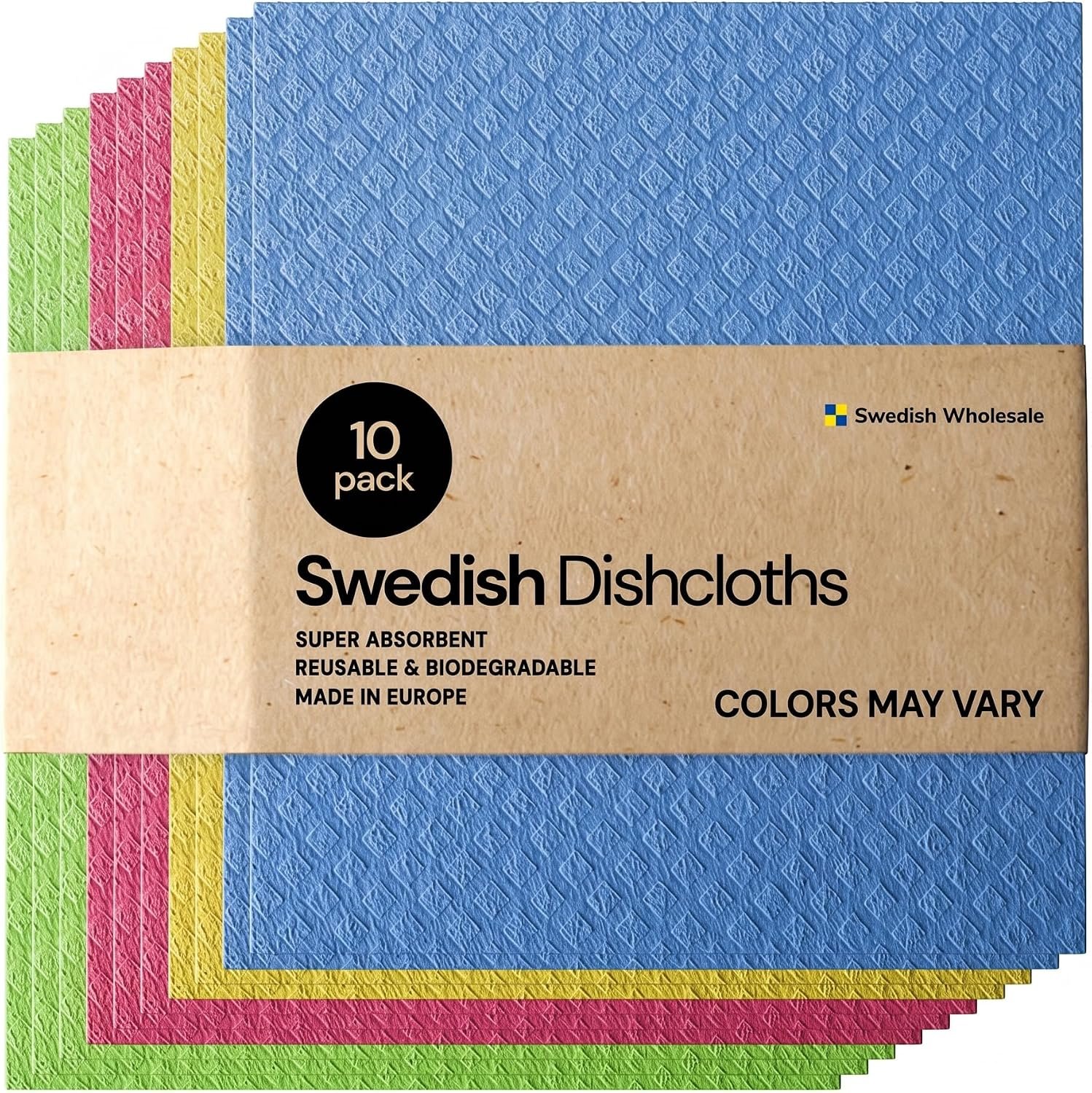
Swedish Dishcloths, Reusable Cellulose Sponge Cloths, 10-Pack
Water left on wood is what causes trouble. Dry the board with a clean cloth right after rinsing, then stand it up to finish air drying.
These cellulose cloths soak up water fast and wash for reuse.
- Very absorbent
- Reusable
- Ten in a pack
- Wash them often
- Keep separate from raw-meat cloths
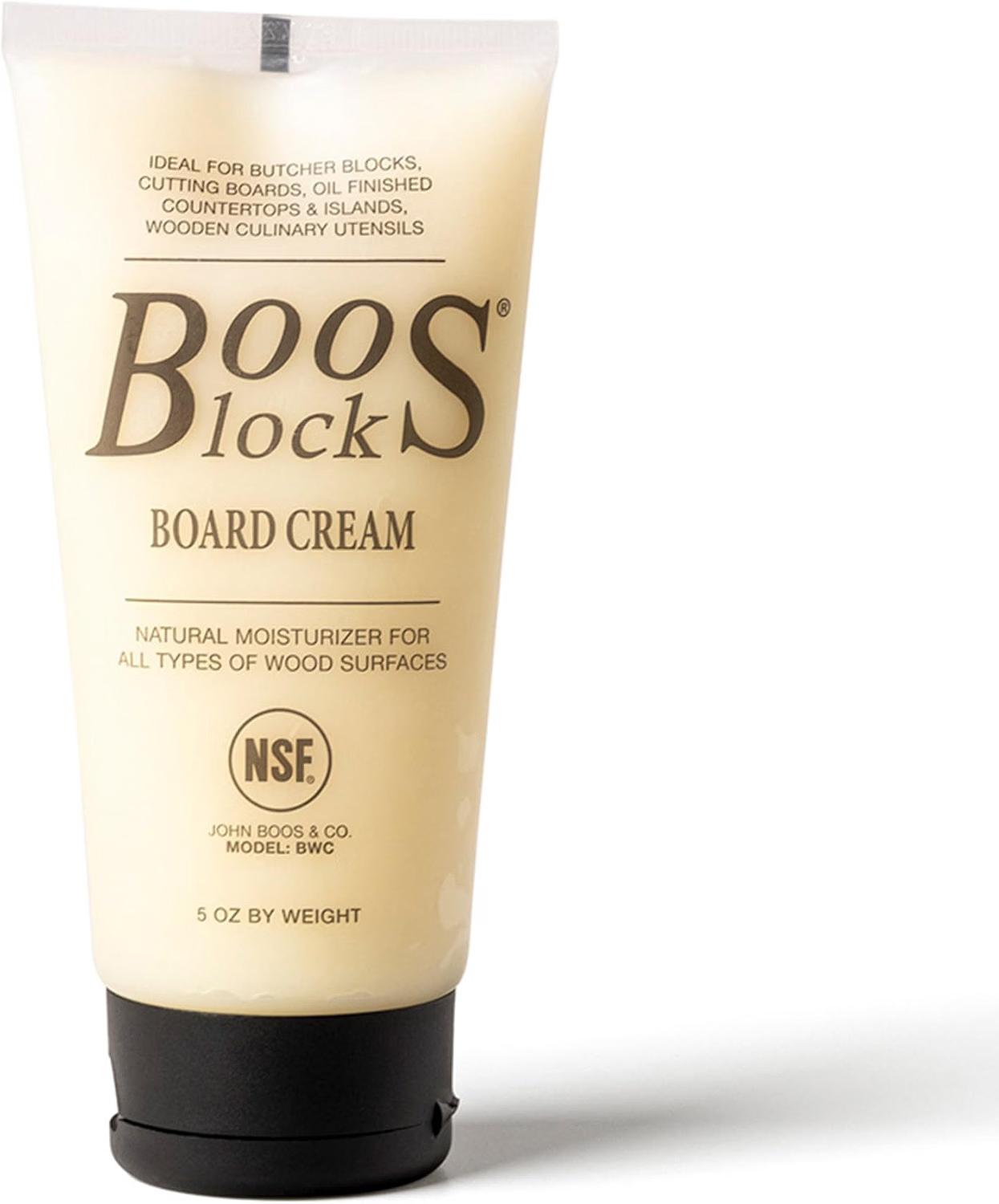
John Boos Board Cream
Scrubbing, salt and sanitizing pull moisture out of wood. A coat of oil and board cream afterwards puts it back and helps stop cracking.
The cream is unbleached beeswax and food-grade mineral oil.
- Restores moisture
- Helps stop cracking
- Food-safe ingredients
- Needs reapplying
- Use after oil
How to Wash a Wooden Cutting Board Every Day
- Scrape off food as soon as you finish.
- Wash with warm water and a little dish soap, scrubbing softly with a brush or sponge.
- Rinse quickly. Do not soak the board or let water sit on it.
- Dry it with a clean cloth.
- Stand it on edge to air dry so both sides get air.
From the John Boos care guide and USDA guidance.
How to Sanitize, Deodorize and Remove Stains
| Method | Mix | How | When |
|---|---|---|---|
| Bleach (USDA) | 1 tablespoon unscented liquid chlorine bleach per gallon of water | Flood the surface, let it stand several minutes, rinse, dry | After raw meat, poultry or fish |
| Bleach (John Boos) | 1 teaspoon liquid chlorine bleach per quart of water | Wipe on, rinse, dry | Deeper sanitizing |
| Vinegar (John Boos) | 1 part vinegar to 2 parts water | Wipe on, dry thoroughly | Regular freshening |
| Lemon and coarse salt | Coarse salt and half a lemon | Scrub, wait 5 to 15 minutes, rinse, dry | Stains and odors |
Keep one board for raw meat, poultry and fish and another for bread and produce. Many cooks use plastic for raw meat; see the best plastic cutting boards.
What to Avoid
No dishwasher
John Boos says wood boards are not dishwasher safe; the USDA notes laminated boards may crack and split.
No soaking
Soaking upsets the moisture in the wood and can split the rails.
No harsh chemicals
Boos warns they can damage the wood.
No hot pans
Do not use the board as a hot pad.
No flat storage on stone
It traps moisture under the board and can lead to warping.
No worn-out boards
The USDA says to discard boards with deep, hard-to-clean grooves.
After a deep clean, put the moisture back: how to oil a cutting board. Choosing a new board? See end grain vs edge grain.
Tips for a Clean, Long-Lasting Board
Five habits.
Wash right away
Do not let juices sit on the wood.
Use little soap
A gentle detergent is enough; heavy soap strips the oil.
Dry upright
Air on both sides helps prevent warping.
Separate raw meat
One board for raw meat, another for ready-to-eat food.
Oil monthly
Clean boards dry out; oil and cream bring them back.
More board and kitchen care guides: mineral oil for cutting boards, bamboo cutting boards, how to clean ceramic pans and range hood degreasing tools.
How to Clean a Wooden Cutting Board FAQs
How do you clean a wooden cutting board?▼
Wash it with warm water and a little dish soap, rinse quickly, dry it with a clean cloth and stand it on edge to air dry.
How do you sanitize a wooden cutting board?▼
With diluted bleach: the USDA uses 1 tablespoon of unscented liquid chlorine bleach per gallon of water. Flood the surface, let it stand several minutes, rinse and dry.
Can you clean a cutting board with vinegar?▼
Yes. John Boos suggests 1 part vinegar to 2 parts water; wipe it on and dry thoroughly.
How do you get smells out of a wooden cutting board?▼
Coarse salt and lemon. Scrub it in with half a lemon, wait 5 to 10 minutes, rinse and dry.
Can wooden cutting boards go in the dishwasher?▼
No. John Boos says wood boards are not dishwasher safe, and the USDA notes laminated boards may crack and split.
Should you soak a wooden cutting board?▼
No. Soaking can make the wood split.
How do you clean a cutting board after raw chicken?▼
Wash it, then sanitize it with the USDA bleach mix, rinse and dry. A separate board for raw meat is safest.
When should you replace a wooden cutting board?▼
When it has deep, hard-to-clean grooves, per the USDA.
The Bottom Line
- Every use: warm soapy water with a soap-dispensing brush, dry with a clean cloth and stand it up in a drying rack.
- After raw meat: 1 tablespoon of bleach per gallon of water, rinse, dry. For freshening, vinegar and water.
- Stains and smells: coarse salt and half a lemon, then oil and board cream.
Wash it fast, dry it upright, sanitize after raw meat and never soak it.