
10 Minutes · 4 Ingredients · Actually Pipes
Cream Cheese Buttercream Frosting Recipe (Silky, Pipeable, Holds Its Shape)
The version that stands up in a piping bag instead of sliding off the cupcake — built on temperature and order of operations, not extra sugar.
- 10 minutes
- Pipes clean rosettes
- 4 ingredients
- Not too sweet
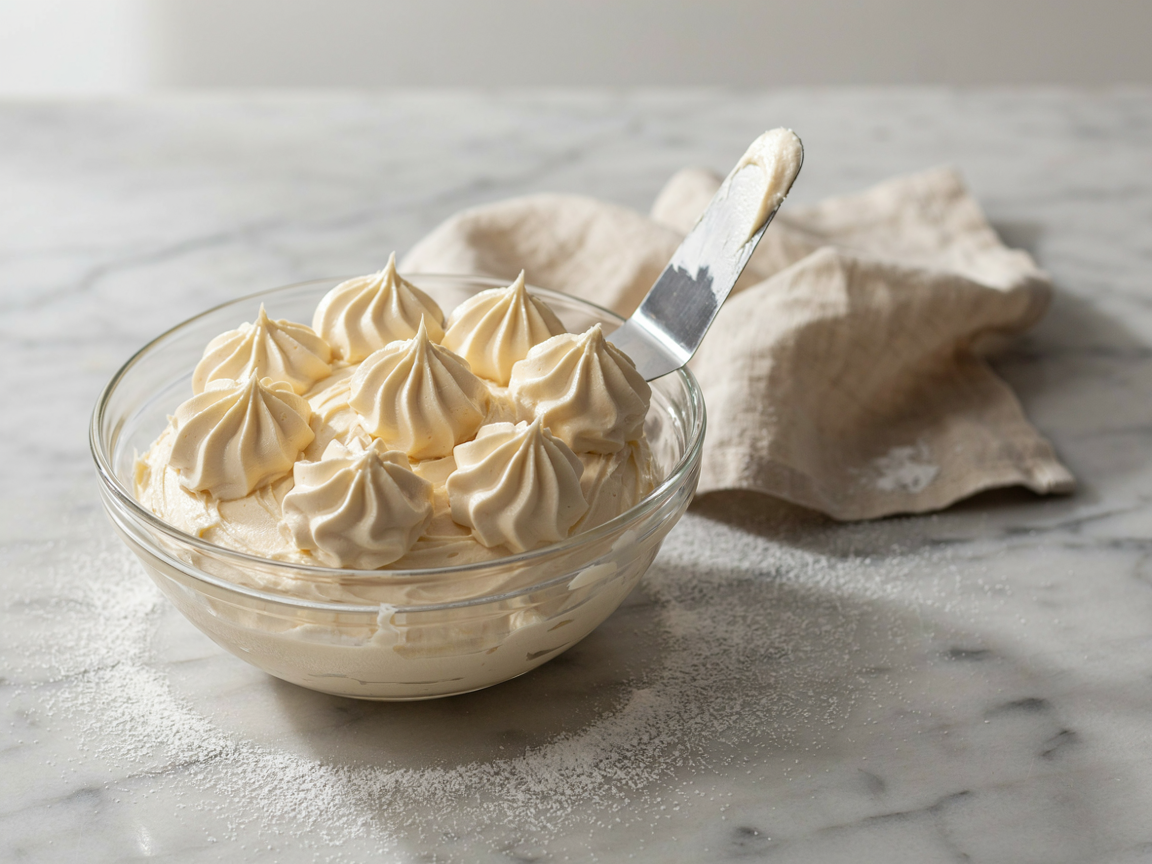
Those ridges holding their edge are the whole test. Soft frosting rounds them off within a minute.
A cream cheese buttercream frosting recipe lives or dies on one thing: whether it holds a shape. Most don’t. You beat everything together, it looks beautiful in the bowl, and twenty minutes later every rosette has slumped into a puddle and you are scraping cupcakes into the bin.
The fix is not more powdered sugar — that just makes it cloying and still soft. It is temperature and the order you add things. Cream cheese is roughly 55% water, and every extra second in the mixer breaks its structure down and releases that water into your butter. This version whips the butter first and adds the cream cheese last, for well under a minute.
Save the pin so the ratios are there next time you are mid-bake.
What This Cream Cheese Buttercream Frosting Recipe Does Differently
Four things cause almost every failed batch. Each one has a specific fix, and together they are the entire recipe.
Tub cream cheese
Spreadable tub cream cheese is thinned with extra water and gums so it scoops cold. It will never firm up. Block cream cheese, full fat, always.
Ingredients too warm
“Room temperature” is where this goes wrong. You want both the butter and the cream cheese at about 65°F — cool to the touch, dents under a finger but holds the dent.
Over-beating
Cream cheese is an emulsion. Beat it for two minutes and it breaks, releasing water into the butter. Thirty to forty-five seconds is genuinely all it gets.
Wrong order
Creaming butter and cream cheese together is the standard instruction and it is the standard mistake. Butter alone first, sugar second, cream cheese last.
The one-sentence version: whip cold-ish butter until pale, beat in the sugar, then fold the cream cheese in for barely half a minute. That is the difference between frosting that pipes and frosting that pools.
The Four Ingredients, and What Each One Does
There is nothing clever in this list. What matters is the form each one takes.
Full-fat block cream cheese
An 8 oz block, not the tub. Take it out of the fridge about 30 minutes before you start — you want it cool, not soft. If it has gone properly soft and greasy, put it back in the fridge for 15 minutes. Low-fat versions carry even more water and will not set.
Unsalted butter
One stick, also at about 65°F. This is the ingredient doing the actual structural work: whipped butter holds air and firms as it cools, which is what lets a rosette keep its ridges. Do not soften it in the microwave — melted pockets never recover.
Powdered sugar, sifted
Four cups per 8 oz of cream cheese. Sifting is not optional here — cornstarch in powdered sugar clumps, and a single lump will block a piping tip mid-rosette. The cornstarch is also quietly useful: it absorbs a little of the cream cheese’s water.
Vanilla and salt
A teaspoon of vanilla and a scant quarter-teaspoon of fine salt. The salt is what stops this tasting like sweetened cream cheese — it is the single cheapest upgrade in the recipe and most people leave it out.
What not to add: milk, cream or lemon juice. Every one of them adds water to a frosting whose entire problem is water. If it is too stiff, the fix is a few more seconds of beating, not liquid.
The Recipe
Pipeable Cream Cheese Buttercream
Whipped butter, sifted sugar, and block cream cheese added last and beaten for under a minute.
What are you frosting?
Ingredients
- 8 oz (1 block)12 oz (1½ blocks)16 oz (2 blocks)24 oz (3 blocks) full-fat block cream cheese, at about 65°F
- ½ cup (1 stick / 113g)¾ cup (1½ sticks / 170g)1 cup (2 sticks / 227g)1½ cups (3 sticks / 340g) unsalted butter, at about 65°F
- 4 cups (480g)6 cups (720g)8 cups (960g)12 cups (1.4kg) powdered sugar, sifted
- 1 tsp1½ tsp2 tsp1 tbsp pure vanilla extract
- ¼ tsp⅓ tsp½ tsp¾ tsp fine salt
Instructions
Get the temperature right
Take the butter and the block cream cheese out about 30 minutes ahead. Both should be cool to the touch and dent under a finger without the finger sinking in. If either has gone soft and shiny, chill it for 15 minutes before starting.
Whip the butter alone
Beat the butter on medium-high for a full 3 to 4 minutes, scraping the bowl twice, until it is visibly paler and looks whipped rather than creamed. This is where the structure comes from, so do not shorten it.
Add the sugar in two goes
Add half the sifted powdered sugar on the lowest speed, mix until it disappears, then add the rest. Once it is combined, beat on medium for 1 minute. The mixture will look thick and slightly dry — that is correct.
Add the cream cheese last, briefly
Cut the cream cheese into four or five chunks and add them all at once. Beat on medium for 30 to 45 seconds only, just until smooth. Stop the moment it comes together — every extra second past this makes it looser.
Vanilla and salt
Add the vanilla and salt and mix on low for about 10 seconds. Scrape the bowl once and fold anything from the bottom through by hand rather than running the mixer again.
Test it with a spoon
Lift a spoonful and turn it upside down. Frosting that is ready clings to the spoon and holds a soft peak. If it slides off, it needs chilling rather than more sugar.
Chill before piping if needed
If the kitchen is warm or the frosting feels slack, refrigerate it for 15 to 20 minutes and stir it gently before filling the piping bag. It firms noticeably as the butter cools.
Roughly, per cupcake’s worth
Calculated from the 18-cupcake batch — 12 oz cream cheese, ¾ cup butter and 6 cups powdered sugar — divided eighteen ways.
This is an estimate, and how generously you pipe will move it more than any ingredient choice. A thin spread over a sheet cake works out at well under half this.

A swirl that peaks and stays peaked. If yours sinks as you lift the bag, jump to the consistency guide below.
Three Consistencies From One Batch
The base recipe lands on pipeable. Tap what you need instead.
Spreadable — for layer cakes and sheet cakes
Looser and softer, so it glides off an offset spatula without tearing the crumb. Use the base recipe but hold back 1 cup of the powdered sugar, and use it straight away at room temperature rather than chilling it.
This is the right choice for a naked cake, a rustic swooped finish, or anything you are smoothing rather than piping. It will not hold a sharp edge and it is not meant to.
Spoon test: falls slowly off an upturned spoon in a thick ribbon.Pipeable — the base recipe
Holds a swirl, a shell border and a star tip cleanly. This is exactly what the recipe above produces, with no adjustment at all, provided your ingredients were at 65°F and you stopped beating on time.
If the kitchen is above about 75°F, chill the frosting 15 to 20 minutes before piping. Butter is what gives this frosting its spine and butter softens fast.
Spoon test: clings to an upturned spoon and holds a soft peak.Stiff — for roses, petals and tall borders
Add 1 extra cup of sifted powdered sugar plus 2 tablespoons of cornstarch, then chill for a full 30 minutes. The cornstarch absorbs water without adding sweetness, which is why it beats simply adding more sugar.
For piped roses specifically, work in small batches and keep the rest of the bowl in the fridge. The warmth of your hands on a piping bag softens frosting faster than anything else in the room.
Spoon test: barely moves on an upturned spoon, holds a stiff point.Five Flavour Variations
Each one is built on the base recipe. Quantities are for the 18-cupcake batch.
Classic vanilla
The base recipe, and the one that goes with everything: carrot cake, red velvet, banana bread, pumpkin, plain vanilla cupcakes.
- 1½ tsp pure vanilla extract, or the scraped seeds of half a vanilla bean
- ⅓ tsp fine salt
- For a whiter finish, use clear vanilla — pure extract tints it faintly cream
Brown butter
Nutty, caramelly and the most grown-up version here. Worth the extra fifteen minutes on a carrot or spice cake.
- Brown the butter first: melt it, cook until the solids turn golden and it smells nutty, then pour into a bowl
- Chill it until it re-solidifies to a soft-butter texture — usually 45 minutes in the fridge, stirring once
- Then use it exactly as the recipe says, whipping it alone first
- Reduce vanilla to 1 tsp so the butter flavour leads
Lemon
Bright and sharp, and the best match for blueberry, poppy seed or plain butter cake.
- 2 tsp finely grated lemon zest — zest only, no juice
- ⅛ tsp citric acid if you want real tartness without liquid
- Reduce vanilla to ½ tsp
- Rub the zest into the powdered sugar with your fingers first to release the oils
Strawberry
Real fruit flavour and a natural pink, with no added moisture at all.
- ¾ cup freeze-dried strawberries, blitzed to a fine powder and sifted
- Add it with the powdered sugar, not afterwards
- Reduce vanilla to 1 tsp
- Works identically with freeze-dried raspberry or mango
Chocolate
Tangy and rich at once, and excellent on red velvet or a plain chocolate cake.
- Replace 1 cup of the powdered sugar with ¾ cup unsweetened cocoa powder, sifted together
- Add a pinch more salt to keep it from tasting flat
- ½ tsp espresso powder deepens the chocolate without tasting of coffee
- Expect it slightly stiffer than the base — cocoa is a drying agent
Substitutions That Actually Work
Frosting is less forgiving than most recipes, so each swap below is marked with what it costs you.
| Instead of | Use | What changes |
|---|---|---|
| Instead ofA stand mixer | UseA hand mixer, with an extra minute added to the butter whip | What changesSame result, slightly more time and a warmer bowl — watch for softening |
| Instead ofUnsalted butter | UseSalted butter, with the added salt left out | What changesVery slightly saltier and less controllable, but perfectly good |
| Instead ofPowdered sugar | UseGranulated sugar blitzed with 1 tsp cornstarch per cup, then sifted twice | What changesGrittier unless your blender is powerful — sift more than you think you need to |
| Instead ofDairy, entirely | UseVegan block-style cream cheese and vegan butter sticks, never tub versions | What changesSofter by a noticeable margin — add 2 tbsp cornstarch and chill a full 30 minutes before piping |
| Instead ofVanilla extract | UseAlmond extract at half the quantity, lemon zest, or half a scraped vanilla bean | What changesSee the flavour variations above for full quantities |
| Instead ofLess sweetness | UseReplace 1 cup of the sugar with 2 tbsp cornstarch plus an extra pinch of salt | What changesSlightly less stiff, so chill it before piping |
| Instead ofBlock cream cheese | UseMascarpone, at the same weight | What changesRicher and much softer. This is the one swap that changes the outcome — expect spreadable, not pipeable |
The one swap not worth making: spreadable tub cream cheese. It is thinned with water and gums so it scoops cold, and no amount of extra sugar or chilling will make it hold a piped shape.
Make Ahead, Store, and the Refrigeration Question
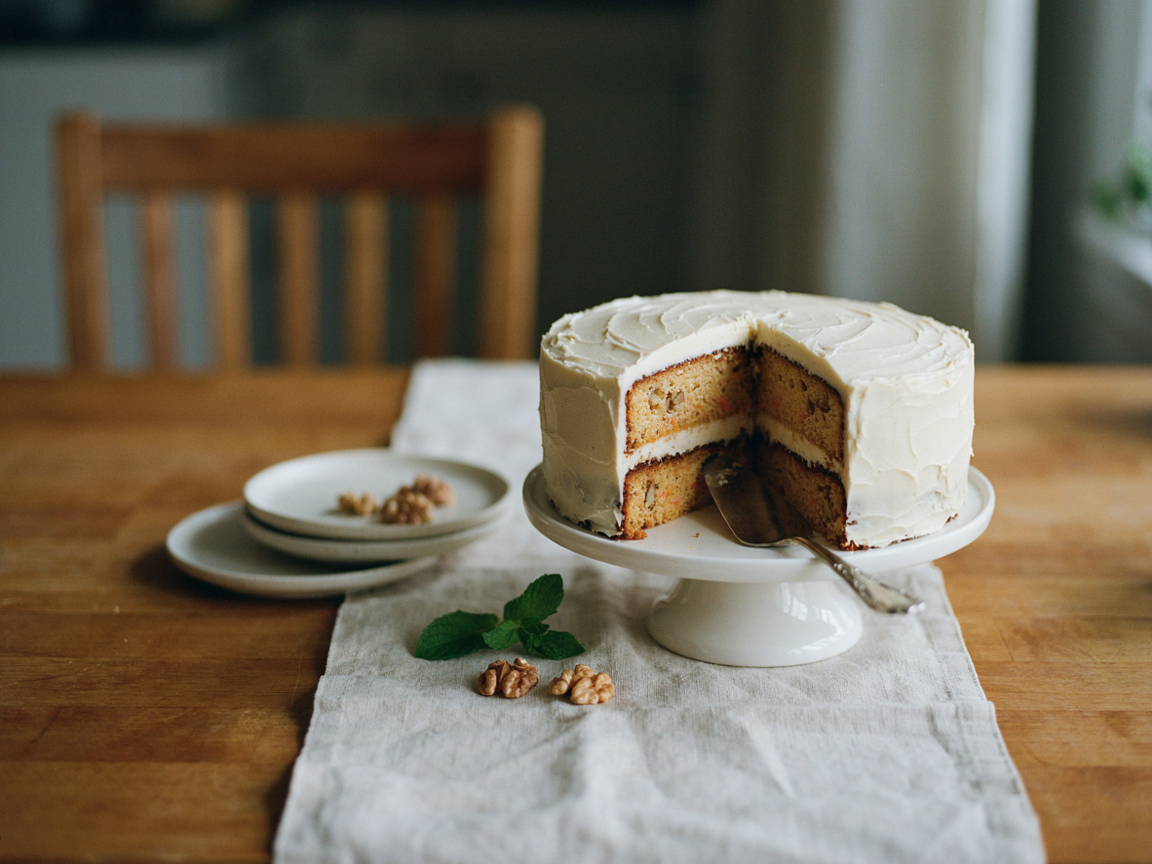
Frosted a day ahead and kept cold, this holds its swoops without weeping.
Pick your timeline:
Using it today
Frosting made and used within a couple of hours needs nothing except a cool room. Keep the bowl covered with plastic wrap pressed to the surface so it does not form a skin, and out of direct sun. If the kitchen is warm, park the bowl in the fridge between batches of cupcakes rather than leaving it on the counter.
Up to 5 days ahead
Make it, press plastic wrap onto the surface, seal in an airtight container and refrigerate for up to 5 days. It will set very firm. To use, let it stand at room temperature for about 45 minutes, then beat on low for 20 to 30 seconds to bring it back — no longer, or you will loosen it. Do not microwave it to speed this up.
Freezing — up to 3 months
It freezes well. Scoop into a freezer bag, press out the air, flatten and freeze up to 3 months. Thaw overnight in the fridge, then bring to room temperature and beat briefly as above. Expect it to look slightly separated when it first thaws — 20 seconds of low-speed beating brings it back together. Do not thaw at room temperature; the outside softens while the middle is still frozen and it splits.
Does a frosted cake need refrigerating?
Yes. Because of the dairy, a cake or cupcakes frosted with this should be refrigerated if they will sit for more than about 2 hours, and covered so the frosting does not pick up fridge smells. Take them out 30 to 60 minutes before serving — cold frosting tastes muted and the cake crumb is firm straight from the fridge. Frosted cupcakes keep 4 to 5 days refrigerated.
What to Frost With It
Tangy and rich at once, which means it works best against cakes that are sweet, spiced or dense.
Carrot cake
The classic pairing, and the reason this frosting exists. Use the brown butter variation if you want it to taste like a bakery version.
Red velvet
Cocoa and buttermilk against the tang is the whole point. Stick to classic vanilla here — anything else competes.
Banana bread and pumpkin loaf
Spread rather than piped, and slightly thinner. The spreadable consistency in the guide above is made for this.
Cinnamon rolls
Use the spreadable version and apply it while the rolls are just warm, not hot, so it melts in without sliding off entirely.
Plain vanilla or chocolate cupcakes
Where the piped version earns its keep. The lemon and strawberry variations both look and taste best on a plain crumb.
Spice cake and gingerbread
Warm spice against tang is underrated. Add a pinch of cinnamon to the frosting itself to tie the two together.
Troubleshooting
Pick whatever went wrong:
Too runny to pipe
Almost always over-beating, warm ingredients, or tub cream cheese. The fix: refrigerate the whole bowl for 20 to 30 minutes and stir gently — nine times out of ten that alone fixes it. If it is still slack, beat in 2 tablespoons of cornstarch rather than more sugar; it absorbs water without making the frosting sweeter.
Grainy or gritty
The powdered sugar has not dissolved, usually because the butter was too cold or the sugar went in all at once on high speed. The fix: keep beating on medium-low for another minute or two — it almost always comes smooth. If it does not, the frosting is too cold; let it sit 10 minutes and beat again briefly.
Lumpy with visible flecks
Cold chunks of cream cheese that never fully broke down, or unsifted sugar. The fix: press the frosting through a fine sieve with a spatula — tedious but it works completely. To prevent it next time, cut the cream cheese into small pieces before it goes in, and always sift.
Too sweet
Four cups of sugar to one block of cream cheese is a lot, and it needs balancing. The fix: add another pinch of fine salt and beat 10 seconds — salt suppresses perceived sweetness more effectively than anything else. A quarter-teaspoon of citric acid, or swapping in the lemon-zest variation, also cuts it noticeably without adding liquid.
Split, curdled or weeping liquid
The emulsion broke, usually from a big temperature gap between the butter and the cream cheese. The fix: chill the bowl 20 minutes, then beat on low — slowly and briefly — until it comes back. If it still looks broken, whip 2 tablespoons of fresh softened butter in a separate bowl and beat the split frosting into it a spoonful at a time. That rebuilds the emulsion around new fat.
Questions, Answered
Why is my cream cheese frosting too runny to pipe?
Three usual causes. You used spreadable tub cream cheese instead of a full-fat block, your butter and cream cheese were too warm, or you beat the cream cheese for too long. Cream cheese is about 55 per cent water held in an emulsion, and extended beating breaks that emulsion and releases the water into the butter. Chilling the finished frosting for 20 to 30 minutes fixes most batches.
Can I use tub cream cheese instead of a block?
No, not for frosting you intend to pipe. Spreadable tub cream cheese is deliberately thinned with extra water and stabilising gums so it stays scoopable straight from the fridge, and that extra liquid means the frosting will never firm up. Full-fat block cream cheese is the only version that sets firm enough to hold a piped shape.
How do I make cream cheese frosting stiffer without more sugar?
Chill it first, since the butter is what gives the frosting its structure and it firms as it cools. If it is still too soft after 30 minutes in the refrigerator, beat in 2 tablespoons of cornstarch, which absorbs moisture without adding sweetness. Meringue powder works the same way at about 1 tablespoon per batch.
Does cream cheese frosting need to be refrigerated?
Yes. Because of the dairy content, anything frosted with it should be refrigerated if it will sit out longer than about 2 hours, and kept covered. Take a frosted cake out of the fridge 30 to 60 minutes before serving, because cold frosting tastes muted and the cake crumb is firm straight from the refrigerator.
Can I make cream cheese frosting ahead of time?
Yes, and it keeps well. Press plastic wrap onto the surface, seal in an airtight container and refrigerate for up to 5 days or freeze for up to 3 months. Let refrigerated frosting stand at room temperature for about 45 minutes, then beat on low for 20 to 30 seconds to bring it back. Do not beat it longer than that or it will loosen again.
Why does my cream cheese frosting taste too sweet?
The sugar-to-cream-cheese ratio needed for a pipeable texture is genuinely high, so it has to be balanced rather than reduced. Add another pinch of fine salt and beat for 10 seconds, since salt suppresses perceived sweetness more effectively than anything else. Lemon zest or a little citric acid also cuts it sharply without adding any liquid.
Can I add fruit to cream cheese frosting?
Only in dried form. Fresh or frozen fruit, purees and juices all add water to a frosting whose main weakness is water, and they will make it soupy. Use freeze-dried fruit blitzed to a fine powder instead, added along with the powdered sugar. About three-quarters of a cup gives strong flavour and natural colour with no added moisture.
What is the difference between cream cheese frosting and cream cheese buttercream?
Plain cream cheese frosting is mostly cream cheese with a little butter, which makes it tangy but soft and hard to pipe. Cream cheese buttercream uses a much higher proportion of whipped butter, which gives it structure while keeping the tang. That extra butter, whipped on its own before anything else is added, is what makes this version hold a piped shape.
Keep Reading
Four more frostings and a cake to put one on.
Block cream cheese, both fats at 65°F, butter whipped alone first, cream cheese in last for under a minute. Four rules, and they matter more than any ingredient on the list.
Pin this cream cheese buttercream frosting recipe so the ratios and the consistency guide are there the next time you are halfway through a bake — then come back and tell us what you frosted with it.