
How to Sharpen a Knife with a Whetstone: Step by Step
How to sharpen a kitchen knife on a whetstone: choosing a grit, soaking, holding the angle, raising a burr, polishing and flattening the stone.
First stone: King KW65. Kit with an angle guide: Sharp Pebble 1000/6000. No soaking: Shapton Kuromaku 1000. Safety: Schwer Cut-Resistant Gloves.
Sharpening on a whetstone takes a little practice, but the steps are simple. Hold one angle, raise a burr on each side, then polish it away.
To sharpen a knife with a whetstone, soak or wet the stone and set it on a non-slip base. Hold the blade at about 15 degrees for Japanese knives or 20 degrees for German knives. Stroke one side until a burr forms along the whole edge, repeat on the other side, then finish on a finer grit.
The nine steps, an angle chart and the common mistakes follow.
Product links go to Amazon. As an Amazon Associate, Kitchen Guide 101 earns from qualifying purchases.
Whetstones and Sharpening Gear Compared
All 5 side by side. Tap any name to see it on Amazon.
| Tool | Type | Prep | Use it for | Best for | Price |
|---|---|---|---|---|---|
| King KW65 1000/6000 Combination Whetstone | 1000 / 6000 water stone | Soak | Sharpening and polishing | Your first stone | $ |
| Sharp Pebble Premium Whetstone Knife Sharpening Stone, 1000/6000 | 1000 / 6000 kit | Soak | Sharpening with an angle guide | Beginners | $ |
| Shapton Ha No Kuromaku 1000 Grit Ceramic Whetstone | 1000 ceramic stone | Splash | Quick regular sharpening | Sharpening often | $$ |
| DMT Dia-Sharp Double-Sided Diamond Sharpening Stone, Coarse and Extra Coarse | Diamond plate | Dry or wet | Chips and flattening stones | Repairs and upkeep | $$$ |
| Schwer SlicePro ANSI A9 Cut Resistant Gloves (1 Pair) | Cut-resistant gloves | Put on first | The hand guiding the blade | Safer practice | $ |
Details are as stated on each Amazon listing at time of writing and can change. Price tiers: $ lowest in this group · $$ middle · $$$ highest.
5 Tools for Sharpening on a Whetstone
Four stones and one pair of gloves. Stone picks match the ones on the best whetstones list.
King KW65 1000/6000 Combination Whetstone
A classic two-sided stone that has started many cooks sharpening. The 1000 side sets a fresh edge and the 6000 side polishes it.
It needs a soak before use, and the softer 6000 side wears faster, so flatten it now and then.
- Sets and polishes an edge
- Trusted for decades
- Low price tier
- Needs soaking
- Fine side wears fast
Sharp Pebble Premium Whetstone Knife Sharpening Stone, 1000/6000
A beginner kit with a bamboo base and an angle guide. This Old House named it the best whetstone set for beginners.
The angle guide helps hold a steady angle while the motion becomes habit. It needs a soak before use.
- Angle guide helps
- Complete starter kit
- Low price tier
- Needs soaking
- Wears faster than top stones
Shapton Ha No Kuromaku 1000 Grit Ceramic Whetstone
A hard ceramic stone that is ready with a splash of water. It cuts quickly and stays flat longer than softer soaking stones.
It has one grit only, so pair it with a finer stone for a polished edge.
- Ready in seconds
- Stays flat longer
- Fast cutting
- Single grit
- Middle price tier
DMT Dia-Sharp Double-Sided Diamond Sharpening Stone, Coarse and Extra Coarse
A diamond plate that cuts fast and never needs soaking. This Old House called it particularly hard and fast-working, and it can be used dry.
It repairs chipped edges and flattens water stones that have dished with use. Finish on a finer stone afterwards.
- Very fast cutting
- Stays flat
- Flattens other stones
- Coarse grits only
- Top price tier
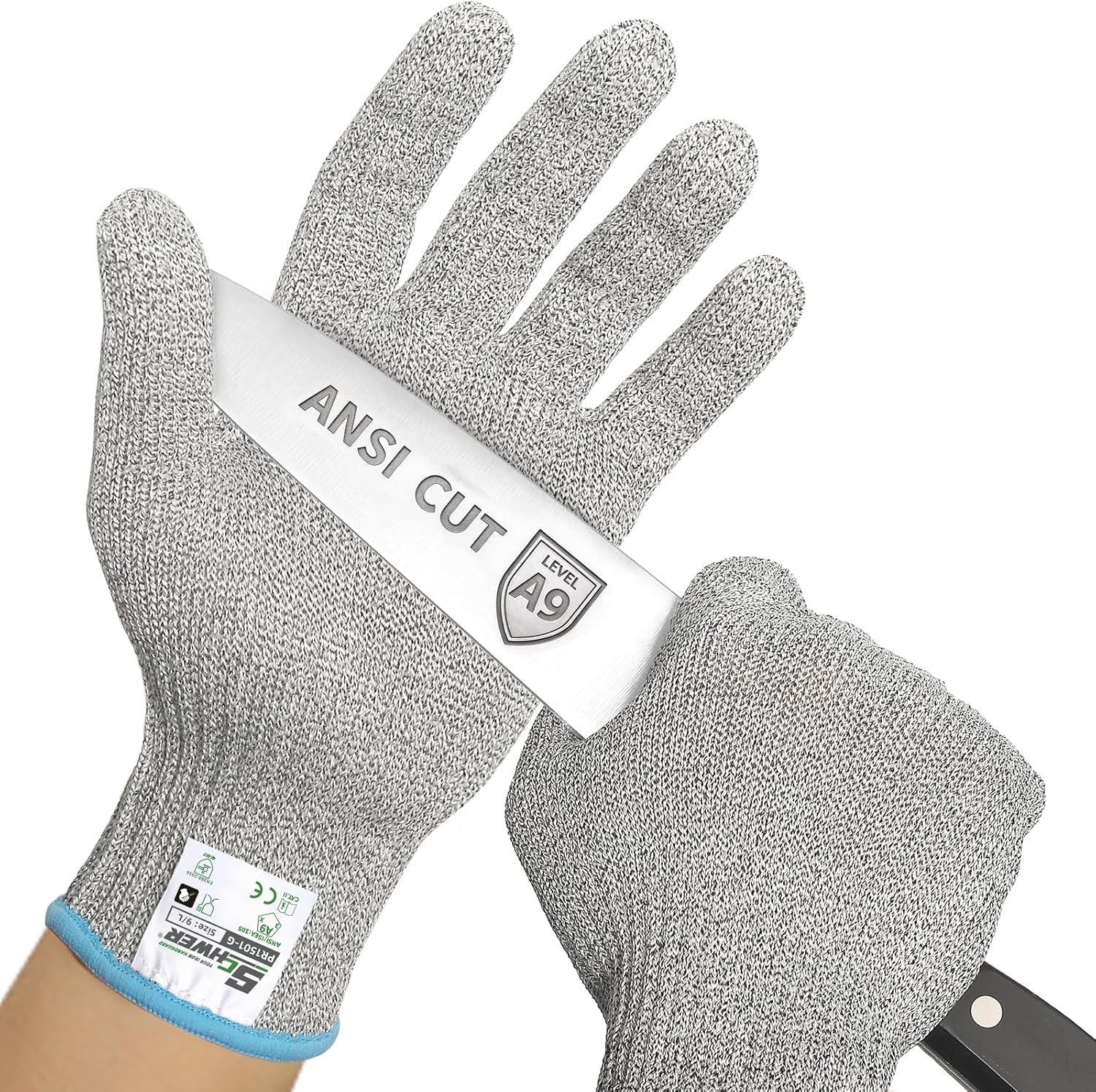
Schwer SlicePro ANSI A9 Cut Resistant Gloves (1 Pair)
Gloves knit from high-strength fibers and stainless steel, rated ANSI A9, the top of the cut scale. Wear one on the hand that guides the blade while the motion is new.
They are food grade, contain no glass fiber and come in sizes from XXS to XL. They resist cuts, not punctures.
- Top cut rating
- Food grade
- Wide size range
- Cuts, not punctures
- Still sharpen slowly
How to Sharpen a Knife with a Whetstone, Step by Step
| Step | What to do | Tip |
|---|---|---|
| 1. Prep the stone | Soak a soaking stone for 10 to 15 minutes, until bubbles stop. Splash water on a splash-and-go stone. | Never use oil on a water stone. |
| 2. Set it up | Put the stone coarse side up on its base or on a damp towel. | It must not slide. |
| 3. Find the angle | Tilt the blade to about 15 degrees for Japanese knives or 20 degrees for German knives. | Color the edge with a marker to see where the stone touches. |
| 4. Sharpen the first side | Sweep the blade across the stone from heel to tip with light, even pressure. | Keep the stone wet as you work. |
| 5. Raise a burr | Keep going until a slight burr runs along the whole opposite side of the edge. | Feel gently from the spine toward the edge. |
| 6. Switch sides | Repeat on the other side at the same angle until the burr flips back. | Count strokes to keep both sides even. |
| 7. Polish | Turn the stone to the fine side (3000 to 6000) and repeat with lighter strokes. | Lighter pressure on every pass. |
| 8. Remove the burr | Finish with a few single, alternating strokes on each side. | A leather strop also works. |
| 9. Test and clean up | Slice a sheet of paper, then rinse the knife and the stone. | Let the stone dry before you store it. |
Work in sections (heel, middle, then tip) so the whole edge gets the same number of strokes.
What Angle to Sharpen a Knife
| Knife | Angle per side | Why |
|---|---|---|
| Japanese chef knife, santoku or nakiri | About 15 degrees | Thinner, harder edges |
| German or Western chef knife | About 20 degrees | A sturdier edge |
| Serrated bread knife | No flat stone | Use a tapered rod or a serrated slot |
Not sure what angle your knife has? Color the edge bevel with a marker and make one light stroke. If the ink comes off the whole bevel, the angle matches; if it comes off only the top or the very edge, adjust.
For the grit chart and six stones, see the best whetstones.
Common Whetstone Mistakes
Rocking the angle
A wobbling wrist rounds the edge. Keep the wrist still and move with the whole arm.
Switching sides too soon
Without a full-length burr, part of the edge stays dull.
Pressing too hard
Heavy pressure tears the edge. Let the stone do the work.
Letting the stone dry
Keep it wet so the slurry can do its job.
Skipping the tip
Lift the handle slightly at the curve so the tip gets sharpened too.
Never flattening
A dished stone leaves an uneven edge. Flatten it now and then.
Between sharpenings, a honing rod keeps the edge straight. See honing steel vs whetstone.
What You Need
Five things to have on the counter.
A 1000 grit stone
Add a 3000 to 6000 grit side for polish.
For soaking or splashing
Keep the surface wet as you work.
A holder or damp towel
The stone must not slide.
Any permanent marker
Shows where the stone touches.
Cut-resistant
For the hand guiding the blade.
More knife guides: budget knife sharpeners, Japanese chef knives, knife deals and magnetic knife strips.
Whetstone Sharpening FAQs
What grit whetstone should I use?▼
1000 grit for regular sharpening. Use 400 or coarser for chips or a very dull edge, then 3000 to 6000 to polish.
What angle should I sharpen my knife at?▼
About 15 degrees per side for Japanese knives and about 20 degrees for German knives.
Do you push or pull the knife on a whetstone?▼
Either works if the angle stays steady. Many people push with the edge leading, then work the other side the same way.
How do I know when to switch sides?▼
When a slight burr runs along the whole opposite side of the edge. Feel gently from the spine toward the edge, never along it.
Do I need to soak my whetstone?▼
Soaking stones need 10 to 15 minutes, until bubbles stop. Splash-and-go stones like the Shapton Kuromaku need only a splash. Never use oil on a water stone.
How often should I sharpen my knives?▼
Every few months for most home cooks, with a honing rod in between. See honing steel vs whetstone.
Can you sharpen a serrated knife on a whetstone?▼
Not on the flat face. Use a tapered rod or a sharpener with a serrated slot, such as the Work Sharp Culinary E2.
How do I flatten a whetstone?▼
Draw a pencil grid on the stone and rub it on a flattening stone or diamond plate until the lines are gone.
The Bottom Line
- Your first stone: the King KW65; with an angle guide: the Sharp Pebble 1000/6000.
- No soaking: the Shapton Kuromaku 1000.
- Keep stones flat: the DMT Dia-Sharp Diamond.
- Safer practice: Schwer Cut-Resistant Gloves.
A steady angle, a full burr and a light finish: that is the whole skill.