
Open Shelving · Freestanding · Renter-Friendly
15 Kitchen Without Cabinets Ideas That Look Stunning and Stay Organized
Fifteen ways to store everything a run of cupboards held — on the walls, under the counter and in furniture that is not screwed to anything. With a table of exactly what to put where.
- 15 ideas
- Storage plan included
- Rental-friendly
- Costs compared
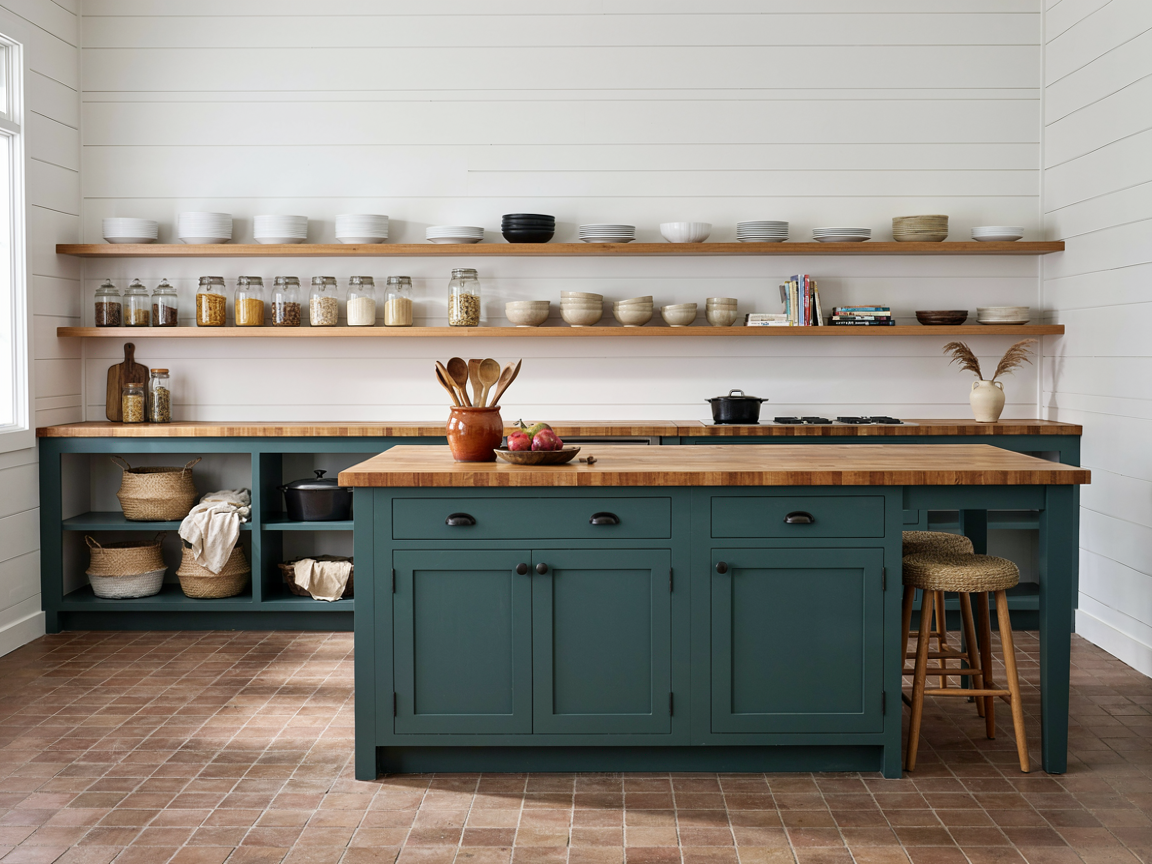
Two long oak shelves, open base storage with baskets and a freestanding island. Not one fitted wall cabinet in the room.
A kitchen without cabinets is not a kitchen without storage. It is a kitchen where the storage is chosen rather than inherited — the opposite of the cookie-cutter run every other kitchen on the street has — shelves, rails, baskets and furniture doing the job a single band of cupboards used to do, usually for a fraction of the cost.
Below are fifteen ideas, with images of each kind of kitchen, a table showing exactly where each category of kitchen clutter goes once the cupboards are gone, how the costs compare, and an honest section on what you give up. Most people reading this are only removing the upper cabinets, so there is a section for that too.
Before You Take Anything Off the Wall
Cabinet-free kitchens fail for one reason: the demolition happens before the plan. Four things make the difference.
What cabinets really do
A run of cabinets does three separate jobs: it stores things, it hides things, and it carries the countertop. Only the second one is hard to replace. Storage and surface have dozens of alternatives; concealment is the job that needs a deliberate plan.
Replace them job by job, not wall by wall
The mistake is ripping out a wall of cupboards and then wondering where the cereal goes. List what is in them first, group it by how often you reach for it, and give each group a new home before anything comes off the wall.
Daily things out, dull things hidden
Everything you touch every day can live in the open and will look like it belongs there. Cleaning sprays, carrier bags and mismatched plastic tubs will not. Those are what the one closed unit is for.
Buy the containers before the shelves
Open storage only reads as deliberate when the things on it match. Jars, baskets and tins in one or two materials do more for the look than the shelf itself ever will.
Settle the layout first. Where the sink, hob and fridge sit decides which walls are even available for storage. Our guide to kitchen layouts is worth ten minutes before you start measuring for shelves.
Where to Start, Depending on Your Situation
The right first move is not the same for everyone. Pick the one that describes you:
You are renting
Nothing on this list has to go through a wall. Start with a freestanding island or cart, add a baker’s rack or a secondhand hutch, and use a tension rod with a curtain for the under-counter run.
Everything you buy leaves with you, so treat the budget as furniture rather than renovation. Removable adhesive hooks and a magnetic strip fixed to an existing cabinet side cover the small stuff without a single drill hole.
You already have cabinets you want rid of
Do not remove anything yet. Take the doors off one run, fill and paint the openings, and live with it for a fortnight. It costs almost nothing and it answers the only question that matters, which is whether you can keep it tidy.
If you love it, carry on. If you do not, the doors go back on in an evening. Removing cabinets you already own saves no money at all, so the open-shelf look has to be the reason.
You are fitting out a kitchen from scratch
This is where going cabinet-free saves serious money, because fitted cabinetry is usually the largest single line in the whole job and you are simply not buying it.
Spend what you save on two things: a worktop you like touching, and one tall pantry unit. Those two carry the whole room, and shelves, rails and baskets can be added gradually afterwards.
You are working to a tight budget
Three things in order: a pegboard on the main wall, two timber shelves on brackets, and a secondhand hutch or baker’s rack for everything else. That combination covers a full kitchen for a fraction of cabinetry.
Buy the baskets and jars gradually rather than all at once, and buy them matching. Consistent containers are what make inexpensive open storage look considered rather than makeshift.
15 Kitchen Without Cabinets Ideas
These are the stylish, practical forms of storage that replace fitted cupboards in real kitchen designs. Most cabinet-free interiors use four or five of them together, so read them as a menu of options rather than a list. Any one of them replaces a stretch of what rows of cabinets used to hold.
Open shelving where the uppers were
Two long floating shelves in oak, walnut or painted timber carry roughly what a run of upper cabinets held, in half the visual weight. Keep the lower shelf at a height you can reach flat-footed and give the upper one the things you use weekly rather than daily.
A single long rail shelf over the counter
One continuous shelf running the full length of the wall reads calmer than two or three shorter ones, and it makes a small kitchen look wider. Add a rail along its front edge and it doubles as a hanging point for mugs and utensils.
A ceiling-mounted pot rack
Hanging cookware frees an entire base cupboard and puts the heaviest, most awkward items within arm’s reach. Fix it into joists, not plasterboard, and hang it high enough that nobody walks into a stockpot.
A pegboard wall
The most reconfigurable storage there is. Pots, pans, boards, utensils, even small shelves hang off it, and the whole arrangement can change in an afternoon. In a deep clay or forest tone it becomes the focal point of the room rather than something you try to hide.
Wall rails with S-hooks
A brass or black steel rail fixed under a shelf or along the backsplash holds pans, ladles, colanders and bunches of herbs. It is the cheapest idea on this list and the one that makes a kitchen look most like a working one.
A magnetic knife strip
Knives come out of the drawer, stop blunting each other, and take up no horizontal space at all. Fit it at the end of the counter run rather than above the hob, where the blades collect grease.
A freestanding island or kitchen cart
Prep surface, storage and seating in one piece of furniture that is not attached to anything. It can move when the room changes, and it goes with you when you do, which is why it is the single best buy for a rented kitchen.
A vintage hutch or Welsh dresser
Open shelves on top, closed cupboards below, and far more character than anything fitted. Estate sales, auctions and marketplace listings are full of them at a fraction of what the equivalent cabinetry would cost.
Open base shelving with baskets
Leave the base run open and slide woven or wire baskets into it. You get the capacity of a cupboard with none of the door hardware, and baskets pull out to the counter in one movement instead of being rummaged through.
One tall freestanding pantry
The compromise that makes everything else work. A single tall unit swallows dry goods, small appliances and cleaning supplies behind one door, which is what lets the rest of the kitchen stay open without looking chaotic.
Curtained storage under the counter
A tension rod and a length of linen hides the under-counter run completely, costs almost nothing and leaves no holes behind. It is the classic answer for a rented kitchen and it softens a room full of hard surfaces.
A coffee and tea station on a cart
Group the kettle, the grinder, the mugs and the tins on one rolling cart and the main counter stays clear every morning. Wheel it out of the way when you need the space for something else.
Deep drawers instead of base cupboards
If you are keeping a base run, drawers beat doors for everything except the sink cupboard. You see the whole contents at once instead of kneeling and reaching into the dark at the back.
Keep the boxes, lose the doors
The cheapest change on this page: unscrew the doors from the cabinets you already have, fill and paint the openings, and you have open shelving by Sunday evening. If it does not suit you, the doors go back on.
A prep pantry in the next room
A cupboard, a hallway recess or a utility room taking the appliances, the bulk shopping and the mess means the kitchen itself needs almost no storage at all. It is the reason so many cabinet-free kitchens in magazines look effortless.
Idea 14 is where to start if you are unsure. Taking the doors off the cabinets you already have costs a screwdriver and an afternoon, and it tells you within a week whether you can live with open storage. Keep the doors and the hinges in a bag. Our cabinets without doors guide covers how to finish the openings so it looks deliberate.
What to Buy for Ideas 1, 2 and 7
If you have the countertop but no cabinets at all, these are the three things we would suggest you purchase first — between them they cover shelving, surface and storage.
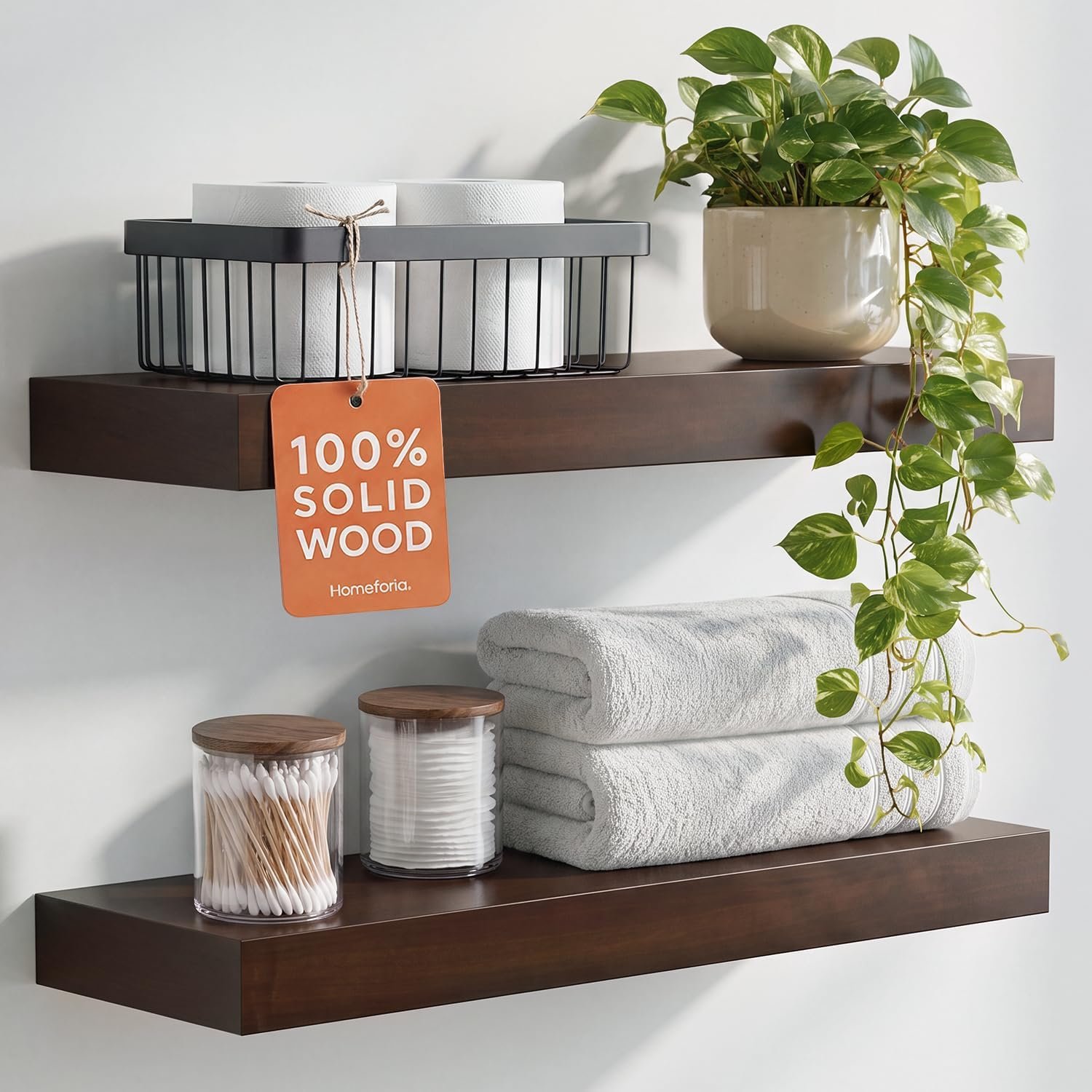
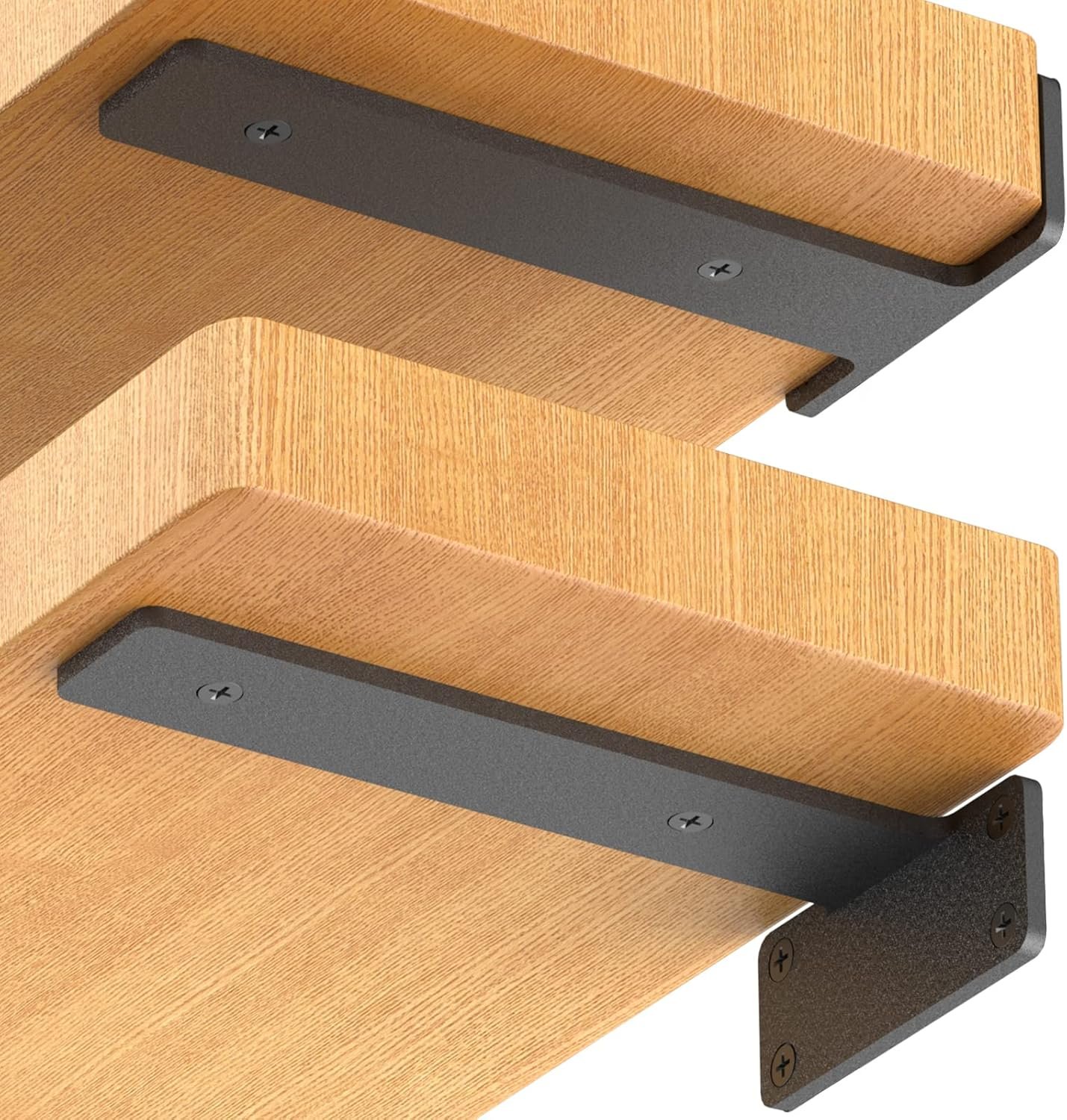
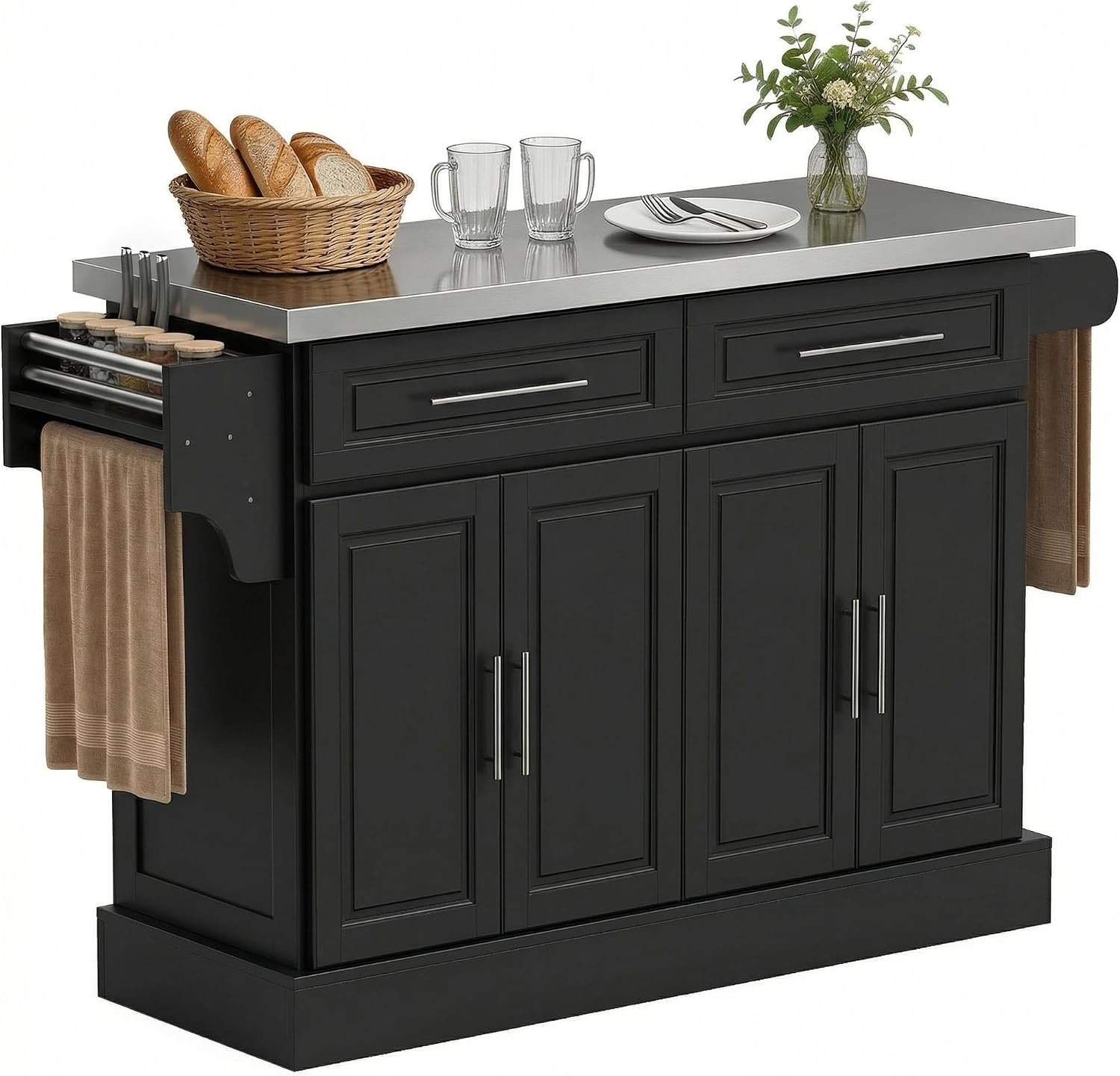
This post contains affiliate links. If you buy through one, Kitchen Guide 101 may earn a small commission at no extra cost to you.
If You Are Only Removing the Upper Cabinets
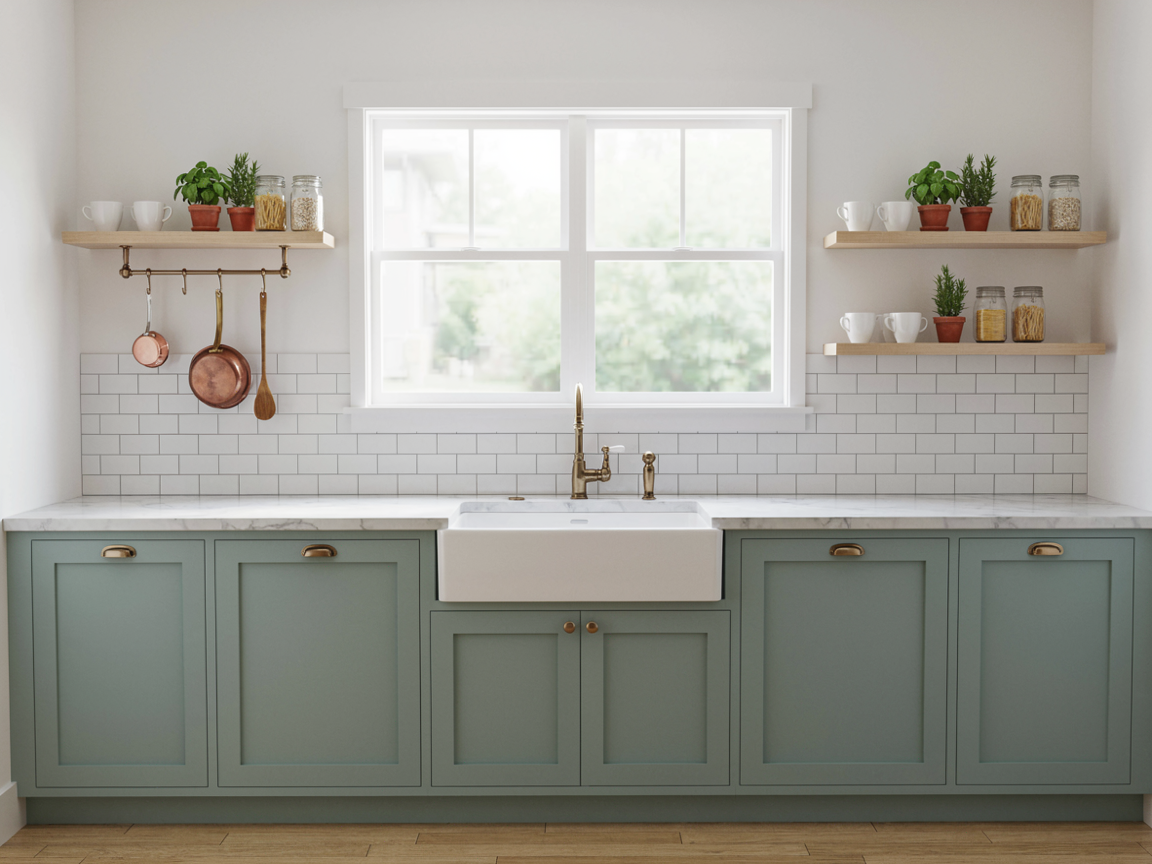
Base cabinets kept, uppers gone, short shelves stopping cleanly either side of the window.
This is what most people actually mean, and it is an easier project than going fully cabinet-free: the base run keeps carrying the countertop and the bulk of the storage, and you only have to rehouse what was above eye level.
Three things decide whether it works. Move the lost storage down before you take anything off the wall — usually into deep drawers or a freestanding pantry. Keep the wall above the hob clear or wipeable, because that is where grease settles and an open timber shelf will not forgive it. And stop shelves cleanly at the window frame rather than running them past it, which is the detail that separates the kitchens that look designed from the ones that look stripped.
We have a whole post on this one: kitchen ideas without upper cabinets goes through shelf heights, what to do above the range, and how to handle the wall you have just exposed.
And If You Are Removing the Lower or Bottom Cabinets
Removing the bottom cabinets is less common, and a different problem. The base run is doing structural work — it holds up the countertops — so it cannot simply be taken out the way the uppers can.
Keep a support run, lose the doors
The simplest route: keep the carcasses that hold the counter, take the doors off and slide baskets into the openings. The countertop stays supported and the room opens up at no structural risk.
Swap in a freestanding base
A butcher’s block, a sturdy console table or a run of trestles can carry a worktop if the span is short and the support is well placed. Longer spans need a stone or engineered top rated for it.
Open shelving between supports
Keep end panels or legs at intervals and run timber shelves between them. You get the look of open base storage with the countertop properly held up along its length.
Drawers in a freestanding unit
If what you really wanted was to stop kneeling into a dark cupboard, deep drawers in a freestanding unit solve that without touching the counter run at all.
The sink is the exception. Whatever you do elsewhere, the cupboard under the sink earns its door: pipework, waste, cleaning supplies and the bin all live there. A curtain works just as well as a door and costs almost nothing.
What to Put in Place of Cabinets: Storage Solutions by Category
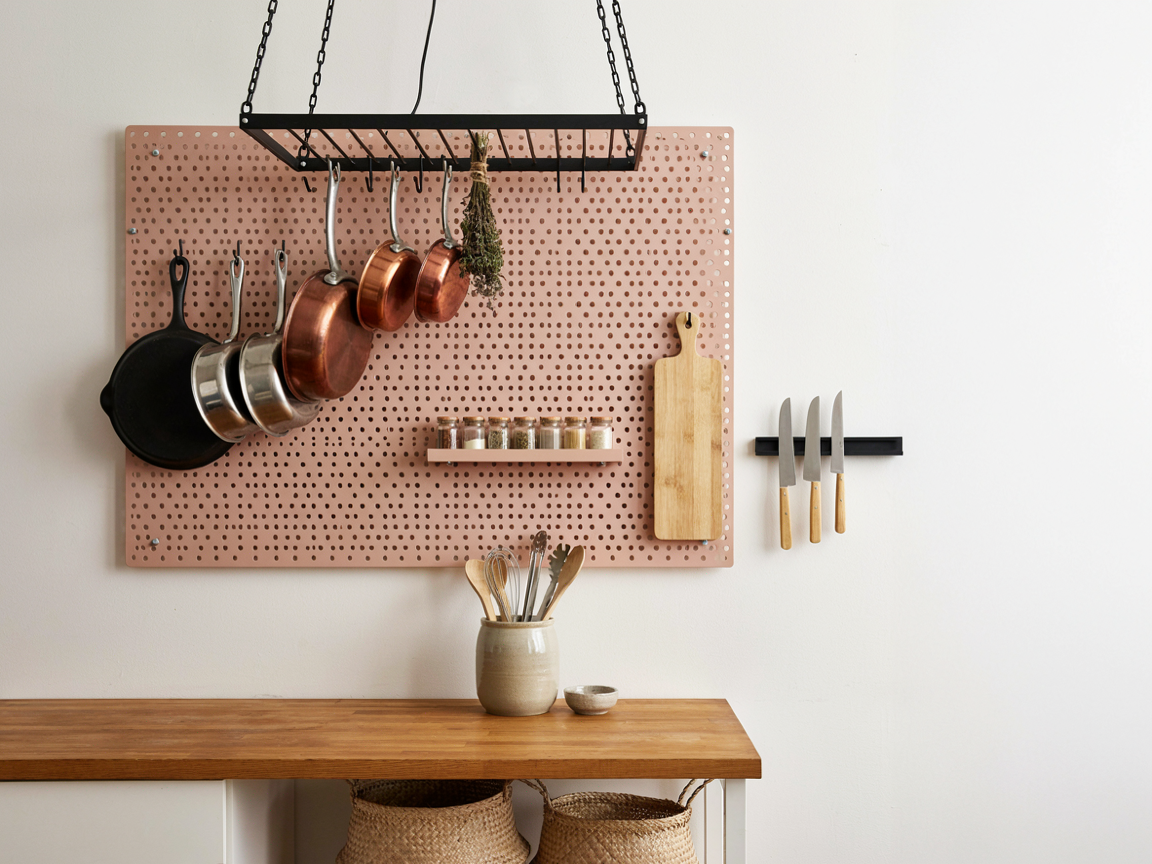
A pegboard, a hanging rack and a magnetic strip replacing an entire wall of cupboards.
This is the table to work from. Go through your cabinets category by category and give each one a destination before anything comes off the wall.
| What the cabinet held | Where it goes instead | Why it works |
|---|---|---|
| Instead ofEveryday plates, bowls and dishes | UseAn open shelf at eye level, nearest the dishwasher | What changesThe shortest possible put-away journey. Stack by size, not by set. |
| Instead ofGlasses, cups and mugs | UseThe shelf closest to the kettle or the sink; mugs on under-shelf hooks | What changesHooks under a shelf use dead air and keep the shelf itself clear. |
| Instead ofPots and pans | UseCeiling pot rack or a wall rail with S-hooks | What changesThe heaviest, most awkward items, out of the cupboard they were filling. |
| Instead ofKnives | UseMagnetic strip at the end of the counter run | What changesNot above the hob, where grease settles on the blades. |
| Instead ofDry goods | UseMatching glass jars on an open shelf | What changesBuy the jars before you fit the shelf. Mismatched packets are what make open shelving look messy. |
| Instead ofSpices | UseA narrow ledge or a pegboard rack beside the hob | What changesShallow depth is the whole point. A deep shelf hides the back row forever. |
| Instead ofSmall appliances | UseA deep base shelf or inside the freestanding pantry | What changesHeavy things belong low, and the ones you use weekly belong behind a door. |
| Instead ofCleaning supplies | UseA curtained bay under the sink or one lidded basket | What changesThis is the category that ruins an open kitchen. Hide it properly. |
| Instead ofFood storage containers | UseOne deep drawer or one lidded basket, nested | What changesLids in a separate container, nested by size. Anything that does not fit goes. |
| Instead ofRarely used serveware | UseThe highest shelf, or out of the kitchen entirely | What changesIf you use it twice a year it does not need to be in the room. |
| Instead ofBin and recycling | UseA pull-out crate in the open base run | What changesOpen base shelving makes this easier than a cupboard does, not harder. |
What to Put on the Walls and Shelves
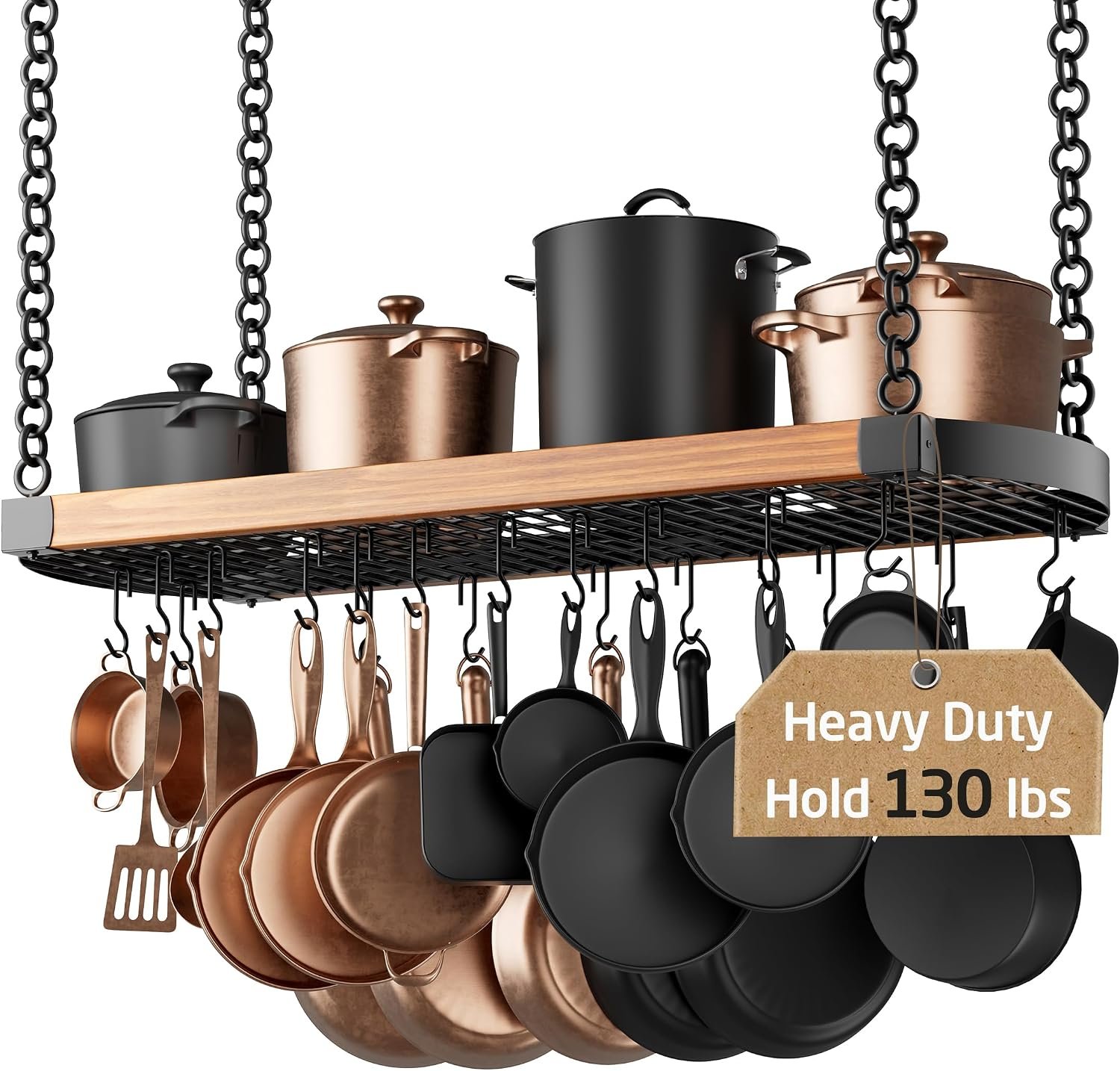
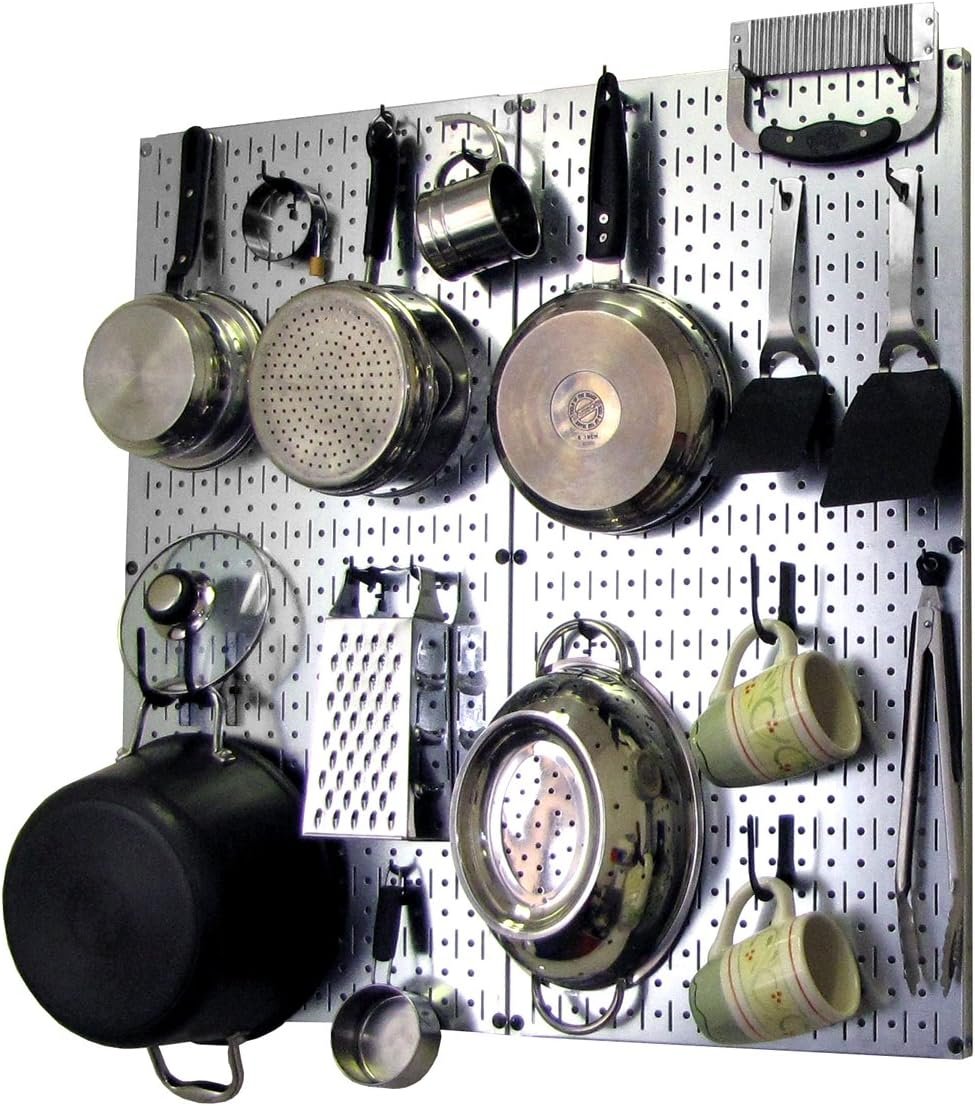
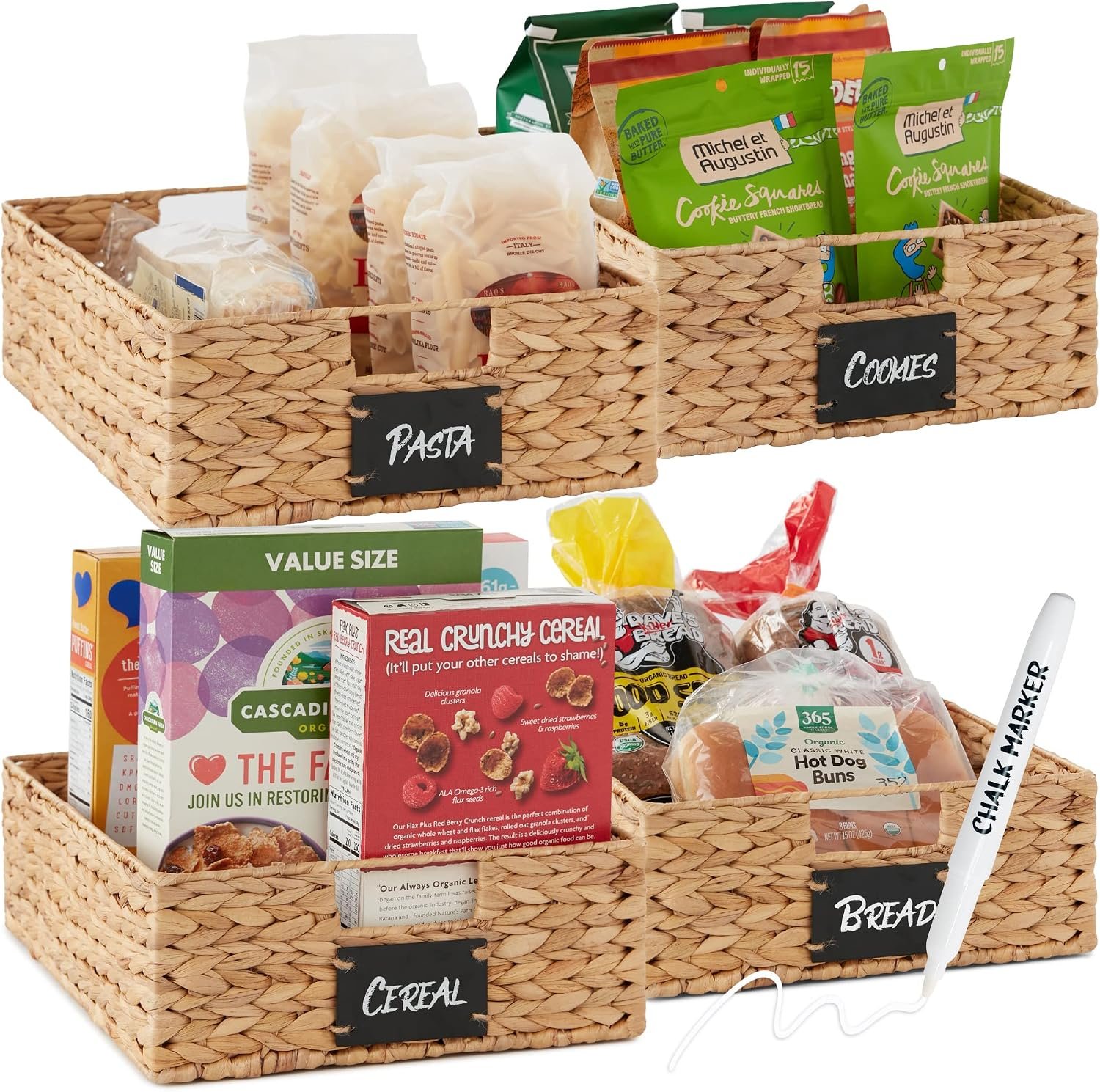
Affiliate links — Kitchen Guide 101 may earn a small commission at no extra cost to you.
If a category has no good answer in the table above, that is the category your one closed unit is for — and this is the unit.
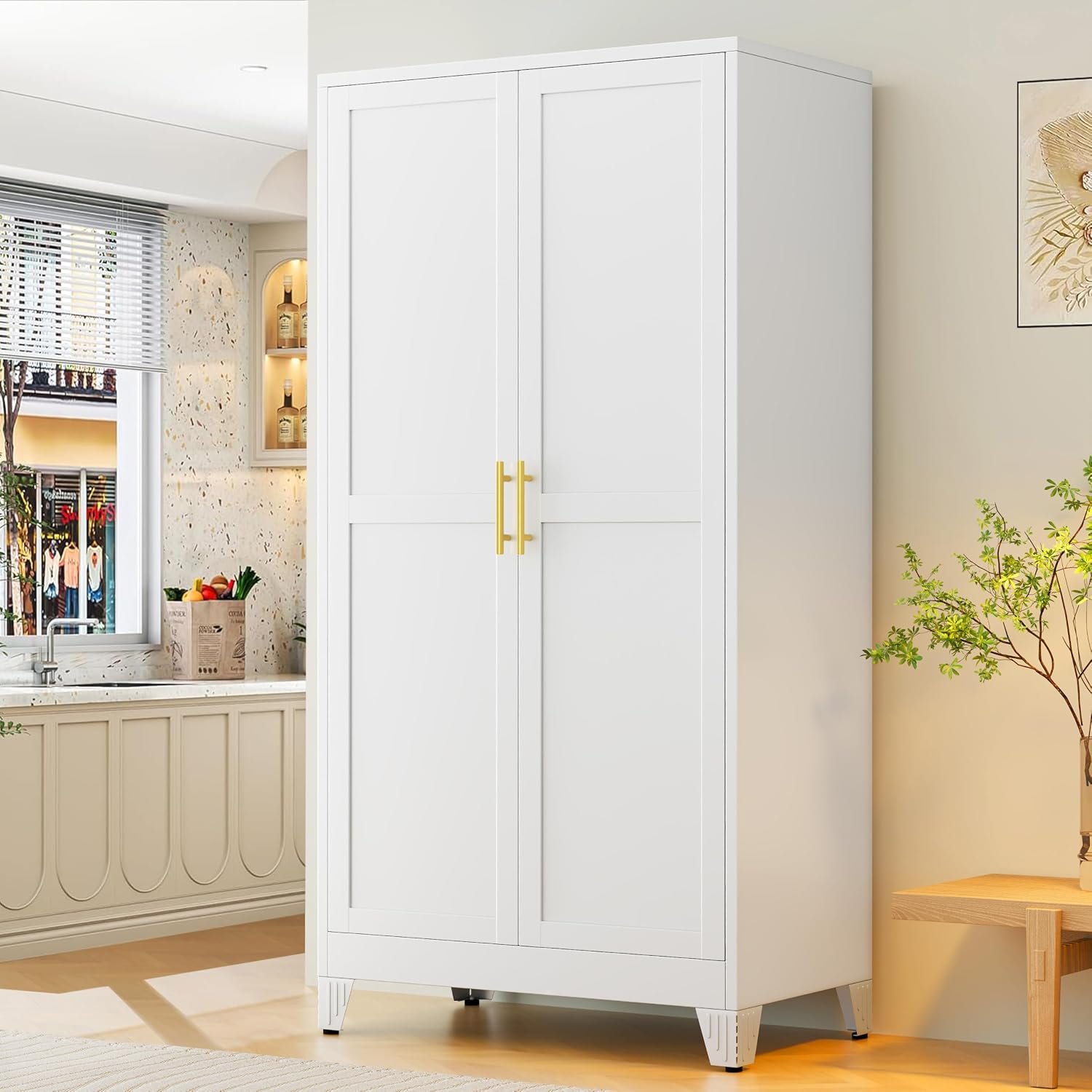
Affiliate links — Kitchen Guide 101 may earn a small commission at no extra cost to you.
What It Costs Compared to Cabinets
Costs vary enormously by country, material and who does the work, so these are relative rather than absolute — but the ranking holds almost everywhere.
| Option | Cost against fitted cabinets | Worth knowing |
|---|---|---|
| OptionFitted cabinetry | Cost against fitted cabinetsThe baseline | Worth knowingPriced per linear foot and almost always the largest single line in a kitchen renovation. |
| OptionOpen shelving, DIY | Cost against fitted cabinetsA small fraction of cabinetry | Worth knowingTimber, brackets and your own afternoon. The cost scales with the wood, not the length. |
| OptionPegboard wall | Cost against fitted cabinetsThe cheapest wall storage there is | Worth knowingA board, a tin of paint and a bag of hooks covers a whole wall. |
| OptionWall rails and S-hooks | Cost against fitted cabinetsVery low | Worth knowingSold by the metre. Brass costs more than steel and ages better. |
| OptionCeiling pot rack | Cost against fitted cabinetsLow to moderate | Worth knowingThe rack is cheap; fixing it into joists properly is the part worth care. |
| OptionFreestanding pantry | Cost against fitted cabinetsModerate | Worth knowingWatch for floor models and discontinued finishes, which are often heavily reduced. |
| OptionSecondhand hutch or dresser | Cost against fitted cabinetsVaries widely | Worth knowingEstate sales and marketplace listings. Measure the ceiling height before you fall in love. |
| OptionRemoving existing doors | Cost against fitted cabinetsClose to nothing | Worth knowingFiller, paint and a screwdriver. Keep the doors and the hinges in case you change your mind. |
Where the savings actually are. Going cabinet-free saves the most when you are fitting out a kitchen from scratch. If you already own the cabinets, removing them costs money and saves none — which is the strongest argument for taking the doors off first and seeing how it feels.
What You Give Up
Every version of this post online lists the upsides. These are the four things worth knowing before you commit, whether you want to decorate a kitchen around a few remaining cupboards or go fully unfitted.
Dust is real, grease is worse
Open shelves collect both, and the shelf nearest the hob collects the most. Things you use daily never sit long enough to gather dust — which is the real argument for putting only daily items in the open.
You have to stay tidy
A cabinet forgives a messy half hour; an open shelf does not. If the kitchen is usually mid-chaos, keep one closed unit more than you think you need.
Heights change the plan
Open shelving puts everything in reach, which is excellent until there are small children in the room. Put breakables and knives high, and keep the lowest shelf dull.
Think about resale honestly
A buyer who wants a conventional kitchen will mentally price in replacing the cabinets. Freestanding and reversible choices protect you here — furniture leaves with you, and doors can go back on.
Kitchen Without Cabinets: Common Questions
What can I use instead of kitchen cabinets?
Open shelving, a freestanding island or cart, a vintage hutch, a ceiling pot rack, a pegboard wall, wall rails with hooks, a magnetic knife strip, open base shelving with baskets, one tall freestanding pantry, and curtained storage under the counter. Most cabinet-free kitchens use four or five of those together rather than relying on any single one.
What do you put in place of upper cabinets?
Open shelving is the usual answer, but it is not the only one. A single long rail shelf, a pegboard panel, a wall rail with S-hooks, a magnetic knife strip or simply bare wall with good tiling all work. Whatever you choose, move the storage you lose down into deep drawers or a freestanding pantry rather than hoping it will fit somewhere.
Is a kitchen without cabinets practical?
Yes, if you plan it by category rather than by wall. Work out what the cabinets currently hold, decide where each group is going, and keep one closed unit for cleaning supplies, bulk packets and the things that will never look good on display. Kitchens that fail without cabinets are the ones where the demolition came before the plan.
How do you get enough storage in a kitchen without cabinets?
By using the walls and the floor rather than one band of upper cupboards. Walls take shelves, rails, pegboards and racks; the floor takes a freestanding island, a pantry unit and baskets under the counter. Between them they usually hold more than the cabinets did, because nothing is lost at the back of a deep shelf.
Is it cheaper to have a kitchen without cabinets?
Usually, and often by a lot. Fitted cabinetry is priced per linear foot and is typically the biggest line in a kitchen renovation, while shelving, pegboard, rails and secondhand furniture cost a fraction of it. The savings are largest when you are fitting out a kitchen from scratch rather than removing cabinets you already own.
Do open shelves get dusty and greasy?
They do, and the shelf nearest the hob gets the worst of it. The practical fix is to keep only things you use daily in the open, because they are taken down and washed often enough that nothing settles. Put anything used monthly or less behind a door or out of the kitchen.
Can you have a kitchen without lower cabinets?
Yes. Replace the base run with open shelving and baskets, a freestanding table or butcher’s block, or a run of deep drawers in a freestanding unit. The one thing to plan for is the countertop, which still needs something to sit on, so keep a support run or choose a worktop designed to span.
What about kitchens with no cabinets at the windows?
The walls around windows are where upper cabinets look worst and open shelving looks best. Run short shelves either side of the window and stop them cleanly at the frame so the glass stays unobstructed, or skip shelves entirely and let the window be the feature. A rail under the shelf on the darker side keeps that wall useful.
How do you organise a kitchen without cabinets?
Group by frequency first and by category second. Daily items go at eye level nearest where they are used, weekly items go higher or lower, and anything rarer leaves the room. Then unify the containers, because matching jars and baskets are what make open storage read as organised rather than cluttered.
Does removing kitchen cabinets hurt resale value?
It can, if the changes are permanent and unusual. Buyers who want a conventional kitchen will price in putting cabinets back. Reversible choices protect you: freestanding furniture leaves with you, doors removed from existing boxes can be rehung, and shelving comes off a wall with a screwdriver and some filler.
Can renters design a kitchen without cabinets?
This is where the approach works best, because almost everything on the list is freestanding or temporary. A rolling island, a hutch, a bakers rack, a tension rod with a curtain and a pantry unit all arrive without a single screw in a wall, and all of them come with you when you move.
What is a kitchen without cupboards called?
There is no single term. You will see it described as open-plan storage, an unfitted kitchen, a freestanding kitchen, or simply a kitchen without wall units. Unfitted is the one designers tend to use, and it describes the idea well: furniture that stands on its own rather than a continuous run built into the walls.
What goes above the stove if there are no upper cabinets?
Keep it clear, or keep it wipeable. A tiled or stainless splashback with nothing on it is the easiest to live with, since that area takes the most heat and grease. If you want storage there, a narrow stainless ledge or a rail with S-hooks cleans in seconds, which an open timber shelf does not.
How do you set up a kitchen if you cannot afford cabinets?
Start with a sturdy worktop on a simple base, add two timber shelves on brackets, and put a pegboard on the wall for pans and tools. Then look for a secondhand hutch or a baker’s rack for everything else. That combination costs a small fraction of fitted cabinetry and can be assembled one piece at a time as money allows.
More Cabinet-Free Kitchen Ideas
The three versions of this project that deserve their own guide.
Plan it by category, keep one closed unit for the things that will never look good on a shelf, and start by taking the doors off something before you take anything off a wall.
Pin this so the kitchen without cabinets storage table is there when you start emptying the cupboards.