
How to Make Sourdough Bread Without a Dutch Oven (Easy Beginner Method)
Quick Answer: Can You Make Sourdough Without a Dutch Oven?
Yes — you absolutely can. A Dutch oven only does one job: it traps steam for a crispy crust and big oven spring. Recreate that steam with a pan of hot water plus a hot baking stone or sheet pan, and you get the same golden, open-crumb loaf. Bake at 500°F for 20 minutes with steam, then 450°F for 20–25 minutes uncovered.
- Easiest methodWater-pan steam + baking stone
- Oven temp500°F → 450°F
- Bake time40–45 minutes total
- No special gearSheet pan + metal pan for water
- Skip the folds?Yes — no-knead variation below
- Best forBeginners & small kitchens
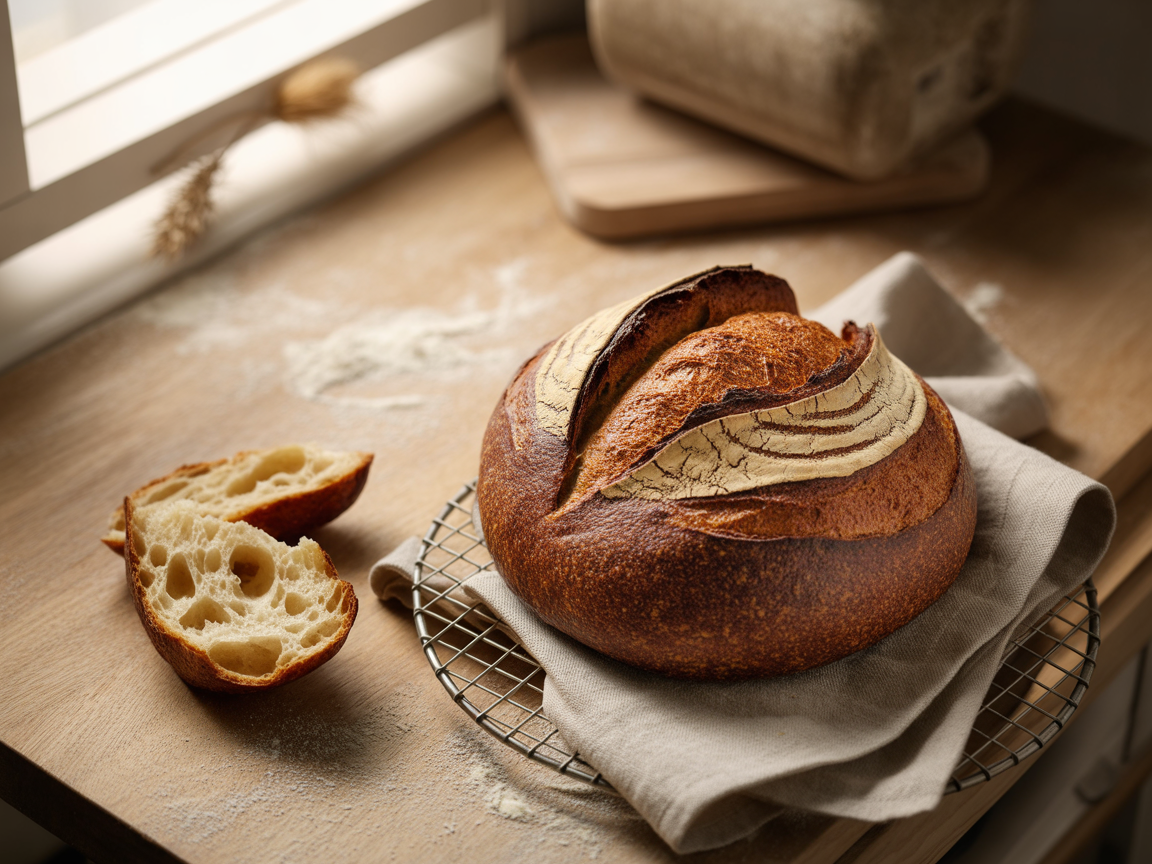
So you want to bake sourdough bread without a Dutch oven? Good news: you don’t need one. Many home bakers assume a Dutch oven is essential for that shatteringly crisp crust — but all it really does is trap steam, and there are several simple ways to do that with tools you already own. This guide gives you a full fool-proof recipe plus six no-Dutch-oven baking methods, exact temperatures, and easy beginner variations.
Why Dutch Ovens Aren’t Essential for Sourdough
Dutch ovens became the go-to for one reason: steam retention. During the first phase of baking, steam keeps the crust soft so the dough can expand fully — that’s what creates dramatic oven spring and a crackly exterior. But a Dutch oven isn’t the only way to make steam.
Any method that traps heat and moisture around the loaf will work. Professional bakeries use steam-injection ovens; at home, a pan of hot water on the bottom rack does the same thing. Pizza stones, cast iron skillets, loaf pans, and even an inverted baking pan all get you there. Your kitchen probably already has a solution waiting.
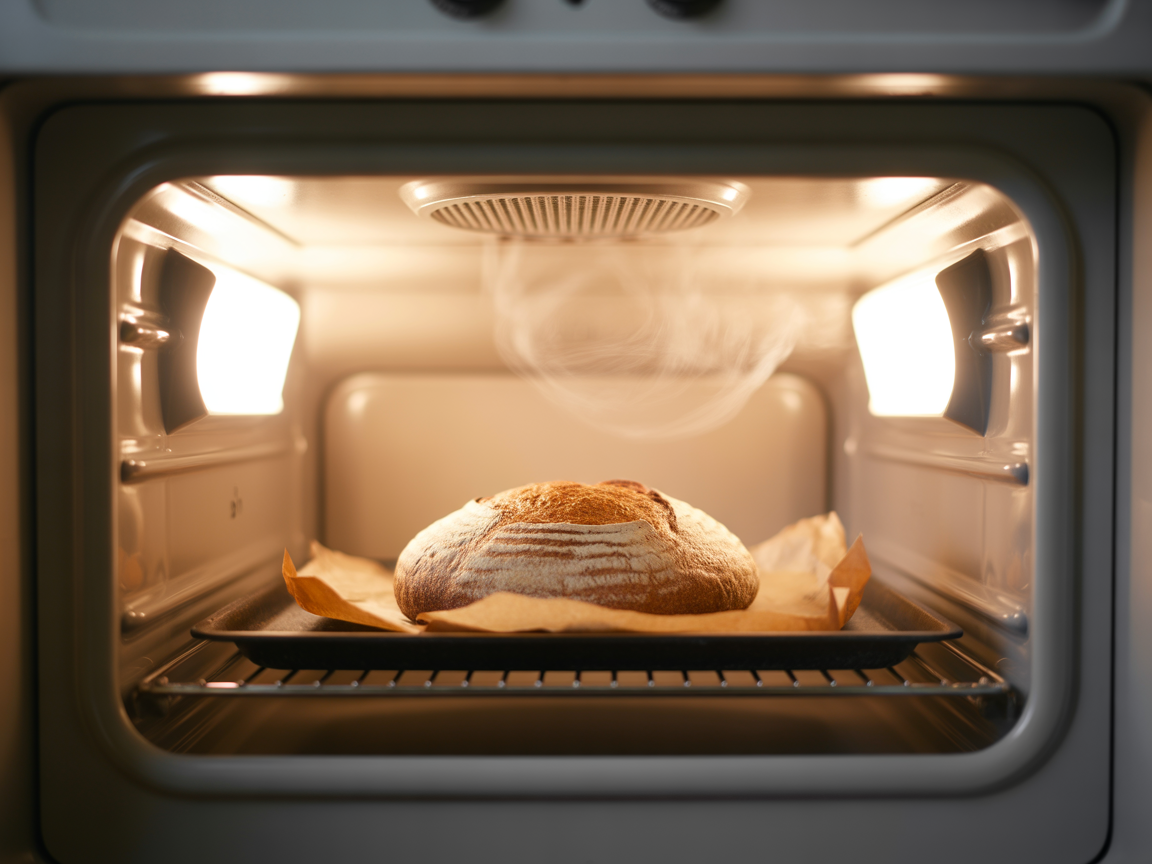
Easy No-Dutch-Oven Sourdough Bread Recipe
This is a beginner-friendly recipe measured in both grams and cups. It uses a simple water-pan steam method — and if you’d rather not do stretch-and-folds, there’s a no-knead variation right below it.
Easy No-Dutch-Oven Sourdough Bread
A golden, shatteringly crispy sourdough boule with a pillowy open crumb — baked without a Dutch oven using a simple steam method any beginner can master.
🧇 Ingredients
- 450g (3½ cups) bread flour, plus extra for dusting
- 300ml (1¼ cups) lukewarm filtered water
- 100g (½ cup) active sourdough starter, fed and bubbly
- 9g (1½ tsp) fine sea salt
- 1 tsp olive oil (for coating the bowl)
- Rice flour for dusting the banneton (optional)
- 1 cup hot water — for the steam tray, not mixed into the dough
📝 Instructions
- Autolyse. In a large bowl, mix the bread flour and lukewarm water until no dry flour remains. Cover and rest 30–45 minutes.
- Add starter & salt. Add the bubbly starter and sea salt. Dimple them in with your fingers and squeeze through until fully incorporated.
- Stretch & fold. Over the next 3–4 hours at room temperature, do 4 sets of stretch-and-folds every 30 minutes. The dough should turn smooth, elastic and slightly domed. (Prefer to skip this? See the no-knead variation below.)
- Bulk ferment. Cover and let the dough rise at room temperature (75°F/24°C) for 4–6 hours, until it has grown 50–75% with visible bubbles on the surface and sides.
- Shape. Turn out onto a lightly floured surface. Pre-shape into a rough round, rest 20 minutes, then do a final tight shaping — fold the edges toward the center, flip seam-side down, and drag toward you to build surface tension.
- Cold proof. Place seam-side up in a rice-flour-dusted or linen-lined banneton. Cover tightly and refrigerate overnight (8–16 hours) for better flavor and easier scoring.
- Preheat (no Dutch oven). Put a baking stone or inverted sheet pan on the center rack and an empty metal pan on the bottom rack. Preheat to 500°F (260°C) for at least 45 minutes.
- Score. Flip the cold dough onto parchment. With a sharp lame or razor, score one deep diagonal slash at a 30° angle, about ½ inch deep.
- Create steam. Slide the dough (on parchment) onto the hot stone. Immediately pour 1 cup of hot water into the empty metal pan below and close the door fast.
- Bake with steam. Bake at 500°F (260°C) for 20 minutes with the steam pan in place.
- Bake uncovered. Remove the steam pan, drop the oven to 450°F (232°C), and bake another 20–25 minutes until the crust is deep mahogany and the internal temp reads 205–210°F (96–99°C).
- Cool. Transfer to a wire rack and wait at least 1 hour before slicing — the crumb finishes setting as it cools.
- Float test: drop a spoonful of starter in water — if it floats, it’s ready. This is the single biggest factor for a good rise.
- Steam is everything: the first 20 minutes of steam keep the crust soft for maximum oven spring — it replaces the Dutch oven lid.
- Flour matters: bread flour (12–14% protein) gives the most open crumb; all-purpose works but bakes a little denser.
- Storage: keep cut-side down at room temperature up to 3 days, or slice and freeze up to 3 months. A bread box keeps the crust crisp longer.
6 Ways to Bake Sourdough Without a Dutch Oven
The recipe above uses the water-pan method, but any of these six will give you a crackly crust. Pick whichever matches the gear you already own.
1. Water Pan + Stone
Preheat an empty metal pan on the lower rack. Slide your loaf onto a hot stone or sheet pan, then pour 2 cups of boiling water into the pan and shut the door fast to trap the steam.
Best for: total beginners with no special tools.
2. Pizza Stone + Foil Tent
Heat a pizza stone 45 min at 475°F. Slide the loaf (on parchment) onto it and loosely tent with foil, shiny side down, for the first 20–25 min, then uncover to brown.
Best for: a crisp, even bottom crust.
3. Inverted Baking Pan
Bake on a hot sheet pan and cap the loaf with a second pan turned upside-down like a dome for the first 25 min. Remove it (carefully — steam!) and finish 12–15 min uncovered.
Best for: using only what’s in the cupboard.
4. Loaf Pan Method
Shape the dough to fit a standard loaf pan and drop it in. Cover with foil or a second inverted pan for the first 20 min at 450°F, then uncover and bake 20–25 min. Great for easy, sliceable sourdough.
Best for: sandwich loaves & no shaping skills.
5. Cast Iron Skillet
Either pour boiling water into a preheated skillet on the lower rack for steam, or bake the loaf right in the skillet, tented with foil. Cast iron’s thermal mass builds a superb crust.
Best for: bakers who already own cast iron.
6. Baking Cloche
A ceramic cloche works exactly like a Dutch oven but lighter. Preheat 30 min at 475°F, bake covered 25–30 min, then uncover 10–15 min. The one purchase worth making if you bake often.
Best for: frequent bakers wanting consistency.
🍽️ No lid, or a torn Dutch oven lid?
If your Dutch oven lid ripped, warped, or went missing, you don’t need to replace it. Any oven-safe cover works as a stand-in — an inverted metal bowl, a heat-safe glass bowl, or a foil tent over the loaf traps exactly the same steam for the first 20 minutes. Just make sure it clears the top of the dough as it rises.
What Temperature & How Long to Bake?
The exact numbers shift slightly by method, but the pattern is always the same: hot with steam first, then a little cooler to brown. Here’s the cheat sheet:
| Method | Steam / Covered Phase | Uncovered Phase |
|---|---|---|
| Water pan + stone | 500°F · 20 min | 450°F · 20–25 min |
| Pizza stone + foil | 475°F · 20–25 min | 475°F · 15–20 min |
| Inverted pan | 450°F · 25 min | 450°F · 12–15 min |
| Loaf pan | 450°F · 20 min | 450°F · 20–25 min |
| Cast iron skillet | 450°F · 20–25 min | 450°F · 15 min |
| Cloche | 475°F · 25–30 min | 475°F · 10–15 min |
Easy Variations
👷 No-Knead / No Stretch-and-Fold Version
Short on time or hands? Skip the four sets of folds entirely. After mixing in the starter and salt (step 2), simply cover the bowl and let it bulk ferment undisturbed for 8–12 hours at cool room temperature. The long, slow fermentation builds structure on its own. Give it one gentle fold before shaping if the dough feels slack, then continue from the shaping step. The crumb is a touch tighter than the folded version, but it’s genuinely hands-off. A stand mixer can also do the initial mix if you’d rather not use your hands at all.
🌾 Whole Wheat & Other Flours
Swap up to 50% of the bread flour for whole wheat for a nuttier, heartier loaf — add a splash more water, since whole wheat drinks more. Want to go all-in on wholegrain flavor? Try our sourdough rye bread recipe. Baking gluten-free? That needs a dedicated formula rather than a straight swap.
❄️ Air Fryer & Small-Batch
An air fryer with a bread setting can bake a small boule — preheat, add a few ice cubes or a spritz of water for steam, and bake at about 380°F for 25–30 minutes, checking early since air fryers run hot. And don’t toss your sourdough discard — it makes excellent crackers and chips.
Tips for Success Without a Dutch Oven
- Your oven matters more than your gear. Most home ovens have hot and cool spots — an oven thermometer keeps you honest, since even a few degrees changes the crust.
- Never skip scoring. Slashing the top controls where the loaf expands — even more important without a Dutch oven.
- Proof properly. Under- or over-proofed dough won’t bake well no matter the method. Bulk fermentation and shaping matter as much as the oven trick.
- Keep the door shut for the first 20–25 minutes — that’s when oven spring happens and every peek lets steam escape.
Common Mistakes to Avoid
- Opening the door too early — it releases the steam and collapses your oven spring. Wait at least 20 minutes.
- Using cold water for steam — only boiling or very hot water flashes to steam instantly on a hot pan.
- Skipping the preheat — a cold oven and cold baking surface give you dense, pale, soft-crusted bread.
- Flimsy pans for the inverted method — thin pans warp and won’t seal; use heavy-duty ones.
Sourdough Without a Dutch Oven: FAQ
Can you make sourdough bread without a Dutch oven?
Yes. A Dutch oven only traps steam for a crisp crust, and you can recreate that with a pan of hot water plus a hot baking stone or sheet pan. A loaf pan, cast iron skillet, inverted pan, or cloche all work too.
What can I use instead of a Dutch oven for sourdough?
A baking stone or inverted sheet pan with a pan of hot water for steam is the easiest swap. Other options are a pizza stone with a foil tent, an inverted baking pan as a dome, a loaf pan, a cast iron skillet, or a ceramic cloche.
What temperature do you bake sourdough without a Dutch oven?
Bake at 500°F (260°C) for the first 20 minutes with steam, then reduce to 450°F (232°C) and bake 20–25 minutes uncovered. The loaf is done at an internal temperature of 205–210°F (96–99°C).
How do I make sourdough without a Dutch oven lid?
If your lid ripped or is missing, cover the loaf with an inverted metal or heat-safe glass bowl, or a loose foil tent, for the first 20 minutes. Any oven-safe cover that traps steam and clears the rising dough works as a lid substitute.
Can I bake sourdough in a loaf pan instead of a Dutch oven?
Yes. Shape the dough to fit a standard loaf pan, cover with foil or an inverted pan for the first 20 minutes at 450°F, then uncover and bake another 20–25 minutes. It makes an easy, sliceable sandwich-style sourdough with no shaping skills needed.
Can I make sourdough without stretch and folds?
Yes — use the no-knead variation. After mixing in the starter and salt, cover and let the dough bulk ferment undisturbed for 8–12 hours, then shape and bake as usual. The crumb is slightly tighter but the process is completely hands-off.
Do I need a baking stone or cast iron to bake sourdough without a Dutch oven?
No. A heavy inverted sheet pan works in place of a baking stone, and any metal pan can hold the hot water that makes steam. Cast iron and a stone improve heat retention but are not required.
How do I get a crispy crust without a Dutch oven?
Steam is the secret. Keep a pan of hot water in the oven for the first 20–25 minutes so the crust stays soft long enough to spring, then remove the steam and bake uncovered until deep mahogany brown. Add more water if your crust is coming out pale.
Can you bake sourdough in an air fryer without a Dutch oven?
A small boule can bake in an air fryer with a bread setting. Preheat, add a spritz of water or a few ice cubes for steam, and bake around 380°F for 25–30 minutes, checking early because air fryers run hot and bake small batches only.
Why is my sourdough flat without a Dutch oven?
A flat loaf usually means the starter wasn’t active enough, the dough over-fermented, or shaping left too little surface tension — not the missing Dutch oven. Do the float test, watch the bulk rise, and shape tightly for a taller loaf.
Final Thoughts
Baking sourdough without a Dutch oven is not only possible — it’s genuinely easy once you know the steam trick. Start with the water-pan method (it needs the least gear), or reach for the loaf pan if you’d rather skip shaping. Nail one method, then experiment: every oven behaves a little differently, and the best technique is the one that fits your kitchen. Now go bake a beautiful loaf — you’ve got this.