
Any Cooker Size · Any Rice · One Ratio That Always Works
Spanish Rice in a Rice Cooker — Fluffy Every Time, Any Cooker Size
The liquid ratio written out for 3-cup, 4-cup, 6-cup, 8-cup and 10-cup cookers, what changes if your rice is jasmine or sticky rather than long grain, and the one measuring mistake that makes rice cooker Spanish rice mushy.
- Hands-off cooking
- 5 cooker sizes
- 7 kinds of rice
- Printable card
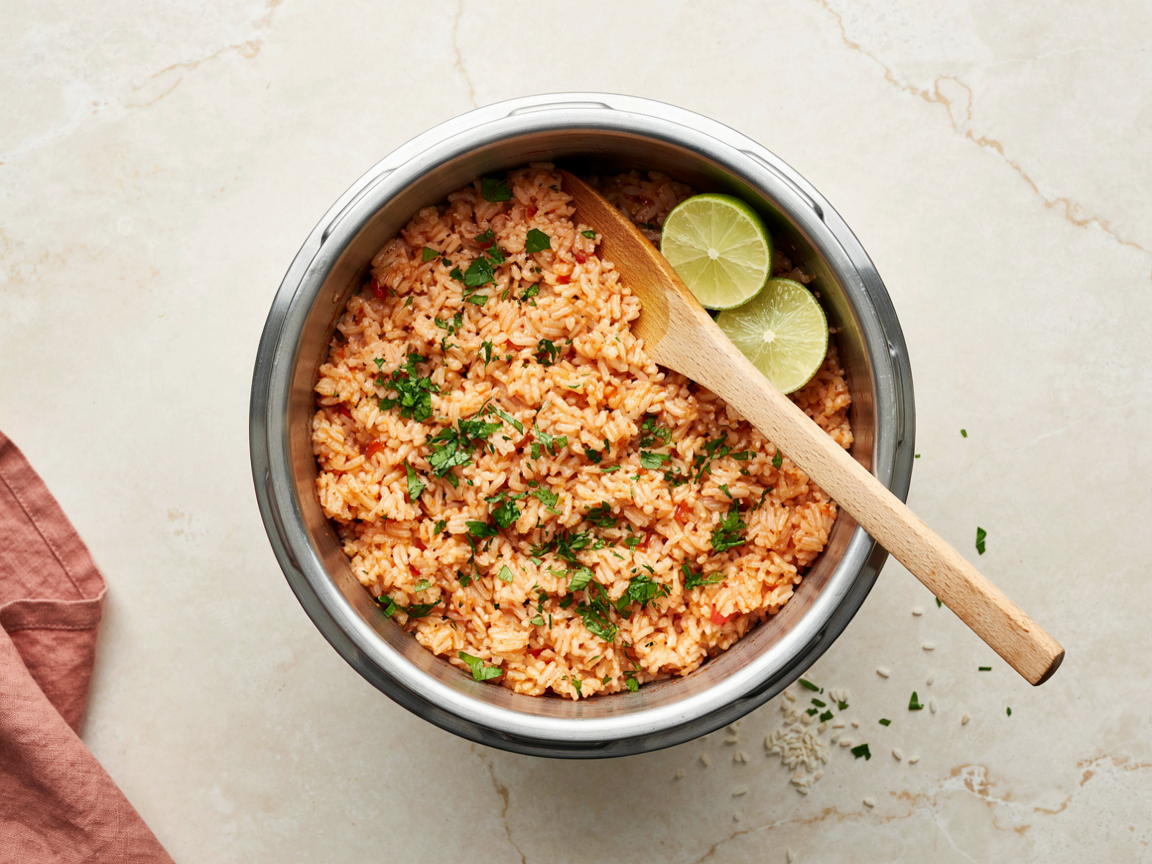
Fluffed with a fork, lifting from the bottom rather than stirring. Ten minutes of resting first.
Spanish rice in a rice cooker is almost entirely hands-off, and almost everyone gets it wrong the same way the first time. It comes out soft, a bit sticky, more like tomato risotto than the separate red grains you were after.
There is one reason for it, and it is a measuring mistake rather than a cooking one. The tomato sauce is part of your liquid, not extra to it. Get that right and a rice cooker will produce better Spanish rice than a pan, because it never loses steam and it never needs stirring.
The Ratio, and How It Scales to Your Cooker
1 cup rice : 1½ cups total liquid
Total means tomato sauce plus broth added together — not broth with tomato poured in afterwards.
Rice cooker sizes are quoted in the cooker’s own little plastic cup, which holds about 180 ml, and the number is the maximum uncooked rice it takes. The amounts below are in standard US cups, and they deliberately sit below each cooker’s maximum — Spanish rice foams more than plain rice because of the oil and the tomato.
| Your cooker | Its max | Rice to use | Total liquid | Serves |
|---|---|---|---|---|
| Your cooker3-cup, the mini | Its max2¼ US cups | Rice to use1 cup | Total liquid1½ cups | Serves2–3 |
| Your cooker4-cup | Its max3 US cups | Rice to use1½ cups | Total liquid2¼ cups | Serves3–4 |
| Your cooker6-cup — the base recipe | Its max4½ US cups | Rice to use2 cups | Total liquid3 cups | Serves4–6 |
| Your cooker8-cup | Its max6 US cups | Rice to use3 cups | Total liquid4½ cups | Serves6–8 |
| Your cooker10-cup and larger | Its max7½ US cups | Rice to use4 cups | Total liquid6 cups | Serves8–10 |
If your cooker is not on the list, take two thirds of its maximum uncooked capacity and use that much rice, then multiply by 1.5 for the liquid. A cooker that holds 5 US cups of rice takes 3⅓ cups for this recipe with 5 cups of liquid. The ratio never changes; only the headroom does.
Spanish Rice in a Rice Cooker Recipe
Rice Cooker Spanish Rice
Toasted long grain rice with tomato, cumin and smoked paprika, cooked hands-off in the rice cooker and fluffed with a fork.
What size is your cooker?
Ingredients
- 1 cup2 cups3 cups4 cups long grain white rice
- 1 tbsp2 tbsp3 tbsp¼ cup oil
- ¼ medium½ medium¾ medium1 medium onion, finely diced
- 1234 garlic cloves, minced
- ½ cup1 cup1½ cups2 cups plain tomato sauce or passata
- 1 cup2 cups3 cups4 cups chicken or vegetable broth
- ½ tsp1 tsp1½ tsp2 tsp ground cumin
- ½ tsp1 tsp1½ tsp2 tsp chilli powder
- ¼ tsp½ tsp¾ tsp1 tsp smoked paprika
- ½ tsp1 tsp1½ tsp2 tsp fine salt
- 2 tbsp¼ cup6 tbsp½ cup fresh coriander, chopped
- ½11½2 lime, cut into wedges
Instructions
Rinse the rice until the water runs nearly clear
Three or four changes of cold water in a sieve, rubbing the grains gently with your fingers. You are washing off loose surface starch, and that starch is the single biggest cause of gluey rice cooker rice. Drain it well — water clinging to the grains counts toward your liquid.
Toast the rice in oil until it smells nutty
Heat the oil in a skillet over medium heat, add the drained rice and stir for 3 to 4 minutes until the grains turn chalky-white at the edges and smell faintly like popcorn. This is what makes Spanish rice fluffy instead of soft, because the oil coats each grain and stops it releasing starch into the pot. If your cooker has a sauté or brown function, do this step in the cooker bowl and skip the skillet.
Soften the onion and garlic in the same pan
Push the rice aside, add the diced onion and cook 2 minutes until translucent, then the garlic for 30 seconds more. Stir in the cumin, chilli powder, smoked paprika and salt and let them toast for another 30 seconds — dry spices need fat and heat to release, and stirring them into liquid later does almost nothing.
Tip everything into the cooker and stir once
Scrape the rice mixture into the cooker bowl, pour in the tomato sauce and the broth, and stir once to combine. Once. Stirring rice repeatedly in a cooker knocks starch off the grains and is the other half of the gluey problem. Level the surface with the back of a spoon and close the lid.
Run the plain white rice cycle and do not open the lid
Use the standard white rice setting, not a mixed-rice or sushi program. A one-switch cooker will click to warm by itself. Do not lift the lid to check — a rice cooker works by trapping steam, and every peek costs you liquid and time.
Rest 10 minutes, then fluff with a fork
Leave the lid closed for 10 minutes after it clicks off. This is not optional politeness — it lets the moisture even out between the wet bottom and the drier top. Then fluff with a fork, lifting from the bottom rather than stirring, and finish with chopped coriander and a squeeze of lime.
Roughly, per serving
Made with vegetable broth this is fully plant-based. Adding a can of beans takes it to roughly 360 calories a serving with about 9g of protein.
This is an estimate, not a lab analysis.
Which Rice to Use
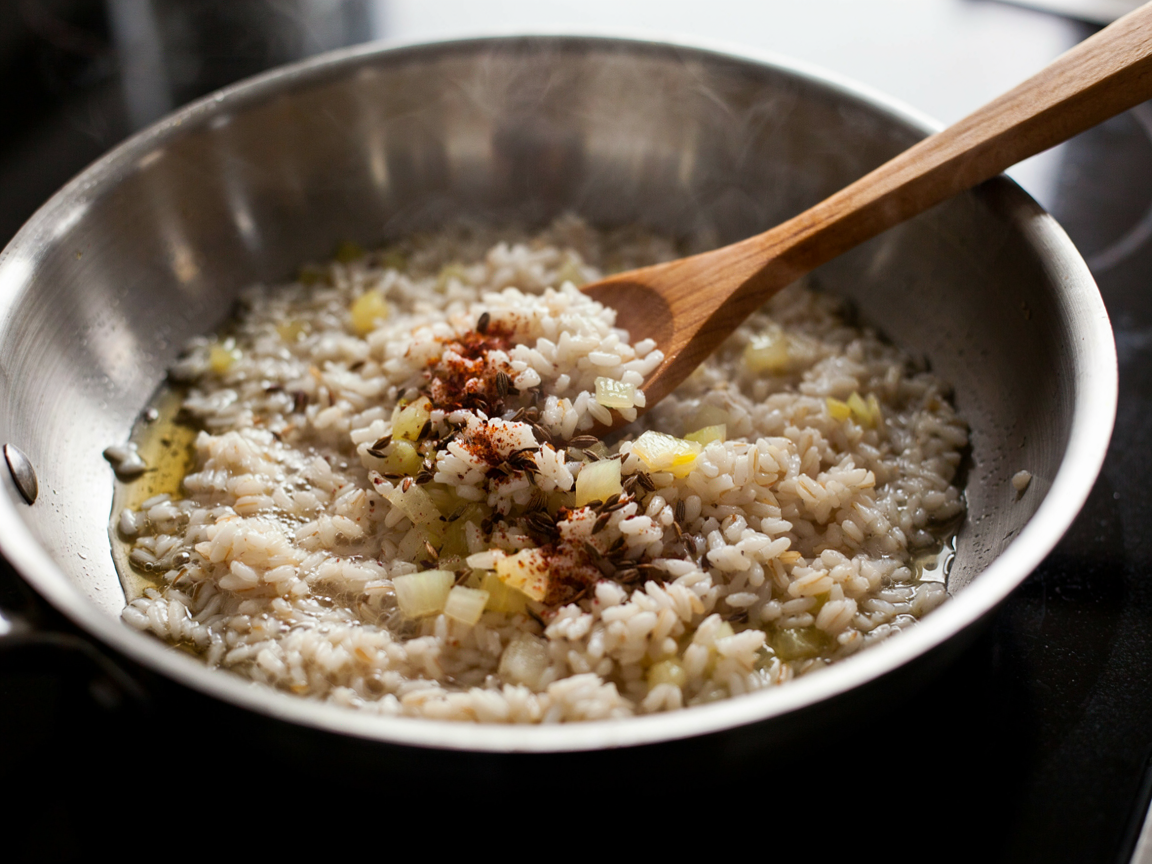
Toasted until the grains go chalky at the edges and smell like popcorn. Three or four minutes.
The rice you have decides your liquid, and it is the second most common reason a batch goes wrong. These are per cup of dry rice, and they are total liquid including the tomato.
| Rice | Total liquid per cup | What changes |
|---|---|---|
| RiceLong grain white | Total liquid per cup1½ cups | What changesThe default this recipe is written for. Separate grains, classic texture, most forgiving |
| RiceBasmati | Total liquid per cup1½ cups | What changesThe driest, longest grain of all and excellent here. Soak 15 minutes first and rinse very well |
| RiceJasmine | Total liquid per cup1⅓ cups | What changesFragrant and naturally softer. Cut the liquid or it goes soft in the middle |
| RiceMedium grain | Total liquid per cup1⅓ cups | What changesSlightly clingy rather than separate. Reduce the liquid and accept a softer result |
| RiceShort grain, sushi or sticky rice | Total liquid per cup1¼ cups | What changesIt will be sticky, not fluffy — that is what the grain does. Rinse very thoroughly and cut the liquid hard |
| RiceParboiled or converted | Total liquid per cup1¾ cups | What changesAlmost impossible to make gluey. The one to use if previous attempts went wrong |
| RiceBrown long grain | Total liquid per cup2¼ cups | What changesUse the brown rice setting, 45 to 50 minutes. Toast it the same way |
On sticky rice specifically: you can absolutely make Spanish rice with it and it will taste right, but it will cling, because that is what the grain is built to do. Rinse it through four or five changes of water, cut the liquid to 1¼ cups, and think of the result as a soft Spanish rice rather than a failed fluffy one. No technique makes short grain rice behave like long grain.
What Kind of Rice Cooker You Have
The method barely changes, but one detail does in each case:
The one-switch cooker
A single cook-to-warm lever and nothing else — the most common kitchen cooker there is. It has no sauté function, so toast the rice in a skillet first. It decides the rice is done by sensing when the free liquid has gone, and tomato solids can make it click early; if the rice is still firm, stir in a quarter cup of hot broth and press cook again.
The fuzzy-logic or micom cooker
The kind with a menu of programs and a digital display. Use the plain white rice program, not the mixed-rice, sushi or porridge setting — mixed-rice programs add soaking time that turns a tomato-based rice soft. Cycles run longer than a one-switch cooker, which is normal and produces a better result.
A cooker with a sauté or brown function
The easiest version of this recipe. Toast the rice and soften the onion directly in the cooker bowl, then add the liquid and switch to the rice program. One pot, nothing else to wash, and no heat lost transferring.
Large and commercial cookers
The ratio does not change with scale — 1 cup of rice to 1½ cups of total liquid holds all the way up. What does change is stirring: in a deep pot, stir once at the very start to distribute the tomato, then leave it entirely alone. Fill no more than two thirds of the bowl.
The Four Things That Make It Fluffy
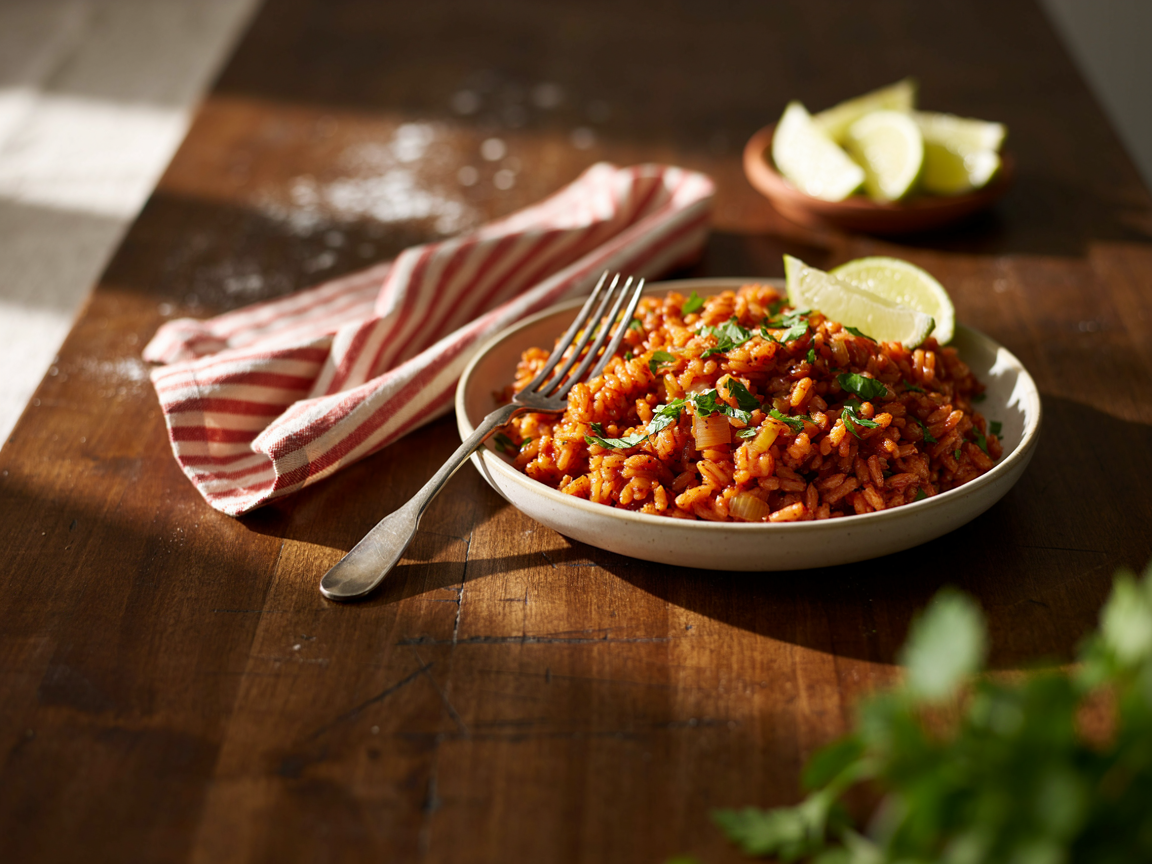
Separate grains, not a mass. That is rinsing and toasting, not luck.
Rinse, and actually rinse
Three or four changes of water until it runs nearly clear. Loose surface starch is what glues grains together, and a quick single rinse does not remove it.
Toast the grains in oil first
Three or four minutes until they smell nutty. The oil coats each grain and slows starch release during cooking. This is the step people skip and it is the one that separates fluffy from soft.
One stir, then hands off
Stir once after the liquid goes in to distribute the tomato, then close the lid and leave it. Every subsequent stir, and every lift of the lid, costs you texture.
Rest ten minutes before fluffing
The bottom of the pot is wetter than the top when the cycle ends. Ten minutes with the lid on evens it out, and fluffing with a fork — lifting, not stirring — keeps the grains whole.
If you only do one of them, make it the toasting. Rinsing helps, resting helps, restraint helps — but the oil coating each grain is what actually stops the starch escaping, and it is the step that separates Spanish rice from rice cooked in tomato sauce.
Six Variations
Same cooker, same ratio, pick your version:
Spanish rice and beans
Add one drained, rinsed 15 oz can of pinto or black beans at the very start, with the liquid. Beans carry moisture, so drop the broth by a quarter cup per can. In a 4-cup cooker this means 1½ cups of rice, 2 cups total liquid and one can of beans, which fills it comfortably and serves four.
The salsa shortcut
Replace the tomato sauce, onion, garlic and all the spices with an equal volume of jarred salsa — 1 cup of salsa for a 6-cup cooker batch. Still toast the rice first. It is a genuinely good shortcut and cuts the prep to about four minutes; a chunky salsa gives you a more rustic rice, a smooth one a more traditional look.
Tomato-forward
Take the tomato sauce to 1½ cups and the broth down to 1½ cups, keeping the 3 cups total. Deeper red, fuller tomato flavour, and slightly softer grains — tomato has sugar in it, which changes how the rice cooks. Add a teaspoon of tomato paste with the spices for more colour without more liquid.
Spicy
One finely diced jalapeño in with the onion, a quarter teaspoon of cayenne with the dry spices, and a chipotle in adobo mashed into the tomato sauce. Build the heat into the fat at the toasting stage rather than adding chilli at the end, where it sits on top rather than running through.
One-pot with chicken
Nestle 1 lb of boneless chicken thighs, cut into 2-inch pieces and seasoned, on top of the rice before you close the lid. Do not stir them in. They steam through in the same cycle and their juices run down into the rice. Check they have reached 165°F before serving and add 5 minutes on warm if not.
Brown rice version
Same method, but 2¼ cups of total liquid per cup of brown rice and the brown rice setting, which runs 45 to 50 minutes. Toast it exactly the same way. Brown rice is far less prone to going gluey, so this is the forgiving version.
What Goes Wrong
Pick whatever happened:
It came out mushy
Too much total liquid, almost always because the tomato sauce was added on top of the usual water rather than counted as part of it. The fix: tomato sauce, salsa and broth all count toward the 1½ cups of liquid per cup of rice. Next time, measure the tomato first and make up the difference with broth. To rescue this batch, spread it on a tray and let it steam off for 10 minutes.
It was crunchy in the middle
The cooker clicked off early, which tomato-based rice does because the sensor reads thickened sauce as dryness. The fix: stir in a quarter cup of hot broth, close the lid and press cook again. It will usually run a short second cycle and finish properly. Do not add cold liquid — it drops the pot temperature and the cooker may not restart.
It was gluey and stuck together
Unrinsed rice, or too much stirring. The fix: rinse until the water runs nearly clear, toast the grains in oil before anything wet goes near them, and stir exactly once after the liquid goes in. Those three things together are the whole difference between fluffy and gluey.
It burned on the bottom
Tomato sugars scorching against the hot plate. The fix: make sure the rice is level and fully submerged before you close the lid, and never let a Spanish rice sit on warm for more than about 20 minutes. If your cooker runs hot, adding the tomato sauce on top and stirring it in at the very end of the cycle avoids it entirely.
It tasted flat
The spices went in with the liquid instead of into the hot oil. The fix: toast cumin, chilli powder and paprika in the pan with the onion for 30 seconds before anything wet arrives. Also use broth rather than water — water is a missed opportunity in a dish where every grain absorbs it.
The cooker overflowed
Too full. The fix: Spanish rice foams more than plain rice because of the oil and the tomato, so fill to about two thirds of the cooker’s maximum rather than to the top. The table above already builds that headroom in.
Questions, Answered
Can I make Spanish rice out of sticky rice in a rice cooker?
You can cook it, but it will not be fluffy — short grain, sushi and sticky rice varieties are high in the starch that makes grains cling, and no technique changes that. If it is what you have, rinse it very thoroughly through four or five changes of water, toast it in oil, and cut the liquid to 1¼ cups per cup of rice. You will get a soft, clumping Spanish rice that tastes right and eats more like a risotto. For genuinely separate grains you need long grain, basmati or parboiled rice.
How much liquid do I use for Spanish rice in a rice cooker?
One and a half cups of total liquid per cup of long grain white rice — and the word total is the important one. The tomato sauce counts toward it. For a 6-cup cooker that means 2 cups of rice with 1 cup of tomato sauce plus 2 cups of broth, which is 3 cups of liquid altogether. Adding tomato sauce on top of the normal amount of water is the single most common reason rice cooker Spanish rice comes out mushy.
Can I use salsa instead of tomato sauce?
Yes, and it is a very good shortcut. Swap an equal volume of jarred salsa for the tomato sauce and you can drop the onion, garlic and spices entirely, since the salsa already has them — 1 cup of salsa for a 6-cup cooker batch. Still toast the rice in oil first, because that step is doing something the salsa cannot. A chunky salsa gives a rustic result, a smooth one looks more traditional.
Do I really have to toast the rice first?
It is the difference between Spanish rice and tomato-flavoured rice. Toasting coats each grain in oil, which slows how fast it gives up starch, and that is what keeps the grains separate. If your cooker has a sauté function you can do it in the bowl; otherwise it is one skillet and four minutes. Skip it and the rice will still be edible, just softer and more uniform.
Can I make Spanish rice and beans in a 4-cup rice cooker?
Yes, and it fills one nicely. Use 1½ cups of rice, 2¼ cups of total liquid — that is ¾ cup tomato sauce plus 1½ cups broth — and one drained, rinsed 15 oz can of pinto or black beans added at the start. Beans bring moisture, so knock a quarter cup off the broth. That serves three to four generously.
Which setting should I use?
The plain white rice program, every time. Avoid mixed-rice, sushi and porridge settings, which add soaking or extra liquid time that turns tomato-based rice soft. On a one-switch cooker there is only the one lever, which is fine. For brown rice, use the brown rice setting and 2¼ cups of liquid per cup.
Why did my rice cooker click off before the rice was done?
Because thickened tomato sauce reads as dryness to the cooker’s sensor, which is measuring temperature at the bottom of the bowl rather than whether your rice is cooked. Stir in a quarter cup of hot broth, close the lid and press cook again — it will run a short second cycle and finish. Always use hot liquid; cold liquid drops the pot temperature and some cookers refuse to restart.
Count the tomato as liquid, rinse the rice, toast it in oil, stir once, and rest it ten minutes before the fork goes near it. That is the entire recipe, and it works in any cooker on the table above.
Pin this Spanish rice in a rice cooker so the cooker-size chart is there the next time you are staring at a bag of rice and a tin of tomatoes.