
Creamy Thai Red Curry With Chicken: Easy One-Pot Dinner in 30 Minutes
Golden-seared chicken and sweet red pepper in a velvety coconut sauce built on fried red curry paste, balanced with fish sauce, palm sugar and lime. One pot, thirty minutes, over jasmine rice.
- 30 minutes, one pot
- Dairy-free
- Mild to hot, your call
- Printable recipe
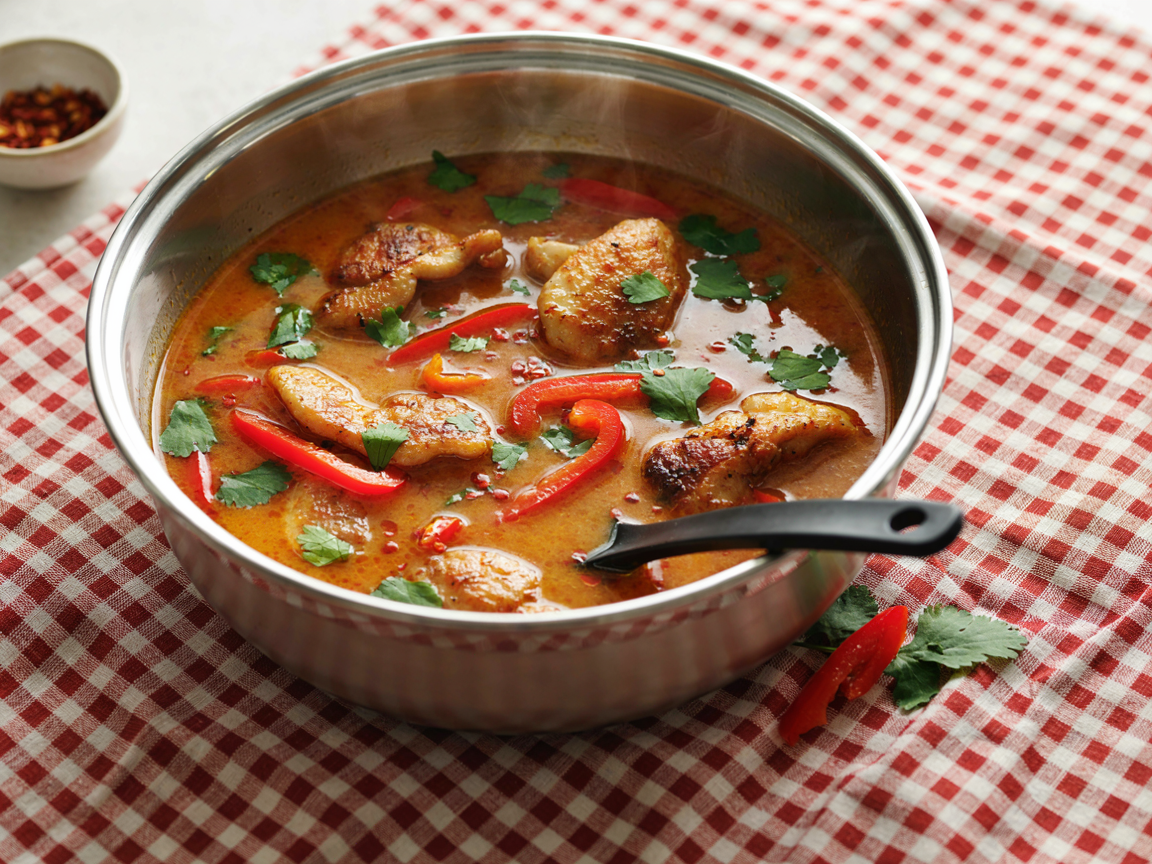
The pot from the pin: orange-red coconut curry with seared chicken, red pepper strips and cilantro.
A good Thai red curry tastes slow-cooked but takes 30 minutes, and the secret is frying the paste twice: first in oil, then in the thick cream from the top of the coconut milk can. Seared chicken and red pepper go into the same pot, and the sauce is balanced with fish sauce, sugar and lime at the very end.
In this post:
- Why this curry works
- The ingredients, and what each one does
- The recipe, scaling from 2 to 8
- Four rules for a creamy, unsplit sauce
- How hot to make it, and how to balance it
- Which vegetables to add, and when
- Six versions: shrimp, butternut, vegetarian, green
- Serving, storage, troubleshooting and 14 FAQs
Why This Thai Red Curry Works
Thirty minutes, one pot
Ten minutes to slice, twenty to cook. The chicken, vegetables and sauce all happen in the same pan, and the rice cooks alongside.
Restaurant depth from a jar
Frying the paste in oil, then frying it again in the thick coconut cream, is what turns a jar of paste into a curry that tastes slow-cooked.
Creamy without cream
Full-fat coconut milk at a gentle simmer gives the velvety, orange-red sauce on the pin. No dairy, and it does not split.
Balanced at the end
Salty fish sauce, sweet palm sugar and sour lime go in by taste in the last minute, so every jar of paste comes out right.
Ingredients for Thai Red Curry With Chicken
Thai red curry paste
The backbone: dried red chillies, lemongrass, galangal, garlic and shallot. Jars vary a lot in heat and salt, so start with less and add.
Full-fat coconut milk
Do not shake the can. The thick cream on top is fried with the paste; the thin milk underneath becomes the sauce. Light coconut milk splits and tastes watery.
Chicken thighs or breast
Thighs stay tender if the curry simmers a little long; breast is leaner but dries if overcooked. Cut either into even, bite-size pieces.
Fish sauce
The salt in Thai cooking, made from fish and salt, so it is halal. Soy sauce or tamari for a fish-free curry.
Palm or brown sugar
Rounds off the chilli and the lime. Coconut sugar or light brown sugar work the same.
Makrut lime leaves
Optional, but they give the citrus perfume of a restaurant curry. Tear them and fish them out before serving. Frozen ones keep for months.
Red bell pepper
Sweet and bright against the heat. The pin uses red pepper strips; the vegetables table below lists what else to add and when.
Thai basil or cilantro
Thai basil is the traditional finish, with an anise note; cilantro, as on the pin, is fresher and easier to find.
Creamy Thai Red Curry With Chicken Recipe
The card makes 4 servings in a 12-inch deep skillet or wok. Tap a size and everything updates.
Creamy Thai Red Curry With Chicken
The curry from the pin: golden-seared chicken and sweet red pepper in a velvety coconut sauce built on fried red curry paste, finished with lime and fresh herbs. One pot, 30 minutes. Tap a size and the printable card updates.
How many servings?
Ingredients
- ¾ lb1½ lb2¼ lb3 lb boneless chicken thighs (or breast), bite-size pieces
- 1 tbsp2 tbsp3 tbsp¼ cup neutral oil
- ½ medium1 medium1 large2 medium yellow onion, sliced
- 1 small1 large23 red bell pepper, sliced into strips
- 2468 garlic cloves, minced
- ½ tsp1 tsp1½ tsp2 tsp fresh ginger, grated
- 1½ tbsp3 tbsp¼ cup + 1 tbsp6 tbsp Thai red curry paste (2 tbsp for mild)
- ½ can1 can1½ cans2 cans full-fat coconut milk (13.5-oz cans)
- ¼ cup½ cup¾ cup1 cup chicken broth
- 1½ tsp1 tbsp1½ tbsp2 tbsp fish sauce
- 1½ tsp1 tbsp1½ tbsp2 tbsp brown, palm or coconut sugar
- 2346 makrut lime leaves, torn (optional)
- 1½ tsp1 tbsp1½ tbsp2 tbsp fresh lime juice
- ¼ cup½ cup¾ cup1 cup Thai basil or cilantro leaves
- jasmine rice, sliced red chilli and lime wedges, to serve
Curry paste varies more than anything else here: some jars are twice as hot as others. Start with 2 tbsp the first time. Many contain shrimp paste; check the label for a vegetarian table. Full-fat coconut milk, unshaken, so the thick cream sits on top. Thighs stay juicier; breast works if it simmers only 6 to 8 minutes.
Instructions
Sear the chicken
Heat half the oil in a large deep skillet, wok or pot over medium-high. Sear the chicken in a single layer, without stirring, for 3 minutes until golden underneath; turn once and lift onto a plate. It finishes in the sauce.
Soften the onion and pepper
Add the rest of the oil, then the onion and red pepper. Cook 3 minutes, stirring, until the onion softens and the pepper edges turn glossy.
Fry the paste
Push the vegetables aside, add the curry paste to the oil in the middle and fry it 1 to 2 minutes, stirring, until darker and fragrant. Stir in the garlic and ginger for the last 30 seconds.
Crack the coconut cream
Spoon in the thick cream from the top of the can and fry it with the paste for 2 minutes, until little beads of red oil appear. Then pour in the rest of the coconut milk and the broth.
Season and simmer
Add the fish sauce, sugar and lime leaves and bring to a gentle simmer, never a hard boil, which splits coconut milk.
Finish the chicken
Return the chicken and its juices and simmer uncovered 8 to 10 minutes, stirring now and then, until cooked through and the sauce coats a spoon.
Balance
Off the heat, stir in the lime juice. Taste: more fish sauce if it is flat, a pinch of sugar if it is sharp, a squeeze of lime if it is heavy. Scatter the basil or cilantro.
Serve
Ladle over jasmine rice with sliced red chilli and lime wedges on the side.
Four Rules for a Creamy Red Curry
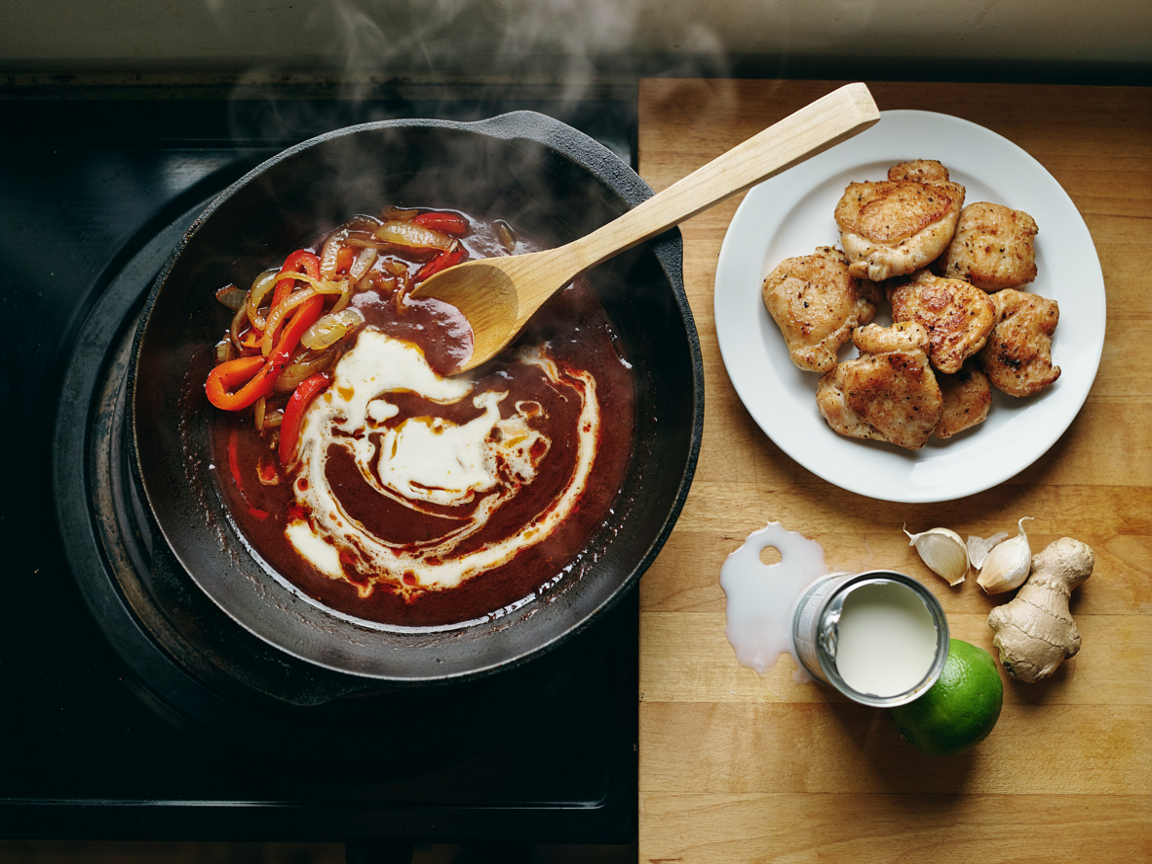
Frying the paste: red curry paste and the thick coconut cream in the pan, beads of red oil just appearing, the seared chicken waiting on a plate.
Fry the paste in oil
A full minute or two, stirring, until it darkens and smells toasted. Paste stirred straight into liquid tastes raw and flat.
Crack the cream, then add the milk
Fry the thick coconut cream with the paste until beads of red oil appear. That is the flavor of a restaurant curry.
Simmer, never boil
A gentle bubble keeps the sauce smooth and the chicken tender. A hard boil splits coconut milk and toughens the meat.
Balance last
Fish sauce, sugar and lime go in to taste at the very end. Lime cooked for 10 minutes loses its brightness.
How Hot to Make It, and How to Balance It
| Heat | For 4 servings | Notes |
|---|---|---|
| HeatMild, for children | For 4 servings1½ tbsp paste for 4, no fresh chilli | NotesServe with extra rice and cucumber |
| HeatMedium (as written) | For 4 servings3 tbsp paste for 4 | NotesWarm, fragrant, not fiery |
| HeatHot | For 4 servings4 tbsp paste, plus 1 to 2 sliced bird’s eye chillies with the paste | NotesRed chilli on top as well |
| HeatToo hot already | For 4 servingsSplash of coconut milk, a pinch of sugar, a squeeze of lime | NotesRice and cucumber on the side |
Taste and Adjust
The last minute decides the curry. Taste it off the heat and fix it with this:
| It tastes | Why | Add |
|---|---|---|
| It tastesFlat, dull | WhyNeeds salt | AddFish sauce, ½ tsp at a time |
| It tastesToo salty | WhyToo much fish sauce or a salty paste | AddA splash of coconut milk, lime and a pinch of sugar |
| It tastesToo sweet | WhyToo much sugar | AddLime juice and a few drops of fish sauce |
| It tastesToo sour | WhyToo much lime | AddA pinch of sugar |
| It tastesHeavy, rich | WhyNeeds acid | AddA squeeze of lime and fresh herbs |
| It tastesThin | WhySimmered too briefly | AddSimmer uncovered 3 to 5 minutes more |
Vegetables for Red Curry, and When to Add Them
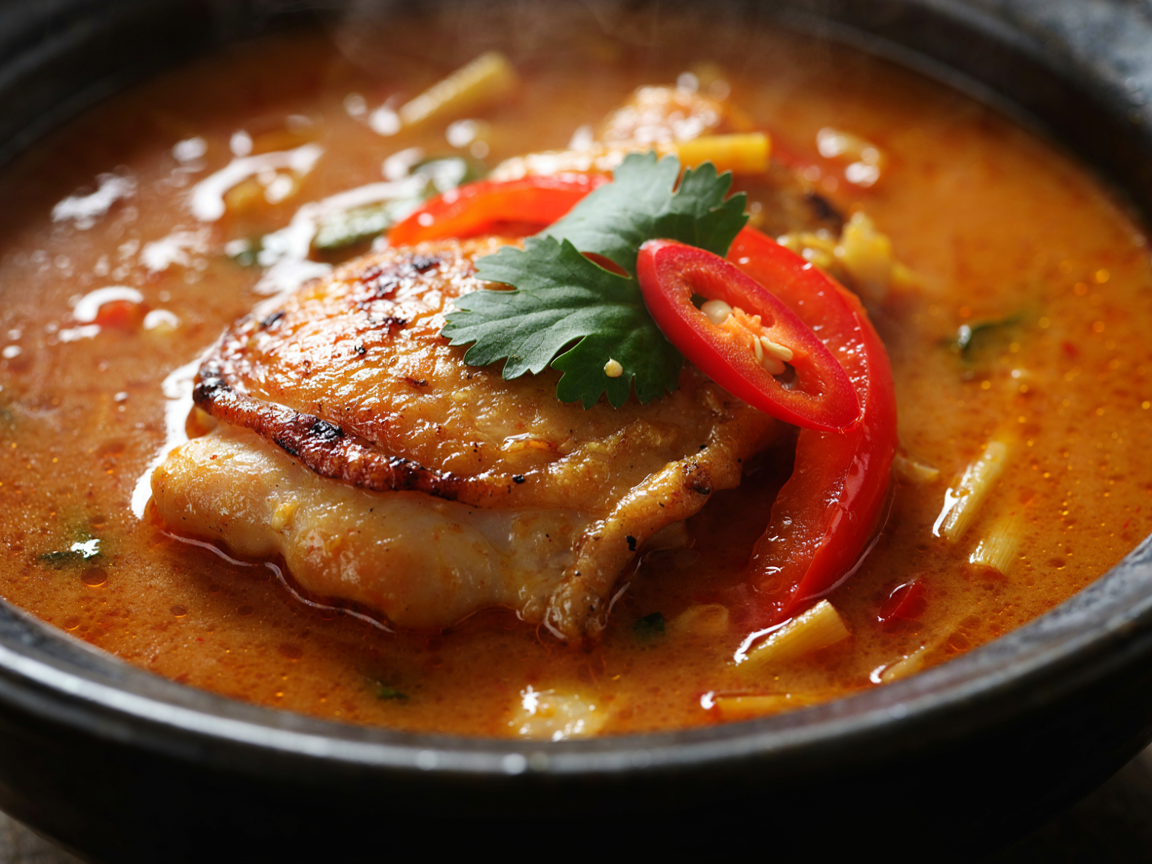
Up close: seared chicken and soft red pepper in the glossy orange-red sauce, cilantro on top.
| Vegetable | When | Notes |
|---|---|---|
| VegetableRed or yellow bell pepper | WhenWith the onion | NotesThe pin’s choice; sweet and bright |
| VegetableBroccoli florets, carrots | WhenWith the chicken | NotesNeed 6 to 8 minutes |
| VegetableZucchini, snap peas, green beans | WhenLast 4 minutes | NotesStay crisp-tender |
| VegetableBamboo shoots, baby corn | WhenLast 4 minutes | NotesDrained, from a can |
| VegetableSweet potato or butternut cubes | WhenWith the coconut milk | NotesNeed 12 to 15 minutes; cut small |
| VegetableBaby spinach, Thai basil | WhenOff the heat | NotesThey wilt in seconds |
Six Ways to Make Thai Red Curry
Same sauce, a different main ingredient. Tap a version:
Creamy Thai Red Curry With Chicken
The recipe above: seared chicken and red pepper in coconut red curry. The pot on the pin.
Thai Red Curry Shrimp
Skip the sear. Make the sauce as written, then add 1½ lb peeled shrimp for the last 3 to 4 minutes, just until pink and curled. A 20-minute dinner.
Red Curry With Butternut Squash
Add 3 cups small butternut or pumpkin cubes with the coconut milk and simmer 12 minutes before the chicken goes back in. The autumn version: sweeter and thicker.
Chickpea and Vegetable Red Curry
Swap the chicken for a can of chickpeas and a cubed sweet potato, the broth for vegetable broth, the fish sauce for soy sauce, and use a paste without shrimp. Spinach at the end.
Thai Green Curry
The same method with green curry paste, Thai eggplant or zucchini and snap peas instead of red pepper, and plenty of Thai basil. Brighter, more herbal and usually hotter.
Red Curry Noodle Bowl
Add an extra ½ cup broth and serve over rice noodles instead of rice, with bean sprouts, lime and cilantro on top. Toss the noodles in just before serving.
What to Serve With Thai Red Curry, and How to Store It
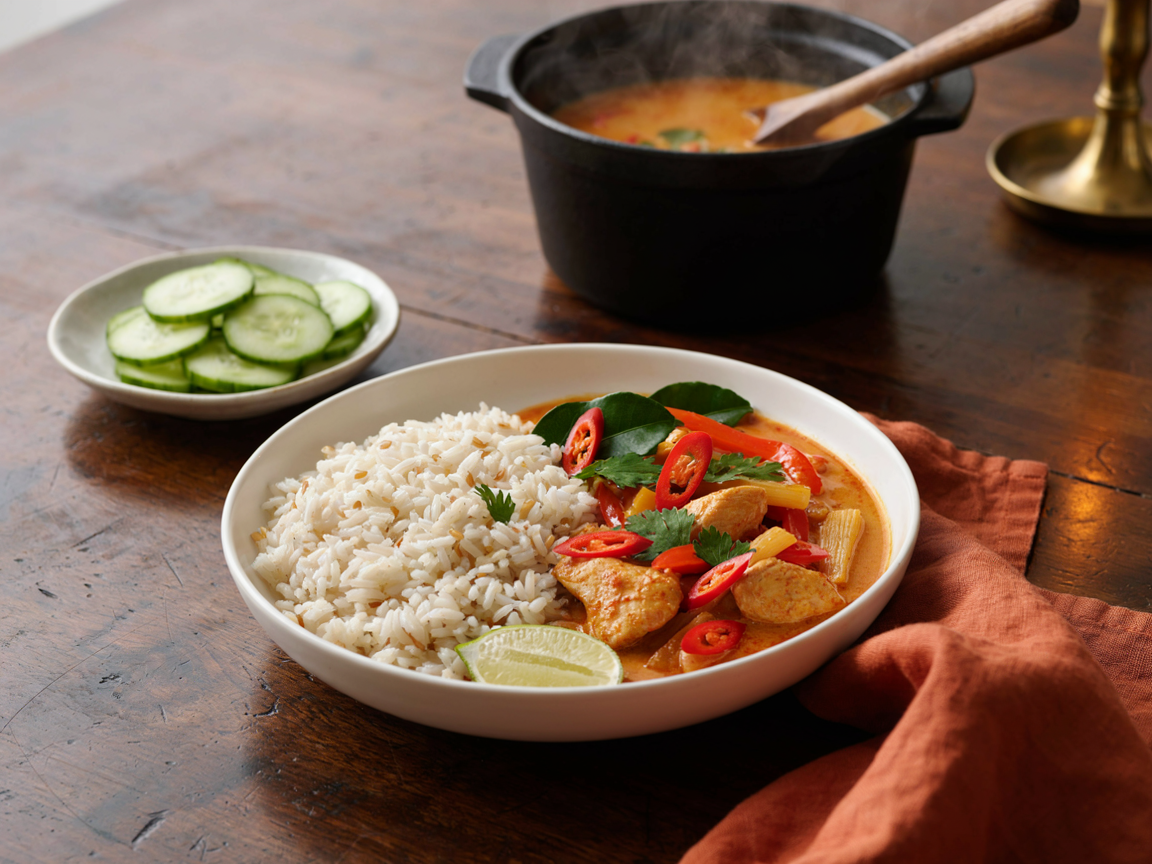
Dinner: red curry over jasmine rice with sliced red chilli, cilantro and a wedge of lime.
What to put on the table with it:
- Rice: jasmine rice, or coconut rice cooked with a splash of the coconut milk
- Fresh and crunchy: cucumber slices with lime and a pinch of sugar
- Noodles: rice noodles, as in the noodle bowl tab
- More curries: creamy coconut curry, chicken karahi or butter chicken
- Without coconut: fish curry without coconut
Storage and Reheating
| How | How long | |
|---|---|---|
| Fridge | HowAirtight, sauce and chicken together | How longUp to 4 days; better on day 2 |
| Freezer | HowWithout delicate vegetables or herbs | How longUp to 2 months |
| Reheat | HowGently on the stove with a splash of water or broth | How longDo not boil |
| Rice | HowSeparately, cooled quickly, chilled within an hour | How long1 day; reheat until steaming |
| Meal prep | HowCurry and rice in separate containers | How longFresh lime and herbs on reheating |
Troubleshooting
| Problem | Likely cause | Fix |
|---|---|---|
| ProblemSauce split or oily | Likely causeBoiled hard, or light coconut milk | FixGentle simmer; full-fat milk. A splash of hot water and a whisk |
| ProblemBland | Likely causePaste not fried, or too little fish sauce | FixFry the paste 1 to 2 minutes; season at the end |
| ProblemToo spicy | Likely causeA hot brand of paste | FixCoconut milk, sugar and lime; less paste next time |
| ProblemChicken dry | Likely causeBreast simmered too long | FixThighs, or breast for 6 to 8 minutes only |
| ProblemThin sauce | Likely causeNot reduced, or extra broth | FixSimmer uncovered 5 minutes |
| ProblemPale color | Likely causeToo little paste, or not fried | FixFry the paste and cream until red oil beads |
| ProblemBitter | Likely causeGarlic or paste scorched | FixLower the heat when the paste goes in |
| ProblemPeppers mushy | Likely causeAdded too early | FixWith the onion for soft, last 4 minutes for crisp |
Nutrition (approximate, per serving, without rice)
One of four servings with chicken thighs and full-fat coconut milk. Halal, dairy-free and gluten-free as written (check the paste); a cup of jasmine rice adds about 200 calories.
Thai Red Curry: FAQs
How do you make Thai red curry with chicken?
Sear bite-size chicken, soften onion and red pepper, fry red curry paste in the oil, then fry the thick coconut cream with it until red oil appears. Add the rest of the coconut milk, broth, fish sauce and sugar, simmer the chicken 8 to 10 minutes and finish with lime and herbs. Thirty minutes in one pot.
What makes Thai red curry creamy?
Full-fat coconut milk at a gentle simmer. Frying the thick cream from the top of the can with the paste first gives it body; light coconut milk or a hard boil makes it thin and split.
Is Thai red curry spicy?
Medium as written, but it depends on the paste: some brands are twice as hot as others. Start with 2 tbsp for four people, taste, and add more. The heat table above shows mild to hot.
Chicken thighs or breast for curry?
Thighs stay juicy even if the curry simmers a few minutes longer. Breast works if it is cut evenly and simmered only 6 to 8 minutes. Both are seared first.
Can I make it without fish sauce?
Yes. Use soy sauce or tamari, a little more to taste, or salt. The curry is less savory but still well seasoned.
What vegetables go in Thai red curry?
Red bell pepper, as on the pin, plus broccoli, zucchini, snap peas, green beans, bamboo shoots, baby corn, sweet potato or spinach. The vegetables table above says when each goes in.
Why did my coconut curry split?
It boiled too hard, or light coconut milk was used. Keep it at a gentle simmer. If it splits, take it off the heat and whisk in a splash of hot water or fresh coconut milk.
What are makrut lime leaves, and do I need them?
The fragrant leaves of the makrut lime tree, sometimes sold under an older name. They give the citrus perfume of a restaurant curry. Optional: lime zest at the end is the closest swap.
Can I use light coconut milk?
It works but the sauce is thinner and more likely to split. Use full-fat, or half full-fat and half broth if you want it lighter.
How do I thicken Thai red curry?
Simmer it uncovered for 3 to 5 minutes more. Avoid flour; if you must, stir in 1 tsp cornstarch mixed with cold water and simmer a minute.
Is this Thai red curry halal and dairy-free?
Yes with halal chicken: fish sauce is made from fish and salt, and there is no alcohol. It is dairy-free, since the creaminess is all coconut. Check the paste label if you also need it shellfish-free.
What do you serve with Thai red curry?
Jasmine rice is traditional; coconut rice or rice noodles also work. A cucumber salad with lime and a pinch of sugar cools the heat.
Can I make it ahead or freeze it?
Yes. It keeps 4 days in the fridge and tastes better on day two. Freeze without delicate vegetables or herbs for up to 2 months, and reheat gently without boiling.
How many calories are in Thai red curry with chicken?
About 525 per serving of the curry for four, before rice. A cup of jasmine rice adds about 200. Half full-fat coconut milk and half broth brings it down to about 430.
Save the pin so the recipe, the heat table and the six versions are one tap away.
More Curry Recipes
Creamy and coconut-free, chicken, seafood and vegetarian.
Creamy Coconut Curry
Chicken and red pepper, Indian-style. See the recipe → Without CoconutFish Curry Without Coconut
Bold, spicy, 40 minutes. See the recipe → CreamyButter Chicken
The other creamy chicken curry. See the recipe → PakistaniChicken Karahi
Tomato-based, ready in 40 minutes. See the recipe → SeafoodShrimp Curry
Twenty minutes, start to finish. See the recipe → VegetarianLentil Curry
For the meatless night. See the recipe →Fry the paste, crack the cream, simmer gently, balance at the end. Thirty minutes and one pot, and it tastes like the takeaway.
Pin this Thai red curry for the next weeknight.