
Perfect Turkey Brine for a Juicy, Flavorful Thanksgiving Turkey
An apple cider and herb wet brine that seasons the bird to the bone and keeps it juicy even if the oven runs long, with the salt ratio for every brand, brine times by weight, the container and food-safety rules, six flavor versions and what to change when you roast.
- 20 minutes to make
- Scales to 24 lb
- No alcohol
- Printable card
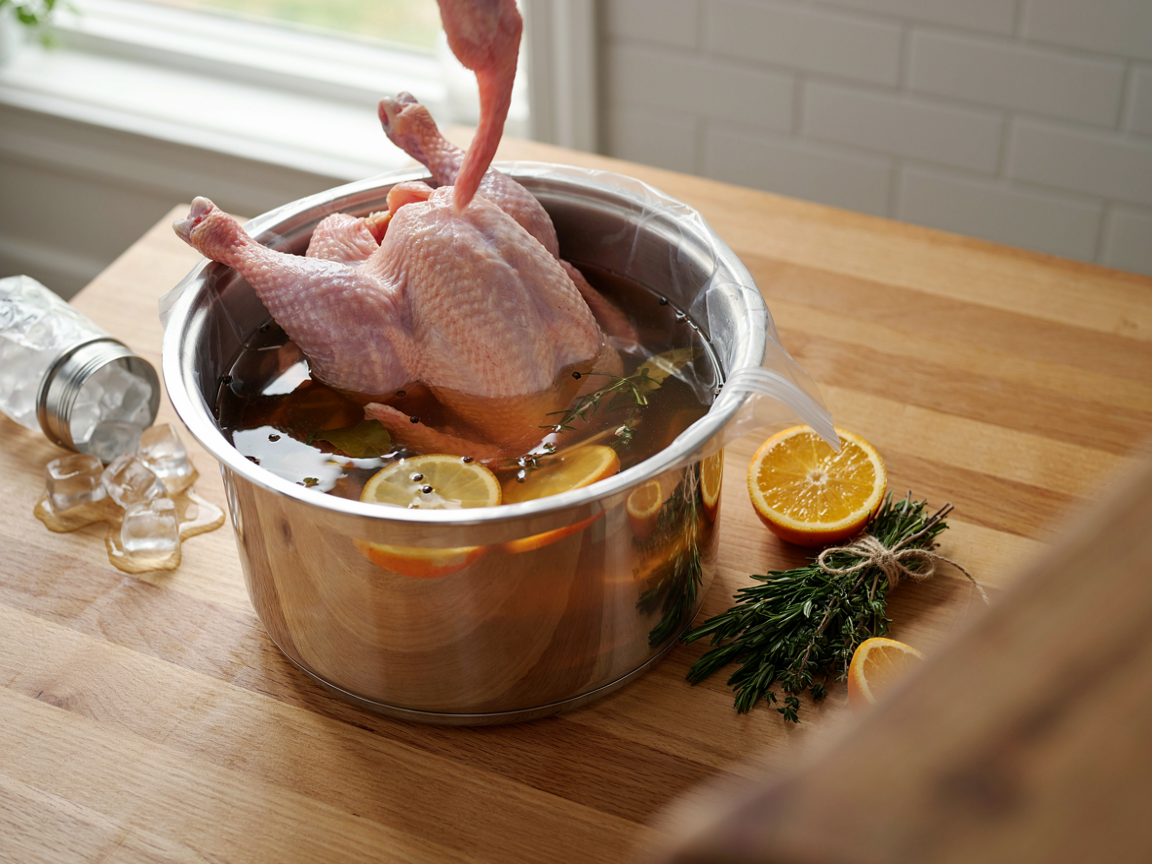
The turkey going into the cold apple cider brine: orange, bay and rosemary in the pot, ice on standby to keep it under 40 degrees.
A good turkey brine is the difference between a Thanksgiving turkey people politely eat and one they go back for. Salt water, given a night, seasons the meat all the way through and holds moisture in it, so the breast is juicy at the same moment the thighs are done. This one adds fresh apple cider, brown sugar and the Thanksgiving herbs, takes 20 minutes to make the night before, and scales from a turkey breast to a 24-pound bird with the hours for each.
Below: why brining works and what the cider adds, the salt ratio by brand (the thing most brines get wrong), wet brine against dry brine, what each ingredient is doing, the recipe with a card that scales by turkey weight, brine times for every size, how to keep it cold and safe, six flavor versions, what to change when you roast and make the gravy, troubleshooting and every question about brining a turkey.
Why a Turkey Brine Makes the Difference
Four reasons this is the step worth the bucket:
It is the one step that makes turkey juicy
Salt water works its way into the meat overnight, loosens the muscle proteins so they hold onto moisture, and seasons the bird all the way to the bone. A brined turkey can roast 10 minutes too long and still be juicy; an unbrined one cannot.
Apple cider does what water cannot
Fresh cider adds a gentle sweetness and the apple-orchard flavor that belongs next to sage and thyme, and its sugars help the skin brown deep gold. It is non-alcoholic pressed apple juice, nothing fermented.
Twenty minutes of work, the night before
Boil, dissolve, cool, submerge, walk away. The brine does the work while you sleep, and the turkey is ready to dry and roast the next day.
One ratio for any size bird
One cup of kosher salt per gallon of liquid. The card scales the brine from a turkey breast to a 24-pound bird, with the hours for each.
The Salt Ratio: One Cup per Gallon, by Brand
Every turkey brine is one cup of kosher salt per gallon of liquid. The catch is that salt brands weigh differently for the same cup, which is why so many brined turkeys come out too salty. Amounts per gallon:
| Salt | Per gallon of liquid | Notes |
|---|---|---|
| SaltDiamond Crystal kosher | Per gallon of liquid1 cup | NotesThe amounts in the card; light, flaky, dissolves fast |
| SaltMorton kosher | Per gallon of liquid¾ cup | NotesDenser crystals; a full cup makes the brine too salty |
| SaltFine sea salt or table salt | Per gallon of liquid½ cup + 1 tbsp | NotesDense; measure carefully, and skip iodized table salt if you can (it can taste metallic) |
| SaltCoarse sea salt | Per gallon of liquid¾ cup | NotesBetween the two koshers; dissolve fully before the turkey goes in |
| SaltPickling salt | Per gallon of liquid½ cup + 1 tbsp | NotesPure and fine; measures like table salt |
Wet Brine or Dry Brine?
This post is the wet brine. The dry brine is the other good answer, and the right one for a small fridge:
| Wet brine (this recipe) | Dry brine | |
|---|---|---|
| Juiciness | Wet brine (this recipe)Highest; adds moisture | Dry brineHigh; keeps the turkey’s own moisture |
| Skin | Wet brine (this recipe)Good, if dried uncovered 8 to 24 hours | Dry brineCrispest; the salt dries the skin as it works |
| Flavor | Wet brine (this recipe)Aromatics, cider and sugar season the meat | Dry brineClean turkey flavor; herbs stay on the surface |
| Space needed | Wet brine (this recipe)A bucket, cooler or bag and a cold place for 1 to 2 gallons | Dry brineA sheet pan in the fridge |
| Time | Wet brine (this recipe)12 to 24 hours, plus 8 to 24 drying | Dry brine24 to 72 hours |
| Gravy | Wet brine (this recipe)Drippings salty and slightly sweet; use low-sodium stock | Dry brineDrippings normal, slightly salty |
| Best for | Wet brine (this recipe)A bird you want foolproof-juicy; a big gathering; smoking | Dry brineSmall fridges; crisp-skin lovers; spatchcocked birds |
Ingredients for an Apple Cider Turkey Brine
Salt, sugar, cider and a handful of aromatics from the Thanksgiving shopping list:
Kosher salt
The whole brine is built on one cup of kosher salt per gallon. Brands measure differently because the crystals are different sizes, so the salt table above matters more than anything else on this page.
Brown sugar
Half a cup per gallon balances the salt and helps the skin brown. It does not make the turkey sweet; it makes it taste seasoned instead of salty.
Fresh apple cider
Four cups per gallon, the cloudy unfiltered pressed apple juice sold in the fall, not hard cider and not cider vinegar. Clear apple juice works; it is a little sweeter, so cut the sugar by a quarter.
Onion, orange and garlic
The savory base. Quartered and smashed so they give up flavor into the boiling water in 10 minutes. The orange adds a brightness that cuts the richness of the bird.
Rosemary, thyme and bay
The Thanksgiving herbs. Whole sprigs, boiled with the salt and steeped; they perfume the brine, and the flavor carries faintly into the meat and strongly into the drippings and gravy.
Peppercorns and a cinnamon stick
Whole peppercorns for warmth without grit; one cinnamon stick for a fall note that makes people ask what is in it. Leave out the cinnamon for a plainer bird.
Ice
Cools the hot brine fast so it is safe for the turkey within the hour. Count it as part of the water; the amounts in the card already do.
The container
A food-safe 5-gallon bucket, a brining bag set inside a stockpot, or a clean cooler. It has to hold the turkey fully submerged and stay below 40°F for the whole brine. The container cards below have the options.
Perfect Turkey Brine Recipe
The card makes 1½ gallons for a 12 to 16 pound turkey by default. Tap your turkey’s weight and the brine, the aromatics and the brining time all update together.
Apple Cider and Herb Turkey Brine
The classic wet brine: kosher salt and brown sugar dissolved in water and fresh apple cider with onion, orange, garlic, rosemary, thyme, bay and peppercorns. Twenty minutes to make, overnight in the fridge, and the juiciest, best-seasoned turkey you have roasted. Tap your turkey’s weight and the brine, the aromatics and the time all update with the printable card.
How big is the turkey?
Ingredients
- 1 gallon (16 cups)1½ gallons (24 cups)2 gallons (32 cups)2½ gallons (40 cups) water, divided
- 1 cup1½ cups2 cups2½ cups kosher salt (see the salt table: amounts are for Diamond Crystal; use ¾ as much Morton)
- ½ cup¾ cup1 cup1¼ cups light brown sugar, packed
- 4 cups6 cups8 cups10 cups fresh apple cider (unfiltered apple juice, non-alcoholic)
- 1223 yellow onion, quartered
- 1122 orange, sliced
- 46810 garlic cloves, smashed
- 46810 fresh rosemary sprigs
- 681215 fresh thyme sprigs
- 2345 bay leaves
- 1 tbsp1½ tbsp2 tbsp2½ tbsp whole black peppercorns
- 1122 cinnamon stick (optional)
- 4 cups6 cups8 cups10 cups ice
- turkey breast or 8 to 12 lb bird12 to 16 lb bird16 to 20 lb bird20 to 24 lb bird whole turkey, thawed, giblets removed, not pre-brined or self-basting
Check the label first. Do not brine a turkey labeled kosher, self-basting, enhanced, or “contains up to X% solution”; it has already been salted and will come out too salty. A plain fresh or thawed natural turkey is the one to brine.
Instructions
Dissolve the salt and sugar
Bring half the water to a boil in a large pot with the salt, brown sugar, onion, orange, garlic, rosemary, thyme, bay leaves, peppercorns and the cinnamon stick. Stir until the salt and sugar dissolve completely, about 2 minutes after it boils, then turn off the heat and let it steep 10 minutes.
Cool it down completely
Pour the hot brine into your brining container (a food-safe bucket, a brining bag inside a stockpot, or a cooler). Add the remaining cold water, the apple cider and the ice and stir. The brine must be refrigerator-cold, below 40°F, before the turkey goes in; warm brine is a food-safety problem and starts cooking the skin. If it is still warm, refrigerate it 1 to 2 hours.
Submerge the turkey
Remove the giblets and neck and lower the turkey into the brine breast-side down. It must be fully covered; weigh it down with a plate if it floats, or add more cold water and a little more salt (¼ cup per extra quart).
Brine in the fridge
Cover and refrigerate, or keep the cooler packed with ice packs and check that it stays below 40°F. Brine 12 to 18 hours for a 12 to 16 pound turkey, about 1 hour per pound and never more than 24. The brine-time table below has every size, including turkey breasts.
Rinse, dry and rest uncovered
Lift the turkey out, discard the brine, rinse the bird briefly inside and out under cold water and pat it completely dry with paper towels. Set it on a rack over a sheet pan and refrigerate uncovered for 8 to 24 hours. This drying step is what gives a brined turkey crisp skin instead of rubbery skin.
Season lightly and roast
Rub with herb butter or oil as your roast recipe says, but use half the salt the recipe calls for and skip salting the cavity; the brine has already seasoned the meat. Roast as usual. Expect the skin to brown faster because of the sugar; tent with foil if it is deep gold before the thigh reaches 165°F.
Taste before you salt the gravy
Drippings from a brined turkey are saltier than usual. Make the gravy with low-sodium stock, taste at the end and only then add salt.
How Long to Brine a Turkey, by Weight
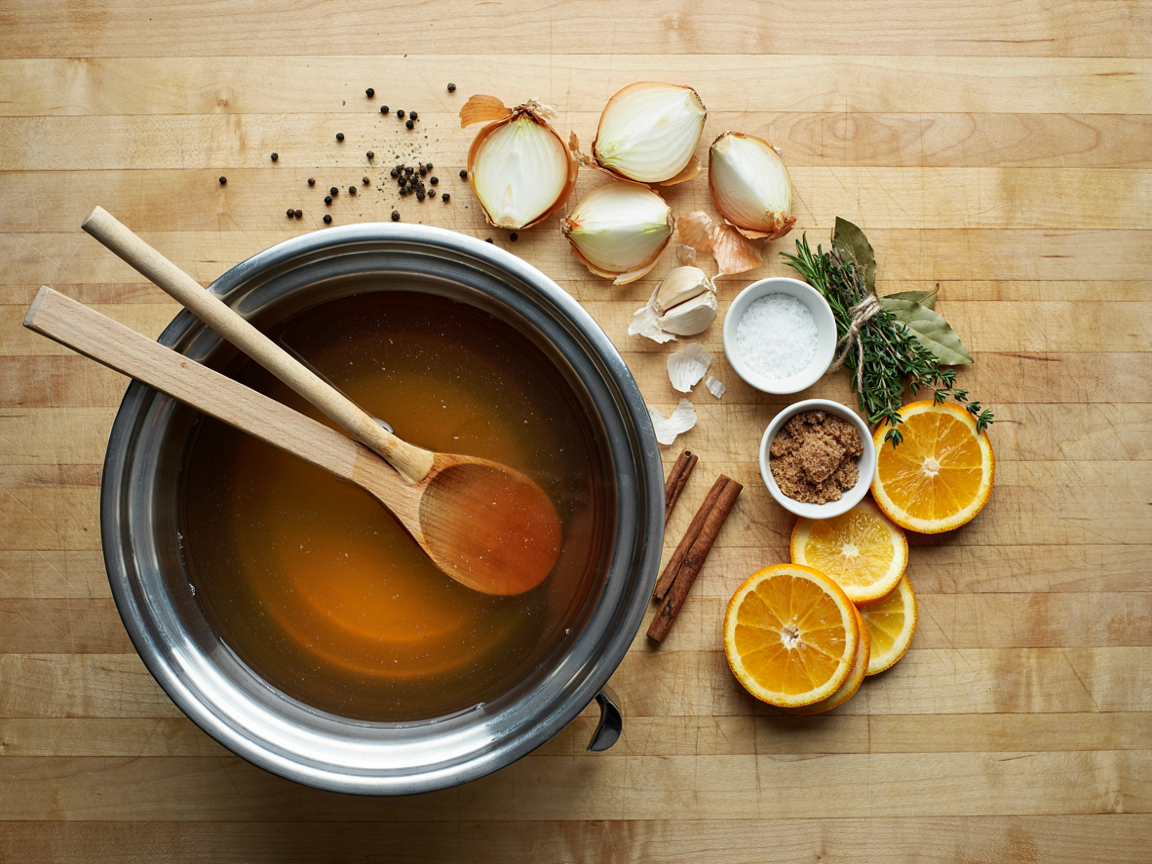
The apple cider brine: salt, brown sugar, onion, orange, rosemary, thyme, bay and peppercorns in the stockpot, cooling before the turkey goes in.
About an hour per pound, between 8 and 24 hours, with turkey breasts the exception:
| Turkey | Brine time | Brine needed | Notes |
|---|---|---|---|
| TurkeyBone-in turkey breast (4 to 7 lb) | Brine time4 to 8 hours | Brine needed1 gallon | NotesNever overnight; breast meat over-salts fast |
| TurkeyBoneless turkey breast (2 to 4 lb) | Brine time3 to 5 hours | Brine needed½ gallon (halve card size A) | NotesPat dry well; the skin needs the drying rest |
| Turkey8 to 12 lb turkey | Brine time8 to 12 hours | Brine needed1 gallon | NotesCard size A |
| Turkey12 to 16 lb turkey | Brine time12 to 18 hours | Brine needed1½ gallons | NotesCard size B; the most common bird |
| Turkey16 to 20 lb turkey | Brine time16 to 20 hours | Brine needed2 gallons | NotesCard size C; needs a cooler or bucket |
| Turkey20 to 24 lb turkey | Brine time20 to 24 hours | Brine needed2½ gallons | NotesCard size D; 24 hours is the ceiling |
| TurkeySpatchcocked turkey, any size | Brine time8 to 12 hours | Brine neededSame as its weight | NotesBrines faster; see our spatchcock method |
| TurkeyTurkey for smoking | Brine time12 to 18 hours | Brine neededSame as its weight | NotesSee the smoked-turkey brine for the sugar change |
Where to Brine It, and Keeping It Cold
The brine and the turkey have to stay below 40°F the whole time. Four ways to manage that:
Brining bag in a stockpot
The easiest. A large food-safe brining bag holds the turkey and 1½ gallons; stand it in a stockpot or roasting pan so it cannot leak, squeeze out the air, tie, and refrigerate.
Food-safe bucket
A clean 5-gallon food-grade bucket with a lid holds a 20-pound bird and 2½ gallons. It needs a fridge shelf cleared, or a garage or porch that stays below 40°F.
Cooler with ice packs
For a big turkey or a full fridge. Brine in a clean cooler, add frozen gel packs or sealed bags of ice (not loose ice, which dilutes the brine), and check with a thermometer that it stays under 40°F. Refresh the packs every 6 to 8 hours.
Stockpot, lid on
Works for a turkey breast or a bird up to about 12 pounds in a 16-quart pot, if the whole pot fits in the fridge. Weigh the bird down with a plate so it stays under.
Six Flavors of Turkey Brine
Same salt, same sugar, same times. Tap a version:
Classic Herb Turkey Brine
Leave out the cider and the cinnamon and use all water, with the same salt and sugar. Double the thyme and add 6 sage leaves and a tablespoon of whole coriander. The plainest, most traditional brine, and the one for a gravy you want to taste purely of turkey.
Citrus Turkey Brine
Replace the cider with the juice of 4 oranges and 2 lemons plus water to make up the volume, add the spent halves to the pot, and use 6 whole cloves and a thumb of sliced ginger instead of the cinnamon. Bright, fresh, and very good on a turkey that will be served with a fruit relish.
Warm Spiced Cider Brine
Keep the cider and add 2 cinnamon sticks, 3 star anise, 1 tablespoon allspice berries and 6 cloves to the boil. The brine smells like mulled cider and the skin roasts a deeper mahogany from the extra sugar; tent it early. The one for a turkey served with sweet potatoes and cranberry.
Garlic and Herb Brine
Use two whole heads of garlic, halved crosswise, a bunch of parsley stems, 2 tablespoons of dried oregano and a teaspoon of crushed red pepper with the rosemary and thyme, and all water instead of cider. Savory and faintly spicy; it pairs with a garlic herb butter under the skin.
Maple and Black Pepper Brine
Swap the brown sugar for ¾ cup pure maple syrup per gallon, double the peppercorns and add 2 tablespoons of coarsely cracked black pepper to the pot. A deeper, almost smoky sweetness with no alcohol; it is the brine for a turkey finished with a maple butter glaze.
Brine for a Turkey Breast
Use card size A (1 gallon) for a bone-in breast and brine only 4 to 8 hours; a boneless breast needs half the brine and 3 to 5 hours. Breast meat takes salt fast and turns ham-like if it sits overnight. Our turkey breast brine post has the full breast method, roast times and the slicing.
What Changes After You Brine: Roasting and Gravy
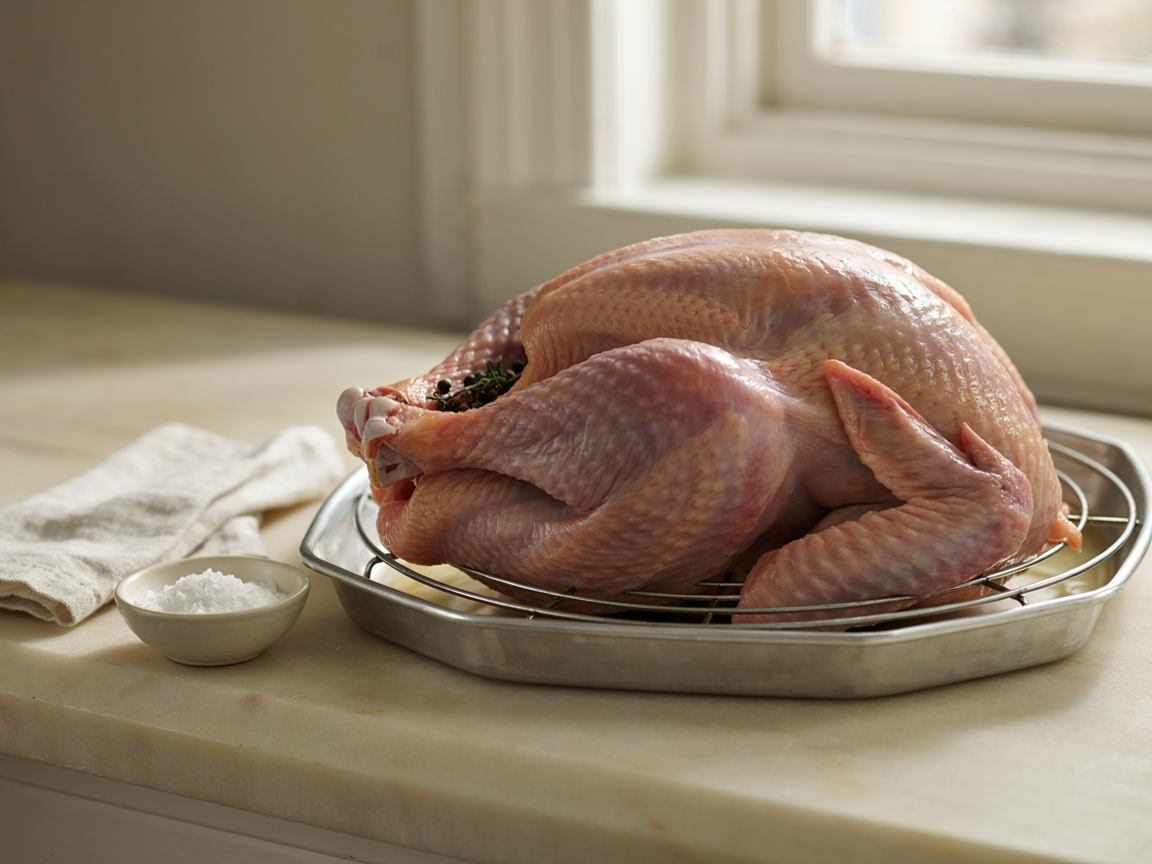
The brined turkey after its uncovered rest in the fridge: skin dry, tight and ready to crisp.
A brined turkey roasts like any other with six small adjustments:
| What | Do this | Why |
|---|---|---|
| WhatSalt in the rub or butter | Do thisUse half, or none in the cavity | WhyThe meat is already seasoned through |
| WhatDry the skin | Do thisUncovered in the fridge 8 to 24 hours after rinsing | WhyWet skin steams; dry skin crisps |
| WhatOven | Do thisSame temperature as your recipe | WhyTent at deep gold; cider sugar browns faster |
| WhatDoneness | Do this165°F in the thickest thigh, 160°F in the breast | WhyA brined turkey forgives 10 extra minutes, not 30 |
| WhatStuffing | Do thisCook it separately | WhyDrippings are salty and the cavity holds brine |
| WhatGravy | Do thisLow-sodium stock, salt at the very end | WhyThe drippings carry the brine’s salt and a little sweetness |
| WhatResting | Do this30 minutes, loosely tented | WhyJuices settle; the brine’s work shows in the slice |
The Rest of the Turkey Plan
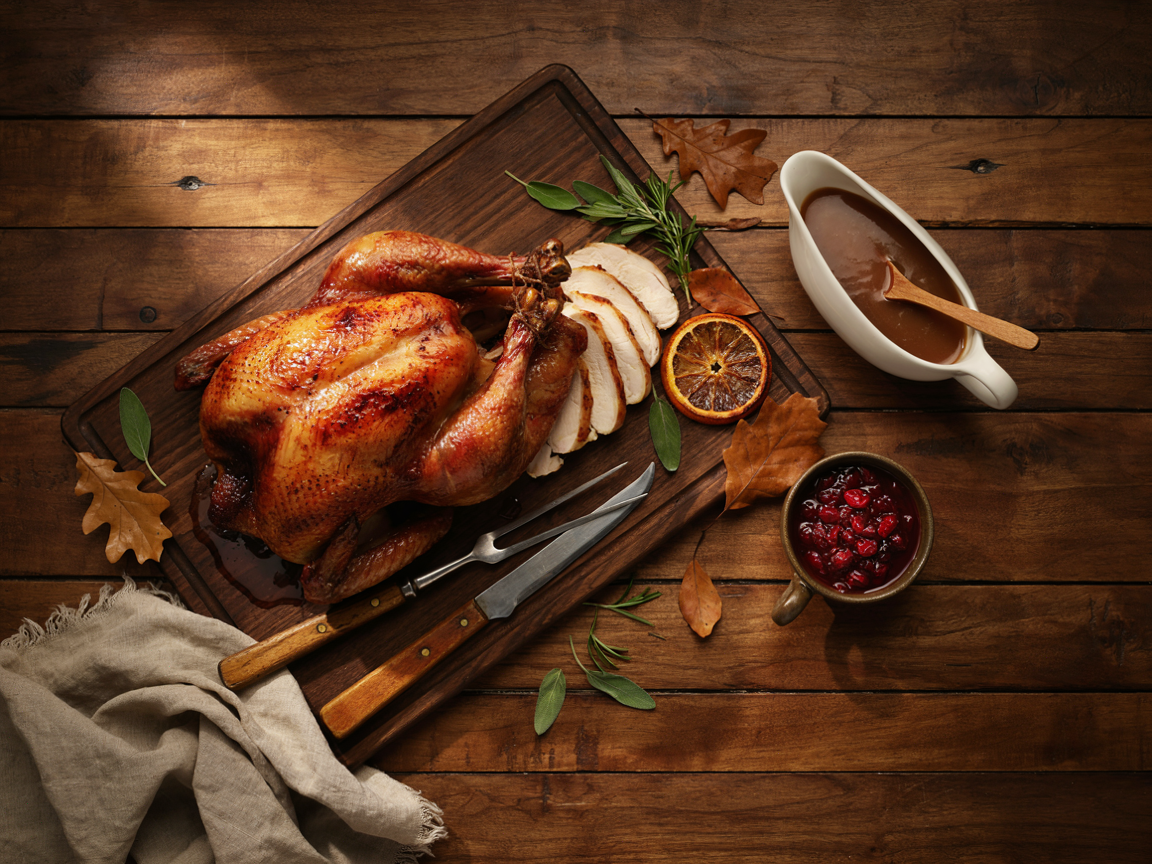
The roasted brined turkey on the board: deep gold skin, juicy breast, gravy alongside.
The brine is step one. For roasting, the herb butter for turkey goes under the skin once the turkey is dry, and the herb butter roasted turkey and the spatchcock turkey are the two roast methods that take a brined bird best. For a smaller table, the turkey breast brine brines in 4 to 8 hours, and for a smoker the smoked turkey brine adjusts the sugar. If the fridge is full, the dry brine method needs only a sheet pan. The Thanksgiving brown gravy is built with low-sodium stock for exactly these drippings, and the rest of the Thanksgiving table cooks separately as it should.
Troubleshooting a Turkey Brine
| Problem | Likely cause | Fix |
|---|---|---|
| ProblemTurkey too salty | Likely causeWrong salt measured, brined too long, or an enhanced turkey | FixUse the salt table; stay under 24 hours; check the label for added solution |
| ProblemSkin rubbery or pale | Likely causeSkipped the uncovered drying rest, or roasted wet | FixRinse, pat dry, 8 to 24 hours uncovered in the fridge |
| ProblemTurkey floats | Likely causeAir in the cavity | FixBreast-side down; weigh with a plate; squeeze air from a brining bag |
| ProblemBrine warm when the turkey went in | Likely causeNot enough ice; added too soon | FixChill to below 40°F first; refrigerate the brine 1 to 2 hours if needed |
| ProblemGravy too salty | Likely causeDrippings from a brined bird | FixLow-sodium stock; a peeled potato simmered 10 minutes absorbs some; a splash of cream softens it |
| ProblemBreast dry anyway | Likely causeOvercooked past 165°F, or breast brined with the whole bird too long | FixPull at 160°F in the breast and rest; brine breasts 4 to 8 hours only |
| ProblemNot enough brine to cover | Likely causeContainer too wide | FixTaller, narrower container; or add 1 quart water and ¼ cup kosher salt per quart |
What the brine adds (approximate, per 4-oz serving of roasted turkey)
Only a small fraction of the brine’s salt and sugar ends up in the meat; the rest is discarded with the brine. Fresh apple cider is non-alcoholic pressed juice. No pork, no wine, no spirits.
Turkey Brine: FAQs
What is the ratio of salt to water for a turkey brine?
One cup of Diamond Crystal kosher salt per gallon of liquid, or ¾ cup of Morton kosher, or half a cup plus a tablespoon of fine salt, with half a cup of brown sugar per gallon. The salt table above has every type. Measured correctly, this brine seasons the turkey without making it salty.
How long should I brine a turkey?
About one hour per pound, with a floor of 8 hours and a ceiling of 24: 12 to 18 hours for a 12 to 16 pound turkey. Turkey breasts are the exception, 4 to 8 hours for bone-in and 3 to 5 for boneless, because breast meat takes salt fast. The brine-time table above has every size.
Do you rinse a turkey after brining?
A brief rinse inside and out under cold water, then pat it completely dry and leave it uncovered in the fridge 8 to 24 hours. The rinse removes surface salt so the skin does not taste salty; the uncovered rest dries the skin so it crisps. Skip the rinse and reduce the salt in your rub to nothing instead if you prefer; never skip the drying.
Can I brine a frozen turkey?
Not fully frozen. The turkey has to be thawed enough that the brine can reach the meat, and a frozen bird keeps the brine too cold to work. Thaw it completely in the fridge first (24 hours per 4 to 5 pounds), or finish the last day of thawing in the brine if it is only slightly icy in the center.
Can I brine a kosher, self-basting or enhanced turkey?
No. Those turkeys have already been salted or injected with a salt solution (the label says kosher, self-basting, enhanced, or contains up to X percent solution). Brining them again makes the meat unpleasantly salty. Buy a plain natural or fresh turkey to brine, or skip the brine and just use herb butter.
Does brining make the turkey taste salty?
Not at this ratio and time. The meat tastes seasoned, the way a well-salted roast does, not salty. It turns salty when the salt is measured by the wrong brand, when the turkey brines past 24 hours, or when an already-enhanced turkey is brined. The drippings are saltier than usual, so taste the gravy before salting it.
What is the difference between a wet brine and a dry brine?
A wet brine soaks the turkey in salted water overnight and adds moisture and the flavor of whatever is in the water; it needs a container and a cold place. A dry brine rubs the turkey with salt and leaves it uncovered in the fridge 1 to 3 days; it keeps the turkey’s own moisture and gives the crispest skin with no container at all. The comparison table above goes through both; our dry brine post has that method.
Can I use apple juice instead of apple cider?
Yes. Fresh cider is unfiltered pressed apple juice, so clear apple juice is the same thing filtered and usually a little sweeter; cut the brown sugar by a quarter. Both are non-alcoholic. Do not use hard cider or cider vinegar.
Can I brine a turkey in a cooler?
Yes, and it is the answer for a big bird or a full fridge. Use a clean cooler, keep the brine below 40°F with frozen gel packs or sealed bags of ice (loose ice dilutes the brine), check it with a thermometer and refresh the packs every 6 to 8 hours. The container cards above cover buckets and bags too.
Do I still season or butter a brined turkey?
Yes, but lightly. Rub it with herb butter or oil as your roast recipe says, with half the salt or none, and do not salt the cavity. The brine seasoned the meat; the butter is for the skin and the drippings. Our herb butter turkey post pairs with this brine.
Can I stuff a brined turkey?
It is better not to. The cavity holds some brine, which makes stuffing salty and wet, and a brined bird cooks a little faster than a stuffed one needs. Bake the stuffing in a dish, and put onion, orange and herbs in the cavity instead.
Can I make the brine ahead or reuse it?
Make it up to 3 days ahead and keep it refrigerated; it must be cold anyway. Never reuse brine that has held raw poultry; discard it, and do not use it to baste or make gravy.
Will this brine work for a smoked or spatchcocked turkey?
Yes. A spatchcocked turkey brines faster, 8 to 12 hours, because the brine reaches more surface. For smoking, this brine works as written; our smoked-turkey brine post adjusts the sugar so the skin does not darken too far over 4 hours of smoke.
How do I know the brine is cold enough and safe?
Below 40°F on an instant-read thermometer before the turkey goes in and for the whole brining time. Cool the boiled brine with the ice and cold water, check it, and refrigerate it another hour if it reads warmer. A turkey that spends more than 2 hours above 40°F is not safe to cook.
Save the pin so the brine, the salt table and the brine times are one tap away the week of Thanksgiving.
The Rest of the Turkey Plan
The dry brine, the breast brine, the smoker brine, the herb butter and the gravy.
Dry Brine Turkey
Crispiest skin, no bucket, 1 to 3 days. See the method → Smaller BirdTurkey Breast Brine
The 4-to-8-hour brine for a breast. Brine a breast → For the SmokerBrine for Smoked Turkey
The sugar change that keeps smoked skin from blackening. See the brine → After the BrineHerb Butter for Turkey
What goes under the skin once the bird is dry. Make the butter → Fastest RoastSpatchcock Turkey
Flat, even and done in 90 minutes. See the method → GravyThanksgiving Brown Gravy
Built for the saltier drippings of a brined bird. Make the gravy →One cup of kosher salt per gallon, brown sugar, cider and the herbs, boiled and cooled, the turkey under it overnight, then rinsed, dried uncovered and roasted with a light hand on the salt. That is the whole secret to a juicy turkey.
Pin this turkey brine so the ratio, the times by weight and the roasting changes are ready the night before Thanksgiving.