30 Minutes · Oven Baked · One Sauce Pan
Boneless Skinless Chicken Thigh Pasta (Creamy Garlic Parmesan, 30 Minutes)
Thighs roast in the oven while the pasta boils and the sauce comes together on the stove. Nothing waits on anything else.
- 30 minutes start to plate
- 425°F oven
- Forgiving cut
- Reheats without splitting
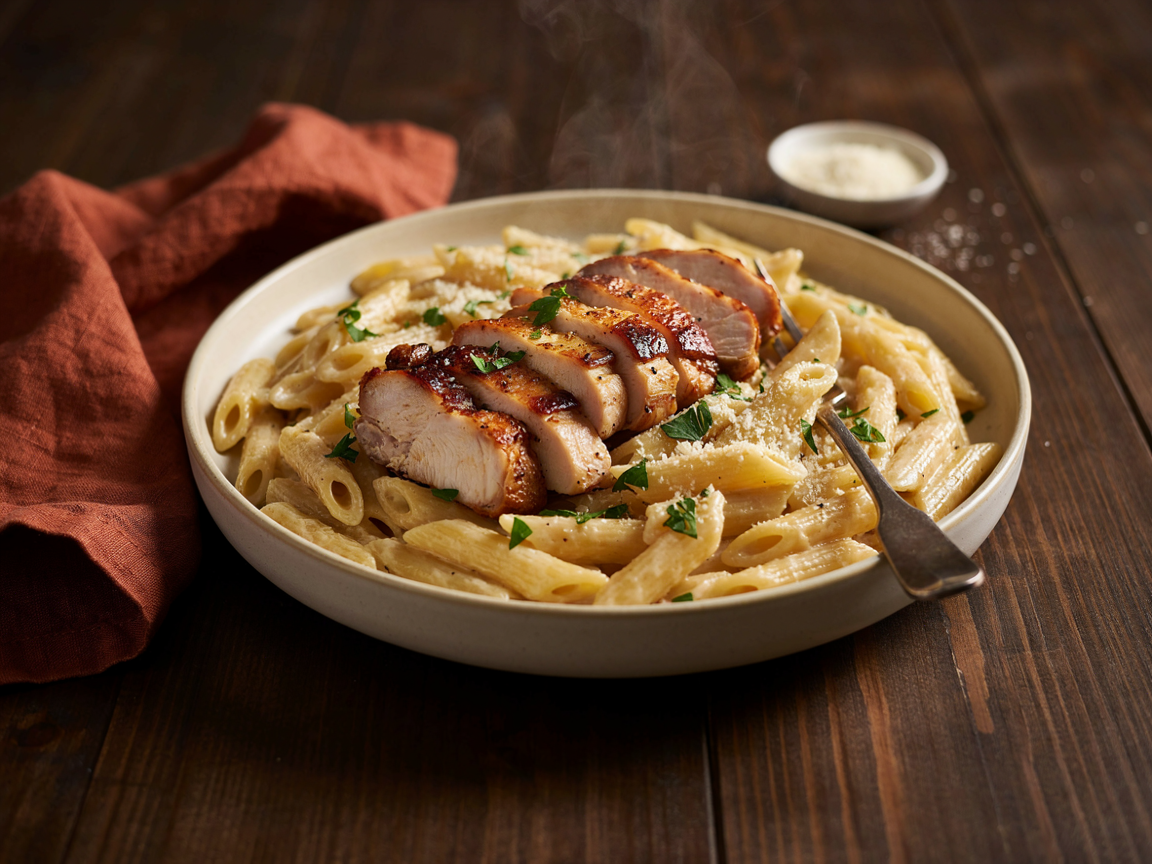
The sauce should coat the penne, not pool underneath it. That comes from pasta water, not more cream.
Boneless skinless chicken thigh pasta is the weeknight dinner that survives being made badly, which is exactly why it is worth making well. Thighs carry enough fat to stay juicy even if you leave them in five minutes too long, so the oven does the work while you handle the pasta and the sauce.
Two things separate this from every other creamy chicken pasta. The thighs go in the oven rather than the pan, so you are not managing chicken and sauce at the same time. And the sauce is finished with starchy pasta water, which is what makes it cling to the penne instead of sliding off into a puddle at the bottom of the bowl.
Save the pin so the timeline is there on the night you need it.
Why Thighs Beat Breasts in a Cream Sauce
This is not a budget compromise. For a dish like this, thighs are genuinely the better cut, and for reasons worth understanding.
They forgive you
Chicken breast goes from perfect to dry across about three minutes. Thighs have roughly twice the fat and a much wider window — five minutes over and they are still good.
They want to go past 165°F
Thighs are full of connective tissue that only breaks down higher up. Pull them at 175°F rather than 165°F and they go from slightly springy to genuinely tender.
More flavour into the sauce
The rendered fat and browned juices left in the baking dish are worth more than any stock cube. Scrape them into the cream and the sauce tastes like it took an hour.
They reheat properly
This matters more than anything else on a weeknight. Reheated chicken breast is chalky. Reheated thigh is still moist, which is what makes this a real meal-prep dish.
If you only have breasts: use them, but cut them to an even thickness, drop the oven to 400°F, bake for 18 to 20 minutes and pull at 160°F to carry over to 165°F. Rest a full 10 minutes before slicing.
Boneless Skinless Chicken Thigh Pasta: The 30-Minute Timeline
Everything below assumes you read it once first. Nothing here is hard, but the overlaps are what make it thirty minutes instead of fifty.
-
0:00
Oven on, chicken seasoned
Set the oven to 425°F. Pat the thighs dry, toss with oil and the seasoning mix, and lay them in a baking dish without overlapping.
-
0:05
Chicken in
Into the oven, middle rack. It needs 22 to 25 minutes and you will not touch it again until it comes out.
-
0:06
Salt the pasta water
Fill the pot and get it on high heat. It takes roughly 8 minutes to boil, which is exactly the gap you have.
-
0:14
Pasta in
Penne takes 11 to 12 minutes. Set a timer for one minute under the package time — it finishes in the sauce.
-
0:17
Start the sauce
Butter and garlic in a wide pan over medium-low. Two minutes of gentle cooking, then the cream goes in to reduce.
-
0:24
Reserve, drain, rest
Scoop out a mug of pasta water before draining. The chicken comes out around now — let it rest 5 minutes before slicing.
-
0:26
Cheese off the heat
Pull the sauce off the burner, then stir in the parmesan. This is the step that decides whether the sauce is silky or grainy.
-
0:28
Combine and loosen
Pasta into the sauce with a splash of the reserved water, tossing until it coats. Slice the chicken, pile it on, parsley over the top.
The Recipe
Creamy Garlic Parmesan Chicken Thigh Pasta
Oven-baked boneless skinless thighs sliced over penne in a garlic parmesan cream sauce loosened with pasta water.
How many are you feeding?
Ingredients
For the chicken- 12 oz (about 3)1½ lb (about 6)2¼ lb (about 9)3 lb (about 12) boneless skinless chicken thighs
- 2 tsp1 tbsp1½ tbsp2 tbsp olive oil
- ½ tsp each1 tsp each1½ tsp each2 tsp each garlic powder, smoked paprika and dried Italian herbs
- Scant ½ tsp¾ tsp1 tsp1½ tsp salt, plus ¼ tsp½ tsp¾ tsp1 tsp black pepper
- 6 oz12 oz1 lb1¼ lb penne, or any short ridged pasta
- 1½ tbsp3 tbsp¼ cup6 tbsp unsalted butter
- 3 cloves5 cloves7 cloves10 cloves garlic, finely minced
- ⅔ cup1¼ cups1¾ cups2½ cups heavy cream
- ⅓ cup (35g)¾ cup (75g)1 cup (100g)1½ cups (150g) parmesan, grated from a block
- ¼ cup½ cup¾ cup1 cup reserved pasta water, plus more as needed
- To finish chopped flat-leaf parsley and extra parmesan
Instructions
Season the thighs
Heat the oven to 425°F (220°C). Pat the thighs completely dry with paper towel, then toss with the olive oil, garlic powder, smoked paprika, Italian herbs, salt and pepper until evenly coated.
Bake without crowding
Lay the thighs in a baking dish in a single layer with a little space between them, smooth side up. Bake for 22 to 25 minutes, until a thermometer in the thickest part reads 175°F.
Boil the pasta
While the chicken bakes, bring a large pot of well-salted water to the boil and cook the penne one minute short of the package time. Scoop out a mugful of the starchy water before you drain it.
Soften the garlic
Melt the butter in a wide pan over medium-low heat, add the minced garlic and cook gently for 2 minutes until fragrant but not coloured. Browned garlic turns the whole sauce bitter.
Reduce the cream
Pour in the heavy cream, bring to a bare simmer and let it bubble gently for 4 to 5 minutes until it thickens enough to coat the back of a spoon. Do not let it boil hard.
Parmesan off the heat
Take the pan off the burner completely, wait about 30 seconds, then stir in the grated parmesan a handful at a time until melted and smooth. Adding cheese to a hot pan is what makes the sauce grainy.
Combine and serve
Rest the chicken 5 minutes, then slice it across the grain. Add the drained pasta to the sauce with a splash of reserved pasta water and toss until it coats every piece, adding more water as needed. Top with the sliced chicken, parsley and extra parmesan.
Roughly, per serving
Calculated from the 4-serving quantities: 1½ lb boneless skinless thighs, 12 oz dry penne, 1¼ cups heavy cream, ¾ cup parmesan and 3 tbsp butter, divided four ways.
This is an estimate, not a lab analysis. Your brands, your exact portion sizes and how much sauce ends up in the bowl will move it. The lighter variation in the swaps above brings it down by roughly 250 calories a serving.
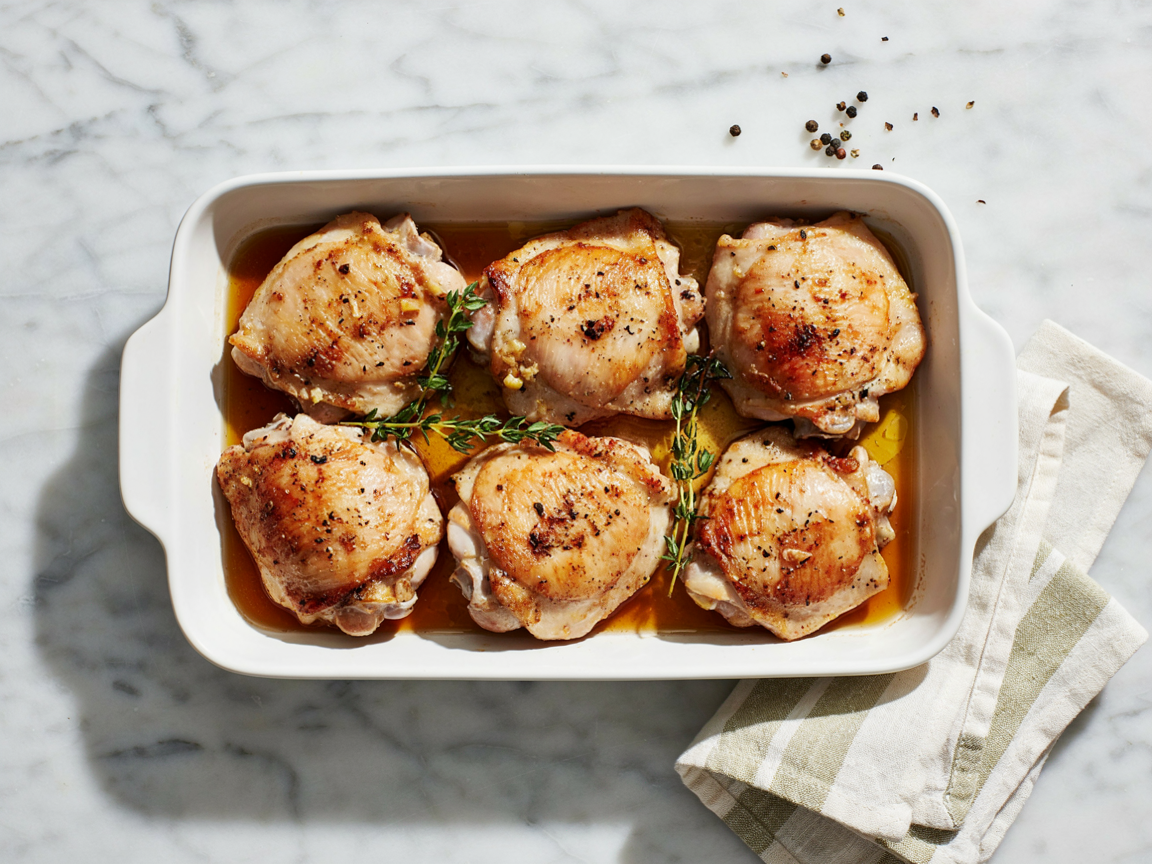
Single layer, space between each one. Crowded thighs steam instead of browning.
The Sauce, and Why It Goes Grainy
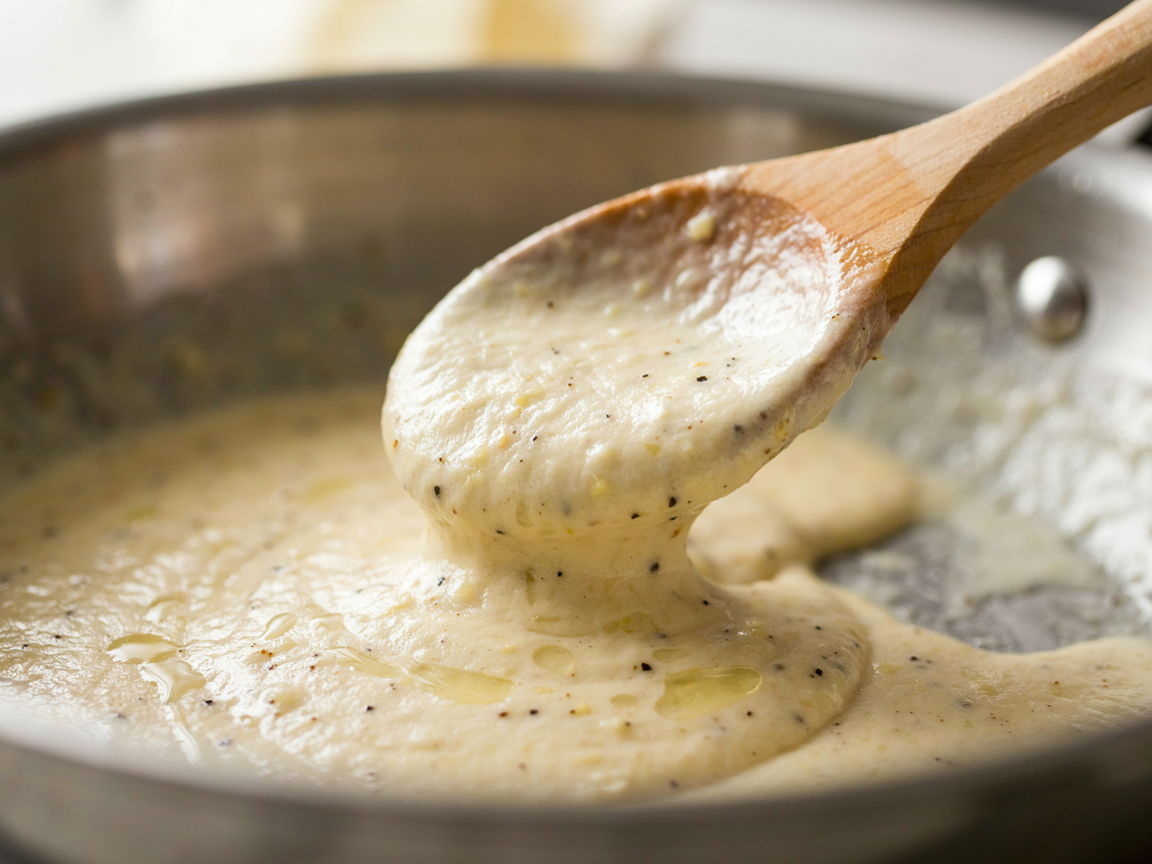
Ready when it ribbons off the spoon and holds a line when you drag a finger through it.
Grate your own parmesan. This is the single most common reason a cream sauce turns gritty. Pre-grated parmesan is dusted with cellulose or potato starch so the shreds do not clump in the bag, and those anti-caking agents do not melt — they suspend in the sauce as fine grit. A block and a microplane solve it completely.
Cheese goes in off the heat. Parmesan proteins tighten and squeeze out their fat above about 180°F, which is what separates a sauce into stringy curds and oil. Pull the pan off the burner, count to thirty, then stir the cheese in. It will melt from the residual heat alone.
Pasta water is not optional. The starch suspended in it acts as an emulsifier, binding the fat and the liquid so the sauce clings to the pasta rather than sliding off. A cream sauce finished without it always tastes heavier and looks thinner on the plate. Reserve more than you think you need — you can always tip it away.
Do not let the cream boil hard. A bare simmer reduces it gently. A rolling boil splits it, and a split cream sauce is much harder to bring back than one you simply need to thicken further.
Finishing the sauce in the pan with the pasta matters too. That last minute of tossing lets the pasta release a little more starch directly into the sauce and absorb some of it back. Pouring sauce over plated pasta skips that entirely, and you can taste the difference.
Five Ways to Change It Up
All built on the same method. Quantities are for the 4-person batch.
Pasta shapes
Shape matters more than people expect with a cream sauce. You want ridges and hollows for the sauce to catch in.
- Penne rigate — the default. Ridges hold sauce, the tube traps it.
- Rigatoni — wider tubes, best if you like big bites of chicken with each forkful.
- Fusilli or cavatappi — spirals catch more sauce than any other shape here.
- Avoid smooth penne lisce and long strands — the sauce slides straight off and pools.
Lighter version
Noticeably lighter without losing the coating texture, because the starch does more of the work.
- Swap the heavy cream for ¾ cup whole milk plus ½ cup chicken stock
- Whisk 2 teaspoons of cornstarch into the cold milk before it goes in the pan
- Reduce the butter to 2 tablespoons
- Use a little more pasta water at the end — this version tightens faster as it sits
Spicy
Heat cuts through the cream and makes the whole dish taste less heavy.
- 1 to 2 teaspoons Calabrian chilli paste stirred into the butter with the garlic
- Or ½ to 1 teaspoon red pepper flakes, added at the same point
- Add ¼ teaspoon cayenne to the chicken seasoning for heat all the way through
- Finish with lemon zest — it sharpens the heat rather than cooling it
Sun-dried tomato
The version that tastes like a restaurant dish for about ninety extra seconds of work.
- ⅓ cup oil-packed sun-dried tomatoes, drained and sliced thin
- Cook them in the butter for 1 minute before the garlic goes in
- Use 1 tablespoon of the tomato oil in place of some of the butter
- Finish with torn fresh basil instead of parsley
Add greens
The easiest way to make this a complete meal without another pan.
- Spinach — 4 large handfuls stirred into the finished sauce; it wilts in under a minute
- Broccoli — drop florets into the pasta water for the last 3 minutes and drain together
- Peas — frozen, straight into the pasta water for the final minute
- Asparagus — cut into batons and roast alongside the chicken for the last 10 minutes
Substitutions That Actually Work
Every swap below has been chosen so the method stays the same. Anything that changes the timing is flagged.
| Instead of | Use | What changes |
|---|---|---|
| Instead ofHeavy cream | Use¾ cup whole milk whisked with 2 tsp cornstarch, or evaporated milk straight from the can | What changesLighter and it tightens faster as it sits, so keep more pasta water back |
| Instead ofParmesan | UsePecorino Romano — use about two-thirds — or Grana Padano | What changesPecorino is much saltier, so cut the salt on the chicken |
| Instead ofChicken thighs | UseBreasts cut to an even thickness, 400°F for 18–20 minutes, pulled at 160°F | What changesLeaner and far less forgiving, and it will not reheat as well |
| Instead ofPenne | UseRigatoni, fusilli or cavatappi | What changesNo timing change. Avoid smooth penne lisce and long strands — the sauce slides off |
| Instead ofAn oven | UseSear the thighs in a skillet, 5–6 minutes a side over medium, then build the sauce in the same pan | What changesOne less dish, but you lose the hands-off window that makes this 30 minutes |
| Instead ofDairy, entirely | UseFull-fat canned coconut milk plus 2 tbsp nutritional yeast in place of the parmesan | What changesNoticeably coconut-flavoured — it works best with the spicy variation |
| Instead ofWheat pasta | UseAny short gluten-free shape, cooked 1 minute under the package time | What changesGF cooking water is much starchier, so add it a splash at a time or the sauce turns gluey |
The one swap not worth making: pre-grated parmesan in place of a block. It is coated in cellulose to stop it clumping, that coating does not melt, and it is the single most common cause of a gritty sauce.
Meal Prep, Storage and Reheating Cream Sauce
Pick your timeline:
Components ahead — up to 2 days
The best way to shorten this further. Season the raw thighs and refrigerate them in a covered dish for up to 24 hours — they actually benefit from the time, since the salt works its way in. Mince the garlic and grate the parmesan up to 2 days ahead and keep them in sealed containers. On the night, you are down to about 25 minutes and almost no prep.
Meal prep boxes — 4 days
This dish boxes up better than most creamy pasta because thigh meat does not dry out on reheating. Portion into airtight containers and refrigerate up to 4 days. Add 1 tablespoon of milk or stock to each box before sealing — the pasta absorbs sauce overnight, and that splash is what it drinks back when reheated. Keep the parsley separate and add it fresh.
Reheating without splitting
Cream sauces split when they are reheated fast. On the stove: low heat, a splash of milk, stirring gently, 4 to 5 minutes — this is the best result by a distance. In the microwave: 50 per cent power in 45-second bursts, stirring between each, with a tablespoon of milk added first. Full power for two minutes will separate the fat out every time and there is no coming back from it.
Freezing — honestly, don’t
Cream sauces freeze badly. The emulsion breaks on thawing and the pasta turns mushy from ice crystals, so what you get back is oily and grainy no matter how carefully you reheat it. If you need to freeze something, freeze the cooked seasoned thighs on their own for up to 3 months, then make the pasta and sauce fresh in about 15 minutes. That gets you most of the convenience with none of the texture loss.
What to Serve With It
The sauce is rich, so everything alongside it should cut rather than add.
A sharp green salad
Peppery leaves with a mustard vinaigrette. The acid resets your palate between forkfuls, which is exactly what a cream sauce needs beside it.
Roasted broccoli or asparagus
Roast at 425°F alongside the chicken for the last 10 minutes. Same oven, same pan if there is room, no extra timing to manage.
Garlic bread — with a caveat
It works, but it doubles down on richness. If you serve it, keep the portion small and skip the cheese on top.
Something cold and sharp to drink
Sparkling water with a lot of lemon, or unsweetened iced tea. Anything sweet makes the whole plate feel heavier than it is.
Troubleshooting
Pick whatever went wrong:
The sauce split into fat and liquid
The cream boiled too hard, or the cheese went in over direct heat. The fix: take it off the heat, add 2 tablespoons of cold cream and whisk hard — the temperature drop plus agitation will often bring it back. If that fails, whisk a tablespoon of pasta water into a clean pan and add the split sauce a spoonful at a time, re-emulsifying it around the starch.
The sauce is gritty
Almost certainly pre-grated parmesan. The cellulose and potato starch used to stop it clumping in the bag do not melt, and they stay in the sauce as fine grit. The fix: there is no rescue once it is in — but next time, grate from a block. If it is only slightly gritty, a good splash of pasta water and hard tossing will mask a lot of it.
Too thick and claggy
Either the cream reduced too far or the pasta sat in it and drank it. The fix: reserved pasta water, a splash at a time, tossing between additions. If you have already tipped it away, use warm milk or stock rather than plain water — plain water thins the flavour along with the texture.
Too thin and watery
Not enough reduction, or too much pasta water at once. The fix: return the pan to medium-low without the pasta in it and simmer 2 to 3 more minutes, then add another handful of grated parmesan off the heat. Remember that the sauce tightens noticeably in the 2 minutes between the pan and the table, so stop just before it looks right.
The chicken tastes bland or came out dry
Bland is almost always wet chicken — seasoning slides off a damp surface instead of sticking. The fix: pat the thighs properly dry before oiling, and season more heavily than feels right, since the pasta and sauce dilute it. Dry means either overcooked well past 175°F or sliced without resting. Give them a full 5 minutes before the knife goes anywhere near them.
Questions, Answered
What temperature should boneless skinless chicken thighs be cooked to?
Thighs are safe at 165°F, but they are noticeably better at 175°F to 180°F. That extra range gives the connective tissue time to break down, which is what takes them from slightly springy to genuinely tender. At 425°F, boneless skinless thighs take about 22 to 25 minutes to get there.
Can I use chicken breast instead of thighs?
Yes, with adjustments. Cut the breasts to an even thickness so they cook uniformly, drop the oven to 400°F, bake for 18 to 20 minutes and pull them at 160°F so carryover heat brings them to 165°F. Rest them a full 10 minutes before slicing. They will be leaner and less forgiving, and they will not reheat as well the next day.
Why is my parmesan cream sauce grainy?
Two causes. Pre-grated parmesan is coated in cellulose or potato starch to stop it clumping in the bag, and those anti-caking agents do not melt, so they stay suspended as grit. The other cause is adding cheese over direct heat, which makes the proteins tighten and squeeze out their fat. Grate from a block and stir the cheese in off the heat.
Do I really need to save pasta water?
Yes, it does real work. The starch suspended in the water acts as an emulsifier, binding the fat and liquid together so the sauce clings to the pasta instead of sliding off it. A cream sauce finished without it tastes heavier and looks thinner on the plate. Reserve more than you think you need, because you can always pour it away.
How do I reheat creamy pasta without it splitting?
Slowly, with added liquid. On the stove, use low heat with a splash of milk and stir gently for 4 to 5 minutes. In the microwave, add a tablespoon of milk first and heat at 50 per cent power in 45-second bursts, stirring between each. Full power will separate the fat out of the sauce and there is no way to bring it back.
Can I freeze chicken thigh pasta?
Not successfully. Cream sauces break when thawed and the pasta goes mushy from ice crystals, so it comes back oily and grainy however carefully you reheat it. Freeze the cooked seasoned thighs on their own for up to 3 months instead, then make the pasta and sauce fresh, which takes about 15 minutes.
What pasta shape works best?
Short shapes with ridges or hollows. Penne rigate, rigatoni, fusilli and cavatappi all catch and hold a cream sauce well. Avoid smooth penne lisce and long strands like spaghetti, because the sauce slides off them and pools at the bottom of the bowl instead of coating each bite.
How long does this keep in the fridge?
Four days in airtight containers. Add a tablespoon of milk or stock to each portion before sealing, because the pasta absorbs sauce overnight and that splash is what it drinks back when reheated. Keep fresh parsley separate and add it after reheating rather than before.
Keep Reading
More pasta from the site, hot and cold.
Oven for the chicken, stove for the sauce, and a mug of pasta water to bring them together. That split is the whole reason this lands in thirty minutes instead of fifty.
Pin this boneless skinless chicken thigh pasta so the timeline and the reheating method are there on the night you need them — then come back and tell us which variation you went with.