
Honing Steel vs Whetstone: What Each Does and When to Use It
Honing steel vs whetstone: what each one does to the edge, how often to use them, how to hone a knife, and six picks.
Best everyday steel: Victorinox 10″ Steel. Best for Japanese knives: Mac Ceramic Rod. Best first whetstone: King KW65. Best no-skill sharpener: Work Sharp E2.
A honing steel and a whetstone do two different jobs. Honing straightens the edge you have; a whetstone grinds a new one.
Use a honing steel about once a week to keep a sharp knife sharp: it pushes a bent edge back into line. Use a whetstone every few months, or when honing stops working, to grind a new edge. Most kitchens need both.
The chart, a quick test and six picks follow.
Product links go to Amazon. As an Amazon Associate, Kitchen Guide 101 earns from qualifying purchases.
Honing Rods, Whetstones and a Sharpener Compared
All 6 side by side. Tap any name to see it on Amazon.
| Tool | Type | Removes metal | How often | Best for | Price |
|---|---|---|---|---|---|
| Victorinox 10-Inch Honing Steel | Steel rod | Very little | Weekly | Everyday knives | $ |
| Wüsthof 10-Inch Honing Steel | Steel rod | Very little | Weekly | German knives | $$ |
| Mac White Ceramic Honing Rod | Ceramic rod | A little | Weekly | Japanese knives | $$ |
| King KW65 1000/6000 Combination Whetstone | 1000 / 6000 stone | Yes | Every few months | Sharpening at home | $ |
| Shapton Ha No Kuromaku 1000 Grit Ceramic Whetstone | 1000 stone | Yes | Every few months | Sharpening often | $$ |
| Work Sharp Culinary E2 Electric Knife Sharpener | Electric sharpener | Yes, more than stones | When honing stops working | Sharp knives with no practice | $$ |
Details are as stated on each Amazon listing at time of writing and can change. Price tiers: $ lowest in this group · $$ middle · $$$ highest.
3 Honing Rods, 2 Whetstones and an Electric Sharpener, Reviewed
Picks match the best honing steels and best whetstones guides.
Victorinox 10-Inch Honing Steel
A simple stainless honing steel with an ergonomic, slip-resistant handle. Ten inches gives room to hone an 8-inch chef knife from heel to tip.
It keeps everyday knives in line between sharpenings.
- Low price tier
- Comfortable grip
- Long enough for chef knives
- Realigns only, no sharpening
- Not for very hard Japanese steel
Wüsthof 10-Inch Honing Steel
A no-fuss magnetic steel from a top knife brand. It is long enough for chef knives, sturdy and made to last decades.
Pair it with Wüsthof or other German knives for weekly upkeep.
- Sturdy build
- Long enough for chef knives
- Slip-resistant handle
- Realigns only, no sharpening
- Middle price tier
Mac White Ceramic Honing Rod
A fine white ceramic rod. It realigns the edge and polishes it a little, so it suits Japanese knives that need gentle upkeep.
Ceramic can chip or break if dropped, so hang or store it with care.
- Gentle on hard steel
- Light sharpening too
- Fine finish
- Can break if dropped
- Middle price tier
King KW65 1000/6000 Combination Whetstone
A classic two-sided stone. The 1000 side sets a fresh edge and the 6000 side polishes it.
It needs a soak before use, and the softer 6000 side wears faster, so flatten it now and then.
- Sets and polishes an edge
- Trusted for decades
- Low price tier
- Needs soaking
- Takes practice
Shapton Ha No Kuromaku 1000 Grit Ceramic Whetstone
A hard ceramic stone that is ready with a splash of water. It cuts quickly and stays flat longer than softer soaking stones.
One grit only, so add a finer stone later for a polished edge.
- Ready in seconds
- Stays flat longer
- Fast cutting
- Single grit
- Takes practice
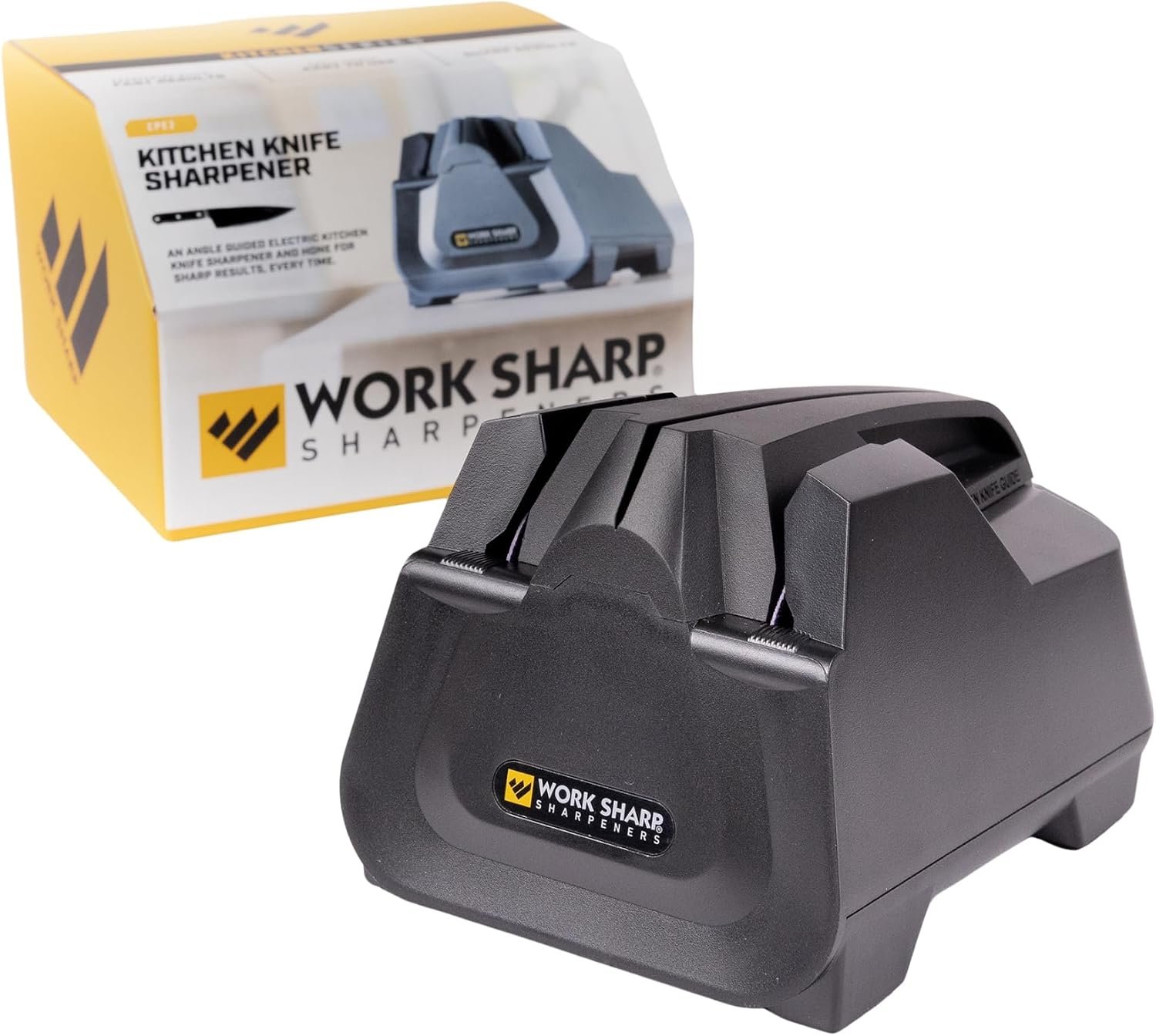
Work Sharp Culinary E2 Electric Knife Sharpener
Guided slots and a motor set the angle for you, so a dull chef, santoku, paring or serrated knife gets a keen edge in seconds. It fits in a drawer.
Electric sharpeners remove more steel than stones, so keep honing between uses and sharpen only when honing stops working.
- No skill needed
- Sharpens serrated knives
- Drawer-sized
- Removes more steel than stones
- Less control than a whetstone
Honing Steel vs Whetstone: Side by Side
| Honing steel | Whetstone | |
|---|---|---|
| What it does | Pushes a bent or rolled edge back into line | Grinds away metal to form a new edge |
| Removes metal | Very little (steel) to a little (ceramic) | Yes |
| How often | About once a week at home | Every few months for most home cooks |
| Time | About a minute | Longer, and it takes practice |
| Fixes a dull knife | No | Yes |
| Skill | Easy to learn | Holding the angle takes practice |
| Best for | Keeping a sharp knife sharp | Bringing back a dull edge |
A honing steel cannot fix a dull edge, and a whetstone is too much work for weekly upkeep. That is why most kitchens use both.
Which One Does Your Knife Need?
Slice a sheet of paper. If the knife snags or tears it, hone the edge and try again. If it still snags after honing, the edge is worn and needs a whetstone.
| Rod | What it does | Best for |
|---|---|---|
| Steel (smooth or ribbed) | Realigns the edge only | German and Western knives, daily honing |
| Ceramic | Realigns and sharpens lightly | Japanese knives and gentle upkeep |
| Diamond | Removes metal like a coarse sharpener | Dull or very hard steel, used sparingly |
Rod types as described in the best honing steels guide.
How to Use a Honing Steel
Hold the rod upright
Rest the tip on a cutting board or towel so it cannot slip.
Match the angle
About 15 degrees for Japanese knives and 20 for German knives.
Sweep heel to tip
Draw the blade down the rod so the whole edge touches it.
Alternate sides
One stroke per side, five to ten times.
Keep it light
Honing is a light touch, not a scrub.
Wipe the blade
Wipe off any metal dust before you cook.
Ready to sharpen? Follow how to sharpen a knife with a whetstone.
How to Choose
Five things to check.
Longer than the blade
A 10-inch rod suits an 8-inch chef knife.
Steel, ceramic or diamond
Ceramic for hard Japanese knives.
Start with 1000
Add a fine side later for polish.
Soak or splash
Splash-and-go stones are ready faster.
Stone or electric
An electric sharpener trades control for speed.
More knife guides: budget knife sharpeners, Japanese chef knives, chef knives and knife deals.
Honing Steel vs Whetstone FAQs
Is honing the same as sharpening?▼
No. Honing pushes the edge back into line and removes little or no metal. Sharpening grinds away metal to make a new edge.
Do I need both a honing steel and a whetstone?▼
For most home cooks, yes: hone about once a week and sharpen every few months.
How often should I hone my knives?▼
About once a week for home cooks. Cooks who use their knives all day often hone before each session.
How often should I use a whetstone?▼
Every few months for most home cooks, or whenever honing no longer brings the edge back.
Can a honing steel damage a knife?▼
Heavy pressure or a ribbed steel can chip very hard Japanese edges. Use a ceramic rod and a light touch on those knives.
Ceramic or steel honing rod?▼
Ceramic is gentler and sharpens lightly; steel is more durable for daily honing.
Can I use a whetstone instead of a honing steel?▼
You can, but every sharpening removes metal. A rod is the gentler way to keep an edge between sharpenings.
Is an electric sharpener better than a whetstone?▼
It is faster and needs no skill, but it removes more steel. A whetstone gives more control.
The Bottom Line
- Weekly honing: the Victorinox 10″ Steel or the Wüsthof 10″ Steel.
- Japanese knives: the Mac Ceramic Rod.
- Sharpening every few months: the King KW65 or the Shapton Kuromaku 1000.
- No time to learn a stone: the Work Sharp E2.
Hone often, sharpen rarely, and a good knife stays sharp for years.