
End Grain vs Edge Grain Cutting Boards: Which Is Better?
End grain is kinder to knives and hides cuts; edge grain is flatter, simpler and costs less. Here is how they compare, with five boards and the cream that keeps both in shape.
An end-grain cutting board is made from short blocks stood on end, so the wood fibers point up. An edge-grain board is made from long strips laid side by side, so the fibers run along the board.
John Boos, which makes both, says end grain keeps knives sharper longer, while edge grain is the more affordable, flatter choice.
End grain if you want the kindest surface for your knives and a board that hides cuts, and you will oil it often. Edge grain if you want a flat, lighter-priced board that is easy to refresh by sanding. Both are equally good for food safety and durability when cared for.
A side-by-side chart, which board suits which cook, care for each, and five boards plus a board cream are below.
Product links go to Amazon. As an Amazon Associate, Kitchen Guide 101 earns from qualifying purchases.
End-Grain and Edge-Grain Boards Compared
Sizes and features are from each listing. Tap any name to see it on Amazon.
| Board | Grain | Wood | Size | Best for | Price |
|---|---|---|---|---|---|
| Sonder Los Angeles Alfred Black Walnut End-Grain Cutting Board | End grain | Black walnut | 17 x 13 x 1.5 in | Prep and serving | $$$ |
| John Boos Classic Maple End-Grain Chopping Block | End grain | Hard maple | 18 x 12 x 1.75 in | A board for life | $$$ |
| Teakhaus End-Grain Teak Butcher Block | End grain | Teak (FSC-certified) | 16 x 12 x 1.5 in | Everyday prep | $$ |
| John Boos Maple Edge-Grain Cutting Board | Edge grain | Hard maple | Several sizes | A flat, steady surface | See listing |
| Teakhaus Edge-Grain Teak Cutting Board | Edge grain | Teak | Several sizes | Everyday prep | See listing |
| John Boos Board Cream | Board care | For any wood | 5 oz | Both board types | $ |
Details are as stated on each Amazon listing at time of writing and can change. Price tiers: $ lowest in this group · $$ middle · $$$ highest.
3 End-Grain Boards, 2 Edge-Grain Boards and a Board Cream
End-grain picks match the best end-grain cutting boards list; the edge-grain boards come from the same makers for a fair comparison.
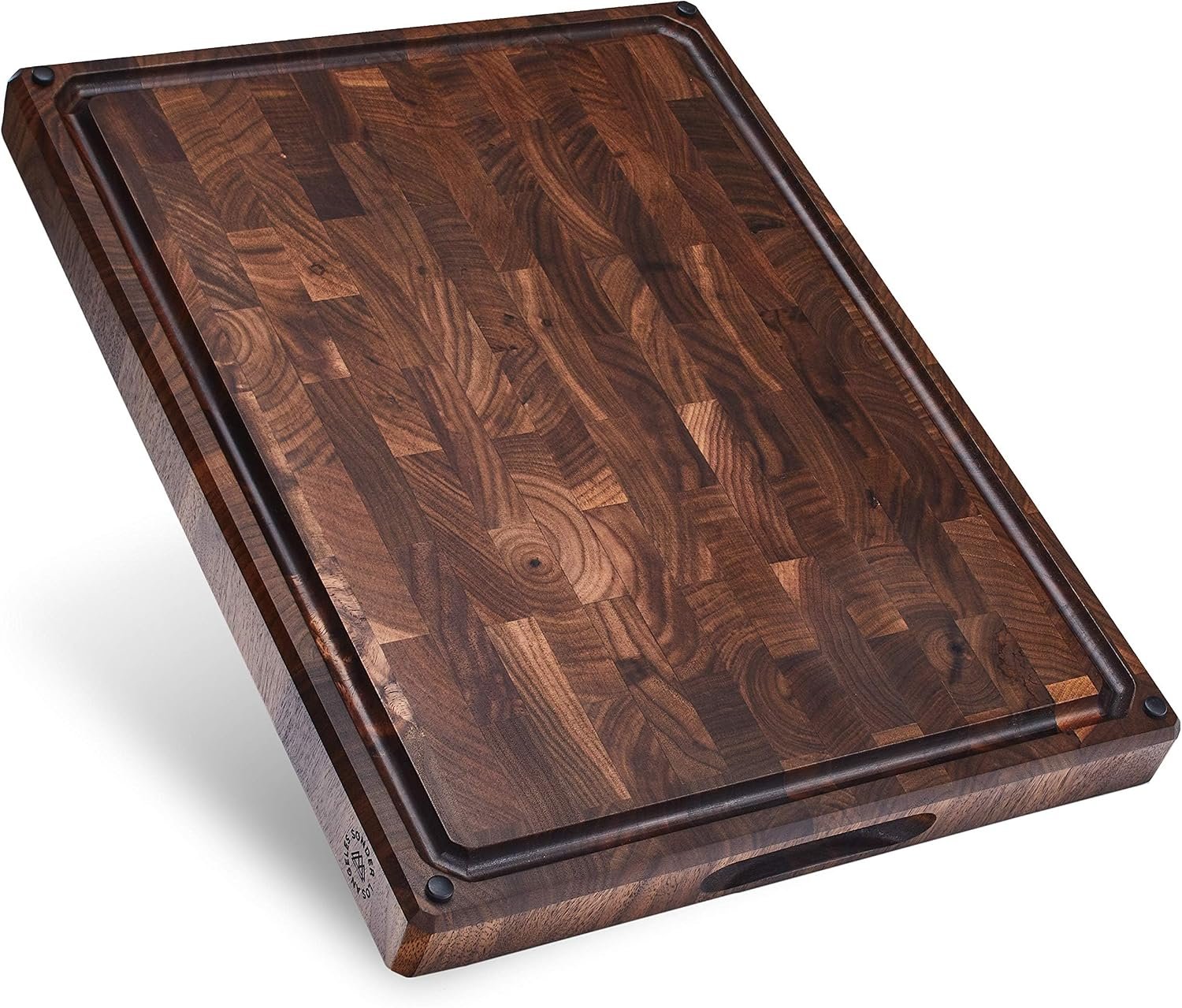
Sonder Los Angeles Alfred Black Walnut End-Grain Cutting Board
An end-grain board in American black walnut, 17 by 13 inches and 1.5 inches thick. On end grain the fibers stand upright, so the knife slips between them and the surface closes back up.
It adds a deep 3.5-ounce juice groove, three sorting wells and removable non-slip feet.
- Knife-friendly end grain
- Juice groove and sorting wells
- Made in USA
- Needs regular oil
- Highest price tier here
John Boos Classic Maple End-Grain Chopping Block
The classic American end-grain block in hard maple, 18 by 12 inches and 1.75 inches thick. John Boos says the end-grain fibers absorb the blade’s impact, which keeps knives sharper.
It is reversible with finger grips, and Boos says to oil it at least once a month.
- Thick and steady
- Reversible
- Maple is the classic block wood
- Heavy to move
- Monthly oiling
Teakhaus End-Grain Teak Butcher Block
An end-grain block in FSC-certified teak, 16 by 12 inches and 1.5 inches thick. It costs less than the walnut and maple end-grain boards here while keeping the knife-friendly surface.
It has a juice groove and grip handles and is reversible.
- Knife-friendly end grain
- Lower price tier than the others
- Reversible with handles
- Still needs oiling
- Teak is darker than maple
John Boos Maple Edge-Grain Cutting Board
Edge grain is built from long maple rails laid side by side, with the fibers running lengthwise. John Boos says edge grain gives a uniform thickness and a true flat cutting surface, and costs less than end grain.
Knife marks show over time; Boos suggests sanding with the grain, then oil and cream.
- Flat and even
- Lower cost than end grain
- Easy to refresh by sanding
- Shows knife marks
- Still needs oiling
Teakhaus Edge-Grain Teak Cutting Board
The edge-grain version of the teak board: long teak strips glued side by side. Edge-grain boards are usually lighter on the wallet than end grain, and the flat rails make a steady surface for slicing.
Pick a size that fits your sink for easy washing.
- Flat slicing surface
- Several sizes
- Lower cost than end grain
- Shows knife marks
- Check the size on the listing
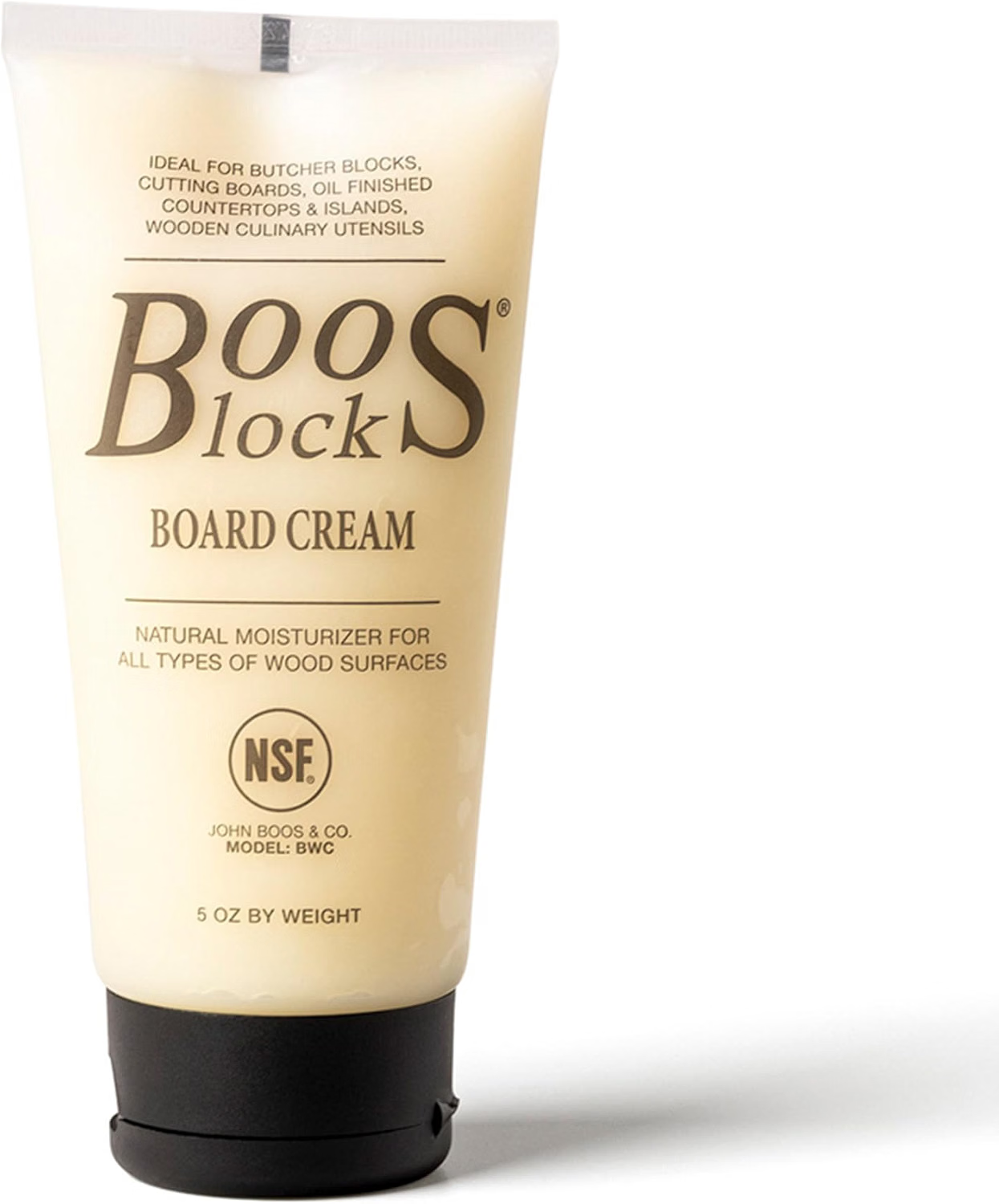
John Boos Board Cream
Whichever board you pick, it lasts longer with care. Boos Board Cream is unbleached beeswax and food-grade mineral oil, made to seal in moisture after you oil the board.
End grain drinks more oil, so it needs this more often than edge grain.
- Seals in moisture
- Food-safe ingredients
- Works on all wood boards
- Needs reapplying
- Use with an oil, not instead
End Grain vs Edge Grain at a Glance
| End grain | Edge grain | |
|---|---|---|
| How it is built | Short pieces stood on end, fibers upright | Long rails side by side, fibers running lengthwise |
| On your knife | The blade slips between fibers; knives stay sharper longer | Knife-friendly, but the blade cuts across the fibers |
| Cut marks | Fibers close back up; marks hide | Marks show over time; sand them out |
| Surface | Checkerboard look | Uniform thickness, true flat surface |
| Oiling | May need more oil to stop drying out | Regular oiling |
| Price | Can cost more to make | More affordable |
| Food safety and durability | Equally good | Equally good |
From John Boos.
Which One Is Right for You?
Knife lovers
End grain: the blade slips between the fibers instead of cutting across them.
Budget first
Edge grain: it costs less to make, and it is still knife-friendly.
Heavy chopping
A thick end-grain block stays put and hides cut marks.
Slicing and carving
Edge grain gives a flat, even surface.
Low upkeep
Edge grain needs less oil than end grain.
Raw meat
Keep a separate board for raw meat, poultry and fish. A plastic board works; see plastic cutting boards.
Bamboo is another option; see bamboo cutting boards.
How to Care for Each
Wash by hand
Warm water and a little dish soap; never the dishwasher.
Never soak
Soaking upsets the moisture in the wood and can split the rails.
Dry upright
Stand it on edge so air reaches both sides.
Oil monthly
At least once a month, with food-grade mineral oil, never cooking oil.
Seal it
Board cream after oiling locks the moisture in.
Refresh edge grain
Sand out knife marks with the grain, then oil and cream.
Step by step: how to oil a cutting board and how to clean a wooden cutting board.
How to Choose a Cutting Board
Five things to check.
Pick the grain
End grain for knife care and hidden cuts; edge grain for a flat, lower-cost board.
Pick the wood
Maple is the classic; walnut and teak are darker.
Size it
About 16 by 12 inches suits daily prep; bigger for carving.
Check the thickness
The end-grain boards here are 1.5 to 1.75 inches thick.
Plan the care
Hand wash, dry upright, oil at least monthly.
More knife and board guides: mineral oil for cutting boards, how to sharpen a knife with a whetstone, honing steel vs whetstone and knife deals.
End Grain vs Edge Grain FAQs
Is end grain or edge grain better for a cutting board?▼
End grain is kinder to knives, because the blade slips between the fibers. Edge grain is flatter and costs less. John Boos calls both equally good for food safety and durability.
Does end grain keep knives sharper?▼
Yes. John Boos says the end-grain fibers separate and close back up, which keeps the edge sharper, longer.
Why do end-grain cutting boards cost more?▼
They take more work to make: many short blocks are cut, stood on end and glued.
Do end-grain boards need more oil?▼
Yes. John Boos says end grain may need more oiling to keep it from drying out.
Can you sand an edge-grain cutting board?▼
Yes. Sand with the grain to remove knife marks, then oil and apply board cream.
Can wooden cutting boards go in the dishwasher?▼
No. John Boos says wood cutting boards are not dishwasher safe, and they should never be soaked.
How often should you oil a wooden cutting board?▼
At least once a month, and whenever it looks dry or lighter in color.
Should I use a separate board for raw meat?▼
Yes. Use one board for raw meat, poultry and fish and another for ready-to-eat food.
The Bottom Line
- End grain: the Sonder Alfred Walnut or the John Boos Maple End-Grain for a board for life; the Teakhaus End-Grain for value.
- Edge grain: the John Boos Maple Edge-Grain for a flat, lower-cost board.
- Either way: oil monthly and seal with John Boos Board Cream.
Pick end grain for your knives, edge grain for your budget, and oil either one every month.