Range Hood Inserts: The 8 Best Custom Hood Liners of 2026
Compared by cabinet width, airflow and venting direction — from a 24-inch vent hood insert for a narrow cabinet to a 46-inch pro-style liner. With the measurements to take before you order.
A range hood insert — also listed as a vent hood insert or a hood vent insert — is the working half of a range hood: the blower, filters and lights, with no outer shell. You supply the hood: a custom wood surround, a plaster chimney, or a cabinet. The insert drops inside and disappears.
That makes one measurement matter more than any spec on the box: the internal width of the shell it has to sit in. Get that wrong and nothing else about the hood matters. We compared eight inserts across 24 to 46 inches on airflow, noise, venting direction and depth — the four things that actually decide whether one works in your kitchen. In a hurry, these are the top-rated picks: the best hood insert for most kitchens, the best value, and the most affordable.
What Size Range Hood Insert Do You Need?
This is the question that sends most people back to the returns desk, and it has nothing to do with your cooktop. Measure the inside of the hood shell, not the range below it. The insert has to fit within that opening with room for the mounting flange.
| Your shell opening | Buy this width | Options on this list |
|---|---|---|
| Under 26″ | 24″ insert | Zomagas 24″ |
| 26–29″ | 28″ insert | ZLINE 698-28 |
| 30–33″ | 30″ insert | IKTCH, HisoHu, Zomagas 30″, KOBE, Hauslane IN-R100SS-30, Awoco 30″ |
| 34–35″ | 34″ insert | ZLINE 698-34, Hauslane IN-R300SS-34 |
| 36–39″ | 36″ insert | IKTCH 36″, HisoHu 36″, Zomagas 36″, Hauslane 36″, Awoco 36″ |
| 40–41″ | 40″ insert | Hauslane IN-R300SS-40 |
| 42–45″ | 42″ insert | Hauslane IN-R200SS-42 |
| 46″ and over | 46″ insert | ZLINE 698-46, Hauslane IN-R300SS-46 |
The two sizes most kitchens need are the 30-inch and 36-inch range hood insert, because those match the two standard range widths. Everything else on the table is for custom or unusual shells.
One more thing worth knowing: several of these inserts are sold as a family of widths under a single listing. The Hauslane runs from 30 to 46 inches, the Zomagas covers 24, 30 and 36, the ZLINE offers 28, 34 and 46, and both the IKTCH and the HisoHu come in 30 and 36. So the product that suits your kitchen is often a size option on a listing below rather than a different brand entirely.
Range Hood Insert Comparison
| Insert | Best for | Widths | Max CFM | Rating |
|---|---|---|---|---|
| IKTCH IKB01 | Best Overall | 30″, 36″ | 900 | ★ 4.5 |
| HisoHu Insert | Best Value & Airflow | 30″, 36″ | 1,200 | ★ 4.6 |
| Broan PM300SS | Best Budget | 21″ liner | 300 | ★ 4.5 |
| Hauslane IN-R300 | Best Pro-Style | 30–46″ | 860 | ★ 4.3 |
| Zomagas 24″ | Best Narrow Cabinet | 24″, 30″, 36″ | 600 | ★ 4.5 |
| KOBE Brillia | Best Build Quality | 30″ | 550 | ★ 4.3 |
| ZLINE 698 | Best Wide Format | 28″, 34″, 46″ | 700 | ★ 4.0 |
| Awoco Split | Quietest (ceiling mount) | 30″, 36″ | 800 | ★ 4.4 |
Star ratings and review counts reflect Amazon listings at the time of writing and change over time — tap a name for the current rating, price and available sizes.
The 8 Best Range Hood Inserts, Compared
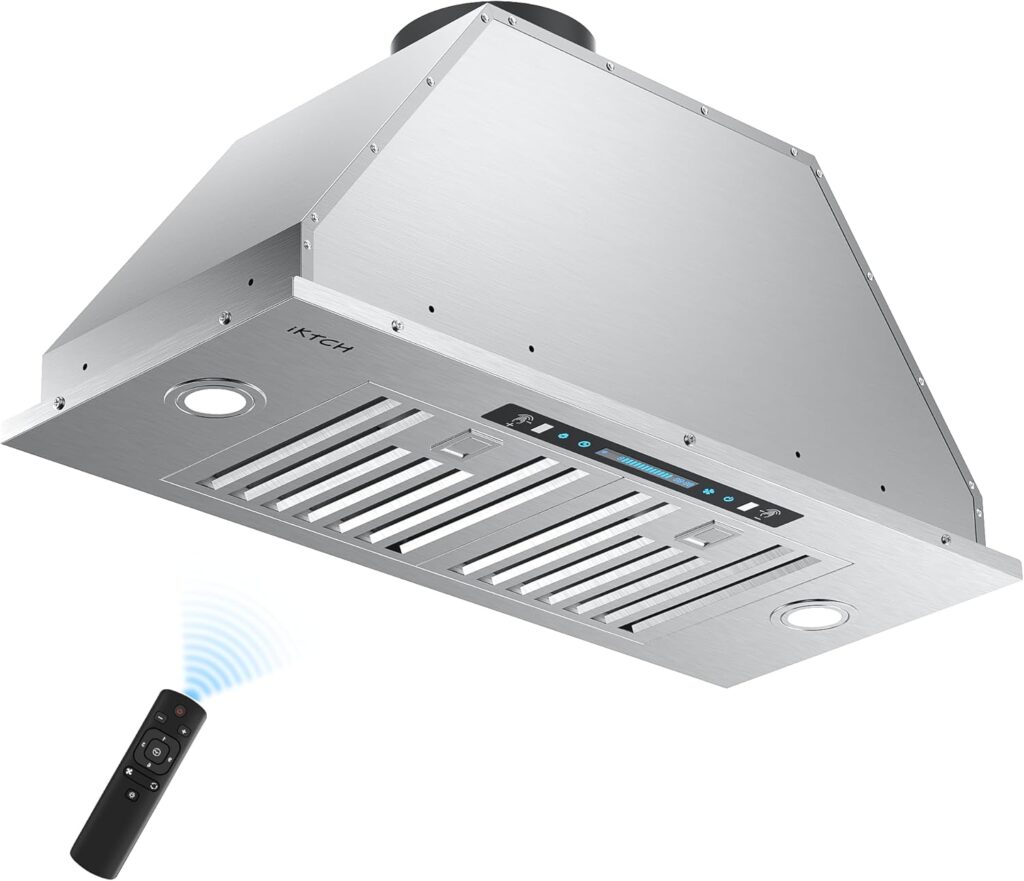
IKTCH IKB01 Insert Range Hood (30″ / 36″)
- 900 CFM
- 40–65 dB
- Gesture + touch
- Ducted or ductless
- $$
The one to buy if you want the safest choice rather than the cleverest one. Over 1,100 reviews and Amazon’s Choice is a depth of feedback no other insert here comes close to, which matters a great deal for an appliance you are about to build permanently into cabinetry.
Four speeds from 40 dB at the low setting to 65 dB flat out, gesture control for when your hands are covered in something, and dishwasher-safe stainless filters. Available in black or stainless, in 30 and 36 inch. At 11.8 inches deep it fits comfortably in most shells.
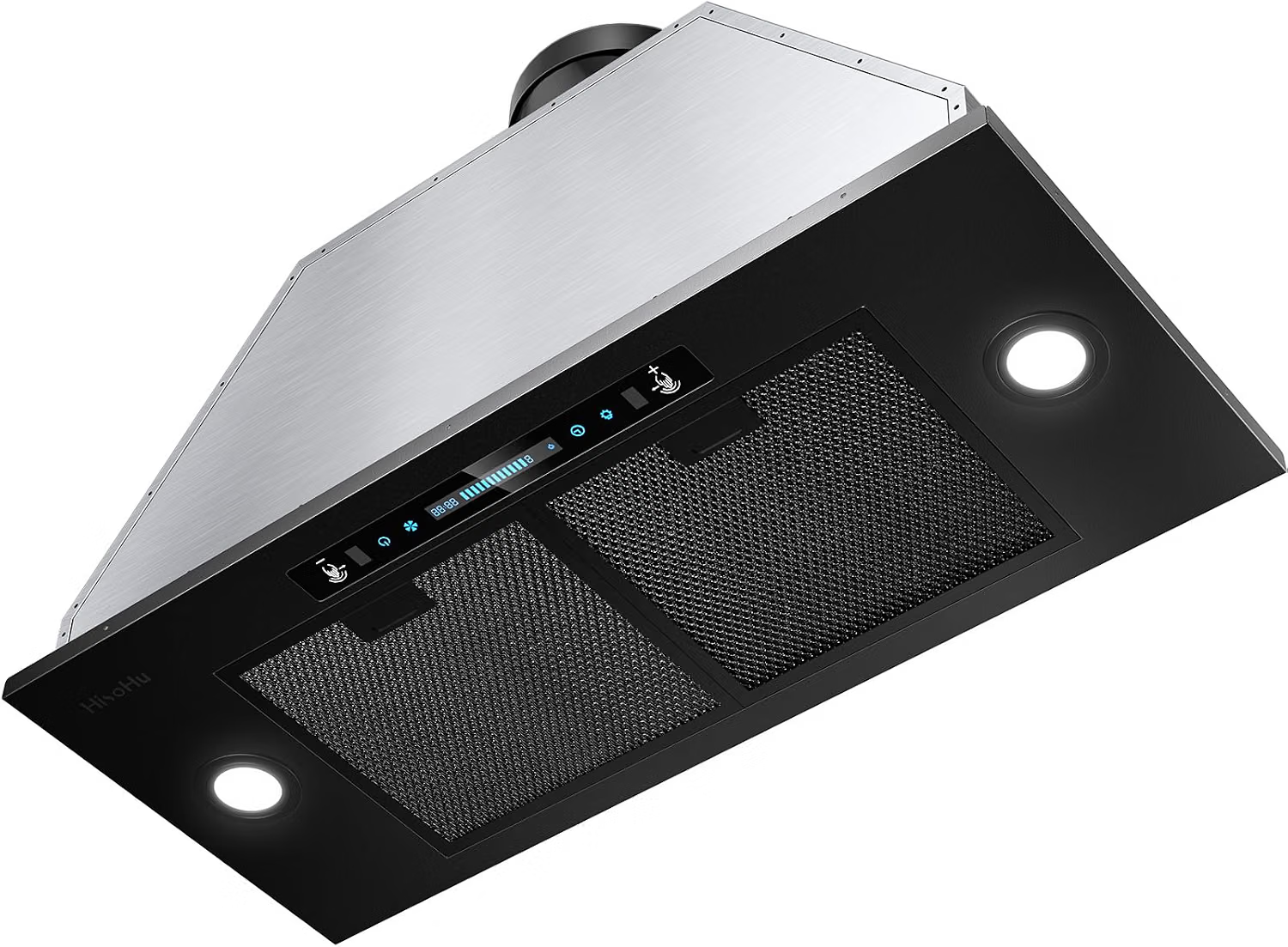
HisoHu 1200 CFM Insert Range Hood (30″ / 36″)
- 1,200 CFM
- 35 dB on low
- LCD + gesture
- 2-year warranty
- $$
The spec sheet is genuinely hard to argue with: 1,200 CFM and a claimed 35 dB on the low setting, for roughly the same money as inserts pulling 900. Four speeds, an LCD panel, gesture control, a remote, and a delayed shut-off that keeps pulling after you finish cooking.
The caveat is review depth rather than quality. Under 200 reviews is thin for something that gets built into a hood shell and is awkward to replace, so it carries more unknown than the IKTCH does. If the numbers are what you are shopping on, this is the best value on the page.
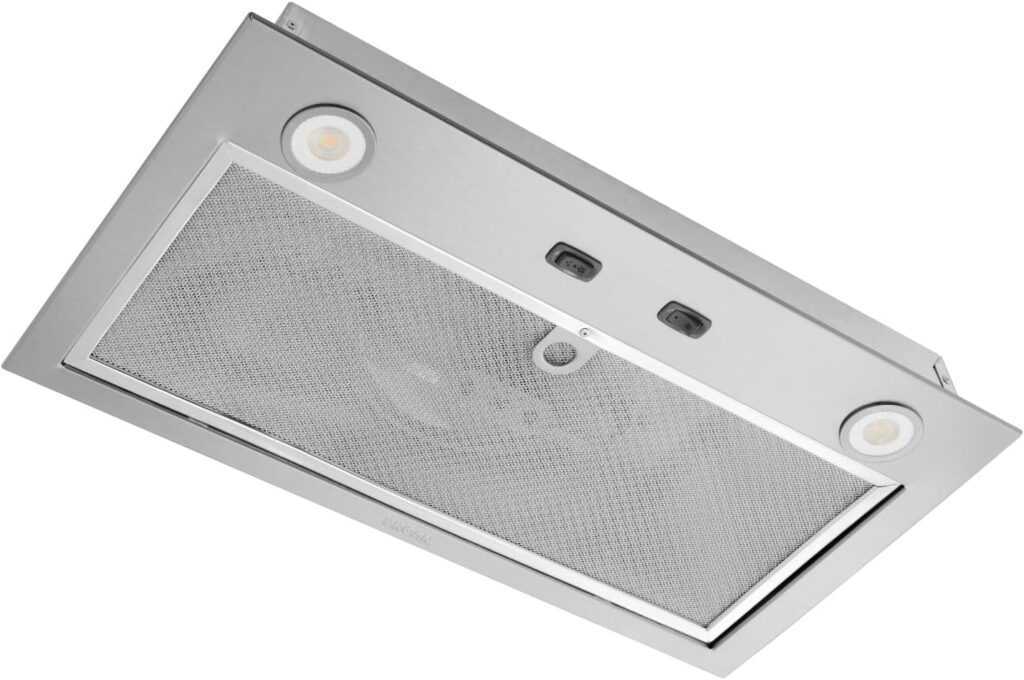
Broan-NuTone PM300SS Custom Power Pack
- 300 CFM
- 3 sones
- EZ1 clips
- 11.4″ deep
- $
Broan calls this a power pack rather than an insert, and it is the cheapest honest way into a custom hood on this list. Two speeds, 300 CFM, aluminium mesh filters that go in the dishwasher, and a single LED over the cooktop.
What makes it the easy recommendation for a first custom hood is the install. The EZ1 clips mean one person can fit it, the liner extension handles cabinets up to 13 inches deep, and at 2.8 inches tall it needs almost no clearance above. 300 CFM suits light to moderate cooking; the same listing carries 450 and 600 CFM versions if you fry often.
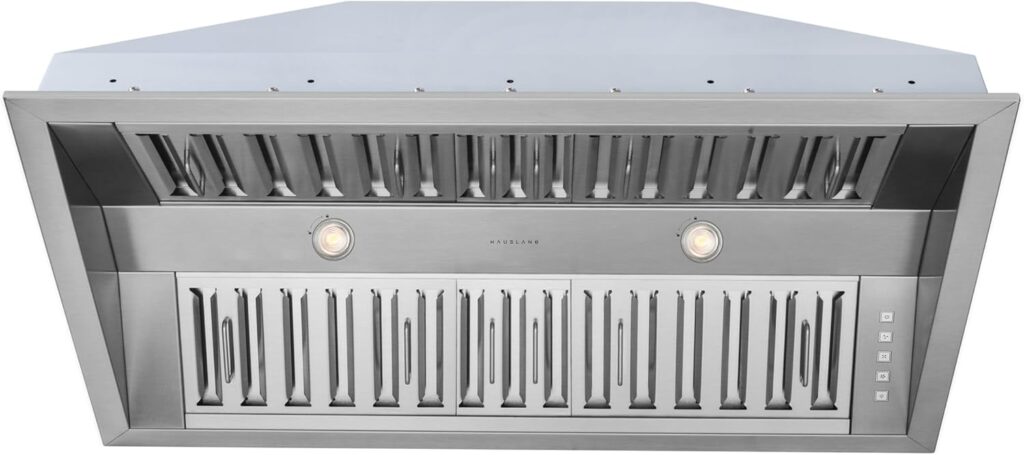
Hauslane IN-R300SS Pro-Style Insert (30″ to 46″)
- 500–860 CFM
- 21″ deep
- Baffle filters
- 30–46″
- $$$
The one with the widest size ladder by a distance. Hauslane runs this family from 30 inches all the way to 46, which makes it the answer for the widths nobody else covers — the 42-inch in particular has almost no competition on Amazon.
Commercial-style baffle filters with full-size handles rather than mesh, GU10 LEDs, three speeds and a ducted-or-ductless 6-inch outlet. The catch is depth: at 21 inches front to back it is nearly twice the depth of the Broan, so measure your shell before you commit.
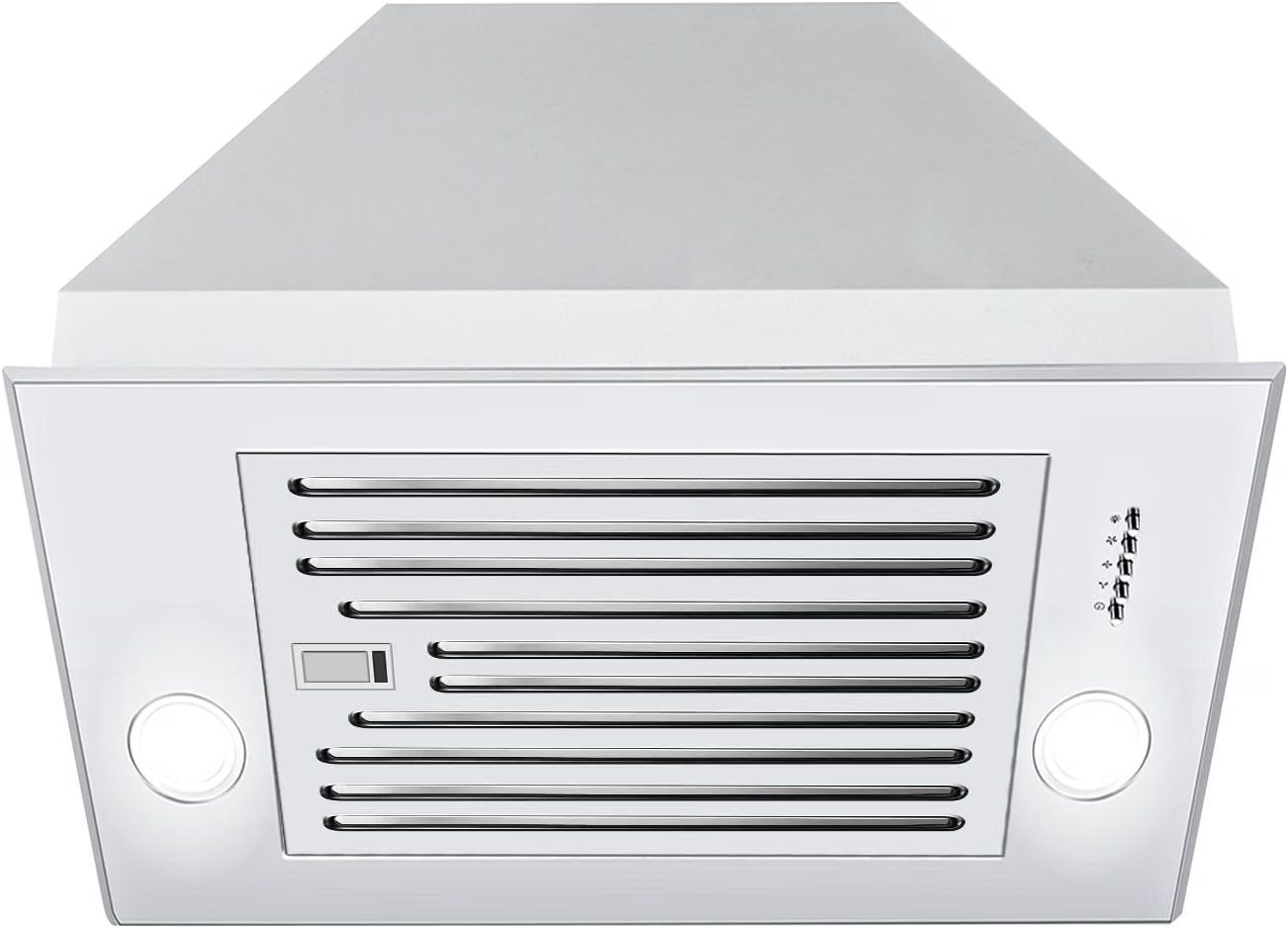
Zomagas Range Hood Insert (24″ / 30″ / 36″)
- 600 CFM
- 24″ option
- Baffle filters
- Ducted or ductless
- $
The only 24-inch insert on this list, and that is genuinely hard to find. Narrow hoods over apartment cooktops, galley kitchens and bar areas all need one, and most brands start at 30.
Six hundred CFM through stainless baffle filters, three speeds, two LEDs, and ductless conversion with the matching charcoal filters. The same listing also carries 30 and 36 inch versions at 600, 700 and 900 CFM, so it scales up if the narrow one is not what you need after all.
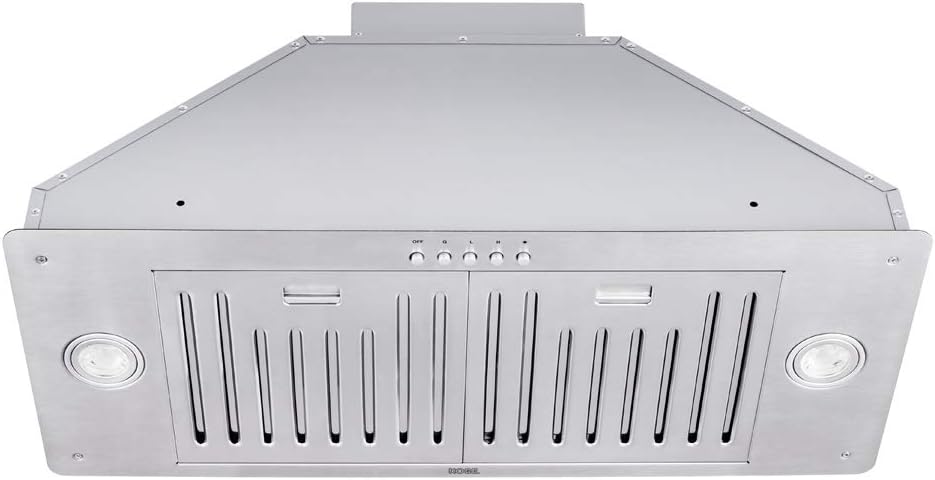
KOBE Brillia INX2730SQB-700-2 (30″)
- 550 CFM
- QuietMode
- 18-gauge steel
- Top 6″ vent
- $$$
The one built like a piece of commercial equipment. Eighteen-gauge stainless with a seamless satin finish feels a different class from the thinner pressed steel on the budget end, and KOBE has been making hoods for a long time.
Three mechanical push buttons — QuietMode, low and high — rather than a touch panel, which is a feature rather than a limitation on something that lives above a greasy cooktop. Buttons still work with a knuckle. Exhausts through a 6-inch round top vent only.
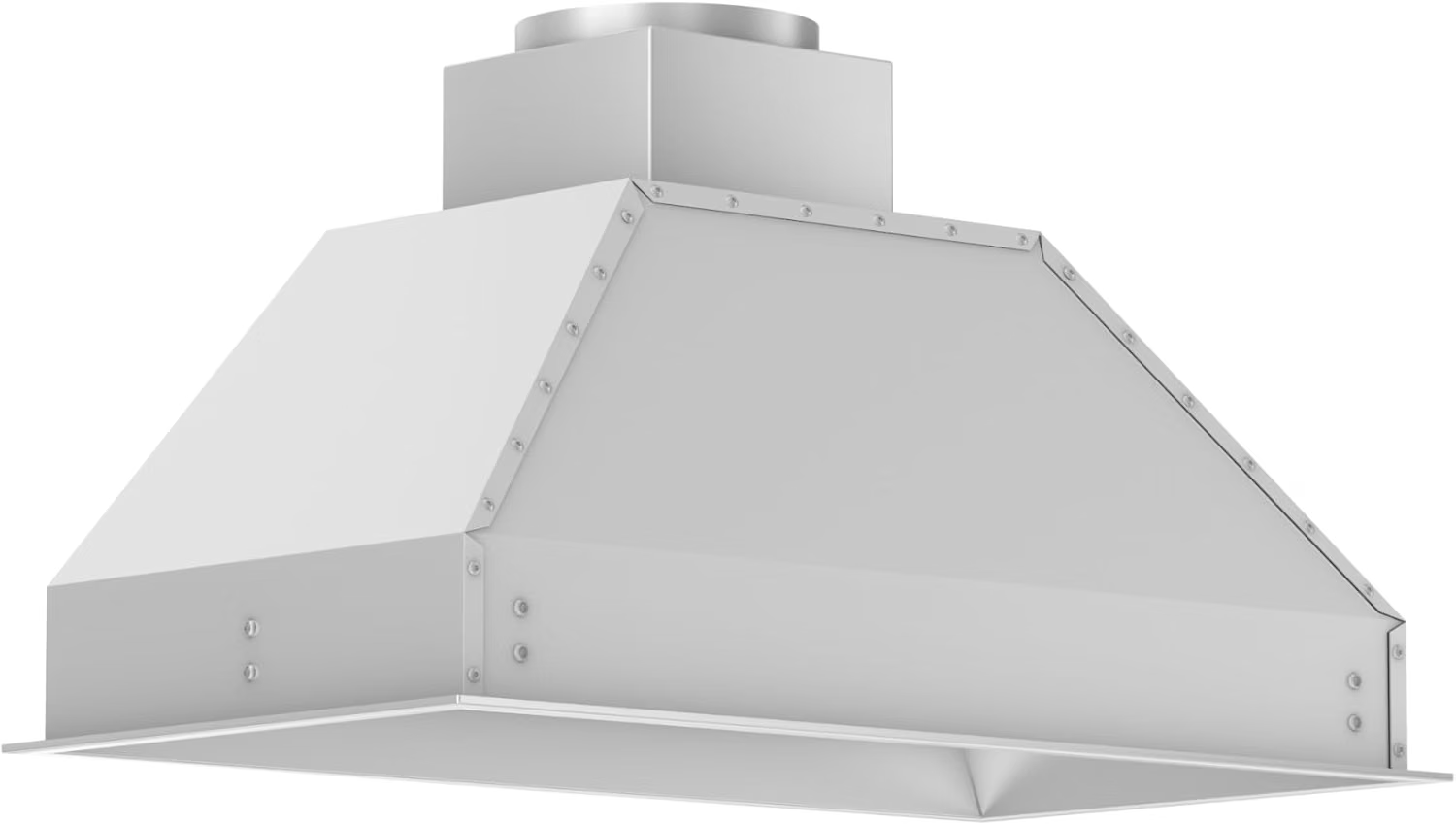
ZLINE 698-34 Ducted Insert (28″ / 34″ / 46″)
- 280–700 CFM
- 4 speeds
- 8″ duct
- Lifetime motor
- $$$
ZLINE covers the in-between widths — 28, 34 and 46 inches — that most brands skip entirely. Four speeds at 280, 420, 560 and 700 CFM give you genuinely useful steps rather than the usual low-medium-high guess.
Brushed 430-grade stainless, dishwasher-safe baffle filters, LED lighting, and a lifetime motor warranty on top of three years parts. The one thing to check before ordering: it ships with a transition piece for 8-inch ducting, not the 6-inch most of this list uses.
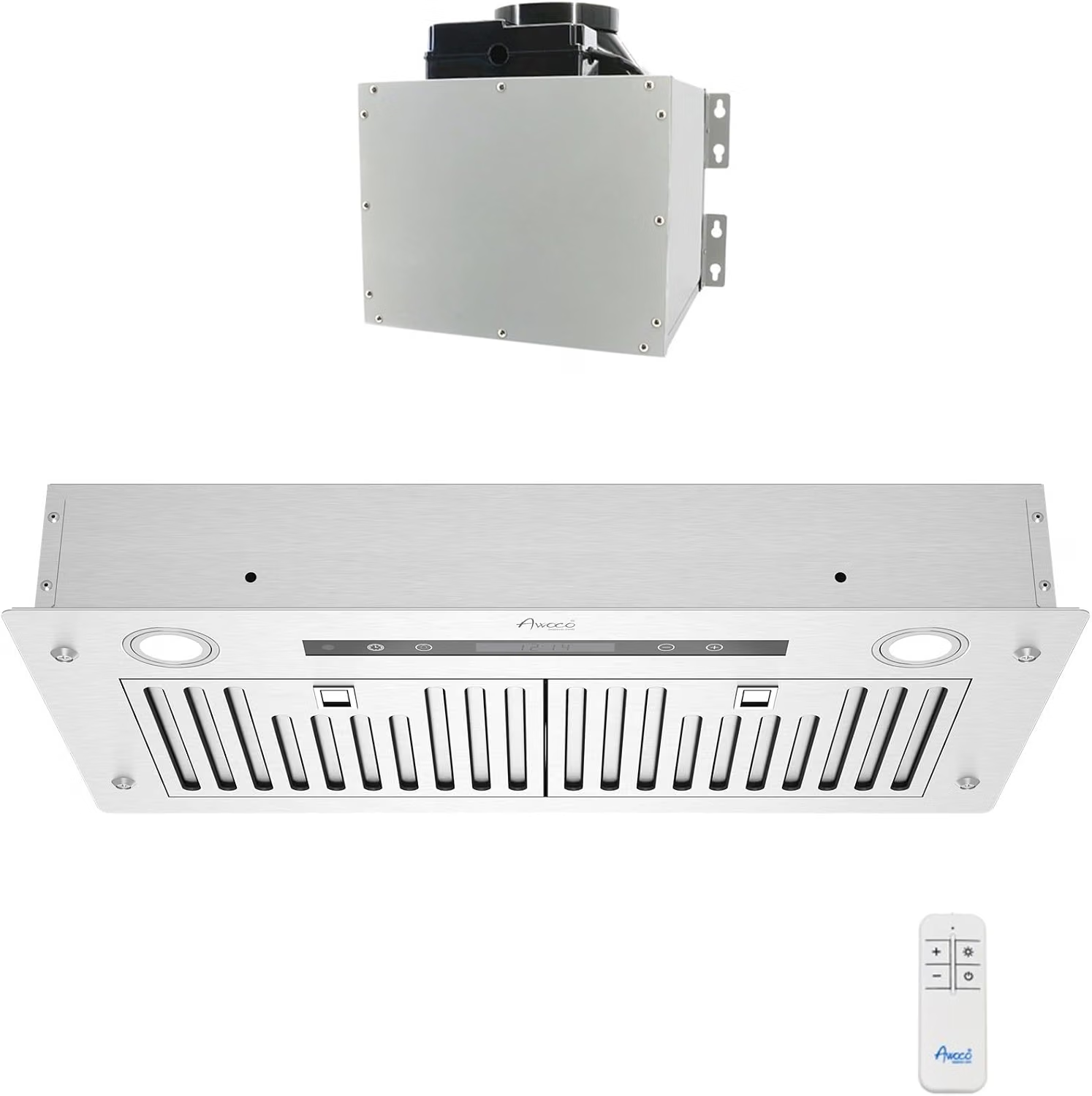
Awoco Split Ceiling-Mount Hood (30″ / 36″)
- 800 CFM
- 40 dB on low
- Remote blower
- Needs attic access
- $$
This one is on the list for a specific reason and it comes with a specific condition. The blower does not sit in the hood — it mounts in the attic above, with only the slim 4-inch-tall hood body in the ceiling. Moving the motor away from the room is the single most effective way to make ventilation quiet, and the numbers show it: 40 dB on low and 52 dB at full 800 CFM.
Be clear about what it is, though. This is a ceiling or soffit installation that requires accessible space above it for the blower unit. It is not a cabinet insert and it will not drop into a custom wood hood shell. It also vents through a 6-inch top outlet only, with no rear-vent option.
Insert, Liner, Power Pack or Built-In — What’s the Difference?
Half a dozen words get used for very nearly the same object, which is why shopping for one is confusing. Here is what each actually means.
The practical upshot: search all of these terms when you are shopping, because the same insert is often listed under a different one depending on the seller.
Ducted, Ductless, and Which Way It Vents
Two decisions here, and the second one catches more people than the first.
How to Choose a Range Hood Insert
How much CFM do you need?
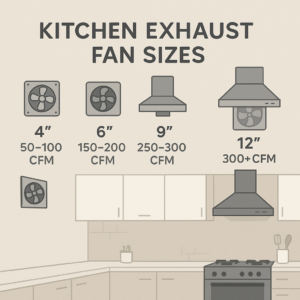
A rough rule for a ducted hood is 100 CFM per linear foot of cooktop, or 1 CFM per 100 BTU on gas. Light cooking is fine at 300–400. Frequent frying, searing or wok cooking on a gas stove wants 600–900. Our kitchen exhaust fan sizing guide works through the maths properly.
Width and depth, in that order
Width must fit the shell opening. Depth is the spec people forget — these range from 11.4 inches (Broan) to 21 (Hauslane), and a deep insert simply will not fit a shallow hood. Measure both before you shortlist anything.
Baffle or mesh filters
Baffle filters are angled steel plates that fling grease out of the airstream. They are easier to clean, last longer, and are what commercial kitchens use. Mesh is cheaper and catches fine particles well but clogs faster. Both go in the dishwasher, and our roundup of range hood degreasing tools covers what shifts the baked-on layer the dishwasher misses.
Noise: sones or decibels
Manufacturers quote one or the other, which makes comparison awkward. Roughly: 1 sone is a quiet fridge, 3 sones is normal conversation. In decibels, 40 is a library and 65 is a vacuum. A remote or attic-mounted blower is the only thing that changes the equation dramatically.
Controls that survive a kitchen
Mechanical buttons work with greasy hands and a knuckle. Touch panels look better and need a clean fingertip. Gesture control sounds like a gimmick and turns out to be genuinely useful mid-cook. Most inserts use LED task lights; warming lamps that keep plated food hot are mostly found on premium pro-style hoods, so if you want them, confirm it on the spec sheet.
What to budget
A capable insert starts around the $150–180 mark for a name-brand power pack or a narrow unit. The $280–320 band buys 900–1,200 CFM with modern controls, which is the sweet spot. Pro-style units in the widest sizes run $550–900.
The Brands People Search For
Three names come up constantly in insert searches and none of them appear on this list, so it is worth saying plainly why.
Range Hood Insert FAQs
What is the difference between a range hood insert and a hood liner?+
How many CFM do I need for a range hood insert?+
What size insert do I need for a 36-inch cooktop?+
Can a range hood insert be used without a duct?+
Do range hood inserts vent out the top or the back?+
Will a range hood insert fit inside a wooden custom hood?+
Can you build a range hood into your cabinets?+
What is the quietest range hood insert?+
Which Range Hood Insert Should You Buy?
For most kitchens the IKTCH IKB01 is the sensible answer — 900 CFM, quiet on low, and by far the deepest review history on this list. If you are chasing airflow per dollar, the HisoHu gives you 1,200 CFM for the same money, with the caveat that it is a newer name with fewer reviews behind it.
Building your first custom hood on a budget? The Broan PM300SS is the easiest install here and costs a third of the pro-style units. Narrow opening? The Zomagas 24-inch is one of very few genuine options. Wide or unusual opening? Hauslane covers 30 to 46 inches and ZLINE fills in 28, 34 and 46.
Whatever you choose, measure the internal width and depth of the shell first, confirm which way it vents, and duct it outside if you possibly can. Those three checks prevent almost every range hood insert return. And if building a shell sounds like more project than you want, a wall-mount range hood gets you the same extraction ready-made. Renting, with no shell to build at all? Our guide to the best portable exhaust fans for the kitchen covers what works without installing anything.