
How to Substitute Agave Nectar for Honey in Any Recipe
The ratio, the two small adjustments for baking, which agave to buy, where the swap is perfect and where to keep the honey, with three short recipes that prove it.
- 1:1 for most recipes
- Vegan swap
- Works in baking
- Printable card
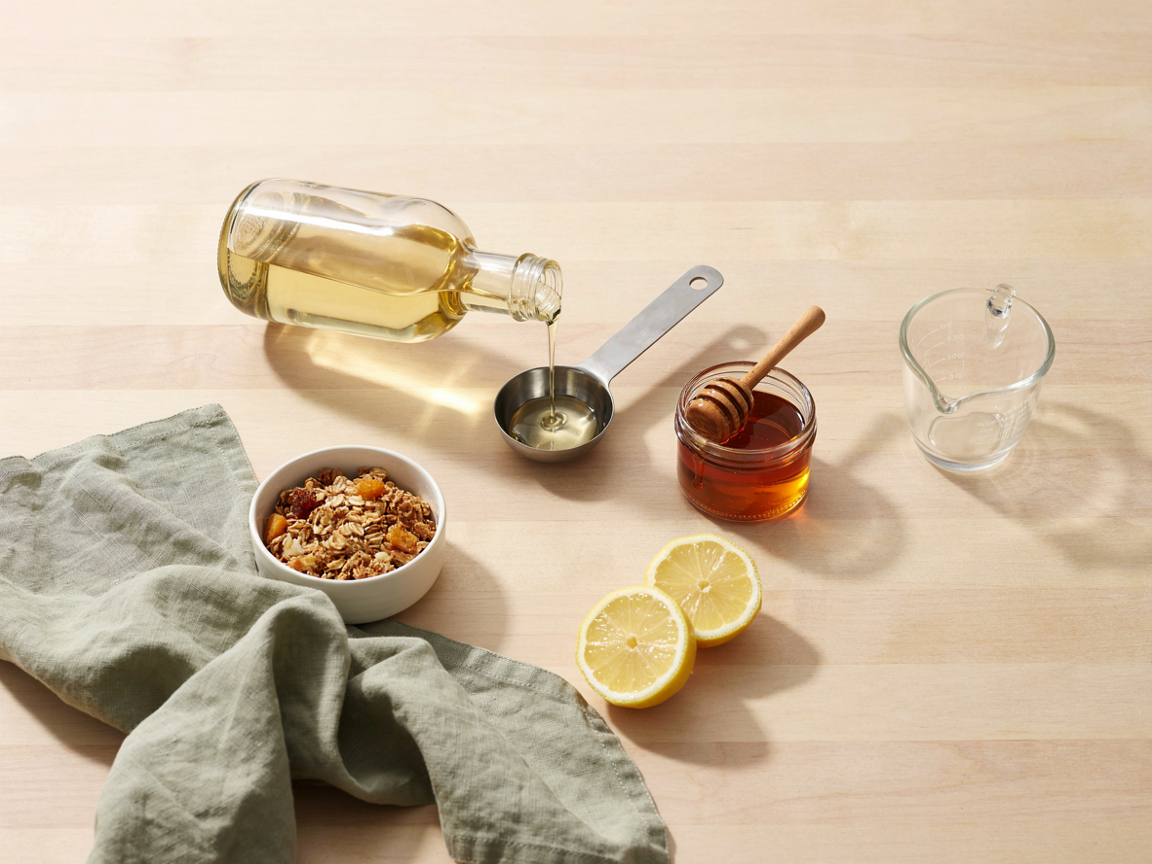
Agave nectar beside honey: thinner, lighter and ready to stand in for it, one for one.
Swapping agave nectar for honey is one of the easiest substitutions in the kitchen, and one of the most badly explained. The short version: use the same amount in anything you stir, shake, simmer or drizzle, use a little less in baking and turn the oven down a notch, and pick the right shade of agave for the job. Everything else on this page is the detail that makes the swap come out right the first time.
Below: the answer in one box, why the swap works, a conversion card that scales from a tablespoon to a cup, which agave to use, where it is a perfect 1:1 and where to be careful, adjustments by recipe type, three short test recipes, how to go the other way, the other honey substitutes when there is no agave either, storage, troubleshooting and every question people ask about agave and honey.
Agave Nectar for Honey: The Short Answer
The ratio
Use agave nectar 1:1 for honey in drinks, dressings, marinades, sauces, glazes, granola and anything no-bake. In baking, use ¾ to 1 cup of agave per cup of honey, lower the oven by 25°F and check 5 minutes early, because agave browns faster. Leave the baking soda alone. Choose amber agave for the closest flavor to honey, light agave for a neutral swap. Do not swap in candy or caramel.
That answer covers nine recipes in ten. The rest of this page is for the tenth, and for getting the nine exactly right.
Why Agave Works in Place of Honey
Both are liquid sweeteners of similar strength
Honey and agave are both thick syrups of simple sugars with a little water, so they bring the same sweetness, the same moisture and the same chewiness to a recipe. That is why the swap is close to 1:1 rather than a formula.
Both keep baked goods soft
Both pull moisture from the air, which is what keeps honey cakes and agave-sweetened muffins soft for days. The keeping quality does not change when you swap.
Both brown fast
Both are mostly fructose and glucose, which caramelize at lower temperatures than table sugar. Agave slightly faster, so the oven comes down 25°F.
The differences are small and fixable
Agave is thinner, a touch sweeter, more neutral in flavor and never crystallizes. Each of those has a one-line fix on the conversion card.
Honey vs Agave Nectar, Side by Side
Each difference in the table has its fix in the last column:
| Honey | Agave nectar | What to do | |
|---|---|---|---|
| Sweetness vs table sugar | HoneyAbout 1.2 to 1.3 times | Agave nectarAbout 1.4 times | What to doStart baking at ¾ of the honey amount |
| Thickness | HoneyThick, slow pour | Agave nectarThinner, like maple syrup | What to doRemove 1 tbsp liquid per cup in baking at 1:1 |
| Flavor | HoneyFloral, varies by flower | Agave nectarNeutral (light) to light caramel (amber, dark) | What to doAmber agave for the closest match |
| Browning | HoneyFast | Agave nectarSlightly faster | What to doOven 25°F lower |
| Crystallizes | HoneyYes, over months | Agave nectarNo | What to doAgave stays pourable in the fridge |
| Dissolves in cold liquid | HoneySlowly | Agave nectarInstantly | What to doBetter in iced drinks |
| Acidity | HoneyMildly acidic | Agave nectarMildly acidic | What to doLeavening stays the same |
| Vegan | HoneyNo | Agave nectarYes | What to doThe main reason for the swap |
| Glycemic index | HoneyModerate | Agave nectarLower, but mostly fructose | What to doUse the same small amounts; neither is a health food |
Agave Nectar for Honey Conversion Card
Tap the amount of honey the recipe asks for. The card shows the agave to use for cold and stirred recipes, the amount to start with in baking, and the small adjustments, and the download button saves it as a card to keep with the recipe.
Agave Nectar for Honey: Conversion Card
Pick the amount of honey your recipe calls for and the card shows how much agave to use, what to take out, and what to change in the oven. Download the card and keep it with the recipe.
How much honey does the recipe call for?
The Swap
- 1 tbsp¼ cup½ cup1 cup agave nectar for drinks, dressings, marinades, sauces, glazes and no-bake recipes (1:1)
- 2¼ tsp3 tbsp6 tbsp¾ cup agave nectar for baking (start here; agave tastes a touch sweeter, go up to 1:1 for more moisture)
- none¾ tsp1½ tsp1 tbsp less of the other liquid, only when baking with the full 1:1 amount (agave is thinner than honey)
- 25°F off the oven temperature
- 5 minutes earlier than the recipe says: start checking the bake
- no change to the baking soda or baking powder
- nonepinch⅛ tsp¼ tsp extra salt, optional (agave tastes flatter than honey)
- ⅛ tsp½ tsp1 tsp2 tsp lemon juice or cider vinegar, optional, to mimic honey’s tang
Going the other way? Honey for agave is also 1:1. Honey is a little thicker and a little less sweet, so add 1 tablespoon of liquid per cup of honey in baking and expect slightly less sweetness and a floral note.
How to Make the Switch
Work out what the honey is doing
Sweetening only (tea, dressing, marinade, sauce), binding (granola, energy bites, no-bake bars), moisture and browning (cakes, muffins, bread), or the flavor itself (honey cake, baklava). The first three swap cleanly; the last one swaps, but the dish will taste of agave, not honey.
Choose the agave
Light agave for a neutral, clean swap in drinks and pale bakes. Amber for the closest match to honey’s flavor in baking, glazes and sauces. Dark or raw for anything that wants a molasses note: barbecue sauce, gingerbread, granola.
Measure it level
Agave pours thinner than honey, so it needs no oiled spoon; measure level in a dry measuring spoon or cup. If the recipe gives honey by weight, agave weighs about the same per cup, so swap gram for gram.
Swap by the card
Use the 1:1 line for anything cold, stirred or simmered. For baking, start with the smaller amount on the card, and if the recipe relies on honey for moisture (a honey cake, a soft muffin), use the full 1:1 amount and take out the small amount of liquid the card shows.
Lower the oven
Agave browns faster than honey. Drop the oven 25°F and start checking 5 minutes before the recipe says. Tent with foil if the top is dark before the center is done.
Taste before it goes cold or in the oven
Agave is sweeter and flatter than honey. In dressings, sauces and batters, taste, then add the pinch of salt and the squeeze of lemon from the card if it tastes one-note. That small acid is most of what people miss when honey is gone.
Do not change the leavening
Both honey and agave are mildly acidic, so a recipe written for honey already has its baking soda in balance. Leave it alone.
Write the result on the recipe
Note the amount of agave and the oven change on the card. The second time is the one that comes out exactly right.
Which Agave Nectar to Use Instead of Honey
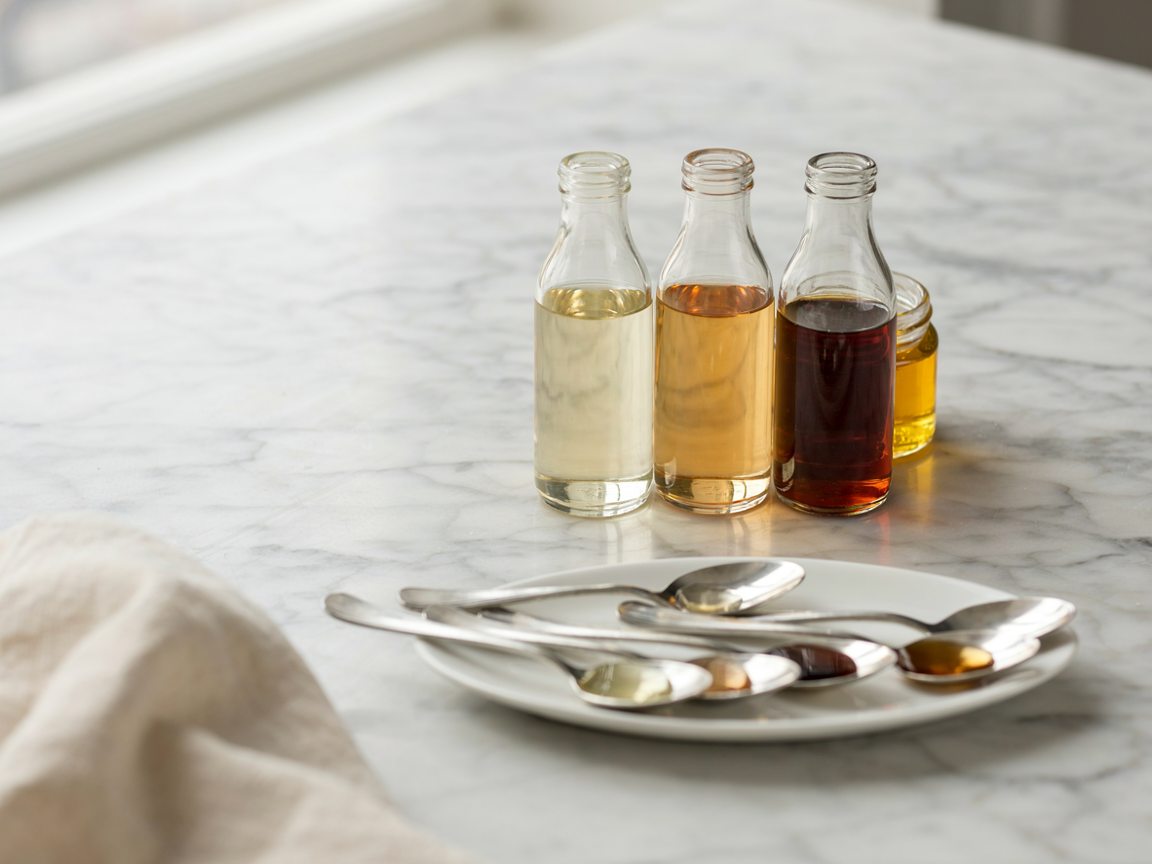
Light, amber and dark agave: the shade decides how close to honey the result tastes.
Agave is sold in three shades, and the shade matters more than the label:
Light agave
Mild, almost neutral, like a thinner simple syrup. Use it when the honey was only there to sweeten: tea, lemonade, smoothies, yogurt, vinaigrettes, pale cakes and frostings. The cleanest 1:1 swap.
Amber agave
Light caramel flavor and golden color, the closest match to a mild honey. The default for baking, glazes, marinades and anything where honey’s flavor was part of the dish.
Dark or raw agave
Deeper, with a molasses edge. For barbecue sauce, gingerbread, granola, oat bars and bran muffins, where a dark honey or molasses would have gone. Too strong for drinks and delicate bakes.
Agave syrup vs agave nectar
The same product under two names; nectar is the label word, syrup is the honest one. Buy whichever is cheaper. Check the ingredient line reads only agave: a few bottles are blended with corn syrup and taste thinner.
Where the Swap Is Perfect, and Where to Be Careful
Six places agave for honey is a straight 1:1 with nothing to think about:
Drinks
Tea, coffee, lemonade, iced tea, smoothies, milkshakes. 1:1, and agave dissolves cold where honey clumps, so it is better here, not just equal.
Dressings and marinades
Vinaigrettes, teriyaki, honey-mustard, yogurt sauces. 1:1; add the squeeze of lemon from the card because the acid is what made the honey version sing.
Glazes and sauces
Glazes for salmon, chicken, carrots, roasted squash, barbecue sauce. 1:1; glazes set a little softer and brown a little faster under the broiler.
Binders
Granola, energy bites, no-bake bars, protein balls. 1:1 by volume. Agave is thinner, so if the mixture is loose, chill it 15 minutes before shaping.
Breakfast
Oatmeal, yogurt, pancakes, waffles, overnight oats, chia pudding. 1:1, drizzled or stirred in.
Frostings and creams
Whipped cream, cream cheese frosting, yogurt frosting, ice cream bases. 1:1; agave stays smooth and pourable in the fridge where honey tightens.
Where It Works With a Small Adjustment, and Where It Does Not
Cakes, muffins and quick breads
Works well. Start with ¾ of the honey amount, go to 1:1 if the crumb needs the moisture, drop the oven 25°F. Expect a slightly paler crumb and a less floral flavor.
Cookies
Works, but agave cookies spread a little more and brown faster. Chill the dough 30 minutes, lower the oven and pull them a shade early.
Yeast breads
Works 1:1. Agave feeds the yeast exactly as honey does. Watch the crust; it browns faster.
Honey cake, honey buns, baklava syrup
Works mechanically, but honey was the flavor. Use amber or dark agave, add the lemon from the card, and call it an agave cake; it will be good, and it will not taste like honey.
Candy and caramel
Not a clean swap. Agave reaches color before it reaches temperature and can scorch; honeycomb and hard candies that depend on honey’s behavior at high heat should keep the honey.
Creamed honey, honey butter, honey set on a cheese board
Not a swap. These rely on honey’s thickness or crystallization, which agave does not have. Use agave for the sweetness and accept a pourable result, or keep the honey.
Adjustments by Recipe Type
| Recipe type | Agave per honey | Liquid change | Other adjustments |
|---|---|---|---|
| Recipe typeDrinks and smoothies | Agave per honey1:1 | Liquid changeNone | Other adjustmentsDissolves cold; stir once |
| Recipe typeDressings, marinades, sauces | Agave per honey1:1 | Liquid changeNone | Other adjustmentsAdd a squeeze of lemon or vinegar |
| Recipe typeGlazes | Agave per honey1:1 | Liquid changeNone | Other adjustmentsBroil 1 to 2 minutes less; sets softer |
| Recipe typeGranola, bars, energy bites | Agave per honey1:1 | Liquid changeNone | Other adjustmentsChill 15 minutes if loose before shaping |
| Recipe typeCakes, muffins, quick breads | Agave per honey¾ cup to 1 cup per cup | Liquid changeRemove 1 tbsp liquid per cup if using 1:1 | Other adjustmentsOven 25°F lower; check 5 minutes early |
| Recipe typeCookies | Agave per honey¾ cup per cup | Liquid changeNone | Other adjustmentsChill dough 30 minutes; oven 25°F lower |
| Recipe typeYeast breads | Agave per honey1:1 | Liquid changeNone | Other adjustmentsTent the crust if it darkens early |
| Recipe typeFrostings, creams, ice cream | Agave per honey1:1 | Liquid changeNone | Other adjustmentsStays pourable; whip cream a little stiffer |
| Recipe typeCandy and caramel | Agave per honeyDo not swap | Liquid change | Other adjustmentsAgave scorches before temperature; keep honey |
Three Test Recipes That Prove the Swap
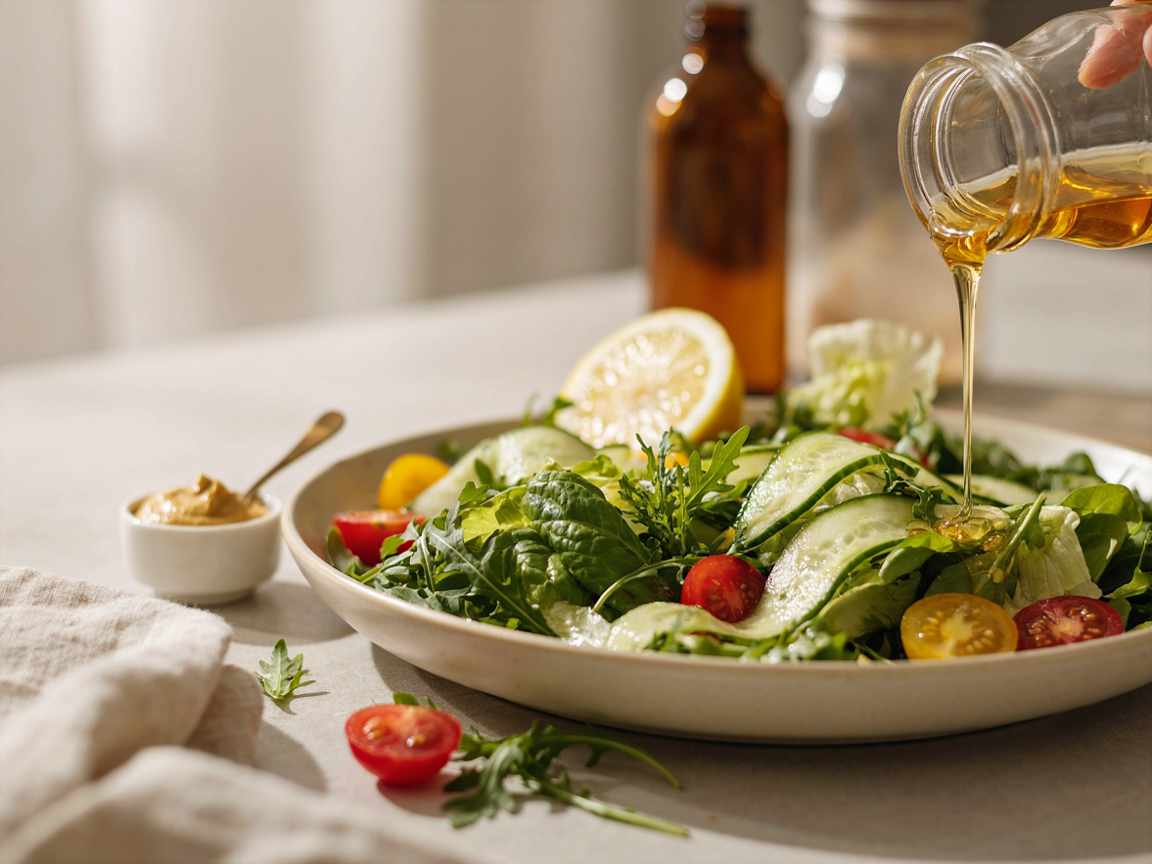
Agave lemon vinaigrette, the cleanest 1:1 swap: glossy, pourable and bright.
Each of these was written for honey and converted with the card. Make one and the rule sticks:
Test Recipe 1: Agave Lemon Vinaigrette (the 1:1 swap, makes ¾ cup)
- ¼ cup fresh lemon juice
- 1½ tbsp light or amber agave nectar (the recipe was written for 1½ tbsp honey)
- 1 tsp Dijon mustard
- 1 small garlic clove, grated
- ½ cup extra-virgin olive oil
- ½ tsp salt, ¼ tsp black pepper
- Whisk the lemon juice, agave, mustard, garlic, salt and pepper in a bowl or shake them in a jar.
- Whisk in the oil in a thin stream until glossy and thick. Taste: if it is flat, another ½ teaspoon of lemon juice brings back what the honey used to do.
Keeps: 1 week in the fridge; agave keeps it pourable straight from the cold, where the honey version would need a shake in warm water.
Test Recipe 2: Agave Simple Syrup for Drinks (makes 1 cup)
- ½ cup light agave nectar
- ½ cup warm water
- Optional: a strip of lemon peel, a few mint leaves or a split vanilla bean
- Stir the agave into the warm water until it disappears; no heat needed. Add the flavoring if using and leave it 20 minutes, then strain.
- Use 1 to 2 tablespoons per glass of iced tea, lemonade or cold coffee, in place of a honey syrup measure for measure.
Keeps: 1 month in the fridge, and it never crystallizes.
Test Recipe 3: Honey-Style Agave Glaze for Salmon or Chicken (enough for 4 pieces)
- 3 tbsp amber agave nectar (for 3 tbsp honey)
- 2 tbsp soy sauce
- 1 tbsp lemon juice
- 1 garlic clove, grated, and ½ tsp grated ginger
- Pinch of salt and chili flakes
- Stir everything together. Brush half over the salmon or chicken before it goes in the oven or pan.
- Brush the rest on in the last 3 minutes and watch closely: agave glazes color a minute or two faster than honey ones. Pull it when it is glossy and just catching at the edges.
Note: the lemon juice is doing the work honey’s own tang used to do; do not skip it.
Where the Swap Shows Up on This Site
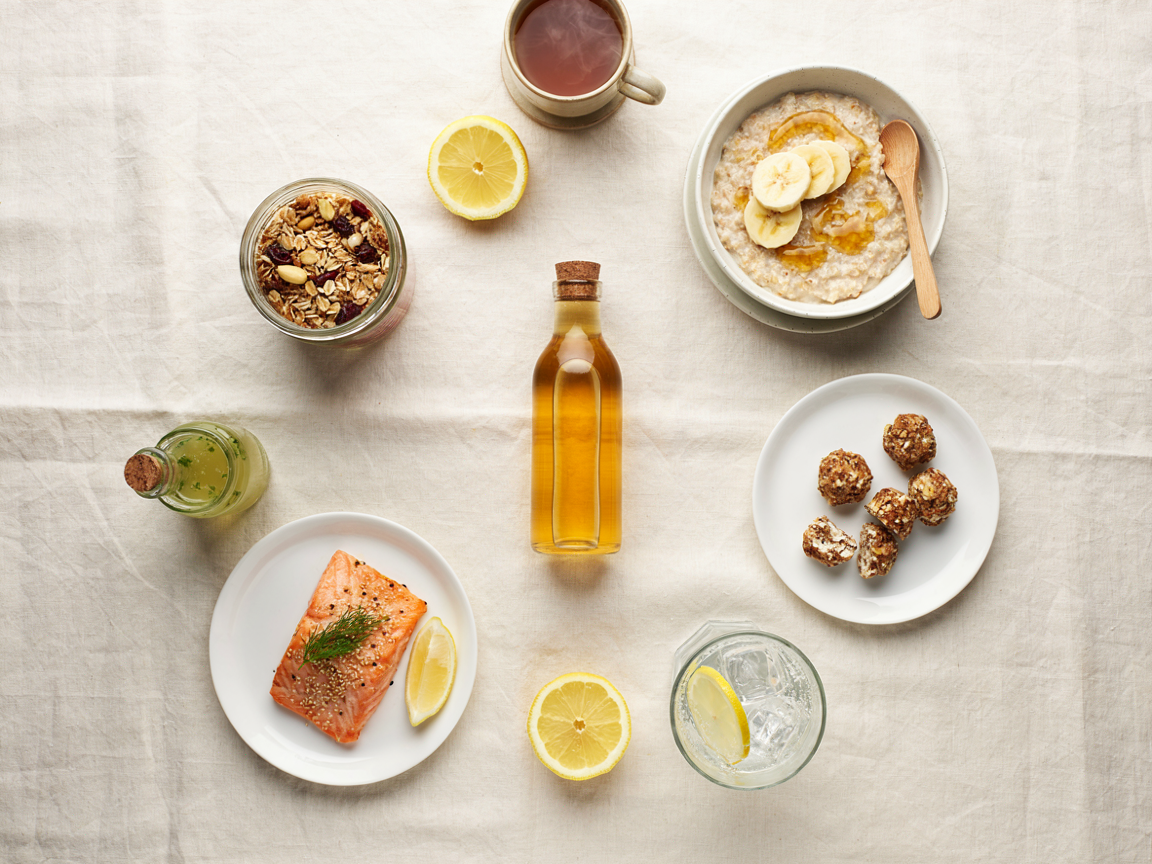
The pantry shelf after the swap: agave in the granola, the dressing, the glaze and the lemonade.
The swap shows up most often in a few places on this site. Agave is the easy vegan fix for the no-bake energy bites and protein bars and for any of the homemade granola recipes, it goes straight into the homemade salad dressings and the chicken marinades measure for measure, and it sweetens homemade lemonade without clumping. For a honey-flavored vegan alternative rather than a neutral one, the dandelion honey recipe is made from flowers and sugar and drizzles like the real thing.
Other Honey Substitutes When There Is No Agave
Agave is the easiest, but it is not the only one. Each line gives the ratio and the catch:
| Substitute | Per 1 cup honey | The catch | Best for |
|---|---|---|---|
| SubstituteMaple syrup | Per 1 cup honey1:1 | The catchThinner than honey, distinct maple flavor; oven 25°F lower | Best forBaking, breakfast, glazes |
| SubstituteAgave nectar | Per 1 cup honey1:1 (¾ in baking) | The catchNeutral, thinner, browns fast | Best forEverything except candy |
| SubstituteGolden syrup | Per 1 cup honey1:1 | The catchThick, buttery; the closest texture to honey | Best forBaking, flapjacks, candy |
| SubstituteBrown rice syrup | Per 1 cup honey1¼ cups per cup | The catchHalf as sweet, very sticky | Best forGranola, bars, binders |
| SubstituteDate syrup | Per 1 cup honey1:1 | The catchDark, fruity, less sweet | Best forOatmeal, dressings, dark bakes |
| SubstituteMolasses | Per 1 cup honey½ to ¾ cup per cup | The catchStrong, bitter edge | Best forGingerbread, barbecue sauce only |
| SubstituteSugar plus liquid | Per 1 cup honey1¼ cups sugar + ¼ cup liquid per cup | The catchLoses the chew and the keeping quality | Best forWhen no syrup is in the house |
| SubstituteDandelion honey | Per 1 cup honey1:1 | The catchVegan, floral, honey-like | Best forTea, toast, drizzling; see the recipe below |
Storing Agave Nectar
| Where | How long | Notes |
|---|---|---|
| WherePantry, sealed | How long2 years | NotesRoom temperature; it never crystallizes |
| WhereFridge | How longNot needed | NotesFine if you prefer; it stays pourable |
| WhereAfter opening | How long1 year or more | NotesWipe the threads so the cap does not stick |
| WhereSigns it has turned | How longRare | NotesOff smell or mold at the rim; otherwise it keeps |
Troubleshooting the Swap
| Problem | Likely cause | Fix |
|---|---|---|
| ProblemCake or muffins too dark on top | Likely causeAgave browns faster | FixOven 25°F lower; tent with foil halfway |
| ProblemTastes too sweet | Likely causeAgave is sweeter than honey | FixUse ¾ of the honey amount next time; add a pinch of salt now |
| ProblemTastes flat or one-note | Likely causeHoney’s acidity and floral notes are gone | FixA squeeze of lemon or a splash of cider vinegar |
| ProblemCookies spread thin | Likely causeThinner syrup, more fructose | FixChill the dough 30 minutes; use ¾ of the amount |
| ProblemGranola or bites will not hold together | Likely causeThinner binder | FixChill 15 minutes before shaping; add 1 tbsp nut butter |
| ProblemGlaze will not set thick | Likely causeAgave does not thicken like honey | FixSimmer the glaze 2 minutes to reduce, or add 1 tsp cornstarch slurry |
| ProblemBatter looks wetter than usual | Likely causeAgave carries a little more water | FixRemove 1 tbsp liquid per cup of agave |
Agave Nectar for Honey: FAQs
Can you substitute agave nectar for honey?
Yes, in almost any recipe. Use agave nectar 1:1 for honey in drinks, dressings, marinades, sauces, glazes, granola and no-bake recipes. In baking, use three-quarters to one cup of agave per cup of honey, lower the oven by 25°F and check 5 minutes early, because agave browns faster. Candy and caramel are the one place not to swap.
What is the ratio of agave to honey?
One to one for most recipes. For baking, start with ¾ cup of agave per 1 cup of honey, because agave is a little sweeter, and go up to a full cup if the recipe relied on honey for moisture, removing 1 tablespoon of other liquid per cup. The conversion card above gives the amounts for 1 tablespoon, ¼ cup, ½ cup and 1 cup.
Does agave nectar taste like honey?
No. Light agave is nearly neutral, like a thin simple syrup; amber agave has a light caramel flavor that comes closest to a mild honey; dark agave has a molasses note. None has honey’s floral flavor or its slight tang, which is why a squeeze of lemon or vinegar is on the conversion card for dressings and sauces.
Which agave nectar is best for replacing honey?
Amber agave for baking, glazes and sauces, where it matches honey’s color and flavor most closely. Light agave for drinks, smoothies, frostings and pale cakes where you want sweetness without flavor. Dark or raw agave for barbecue sauce, gingerbread and granola.
Do I need to change the baking soda when I use agave instead of honey?
No. Both honey and agave are mildly acidic, so a recipe written for honey already has the right amount of baking soda or powder. Leave the leavening exactly as written. (The leavening change you may have read about is for replacing granulated sugar with a liquid sweetener, not honey with agave.)
Why do I need to lower the oven temperature?
Agave is mostly fructose, which caramelizes at a lower temperature than table sugar and slightly faster than honey. At the original temperature the top and edges darken before the center is cooked. Dropping the oven 25°F and starting to check 5 minutes early fixes it.
Is agave nectar healthier than honey?
Not meaningfully. Agave has a lower glycemic index than honey, but that is because it is mostly fructose, which the body handles differently rather than better. Both are concentrated sugars with similar calories per spoon. The reasons to swap are flavor, texture, availability and keeping a recipe vegan, not health. Use the same small amounts you would use of honey.
Is agave nectar vegan?
Yes. Agave nectar is made from the sap of the agave plant with no animal involvement, which is the most common reason people replace honey with it. Dandelion honey, made from flowers and sugar, is the other vegan honey-style option, and the recipe is linked below.
Can I substitute agave for honey in baking bread?
Yes, 1:1. Yeast feeds on agave exactly as it does on honey, so the rise is the same. The crust browns a little faster, so tent it with foil if it darkens before the loaf sounds hollow.
Can I use agave instead of honey in granola and energy bites?
Yes, 1:1 by volume. Agave binds slightly less firmly because it is thinner, so if the mixture feels loose, chill it 15 minutes before pressing or rolling, or add a tablespoon of nut butter. Granola made with agave bakes a shade darker; pull it 5 minutes early.
What can I substitute for honey if I have no agave either?
Maple syrup 1:1 is the easiest; golden syrup 1:1 is the closest in texture; brown rice syrup at 1¼ cups per cup for binders; date syrup 1:1 for dark bakes; or 1¼ cups sugar plus ¼ cup liquid per cup of honey when there is no syrup at all. The substitutes table above lists each one with its adjustments.
Does agave nectar go bad?
Rarely. Sealed, it keeps about 2 years in the pantry and well over a year after opening, at room temperature, and it never crystallizes the way honey does. Wipe the bottle threads so the cap does not glue shut. An off smell or mold at the rim is the only sign to discard it.
How do I measure agave compared to honey?
Level, in a dry measuring cup or spoon; it pours thin enough that you do not need to oil the cup as you would for honey. By weight, a cup of agave and a cup of honey are close enough that you can swap gram for gram when a recipe gives honey in grams.
Can I substitute honey for agave nectar?
Yes, 1:1 the other way too. Honey is thicker and slightly less sweet, so in baking add 1 tablespoon of liquid per cup of honey and expect a floral flavor and a little more color. In cold drinks, dissolve the honey in a spoonful of warm water first, because it does not dissolve cold the way agave does.
Save the pin so the conversion card is one tap away the next time a recipe calls for honey.
Recipes That Take the Swap
The energy bites, granola, dressings and glazes where agave stands in for honey.
No-Bake Energy Bites and Protein Bars
The honey-bound bites that swap to agave 1:1. See the recipes → GranolaHomemade Granola Recipes
Sweeten any of them with agave instead. Make a batch → DressingsHomemade Salad Dressings
Every honey dressing here takes the 1:1 swap. See the dressings → GlazeHoney Soy Salmon Glaze
The glaze from test recipe 3, in full. Get the glaze → Vegan HoneyDandelion Honey from Fresh Flowers
The other vegan honey alternative, made at home. Make it → Vegan21 Vegan Dessert Recipes
Where agave earns its place in the pantry. See the desserts →Same amount in anything stirred or simmered, three-quarters to a full measure in baking with the oven 25 degrees lower, amber agave for flavor, light for neutral, and a squeeze of lemon where the honey used to be. That is the whole swap.
Save this agave nectar for honey guide so the conversion card is one tap away the next time a recipe calls for honey and the jar is empty.