
Gluten Free Pizza Dough Recipe No Yeast: Easy Chewy Crust From Scratch
A cup-for-cup flour blend, baking powder, Greek yogurt, an egg and olive oil, with psyllium for the chew that gluten-free crusts usually lack. No rise, rolled between parchment, par-baked on a hot pan and topped light. Forty minutes to pizza night.
- No yeast, no rise
- Dairy-free and vegan version
- Freezer par-bake batch
- Printable recipe
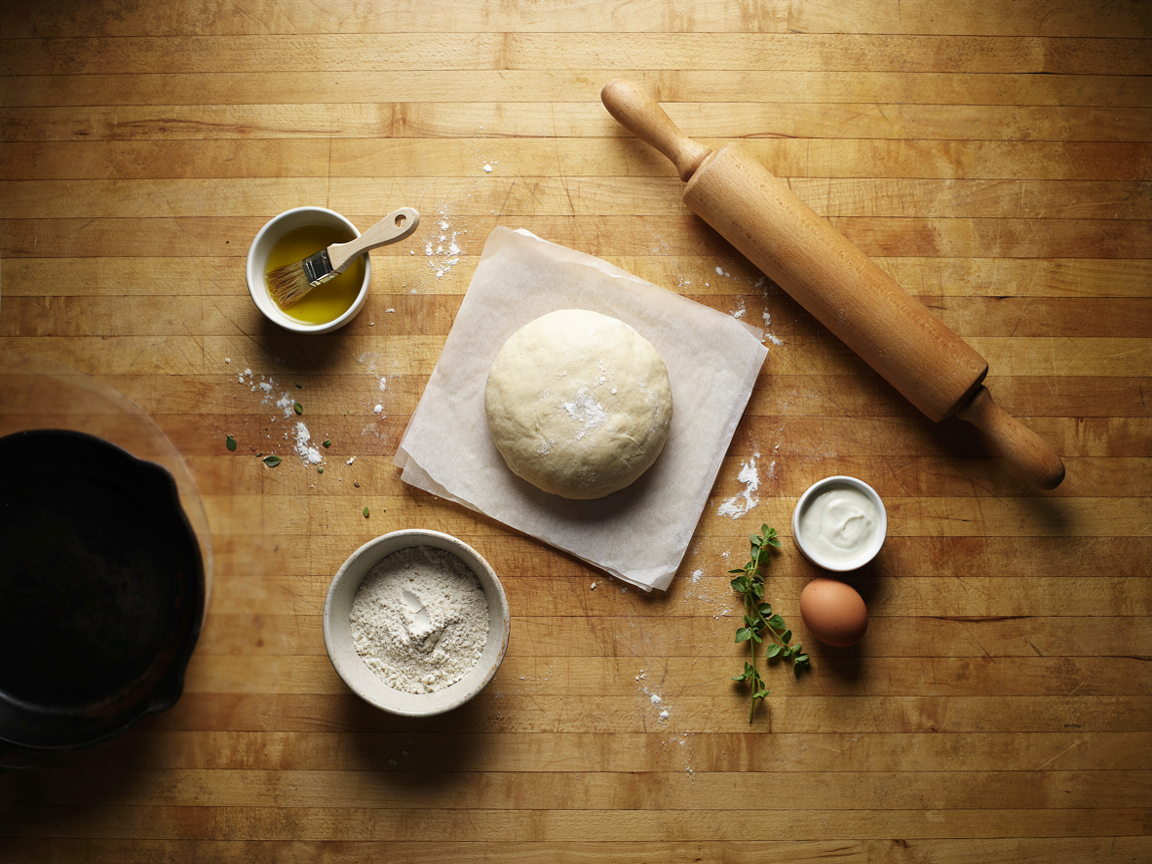
The rested dough on parchment: smooth, soft and ready to press out, no flour on the board.
A gluten free pizza dough recipe no yeast can be done in 40 minutes, but most of them bake into a cracker. This one is chewy. Psyllium husk, an egg and Greek yogurt give the dough stretch, baking powder gives it lift without a rise, and a par-bake on a preheated pan gives it a crisp bottom that holds a slice. One bag of flour, no proofing, no special equipment.
In this post:
- Why this crust is chewy, not crumbly
- Ingredients, and which gluten-free flours work
- The recipe, for one pizza, two, a sheet pan or four
- The five rules and a topping guide for gluten-free crust
- Six versions: vegan, thin and crispy, pan style, air fryer, flatbread, freezer
- Storage, serving and troubleshooting
- Nutrition and 14 FAQs
Why This No-Yeast Gluten-Free Crust Is Chewy
Chewy, not crumbly
Most gluten-free no-yeast crusts eat like a cracker. Psyllium husk, an egg and Greek yogurt give this one stretch and chew, so it folds like a slice should.
No yeast, no rise, 40 minutes
Baking powder lifts it, the yogurt’s acid helps, and a 10-minute rest is the only waiting. Pizza night starts after work, not after a two-hour rise.
Crisp bottom, from a hot pan
The dough bakes on parchment slid onto a preheated sheet pan or stone, and it is par-baked before the toppings go on. That is the difference between a crisp slice and a soggy one.
Pantry gluten-free flour, nothing exotic
One bag of cup-for-cup blend, baking powder, yogurt, an egg, oil. No tapioca-potato-rice measuring, no special yeast, no waiting for anything to proof.
Ingredients for Gluten Free Pizza Dough Without Yeast
Gluten-free 1:1 flour blend
A cup-for-cup blend with xanthan gum already in it; these are built from rice flour and starches and behave predictably. The flour table below covers what to do with other blends.
Baking powder
Two teaspoons for one pizza: the lift that yeast would have given. Check the date; old baking powder makes a dense, flat crust.
Psyllium husk powder
The secret to chew. It forms a gel that mimics gluten, so the dough rolls, folds and browns instead of crumbling. Sold in the supplement aisle and most supermarkets.
Greek yogurt
Thick, whole-milk, plain. It brings moisture, fat and acid (which reacts with the baking powder) and gives the crust a faint sourdough tang. Dairy-free yogurt works; see the tab.
Egg
Structure and browning. One egg turns a fragile dough into one that holds together; the dairy-free tab swaps a flax egg and extra psyllium.
Olive oil
In the dough for tenderness, on the parchment so it does not stick, brushed on top so the crust browns. Three jobs, one bottle.
Sugar, salt, garlic powder, oregano
A teaspoon of sugar for color, salt because gluten-free crusts taste flat without enough, and the garlic and oregano so the crust tastes like pizzeria dough, not a biscuit.
Warm water
Just enough to bring the dough to soft-play-dough consistency. Blends absorb differently; add it a spoonful at a time.
Which Gluten-Free Flour Works
| Flour | What happens | Notes |
|---|---|---|
| FlourCup-for-cup blend with xanthan gum (rice-based) | What happensWorks as written | NotesThe recipe |
| FlourBlend without xanthan or guar gum | What happensAdd 1 tsp xanthan gum | NotesOtherwise it cracks |
| FlourBread-style gluten-free flour (higher protein) | What happensWorks; add 1 tbsp more water | NotesChewiest result |
| FlourOat flour alone | What happensCrumbly and dense | NotesUse at most a third of the blend |
| FlourAlmond or coconut flour alone | What happensDoes not work | NotesDifferent recipe entirely |
| FlourChickpea flour | What happensMakes a socca, not a pizza dough | NotesDifferent recipe |
Gluten Free Pizza Dough Recipe No Yeast
The card makes one 12-inch pizza. Tap 2, sheet pan or 4 for pizza night with a crowd.
Gluten Free Pizza Dough, No Yeast (Easy Chewy Crust)
Gluten-free flour, baking powder, Greek yogurt, an egg and olive oil, with psyllium for the chew that gluten-free crusts usually lack; no yeast, no rise, mixed and baked inside 40 minutes. Tap how many pizzas and every amount updates with the printable card.
How many pizzas?
Ingredients
- 1¾ cups (245 g)3½ cups (490 g)3½ cups (490 g)7 cups (980 g) gluten-free 1:1 baking flour blend (with xanthan gum)
- 2 tsp4 tsp4 tsp8 tsp baking powder
- ¾ tsp1½ tsp1½ tsp1 tbsp fine salt
- 1 tsp2 tsp2 tsp4 tsp sugar (for browning)
- 2 tsp4 tsp4 tsp8 tsp psyllium husk powder (for chew; see note)
- ½ tsp each1 tsp each1 tsp each2 tsp each garlic powder and dried oregano
- ¾ cup (180 g)1½ cups (360 g)1½ cups (360 g)3 cups (720 g) plain whole-milk Greek yogurt
- 1224 large egg
- 2 tbsp¼ cup¼ cup½ cup olive oil, plus more for brushing
- 2 to 4 tbsp¼ to ½ cup¼ to ½ cup½ to 1 cup warm water, as needed
- ⅓ cup⅔ cup⅔ cup1⅓ cups To top: pizza sauce
- 1 cup2 cups2 cups4 cups low-moisture mozzarella, shredded
- light handful2 handfuls2 handfuls4 handfuls toppings of choice (beef pepperoni, vegetables, fresh basil)
Psyllium: two teaspoons of psyllium husk powder (whole husks: use 1 tablespoon) is what makes this crust chewy and flexible instead of crumbly. Without it, add 1 teaspoon of extra xanthan gum; the crust will be a little more cracker-like. The flour: a cup-for-cup blend that already contains xanthan gum. Almond, coconut or oat flour alone will not work here.
Instructions
Heat the oven and the pan
Set a rack in the lower third and put a heavy sheet pan, pizza steel or stone in the oven. Heat to 450°F for at least 20 minutes. A hot surface under the parchment is what gives a gluten-free crust a crisp bottom instead of a pale, bendy one.
Mix the dry ingredients
In a large bowl, whisk the flour blend, baking powder, salt, sugar, psyllium, garlic powder and oregano until no streaks remain. If your blend has no xanthan gum, add 1 teaspoon now.
Add the wet and make a soft dough
Whisk the yogurt, egg and olive oil together, pour into the dry and stir with a spatula until a sticky, shaggy dough forms. Add warm water a tablespoon at a time until it comes together into a soft, slightly tacky ball that holds its shape. It should feel like soft play dough, not batter and not stiff.
Rest 10 minutes
Cover the bowl and leave it 10 minutes. The psyllium and starches hydrate, the dough firms up and loses its stickiness, and the baking powder begins its work. Do not skip this; it is the step that makes the dough rollable and the crust chewy.
Shape between parchment
Put the dough on a sheet of parchment brushed with oil, press it into a disc, oil the top and lay a second sheet over it. Roll or press to a 12-inch round about ¼ inch thick, leaving the rim a little thicker. Peel off the top sheet and pinch up the edge. No flour, no stretching, no tossing; gluten-free dough is shaped, not stretched.
Par-bake the crust
Brush the surface with olive oil and prick the center a few times with a fork. Slide the parchment onto the hot pan and bake 10 to 12 minutes, until the crust is set, puffed slightly and pale gold at the edge. Every gluten-free crust needs this par-bake; topped raw, the middle stays gummy.
Top lightly and finish
Spread the sauce thinly, leaving a ½-inch rim, scatter the mozzarella and add toppings sparingly (wet vegetables pre-cooked). Bake 8 to 10 minutes more, until the cheese bubbles and the rim is golden brown. Rest 3 minutes on a rack so the bottom stays crisp, then slice.
The Five Rules of Gluten-Free Pizza Dough
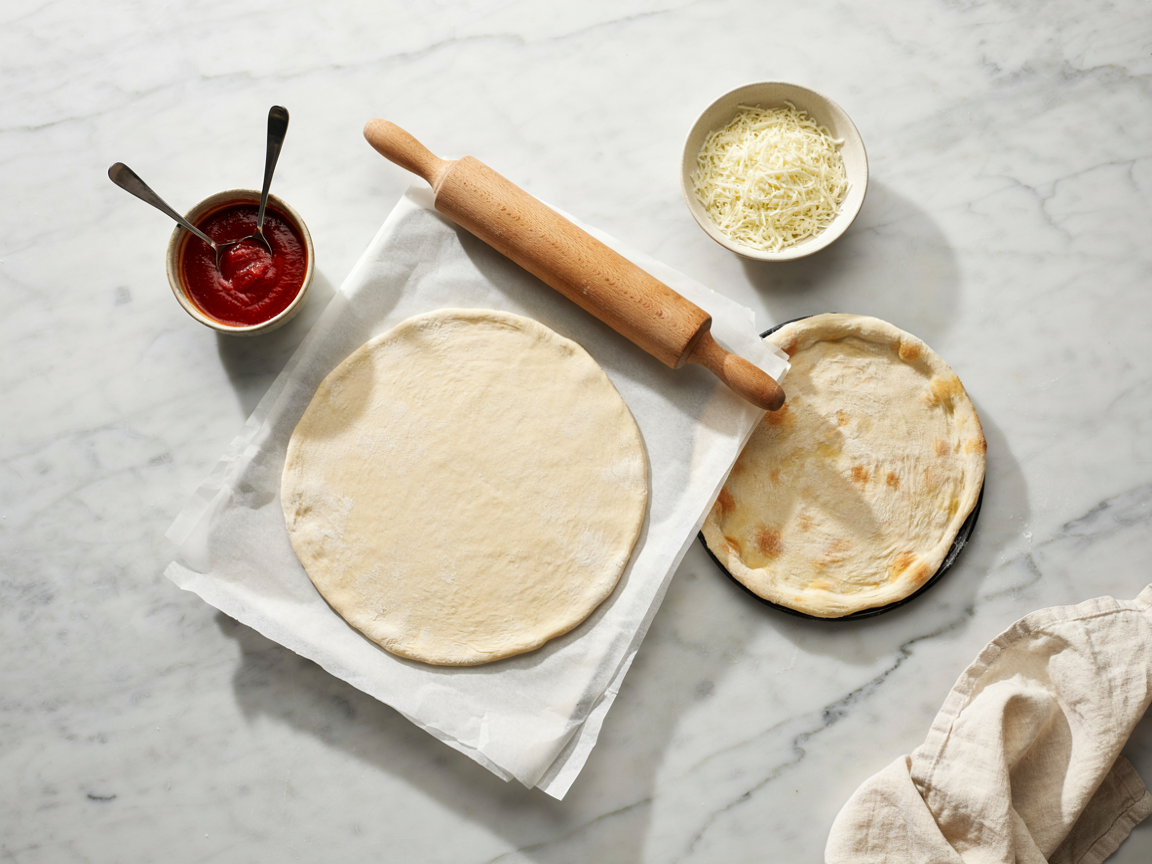
Pressing the dough out between two sheets of oiled parchment: shaped, never stretched.
Use a blend with xanthan, and add psyllium
Gum and psyllium are the gluten substitutes. Without them the dough is sand; with them it rolls and chews.
Rest the dough 10 minutes
The starches and psyllium need time to drink the liquid. Shaped straight away the dough is sticky; rested, it handles like a dream.
Shape between oiled parchment
Gluten-free dough does not stretch and tears when floured and rolled on a board. Two sheets of oiled parchment and a rolling pin, every time.
Par-bake on a preheated pan
Ten to twelve minutes naked at 450°F on a hot surface sets the crust and crisps the bottom. Topped raw, the center stays gummy however long it bakes.
Top like an Italian, not an American
Thin sauce, a cup of cheese, a few pre-cooked toppings. The crust is lighter than wheat dough and it shows you when it is overloaded.
How to Top a Gluten-Free Crust
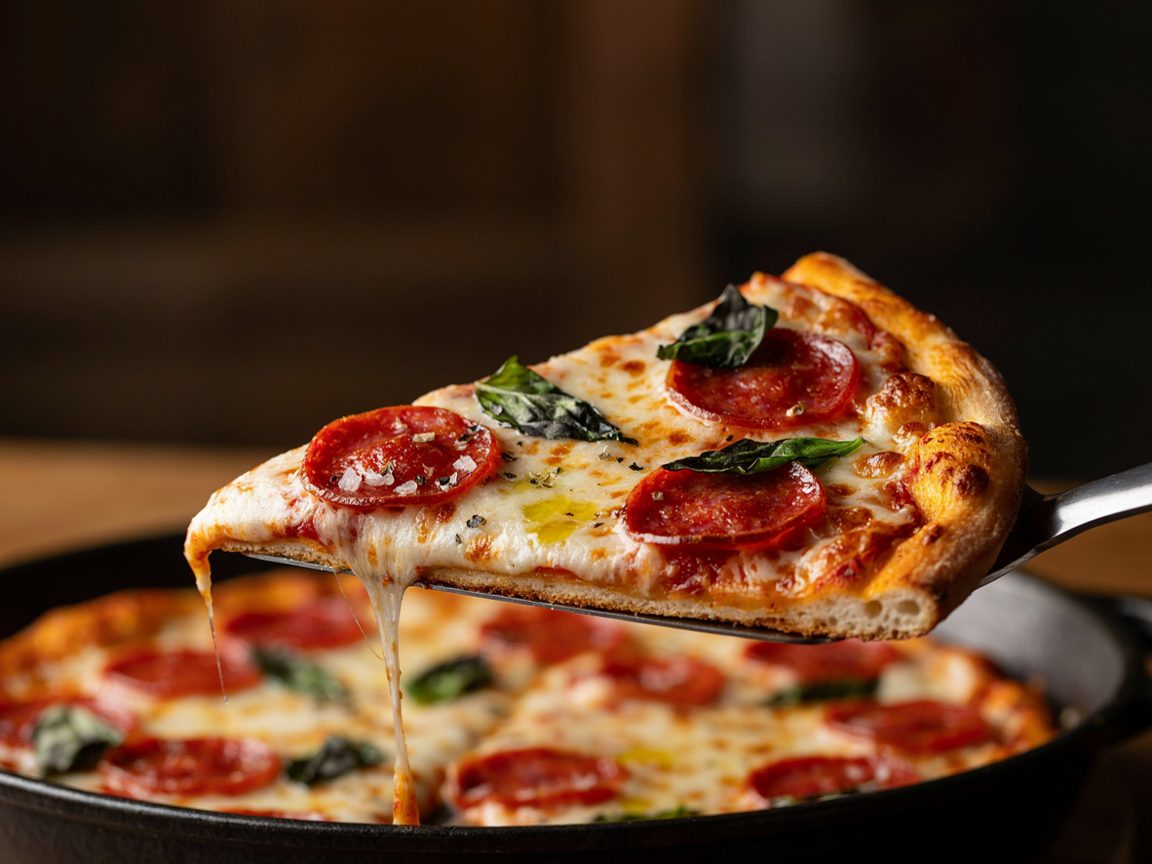
The finished slice: golden rim, crisp bottom, a center that folds instead of flopping.
Lighter than wheat dough, so the toppings have rules of their own:
| Topping | How | Why |
|---|---|---|
| ToppingSauce | HowThin layer, ½-inch rim | WhyThick sauce is the number one cause of a gummy center |
| ToppingCheese | How1 cup low-moisture mozzarella per pizza | WhyFresh mozzarella: tear and blot dry first |
| ToppingBeef pepperoni or beef salami | HowLay flat, not overlapping | WhyCrisps at the edges |
| ToppingMushrooms, peppers, onions | HowSauté first | WhyRaw vegetables release water on the crust |
| ToppingSpinach, arugula, basil | HowAdd after baking | WhyWilts in the residual heat |
| ToppingCooked chicken, roasted vegetables | HowSmall pieces, light hand | WhyGluten-free crust holds less weight than wheat |
| ToppingPineapple or tomato slices | HowPat very dry | WhyOr skip; the wettest toppings |
Six Ways to Make It
Same dough, different shape or diet. Tap a version:
Vegan Gluten-Free No-Yeast Pizza Dough
Use thick unsweetened coconut or almond yogurt in place of the Greek yogurt, replace the egg with a flax egg (1 tablespoon ground flax + 3 tablespoons water, rested 5 minutes) and increase the psyllium to 1 tablespoon. Rest the dough 15 minutes instead of 10. Par-bake 12 minutes; top with a dairy-free cheese that melts and finish 8 to 10.
Thin and Crispy Gluten-Free Crust
Divide the one-pizza dough in two and roll each to a 10-inch round ⅛ inch thick. Par-bake 7 to 8 minutes, top very lightly and bake 6 to 7 more. Cracker-crisp edges, a snap in the middle, and two pizzas from one batch.
Thick Pan Pizza in a Cast Iron Skillet
Press the one-pizza dough into a well-oiled 10-inch cast iron skillet (2 tablespoons of oil in the pan), rest 10 minutes, par-bake 14 minutes at 425°F, then top and bake 12 to 15 more. Thick, fluffy and fried-crisp underneath, the closest a gluten-free crust gets to a deep dish.
Air Fryer Personal Pizzas
Divide the one-pizza dough into 3 balls and roll each to 6 inches on parchment cut to fit the basket. Air fry at 400°F for 5 minutes, flip, top lightly, and air fry 4 to 5 minutes more until the cheese bubbles. Each person builds their own; it is the fastest pizza in the house.
Garlic Herb Flatbread and Breadsticks
Shape the dough into an oval ¼ inch thick, brush with 2 tablespoons of olive oil mixed with 2 grated garlic cloves, ½ teaspoon flaky salt and 1 teaspoon chopped rosemary, and bake at 450°F for 14 to 16 minutes until golden. Cut into strips for breadsticks and serve with pizza sauce or a creamy garlic sauce for dipping.
Par-Baked Crusts for the Freezer
Make the 2 or 4 pizza size, par-bake every crust the full 12 minutes, cool completely, and stack with parchment between, wrapped in plastic and foil. Freeze up to 2 months. Top straight from frozen and bake at 450°F for 12 to 14 minutes. Gluten-free pizza night in 15 minutes, any night.
Storage, Freezing and Reheating
| What | How long | Notes |
|---|---|---|
| WhatRaw dough | How long2 days in the fridge | NotesWrapped; let it sit 15 minutes before shaping; it stiffens cold |
| WhatPar-baked crust | How long2 days at room temperature, 2 months frozen | NotesWrapped; top from frozen |
| WhatBaked pizza, leftovers | How long3 days in the fridge | NotesReheat in a dry skillet with a lid or a 400°F oven 6 minutes; never the microwave alone |
| WhatBaked pizza, frozen | How long2 months | NotesSlices wrapped; reheat from frozen at 400°F 10 minutes |
| WhatDough, frozen | How longNot recommended | NotesBaking powder loses its lift; freeze par-baked crusts instead |
Sauces, Toppings and More Pizza Night
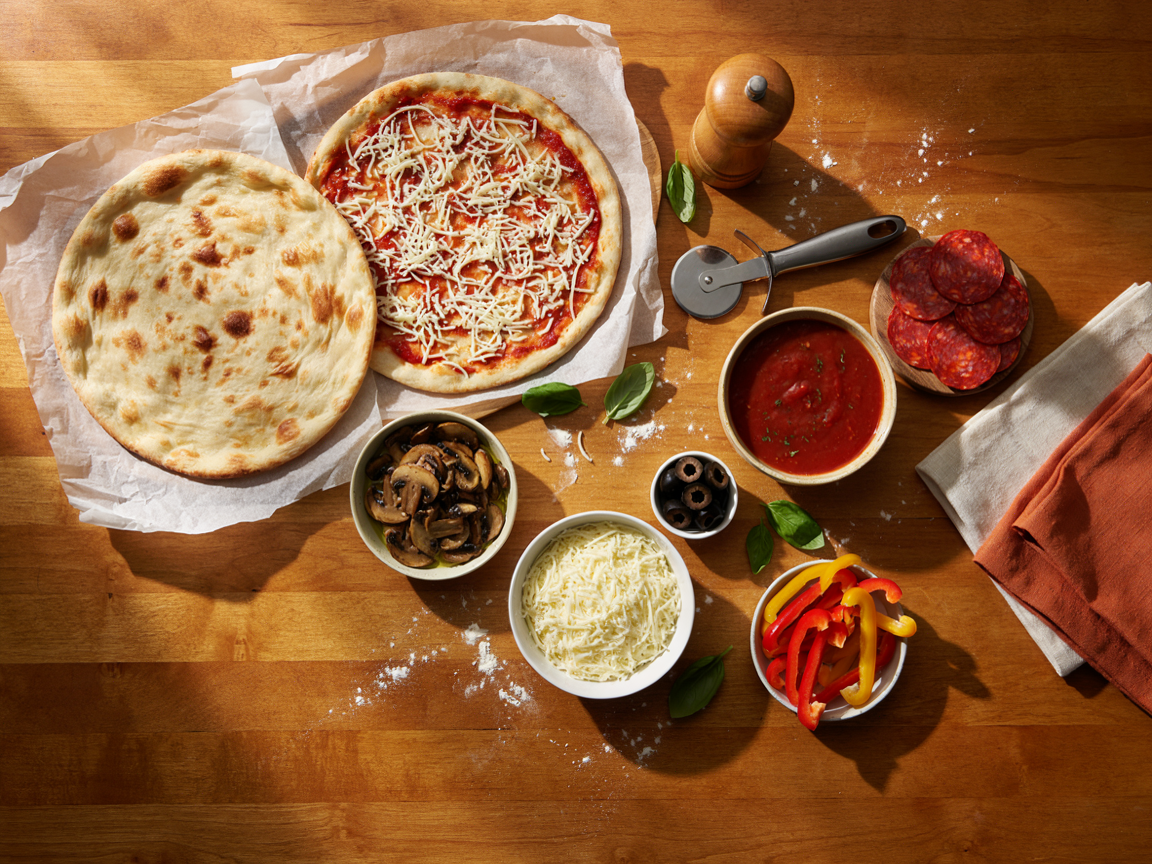
Build-your-own pizza night: par-baked crusts, sauce, cheese and toppings in bowls.
Pizza night, gluten-free from the sauce up:
- Sauce: homemade pizza sauce, creamy garlic white sauce or the 5-minute sugar-free sauce
- Topping ideas: the BBQ chicken pizza or a pesto, feta and roasted vegetable pizza on this crust
- Prefer a vegetable base? gluten-free cauliflower pizza crust
- More no-yeast baking: 20-minute yeast-free breads and cottage cheese flatbread
- Dessert: gluten-free pecan pie bars
Troubleshooting Gluten-Free Pizza Dough
| Problem | Likely cause | Fix |
|---|---|---|
| ProblemGummy, doughy center | Likely causeNo par-bake, too thick, or wet toppings | FixPar-bake 10 to 12 minutes; ¼ inch thick; pre-cook vegetables, thin sauce |
| ProblemCrumbly, falls apart | Likely causeNo gum, no psyllium, or too little liquid | FixBlend with xanthan plus psyllium; add water to soft play-dough texture |
| ProblemCracks while shaping | Likely causeDough too dry or not rested | FixRest 10 minutes; a spoonful more water; oiled parchment |
| ProblemDense and flat | Likely causeOld baking powder, or rolled too thin and heavy | FixFresh powder; ¼ inch with a thicker rim |
| ProblemSoggy bottom | Likely causeCold pan, or baked on a top rack | FixPreheat the pan 20 minutes; lower rack |
| ProblemBland | Likely causeNot enough salt; no garlic or oregano | Fix¾ teaspoon salt per pizza plus the seasonings; salt the sauce too |
| ProblemSticky, impossible to roll | Likely causeNot rested; floured instead of oiled | FixRest; two sheets of oiled parchment |
| ProblemPale crust | Likely causeNo oil brushed on; oven not hot enough | FixBrush with oil; a true 450°F; a minute under the broiler |
Nutrition (approximate, per slice of crust)
Estimates for one of eight slices of crust only, before sauce and toppings. Gluten-free as written with a certified blend and baking powder; no pork, no alcohol.
Gluten-Free No-Yeast Pizza Dough: FAQs
How do you make gluten-free pizza dough without yeast?
Mix a gluten-free cup-for-cup flour blend with baking powder, salt, psyllium husk and seasonings, stir in Greek yogurt, an egg and olive oil, add a little warm water to make a soft dough, rest it 10 minutes, roll it between oiled parchment, par-bake at 450°F for 10 to 12 minutes, then top and bake 8 to 10 more. No rise, about 40 minutes start to finish.
What makes gluten-free pizza crust chewy instead of crumbly?
Psyllium husk, which forms a gel that stands in for gluten, plus an egg for structure and a xanthan-gum flour blend. Together they let the dough roll and the baked crust fold and chew. Without them a no-yeast gluten-free crust eats like a cracker.
Which gluten-free flour is best for pizza dough?
A cup-for-cup baking blend that already contains xanthan gum; rice-based blends are the most predictable. A bread-style gluten-free flour is chewier still. Almond, coconut or chickpea flour on their own do not work in this recipe. The flour table above covers the swaps.
Do I have to par-bake gluten-free pizza crust?
Yes. Gluten-free dough is wetter than wheat dough and does not set under sauce and cheese; topped raw, the center stays gummy no matter how long it bakes. Ten to twelve minutes naked on a hot pan, then top and finish.
Why is my gluten-free pizza crust gummy in the middle?
It was topped before par-baking, rolled thicker than ¼ inch, or loaded with wet toppings and thick sauce. Par-bake first, roll thinner, spread the sauce thin and sauté vegetables before they go on.
Can I make it dairy-free and egg-free?
Yes. Use thick unsweetened coconut or almond yogurt, a flax egg and a tablespoon of psyllium instead of two teaspoons, and rest the dough 15 minutes. The vegan tab has the full method. Top with a dairy-free cheese that is made to melt.
Can I make the dough ahead?
The raw dough keeps 2 days in the fridge; let it warm 15 minutes before shaping. Better: par-bake the crusts and freeze them for up to 2 months, then top from frozen and bake 12 to 14 minutes. The freezer tab has the method.
Why doesn’t it need to rise?
Baking powder provides the lift that yeast would, reacting with the yogurt’s acid and the oven’s heat. The 10-minute rest is for hydration, not rising. The texture is a little denser and more tender than a yeasted crust, closer to a good flatbread.
Can I use regular yogurt instead of Greek?
Yes, but it is thinner, so start with no added water and add only if the dough is dry. Sour cream also works. Thick, plain and full-fat gives the best texture; sweetened or flavored yogurt does not belong here.
What toppings work best on gluten-free crust?
Light ones. Thin sauce, a cup of low-moisture mozzarella, flat beef pepperoni, pre-cooked mushrooms, peppers or onions, and leafy greens added after baking. The topping guide above explains why wet and heavy toppings sink a gluten-free crust.
Is this pizza dough halal?
Yes, as written: flour, yogurt, egg, oil and seasonings, with no alcohol. Use beef pepperoni or beef salami rather than pork, and a halal-certified mozzarella if you prefer. Check that your baking powder and flour blend carry a gluten-free certification if celiac safety matters.
Can I cook it on a pizza stone or in a pizza oven?
Yes, on the parchment: slide it onto a preheated stone or steel at 450 to 500°F and par-bake 8 to 10 minutes, then top and finish 6 to 8. In an outdoor pizza oven, keep it under 600°F and par-bake on a pan first; the thin gluten-free dough scorches on a very hot stone.
How do I reheat gluten-free pizza?
In a dry skillet over medium heat with a lid for 4 to 5 minutes, or a 400°F oven for 6 minutes. The microwave alone makes gluten-free crust rubbery; if you must, follow 30 seconds in the microwave with 2 minutes in a hot skillet.
How many does one pizza serve?
One 12-inch crust cuts into 8 slices and serves 2 to 3. The card scales to 2 pizzas, a 13×18 sheet pan (6 servings) and 4 pizzas; for a crowd, par-bake all the crusts first and finish them two at a time.
Save the pin so the dough, the flour table and the freezer method are one tap away.
More Pizza Night
The cauliflower crust, the sauces, the toppings and the other no-yeast bakes.
Cauliflower Pizza Crust
The vegetable version that holds a slice. See the recipe → The SauceHomemade Pizza Sauce
From fresh tomatoes, by the jar. See the recipe → White PizzaCreamy Garlic Pizza Sauce
Ten minutes, no tomatoes. See the recipe → Topping IdeaBBQ Chicken Pizza
Better than takeout in 30 minutes. See the recipe → No YeastYeast-Free Breads in 20 Minutes
For the nights there is no time. See the breads → Sheet PanFocaccia Pizza
The wheat-flour sheet pan cousin. See the recipe →Flour blend, baking powder, psyllium, yogurt, egg and oil; rest ten minutes, roll between oiled parchment, par-bake on a hot pan, top light, bake again. A chewy gluten-free crust from scratch in forty minutes, no yeast anywhere near it.
Pin this gluten free pizza dough recipe no yeast for every pizza night from here on.