
Juicy Smoked Turkey with a Maple BBQ Rub: Perfect for Thanksgiving or Any Holiday Feast
Dry-brined, rubbed with maple BBQ spices and smoked over apple wood at 275 degrees until the skin is mahogany and the meat is juicy to the bone. Times by weight, every kind of smoker, and the five rules that keep the breast moist.
- About 20 minutes per pound
- Pellet, kettle or offset
- Scales to two birds
- Printable recipe
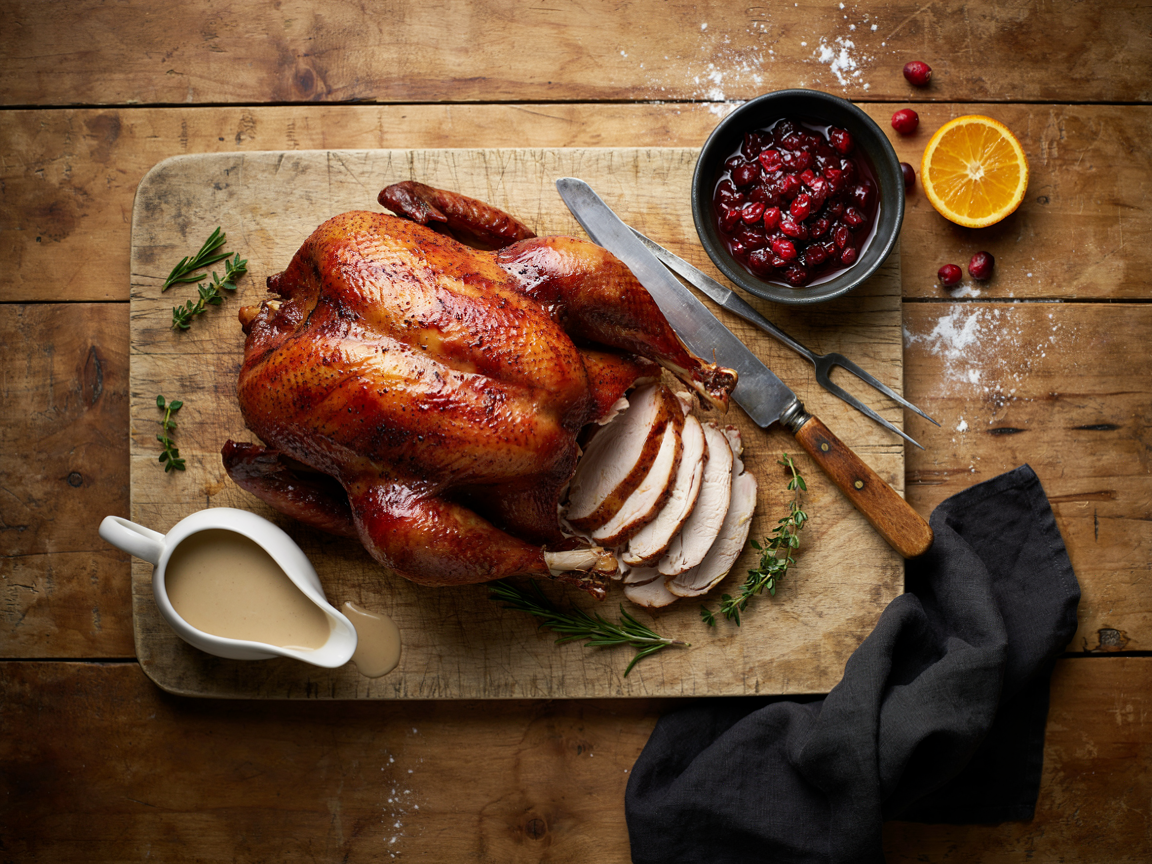
The maple BBQ smoked turkey, rested and carved: mahogany skin, juicy breast slices, gravy from the drip pan and cranberry sauce.
A good smoked turkey is the best turkey most people will ever eat; a bad one is the driest. The difference is three decisions made before the lid closes: dry brine it, smoke it at 275 degrees instead of 225, and pull it at 160 in the breast. The maple BBQ rub is the part everyone remembers: brown sugar and smoked paprika that caramelize into a bark, with a maple glaze brushed on at the end.
In this post:
- Why it stays juicy
- The nine-spice rub, explained
- The recipe, sized for a breast, a 14 lb bird, an 18 lb bird or two turkeys
- Smoking times by weight, wood and doneness temps
- Pellet, kettle, offset, cabinet and spatchcock setups
- The five rules, leftovers and troubleshooting
- 14 FAQs
Why This Smoked Turkey Stays Juicy
Four things this method does that most smoked turkey recipes get wrong:
Juicy to the bone
A dry brine seasons the meat all the way through and helps it hold its juices under hours of heat, so even the breast stays moist. The brine is what makes it juicy; the smoker is what makes it taste like Thanksgiving.
Deep mahogany, crisp skin
Smoked at 275°F, not 225°F, so the fat renders and the skin tightens, with a 325°F finish under a maple glaze that sets into a sticky lacquer. Low-and-slow turkey skin is rubbery; this skin shatters.
Sweet-smoky, not candied
Brown sugar and maple in the rub caramelize against the smoked paprika, mustard and a little cayenne, so the crust tastes like a barbecue bark rather than a dessert. Apple or cherry wood keeps the smoke soft.
Works on any smoker, or a kettle grill
Pellet grill, charcoal kettle, offset, electric or propane cabinet: the tabs below set each one up for 275°F indirect heat with a water pan. A spatchcocked bird cuts the time nearly in half if the grate is wide enough.
The Maple BBQ Rub and Everything Else You Need
The rub is nine pantry spices; the rest is the bird, salt, a binder and the glaze:
The turkey
Twelve to fourteen pounds is the sweet spot: it smokes in under 5 hours and the outer meat is not dry by the time the thigh is done. Over 16 pounds, spatchcock it or smoke two smaller birds side by side. Fully thawed, giblets out.
Kosher salt, for the dry brine
About a tablespoon of coarse kosher salt per 5 pounds, 24 to 48 hours ahead. It seasons deeply and dries the skin for crisping. Already brined or kosher-processed birds are salted; skip this step for those.
Brown sugar
Dark brown for the molasses depth. It caramelizes into the bark and balances the smoke. Maple sugar is a lovely swap if you have it.
Smoked paprika
The backbone of the rub: color, sweetness and a second layer of smoke. Sweet paprika works but the crust will be paler.
Garlic, onion, mustard powder and thyme
The savory middle of the rub, so it tastes like barbecue and not like a cookie. Mustard powder is the quiet one that makes the whole blend taste seasoned.
Cayenne and cumin
Half a teaspoon each for a 14 pound bird: warmth and earthiness, not heat. Double the cayenne if the table likes it.
Olive oil and maple syrup binder
Oil makes the rub stick; a little maple in the binder starts the caramelization early. Softened butter under the skin instead of oil makes the breast richer.
Maple glaze
Maple syrup, melted butter, a splash of apple cider vinegar and a pinch of the rub, brushed on twice in the last 40 minutes. Brushed earlier it burns; brushed at the end it lacquers.
Wood
Apple or cherry for sweet, light smoke that suits poultry; pecan for something nuttier. Hickory in small amounts only. Mesquite overpowers turkey.
Smoked Turkey with Maple BBQ Rub Recipe
The card is written for a 12 to 14 pound whole turkey that serves 10. Tap a different bird and the rub, glaze, salt and smoking time update together.
Juicy Smoked Turkey with a Maple BBQ Rub
Dry-brined, rubbed with maple BBQ spices, smoked over fruit wood at 275 degrees and lacquered with a maple glaze at the end. Pick your bird and the rub, glaze, salt and time all update with the printable card.
Which bird?
Ingredients
- 6 to 7 lb bone-in breast12 to 14 lb whole turkey16 to 18 lb whole turkeytwo 12 to 14 lb turkeys whole turkey, thawed, giblets removed (or bone-in breast)
- 1¼ tbsp2½ tbsp3½ tbsp5 tbsp kosher salt for the dry brine (skip if wet-brined)
- none1 each1 each2 each yellow onion, quartered, and an apple, quartered (for the cavity)
- 2 sprigs6 sprigs6 sprigs12 sprigs fresh thyme and rosemary sprigs (for the cavity)
- 1½ tbsp3 tbsp¼ cup6 tbsp Maple BBQ rub: dark brown sugar, packed
- 1 tbsp2 tbsp3 tbsp¼ cup smoked paprika
- 1½ tsp1 tbsp1½ tbsp2 tbsp garlic powder
- 1½ tsp1 tbsp1½ tbsp2 tbsp onion powder
- 1 tsp2 tsp1 tbsp4 tsp coarse black pepper
- ½ tsp1 tsp1½ tsp2 tsp dried thyme
- ½ tsp1 tsp1½ tsp2 tsp mustard powder
- ¼ tsp½ tsp¾ tsp1 tsp cayenne pepper
- ¼ tsp½ tsp¾ tsp1 tsp ground cumin
- 1½ tbsp3 tbsp¼ cup6 tbsp Binder: olive oil
- 1 tbsp2 tbsp3 tbsp¼ cup pure maple syrup
- 2 tbsp¼ cup6 tbsp½ cup Maple glaze: pure maple syrup
- 1 tbsp2 tbsp3 tbsp¼ cup unsalted butter, melted
- ½ tsp1 tsp1½ tsp2 tsp apple cider vinegar
- ½ tsp1 tsp1½ tsp2 tsp of the rub, reserved for the glaze
Salt: the dry brine amount is for coarse kosher salt; use about two-thirds as much if yours is fine or dense. Thawing: a frozen turkey needs 24 hours in the fridge per 4 to 5 pounds before the brine even starts, so a 14 pound bird comes out of the freezer 5 days before Thanksgiving.
Instructions
Dry brine, 1 to 2 days ahead
Pat the turkey completely dry. Rub the kosher salt over every surface and under the breast skin (loosen it gently with your fingers from the neck end), using about a tablespoon per 5 pounds. Set it on a rack over a sheet pan, breast up, and refrigerate uncovered for 24 to 48 hours. Do not rinse. If you wet-brined it instead, skip the salt entirely and give it an uncovered night in the fridge to dry the skin.
Make the maple BBQ rub and the binder
Stir the brown sugar, smoked paprika, garlic powder, onion powder, pepper, thyme, mustard powder, cayenne and cumin together, breaking up any sugar lumps. Set 1 teaspoon aside for the glaze. In a small bowl, whisk the olive oil with the 2 tablespoons of maple syrup; this is the binder that makes the rub stick and caramelize.
Rub the bird
One hour before smoking, take the turkey out of the fridge. Brush the maple-oil binder over the whole bird and under the breast skin, then press the rub on evenly, including under the skin over the breast and thighs. Put the onion, apple and herb sprigs in the cavity (never stuffing). Tuck the wing tips behind the back and tie the legs loosely. Let it sit at room temperature while the smoker heats.
Heat the smoker to 275°F
Set the smoker or grill up for indirect heat at 275°F with apple, cherry or pecan wood and a water pan under the grate. Not 225°F: a whole turkey at 225°F spends too long between 40 and 140°F and comes out with rubbery skin. Put a leave-in probe in the thickest part of the breast, away from bone.
Smoke, about 20 minutes per pound
Set the turkey breast-side up on the grate, legs toward the hotter end. Keep the lid closed and the temperature steady at 275°F; rotate the bird once halfway. A 12 to 14 pound turkey takes 4 to 4¾ hours. Do not spritz, open or fuss; every lid lift adds 10 minutes.
Glaze and crisp the skin
When the breast reads 145°F (about 40 minutes before it is done), whisk the maple syrup, melted butter, vinegar and the reserved teaspoon of rub into a glaze. Brush it over the whole bird, raise the smoker to 325°F, and brush again 15 minutes later. The glaze sets into a sticky, mahogany lacquer and the higher heat renders the skin crisp.
Pull at 160°F, rest 30 minutes, carve
Take the turkey off when the breast reads 160°F and the thigh at least 175°F; the breast climbs to a safe 165°F as it rests. Rest it 30 minutes on a board, loosely covered with foil (a tight tent steams the skin). Carve the breasts off whole and slice them across the grain; separate the thighs and drumsticks. Pour the drip pan juices into a saucepan for gravy.
Smoking Times, Wood and Doneness Temperatures
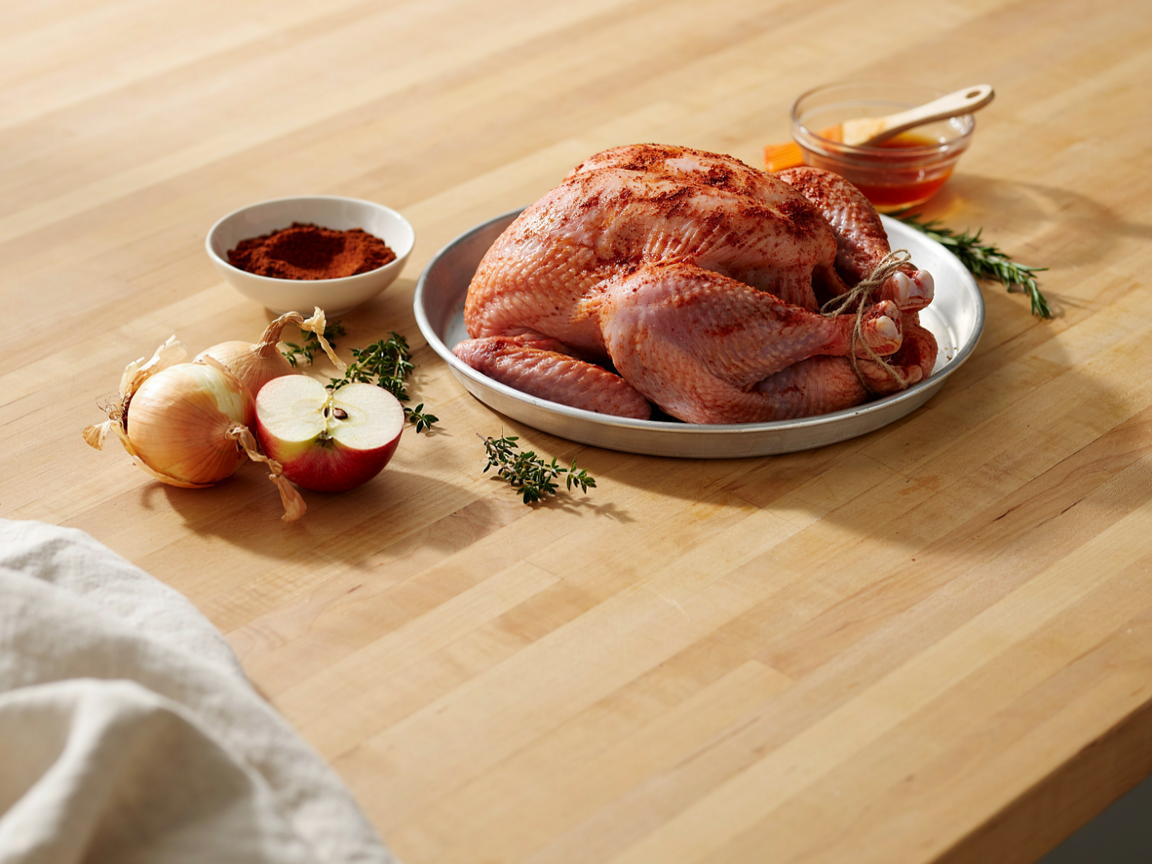
The rub going on over the maple-oil binder, under the breast skin and all over, an hour before the smoker.
Every figure below assumes a steady 275°F at grate level and a fully thawed bird. Always cook to the thermometer:
How Long to Smoke a Turkey
| Bird | Smoker temp | Time | Notes |
|---|---|---|---|
| BirdBone-in breast, 6 to 7 lb | Smoker temp275°F | Time2 to 2½ hours | NotesPull at 160°F in the center |
| BirdWhole, 10 to 12 lb | Smoker temp275°F | Time3½ to 4 hours | NotesAbout 20 minutes per pound |
| BirdWhole, 12 to 14 lb | Smoker temp275°F | Time4 to 4¾ hours | NotesThe recipe size |
| BirdWhole, 14 to 16 lb | Smoker temp275°F | Time4¾ to 5½ hours | NotesConsider spatchcocking |
| BirdWhole, 16 to 18 lb | Smoker temp275°F | Time5½ to 6 hours | NotesSpatchcock or smoke two 12 lb birds instead |
| BirdSpatchcocked, 12 to 14 lb | Smoker temp300°F | Time2½ to 3 hours | NotesFastest and most even |
| BirdAny size at 325°F | Smoker temp325°F | TimeAbout 13 to 15 minutes per pound | NotesLess smoke flavor, crispest skin |
Which Wood
| Wood | Smoke | Notes |
|---|---|---|
| WoodApple | SmokeMild, sweet, fruity | NotesThe safest choice; pairs with the maple |
| WoodCherry | SmokeMild, sweet, deep red color | NotesGives the darkest mahogany skin |
| WoodPecan | SmokeMedium, nutty, rich | NotesLike a gentle hickory |
| WoodMaple | SmokeMild, sweet | NotesHard to find; perfect if you can |
| WoodHickory | SmokeStrong, bacon-like | NotesMix one part with two parts apple |
| WoodMesquite | SmokeVery strong, sharp | NotesSkip it for turkey |
When It Is Done
| Where | Temperature | Notes |
|---|---|---|
| WhereBreast, pull from the smoker | Temperature160°F | NotesCarries over to 165°F during the rest |
| WhereBreast, after resting | Temperature165°F | NotesThe safe serving temperature |
| WhereThigh, pull from the smoker | Temperature175°F or higher | NotesDark meat is better at 180°F; it will not dry out |
| WhereGlaze goes on | Temperature145°F in the breast | NotesAbout 40 minutes before it is done |
| WhereRest | Temperature30 minutes, loosely covered | NotesUp to 45 for a large bird; the breast keeps climbing |
Setting Up Your Smoker (or Grill)
Same bird, same rub, same temperatures. Tap your setup:
Smoked Turkey on a Pellet Grill
Fill the hopper with apple or cherry pellets (a competition or fruit blend works) and set the grill to 275°F. Put a foil pan of water on the grate beside the bird for moisture and easy drippings. Pellet smoke is mild, so if you want more, run the first hour at 225°F on the smoke setting, then 275°F for the rest, adding about 30 minutes to the total. Finish at 325°F for the glaze.
Smoked Turkey on a Charcoal Kettle
Light about 40 briquettes and bank them on one side with 3 or 4 fist-sized apple wood chunks on top, or lay a charcoal snake two briquettes wide around half the kettle with wood chunks on the first third. Put a foil water pan on the empty side under the turkey, lid vent over the bird, and hold 275°F by the bottom vent. Add 8 to 10 unlit briquettes every hour. Move the lid vent and rotate the bird halfway. A 12 to 14 pound bird fits a standard 22-inch kettle; larger birds should be spatchcocked.
Smoked Turkey on an Offset Smoker
Run a small, hot, clean fire of apple or pecan splits with the exhaust wide open for thin blue smoke; white billowing smoke makes turkey taste acrid. Hold 275°F at grate level with a probe thermometer, not the lid gauge. Put the bird legs toward the firebox, a water pan between fire and food, and rotate it end-for-end every 90 minutes. Expect to tend the fire every 30 to 45 minutes.
Smoked Turkey in an Electric or Propane Cabinet
Set the cabinet to 275°F, fill the water pan and add a small handful of apple chips every 45 minutes for the first 2 hours only; turkey takes smoke fast and more than that turns bitter. Many cabinets top out at 275°F, so for the crisp-skin finish move the glazed bird to a 350°F oven for the last 20 to 25 minutes.
Spatchcocked Smoked Turkey
Cut out the backbone with poultry shears, flip and press the breastbone flat, then dry brine and rub as written (the rub goes under the skin more easily this way). Smoke skin-side up at 300°F for 2½ to 3 hours for a 12 to 14 pound bird, glazing at 145°F. Everything cooks evenly, the skin crisps all over, and it fits a kettle grill.
Smoked Turkey Breast with Maple BBQ Rub
A 6 to 7 pound bone-in breast (the first size on the card) dry brines 24 hours, takes half the rub and glaze, and smokes at 275°F for 2 to 2½ hours to 160°F. Set it on a bed of onion and apple in a foil pan to catch the juices for gravy. Boneless breast halves (2 to 3 pounds each) take 1½ to 2 hours; tie them so they cook evenly.
The Five Rules of Juicy Smoked Turkey
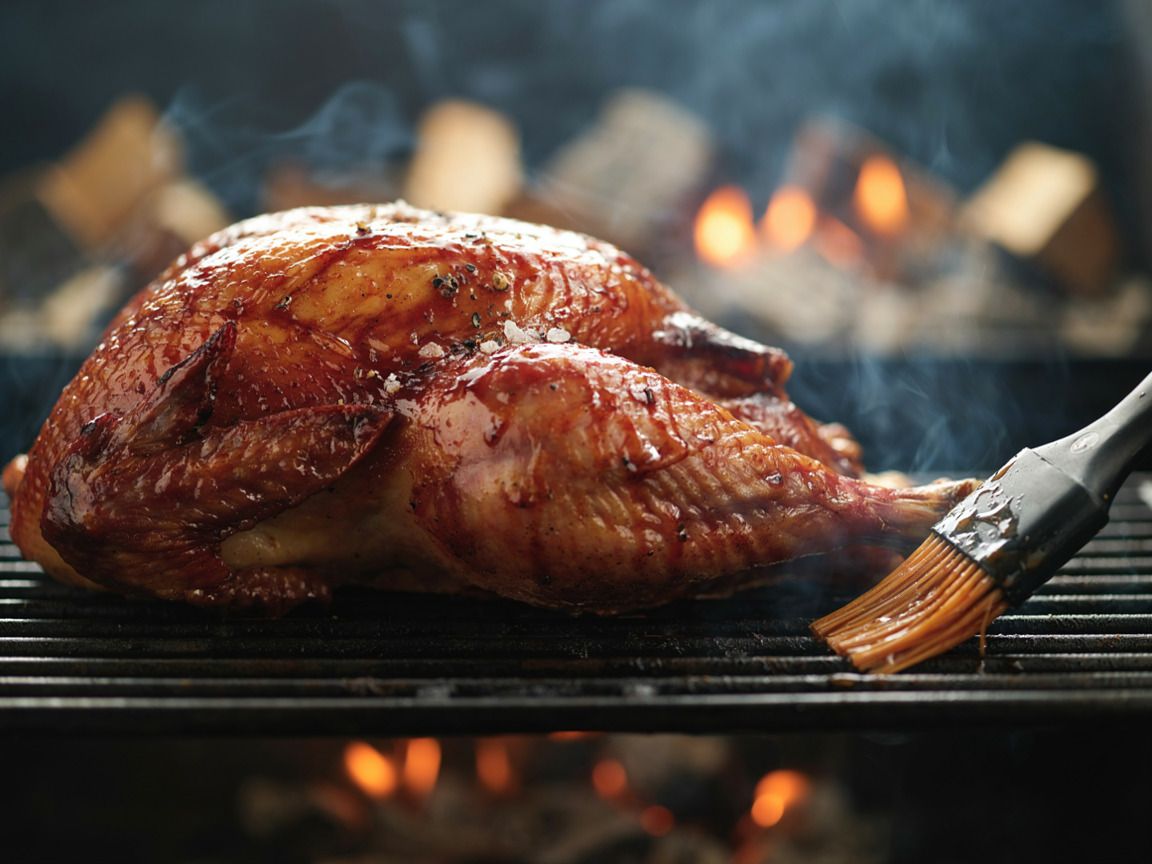
The maple glaze lacquering onto the skin in the last half hour at 325 degrees.
Every dry, rubbery or bitter smoked turkey broke one of these:
Dry brine, 24 to 48 hours
It seasons the meat through, protects it from drying and dries the skin so it crisps. Skipping the brine is the difference between juicy and merely cooked.
275°F, not 225°F
Low-and-slow is for pork shoulder and brisket. Turkey has no collagen to break down, and at 225°F a whole bird spends hours in the 40 to 140°F zone and the skin never renders. Hotter is both safer and better.
Thin smoke for the first two hours
Turkey takes smoke quickly. Light fruit wood, thin blue smoke, and no more chips or chunks after the second hour; heavy white smoke makes it bitter.
Glaze late, then heat up
Maple burns. Brush the glaze on at 145°F in the breast, raise the heat to 325°F and brush once more. Thirty minutes is enough for a lacquer.
Pull at 160, rest 30
The breast climbs 5 degrees on the board. Pull at 165 and rest and you are serving 170 breast meat. Loose foil, not a tight tent, so the skin stays crisp.
Leftovers, Reheating and Smoking Ahead
| What | How long or how | Notes |
|---|---|---|
| WhatFridge, carved | How long or how4 days | NotesStore in the drip pan juices or a splash of broth so it reheats moist |
| WhatFreezer, sliced | How long or how3 months | NotesVacuum seal or freeze flat in bags with a little broth |
| WhatReheat slices | How long or how325°F oven, covered, 15 to 20 minutes with broth | NotesOr a covered skillet with a splash of broth over low heat |
| WhatCarcass | How long or howStock | NotesSmoked turkey stock makes the best soup of the year; simmer 3 hours |
| WhatSmoke ahead for the holiday | How long or how1 day | NotesSmoke, cool, refrigerate whole; reheat covered at 325°F for 45 to 60 minutes and crisp uncovered 10 minutes |
What to Serve with Smoked Turkey
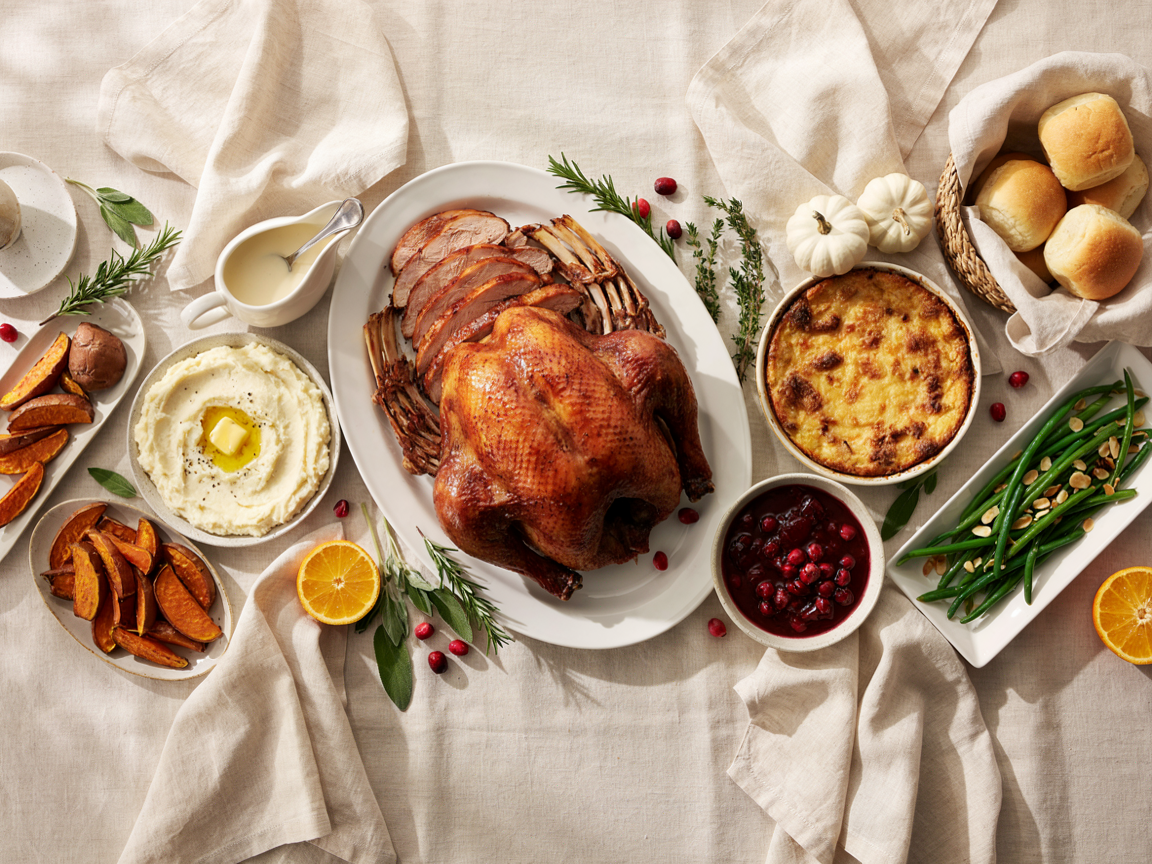
The holiday table: the carved smoked turkey, gravy from the drip pan, cranberry sauce and the sides.
Smoked turkey wants the classic table with a little sweetness to meet the maple:
- Gravy from the drip pan and cranberry sauce
- Mashed potatoes, plus corn casserole without the boxed mix or cheesy corn casserole
- Brown sugar skillet sweet potatoes or roasted squash
- Before the bird: the apple cider turkey brine (wet) or the brine for smoked turkey
- Smaller holiday: the crockpot turkey breast, same rub, weeknight size
- Smoker snacks while it cooks: smoked turkey legs and smoked turkey wings
- Leftovers: turkey cranberry sliders and leftover turkey noodle casserole
Troubleshooting Smoked Turkey
| Problem | Likely cause | Fix |
|---|---|---|
| ProblemRubbery skin | Likely causeSmoked too low, or tented tightly while resting | Fix275°F with a 325°F finish; loose foil |
| ProblemDry breast | Likely causeNo brine, or pulled too late | FixDry brine; pull at 160°F; probe in the breast, not the thigh |
| ProblemBitter, acrid smoke taste | Likely causeToo much wood, or dirty white smoke | FixFruit wood, thin blue smoke, no wood after hour two |
| ProblemGlaze burned black | Likely causeBrushed on too early | FixGlaze at 145°F, 40 minutes before done |
| ProblemBreast done, thighs not | Likely causeLegs toward the cooler end | FixLegs toward the heat; or spatchcock |
| ProblemPink meat near the bone | Likely causeNormal smoke ring and myoglobin | FixTrust the thermometer: 165 breast, 175 thigh is safe and done |
| ProblemTook far longer than planned | Likely causeCold, windy day; lid opened often | FixStart 90 minutes earlier than the table says; rest holds it for an hour |
| ProblemToo salty | Likely causeBrined bird dry-brined again | FixSkip the salt for pre-brined, kosher or self-basting turkeys |
Nutrition (approximate, per serving)
Estimates for about 6 ounces of mixed white and dark meat with skin, rub and glaze, one of ten servings from a 13 pound bird. No pork, no alcohol; naturally gluten-free.
Smoked Turkey: FAQs
How long does it take to smoke a turkey?
About 20 minutes per pound at 275°F: 4 to 4¾ hours for a 12 to 14 pound turkey, 2 to 2½ hours for a 6 to 7 pound bone-in breast, and 2½ to 3 hours for a spatchcocked 12 to 14 pound bird at 300°F. Always cook to temperature, not time; the table above has every size.
What temperature should I smoke a turkey at?
275°F for the main cook, raised to 325°F for the last 30 to 40 minutes to set the glaze and crisp the skin. Not 225°F: turkey has no tough collagen that needs low-and-slow, and a whole bird at 225°F takes 7 or 8 hours, lingers too long in the food-safety danger zone and comes out with rubbery skin.
Should I brine a turkey before smoking it?
Yes. A dry brine of kosher salt for 24 to 48 hours seasons the meat through, helps it stay juicy over hours of smoke and dries the skin so it crisps. A wet brine works too; if you wet brine, skip the salt in this recipe and give the bird an uncovered night in the fridge to dry the skin.
Dry brine or wet brine for smoked turkey?
Dry brine for the smoker: it takes no fridge space, needs no container, and produces drier skin that crisps better in the gentle heat. Wet brine gives a slightly plumper, more subtly seasoned bird and is forgiving if you overcook. Both are better than neither.
What is the best wood for smoking turkey?
Apple or cherry: mild, sweet fruit woods that suit poultry and the maple rub. Cherry gives the deepest mahogany color. Pecan is a good medium option. Use hickory sparingly, mixed with apple, and avoid mesquite, which overwhelms turkey.
How do I get crispy skin on a smoked turkey?
Four things: dry brine uncovered in the fridge so the skin is dry, smoke at 275°F rather than 225°F so the fat renders, finish at 325°F under the glaze for the last half hour, and rest the bird under loose foil, not a tight tent. If the skin is still soft at the end, 10 minutes in a 400°F oven fixes it.
What internal temperature should smoked turkey reach?
Pull it when the breast reads 160°F in the thickest part away from bone and the thigh reads at least 175°F. The breast carries over to 165°F, the safe serving temperature, during a 30 minute rest. A leave-in probe thermometer is the one tool this recipe needs.
Why is my smoked turkey pink?
Smoke reacts with the myoglobin in the meat and leaves a pink ring just under the surface and sometimes near the bones, even when the turkey is fully cooked. It is the same smoke ring prized on brisket. If the thermometer read 165°F in the breast and 175°F in the thigh, the meat is done and safe.
Can I stuff a smoked turkey?
No. In the smoker the stuffing would sit for hours below a safe temperature inside the bird. Put onion, apple and herb sprigs in the cavity for aroma and bake the stuffing separately, moistened with some of the smoked drippings.
How big a turkey can I smoke?
Up to about 16 pounds whole. Larger birds spend so long in the smoker that the breast dries before the thighs finish. For a bigger crowd, spatchcock an 18 pounder or smoke two 12 to 14 pound turkeys side by side; the card has the two-bird amounts.
Do I need to baste or spritz a smoked turkey?
No. Spritzing cools the skin and keeps it from crisping, and every lid lift adds 10 minutes. A water pan in the smoker provides the moisture. The only thing that goes on the bird after the rub is the maple glaze in the last 40 minutes.
Can I make the maple BBQ rub ahead?
Yes. Mix a double or triple batch and keep it in a jar for up to 6 months; it is excellent on chicken thighs, salmon and roasted sweet potatoes. Keep the brown sugar from clumping by storing it airtight and stirring before use.
Can I make this smoked turkey in the oven?
You can make a maple BBQ roast turkey: dry brine and rub as written, roast at 325°F on a rack for about 13 minutes per pound, glaze at 145°F and finish at 400°F for 15 minutes. Add a teaspoon of extra smoked paprika and ¼ teaspoon of liquid smoke to the binder if you want the smoky note.
How do I reheat smoked turkey without drying it out?
Slice it, lay the slices in a baking dish with a few spoonfuls of broth or the smoked drippings, cover tightly and warm at 325°F for 15 to 20 minutes. To reheat a whole smoked bird for the holiday, cover it and heat at 325°F for 45 to 60 minutes, then uncover for 10 minutes to re-crisp the skin.
Save the pin so the rub, the time table and the smoker setups are one tap away the week of Thanksgiving.
More Turkey Day
The brines, the faster bird, the smoker-side snacks and the day after.
Perfect Apple Cider Turkey Brine
The wet brine, by turkey weight. See the brine → For the SmokerTurkey Brine for Smoked Turkey
Written for smoke, not the oven. See the recipe → FasterJuiciest Spatchcock Turkey
The flat bird, done in under three hours. See the method → Fair StyleSmoked Turkey Legs
The drumsticks for the smoker-side crowd. See the recipe → No SmokerCrockpot Turkey Breast
The hands-off holiday breast. See the recipe → Day AfterTurkey Cranberry Sliders
What the leftovers were made for. See the recipe →Dry brine for a day, rub it an hour before, smoke at 275 over apple wood, glaze at 145, finish at 325, pull at 160 and rest for half an hour. That is the bronzed, juicy bird on the board.
Pin this smoked turkey so the maple BBQ rub and the times by weight are ready for Thanksgiving, Christmas and every backyard feast between.