
Sugarless Fruit Cake: No Added Sugar, Sweetened Only With Fruit
Dates, dried fruit and orange juice do all the sweetening in a dense, spiced loaf that slices clean and keeps for days.
- Soak8 to 12 hr
- Mix15 min
- Bake low150°C / 300°F
- Resta night, wrapped
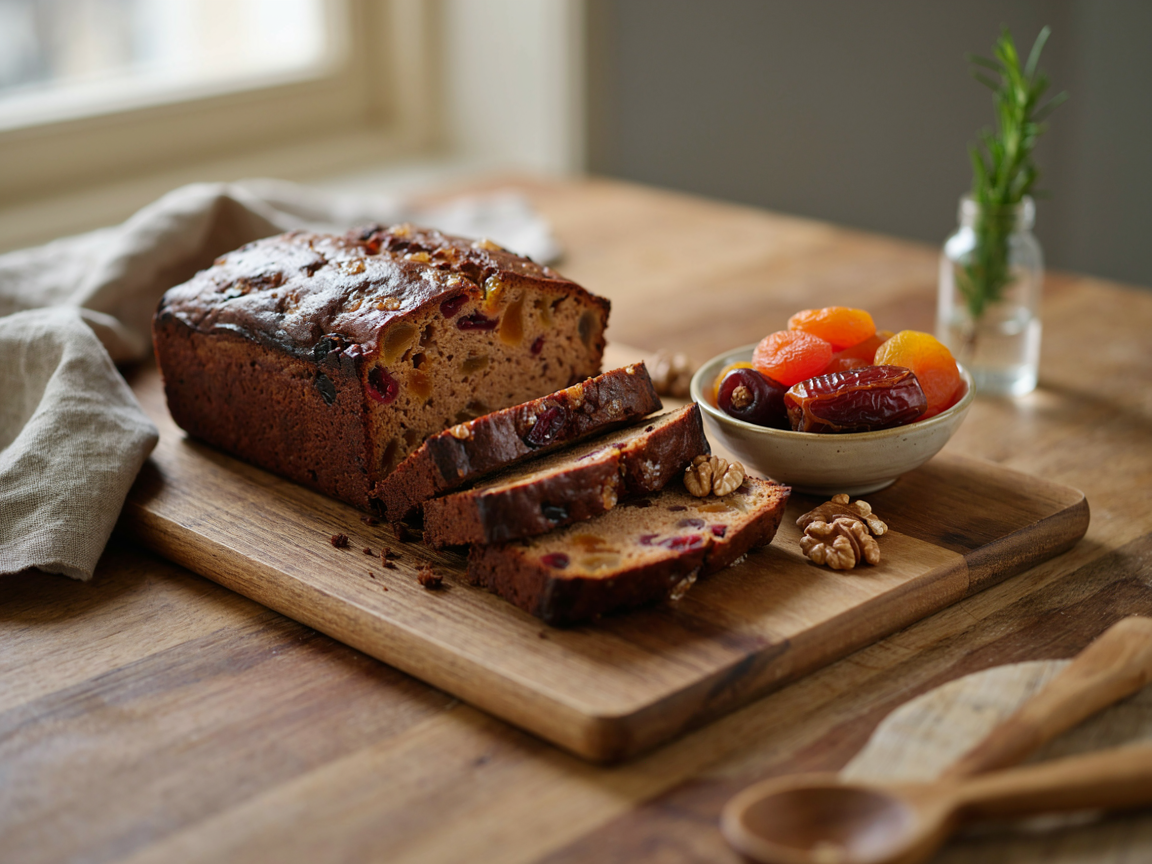
Sliced to show the fruit: sultanas, apricots and dates set in a dark, spiced crumb, with the dates and apricots that sweeten it alongside.
This sugarless fruit cake gets all of its sweetness from fruit: dried fruit soaked overnight in orange juice, and Medjool dates simmered into a thick paste. It bakes low and slow into a dark, moist, spiced loaf full of jewel-bright fruit, with no sugar, honey, syrup or sweetener added.
Quick answer
Soak 400 g (2½ cups) mixed dried fruit in ¾ cup orange juice overnight. Simmer 150 g chopped Medjool dates in ¾ cup water and mash. Mix in 2 eggs, ¼ cup melted butter, 200 g wholemeal flour, leavening and spice. Bake in a lined 2-lb loaf tin at 150°C (300°F) for 1½ to 1¾ hours. Makes 12 slices.
The card below makes one 2-lb loaf, a deep 8-inch round or two loaves, and every amount changes with the size. After it: what “sugar free” honestly means here, which dried fruits are sweetest, swaps for eggs, gluten and nuts, feeding the cake with juice, and decorating it without sugar.
Why This Sugarless Fruit Cake Works
Dates do the sweetening
Chopped Medjool dates simmered in water collapse into a thick, caramel-sweet paste. It sweetens the batter, binds it and keeps the crumb moist for days: the jobs sugar does in a classic fruit cake.
Fruit soaked overnight
The dried fruit drinks up the orange juice overnight, so it stays plump and juicy in the oven instead of pulling moisture out of the crumb. Whatever juice is left in the bowl goes into the batter too.
Baked low and slow
A dense, fruit-heavy batter needs gentle heat. At 150°C (300°F) the center cooks through before the top and edges darken, and the loaf bakes flat and even.
Wholemeal flour, a little butter
Wholemeal flour brings a nutty flavor and enough structure to carry all that fruit. A quarter cup of melted butter or coconut oil keeps the slices tender rather than dry.
One cake, one set of numbers: the quick answer, the recipe card and the step-by-step below all use the same amounts, the same 150°C (300°F) oven and the same bake times.
No Added Sugar Fruit Cake Recipe (Printable Card)
The card is set for one 2-lb (900 g) loaf. Tap 8-inch round or 2 loaves and every amount, time and step changes to match. To print it, pick a size and tap Download the Recipe Card under it.
Sugarless Fruit Cake
A dense, dark, warmly spiced fruit cake with no added sugar, sweetened only by dried fruit, dates and orange juice.
Which size?
Ingredients
To soak the night before- 400 g (about 2½ cups)600 g (about 3¾ cups)800 g (about 5 cups) mixed dried fruit with no added sugar: sultanas, raisins, chopped dried apricots and chopped dates
- Zest of 1Zest of 1½Zest of 2 orange, finely gratedoranges, finely gratedoranges, finely grated
- ¾ cup (180 ml)1 cup + 2 tbsp (270 ml)1½ cups (360 ml) 100% orange juice
- 150 g (about 6 large)225 g (about 9 large)300 g (about 12 large) pitted Medjool dates, chopped
- ¾ cup (180 ml)1 cup + 2 tbsp (270 ml)1½ cups (360 ml) water
- 234 large eggs, at room temperature
- ¼ cup (55 g)6 tbsp (85 g)½ cup (110 g) unsalted butter or coconut oil, melted
- 1 tsp1½ tsp2 tsp alcohol-free vanilla
- 200 g (1⅔ cups)300 g (2½ cups)400 g (3⅓ cups) wholemeal (whole wheat) plain flour
- 1 tsp1½ tsp2 tsp baking powder
- ½ tsp¾ tsp1 tsp bicarbonate of soda (baking soda)
- 1½ tsp2¼ tsp1 tbsp ground cinnamon
- 1 tsp1½ tsp2 tsp mixed spice or apple pie spice
- ¼ tspa generous ¼ tsp½ tsp fine salt
- ½ cup (60 g)¾ cup (90 g)1 cup (120 g) walnuts, chopped (optional; leave out for nut-free)
- walnut halves or whole blanched almonds, to decorate (optional)
Tin: one 2-lb (900 g) loaf tin, about 8½ x 4½ in (21 x 11 cm)one 8-inch (20 cm) round tin, 3 in (7.5 cm) deeptwo 2-lb (900 g) loaf tins. Check the fruit labels: skip mixes with candied peel, glacé cherries or sweetened cranberries, which are candied in sugar.
Instructions
Soak the fruit
The night before, stir the dried fruit, orange zest and juice together in a bowl. Cover and leave 8 to 12 hours, in the fridge if the kitchen is warm. Most of the juice soaks in.
Heat the oven and line the tin
Heat the oven to 150°C (130°C fan, 300°F, gas 2). Grease the loaf tinthe round tinboth loaf tins, then line the base and sides with a double layer of parchment standing 2 inches (5 cm) above the rim.
Make the date paste
Simmer the chopped dates in the water in a small pan for 5 minutes, stirring, until soft and pulpy. Mash with a fork or blend to a thick paste, then cool for 10 minutes.
Mix the wet ingredients
In a large bowl, whisk the date paste, eggs, melted butter and alcohol-free vanilla until smooth. Stir in the soaked fruit and any juice left in its bowl.
Fold in the dry ingredients
Whisk the flour, baking powder, baking soda, spices and salt together, then fold them in with the chopped walnuts until no dry flour shows. The batter is thick and heavy with fruit.
Fill and level
Spoon the batter into the lined tin, press it into the corners and smooth the top. Make a shallow dip in the center so it bakes flat, and press on nuts to decorate now, if using.
Bake low and slow
Bake on the middle shelf for 1½ to 1¾ hours2 to 2¼ hours1½ to 1¾ hours, side by side. If the top darkens before the center is done, lay parchment loosely over it. Keep the door shut for the first hour.
Test with a skewer
A skewer pushed into the center should come out clean of wet batter; a smear of sticky fruit is fine. The top is firm and deep brown, and the center reads about 200°F (93°C).
Cool, then rest
Cool completely in the tin on a rack, about 2 hours. Lift it out by the paper, wrap it in fresh parchment and rest it overnight before slicing thin.
Tin Sizes and Bake Times
Any tin works if the batter fills it no more than about three-quarters and the bake time follows the depth. The oven stays at 150°C (300°F) for all of them; start checking at the shorter time.
| Tin | Batches | Fill | Bake at 150°C (300°F) |
|---|---|---|---|
| Tin2-lb (900 g) loaf tin, about 8½ x 4½ in (21 x 11 cm) | Batches1 | FillAbout two-thirds | Bake at 150°C (300°F)1½ to 1¾ hours |
| Tin9 x 5 in (23 x 13 cm) loaf pan | Batches1 | FillA little over half | Bake at 150°C (300°F)1¼ to 1½ hours |
| TinTwo 1-lb (450 g) loaf tins | Batches1, split | FillAbout half each | Bake at 150°C (300°F)1 to 1¼ hours |
| Tin7-inch (18 cm) round, 3 in deep | Batches1 | FillAbout two-thirds | Bake at 150°C (300°F)1¾ to 2 hours |
| Tin8-inch (20 cm) round, 3 in deep | Batches1½ | FillAbout three-quarters | Bake at 150°C (300°F)2 to 2¼ hours |
| Tin12-cup muffin tin, lined | Batches1 | FillNearly full | Bake at 150°C (300°F)35 to 45 minutes |
Deep round tins need the brown-paper collar described in the method. A loaf tin is fine with a double layer of parchment.
Tins and Tools for This Cake
A tin and parchment are the only must-haves. The rest make the soak, the weighing and the keeping a little easier.
As an Amazon Associate, this site earns from qualifying purchases.
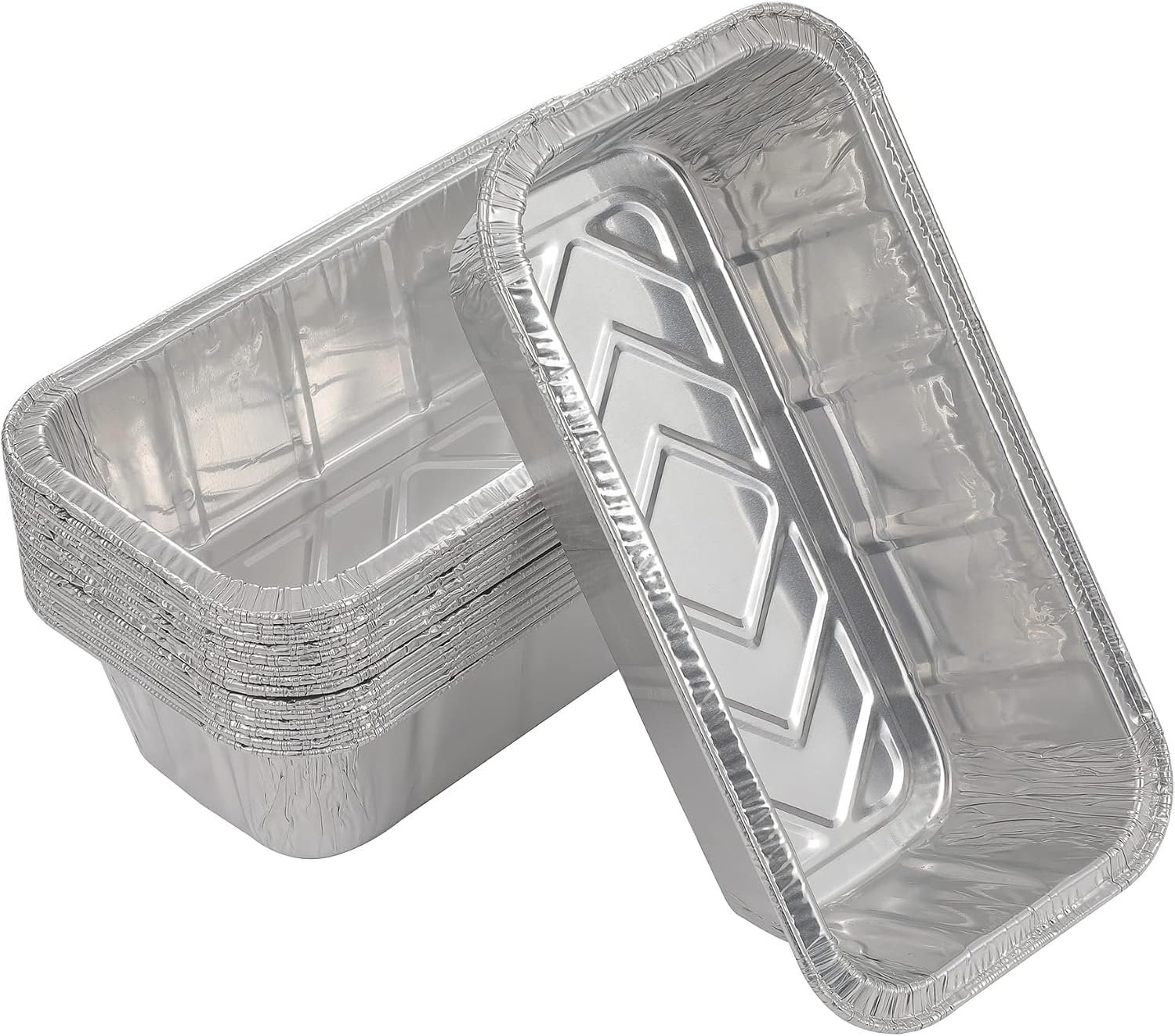
Waytiffer 2 lb Foil Loaf Pans, 25-Pack
The standard 2-lb size, 8½ x 4½ inches, that the card is set for. A foil pan also means the cake can be given in the tin it baked in.
Check Price on Amazon →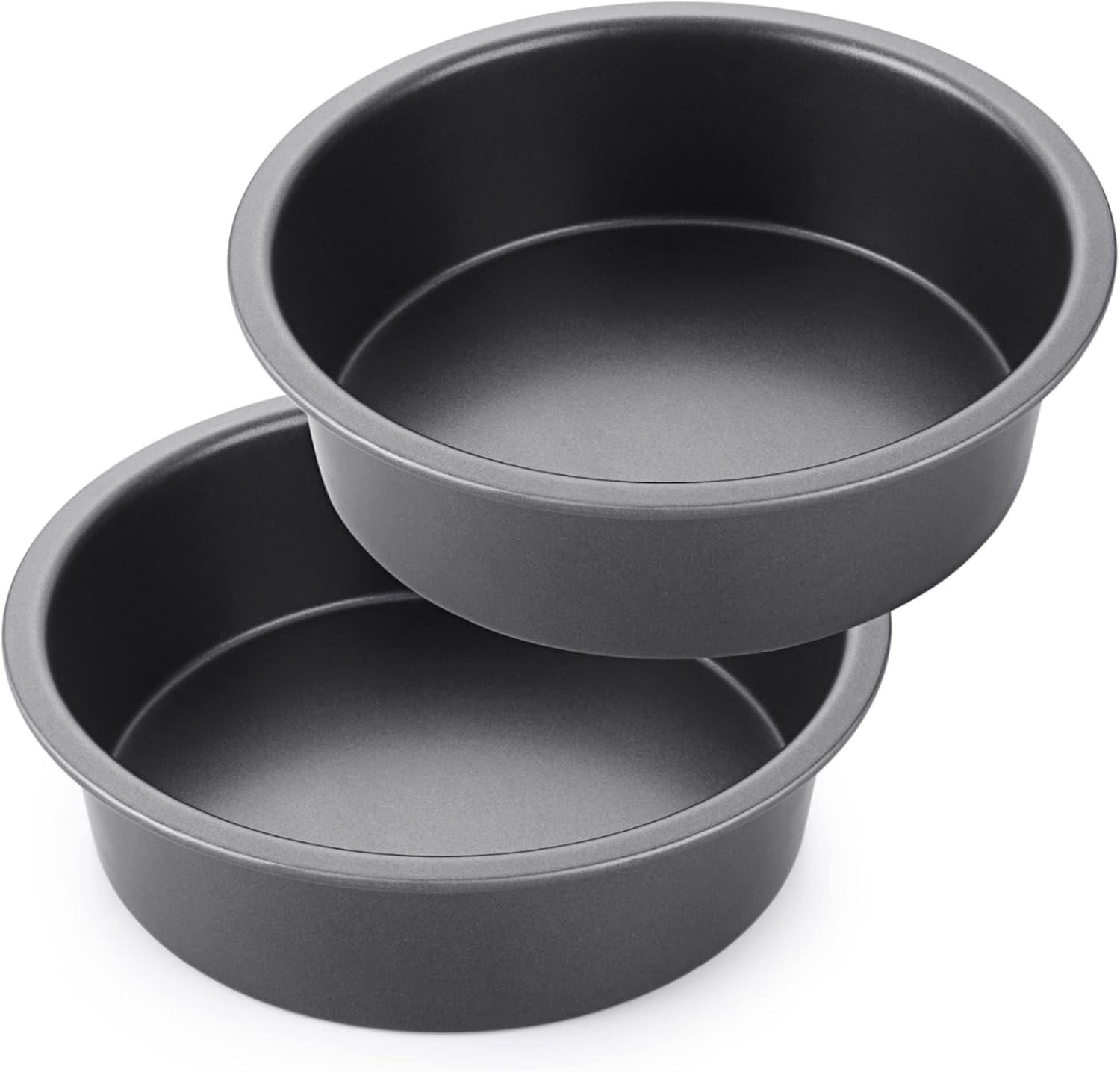
HONGBAKE 8-Inch Deep Round Cake Pans, 2-Pack
For the deep 8-inch round option. These are 2½ inches deep, so stand the parchment 2 inches above the rim and add the brown-paper collar.
Check Price on Amazon →
HIWARE Precut Parchment Paper Sheets, 12 x 16 in
The tin takes a double layer on the base and sides, and a loose sheet goes over the top if it darkens early. Precut sheets save the measuring.
Check Price on Amazon →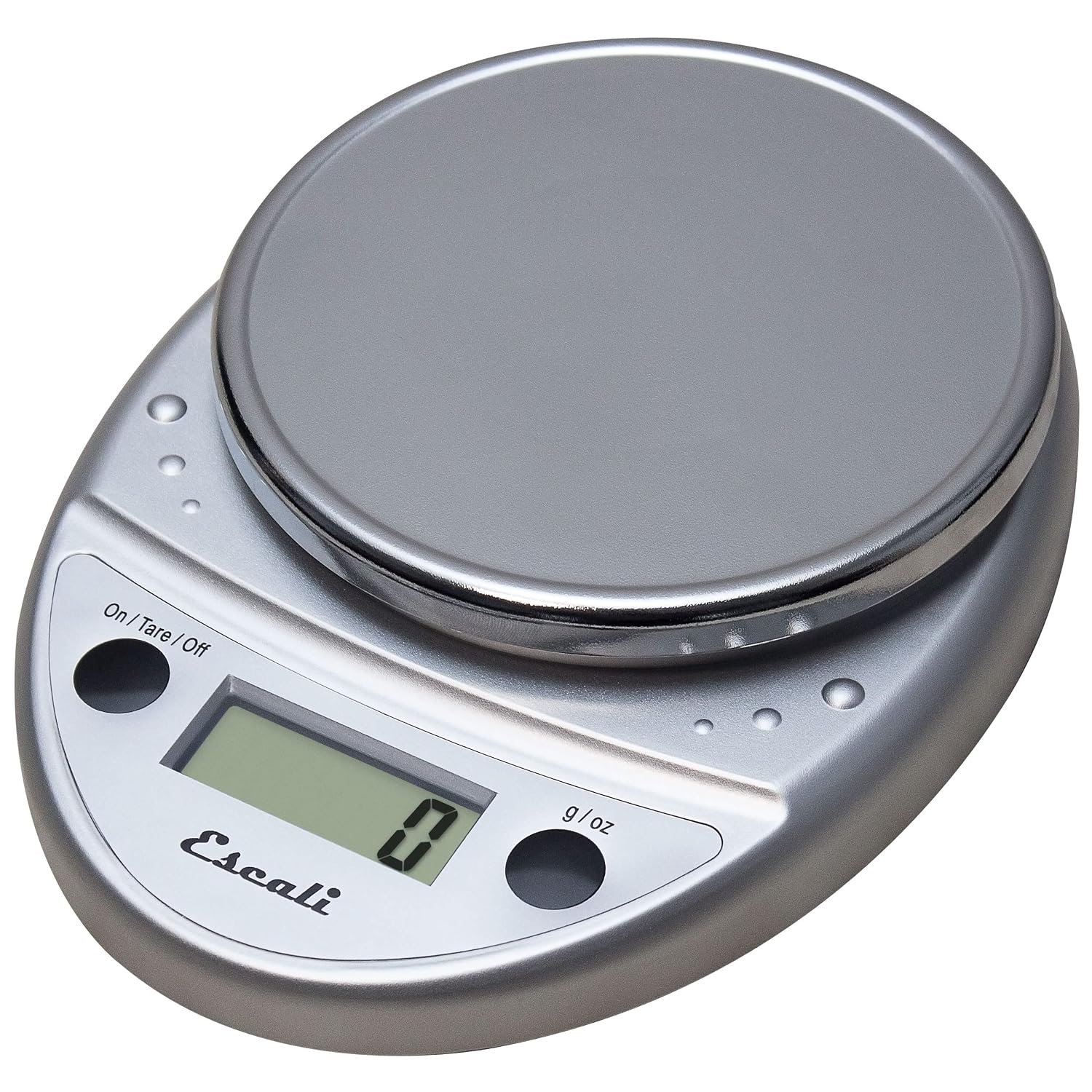
Escali Primo Digital Kitchen Scale
The card is written in grams: 400 g dried fruit, 150 g dates, 200 g flour. Set the bowl on the scale, zero it and weigh each one straight in.
Check Price on Amazon →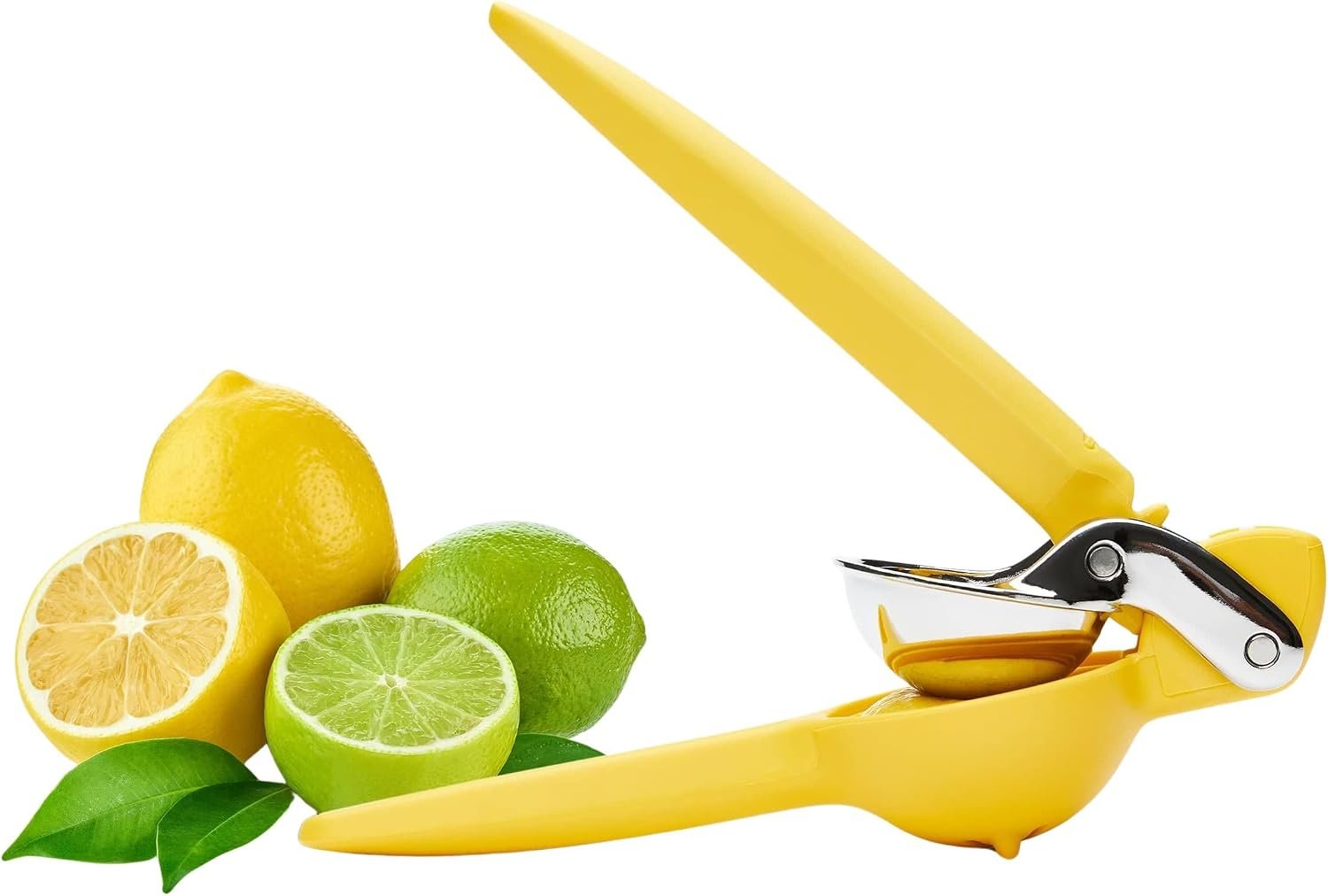
Chef’n FreshForce Citrus Juicer
The overnight soak takes ¾ cup of orange juice. A lever press squeezes each half dry and keeps the seeds out of the bowl.
Check Price on Amazon →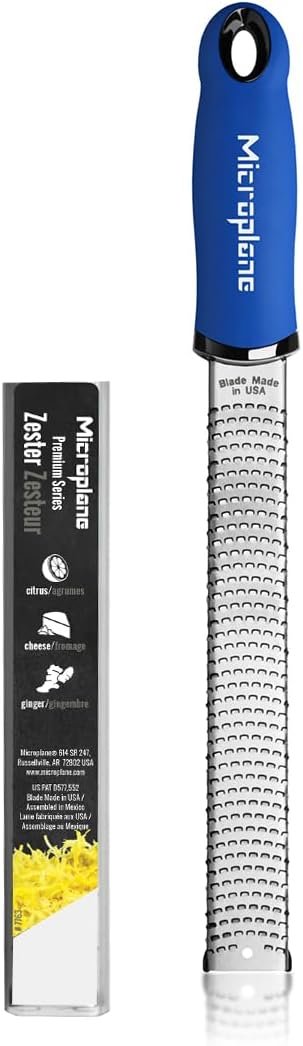
Microplane Premium Classic Zester
Grates just the orange zest for the soak, fine enough to disappear into the batter, and leaves the bitter white pith behind.
Check Price on Amazon →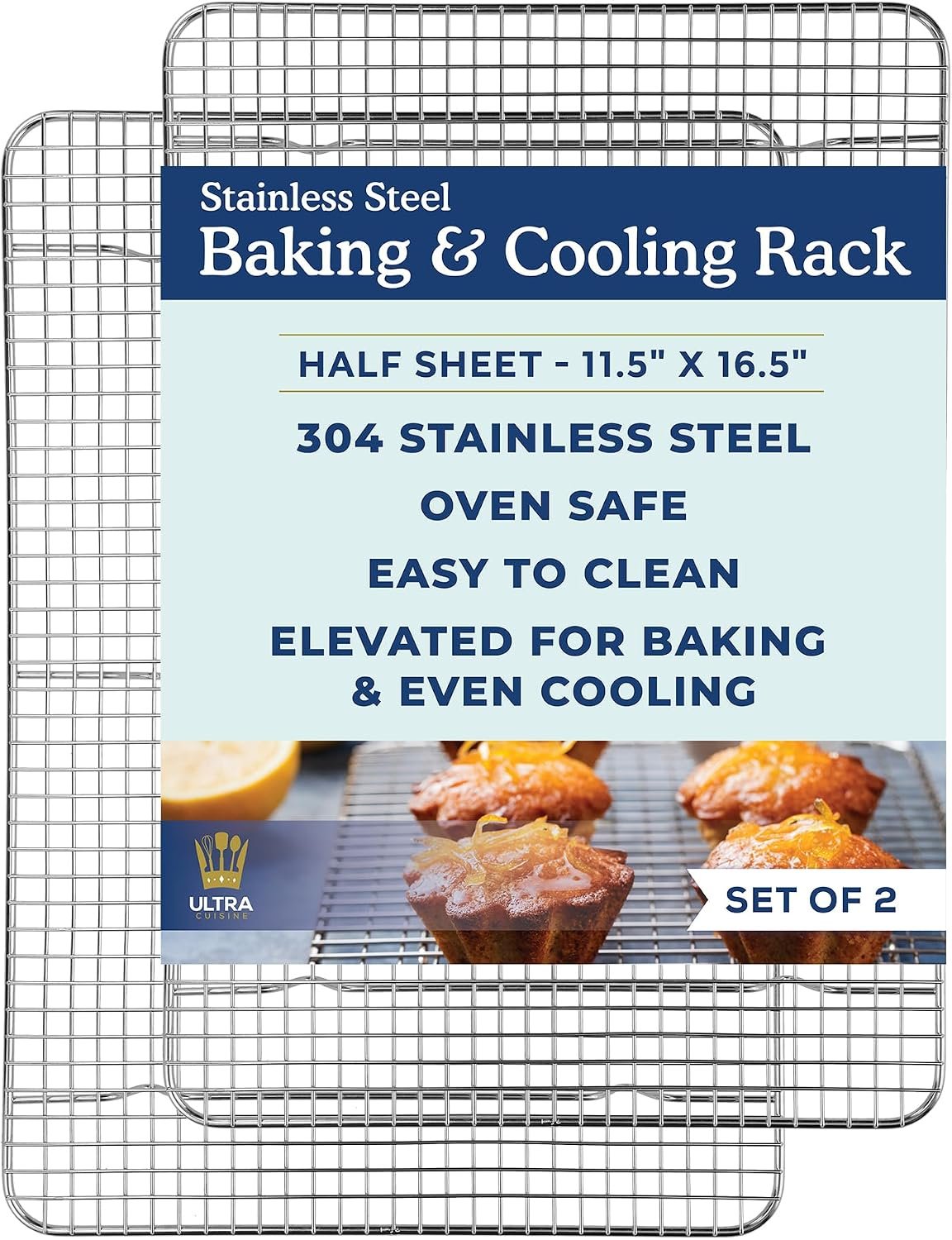
Ultra Cuisine Stainless Steel Cooling Racks, 2-Pack
The cake cools completely in its tin on a rack, about 2 hours. Air underneath stops the base turning damp.
Check Price on Amazon →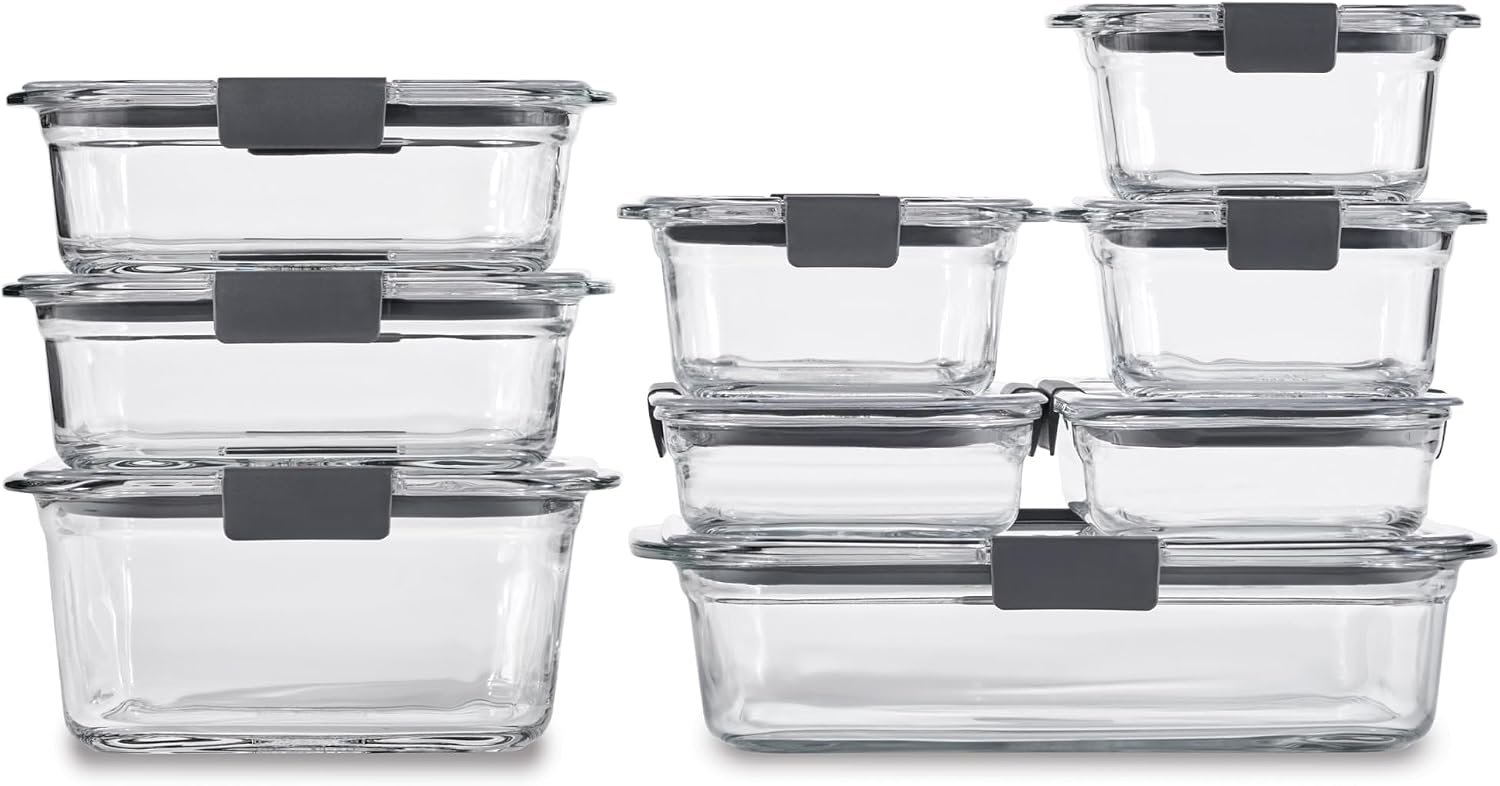
Rubbermaid Brilliance Glass Food Storage Set
Wrapped in parchment, the cake keeps up to 2 weeks in the fridge. A lidded container stops it drying out or picking up fridge smells.
Check Price on Amazon →Sugar Free Fruit Cake: What No Added Sugar Really Means
The plain truth about the sugar
“Sugar free” on this page means no added sugar: no white or brown sugar, honey, syrup or sweetener goes in. It does not mean low in sugar. Dried fruit is naturally high in sugar, so each slice still carries about 30 g of it, all from the fruit and juice.
If you manage blood sugar, follow your doctor’s or dietitian’s advice.
Where the Sweetness Comes From
Per loaf, approximately, from standard nutrition tables. Brands of dried fruit vary, so treat these as a guide:
- Dried fruit mix, 400 g: about 235 g of sugar (67%)
- Date paste, 150 g dates: about 100 g (28%)
- Orange juice, ¾ cup: about 16 g (4%)
- Flour and walnuts: about 2 g (under 1%)
That adds up to about 355 g of natural sugar in the loaf, or about 30 g in each of 12 slices. Two-thirds of it comes from the dried fruit, which is why the fruit mix matters more than any other choice.
Low Sugar Fruit Cake? How to Cut the Sugar per Slice
A cake built on dried fruit is never truly low in sugar, but it can be lower. These changes trim the sugar in each slice; the numbers are approximate.
| Change | Sugar per slice | What you notice |
|---|---|---|
| ChangeThe recipe as written, 12 slices | Sugar per sliceabout 30 g | What you noticeSweet, moist, fruit-packed |
| ChangeThe same cake cut into 16 thinner slices | Sugar per sliceabout 22 g | What you noticeNothing changes but the slice |
| ChangeSoak the fruit in cold black tea instead of juice | Sugar per sliceabout 28 g | What you noticeDarker, less fruity; a classic tea-loaf flavor |
| ChangeMake the paste with prunes instead of dates | Sugar per sliceabout 26 g | What you noticeDarker and deeper, a little less sweet |
| ChangeUse 300 g dried fruit plus an extra 60 g (½ cup) walnuts or seeds | Sugar per sliceabout 25 g | What you noticeNuttier, less sweet, a firmer crumb |
| ChangeAll three swaps together, 12 slices | Sugar per sliceabout 20 g | What you noticeClearly less sweet; spice and nuts lead |
| ChangeAll three swaps, cut into 16 slices | Sugar per sliceabout 15 g | What you noticeThe leanest version here |
The trade-off is sweetness and moisture: with less fruit and no juice, the cake tastes more of spice, nuts and tea. Keep the dates or prunes in the paste either way, because the batter needs them to bind.
Why It Still Tastes Sweet
Medjool dates bring a caramel flavor, orange zest makes the fruit taste brighter, and a pinch of salt sharpens everything. Warm spices make it taste sweeter to many people, which is why the cinnamon and mixed spice are generous.
Which Dried Fruits Are Sweetest? Building the Fruit Mix
The 400 g (2½ cups) of dried fruit sets the flavor, the color and most of the sweetness. Any mix works as long as the total weight stays the same. Approximate natural sugar per 100 g, sweetest first:
| Dried fruit | Sweetness | Sugar per 100 g | Best use |
|---|---|---|---|
| Dried fruitCurrants (dried Zante) | SweetnessVery sweet, tiny | Sugar per 100 gabout 67 g | Best useA handful adds sweetness everywhere |
| Dried fruitDates, Medjool or Deglet Noor | SweetnessVery sweet, caramel-like | Sugar per 100 gabout 63 to 66 g | Best useThe paste, plus chopped in the mix |
| Dried fruitRaisins and sultanas (golden raisins) | SweetnessSweet | Sugar per 100 gabout 59 g | Best useThe bulk of any mix |
| Dried fruitDried apple rings | SweetnessSweet and mild | Sugar per 100 gabout 57 g | Best useChop small; swap for some raisins |
| Dried fruitDried apricots | SweetnessSweet-tart | Sugar per 100 gabout 53 g | Best useColor and tang; chop to raisin size |
| Dried fruitDried figs | SweetnessHoneyed, seedy crunch | Sugar per 100 gabout 48 g | Best useSwap for some of the chopped dates |
| Dried fruitPrunes (dried plums) | SweetnessRich, the least sweet | Sugar per 100 gabout 38 g | Best useA darker, moister, less sweet cake |
| Dried fruitSweetened dried cranberries | SweetnessSweet, but sugar-infused | Sugar per 100 gabout 65 g or more, much of it added | Best useLeave out, or use unsweetened |
Read the Label First
- Ready-mixed bags often include candied peel or glacé cherries, both candied in sugar. Buy a mix without them, or mix your own.
- Dried cranberries are nearly always sweetened. Choose a bag marked unsweetened, or leave them out.
- Tropical fruit such as mango, pineapple and papaya is often sugar-infused. Look for no added sugar on the label.
- A light coating of oil on raisins and sultanas is normal; it keeps them separate and is fine to use.
- Sulfured apricots stay bright orange; unsulfured ones are brown and taste of toffee. Both work.
Three Fruit Mixes to Try
Each one weighs 400 g, so it drops straight into the card. Weigh the fruit if you can: chopped and whole dried fruit pack very differently into a cup.
The jewel mix, on the card
125 g sultanas, 100 g raisins, 100 g chopped dried apricots and 75 g chopped dates. Golden, orange and dark brown fruit: sweet, with a little tang.
Apricot and fig
150 g chopped dried apricots, 150 g chopped dried figs and 100 g sultanas. Brighter and a little less sweet, with the crunch of fig seeds.
Dark and rich
150 g raisins, 150 g chopped prunes and 100 g currants. A darker, moister cake with a deep, almost toffee-like flavor and a little less sugar.
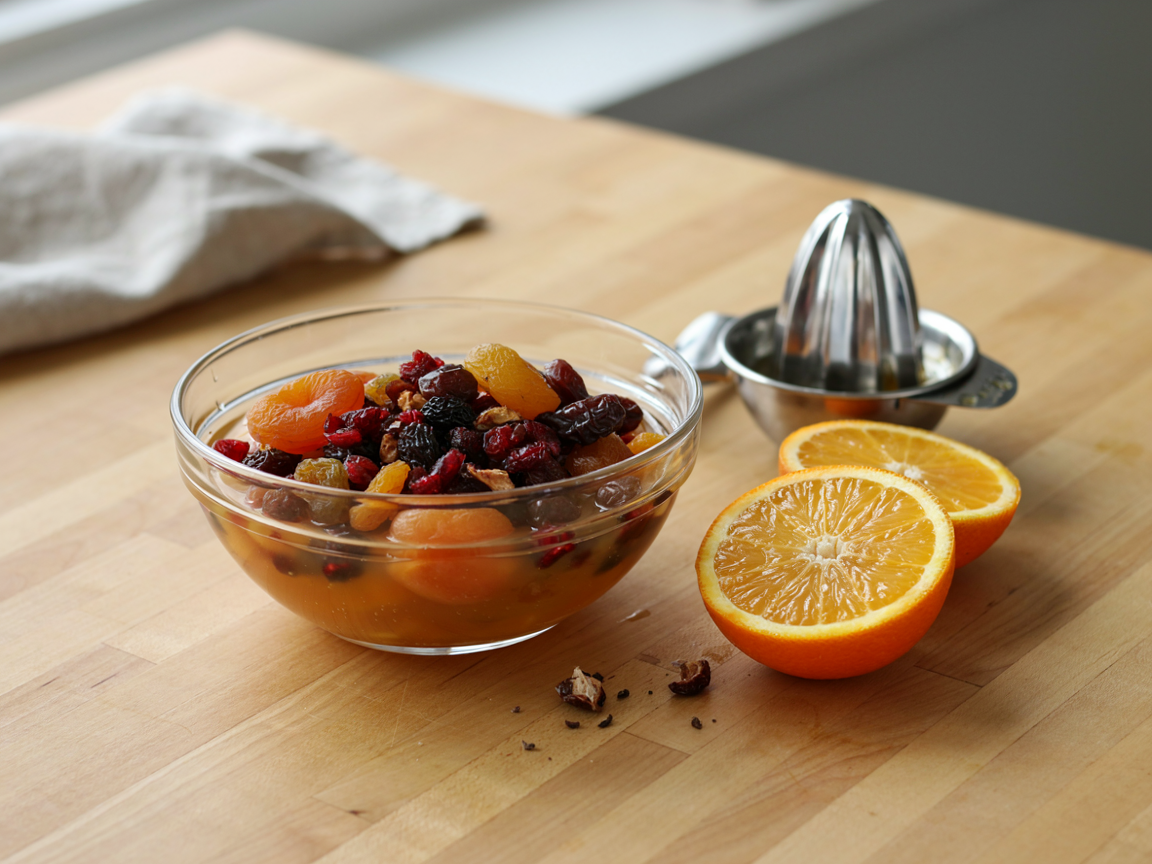
The night before: dried fruit and chopped dates under orange juice and zest. By morning the fruit is plump and most of the juice has gone.
Why Soak the Fruit Overnight?
Dry fruit acts like a sponge in the oven, pulling water from the batter and leaving a crumbly cake with chewy, leathery fruit. Soaked fruit goes in already full, so it stays juicy and the crumb stays moist. The juice also carries the orange flavor right through each piece.
Short on time? Warm the fruit, zest and juice in a small pan over low heat for 3 to 4 minutes, then let it stand for 30 minutes to plump and cool. The overnight soak still gives the juicier result.
How to Make Fruit Cake Without Added Sugar, Step by Step
From bowl to slice this cake runs over two days, but only about 30 minutes of it is hands-on. Here is the plan for one loaf, with the reasons behind each stage.
- Night before
Soak the fruit
Stir the dried fruit, orange zest and juice in a bowl, cover and leave 8 to 12 hours, in the fridge if the kitchen is warm.
- 0:00
Heat and line
Heat the oven to 150°C (130°C fan, 300°F, gas 2). Line the tin with a double layer of parchment standing 2 inches above the rim.
- 0:05
Make the date paste
Simmer the chopped dates in the water for 5 minutes, then mash or blend them into a thick paste and cool for 10 minutes.
- 0:20
Mix and fill
Whisk the paste with the eggs, butter and alcohol-free vanilla, stir in the fruit, fold in the dry mix and spoon it into the tin.
- 0:30
Bake low
Bake 1½ to 1¾ hours, laying parchment over the top if it darkens. Start testing with a skewer at 1 hour 20 minutes.
- 2:15
Cool in the tin
Cool completely in the tin on a rack, about 2 hours. A warm fruit cake crumbles when it is sliced.
- Next day
Rest, then slice
Wrap it in parchment and rest it overnight. The crumb firms and the flavors settle, so it slices thin and clean.
Line the Tin Twice
A fruit cake bakes for a long time, so its outside needs protection. Grease the tin, then line the base and sides with two layers of parchment, letting the side paper stand about 2 inches (5 cm) above the rim. It shields the edges and makes lifting the cake out easy.
For a deep round tin, also tie a double band of brown paper or parchment around the outside with kitchen string, and stand the tin on a baking sheet. Skip the old newspaper trick: printed paper near oven heat is not recommended, and brown paper does the same job.
Why Low and Slow?
A batter this full of fruit is dense and heavy, so heat travels slowly to the middle. In a hotter oven the top and edges set, darken and turn bitter while the center is still wet. At 150°C (300°F) the loaf cooks evenly from edge to center, with a flat top and no scorched fruit.
Make a shallow dip in the center of the batter before it goes in: the middle rises a little more than the edges, so the dip bakes out level. Keep the oven door shut for the first hour, because a rush of cool air can sink the middle.
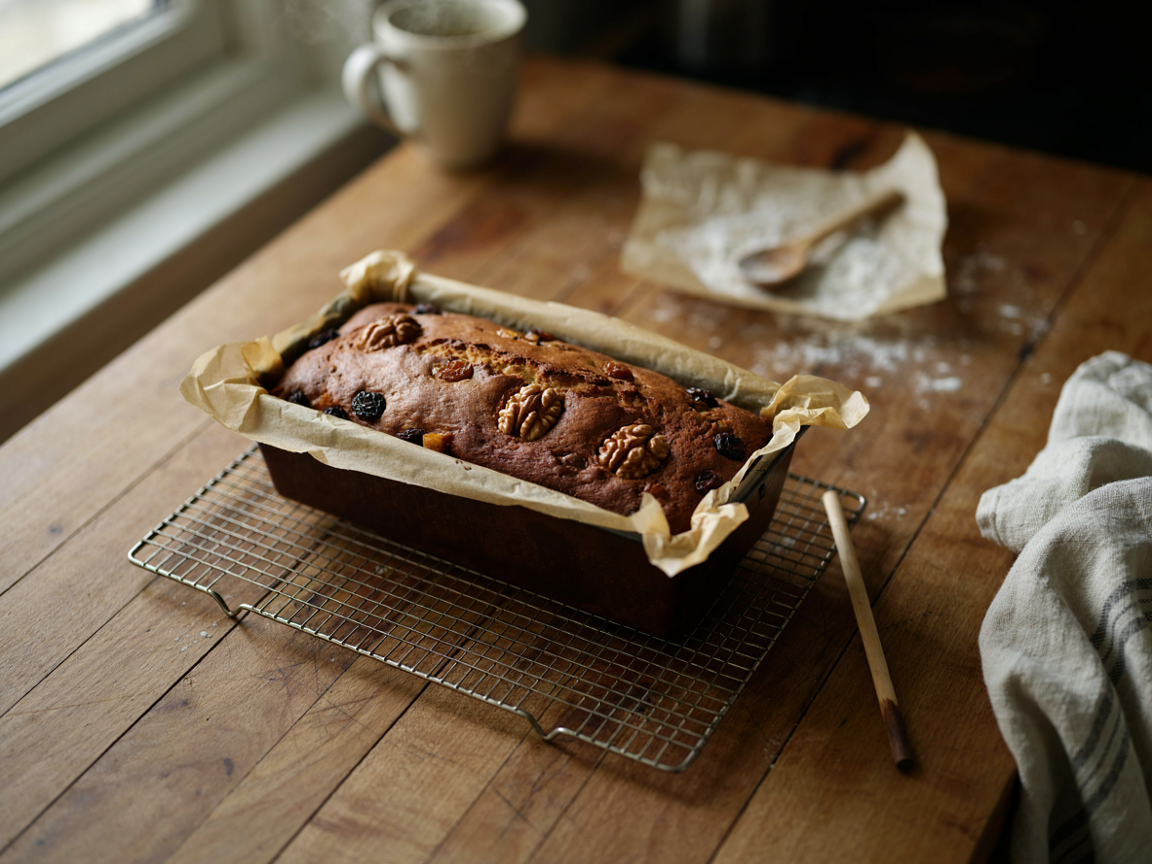
Fresh from a 150°C oven: deep brown, flat on top and just pulling away from its parchment lining. It cools completely in the tin.
Three Doneness Checks
- The skewerPushed into the center, it comes out clean of wet batter. A smear of sticky fruit is fine; a coat of raw batter is not.
- The topFirm, deep brown and springy when pressed lightly in the middle, with the cake just pulling from the paper.
- The thermometerAbout 200°F (93°C) in the very center. Optional, but useful for the deep round cake.
Dark on top but not done? Lay a sheet of parchment loosely over it, give it another 10 minutes and test again.
Troubleshooting
| Problem | Why it happens | Fix next time |
|---|---|---|
| ProblemFruit sank to the bottom | Why it happensBatter too wet, or big, heavy pieces of fruit | Fix next timeChop apricots and dates to raisin size; toss the fruit in 1 tbsp of the flour before folding it in |
| ProblemDark top, raw middle | Why it happensOven running hot, or a smaller, deeper tin than the recipe | Fix next timeBake at 150°C with an oven thermometer; cover the top loosely after an hour |
| ProblemSunken middle | Why it happensUnderbaked, or the oven door opened too early | Fix next timeUse the skewer test; keep the door shut for the first hour |
| ProblemDry, crumbly slices | Why it happensOverbaked, fruit not soaked, or sliced warm | Fix next timeSoak overnight; stop at the skewer test; slice cold with a serrated knife |
| ProblemBurnt sides or base | Why it happensA single layer of lining | Fix next timeTwo layers of parchment; a brown-paper collar for deep tins; bake on a baking sheet |
| ProblemGummy streak near the base | Why it happensUnderbaked, or a thin, watery date paste | Fix next timeSimmer the paste until thick; bake 10 minutes longer; cool fully before slicing |
| ProblemNot sweet enough | Why it happensTart fruit (apricots, prunes) or dry, under-ripe dates | Fix next timeUse more raisins, currants and soft Medjool dates; keep the orange zest |
| ProblemCracked top | Why it happensBatter not leveled, or the oven ran hot | Fix next timeMake a shallow dip in the center; check the oven with a thermometer |
Swaps and Variations: Eggs, Gluten-Free, Nut-Free and More
The recipe is forgiving because the fruit and date paste do most of the work. These swaps keep the method, the oven and the bake time the same unless the table says otherwise.
| Swap | Use | What changes |
|---|---|---|
| SwapNo eggs | Use2 flax eggs (2 tbsp ground flaxseed + 6 tbsp water, rested 10 minutes), or ½ cup (120 g) mashed ripe banana | What changesDenser and more fragile; cool fully and slice thicker |
| SwapGluten-free | Use200 g of a 1:1 gluten-free flour blend that contains xanthan gum | What changesMore crumbly; rest it overnight and slice with a serrated knife |
| SwapNut-free | UseLeave out the walnuts, or use ½ cup pumpkin or sunflower seeds; decorate with apricot halves | What changesThe same cake; check dried fruit labels for nut warnings |
| SwapDairy-free | Use¼ cup melted coconut oil or a neutral oil instead of butter | What changesThe same texture; coconut oil adds a faint coconut note |
| SwapSelf-raising flour | Use200 g wholemeal self-raising flour; leave out the baking powder and keep ¼ tsp baking soda | What changesThe same rise |
| SwapWhite flour | Use200 g plain (all-purpose) flour | What changesA lighter, paler, softer crumb |
| SwapApple juice | UseThe same amount of 100% apple juice for the soak | What changesMilder and less citrusy |
| SwapOther dates or prunes | UseDeglet Noor dates (simmer 2 to 3 minutes longer) or pitted prunes for the paste | What changesPrunes make it darker and a little less sweet |
| SwapSpice blend | Use2½ tsp pumpkin pie spice or apple pie spice in place of the cinnamon and mixed spice | What changesSimilar warmth |
For a softer loaf sweetened with ripe bananas, see this sugar-free banana bread. More bakes without dairy are in these sugar-free dairy-free desserts.
Six Variations
Each starts from the card and changes one thing: the soaking liquid, the fruit, the flavor or the format. Tap one:
Tea-Soaked Fruit Cake
Soak the fruit in ¾ cup (180 ml) cold, strong black tea instead of orange juice, and keep the zest. The cake bakes up darker, with a gentle depth like a classic tea loaf, and a little less sugar per slice.
Apricot and Ginger Fruit Cake
Use 200 g chopped dried apricots and 200 g sultanas as the fruit, and add 1 tsp ground ginger plus 1 tsp freshly grated ginger to the spices. Bright, gingery and a little tart.
Chocolate Fruit Cake
Whisk 2 tbsp unsweetened cocoa powder into the flour and add 2 tbsp extra orange juice to the batter. Cocoa deepens the color and flavor without adding sweetness; raisins and prunes suit it best.
Cherry and Almond Fruit Cake
Swap 100 g of the fruit for unsweetened dried cherries (check the label; many are sweetened), use flaked almonds instead of walnuts and replace 50 g of the flour with ground almonds. Scatter more flaked almonds on top.
Tropical Fruit Cake
Use dried mango, pineapple and papaya only if the label says no added sugar; most are sugar-infused. Soak them in coconut water instead of juice and add ¼ cup (20 g) unsweetened desiccated coconut. Lighter and summery.
Fruit Cake Muffins
Spoon one batch into 12 lined muffin cups, nearly to the top. Bake at the same 150°C (300°F) for 35 to 45 minutes, until a skewer comes out clean. Handy for lunchboxes and small gifts.
Feed It With Juice: Keeping the Cake Moist
Feeding means spooning a little liquid over a baked fruit cake so it stays moist and the flavor deepens. This one is fed with fruit juice, which adds moisture and a fresh orange note. It is optional: the cake is moist without it.
- Day 1
First feed
Once the cake is completely cold, poke 10 to 12 holes in the top with a skewer and spoon over 1 tbsp orange or apple juice (2 tbsp for the 8-inch round). Wrap it in parchment, then foil, and refrigerate.
- Day 4
Second feed
Unwrap, spoon over another tablespoon of juice and wrap it again. Stop there: two feeds are plenty.
- By day 14
Eat it
Keep the fed cake in the fridge and finish it within 2 weeks of baking, or freeze it.
What to Feed It With
| Liquid | Flavor | Note |
|---|---|---|
| Liquid100% orange juice | FlavorBright and citrusy; matches the soak | NoteThe default |
| Liquid100% apple juice | FlavorMild and gently sweet | NoteGood with the cherry and almond version |
| LiquidCold black tea | FlavorTannic and less fruity | NoteAdds no sugar at all |
| LiquidOrange juice warmed with a cinnamon stick | FlavorSpiced and fragrant | NoteCool it completely before feeding |
Juice adds moisture, not keeping power. A fed cake is moister than an unfed one, which is exactly why it belongs in the fridge. Feed it lightly, because a soggy crumb spoils sooner and tastes heavy, and check it for mold before serving.
Holiday Decorating Without Sugar
No icing or marzipan needed. These finishes use only nuts, fruit and juice, so the cake keeps its no added sugar label and still looks ready for a holiday table.
Nut crown
Before baking, press walnut halves, pecan halves or whole blanched almonds over the batter in rows, rings or a star. They toast as the cake bakes and look polished with no extra step.
Apricot glaze
Simmer 50 g (⅓ cup) chopped dried apricots in 4 tbsp (60 ml) orange juice for 5 minutes, then blend smooth. Brush it over the warm cake for a glossy amber finish.
Jewel top
Brush on the glaze, press apricot halves, prunes and pecans on top in a pattern, then brush again. The glaze holds the fruit in place and shines like a candied top.
Coconut snow
Scatter unsweetened desiccated coconut over the tacky glaze for a snowy look. It is the closest thing to a frosted top without any sugar.
Zest and spice garnish
Just before serving, add curls of orange zest, a cinnamon stick, a star anise and a sprig of rosemary. Lift the whole spices off before slicing.
Gift wrap
Wrap the cold cake in parchment, band it with a strip of brown paper and tie it with baker’s string and a tag. Add a note: keep it cool and eat within 5 days, or refrigerate it for up to 2 weeks.
Baking for a holiday spread? Serve it alongside this no-sugar pumpkin pie, or browse these sugar-free Thanksgiving desserts for more ideas.
How to Serve It
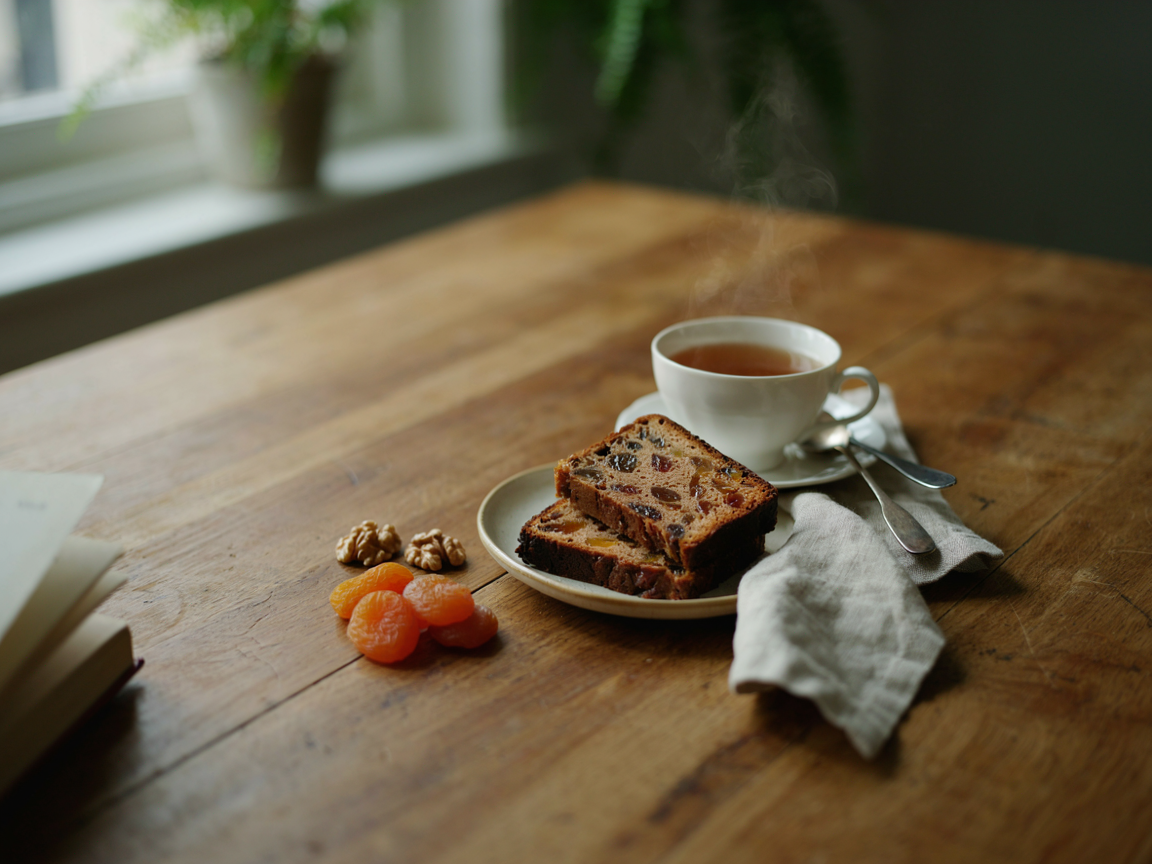
Thin slices go furthest: about 12 from a loaf, or 16 if cut thinner, with a cup of tea and a few walnuts.
Slice it cold or at cool room temperature with a serrated knife, about ¾ inch (2 cm) thick, or thinner for a tea tray. Serve it plain, with a smear of butter, a spoon of plain yogurt or a cup of tea. Warm a slice for 10 seconds in the microwave if you like it soft.
Make Ahead, Storage and Freezing
This cake slices best the day after baking, so it is easy to make ahead. With no added sugar to help preserve it, it keeps for days rather than weeks at room temperature; the fridge and the freezer do the rest.
- 3 months
Freeze it
Wrap the cold cake, whole or sliced, in parchment and then foil or cling film, and seal it in a freezer bag.
- 2 weeks
Or refrigerate it
Wrapped the same way, it keeps up to 2 weeks in the fridge, fed with juice or not.
- 5 days
Or keep it cool
In an airtight tin in a cool, dry spot, wrapped in parchment, it keeps up to 5 days.
- 1 day
Bake and rest
Bake, cool and rest it overnight, or thaw a frozen cake overnight in the fridge. Glaze and decorate it now.
- To serve
Bring it to room temperature
Unwrap it 30 minutes before serving and slice it thin with a serrated knife.
Storage at a Glance
| What | Where and how | How long |
|---|---|---|
| WhatWhole or cut cake | Where and howCool room temperature, wrapped in parchment, in an airtight tin | How longUp to 5 days |
| WhatWhole or cut cake | Where and howFridge, wrapped in parchment, then foil | How longUp to 2 weeks |
| WhatJuice-fed cake | Where and howFridge only, wrapped | How longUp to 2 weeks from baking |
| WhatGlazed or decorated cake | Where and howFridge, loosely covered | How longUp to 1 week |
| WhatWhole cake | Where and howFreezer: parchment, then foil or cling film, in a freezer bag | How longUp to 3 months |
| WhatSlices | Where and howFreezer, parchment between the slices, in a freezer bag | How longUp to 3 months |
Freezing and Thawing
Freeze it whole for a holiday or in slices for lunchboxes and single servings. Thaw a whole cake overnight in the fridge, still wrapped, so any condensation forms on the wrapping rather than the cake. Slices thaw in about 30 minutes at room temperature.
Mold is the thing to watch for in a moist cake with no added sugar. Any fuzzy spots or an off smell means the whole cake goes in the bin, not just the spot.
Nutrition (approximate, per slice)
One of 12 slices from the loaf, with walnuts; about 250 calories without them. All of the sugar comes from the dried fruit, dates and orange juice, and each slice has about 5 g of fiber. Contains eggs, dairy (butter), gluten and tree nuts (walnuts).
Sugarless Fruit Cake FAQ
How do you make sugarless fruit cake?
Soak 400 g mixed dried fruit in ¾ cup orange juice overnight. Simmer 150 g chopped Medjool dates in ¾ cup water and mash to a paste. Mix with 2 eggs, ¼ cup melted butter, 200 g wholemeal flour, leavening and spice, then bake in a lined 2-lb loaf tin at 150°C (300°F) for 1½ to 1¾ hours.
Is sugar free fruit cake really sugar free?
Not entirely. This cake has no added sugar: no sugar, honey, syrup or sweetener goes in. Dried fruit, dates and orange juice are naturally sweet, though, so each of 12 slices still carries about 30 g of natural sugar.
Can you make fruit cake with no sugar at all?
Not if it contains dried fruit, which is mostly natural sugar. The closest is a fruit cake with no added sugar, like this one. To bring the sugar per slice down, soak the fruit in tea, use prunes for the paste, use less fruit and cut thinner slices.
How do you make a low sugar fruit cake?
Start from a no added sugar recipe, then trim the fruit sugar: soak in cold tea instead of juice, make the paste with prunes, use 300 g dried fruit plus extra walnuts, and cut 16 slices. Together that takes a slice from about 30 g of sugar to about 15 g.
What can I use instead of sugar in fruit cake?
Dates do most of the work: simmered and mashed, they sweeten, bind and keep the cake moist. Mashed ripe banana or unsweetened apple purée can replace some of the paste for a softer, less sweet cake. This recipe uses no sugar substitutes or sweeteners.
Which dried fruit is sweetest for fruit cake?
Currants and dates are the sweetest, at about 63 to 67 g of natural sugar per 100 g, then raisins and sultanas at about 59 g. Dried apricots and figs are a little less sweet, and prunes are the least sweet of the usual choices, at about 38 g.
Is there a printable recipe for sugarless fruit cake?
Yes. Pick 1 loaf, an 8-inch round or 2 loaves on the recipe card, then tap Download the Recipe Card under it. It saves a printable page with that size’s ingredients and steps.
Why is fruit cake baked at a low temperature?
The batter is dense and packed with fruit, so heat reaches the middle slowly. A low 150°C (300°F) oven lets the center cook through before the top and edges darken or the fruit on the surface scorches.
How do you know when fruit cake is done?
A skewer pushed into the center comes out clean of wet batter (a smear of sticky fruit is fine), the top is firm and deep brown, and the center reads about 200°F (93°C). The 2-lb loaf takes 1½ to 1¾ hours at 150°C.
Why did the fruit sink to the bottom of my fruit cake?
The batter was too thin to hold it, usually from extra liquid or large, heavy pieces of fruit. Chop apricots and dates to raisin size and toss the fruit in a spoonful of the flour before folding it in.
Can you feed a fruit cake with juice?
Yes. Once it is cold, poke holes in the top and spoon over 1 tbsp orange or apple juice, then repeat once a few days later. Juice adds moisture but does not help it keep, so store the fed cake in the fridge and eat it within 2 weeks.
How long does sugarless fruit cake keep, and can you freeze it?
Up to 5 days wrapped in an airtight tin in a cool spot, up to 2 weeks in the fridge and up to 3 months in the freezer, whole or sliced. Thaw a whole cake overnight in the fridge, still wrapped.
Can I make it gluten-free, egg-free or nut-free?
Yes. Use the same weight of a 1:1 gluten-free flour blend with xanthan gum, 2 flax eggs or ½ cup mashed ripe banana instead of the eggs, and leave out the walnuts or use seeds. Each swap makes a slightly more fragile cake, so rest it overnight before slicing.
Can I use self-raising flour?
Yes. Use 200 g wholemeal self-raising flour, leave out the baking powder and keep ¼ tsp baking soda, which reacts with the orange juice. White self-raising flour works the same way and gives a lighter, paler cake.
More Bakes Without Sugar
A banana loaf, a pumpkin pie, two cheesecakes, easy dump cakes and dairy-free desserts.
Sugar-Free Banana Bread
A soft loaf sweetened with ripe bananas. See the recipe → Holiday PieNo-Sugar Pumpkin Pie
A pumpkin pie for the same holiday table. See the recipe → CreamySugar-Free Cheesecake
A creamy baked cheesecake, sugar-free. See the recipe → Fall FavoriteSugar-Free Pumpkin Cheesecake
Pumpkin and spice in a cheesecake. See the recipe → Easy BakesSugar-Free Dump Cake Recipes
Stir, pour and bake fruit desserts. See the list → Dairy-FreeSugar-Free Dairy-Free Desserts
Desserts with no dairy and no added sugar. See the list →Soak it overnight, sweeten it with dates, bake it low and let it rest: that is the whole secret to a fruit cake with no added sugar.
Pin this sugarless fruit cake for the holidays.