
72 Hour Emergency Kit Food List: What to Pack for 3 Days Per Person
A no-cook, lightweight list with water math, a sample menu and the small extras that make a grab-and-go bag work.
- Calories and weight listed
- Halal throughout
- Car and office versions
A good 72 hour emergency kit food list is short, light and boring in the best way: food that needs no cooking, no fridge and no water, packed so one person can carry three days of meals out the door.
Below: the per-person list with approximate calories and weight, the water math, a sample menu, the non-food items that make it work, and car and office versions. The home supply for longer stays is the best emergency foods to buy at the grocery store.
Quick answer
Per person for 3 days: 6 pouches of tuna or chicken, 6 nut butter packs, 2 sleeves of crackers, 6 granola or protein bars, 6 oz each of dried fruit and nuts, 3 shelf-stable milk boxes, 6 applesauce pouches and a few comfort snacks: about 6,700 calories and 6.3 lb. Plus 3 gallons of water at home.
The 72 Hour Emergency Kit Food List, Per Person
Every item below is ready to eat, light for its calories and sold with a long date. Plan on about 2,000 calories per person per day, the figure nutrition labels are based on; this list gives a little more, because a long, stressful day burns energy.
| # | Food | 3 days, 1 person | Calories (approx.) | Weight (approx.) |
|---|---|---|---|---|
| #1 | FoodPouched tuna or chicken | 3 days, 1 person6 pouches (about 2.5 oz each) | Calories (approx.)480 | Weight (approx.)about 15 oz |
| #2 | FoodNut butter squeeze packs | 3 days, 1 person6 single-serve packs (about 1.15 oz) | Calories (approx.)1,140 | Weight (approx.)about 7 oz |
| #3 | FoodCrackers | 3 days, 1 person2 sleeves (about 4 oz each) | Calories (approx.)1,040 | Weight (approx.)about 8 oz |
| #4 | FoodGranola or protein bars | 3 days, 1 person6 bars (about 1.5 oz each) | Calories (approx.)1,140 | Weight (approx.)about 9 oz |
| #5 | FoodDried fruit | 3 days, 1 person6 oz (raisins, apricots or dates) | Calories (approx.)510 | Weight (approx.)about 6 oz |
| #6 | FoodNuts | 3 days, 1 person6 oz (almonds, peanuts or cashews) | Calories (approx.)990 | Weight (approx.)about 6 oz |
| #7 | FoodShelf-stable milk boxes | 3 days, 1 person3 boxes (8 fl oz each) | Calories (approx.)450 | Weight (approx.)about 1.7 lb |
| #8 | FoodApplesauce pouches | 3 days, 1 person6 pouches (about 3.2 oz each) | Calories (approx.)360 | Weight (approx.)about 1.2 lb |
| #9 | FoodComfort snacks | 3 days, 1 person4 oz (cookies, hard candy, gelatin-free gummies) | Calories (approx.)560 | Weight (approx.)about 4 oz |
| # | FoodTotal, 1 person, 3 days | 3 days, 1 person9 items | Calories (approx.)about 6,700 | Weight (approx.)about 6.3 lb |
Calories and weights are approximate for the pack sizes named; labels vary by brand and flavor.
Why Each Food Earns Its Place
This kit is the grab-and-go layer. For the larger home supply behind it, see the guide to the best emergency foods to buy at the grocery store, and for scaling up beyond three days, this emergency food supply list.
Compact back-up: chewable emergency food tablets fit in a side pocket for a long delay. They are a back-up for the list above, not a replacement for meals.
As an Amazon Associate, this site earns from qualifying purchases. Prices and availability are those shown on Amazon at the time you click.
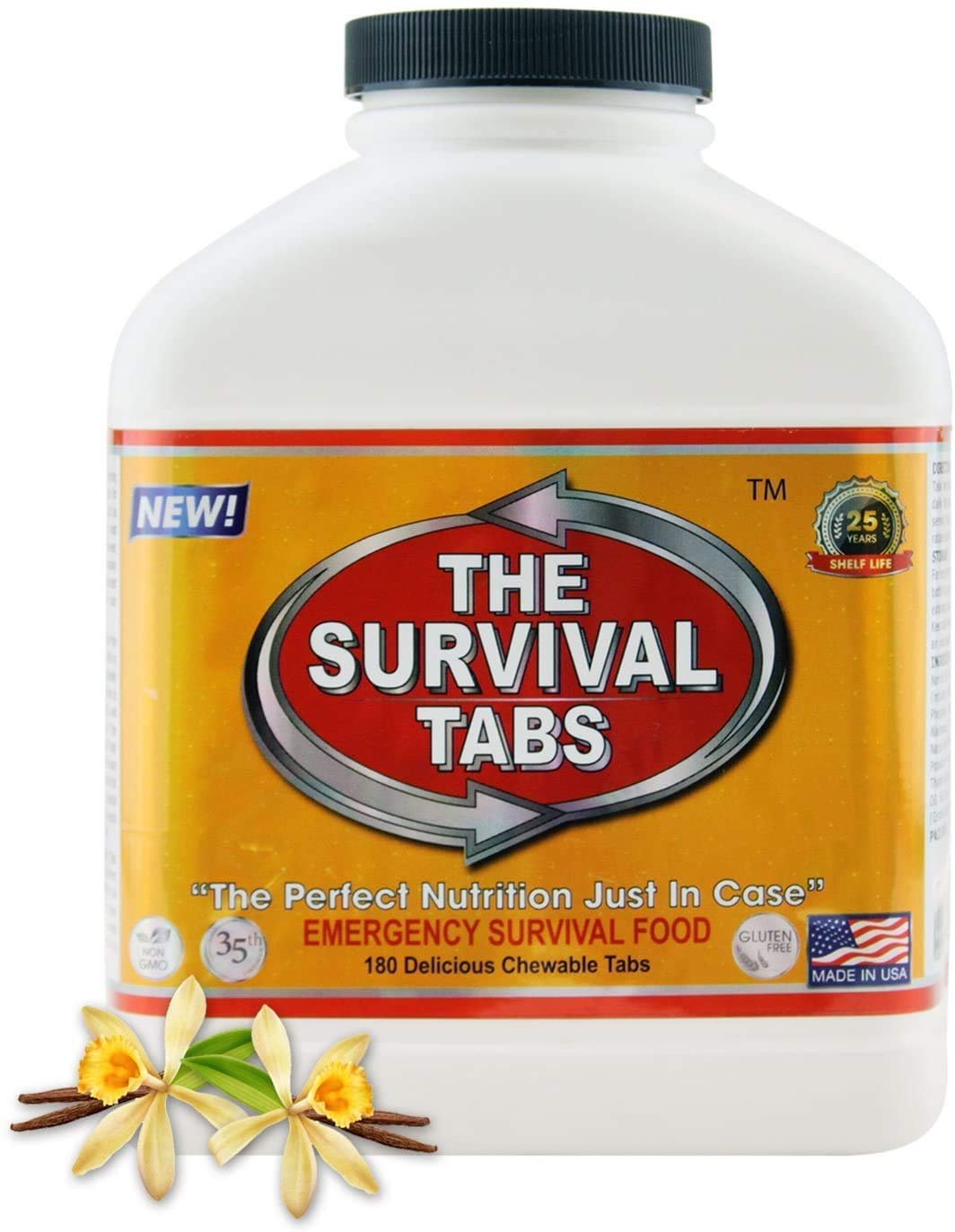
The Survival Tabs, 15-Day Emergency Food Supply
Chewable tablets that take up almost no room in a side pocket. A compact back-up for a long delay, not a replacement for the food on this list.
Check Price on Amazon →Water: 3 Gallons Per Person, Plus Pouches for the Bag
FEMA and Ready.gov advise at least 1 gallon of water per person per day for at least 3 days: about half for drinking, the rest for food and washing. That is 3 gallons per person, which weighs about 25 lb, far too much to carry.
| Household | Water for 3 days | Weight |
|---|---|---|
| Household1 person | Water for 3 days3 gallons | Weightabout 25 lb |
| Household2 people | Water for 3 days6 gallons | Weightabout 50 lb |
| Household4 people | Water for 3 days12 gallons | Weightabout 100 lb |
So split it. Keep the gallons at home, ready for sheltering in place, and put sealed water pouches in the bag with a way to make more: filter straws and purification tablets weigh almost nothing. Containers and rotation are covered in this guide to how to store water for emergencies.
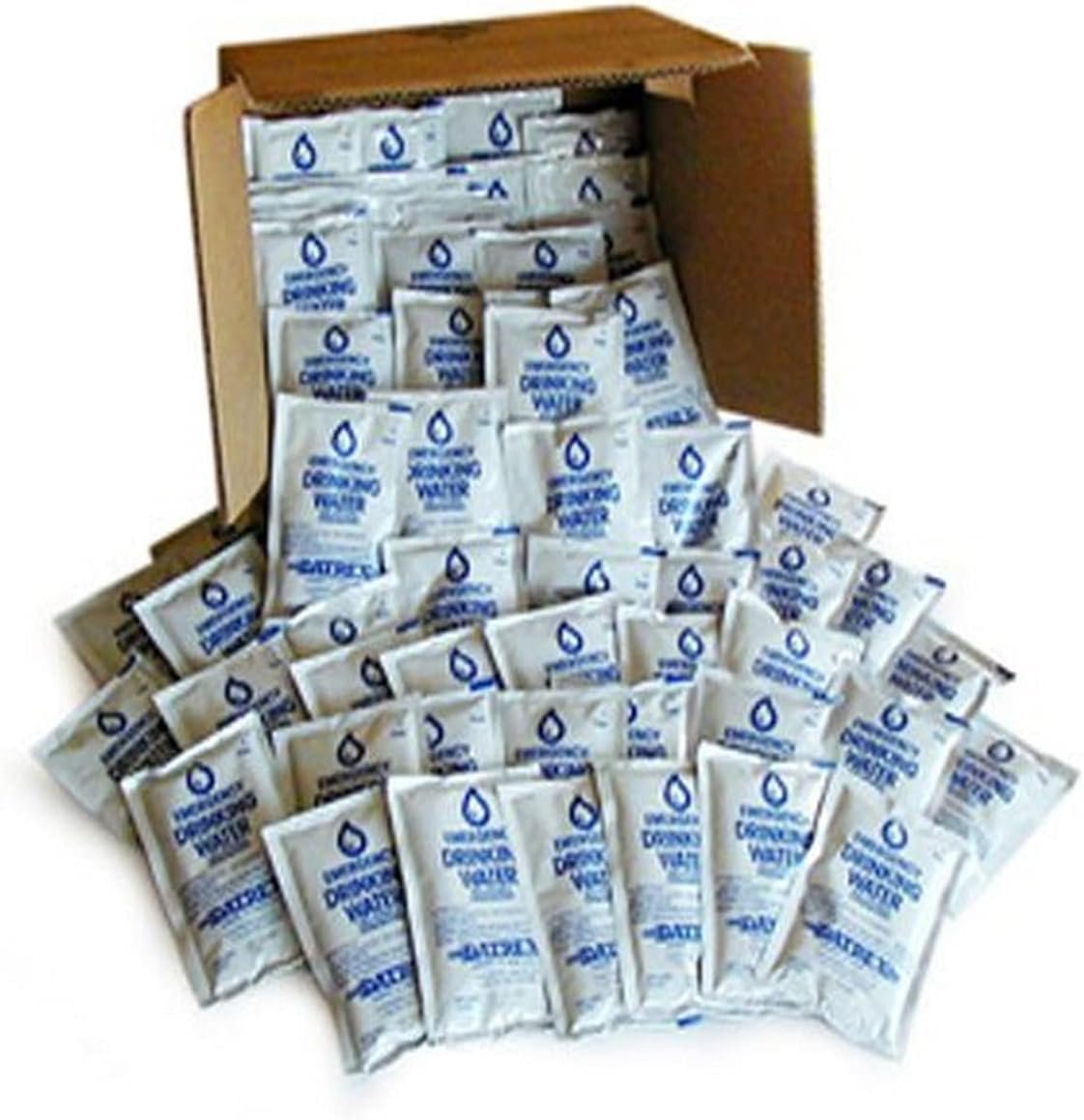
Datrex Emergency Drinking Water Pouches
Small sealed pouches that tuck between the food bags, in a car kit or a desk drawer, where a thin plastic bottle can split.
Check Price on Amazon →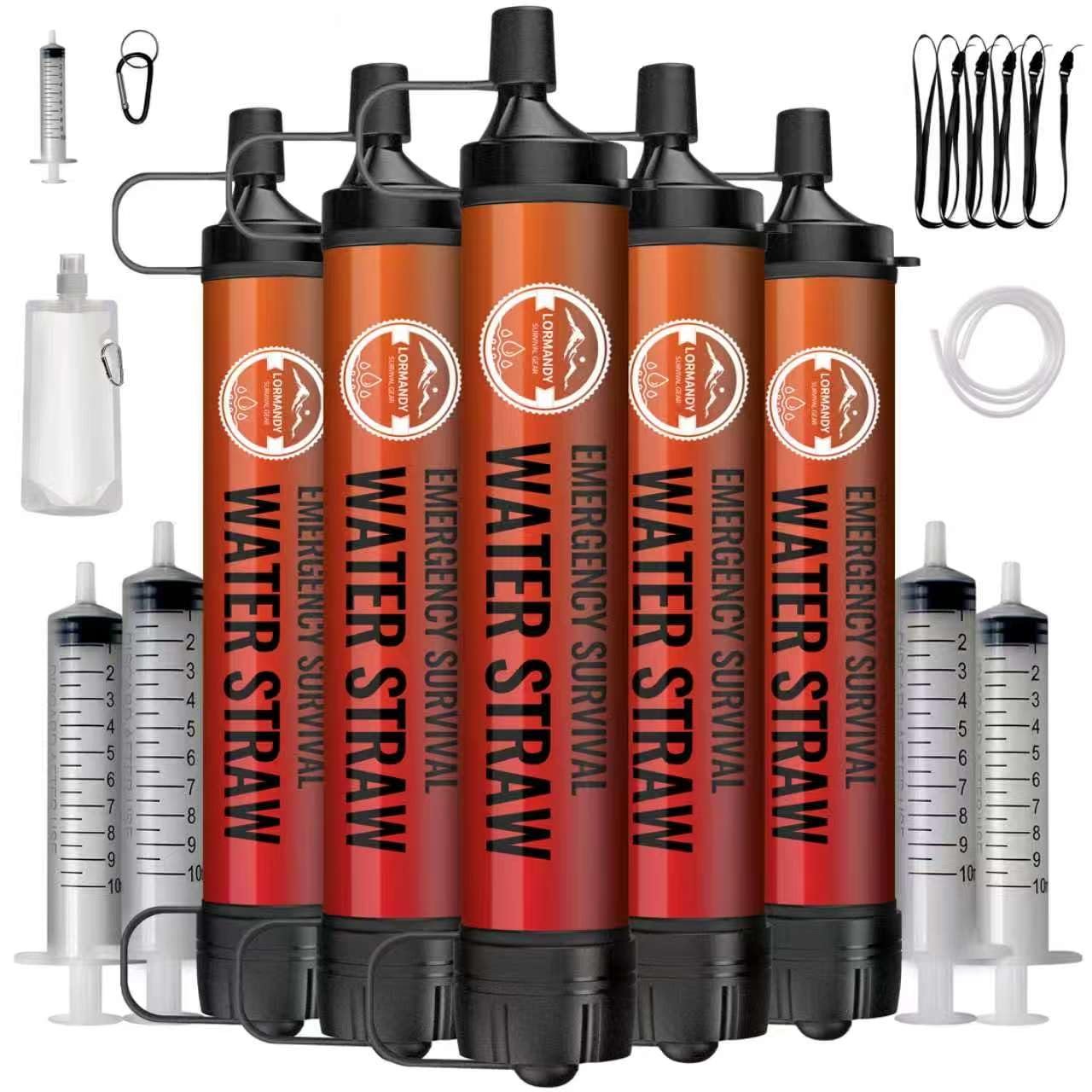
Lormandy Straw Water Filter (5-Pack)
One filter straw per person turns a refill from a tap or stream into drinking water. They filter but do not boil, so pair them with tablets.
Check Price on Amazon →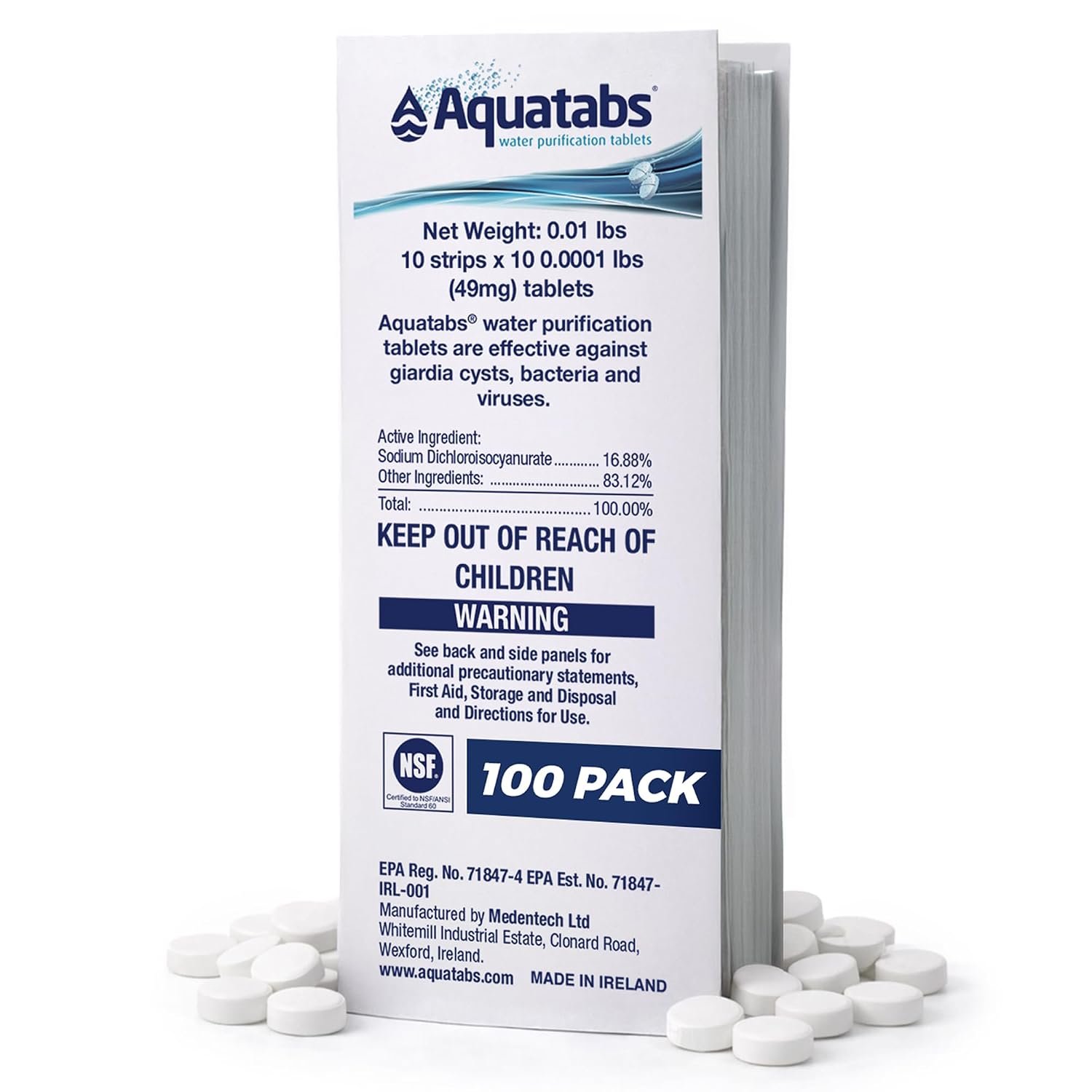
Aquatabs Water Purification Tablets (100 Pack)
Foil-sealed tablets that weigh next to nothing; one treats 0.75 to 2 liters, per the packet. A back-up for refilling bottles on day 2 or 3.
Check Price on Amazon →The Non-Food Items Every Food Kit Needs
Food is only half of eating well from a bag. These small extras make the difference between a picnic and a struggle, and most of them cost very little.
Light, news and a charged phone round out the kit; they are useful at every meal and every hour in between.
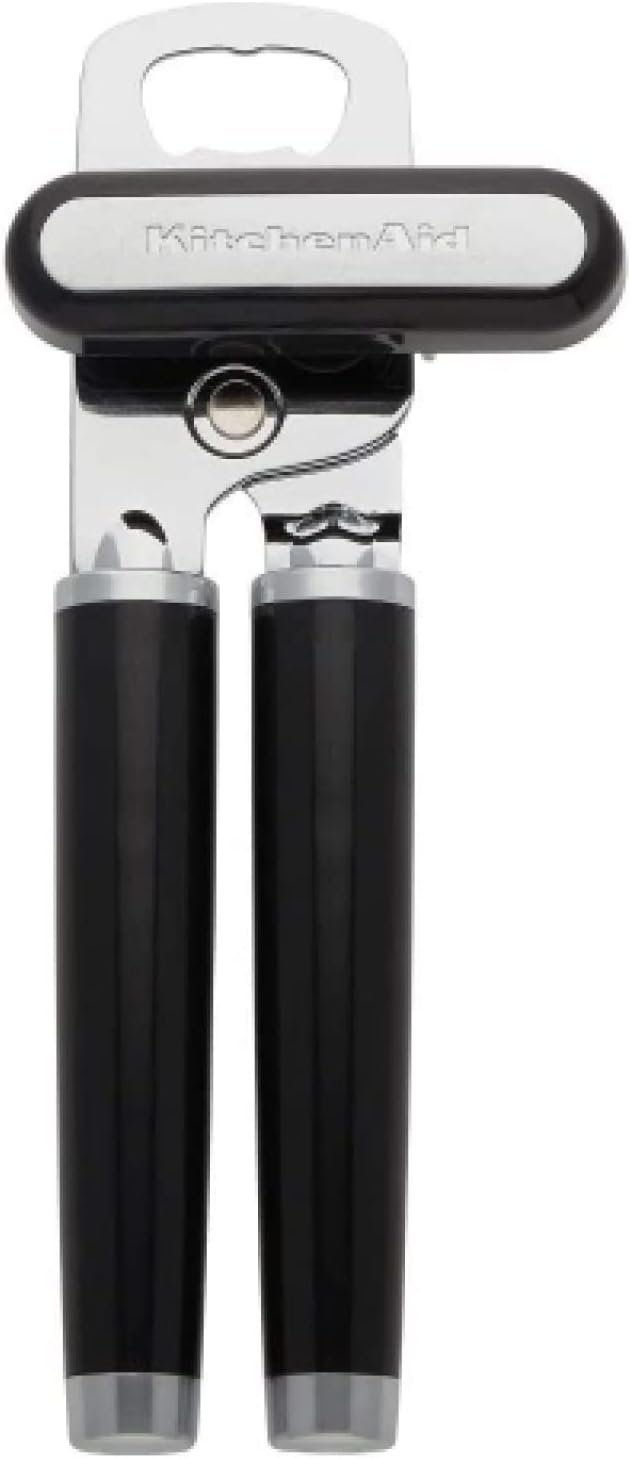
KitchenAid Classic Multifunction Can Opener
Pull-tab lids fail and pouches tear crooked. A hand-turned opener with a big knob earns its weight in every kit.
Check Price on Amazon →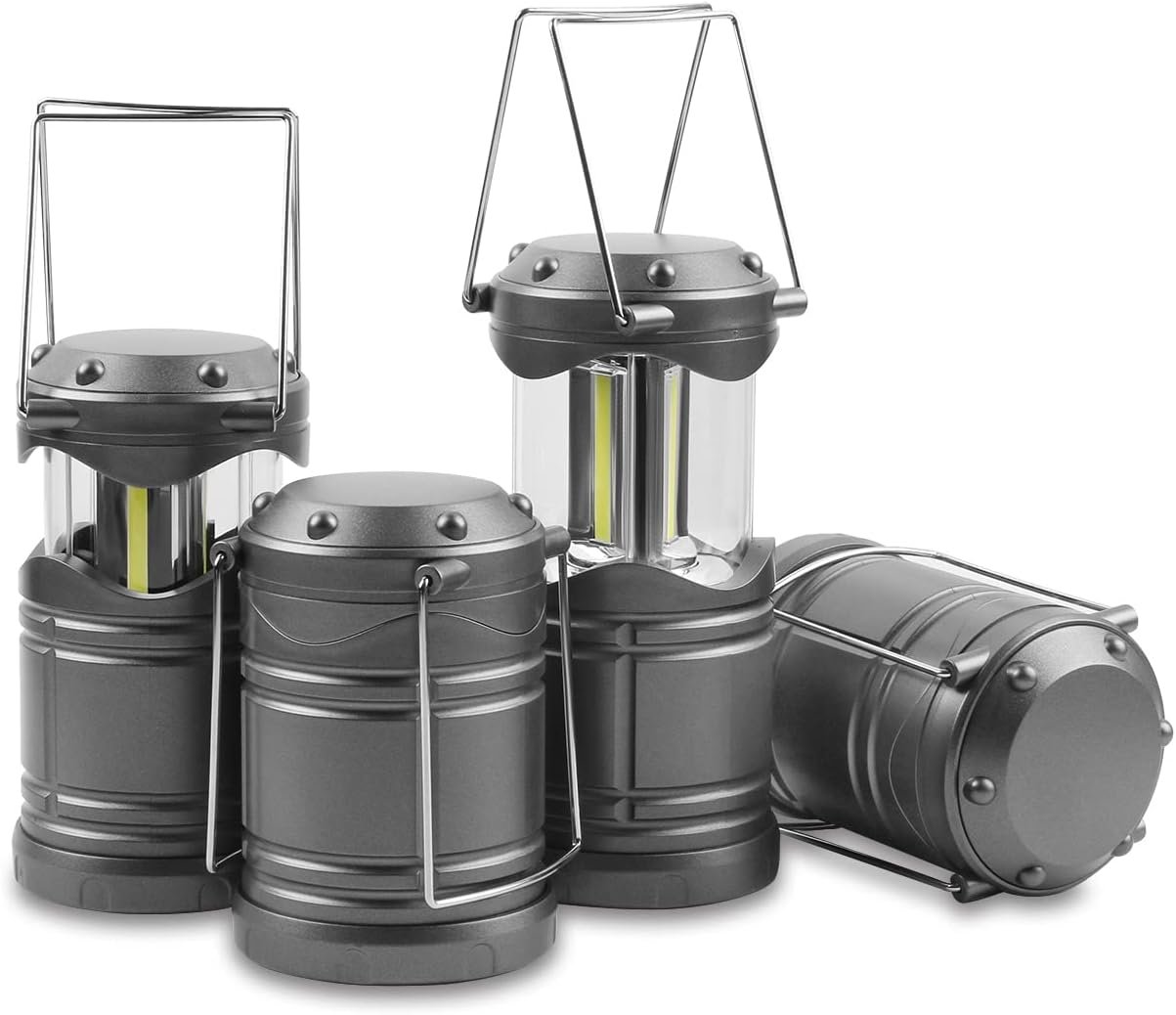
Lichamp LED Camping Lanterns (4-Pack)
Collapsible lanterns that fold flat in a bag: one for each kit, set on the table at mealtimes. They take AA batteries, sold separately.
Check Price on Amazon →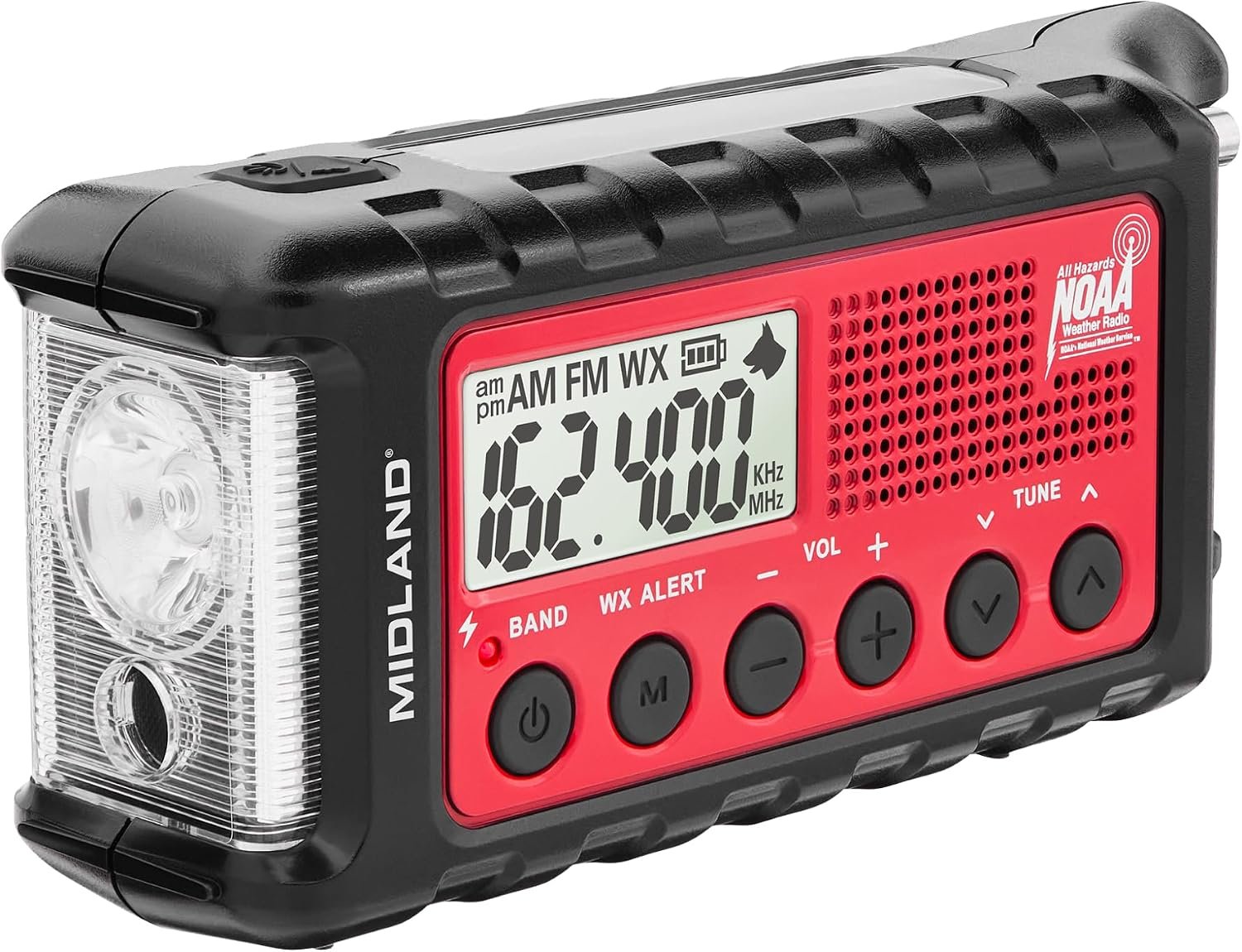
Midland ER310 Emergency Crank Weather Radio
Weather alerts and news on hand-crank, solar or battery power, with a flashlight and a USB port to top up a phone.
Check Price on Amazon →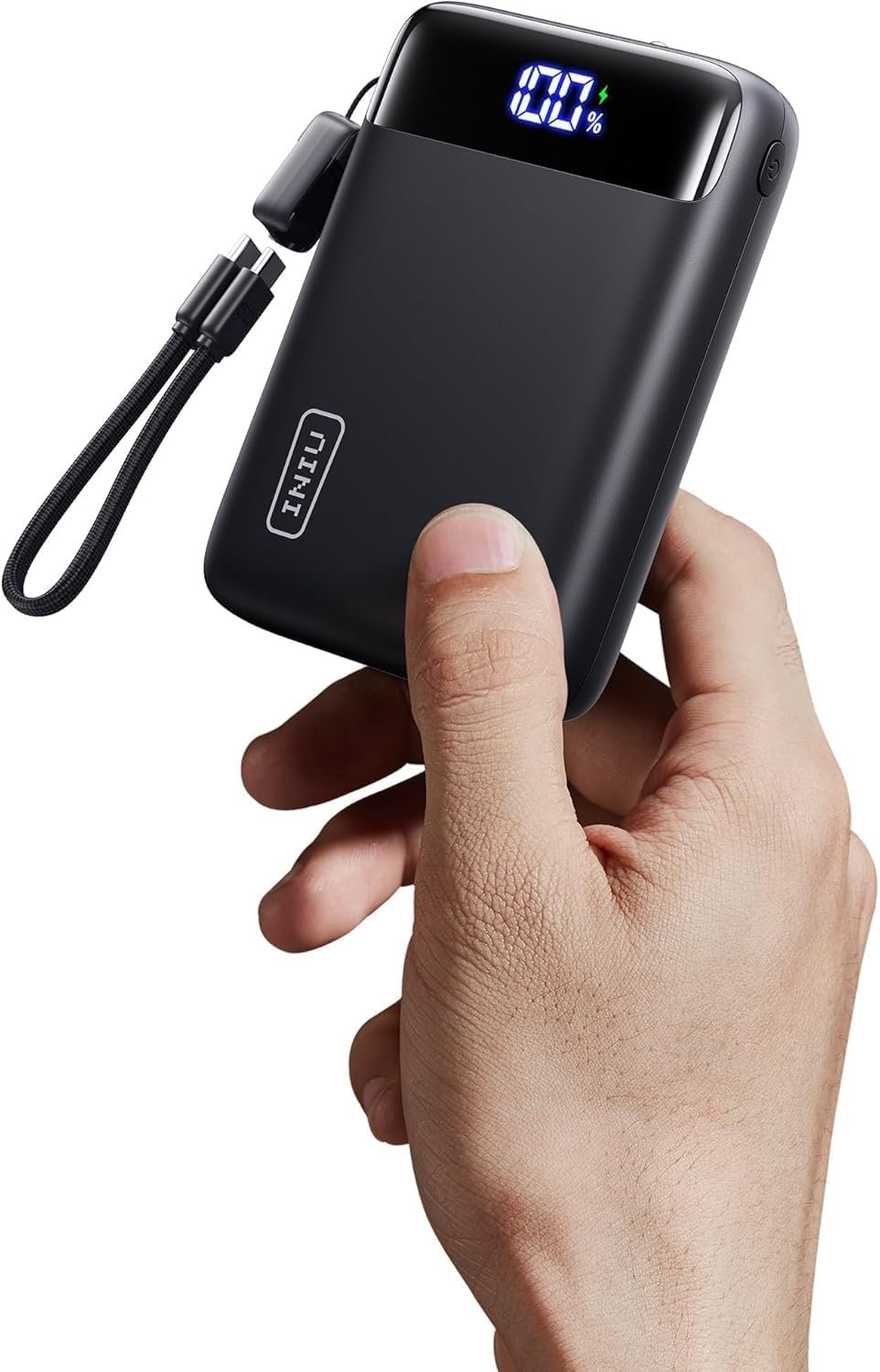
INIU 20,000mAh Portable Charger
Pocket-size power for a phone through three days, with a built-in cable. Recharge it every time the kit is checked.
Check Price on Amazon →Kids and Pets: What to Add
Children eat best when the food looks familiar. Pack a kit per child, built from what they already eat at home, and let them choose a treat or two.
- Their usual snacks: the crackers, bars and fruit pouches they already eat
- Applesauce pouches and juice boxes, which double as fluids
- Shelf-stable milk boxes in single-serve size
- Ready-to-feed formula and clean bottles for babies, following their pediatrician’s guidance
- Allergy-safe swaps such as sunflower seed butter, following their doctor’s guidance
- A small comfort food or two that feels like a treat
More ideas for younger eaters are in this guide to emergency food for kids. Pets need a kit of their own:
- 3 days of their usual food in a sealed bag or container
- Their own water, on top of the 3 gallons per person
- A collapsible bowl and a can opener if the food is canned
- Any medicines and a copy of their records
Car Kit and Office Kit Versions
The same list shrinks for the car and the desk. The big difference is heat: a parked car gets hot enough in summer to melt chocolate and shorten shelf life, so a car kit is checked and swapped more often.
| Kit | Food | Water | Swap |
|---|---|---|---|
| KitCar kit | FoodBars, nut butter packs, crackers, nuts and pouched tuna; skip chocolate and anything that melts | WaterSealed water pouches, which tuck under a seat | SwapHeat in a parked car shortens shelf life: swap more often, at least every 3 months in summer |
| KitOffice kit | FoodOne day of the list: two bars, a tuna pouch, crackers, nut butter, nuts and dried fruit | WaterPouches plus a refillable bottle | SwapEvery 6 months, with the home kit |
| KitHome go-bag | FoodThe full 3-day list per person on this page | WaterPouches in the bag; 3 gallons per person stored at home | SwapEvery 6 months |
Stranded in a car or at work: eat the no-cook food as it comes. Camp stoves and grills belong outdoors only, never in a car, a garage or an office, because of carbon monoxide.
Packing a 72 Hour Food Kit: Weight, Order and Labels
A kit is only useful if it can be carried and found. Six habits keep it light, tidy and quick to check.
Swap the Food Every 6 Months
Kit food is meant to be eaten, not forgotten. Twice a year, unpack it, eat what is closest to its date and restock. A car kit needs a look more often in the hot months.
- Pick two easy dates, such as when the clocks change in spring and fall
- Check every date and eat the oldest food in lunches or snacks that week
- Replace what was eaten and anything that looks crushed, swollen or stale
- Refresh water pouches by their printed date
- Recharge the power bank and test the lantern and radio batteries
- Update kids’ snacks, sizes and any baby supplies as they grow
72 Hour Emergency Kit Food List: FAQ
What food should be in a 72 hour emergency kit?
Food that needs no cooking, no fridge and no water: pouched tuna or chicken, nut butter packs, crackers, granola or protein bars, dried fruit, nuts, shelf-stable milk boxes, applesauce pouches and a few comfort snacks. Add a can opener, utensils and wipes.
How much food do you need for a 72 hour kit?
About 2,000 calories per person per day, roughly 6,000 or more for 3 days. The list on this page comes to about 6,700 calories and weighs about 6.3 lb per person.
How much water should be in a 72 hour emergency kit?
At least 1 gallon per person per day for 3 days, so 3 gallons per person, according to FEMA and Ready.gov. That weighs about 25 lb, so store it at home and carry sealed water pouches plus filter straws or tablets in the bag.
What are the best foods for a 72 hour kit?
Light, long-dated foods that need no preparation: pouches rather than cans, single-serve nut butter, bars, nuts and dried fruit, and small milk boxes. Choose foods the household already likes, since nobody eats well under stress.
Can you put canned food in a 72 hour kit?
Yes, but cans are heavy for what they hold. Pouched tuna and chicken weigh less and need no opener. If cans go in, choose pull-tab lids and still pack a manual can opener.
How often should you replace food in a 72 hour kit?
Every 6 months for a kit kept indoors. Check every date, eat the oldest food and replace it. A kit kept in a car needs checking more often, at least every 3 months in hot weather, because heat shortens shelf life.
Are emergency food tablets or bars enough for a 72 hour kit?
Not on their own. Compact chewable tablets and ration bars are useful back-ups for a side pocket, but real food such as pouched protein, nut butter, crackers and fruit keeps people going better for three days.
Do you need freeze-dried meals for a 72 hour kit?
No. Most freeze-dried pouches need boiling water, which means fuel and extra water. Grocery foods that need no preparation cover three days well. If buying a kit, check for halal certification where that matters.
What should you not put in a 72 hour emergency kit?
Very salty food that makes people thirsty, glass jars, anything that needs cooking or a fridge, food nobody in the house likes, and chocolate in a car kit. Skip anything past its date.
What food should go in a 72 hour kit for kids?
Their usual snacks: crackers, bars, applesauce pouches, juice boxes and shelf-stable milk, plus a comfort treat. Babies need ready-to-feed formula and bottles, following their pediatrician’s guidance.
How heavy is a 72 hour emergency kit?
The food on this list weighs about 6.3 lb per person. Water pouches, utensils, a lantern and a radio add a few pounds more. Gallons of water stay at home: 3 gallons weigh about 25 lb.
What food should be in a car emergency kit?
Bars, nut butter packs, crackers, nuts and pouched tuna, with sealed water pouches. Skip chocolate and anything that melts, and swap the food at least every 3 months in summer, since heat in a parked car shortens shelf life.
How many calories should a 72 hour kit have?
Plan on about 2,000 calories per adult per day, the figure nutrition labels are based on, so roughly 6,000 or more per person for 3 days. Active adults and teenagers may need more.
Where should you keep a 72 hour emergency kit?
Somewhere cool, dry and easy to reach on the way out: a hall closet near an exit is ideal. Avoid hot garages and attics, where heat shortens the life of the food and the water.
More for the Bag and the Shelf at Home
The home supply, water storage, kids’ food and room to keep it all.
Best Emergency Foods to Buy at Your Grocery Store
The 25 staples for the home supply, with a 7-day plan. See the list → Beyond 3 DaysEmergency Food Supply List
Scaling up from a go-bag to weeks at home. See the list → WaterHow to Store Water for Emergencies
Containers, amounts and when to refresh them. Read the guide → Little EatersEmergency Food for Kids
Familiar foods and comfort snacks for children. See the ideas → At HomeWhat to Eat When the Power Goes Out
No-cook meals and a 3-day menu for staying put. See the meals → SpaceKitchen Without a Pantry: Storage Ideas
Room for kits and supplies in a small home. See the ideas →Light, ready to eat and checked twice a year.
That is a 72 hour emergency kit food list that works. Build the home supply behind it from the full list.
Back to the full list: Best Emergency Foods to Buy at Your Grocery Store →
Next read: Emergency Food Supply List.
