
How to Store Water for Emergencies: How Much, Which Containers and How Long It Keeps
A gallon-by-gallon calculator for 1 to 6 people, the containers worth buying, how to sanitize them, and when a stored supply needs replacing.
- Bleach drop chart
- Hidden sources at home
- Pets included
How to store water for emergencies comes down to four decisions: how much to keep, what to keep it in, where it goes, and when to replace it.
In a storm, a flood or a long winter outage, taps can stop or turn unsafe when pumps lose power or mains break, and the stored supply becomes the most important thing in the house. For the food side, see the full list of best emergency foods to buy at the grocery store.
Quick answer
Store at least 1 gallon of water per person per day, for at least 3 days and ideally 2 weeks: 14 gallons each. Use sealed store-bought bottled water or clean, sanitized food-grade containers, kept cool, dark and away from chemicals. Bottled water keeps until its date; replace self-filled tap water about every 6 months.
How to Store Water for Emergencies: How Much Per Person
Plan on 1 gallon per person per day: roughly half for drinking and half for cooking and washing. Ready.gov asks for at least 3 days, and 2 weeks is the target at home when space allows. Store more for hot weather, nursing mothers, anyone who is ill, and pets.
Water Calculator for 1 to 6 People
Tap a length of time. Each gauge shows the household total, scaled to the six-person tank; the table adds the weight, at about 8.3 lb a gallon, and how many 5-gallon containers it fills.
3 Days: The Minimum
| Household | Water | Weight | 5-gallon containers |
|---|---|---|---|
| Household1 person | Water3 gallons | WeightAbout 25 lb | 5-gallon containers1 container |
| Household2 people | Water6 gallons | WeightAbout 50 lb | 5-gallon containers2 containers |
| Household3 people | Water9 gallons | WeightAbout 75 lb | 5-gallon containers2 containers |
| Household4 people | Water12 gallons | WeightAbout 100 lb | 5-gallon containers3 containers |
| Household5 people | Water15 gallons | WeightAbout 125 lb | 5-gallon containers3 containers |
| Household6 people | Water18 gallons | WeightAbout 150 lb | 5-gallon containers4 containers |
2 Weeks: The Target at Home
| Household | Water | Weight | 5-gallon containers |
|---|---|---|---|
| Household1 person | Water14 gallons | WeightAbout 115 lb | 5-gallon containers3 containers |
| Household2 people | Water28 gallons | WeightAbout 235 lb | 5-gallon containers6 containers |
| Household3 people | Water42 gallons | WeightAbout 350 lb | 5-gallon containers9 containers |
| Household4 people | Water56 gallons | WeightAbout 465 lb | 5-gallon containers12 containers |
| Household5 people | Water70 gallons | WeightAbout 585 lb | 5-gallon containers14 containers |
| Household6 people | Water84 gallons | WeightAbout 700 lb | 5-gallon containers17 containers |
30 Days: A Long Outage
| Household | Water | Weight | 5-gallon containers |
|---|---|---|---|
| Household1 person | Water30 gallons | WeightAbout 250 lb | 5-gallon containers6 containers |
| Household2 people | Water60 gallons | WeightAbout 500 lb | 5-gallon containers12 containers |
| Household3 people | Water90 gallons | WeightAbout 750 lb | 5-gallon containers18 containers |
| Household4 people | Water120 gallons | WeightAbout 1000 lb | 5-gallon containers24 containers |
| Household5 people | Water150 gallons | WeightAbout 1250 lb | 5-gallon containers30 containers |
| Household6 people | Water180 gallons | WeightAbout 1500 lb | 5-gallon containers36 containers |
Weight is the reason to spread the supply around: 84 gallons for six people for 2 weeks weighs about 700 lb. The same household also needs food that asks for little water; the emergency food list flags what needs no cooking.
The Best Containers for Storing Water
The best container held only food or drink, seals tightly and is easy to carry and pour. Sealed store-bought bottled water ticks every box and needs no attention until its date.
| Container | Best for | Watch for |
|---|---|---|
| ContainerSealed store-bought bottled water | Best forThe easiest supply: no cleaning, no treating | Watch forKeeps until the date on the pack; heavy cases go on low shelves |
| ContainerFood-grade water containers with a spigot | Best forPouring without lifting; stacking in a closet | Watch forClean before the first fill; 5 gallons weighs about 42 lb |
| ContainerStainless steel containers with a tap | Best forYears of reuse with no plastic taste | Watch forHeavy when full, so fill where it will stay |
| ContainerFood-grade buckets with sealed lids | Best forWashing and flushing water; a refill station | Watch forNo tap; sanitize before holding drinking water |
| ContainerSealed water pouches | Best forGo-bags, the car, a desk drawer | Watch forSmall amounts; check the date |
| ContainerClean 2-liter soda bottles | Best forA free, food-safe start | Watch forSanitize first; keep out of the sun |
What to Avoid
- Milk and fruit-juice jugs: milk proteins and fruit sugars cannot be fully cleaned out, and the thin plastic breaks down.
- Anything that has held a non-food product: bleach, detergent, pesticides, oil or fuel.
- Containers not marked food-grade, such as hardware-store paint buckets.
- Glass for the main supply: it is heavy and breaks in a fall.
As an Amazon Associate, this site earns from qualifying purchases. Prices and availability are those shown on Amazon at the time you click.
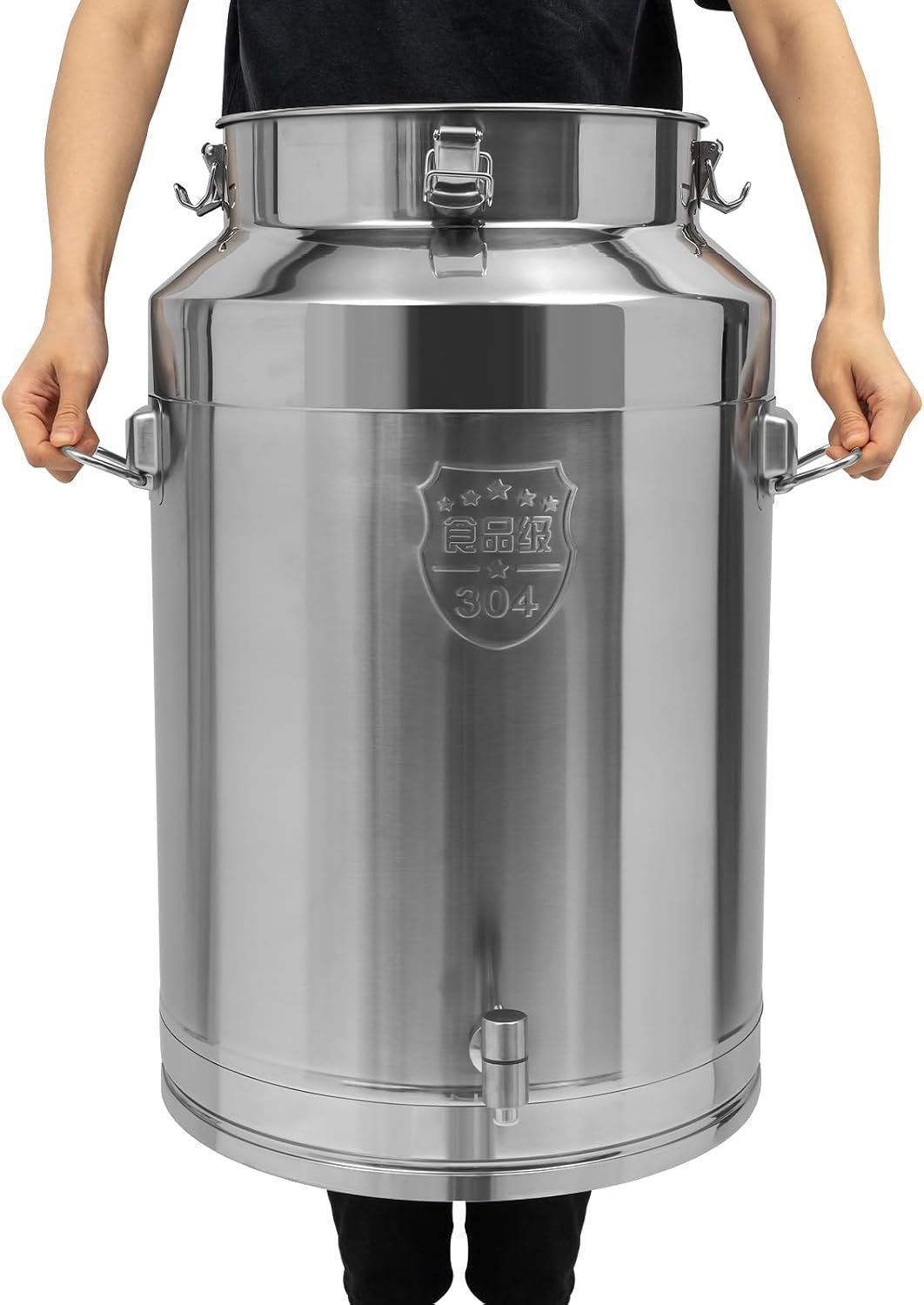
Stainless Steel Milk Can with Spigot
A new stainless steel can, nothing like a plastic milk jug, with a tap and a latching, silicone-sealed lid. It pours without lifting; sanitize it before the first fill and fill big sizes where they will stay.
Check Price on Amazon →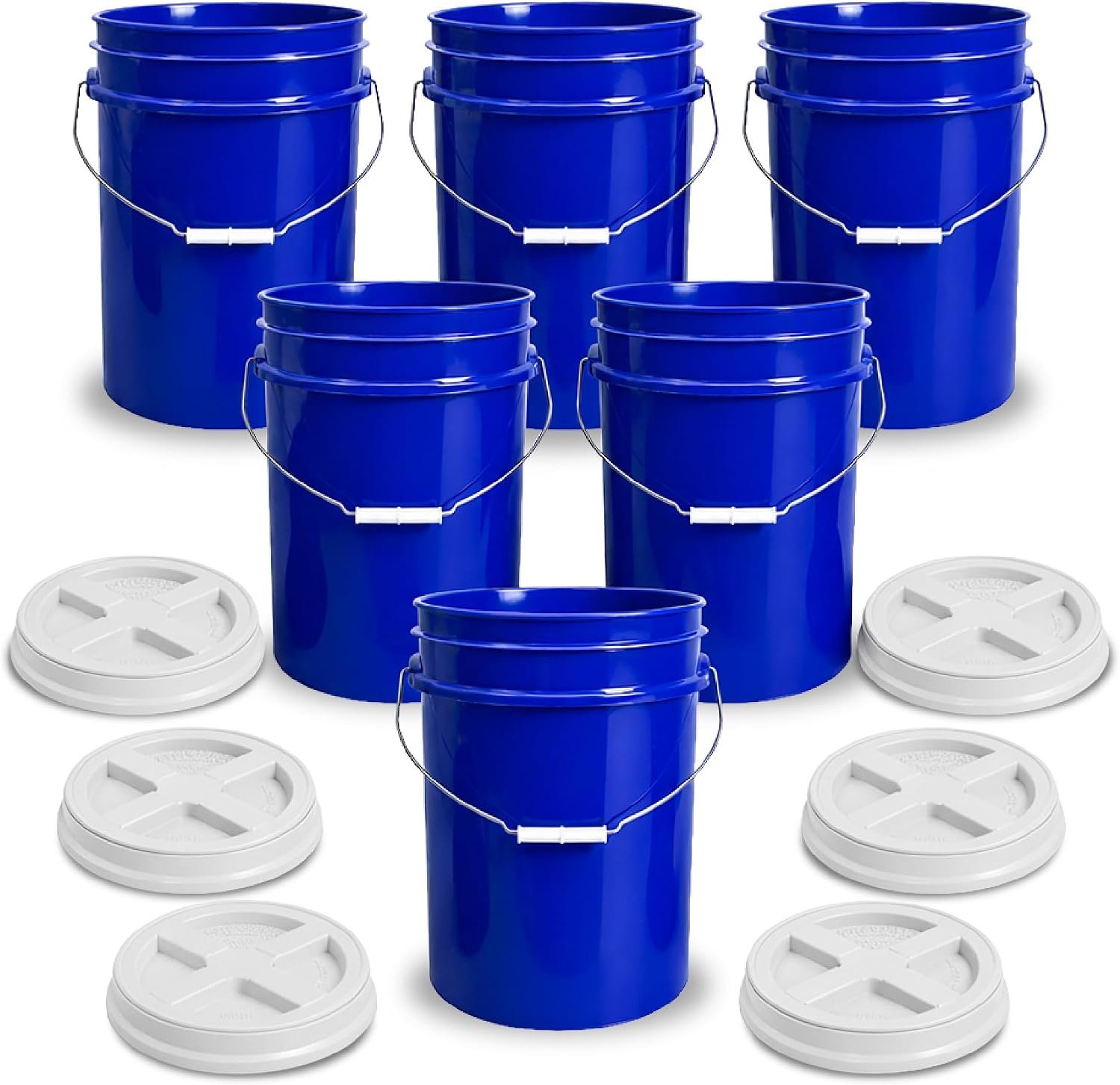
ePackageSupply 5-Gallon Food-Grade Buckets with Gamma Seal Lids (6-Pack)
Six food-grade 5-gallon buckets with screw-on lids that reseal without a tool. Sanitized, one makes a refill station for washing and flushing water; full, each weighs about 42 lb.
Check Price on Amazon →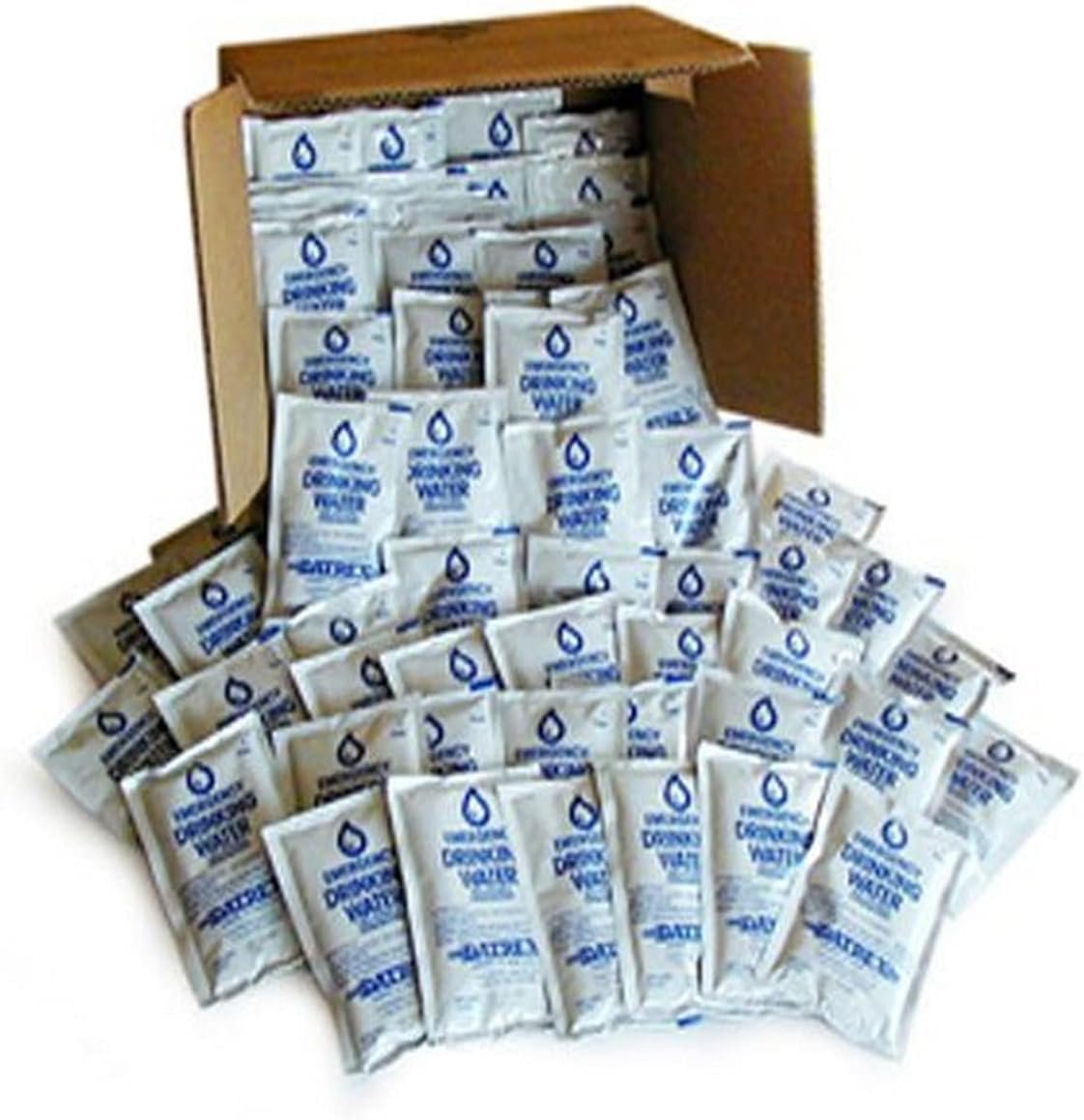
Datrex Emergency Drinking Water Pouches
Sealed drinking water pouches for a go-bag, the car or a desk drawer, where a plastic bottle can split. Check the date on them at every 6-month review.
Check Price on Amazon →How to Clean and Sanitize Water Containers
A new container gets this treatment once, and a reused one every time it is refilled. The method is the CDC’s for household water containers, and it takes about five minutes.
Wash
Scrub the container and cap with dish soap and warm water, then rinse well with clean water.
Mix the sanitizer
Stir 1 teaspoon of unscented household liquid bleach into 1 quart of water. Plain bleach only: no scented, color-safe or added-cleaner kinds.
Coat every surface
Pour the solution in, cap the container and shake it so the solution touches every inside surface.
Wait and empty
Wait at least 30 seconds, then pour the solution out.
Dry or rinse
Let the container air-dry before filling, or rinse it with clean, safe water.
Filling and Labelling Stored Water
Tap water from a public supply treated with chlorine needs nothing added before storing, according to the CDC. Water from a private well or another untreated source should be treated first, using the bleach chart further down.
- Fill to the top and cap tightly, without touching the inside of the cap with your fingers.
- Label every container “drinking water” with the date it was filled.
- Set a reminder to empty, sanitize and refill it in about 6 months.
- Keep a separate, clearly marked supply for flushing and washing if space allows.
How Long Stored Water Keeps and When to Replace It
Sealed store-bought bottled water keeps until its date. Self-filled tap water gets replaced about every 6 months, because caps loosen, containers age and germs can slip in each time one is opened.
| Water | Replace | Good to know |
|---|---|---|
| WaterStore-bought bottled water, sealed | ReplaceBy the date on the pack | Good to knowNothing else needed while it stays sealed, cool and dark |
| WaterSelf-filled tap water | ReplaceAbout every 6 months | Good to knowSanitize the container again at each refill |
| WaterSealed water pouches | ReplaceBy the date on the pouch | Good to knowCheck them with the car and go-bag kits |
| WaterA container in use | ReplaceSoon; keep it covered | Good to knowPour from it rather than dipping cups in |
| WaterFrozen bottles | ReplaceUse as they thaw | Good to knowLeave headspace, since water expands as it freezes |
On replacement day, use the old water for plants or cleaning, then wash, sanitize and refill. Flat-tasting water is not a problem: pouring it back and forth between two clean containers adds air and freshens the taste.
Where to Store Emergency Water
Cool, dark and away from chemicals. Sunlight encourages algae in clear containers, heat softens plastic, and containers belong well away from anything with fumes.
Good spots
- An interior closet floor
- Under beds
- A cool basement shelf
- The back of a pantry or linen closet
Poor spots
- A hot garage or attic
- Next to fuel, paint, pesticides or cleaners
- In direct sun
- High shelves, where the weight is a hazard
Short on space? Split the supply: a few gallons under each bed and in each closet, and pouches in the car. These storage ideas for a kitchen without a pantry find room on door backs and under furniture.
How to Treat Water That May Be Unsafe
When the stored supply runs out, or the water utility issues a boil-water advisory, treat any doubtful water before drinking, cooking or brushing teeth. Let cloudy water settle, or filter it through a clean cloth, paper towel or coffee filter first.
| Method | How | Limits |
|---|---|---|
| MethodBoiling | HowA rolling boil for 1 minute (3 minutes above 6,500 feet), then cool with the lid on | LimitsKills germs; does not remove chemicals; uses fuel |
| MethodUnscented bleach | HowThe drop chart below; stir and wait 30 minutes | LimitsPlain household bleach only; no help against fuel or chemicals |
| MethodPurification tablets | HowThe dose and wait time on the packet | LimitsLight and long-lasting; wait times vary by product |
| MethodFilters and filter straws | HowAs the maker directs | LimitsMany do not remove viruses or chemicals; disinfect too when in doubt |
Bleach Drop Chart for Clear Water
| Water | 6% bleach | 8.25% bleach |
|---|---|---|
| Water1 quart or 1 liter | 6% bleach2 drops | 8.25% bleach2 drops |
| Water1 gallon | 6% bleach8 drops | 8.25% bleach6 drops |
| Water2 gallons | 6% bleach16 drops | 8.25% bleach12 drops |
| Water5 gallons | 6% bleach40 drops | 8.25% bleach30 drops |
These are the CDC’s doses for plain, unscented household bleach. Stir and wait 30 minutes. The water should smell faintly of chlorine; if it does not, repeat the dose and wait 15 minutes more. For cloudy water, filter first, then double the dose.
Once the taps are safe again, everyday filtered drinking water is a separate job; see these countertop water filter systems.
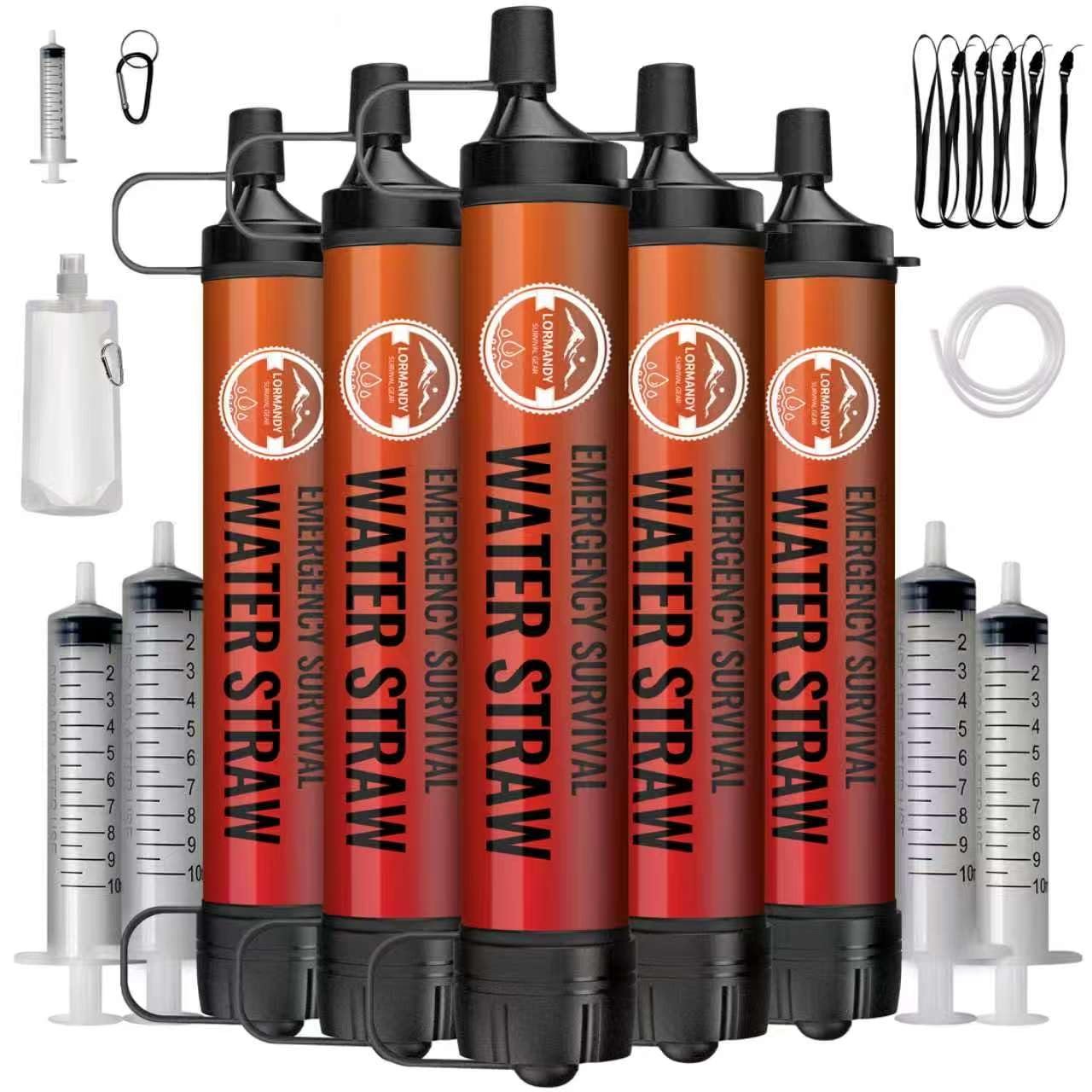
Lormandy Straw Water Filter (5-Pack)
Five filter straws, one per person, with syringes for backflushing. They filter rather than disinfect, so pair them with boiling or tablets when viruses are a concern.
Check Price on Amazon →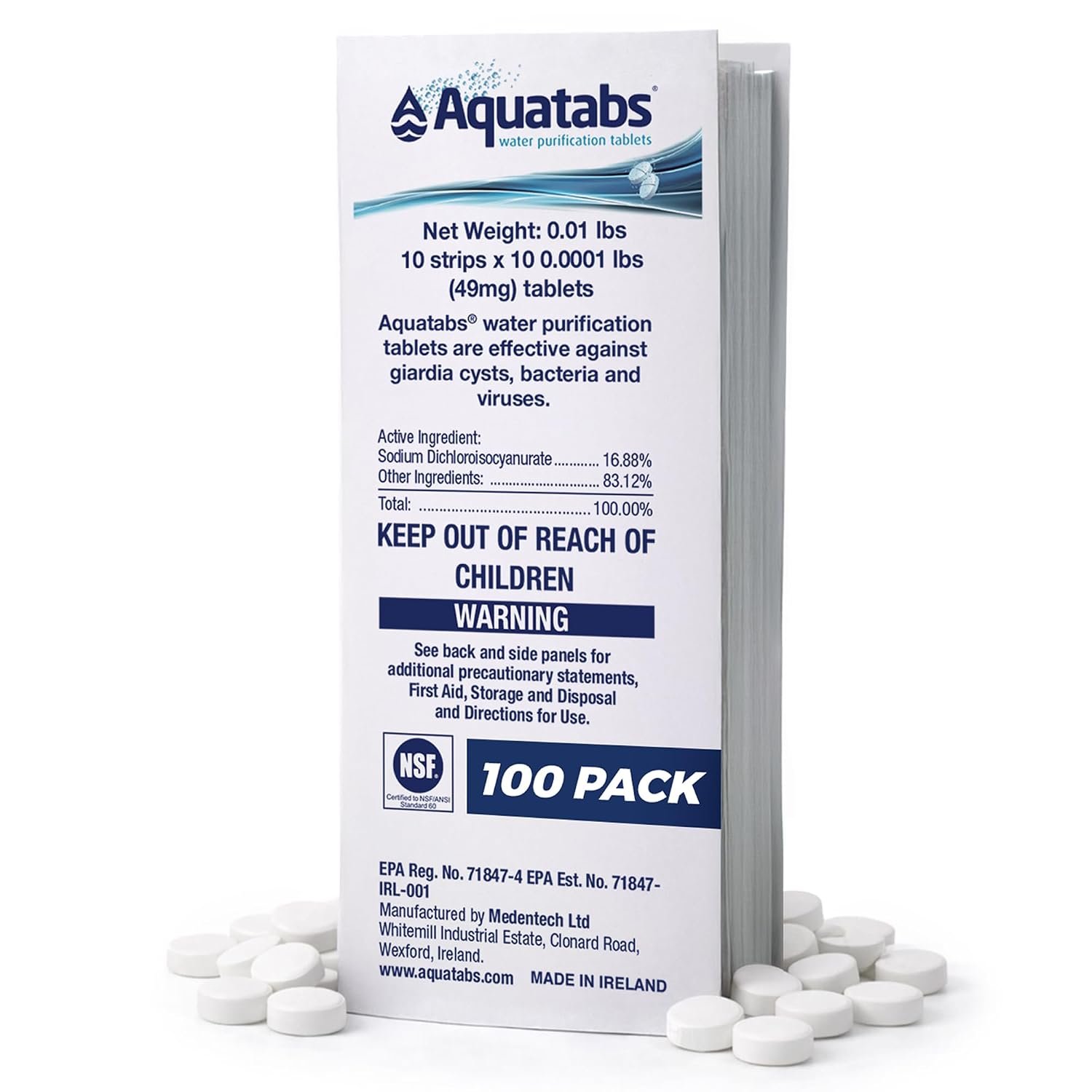
Aquatabs Water Purification Tablets (100 Pack)
One tablet treats 0.75 to 2 liters in 30 minutes, per the packet, and each sits in its own foil strip. A light back-up for days with no fuel to boil water.
Check Price on Amazon →Water for Pets, Cooking and Cleanup
Pets need their own supply on top of the household’s gallon a day: the same number of days of water, and the same bottled or treated water people drink.
Cooking uses the most water after drinking. Rice, red lentils and couscous absorb all of theirs, and pasta water can become soup. Safe ways to heat it all are in how to cook without electricity.
For cleanup, wipe dishes before washing, use paper plates for the first days, and keep hand sanitizer for when water is short. A bathtub filled before the storm handles flushing: pour a bucketful into the bowl.
Packing a go-bag? Water pouches and a filter straw fit beside the food in the 72 hour emergency kit food list.
How to Store Water for Emergencies: FAQ
How much water should you store for an emergency?
At least 1 gallon per person per day, for at least 3 days and ideally 2 weeks: 3 gallons each for the minimum and 14 for two weeks. A family of four needs 12 gallons for 3 days and 56 for 2 weeks. Store more in hot weather and for pets.
How long can you store tap water for emergencies?
About 6 months in clean, sanitized, food-grade containers; then empty them, sanitize again and refill. Tap water from a chlorinated public supply needs nothing added. Label each container with the date it was filled so replacement day is easy to spot.
Does bottled water expire?
Sealed store-bought bottled water keeps until the date printed on the pack when it is stored cool, dark and away from chemicals. Rotate it into everyday drinking before that date and replace the cases as they are used.
What is the best container to store water long term?
A food-grade container with a tight cap, ideally with a spigot so it pours without lifting: stackable 5 to 7 gallon water containers or a stainless steel can with a tap. Sealed store-bought bottles are the easiest of all. Avoid milk jugs and anything that held non-food products.
Can I store water in milk jugs?
No. Milk proteins and fruit sugars cannot be fully cleaned out of milk and juice jugs, so bacteria can grow, and the thin plastic breaks down and leaks. Clean 2-liter soda bottles or food-grade water containers are far better choices.
How do you sanitize water storage containers?
Wash with dish soap and water and rinse. Mix 1 teaspoon of unscented household bleach into 1 quart of water, pour it in, cap and shake so it coats every surface. Wait at least 30 seconds, pour it out, then air-dry or rinse with clean, safe water.
Do you need to add bleach to stored tap water?
Not if it comes from a public supply treated with chlorine, according to the CDC; just store it in clean, sanitized containers. Water from a private well or other untreated source should be treated with bleach before storing.
How many drops of bleach per gallon of water make it safe to drink?
For clear water, 8 drops of unscented 6% household bleach per gallon, or 6 drops of 8.25% bleach. Stir and wait 30 minutes before drinking. For cloudy water, filter it through a clean cloth first, then double the dose.
How long do you boil water to make it safe?
A rolling boil for 1 minute, or 3 minutes above 6,500 feet, then let it cool with the lid on. Boiling kills germs but does not remove chemicals. Pouring the cooled water back and forth between two clean containers improves the flat taste.
Where is the best place to store emergency water?
A cool, dark spot away from sun, heat and chemicals: an interior closet floor, under beds or a cool basement shelf. Avoid hot garages and attics, and keep containers well away from fuel, paint, pesticides and cleaning products.
Can you drink water from a water heater in an emergency?
Yes, if the heater is undamaged. Turn off its gas or power, let the water cool, open a hot tap to let air in and drain from the valve at the bottom. Let sediment settle, and refill the tank completely before turning the heater back on.
Do water filter straws make water safe to drink?
They help, but they do not remove everything. Many personal filters catch bacteria and parasites but not viruses or chemicals. Check what a filter is rated for, and boil or disinfect the water as well when there is any doubt about the source.
Can you freeze water for emergencies?
Yes. Leave headspace in each container, since water expands as it freezes, and avoid glass, which can crack. Frozen bottles keep the freezer colder during an outage and become drinking water as they thaw.
More for the Next Storm
Cooking without power, a 72-hour kit, food safety, everyday filters and room to store it all.
How to Cook Without Electricity
Eight safe ways to cook, and the water each one needs. Read the guide → Go-Bag72 Hour Emergency Kit Food List
Food and water for three days, packed to carry. See the list → Food SafetyPower Outage Food Safety
Fridge and freezer timings, and when to throw food out. Read the guide → Everyday WaterBest Countertop Water Filter Systems
Filtered water at the tap, once the supply is safe again. See the picks → Small SpacesStorage Ideas for a Kitchen Without a Pantry
More places to tuck containers in a small home. Get the ideas → Hot DrinksBest Camping Coffee Makers
Hot drinks from the stored supply, on a camp stove outdoors. See the picks →A gallon a person a day, food-grade containers, and a date on every cap.
That is how to store water for emergencies; the food comes next.
Back to the full list:
Best Emergency Foods to Buy at Your Grocery Store →
Packing a go-bag? See the 72 hour emergency kit food list.
