
How to Cook Without Electricity: 8 Safe Ways and What to Make on Each
Camp stoves, grills, a match-lit gas burner, sunshine and stored heat: where each one is safe, what it cooks best and a one-pot dinner to match.
- Carbon monoxide rules
- Canister planner
- Halal throughout
How to cook without electricity comes down to three choices: a heat source that is safe where you use it, enough fuel for the days ahead, and meals simple enough for one pot.
When a winter storm or a hurricane knocks out the power, hot meals are still possible: the cooking moves outdoors, onto a match-lit gas burner, or into the sun. The full list of best emergency foods to buy at the grocery store covers what to keep on the shelf; this page covers how to heat it.
Quick answer
Cook outdoors on a butane or propane camp stove, a gas grill or a charcoal grill. Indoors, light a gas range burner with a match if the manual allows it, never the oven. A rocket stove, solar oven, retained-heat box or gel chafing fuel fills the gaps.
Never indoors: stoves, grills, charcoalFuel: 1 canister a day for four
How to Cook Without Electricity: 8 Safe Methods
The first three burn fuel and stay outdoors; a gas range is built for indoor use; the last four stretch fuel or replace it. Fuel per day is for four people.
Butane camp stove
The easiest all-rounder: fast boiling, and a steady simmer for rice, pasta and one-pot meals.
- Where Outdoors only: a patio, balcony or driveway, on a stable table out of the wind.
- Fuel per day About one 8 oz canister a day for four people cooking two hot meals.
- Safety No pot or griddle wider than the grate: reflected heat can overheat the canister.
Propane camp stove or gas grill
Two burners or a big grate: a kettle and a pot at once, or a skillet on the grate.
- Where Outdoors, well away from doors, windows and vents.
- Fuel per day About one 1 lb cylinder a day for four, or roughly an hour of a 20 lb grill tank.
- Safety Check hoses with soapy water before storm season; store tanks outdoors, upright.
Charcoal grill
Foil packets, flatbreads, grilling, and a heavy pot or skillet set right on the grate.
- Where Outdoors only, never in a garage, tent or enclosed porch.
- Fuel per day About 5 lb of briquettes, one full chimney starter, per cooking session.
- Safety Coals give off carbon monoxide until fully out; douse the ashes and keep them in a metal can.
Gas range lit with a match
Ordinary stovetop cooking: the one fuel-burning method built for indoors.
- Where The top burners only, where the manual allows lighting by hand. Not the oven.
- Fuel per day Household gas, which often keeps flowing during a power outage.
- Safety Hold the lit match at the burner, then turn the knob. Crack a window; never heat the room with it.
Rocket stove
Boiling water and simmering one pot on twigs and sticks gathered after a storm.
- Where Outdoors on bare ground or paving, clear of the house and anything that burns.
- Fuel per day A few armfuls of dry sticks a day.
- Safety Check for burn bans, keep water close, and let it burn out before walking away.
Solar oven
Slow-cooked rice, red lentils, soaked beans, stews and potatoes with no fuel at all.
- Where Outdoors in full sun, turned to face the sun every hour or so.
- Fuel per day None. Allow 2 to 4 hours a dish on a clear day.
- Safety Pots and reflectors get hot. Start by midday so food is cooked and eaten before the sun drops.
Retained-heat cooking box
Rice, lentils, beans and stews: a short boil, then trapped heat finishes the job.
- Where Anywhere indoors, after the boil on an outdoor stove or a match-lit burner.
- Fuel per day Only the few minutes of boiling, a fraction of the usual.
- Safety If the food has cooled below steaming hot, bring it back to a full boil before serving.
Gel chafing fuel
Warming canned food in a pan or keeping a pot warm. It rarely brings water to a full boil.
- Where On a chafing stand, used exactly as the label directs.
- Fuel per day One or two cans a day; most are sold as 2 to 6 hours of burn time.
- Safety Never leave it unattended or move it while lit; snuff it with the lid.
All 8 at a Glance
| Method | Indoors? | Boils water? | Fuel per day, four people |
|---|---|---|---|
| MethodButane camp stove | Indoors?No | Boils water?Yes fast | Fuel per day, four people1 canister (8 oz) |
| MethodPropane stove or gas grill | Indoors?No | Boils water?Yes | Fuel per day, four people1 cylinder (1 lb), or an hour of a 20 lb tank |
| MethodCharcoal grill | Indoors?No | Boils water?Yes slowly | Fuel per day, four peopleAbout 5 lb charcoal |
| MethodGas range, match-lit | Indoors?Yes burners only | Boils water?Yes | Fuel per day, four peopleHousehold gas |
| MethodRocket stove | Indoors?No | Boils water?Yes | Fuel per day, four peopleDry sticks |
| MethodSolar oven | Indoors?No (in the sun) | Boils water?Slowly, clear days | Fuel per day, four peopleNone |
| MethodRetained-heat box | Indoors?Yes | Boils water?No | Fuel per day, four peopleMinutes of boiling |
| MethodGel chafing fuel | Indoors?As the label directs | Boils water?Rarely | Fuel per day, four people1 to 2 cans |
Induction and electric cooktops go dark with the power, one practical point in the gas vs induction cooktops debate. And most of the emergency food list needs no heat at all, so many households cook once a day and eat no-cook for the rest.
Carbon Monoxide: The Safety Rule That Comes First
Camp stoves, grills, charcoal and generators all give off carbon monoxide, a gas with no color and no smell that builds up quickly in closed spaces. It is the reason every fuel-burning method above, except a gas range used as designed, lives outdoors.
Four rules for every outage
- Never run a camp stove, grill, charcoal or a generator indoors or in a garage, even with the door open, on an enclosed porch or in a tent.
- Keep carbon monoxide alarms working, with fresh batteries or a battery back-up, and test them before storm season.
- Never heat the home with a gas range, an oven, a grill or a camp stove.
- Headache, dizziness, weakness, nausea or confusion can mean carbon monoxide: get everyone into fresh air and call 911.
Cook well away from doors, windows and vents so fumes cannot drift back inside. Rain is no reason to move the stove into the garage: a canopy over an open patio table is the safer fix.
How Much Fuel to Keep for 3 Days, 1 Week or 2 Weeks
The table assumes two hot meals a day plus hot drinks, with the rest of the menu no-cook. Many single-burner butane stoves run about 1½ to 2 hours on high from one 8 oz canister, longer on low; the stove’s manual gives the real figure. Counts round up to whole canisters.
| Household | 3 days | 1 week | 2 weeks |
|---|---|---|---|
| Household1 person | 3 days1 canister | 1 week2 canisters | 2 weeks4 canisters |
| Household2 people | 3 days2 canisters | 1 week4 canisters | 2 weeks7 canisters |
| Household4 people | 3 days3 canisters | 1 week7 canisters | 2 weeks14 canisters |
| Household6 people | 3 days5 canisters | 1 week11 canisters | 2 weeks21 canisters |
On a grill, a full 20 lb propane tank is commonly estimated at 18 to 20 hours on medium. At about an hour of cooking a day, one tank covers 1 to 4 people for 2 weeks; a household of 6 needs 2. Keep a spare tank either way.
Storing Fuel Safely
Keep butane canisters and 1 lb cylinders capped in a cool, dry, ventilated spot away from the water heater, furnace and living areas. Store 20 lb tanks outdoors and upright, never in the house, basement or garage. Buy fuel before storm season: canisters sell out alongside the batteries.
As an Amazon Associate, this site earns from qualifying purchases. Prices and availability are those shown on Amazon at the time you click.
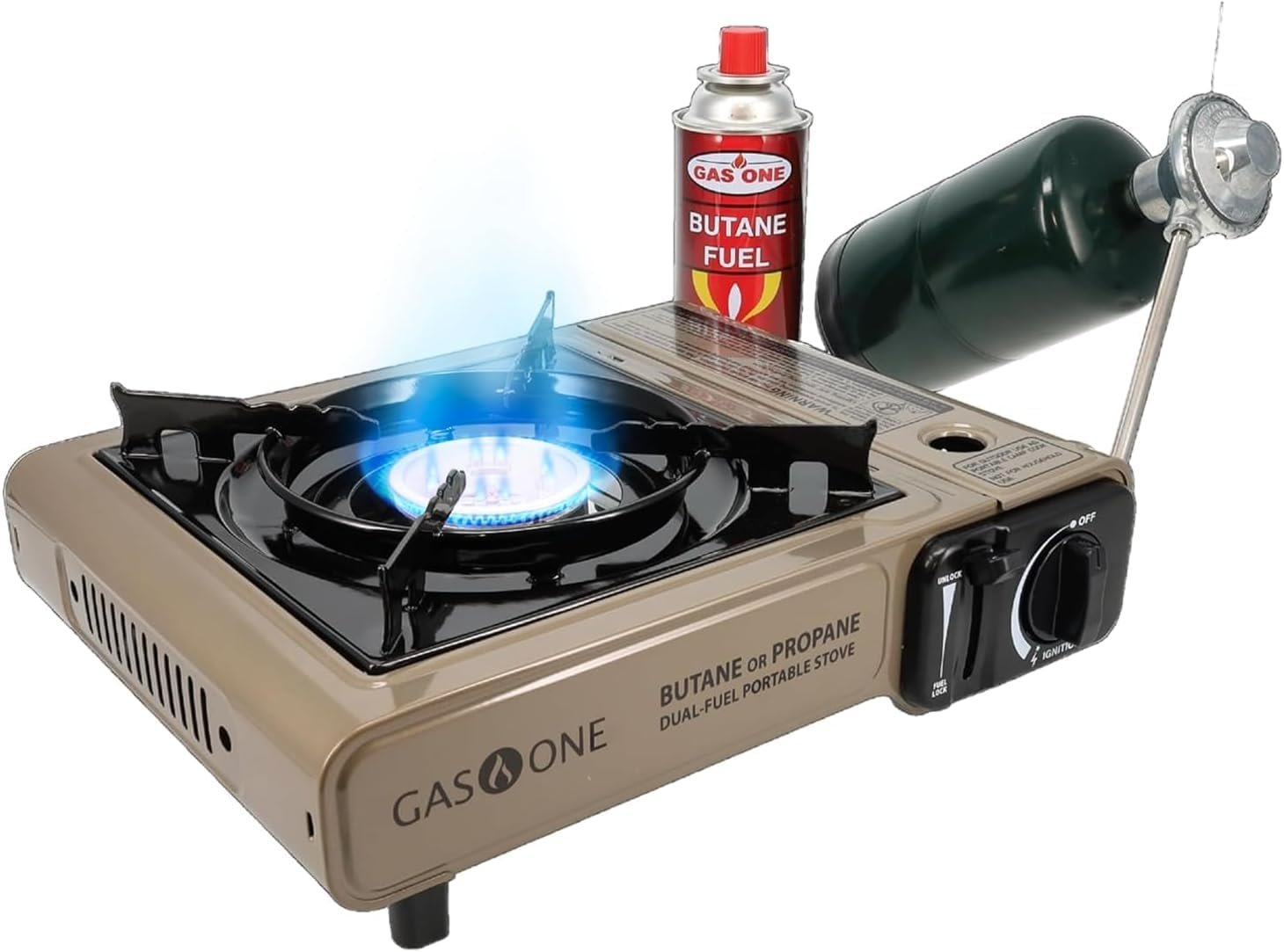
Gas One GS-3400P Dual Fuel Portable Camping Stove
The stove most of this page is built around. It takes an 8 oz butane canister or, with its regulator, a 1 lb propane cylinder, so either fuel works. Outdoors only.
Check Price on Amazon →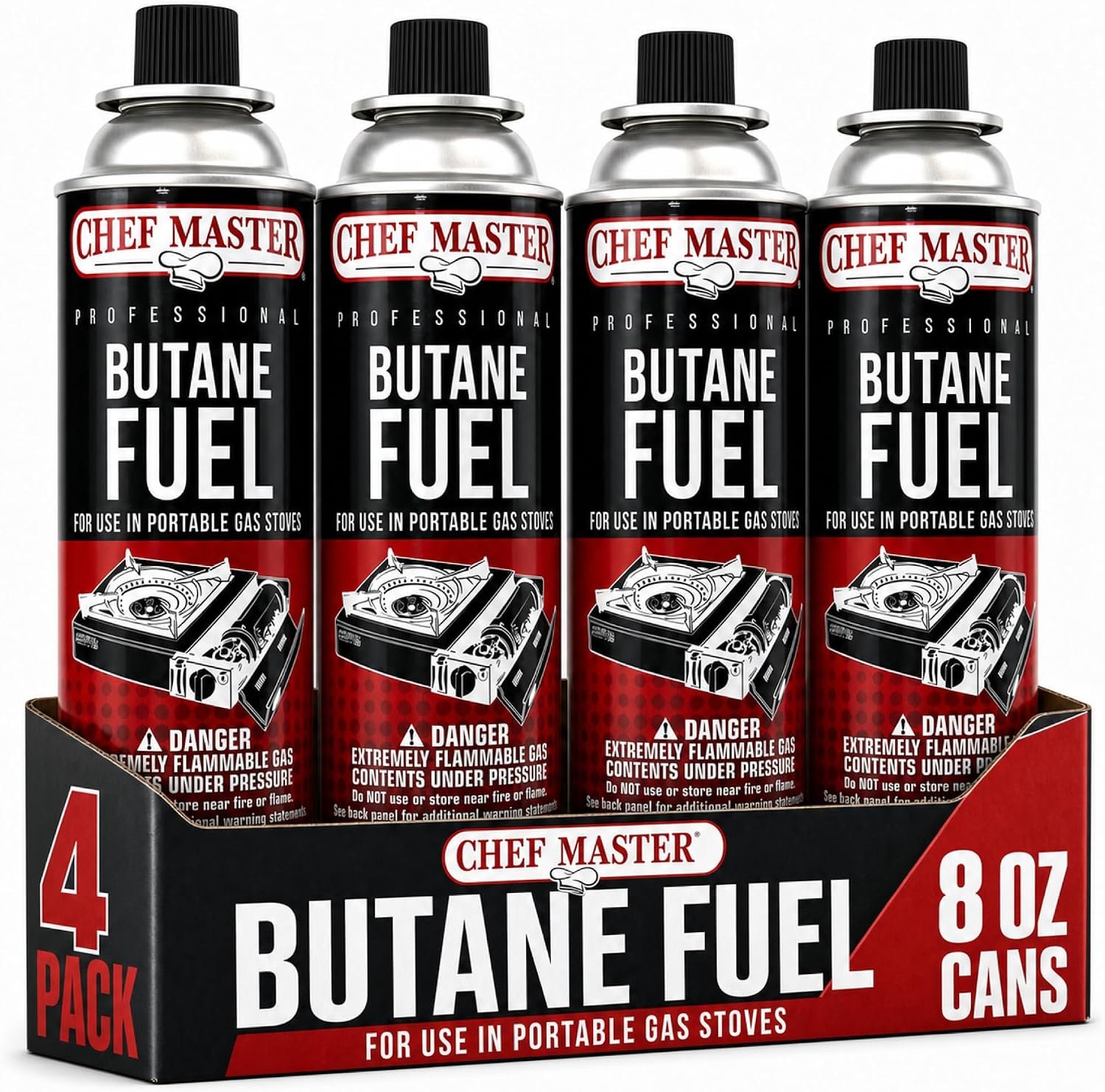
Chef Master Butane Fuel Canisters, 8 oz (4-Pack)
Four 8 oz canisters: about four days of cooking for a family of four by the fuel table above. Store them cool and upright, away from the water heater.
Check Price on Amazon →10 One-Pot Meals and the Best Heat for Each
All halal, all built from shelf-stable staples, and each matched to the method that suits it best. Full amounts and steps for pantry meals are in the emergency pantry recipes, and these lentil soups and stews turn a bag of dried lentils into dinner.
Rice and Bean Pot
White rice simmered with canned pinto beans, fire-roasted tomatoes, broth and cumin; add halal canned chicken if there is some.
Butane camp stove25 min
Red Lentil and Tomato Soup
Red lentils, canned tomatoes, broth, cumin and turmeric. No soaking; the pot sits in the sun untouched.
Solar oven2 to 3 hr
Angel Hair With Tomatoes and Tuna
Thin pasta cooks in 4 to 5 minutes. Toss it with canned tomatoes, oil, garlic powder and tuna.
Butane camp stove10 min
Chickpea and Coconut Curry
Canned chickpeas, coconut milk, peas or spinach and curry powder, over rice or flatbread.
Propane stove or grill burner15 min
Eggs Poached in Spiced Tomato Sauce
For the first hours of an outage, while the eggs are still cold: simmer them in spiced canned tomatoes.
Gas range, match-lit15 min
Foil-Packet Chicken, Potatoes and Green Beans
Canned potatoes, green beans and halal canned chicken with oil and spices, sealed in heavy foil on the coals.
Charcoal grill20 min
Bean and Green Chile Quesadillas
Tortillas filled with vegetarian refried beans and green chiles, crisped in a dry skillet on the grate.
Gas grill10 min
Boxed Rice and Lentils
White rice and red lentils with turmeric, boiled 5 minutes, then boxed for about an hour.
Retained-heat box1 hr (5 min of fuel)
Couscous With Chickpeas and Raisins
Boiling water over couscous, covered 5 minutes, then canned chickpeas, raisins, oil and lemon juice.
Rocket stove10 min
Warm Chili and Crackers
Vegetarian canned chili or baked beans warmed in a small pan, with crackers on top.
Gel chafing fuel15 min
Short on pots? Canned food can be warmed in its own can on a camp stove or grill: peel off the paper label and open the can first, then handle it with tongs or an oven mitt. It is already cooked, so cold is safe too.
Water for Cooking and Cleanup Without Power
Store at least 1 gallon of water per person per day, for at least 3 days and ideally 2 weeks. Roughly half goes to drinking and the rest to cooking and washing, so one-pot meals stretch it: the cooking water becomes the sauce, and there is one pot to clean.
| Staple | Water | Time on the heat |
|---|---|---|
| StapleWhite rice, 1 cup | Water2 cups | Time on the heat18 to 20 minutes, covered |
| StapleRed lentils, 1 cup | WaterAbout 3 cups | Time on the heat15 to 20 minutes |
| StapleCouscous, 1 cup | Water1¼ cups | Time on the heatJust the boil, then 5 minutes covered off the heat |
| StapleThin pasta, 8 oz | WaterAbout 4 cups | Time on the heat4 to 5 minutes; keep the water for soup |
| StapleRolled oats, 1 cup | Water2 cups | Time on the heatAbout 5 minutes |
| StapleInstant mashed potatoes | WaterAs the package directs | Time on the heatNone after the water boils |
Under a boil-water advisory, bring water to a rolling boil for 1 minute (3 minutes above 6,500 feet) before using it for drinking, cooking or brushing teeth. For containers, amounts and how long stored water keeps, see how to store water for emergencies.
Cleanup With Less Water
- Wipe pots and plates with a paper towel before washing them.
- Wash in one basin of warm soapy water and rinse in a second, then air-dry.
- Line grill pans with foil; use paper plates for the first days.
- Keep hand sanitizer by the cooking table for when water is short.
Practice Before the Power Goes Out
A stove that has never been lit is a guess. One calm evening before storm season answers the questions that are hard to answer in the dark.
- Cook one full pantry meal on the camp stove, outdoors.
- Time one canister on your usual flame, then adjust the fuel table.
- Check the range manual to see whether the burners can be lit by hand.
- Test the carbon monoxide alarms and put in fresh batteries.
- Build a retained-heat box: a cooler with towels packed around the pot.
- Pack a kit: long lighter, matches in a sealed bag, pot holders, a heavy pot, foil, a can opener.
Hot drinks count as much as dinner on a cold morning; these camping coffee makers all work on a camp stove outdoors. For cooking after dark, one lantern on the table and one in the kitchen is far safer than candles near a flame.
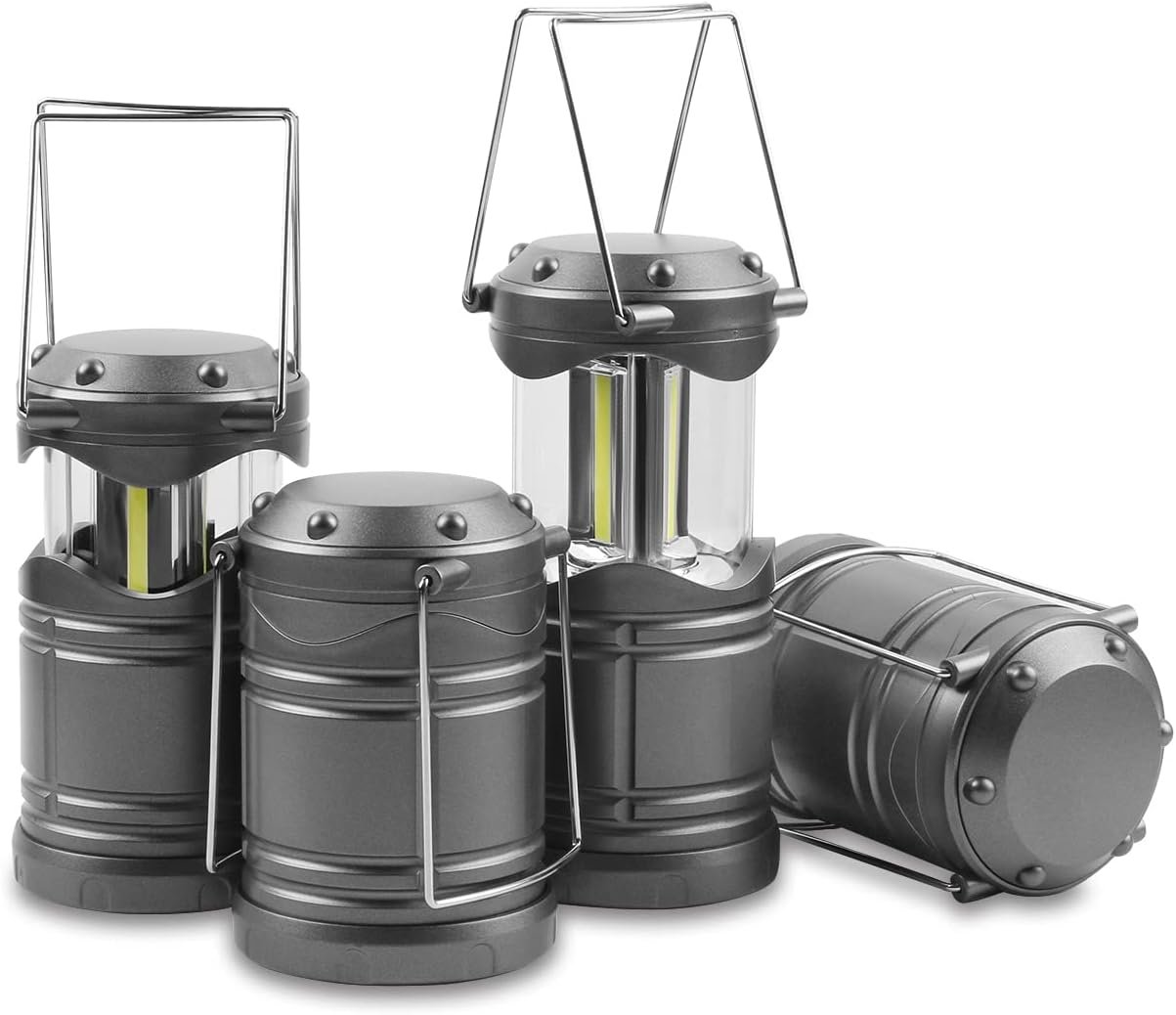
Lichamp LED Camping Lanterns (4-Pack)
One lantern on the outdoor cooking table and one in the kitchen, so nobody cooks by candlelight near a flame. Buy AA batteries with them.
Check Price on Amazon →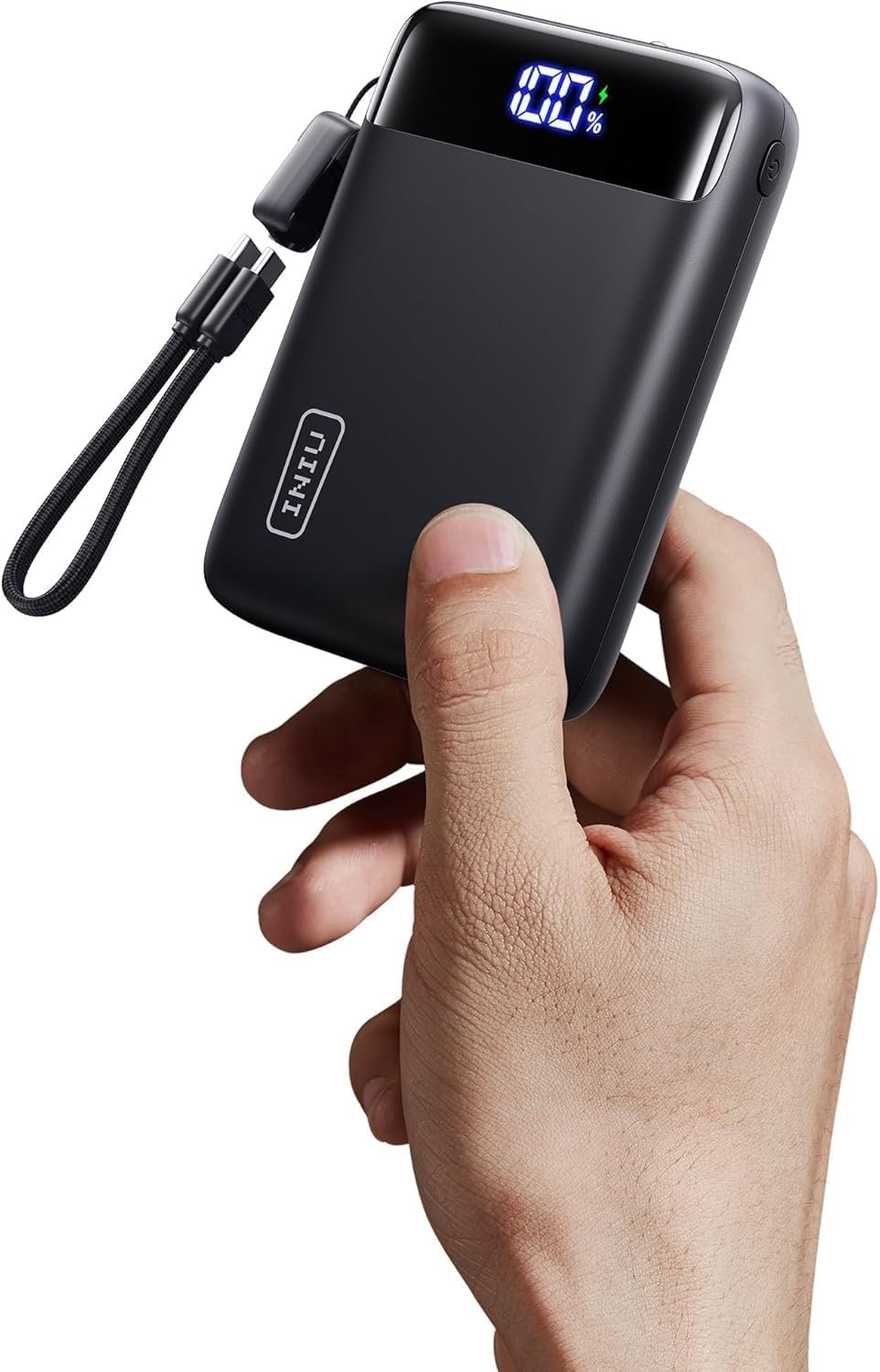
INIU 20,000mAh Portable Charger
About four phone charges by the maker’s count, and a built-in flashlight for checking the stove after dark. Charge it the day a storm is forecast.
Check Price on Amazon →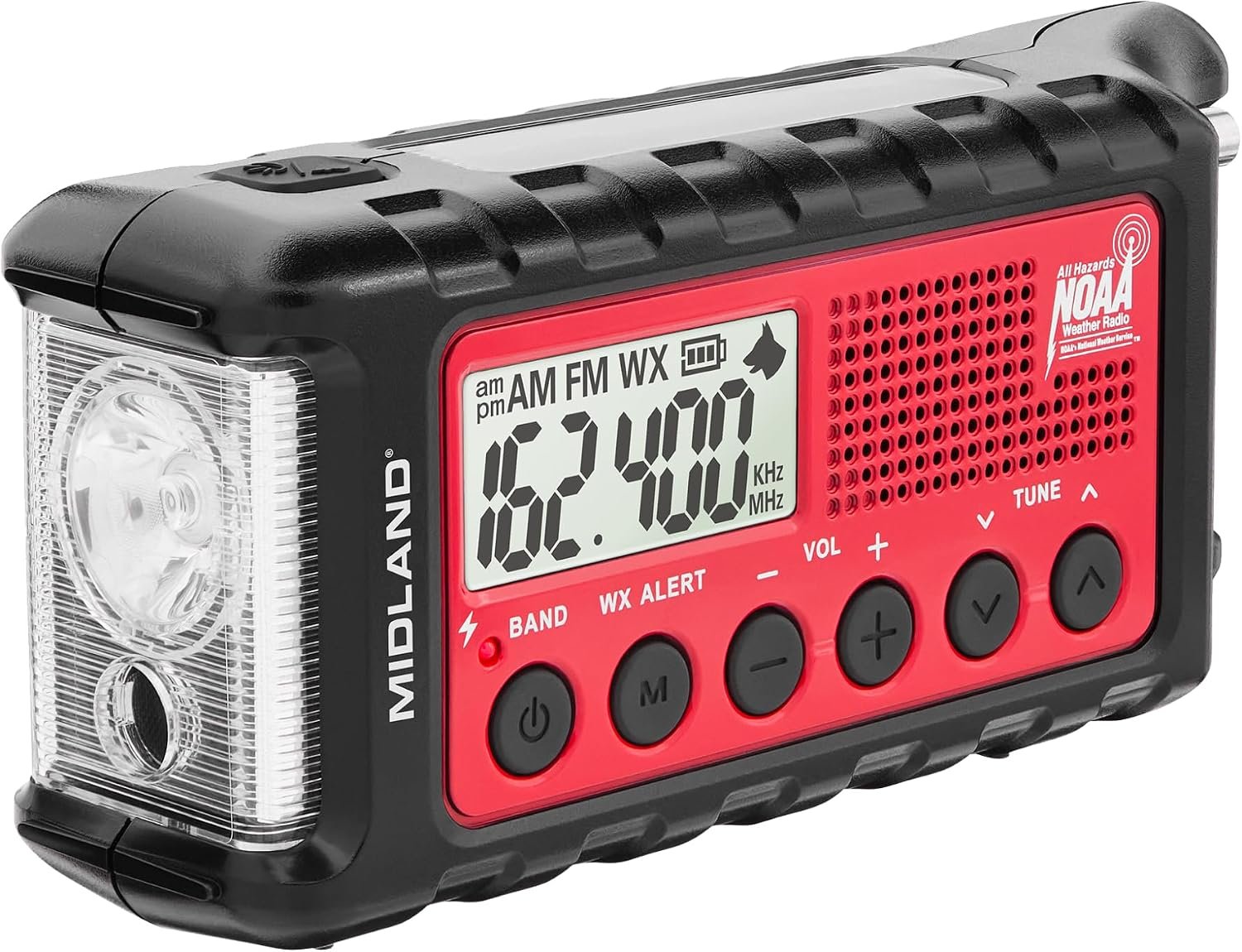
Midland ER310 Emergency Crank Weather Radio
Weather alerts while the cooking moves outdoors, so a squall never catches the stove on the patio. Crank, solar or battery power, plus a flashlight.
Check Price on Amazon →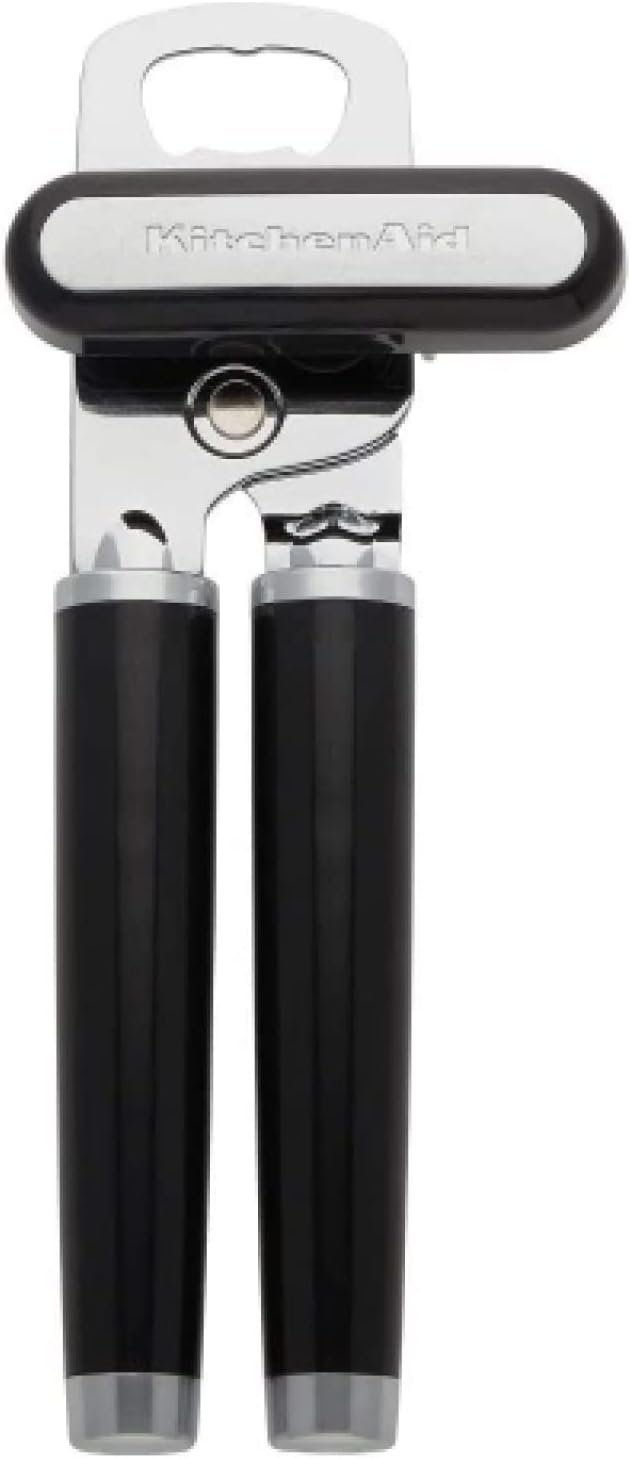
KitchenAid Classic Multifunction Can Opener
Every one-pot meal here starts with cans. A manual opener with a sturdy wheel belongs in the cooking kit, not the kitchen drawer.
Check Price on Amazon →How to Cook Without Electricity: FAQ
How can I cook without electricity during a power outage?
Move the cooking outdoors to a butane or propane camp stove, a gas grill or a charcoal grill, or light a gas range burner with a match if the manual allows it. A rocket stove, solar oven or retained-heat box saves fuel, and gel chafing fuel warms canned food.
Can you use a camp stove indoors?
No. Camp stoves burn fuel and give off carbon monoxide, which has no smell and builds up quickly indoors, in garages, tents and enclosed porches. Cook outdoors on a stable table away from doors and windows, and keep a working carbon monoxide alarm inside.
Can you cook on a gas stove when the power is out?
Often, yes. Many gas ranges have electric igniters but let the top burners be lit by hand: hold a lit match or long lighter at the burner, then turn the knob. Check the manual first, crack a window, and never use the range to heat the house.
Can I use my gas oven without electricity?
Usually not. Most modern gas ovens rely on an electric igniter and a safety valve that stays shut without power, so do not try to light one by hand. Use the top burners where the manual allows it, and never leave the oven door open to warm a room.
Is it safe to grill in the garage with the door open?
No. An open garage door does not clear carbon monoxide fast enough, and the gas can seep into the house. Grills, charcoal, camp stoves and generators belong outdoors, well away from doors, windows and vents, even when it is raining.
How long does an 8 oz butane canister last?
On many single-burner stoves, about 1½ to 2 hours on high and longer on a simmer; the stove’s manual gives the real figure. For a family of four cooking two hot meals and drinks a day, plan on about one canister a day.
How much propane do I need for a week without power?
On a grill, a full 20 lb tank is commonly estimated at 18 to 20 hours on medium, which covers about an hour of cooking a day for two weeks. On a camp stove with 1 lb cylinders, plan about one a day for four people, so 7 for a week.
What can I cook without electricity or gas?
A solar oven cooks rice, lentils and stews on clear days with no fuel, and a rocket stove boils water on twigs and sticks. Or skip cooking: canned fish, canned beans, fruit, peanut butter and crackers need no heat at all.
How does retained-heat cooking work?
Bring a pot of rice, lentils or stew to a full boil for a few minutes, cover it, then nest it in a cooler or box packed with towels or blankets. The trapped heat finishes the cooking over an hour or more, on a fraction of the fuel.
Can you cook in a fireplace during a power outage?
A working fireplace or wood stove that vents up a chimney can heat a kettle or a pot. Open the damper, burn only dry wood, keep children back and keep the carbon monoxide alarms working. Never burn charcoal indoors, in a fireplace or anywhere else inside.
Can you heat canned food in the can?
Yes, outdoors on a camp stove or grill, after peeling off the paper label and opening the can: a sealed can can burst as it heats. Handle it with tongs or an oven mitt. Canned food is already cooked, so it is safe to eat cold too.
How do you boil water without electricity?
On an outdoor camp stove, a grill side burner or a rocket stove, or on a match-lit gas range burner. To make water safe to drink, keep it at a rolling boil for 1 minute, or 3 minutes above 6,500 feet, then let it cool with the lid on.
What are the signs of carbon monoxide poisoning?
The CDC lists headache, dizziness, weakness, an upset stomach, vomiting, chest pain and confusion; people who are asleep can be overcome before they notice anything. If an alarm sounds or anyone feels these, get everyone into fresh air and call 911.
More for the Next Outage
What to eat first, food safety, coffee without power and two cooktop comparisons.
What to Eat When the Power Goes Out
What to eat first, what waits, and no-cook meals for the dark days. Read the guide → Food SafetyPower Outage Food Safety
Fridge and freezer timings, and when to throw food out. Read the guide → Hot DrinksBest Camping Coffee Makers
Morning coffee made on a camp stove, outdoors. See the picks → CooktopsGas vs Induction Cooktops
How the two compare in an everyday home kitchen. Compare them → GriddlesElectric Griddle vs Gas Griddle
The two griddle types side by side. Compare them → One PotLentil Soups and Stews
More pots built on a bag of dried lentils. See the recipes →Flames outdoors, a match for the gas burner, and the sun or a box for the rest.
That is how to cook without electricity safely. The next step is the food on the shelf.
Back to the full list:
Best Emergency Foods to Buy at Your Grocery Store →
Ready to cook? Start with these emergency pantry recipes.
