
Emergency Food for Kids: What to Stock for Babies, Toddlers and School-Age Kids
Familiar, shelf-stable food sorted by age, with nut-free swaps, how much per child, the water math and a 3-day no-cook menu.
- Halal throughout
- Choking reminders
- Pack-your-own snack box
- Formula basics
Emergency food for kids works best when it is food they already know: the same formula, crackers and cereal as any other week, in packs that need no fridge and, ideally, no stove.
When a storm or a winter outage keeps everyone home, familiar food is one less change for a child to cope with. For the whole household’s list, start with the best emergency foods to buy at the grocery store.
Quick answer
Stock what each child already eats, in shelf-stable form: ready-to-feed formula for babies; pouches, fruit cups, oatmeal and soft crackers for toddlers; cereal, peanut or seed butter, crackers, tuna pouches and boxed milk for older kids. Plan 3 days at minimum, 2 weeks if possible.
Water: 1 gallon per child per dayBabies: no honey or milk powder
Emergency Food for Kids by Age: Babies, Toddlers and School-Age Kids
Children need what adults need in an outage, water, enough to eat and food they recognize, but the right form changes fast with age. The table is the short version; tap an age for the details. The household basics are on the best emergency foods list.
| Age | Stock first | Skip | Water |
|---|---|---|---|
| AgeBabies (under 12 months) | Stock firstReady-to-feed formula; the usual powdered formula with sealed bottled water; baby food jars or pouches if already on solids | SkipWhole-milk powder, cow’s milk and honey: none before 12 months | WaterFormula water must be safe: bottled, or boiled and cooled as the label directs |
| AgeToddlers (1 to 3) | Stock firstPouches, applesauce and fruit cups, oatmeal cups, soft crackers, dry cereal, boxed milk they already drink | SkipWhole nuts, whole grapes, hard candy, popcorn, spoonfuls of thick peanut butter | WaterSmall cups, little sips, often |
| AgeSchool-age (4 to 12) | Stock firstCereal, peanut or seed butter, crackers, tuna or halal chicken pouches, fruit cups, granola bars, boxed milk | SkipVery salty snacks when water is short | WaterA labelled bottle each |
Babies: Formula, Baby Food and Safe Water
Ready-to-feed formula needs no water and no mixing, which makes it the simplest choice in an outage. Keep a few days of it even if the baby usually takes powdered formula, in the brand they already use.
Powdered formula is only for safe water: sealed bottled water, or tap water boiled and cooled the way the formula label directs. Mix it exactly as the label says, and follow the pediatrician’s guidance on amounts.
Whole-milk powder, cow’s milk and honey are not for babies under 12 months. For babies on solids, stock the jars or pouches they eat now. Nursing parents need extra water and food themselves, so count them in.
- Ready-to-feed formula, at least 3 days
- The usual powdered formula, plus sealed bottled water to mix it
- Baby food jars or pouches, if already on solids
- Single-use bottles, bowls and spoons to save washing water
Toddlers: Soft Foods, Pouches and Choking Reminders
Toddlers eat little and often, so think in snacks: fruit and veggie pouches, applesauce cups, soft canned fruit, oatmeal cups, soft crackers, dry cereal, and the boxed milk they already drink. Pouches and small cups need no opener and leave no leftovers.
Choking reminders for under-4s: no whole nuts, whole grapes, hard candy or popcorn, and no spoonfuls of thick peanut butter. Spread nut butter thinly, cut round foods small, and keep toddlers sitting while they eat.
After 12 months, whole-milk powder mixed with safe water can stand in for fresh milk; check with the pediatrician first.
- Fruit and veggie pouches
- Applesauce and soft fruit cups
- Oatmeal cups and dry cereal
- Soft crackers
- Boxed milk they already drink
- A spill-proof cup
School-Age Kids: Familiar Snacks and Comfort Food
Older children eat close to adult portions and eat best when the food looks normal. Stock their usual cereal, crackers, peanut or seed butter, tuna or halal chicken pouches, fruit cups, granola bars and boxed milk.
Comfort food earns its place: hot cocoa, a favorite cereal, popcorn made outdoors on the camp stove, or gelatin-free or halal-certified fruit snacks. A child who picked the snack is far more likely to eat it.
- Their usual cereal and crackers
- Peanut or seed butter
- Tuna or halal chicken pouches
- Fruit cups and canned fruit
- Granola or cereal bars
- A few comfort treats
As an Amazon Associate, this site earns from qualifying purchases. Prices and availability are those shown on Amazon at the time you click.
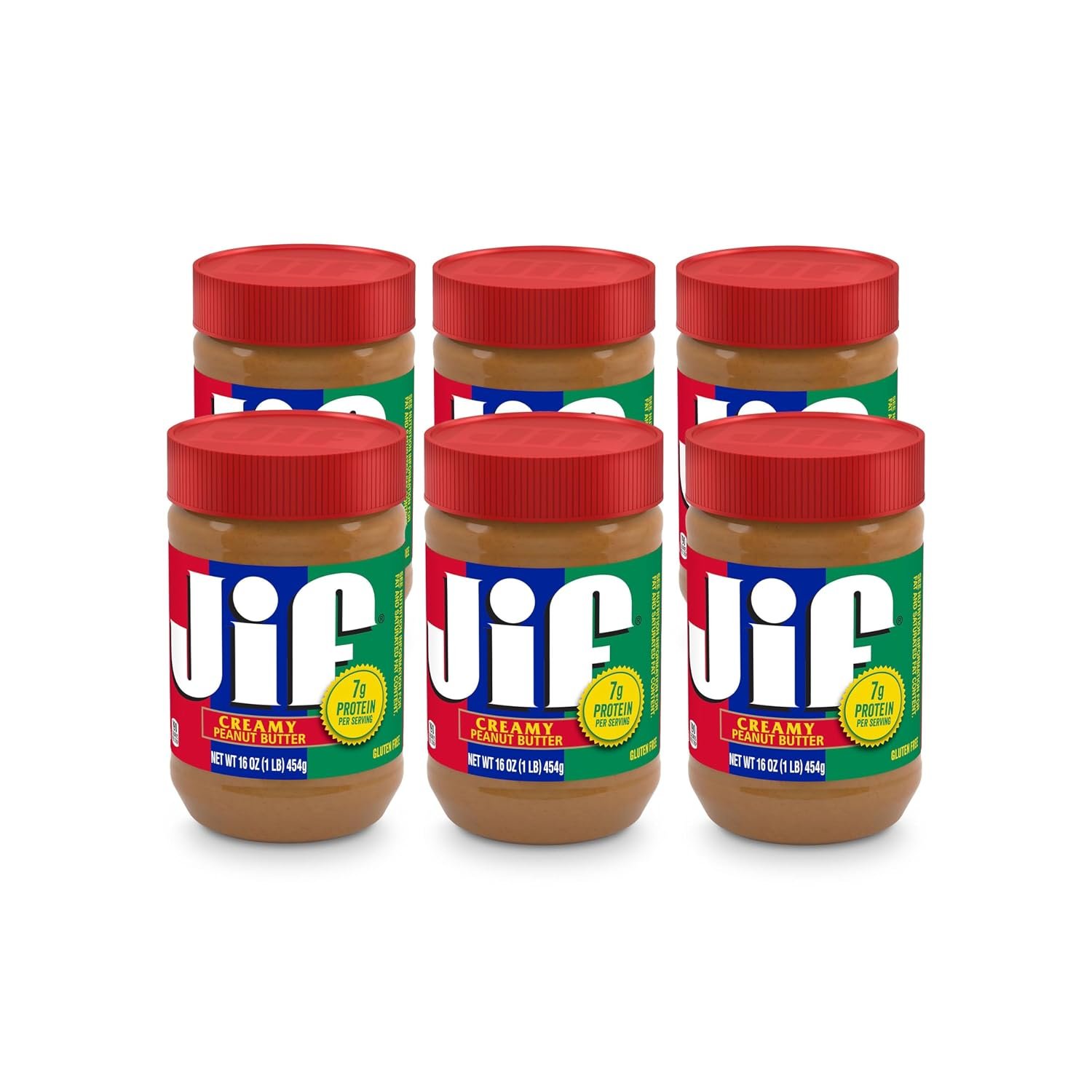
Jif Creamy Peanut Butter, 16 oz (6 Jars)
The no-cook lunch most kids already like, on crackers or tortillas. Swap in sunflower seed butter wherever there is a nut allergy, and spread it thin for toddlers.
Check Price on Amazon →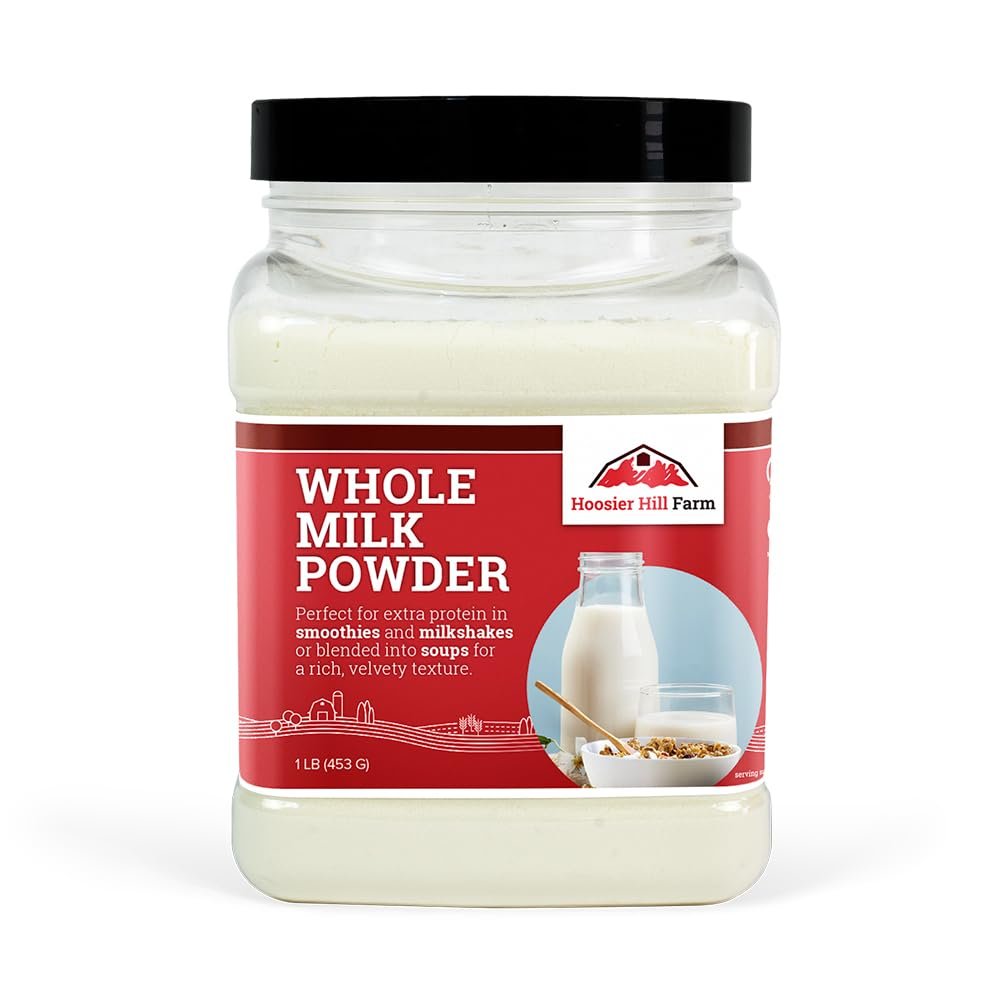
Hoosier Hill Farm Whole Milk Powder, 1 lb
For toddlers over 12 months and older kids: about ⅓ cup whisked into a cup of safe water makes milk for cereal and drinks. Not a formula, and not for babies under 12 months.
Check Price on Amazon →Allergies and Nut-Free Swaps
Allergies don’t pause in an emergency, and unfamiliar packaged food is where surprises hide. Follow the child’s doctor’s guidance, stock only foods already known to be safe, and read every label, since a bulk or store-brand pack can differ from the one at home.
| Instead of | Try | Good to know |
|---|---|---|
| Instead ofPeanut butter | TrySunflower seed butter | Good to knowCheck for “may contain” and shared-facility warnings |
| Instead ofMixed nuts and trail mix | TryDry cereal mixed with raisins or dried fruit | Good to knowNut-free and easy for small hands |
| Instead ofGranola bars with nuts | TryNut-free bars | Good to knowRead every label: recipes change |
| Instead ofWheat crackers (for gluten-free kids) | TryCertified gluten-free crackers or rice cakes | Good to knowStock the brand they already eat |
| Instead ofBoxed cow’s milk | TryShelf-stable oat, soy or rice milk they already drink | Good to knowSoy is an allergen for some children |
| Instead ofFruit snacks or gummies | TryGelatin-free or halal-certified versions | Good to knowMany contain gelatin, so check the label |
Label Everything
- Write the child’s name and “nut-free” on their box in marker
- Keep their food in its own bin, on a separate shelf
- Pack the allergy action plan and any prescribed medicine, and check the dates
- Tell anyone who might feed them, from neighbors to shelter staff
How Much Emergency Food per Child: 3 Days and 2 Weeks
Plan by meals, not calories: three small meals and two snacks a day, nearly all no-cook. Ready.gov asks for at least 3 days of food; 2 weeks at home is the common target when space allows. These are starting amounts per child; adjust to what yours really eat.
| Item | Toddler, 3 days | Toddler, 2 weeks | Ages 4-12, 3 days | Ages 4-12, 2 weeks |
|---|---|---|---|---|
| ItemFruit or veggie pouches | Toddler, 3 days6 pouches | Toddler, 2 weeks28 pouches | Ages 4-12, 3 days3 pouches | Ages 4-12, 2 weeks14 pouches |
| ItemApplesauce or fruit cups | Toddler, 3 days3 cups | Toddler, 2 weeks14 cups | Ages 4-12, 3 days6 cups | Ages 4-12, 2 weeks28 cups |
| ItemBoxed shelf-stable milk (8 oz) | Toddler, 3 days6 boxes | Toddler, 2 weeks28 boxes | Ages 4-12, 3 days6 boxes | Ages 4-12, 2 weeks28 boxes |
| ItemInstant oatmeal cups (need hot water) | Toddler, 3 days3 cups | Toddler, 2 weeks14 cups | Ages 4-12, 3 days3 cups | Ages 4-12, 2 weeks14 cups |
| ItemDry cereal (12 oz boxes) | Toddler, 3 days1 box | Toddler, 2 weeks2 boxes | Ages 4-12, 3 days1 box | Ages 4-12, 2 weeks2 boxes |
| ItemCrackers (8 oz boxes) | Toddler, 3 days1 box | Toddler, 2 weeks2 boxes | Ages 4-12, 3 days1 box | Ages 4-12, 2 weeks4 boxes |
| ItemPeanut or seed butter (16 oz jars) | Toddler, 3 days1 jar | Toddler, 2 weeks1 jar | Ages 4-12, 3 days1 jar | Ages 4-12, 2 weeks2 jars |
| ItemTuna or halal chicken pouches (2.5 oz) | Toddler, 3 days2 pouches | Toddler, 2 weeks7 pouches | Ages 4-12, 3 days3 pouches | Ages 4-12, 2 weeks14 pouches |
| ItemGranola or cereal bars | Toddler, 3 days– | Toddler, 2 weeks– | Ages 4-12, 3 days3 bars | Ages 4-12, 2 weeks14 bars |
| ItemCanned fruit or vegetables (15 oz) | Toddler, 3 days2 cans | Toddler, 2 weeks7 cans | Ages 4-12, 3 days2 cans | Ages 4-12, 2 weeks7 cans |
Babies: count a normal day’s bottles or jars, multiply by 3 or 14, and add a day or two spare, with ready-to-feed formula covering at least the first 3 days.
Water per Child (and Water for Formula)
Count every child as a full person: 1 gallon per person per day, about half to drink and half for cooking and washing, per Ready.gov. Store more for hot weather and anyone who is ill.
| Children | 3 days | 2 weeks |
|---|---|---|
| Children1 child | 3 days3 gallons | 2 weeks14 gallons |
| Children2 children | 3 days6 gallons | 2 weeks28 gallons |
| Children3 children | 3 days9 gallons | 2 weeks42 gallons |
For a baby on powdered formula, the mixing water comes out of that supply and has to be safe; sealed bottled water is simplest. Give each older child their own labelled bottle so it is easy to see who is drinking. More on containers and rotation in how to store water for emergencies.
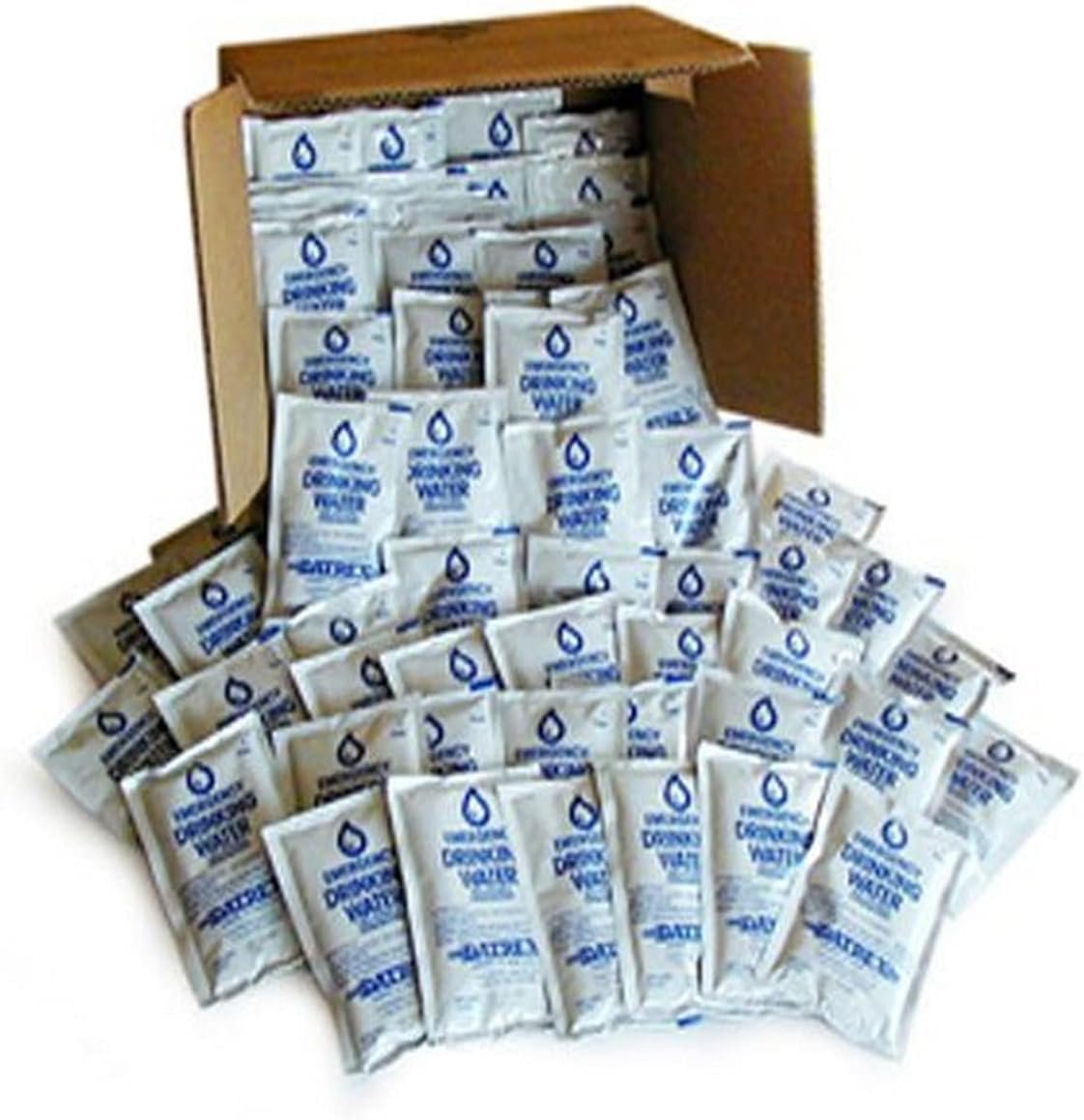
Datrex Emergency Drinking Water Pouches
Small sealed pouches that fit a school backpack, a car seat pocket or each child’s snack box, where a bottle can leak or split.
Check Price on Amazon →A 3-Day No-Cook Emergency Menu Kids Will Eat
Everything here is ready to eat, with no stove and no fridge. For toddlers, use soft crackers, cut canned fruit small and keep to the choking reminders above.
| Day | Breakfast | Lunch | Dinner | Snacks |
|---|---|---|---|---|
| DayDay 1 | BreakfastDry cereal with boxed milk, applesauce cup | LunchPeanut or seed butter crackers, fruit pouch | DinnerTuna or halal chicken pouch on crackers, canned corn | SnacksFruit cup, granola bar |
| DayDay 2 | BreakfastSeed or peanut butter tortilla roll-up, boxed milk | LunchHalal chicken pouch and corn wrap, canned peaches | DinnerRinsed canned black beans and corn with crackers | SnacksApplesauce cup, gelatin-free fruit snacks |
| DayDay 3 | BreakfastCereal bar, canned pears, boxed milk | LunchTuna pouch on crackers, fruit pouch | DinnerVegetarian baked beans straight from the can, crackers, mandarins | SnacksCereal and raisin snack mix |
Open only what gets eaten at one sitting. Without a fridge, finish opened cans, pouches and milk boxes within about 2 hours. In the first hours of an outage, eat the fridge food first; what to eat when the power goes out has the order.
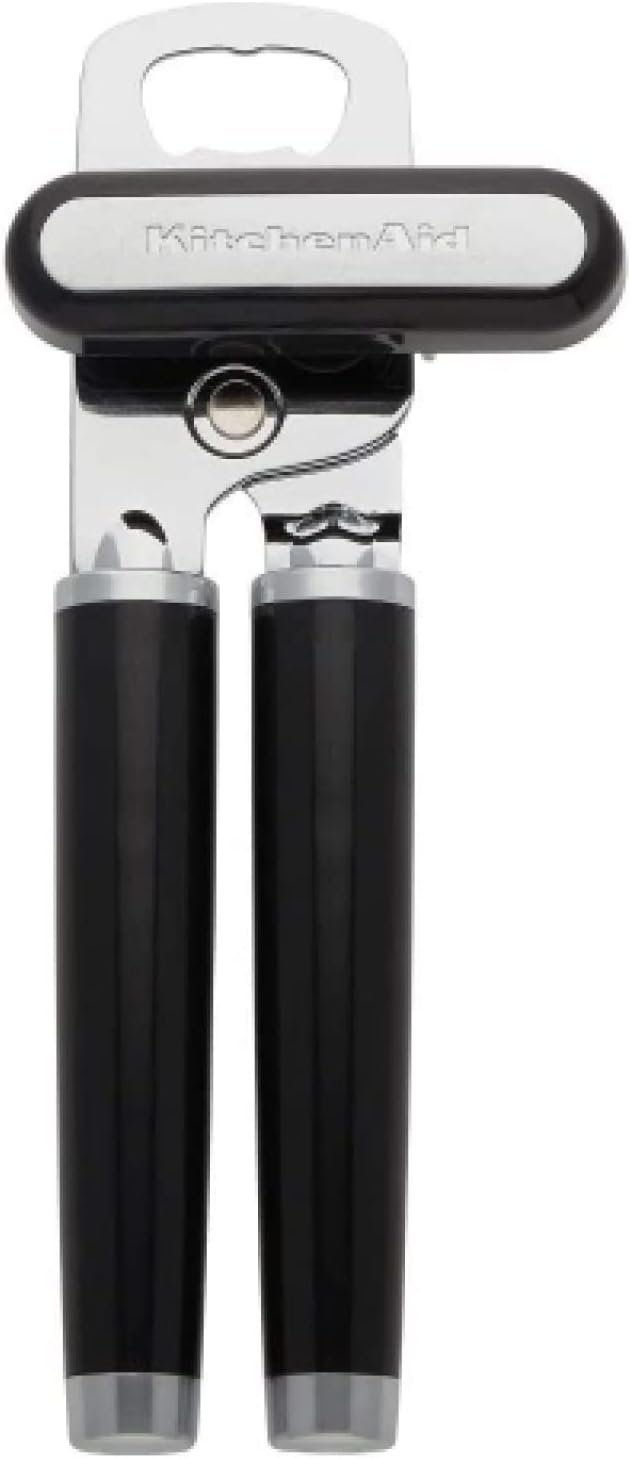
KitchenAid Classic Multifunction Can Opener
Canned fruit, corn and beans on the menu need an opener. A big turning knob is easier for older kids helping out, under supervision.
Check Price on Amazon →Keep Routines and Let Kids Pack Their Own Snack Box
Familiar routines make a strange day easier. Keep mealtimes at the usual hours, and hand each child a small part to play.
Same mealtimes
Breakfast, lunch and dinner at the usual hours, even by lantern light. A predictable day is easier for everyone.
Familiar food first
Serve the snacks and cereals they know before anything new. An unfamiliar meal is easier on a calm day.
A job for everyone
Handing out snacks, checking water bottles or reading the menu aloud gives children a part to play.
Eat together
Dinner around one lantern at the table keeps the evening feeling normal while the power is out.
The Pack-It-Yourself Snack Box
Let each child fill a box with their name on it. They choose, they carry it, and they know exactly where their snacks are.
- A shoebox or tub with their name on it
- Three favorite shelf-stable snacks
- A fruit cup or pouch and a spoon
- A boxed milk or water pouch
- A comfort treat (gelatin-free or halal-certified)
- A small battery lantern or flashlight
- Crayons, cards or a book
- The date, so the snacks get swapped every 6 months
For a grab-and-go version that travels, the 72-hour emergency kit food list covers what goes in a family go-bag.
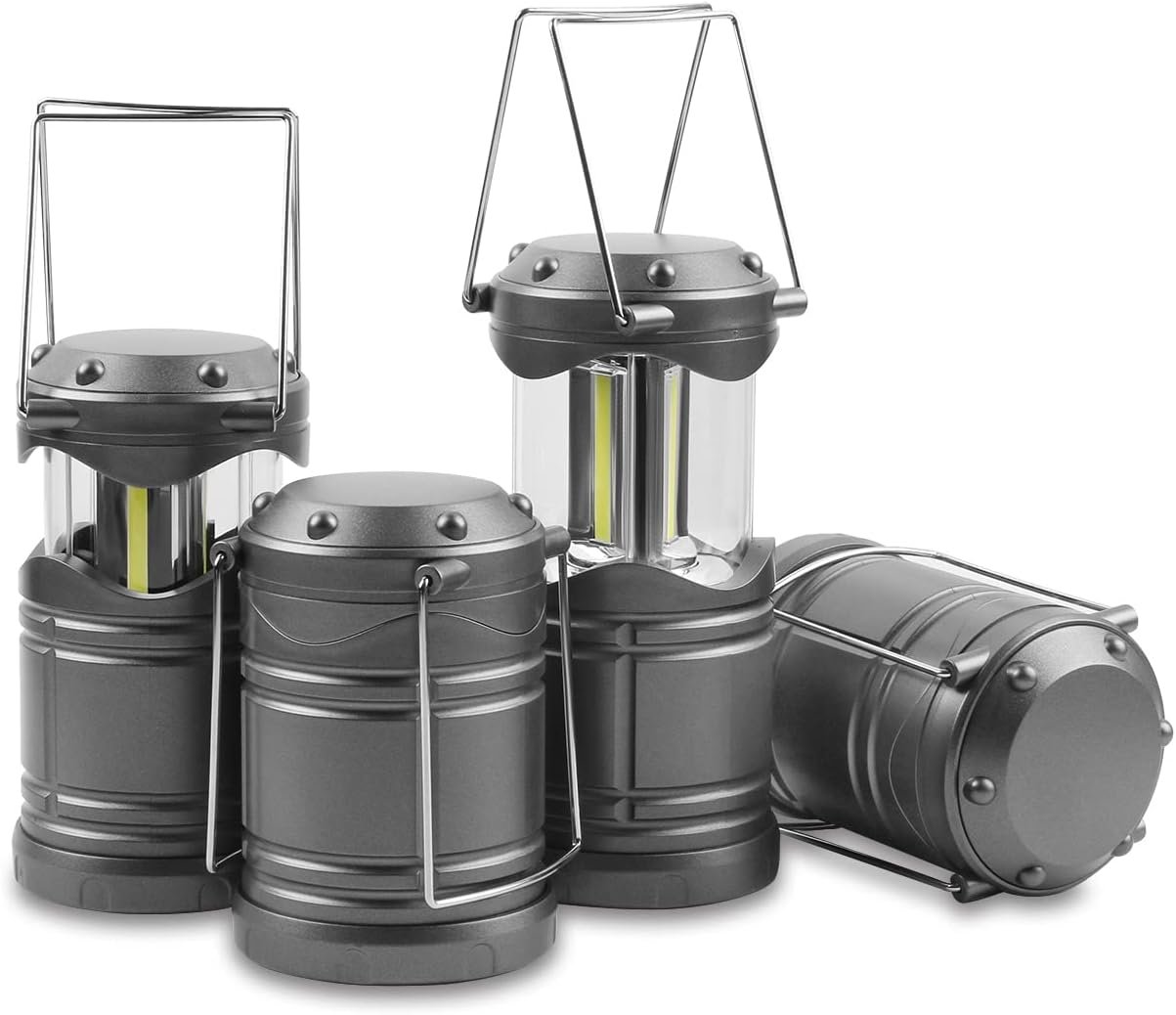
Lichamp LED Camping Lanterns (4-Pack)
Four battery lanterns, so each child’s room and the dinner table get one instead of candles. Batteries aren’t included, so pack them together.
Check Price on Amazon →Emergency Food for Kids: FAQ
What food should I have for kids in an emergency?
Food they already eat, in shelf-stable form: ready-to-feed formula for babies, pouches and fruit cups for toddlers, and cereal, crackers, peanut or seed butter, tuna pouches, fruit cups, bars and boxed milk for older kids. Plan 3 days at minimum and 2 weeks if possible.
What do babies need in an emergency food kit?
Ready-to-feed formula, the usual powdered formula with sealed bottled water to mix it, baby food jars or pouches if the baby is on solids, single-use bottles and spoons, and a few days extra. Follow the pediatrician’s guidance and the formula label.
Can you use powdered formula during a power outage?
Only with safe water: sealed bottled water, or tap water boiled and cooled as the formula label directs, and mixed exactly as the label says. Ready-to-feed formula needs no water at all, which makes it the simplest choice when the power or water is out.
Can babies drink powdered milk?
No. Whole-milk powder, like cow’s milk, is not for babies under 12 months and is not a formula substitute. For babies, the options are breast milk or infant formula, as the pediatrician advises. After 12 months, mixed milk powder can work for drinks and cereal.
What are good emergency snacks for toddlers?
Fruit and veggie pouches, applesauce cups, soft canned fruit, soft crackers, dry cereal, oatmeal cups and boxed milk they already drink. Pouches and small cups need no opener and leave no leftovers.
What foods are choking hazards for toddlers?
For children under 4, the classic ones are whole nuts, whole grapes, hard candy, popcorn and spoonfuls of thick peanut butter. Spread nut butter thinly, cut round foods into small pieces, and keep toddlers sitting down while they eat.
How much water does a child need in an emergency?
Plan 1 gallon per person per day for every child, as for adults: about half to drink and half for cooking and washing. That is 3 gallons per child for 3 days and 14 for 2 weeks. Store more for hot weather and for mixing formula.
What are nut-free emergency foods for kids?
Sunflower seed butter, nut-free bars, dry cereal, crackers, fruit cups and pouches, tuna or halal chicken pouches, canned fruit and boxed milk. Read every label for “may contain” warnings, follow the child’s doctor’s guidance, and keep their food in its own labelled box.
How long does shelf-stable boxed milk last?
Unopened, it keeps until the date on the carton, often several months, at room temperature. Once opened, treat it like fresh milk: about 2 hours without a fridge. Small 8-ounce boxes mean nothing is left over.
How do I keep kids calm and eating during a power outage?
Keep the usual mealtimes, serve familiar food, eat together by lantern light and give each child a small job. Let them choose snacks from their own box. A predictable routine makes a strange day feel more normal.
What should go in a kids’ emergency snack box?
Three favorite shelf-stable snacks, a fruit cup or pouch, a spoon, a boxed milk or water pouch, a comfort treat, a small battery lantern and a game or book. Write the child’s name and the date on the box and refresh it every 6 months.
Are fruit pouches good emergency food for kids?
Yes: they keep for months unopened, need no opener or spoon, and suit toddlers and older kids alike. Check the dates when buying, rotate them into lunch boxes, and finish an opened pouch within the time the label gives.
Is honey safe for babies in an emergency?
No. Honey is not for babies under 12 months, whether raw, cooked or baked into food. Keep it for older children and adults, and check snack labels, since some bars and cereals contain it.
More Kid-Friendly Food Ideas
Snacks, breakfasts and pantry meals children like.
Emergency Pantry Recipes
Peanut noodles, pancakes and more from the shelf. See the recipes → Snack BoxProtein Balls for Kids
No-bake bites for lunch boxes. See the recipe → MorningsHigh-Protein Breakfast for Kids
Easy breakfasts for normal weeks. See the ideas → Fun FoodKids Grazing Table
Snacks set out the fun way. See the table → OatsPumpkin Pie Oats
A cozy bowl from pantry oats. See the recipe → Cozy NightsSoups for Cozy Nights
Warm bowls once the power is back. See the soups →Back to the full list: Best Emergency Foods to Buy at Your Grocery Store
With emergency food for kids packed, the hub covers the rest of the household: water, staples and a 7-day plan.
See the Full Emergency Food List →
Packing a go-bag too? See the 72-hour emergency kit food list.
