
Best Emergency Radios: 7 Hand-Crank and Solar Picks
Seven emergency radio picks compared on bands, power sources and extras, from NOAA weather alert radios to a power bank for phones.
Best overall: Midland ER210. Best budget: FosPower A1. Best weather alerts: Eton FRX3+. Best reception: Kaito KA500.
When the power and the mobile network are both down, a radio is how you hear weather warnings and official instructions. An emergency radio runs without wall power and receives NOAA weather broadcasts.
The best emergency radio for most homes is the Midland ER210, with AM, FM, NOAA weather alert, a hand crank, a solar panel and a flashlight. For the lowest price tier, choose the FosPower A1. Add a power bank to keep phones charged.
All seven are compared below.
Product links go to Amazon. As an Amazon Associate, Kitchen Guide 101 earns from qualifying purchases.
Emergency Radios Compared
All 7 side by side. Tap any name to see it on Amazon.
| Radio | Bands | Power | Extras | Best for | Price |
|---|---|---|---|---|---|
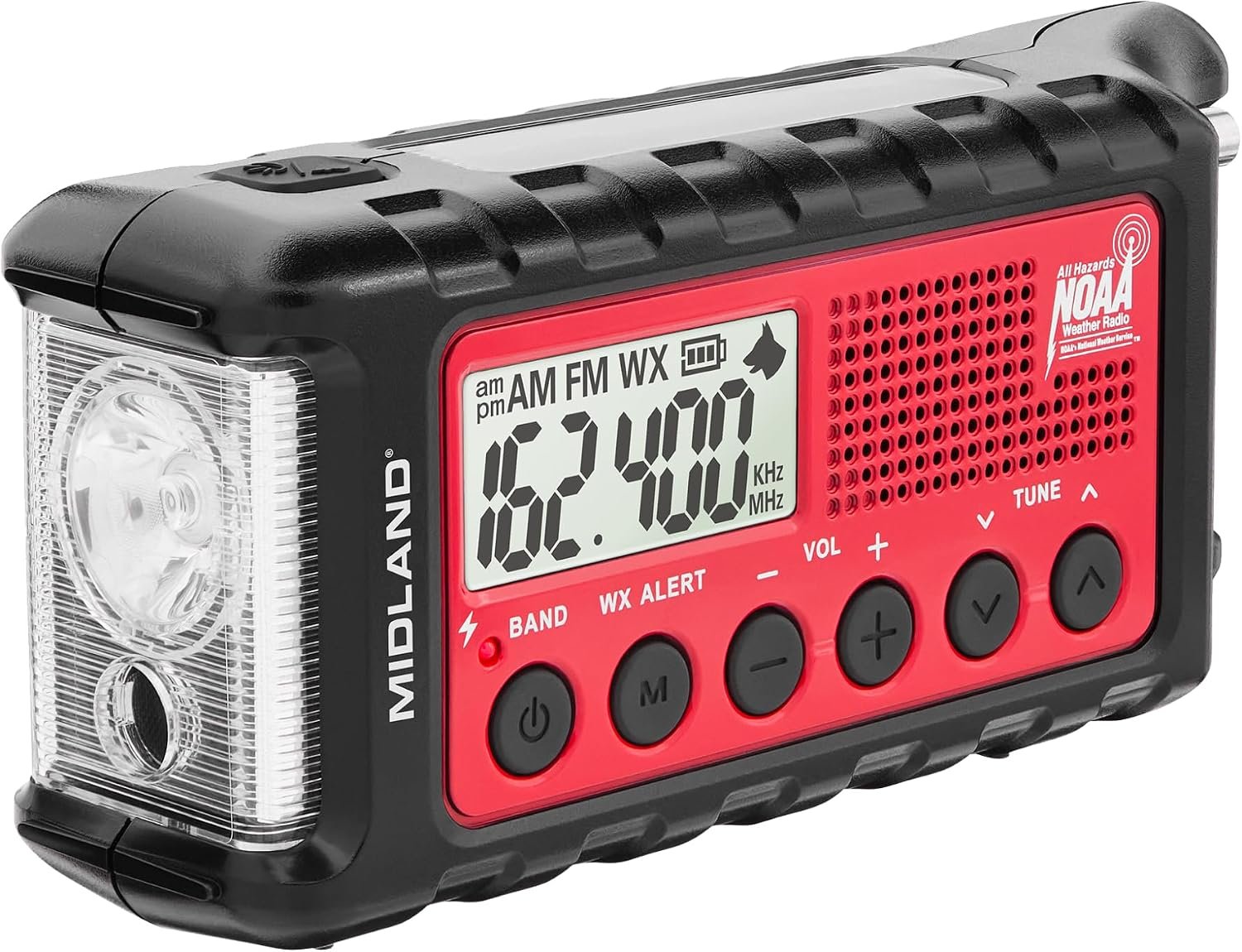
| Midland ER210 Emergency Crank Weather Radio | AM, FM, NOAA weather alert | Crank, solar, rechargeable battery | Flashlight with SOS, USB out | Most households | $$ |
| FosPower Emergency Solar Hand Crank Radio (Model A1) | AM, FM, NOAA weather | Crank, solar, AAA, 2000 mAh battery | Flashlight, reading light, USB out | Go bags | $ |
| Hand-Crank Emergency Radio with Flashlight and USB Charging | Radio, see listing for bands | Hand crank and USB | Flashlight, USB charging | A second radio | $ |
| Eton American Red Cross FRX3+ Emergency Weather Radio | AM, FM, NOAA weather alert | Crank, solar, 2600 mAh battery | Flashlight, red beacon, USB out | Storm regions | $$ |
| Kaito KA500 Voyager Emergency Radio | AM, FM, shortwave, NOAA weather | Crank, solar, AA, USB, built-in battery | Reading lamp, flashlight, USB out | Rural areas | $$ |
| RunningSnail Emergency Hand Crank Radio | AM, FM, NOAA weather | Crank, solar, USB | Flashlight, USB out | Kids and glove boxes | $ |
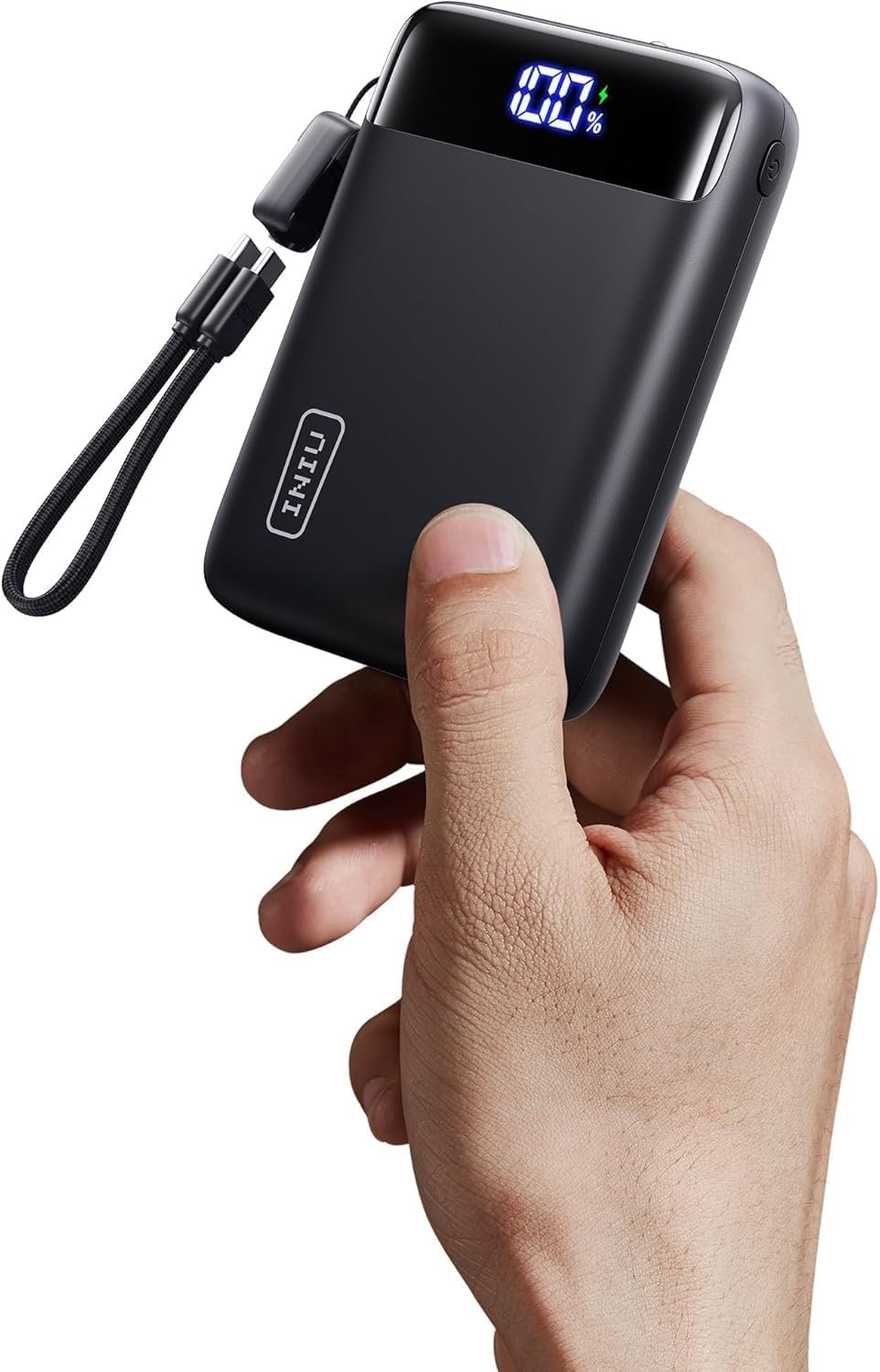
| Portable Power Bank, 20,000 mAh | Power bank, no radio | Rechargeable, 20,000 mAh | USB charging for phones | Keeping phones alive | $ |
Details are as stated on each Amazon listing at time of writing and can change. Price tiers: $ under $30 · $$ $30–60 · $$$ over $60.
The 7 Best Emergency Radio Picks, Reviewed
Features are maker figures. NOAA weather radio covers the United States.
Midland ER210 Emergency Crank Weather Radio
A compact radio from a company known for weather radios. It receives AM, FM and NOAA weather channels and can sound an alert when the National Weather Service issues a warning for your area.
The rechargeable battery fills by USB, by the solar panel or by turning the crank, and a USB port passes a little power to a phone. The flashlight has an SOS strobe.
- Weather alert function
- Three ways to charge
- Solid build
- Small speaker
- Crank charging is slow for phones
FosPower Emergency Solar Hand Crank Radio (Model A1)
A small radio that covers the basics at the lowest price tier. It runs from its built-in 2000 mAh battery, three AAA batteries, the solar panel or the hand crank.
It has both a flashlight and a fold-out reading light, and the USB port can give a phone an emergency top-up.
- Low price tier
- Four power options
- Two lights
- No automatic weather alert
- Small battery for charging phones
Hand-Crank Emergency Radio with Flashlight and USB Charging
A compact crank radio for a second kit. Turn the crank for power when the batteries are flat, and use the built-in flashlight to find your way.
Check the listing for the bands it receives and the battery size before buying.
- Low price tier
- Works with no batteries
- Light and small
- Check the listing for weather bands
- Small speaker
Eton American Red Cross FRX3+ Emergency Weather Radio
Built with the American Red Cross name on it. The alert function switches the radio on when a weather warning is broadcast, and a glow-in-the-dark ring helps you find it when the lights go out.
It charges by crank, solar panel or USB, and has a flashlight plus a red emergency beacon.
- Automatic alerts
- Easy to find in the dark
- Larger battery
- Bulkier than budget radios
- Middle price tier
Kaito KA500 Voyager Emergency Radio
The radio with the widest range of bands. Alongside AM, FM and NOAA weather channels it tunes shortwave, which can bring in distant stations when local ones are off the air.
It runs from the crank, the solar panel, AA batteries, USB or its built-in battery, and has a long telescoping antenna.
- Most bands
- Five power options
- Good antenna
- Analog tuning dial
- Larger body
RunningSnail Emergency Hand Crank Radio
About the size of a soda can. It receives AM, FM and NOAA weather and charges three ways.
The small size makes it a good second radio for a glove box or a child’s school emergency kit.
- Very small
- Low price tier
- Simple controls
- Small battery
- No automatic weather alert
Portable Power Bank, 20,000 mAh
A crank radio gives a phone a few minutes of power. A power bank gives it days. A 20,000 mAh bank recharges most phones several times.
Top it up every three months so it is full when needed.
- Several phone charges
- Low price tier
- Also runs USB lights
- Must be kept charged
- Not a radio
How Are Emergency Radios Powered?
| Power source | Best for | Limits |
|---|---|---|
| Built-in rechargeable battery | Everyday readiness | Loses charge in storage, top up every few months |
| Hand crank | When everything else is flat | A minute of cranking gives a few minutes of radio |
| Solar panel | Slow top-ups in sunlight | Small panels charge slowly |
| AA or AAA batteries | Long outages | Store spare batteries outside the radio |
| USB | Charging before a storm | Needs power or a power bank |
Choose a radio with at least three power sources, so one always works.
How to Keep an Emergency Radio Ready
Charge it every three months
Rechargeable batteries drain slowly in storage.
Find your weather channel
Tune the NOAA weather band at home now and note which channel is clearest.
Store spare batteries beside it
Keep them out of the radio so they cannot leak inside.
Keep it where you shelter
Store the radio with the lantern and water, not in the garage.
Test the crank and light
Run every function twice a year.
Write down local stations
Tape a card with local news frequencies to the back.
Build the rest of the kit with the 72-hour emergency kit food list and the best emergency lanterns and flashlights.
How to Choose an Emergency Radio
Five checks before you buy.
AM, FM and NOAA weather
Shortwave is a bonus in rural areas.
Automatic weather alert
An alert radio switches itself on for warnings.
Three sources or more
Crank, solar and a rechargeable or replaceable battery.
Flashlight built in
One less thing to find in the dark.
Home or go bag
Larger radios sound better. Small ones travel.
More emergency guides: the best emergency food, how to store water for emergencies, power outage food safety and what to eat when the power goes out.
Emergency Radio FAQs
What is the best emergency radio?▼
The Midland ER210 for most homes. It has NOAA weather alert, three ways to charge and a flashlight.
What is a NOAA weather radio?▼
A radio that receives the National Weather Service broadcasts, which run all day with forecasts and warnings for each area of the United States.
Do hand-crank radios really work?▼
Yes. About a minute of cranking gives several minutes of listening. The crank is a backup, and a charged battery is the main power source.
Can an emergency radio charge a phone?▼
A little. Most give enough for a short call or a few messages. A power bank is the better way to keep a phone running.
How long does an emergency radio battery last?▼
Usually several hours of radio per charge. Lights and phone charging drain it faster.
Do I need shortwave?▼
Most households do not. AM, FM and NOAA weather cover local emergencies. Shortwave helps where local stations are few.
Where should I keep an emergency radio?▼
Where the family would shelter, with the flashlight, water and first aid kit.
How often should I charge it?▼
Every three months, and again when a storm is forecast.
The Bottom Line
- Home kit: Midland ER210 or Eton FRX3+ for automatic alerts.
- Rural areas: Kaito KA500.
- Go bags and cars: FosPower A1, RunningSnail Crank Radio or a spare Hand-Crank Emergency Radio.
- For phones: 20,000 mAh Power Bank.
Buy a radio with weather alert, charge it every three months and keep it where you shelter.